
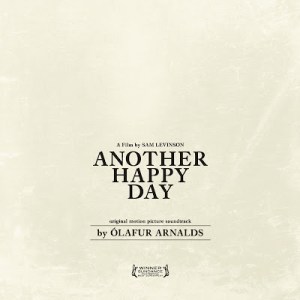
 Ólafur Arnalds‘ score to Another Happy Day features the welcome return of an element missing since the ending of Eulogy for Evolution: grit. It’s there at the end of the opener, resurfaces two tracks later, and permeates the closer, “Everything Must Change”.
Sure, one might fault the album for being a little short (34 minutes), doubling up on themes (“Lynne’s Theme” and “Autumn Day”) and including music that seems incidental. But this is all part of the typical soundtrack experience. The only real flaw is that someone forgot to write the track titles on the CDs. Come on, guys, this is part of the reason people still buy physical copies. Otherwise, most folks will hear what they expect: a series of short, melancholic works for piano and strings. The loveliest of these, the aforementioned “Autumn Day”, also appeared on Living Room Songs. The achingly minimal “The West” is another strong entry in the Arnalds canon, its themes echoed in a higher octave on “Poland”.
Despite its title, Another Happy Day is not an especially happy film. The score reflects its anxieties and conflicts by sounding sorrowful and withdrawn. That is until “Everything Must Change”, the strongest Arnalds composition in recent memory. The track begins with the percussive sound of what is likely a prepared piano; then the bass comes in, then the fuzz, then a deep boom. The score’s two-note motif is mimicked by an electronic voice. Symphonic strings introduce counter-melodies. And then, in the final 70 seconds, the longed-for comfort, given power by its proximity to the melange. It’s as if Arnalds had heeded the message of the song’s title. This return to form and fire is also a step forward for the composer and a hopeful harbinger of things to come. (Richard Allen)
Everything Must Change
 a closer listen