
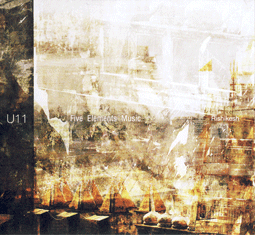
 Rishikesh is a pair of sonically dissimilar recordings that reflect different facets of modern India: the peaceful allure of nature and the crush of human interaction. Each contains a religious element: the creaking of prayer wheels and striking of bells in the first track, the calls to prayer of the second. Together, they seek a higher reflection, a taste of the divine in the seemingly mundane. The sounds of traffic are allowed to intrude on the title track, recorded at the Ganges near the gateway to the Himalayas; today’s travelers pass by the holy like the people of Krishna’s time passed by the hurt and suffering. And yet, each continues, the river to the sea and back again, the endless cycle of suffering.
How to escape? A soundscape can offer only clues, not answers. In the running water, there is transcendence. In meditation, flight. “Vrindavan” amplifies the conflict with additional human intrusion, some welcome and some not. The place of Krishna’s birth is not always peaceful, and those who seek to rise above the mire often contribute to it with sound pollution. Voices raised in supplication can be beautiful or jarring, and examples of each can be found here. Bicycle bells ring, rickshaws race, monkeys screech. The traffic here is louder, and fireworks fight against the sullen serenity. Where is peace to be found? The answer arrives only at the end, in a children’s choral passage that is cut short too soon.
Sometimes it takes a visitor to reveal truths about the country in which one resides. Sergey Suhovik (Five Elements Music) discovers incongruences that may not be apparent to the local populace: a disconnect between worship and tone, a divine setting being ignored. It’s all there for the hearing. Sometimes we can’t hear the forest for the trees, or in other terms, the holy for the human. But the holy still calls, soft yet persistent: the quiet rustle beneath the rote. (Richard Allen)
Available here (with sound samples)
 a closer listen