
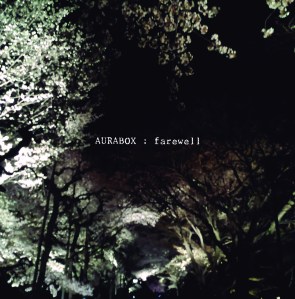
 This Farewell starts off like a quietly intense combination of pieces by Anton Webern and Claude Debussy, suddenly precise and direct, suddenly diffuse and harmonic. It is a great first gesture of goodbye, eyes shying away and hands slightly tense in expectation, a true moment of improv when everything is on the verge of not being said: a “Blur”, an emotional uncertainty held together only by tonal harmony and bodily rhythm. Aurabox, or self-taught pianist Mitchy Yamato from Japan, handles music in the same organic way, as encounter and silent dialogue, an extension of self that, like any one of us, is sometimes brazen and direct, sometimes awkward and confusing, and sometimes even ‘wrong’ (a weak handshake, a missing note, a rejected hug, a tone out of place). It makes for a compelling listen as we try to engage each and every gesture in this very indirect, deferred encounter.
The influence of the most widely acclaimed piano pieces by French composer Erik Satie is undeniable, if only because of the minimal style that dominates the entire album, seeking not to lead listeners throughout melodies, grasping them firmly by the hand, but to attempt to create a little ‘space’ of understanding, a two-way meditation that is as immediate and as short as parting ways with long-time friends. The confines of the style are, I believe, meant to be clear, for this is no jazz improv, nor is it an avant-garde assault on convention, but it is no neoclassical return to some lost order either: it functions within what anyone would expect from piano music by now, and its only drive is a sincere form of expression that is closely tied to the artist’s movements. Like bidding farewell, it will always look similar to anyone not participating in it, but it will forever be unique to those who are, at least when among loved ones of any kind. In this sense, there is a certain demand implied within the album, music’s eternal request… to listen to it again and again in order to give way to understanding.
Now, I’ll probably never meet the artist, but like with so many a Debussy piece, I need but a fantasy or an imaginary association, a living picture of saying goodbye to someone close, to be able to attempt comprehending what is being expressed. Farewell might be the perfect intermediary, full of shining fissures that cast shadows of a modernist form, whispering of gestures and social rituals under the candlelight of one another’s dreams and feelings. As Aurabox flows through harmonies and melodies with ease, we find the strange comfortability of rules constrained, pushed to the verge of meaninglessness; what is at stake is not the ritual but ourselves, trailing away into atonality only to suddenly turn back into the safety of convention, assuming the full vulnerability of improv, of showing ourselves not as we say we are but as we try to be. It’s not an easy operation, and even the most rigid person is vulnerable when eyes meet and skins touch… even the most decidedly tragic piano music holds a sublime ray of sunlight.
In the end, this is a very good experiment in improv, one that is not easily categorized simply because it has little to no ties to jazz or the ultra-modern, and is more closely related to a history that falls off the edges of canon. It could be called an instance of outsider music, unconnected to the short-hand associations usually reserved for such a term. Here is an artist who is self-taught, plays beautifully, and makes all sorts of variations on early modern music as a kind of pure self-expression. It is close to what is commonly referred to ‘modern composition’, and yet it is so, so far. This is one of those albums, then, that you will not hold close due to its historical importance, it is one of those you will cherish out of an unspoken understanding with the artist, an intuition that assures you that yes, this is exactly what you’re feeling, and no one else can come close to describing it. The secret is safe, and only those who you decide to share it with will ever understand it as you do. (David Murrieta)
 a closer listen