
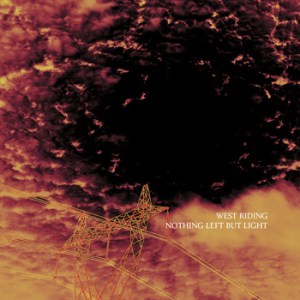
 “So you want to be a rock and roll star? Well listen, now hear what I say …” After listening to artists such as Machinefabriek and Marta Mist, big band director and freelance trumpeter James M. Gregg decided it was time to stop playing it safe. On Nothing Left But Light, he exits the fusion freeway at full speed, but somehow stays upright. This is the rare instance of an established artist exploring new territories in such a way as to make one question why he didn’t do it sooner.
It’s one thing to emulate the work of others, but another to do so without reiteration. For two tracks, Gregg nearly falls into the trap, with the usual lovely piano and echoed brass. Thankfully, this ambient start – proficient yet unremarkable – provides little indication of the sounds that are to come. Listeners jarred by the submerged “oo-oo” vocals and embedded thunderstorm are advised to stick around. After playing with these ambient tropes, Gregg begins to expand his horizons. In retrospect, one might locate the change somewhere in the second track, as a light drone is joined by the sound of a rusty swing. At this point, it would be fair to ask, “When are we going to hear the trumpet?” After all, it’s always best to play to one’s strengths.
Once the trumpet becomes a main feature, the album begins to turn more distinctive. The languid, rainy day improvisations conjure associations with The Blue Nile, but the music surrounding the trumpet is anything but mainstream. “Over Aurora” features a noise that sounds like a manhole cover being unscrewed, accompanied by distant chimes that rattle like Marley’s chains. “Goodbye Paris” sounds as if it was recorded in a helicopter flying into turbulence. The once-melodic piano turns dissonant. The “oo-oo” vocals return like the voice of reason, attempting to hold their own against entropic forces. The helicopter’s rotors turn. Frost attacks the wings. Garbled transmissions struggle to be understood. The safety of the opening track seems as distant as the runway.
The finest track, “Where Waves Grow Sweet”, rises from a quiet whirl to a seeming catastrophe. Layers of drones are joined by scaled counterpart vocals. Crossing guard dings shift speaker-to-speaker. And then the trumpet: sweet stability? But no – additional brass joins the fray, and in the last 40 seconds, fractured static, until the machine is abruptly unplugged. In its wake, the shaken percussion and dark tones of “Revenant” sound like pebbles on the approaching tide, the drums like an invading Viking army. Easing the foot from the accelerator, Gregg then follows this track with effervescent fizzes and the rhythmic sound of a ping-pong ball before racing to the epilogue.
The album will be difficult to replicate live, given the method of recording, a process the composer calls “asynchcronous improvisation”. Short improvisational bursts are recorded, looped, layered and mulched until nearly unrecognizable. By the end, Gregg is wading waist-deep in unfettered experimentation, mud caking his fisherman’s overalls. In the mainstream musical world, the clarity of the opening tracks might be considered the “light”, but in our world, the opposite is true. Gregg has been illuminated, and Nothing Left But Light is evidence of his awakening. (Richard Allen)
 a closer listen