
 Although I’d seen Bill Murray in Ghostbusters and its sequel, I would have been hard-pressed to name anything else he’d done until I met my good friend MattP who was, for reasons I never quite ascertained, obsessed with the guy (this was the pre-Wes Anderson era). He had all Murray’s movies on VHS (this was the pre-DVD era too) and had written him a letter, couriered via somebody who was working, somewhere, in Hollywood (this was the pre-Twitter/Facebook… you get the idea). Whether or not Bill got the letter, or what he thought of it, is unrecorded; there was no response, but Matt was happy because he’d put his feelings on paper and that was enough. As it turns out, he wasn’t alone – people adore Bill Murray. Not in the goatee-stroking, hipster-y, ironic, air quotes way either, they just flat out love the guy, to the extent that one can imagine he’s inundated with devoted fan letters on a daily basis.
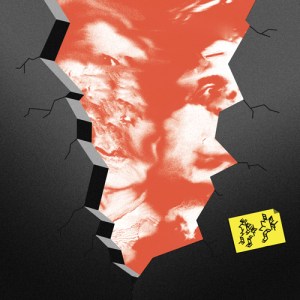
Anyway, in a shocking case of oneupmanship over the letter-writers, William Cody Watson has made a whole record dedicated to the man himself, which is heavy on static-filled rainfall, haunted organ drones and steers clear of any Bobby Brown-style raps concerning the plot of Ghostbusters II. Divided into eleven segued movements over two sides of vinyl, Bill Murray is full of powerful and gorgeous atmospheres, with just enough grit to maintain attention, rather than drifting along in the corner like innumerable underwhelming ambient works. The movements themselves are helpfully titled along the lines of “Burning Cloud”, “Warm Neck” and “Lost Again, Demon” which in theory could all be about Ghostbusters, but the somewhat melancholic sweep of the ambience suggests that the music is more inspired by the Bill Murray seen in Sofia Coppola’s movies rather than Caddyshack. Perhaps I’m just not dialled into Bill enough, but I’m having a bit of a struggle understanding the artwork and tying the music in with the man. But whether or not specific films were used as inspiration doesn’t feel a relevant issue; Watson is simply trying to capture the essence of Bill.
Whatever the associations, Bill Murray stands or falls on the strength of the compositions, and thankfully Watson has come up with the goods, the pieces gliding seamlessly from rain-swept gloom-ridden urban streets to calming, almost pastoral, insularity. Towards the end of the first half, there’s a passage of rich, choral organ work that washes away any of the musical anxiety that’s gone before and has an almost religious overtone in its sense of devotion. I guess that’s the Murray effect because aside from an occasional industrial swell, it’s a feeling that continues throughout most of the second half as well. The music gradually ebbs away to silence, and for a moment one feels displaced; alone in a hotel on the other side of the world. Such is the spell of Bill Murray and Bill Murray. (Jeremy Bye)
 a closer listen