
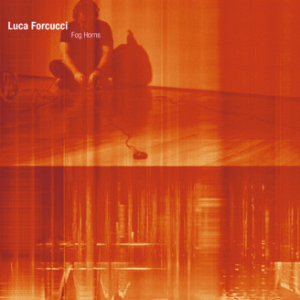
 Sub Rosa’s New Series Framework is dedicated to new experimental performers, especially the “clever” ones. Now up to its 14th installment, the series has another winner in the Swiss and Italian artist Luca Forcucci. Forcucci fits the clever tag, as Fog Horns is one of the more unusual soundscapes on the market, a batch of field recordings enhanced by music ranging from DJ scratches to cello.
The recording was inspired by a trip to San Francisco during which Forcucci fell in love with the sound of the fog horn. It’s relatively common for one to fall in love with a sound, especially one that is unfamiliar and regional: a certain waterfall, a certain bird, a certain loved one’s voice. It remains rare to make this sound one’s muse. Forcucci first heard the fog horns upon arrival, and then again when journeying outside the city and back. Entranced, he went in search of the sound, recorder in hand, walking the coast, hoping to catch the exquisite echo. Yet one man’s fascination is another man’s tedium, which may be why Forcucci chose to augment his tapes. In so doing, he paraphrases the experience, combining actual sounds with imaginative associations.
The title track begins with a scratch, immediately alerting the listener to the fact that this is a studio creation. Light scratches continue to appear throughout, signaling scene changes. Birds twitter their delight as women converse in clacking heels. A train, perhaps a trolley, is sampled in the closing minutes, performing as percussion. The middle piece relies heavily on the sound of surf, which is only a surprise in that it is absent from the opening piece. Midway through, a dark drone surfaces, not unlike a wind tunnel. The surf returns, electronically manipulated, and grows foreboding as a result. The pitch shifts of the final minutes lead one to believe that the fog horns have been time-stretched as well. As they spiral to silence, they set up the album’s dense conclusion, “Winds”. This quarter-hour track builds directly on the sounds that have preceded it, establishing an anchor drone early before introducing the sound of objects affected by the wind, as well as that of the wind itself. Now the surf returns; now the water churns; now the need for the fog horn is finally established. It’s not just an appealing sound, it’s a warning that staves off disaster. By bringing this fact to light, Forcucci captures more than the sound itself; he illustrates its meaning. (Richard Allen)
 a closer listen