
 On New Year’s Eve, we look back on the year that has passed and express hope for the year that is to come. Kaitlyn Aurelia Smith‘s Thoughts on the Future is perfectly suited for such musings, balanced on the border between comfort and trepidation.
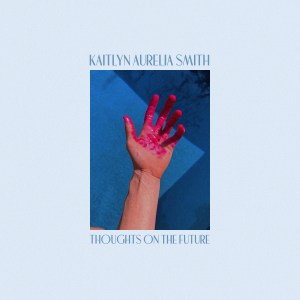
Even the cover is open to interpretation. What looks at first to be blood is likely paint, the upraised arm a symbol of solidarity, the paint a symbol of creativity. But the first impression is what counts. The artist is having a hard time being hopeful about the future, wondering how far a person can acclimate before losing their ability to resist.
Only a few months ago, Smith released GUSH, a vocal synth set packed with perky, romantic, danceable club cuts, with an undercurrent of social commentary. On Thoughts on the Future, the artist returns to the instrumental realm, offering three extended ambient-electronic meditations. The first single, “I Miss the Way You Swim,” is rife with melancholy, easing the way into the new year. Bubbling at the center, the nearly ten-minute piece blossoms into a gorgeous glockenspiel suite. As the orchestral elements enter, one takes a breath and whispers, “Maybe the new year won’t be so bad after all.”
The title track is peaceful and melodic, with percussive textures increasing in density, relaying a feeling of forward movement. Wordless voice enters in the second half, conveying calm. In this, the artist seems to be urging listeners to hold on, reminding them that there will always be voices of comfort to counter those of chaos. And in “Dying Is A Normal Part Of Life,” Smith takes one last look backward, like Janus, before turning her attention to what lies ahead. The EP’s most ambient piece, “Dying” receives the blessings of oboe, cello and violin, a heavenly chorus that bears one’s loved one away but consoles those who are left behind. The multitracked, angelic onomatopoeia implies that everything will be all right in time, without revealing when that will be. Absorbed as one, these three tracks communicate Smith’s own Thoughts on the Future; while there is reason to fear, there is also ample reason to hope. (Richard Allen)
 a closer listen