
 With its extended tones and forlorn timbres, drone music seems perfectly suited to score the expanse of winter. Just as snow blankets disparate objects in a blanket of white, the long and in some cases never-ending nights distort perceptions of time.
Some of the albums below dive into the heart of winter by embracing Arctic timbres; others seek to reflect the feelings of a heart frozen in winter: the loneliness of a lost soul, the isolation of technology, the abandonment of a nation by its leaders. Drone also offers a spiritual balance, conveyed through a meditative feeling and an often peaceful patina. Together they tell a story: what is frozen now will eventually melt.
We begin, as we have grown accustomed to doing, with the release schedule of the incredible Room40 imprint. Lawrence English is the best in the business in combining quality music with advance publicity and a regular release schedule. An amazing ten releases are already in pre-order stage! Not all of them are drone, but all are drone-adjacent, so we will list them all here. The first, Celer‘s Gems VI, is already out as of today: an extended, single-track release accompanied by a short story about a close encounter with a shark. This will be followed this coming Friday by David Shea‘s Meditations, an invitation to adopt the Buddhist practice, perhaps as a New Year’s resolution (January 9). Luis Fernandez + Pierce Warnacke are up a week later with Culatra, which combines field recordings with oscillations and audio effects to paint an aural portrait of the Portuguese fishing island (January 16). Solaris is the score for a stage production of the famous book and film; Jannis Anastasakis captures both the mood and the mystery (January 23).
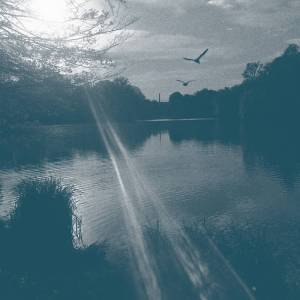 Brad Rose uses a clever play on words in The Sound Leaves, which began as an installation and exhibition. The compositions use the sound of leaves underfoot to explore climate change, specifically the dissolution of once-common sounds (February 6). On the same day, Carlos Giffoni contributes Pendulum, whose guest stars include Lea Bertucci and Mabe Fratti; the tracks traveled around the world and back before settling on their current incarnations. The preview of Western Grey‘s After Hours begins with the sound of children, and concentrates on room resonance and the appeal of deserted spaces (February 13). In complimentary fashion, Andreas Voelk & Scott Monteith‘s And All the Clocks Ran Dry meditates on space, stillness and the dissolution of time (February 20). One week later, Glim offers Tape III, occasionally revisiting the source material of prior releases and repurposing them in new ways (February 27). Cleared presents Lustres as “music for contemplation and quiet reflection,” a phrase that might be used to connect a plethora of Room40 releases (March 6).
 Dedicated to a friend and fellow musician who died too young, KMRU‘s Kin is an immersive album that pushes the sound of the electric guitar into the red, reflecting both beauty and anguish. As a bonus, one of the tracks was co-written with Christian Fennesz (Editions Mego, February 13). Chantal Michele uses her music to explore time dilation and its aftermath. Recorded in winter, All Things Might Spill sounds like a frozen lake, disguising the activity beneath. Clarinet and field recordings widen the palette (Shelter Press, February 20).
Rafael Anton Irisarri‘s Points of Accessibility addresses how “technology shapes perception.” In a world of increasing connectivity, are humans drawing further apart? The music responds is manners both melancholic and dramatic, scoring the imperceptible divide (Black Knoll Editions, February 6). Irisarri also provides mastering for Leo Wolf‘s Veiled in Light, which delves into religion and spirituality, concentrating on the cyclical nature of existence. The tracks begin with a multiplicity of samples, processed into new forms like energy released and re-collected (The Oldest River, January 13). Regan Bowering adds a different voice to the technological conversation on A Technology of Feeling, which proves that machines can convey emotions, even if they cannot (yet) feel them (Infant Tree, January 25).
Recorded in an abandoned textile factory in Narva, Estonia, “a stone’s throw from the Russian border,” Wilson Tanner Smith‘s Perpetual Guest is a commentary on history, borders and time. Played on a restored harmonium, the music seems fragile and bold at the same time. The closing track was meant to be played to celebrate the Soviet capture of Finland, which never occurred (Sawyer Editions, January 16). A year ago this month, California began to burn. Ian Wellman was there when the fires began, rushing around with field recording equipment, gathering the sounds of the scene, not knowing how relevant they would be. The fires would eventually burn for the entire month; Particularly Dangerous Situation is the score (Elevator Batch, January 23).
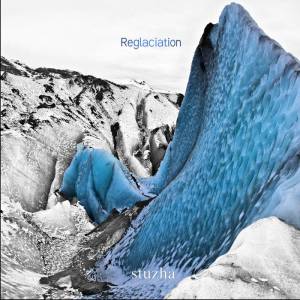 Field recordings join organ and Buchla synthesizer on Erik Klinga‘s Hundred Tongues, which attempts to bridge the gap between human music and avian song, while serving as a potential requiem. The second of a trilogy leaves the ending wide open (thanatosis, January 23). Stuzha returns with Reglaciation, a concept album about the ice melt and the threats posed by climate change. As a bonus, one may also purchase an acrylic painting by the artist; one of these is also the lead image of this article (January 5). Also taking a creative approach to releasing music, xor has paired with filmmakers to produce impressionistic videos for each track on Present Tense. Released every two weeks, these drops have produced great anticipation for this warm album (February 20).
Cold Spring is releasing a pair of intertwined works by 400 Lonely Things on January 9. Why I Went to the Woods is dark and mysterious, a folk horror tale that draws on British psychedelic folk; Creature Comforts is a series of “lullabies for the end of the world,” inspired by the recent United States election, prescient in its fears yet encouraging in its glimmers of hope. Taghelle Nacht is the new split release from Roudi Vagou and Läuten der Seele, splitting the difference between dark ambience and drone. Field recordings, tape loops and opera samples create an immersive experience, like wandering into. a Grimm’s fairy tale (Quindi, February 6).
Richard Allen
 a closer listen
Pingback: ACL 2026 Winter Music Preview ~ Drone – Avant Music News
Pingback: ACL 2026 Winter Music Preview ~ Drone – Avant Music News