
 Introducing an album with a non-album track is a rare and risky thing, but Berlin’s Red Largo pulled it off impressively with their December single Snow. It helps, of course, to release a seasonal-themed track in its season, so one can enjoy it during its time. This languid winter track sets the stage for Hotel Neuf, which will be released on the first day of spring.
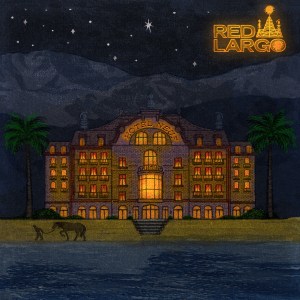
To be fair, the b-side is a radio edit of “The Diplomat,” which is on the album. As the opener, “The Diplomat” places the drums upfront before introducing the also-rare combination of lap steel, bass clarinet and flute. Woodblock even makes an early appearance. But the primary function of both of these tracks is to set a mood. One can see the hotel on the cover, as one approaches by night. All of the rooms seem to be occupied, and everyone seems to be home. What kind of a hotel is this? One might guess that this is a hotel of mysteries, each room sheltering its own secret. The presence of a soldier and a horse trudging right to left only adds to the intrigue. And where are we? The timbre seems to indicate the Middle East, perhaps Istanbul; but the shifting influences muddy the geographical waters. Five notes sound on the clarinet: a warning? A call to arms? Soon after this, the wordless voice of Sonja Kessner makes its first appearance, sounding like a theremin. We learn that she is not only the singer, but the writer and director of the theatrical play that birthed the album.
The sense of theatrics is heard throughout the set, which is at turns wistful, playful and dramatic. One yearns to know what is unfolding onstage or behind the hotel windows; the music affords the listener the chance to be a sonic voyeur. The adventurous interplay of “In the Casino” suggests espionage, double-crosses, and intrigue. This is also one of the tracks to feature Matti Bye, whose involvement in theatre, dance, film and TV enhances the feeling that one has been plunged deep into an unfolding story. As Kessner resurfaces on “The Baroness,” one wonders if she is voicing an important character; at the very end, the tempo of the drums increases as their volume decreases. A music box takes over, creating a pleasing dynamic contrast by rising to the fore.
Pedal steel shines in “The Reception,” lending the track a western feeling, enhanced by the bass. The same holds true for the cinematic and clearly western “Soellenthin, Texas.” The images the listener may conjure are many; in one sense, it is just as well that one is not privy to the plot, as it might restrict the imagination. The slow, peaceful “Trip to the Valley” closes the narrative, while leaving the ending wide open; what happens when our characters arrive in the valley? Is this where they discover the hotel? What is happening in Room 205, Hotel 9? (Richard Allen)
 a closer listen