
 Drone can be a deceptive genre. Listen on the surface, and one may hear only darkness; delve beneath, and one may encounter light. The dichotomy is especially apparent in the dark ambient end of the field, where labels such as Cold Spring, Cryo Chamber and Cyclic Law (all surprisingly starting with the same letter) make their home.
And yet, even more so in recent years, the genre has expanded to include tonal works on organ and strings, often recorded in cathedrals, whose reverberations enhance the depth and extend the decay. Each end of the spectrum embraces spiritual undertones without overt religion. Whether one perceives these as light or darkness is a completely subjective experience.
 Ben Glas asks the question, “music* *?” on the first of Room40‘s spring releases. The question serves as a fitting overture, especially when it comes to drone. Are patterns – intentional or unintentional, generated or composed, invisible or perceived – music? We think they are; otherwise this genre might not exist. By asking questions about the border between music and sound, Glas opens a valuable discussion (March 20). Till Hebrecht & Zamoun team up for Warp Slow, “an exploration of horizontal music,” furthering the theme (March 27). Carl Stone & Asuna continue the discussion on Imu Plastos, which incorporates the manipulated and layered sound of 100 toys (April 10). On the 50th anniversary of Annea Lockwood‘s World Rhythms, the project is revisited, remastered and reimagined, and is now released with a 36-page book. Technically it’s not drone, but field recording, but we like to keep our Room40 releases together (April 17). The “music” question is extended on Stephen Vitiello and Edwin Torres‘ parallel infinites, which asks when syllables become words and words become songs (April 24). Gabriella Smart introduces listeners to the term Parasymbiosis, asking if two separate organisms can share a living space. The parable can be applied to many situations, but Smart concentrates on the earth and the universe as a whole (May 1). Merzbow contributes the season’s loudest, densest release in TripleAkuma, circling the discussion back to Glas. Room40 spring slate is rounded out by reissues of Akira Kosemura‘s Polaroid Piano (April 3) and Celer‘s Poulaine (April 24).
 In Kali Malone + Leila Bordreuil‘s candlelight sessions at Switzerland’s Temple of La Tour-de-Peilz, organ and cello mingle with church bells and passers-by, making Music for Intersecting Planes a three-dimensional experience. The reverberations can be felt even at home as the spaces between the notes expand (Ideologic Organ, March 20). Malone also appears on XKatedral Anthology Series III along with Maria W Horn, Stephen O’Malley and others, coaxing sounds from the organ it might otherwise be reluctant to share (XKatedral, April 10). Jerome Bouve and Delphine Dora join forces on Vents d’aether, a set of live improvisations on organ and harmonium. Recorded in various churches of the Val de Saire, the album operates as a tour of spiritual sound (Hallow Ground, April 11). In similar fashion, Linnea Talp recorded Variations for Light Waves on pipe organs across Sweden, concentrating on “breath and hum,” inviting guests to contribute segments of contrabass clarinet and trombone. In one piece, she nearly asphyxiates the organ, but no pipes were harmed (thanatosis, April 10).
 Ukrainian composer Danya Pilchen uses algorithms to control four organs on Paper Braids, pairing their sounds with feedback from a quartet of microphones. The album is out March 27 on Moving Furniture. The same day, the label releases Orphax‘s Continuation, a purple study of layer and tone. Zosha Warpeha recalls playing Hardanger d’amore in a mausoleum; her entire career has developed from this experience. I grow accustomed to the dark was recorded at ISSUE Project Room in Brooklyn, where the lighting may be better but the experience of shadows remains. When her pure voice emerges, it is an expression of acclamation and triumph (Outside Time, March 27). Alex Zhang Hungtat‘s Dras, recorded in Montreal’s St. Joseph Oratory, is darker and more mysterious, suggesting the sounds between or behind the sounds that are perceived (Shelter Press, April 10). Loula Yorke shifts genres on Salyx, performing a tribute to a local weeping willow tree. Clarinetist Charlotte Jolly joins Yorke for this excursion, offered in a special edition featuring personalized Polaroids (Truxalis, April 3).
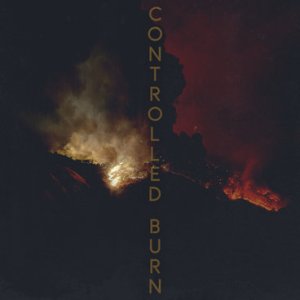 Lost Tribe Sound is back! The label has just announced its newest series, Moss and Melee, collecting preview tracks under the banners Old Growth and Controlled Burn. The spring CDs come from Corrado Maria De Santis, Yoal, Rafa Ramos Sania, Daniël Jolan and Seabuckthorn, with others to follow in the fall, when a third bundle will also be revealed. These will also be the label’s first physical releases in two years; it’s great to have them back! The first three are already up for pre-order, set for May 1, 8 and 15. Corrado Maria De Santis’ Threshold of Light tackles the space between night and first light; Yoal’s Gloaming exposes fragile vocals against a gentle backdrop; and Rafa Ramos Sania’s A Broadcast of Your Silence winds and turns, as field recordings wrap around a double bass.
Cicadas create a natural drone, an effect that inspired Robert Thurman to create Cicadas: Broods XIX and XIII. Two centuries had passed since these broods emerged at the same time. Thurman’s tones act as individual insects, exploring the nature of group dynamics (April 15). It would be hard to extract the field recordings, lap steel and synth from Haxa, but trust us, they are all in there, and Andrew Weathers‘ long pieces are dense in power (Variable Recordings, April 3). Amp‘s Isotropic Beacons collects two singles plus a Bandcamp exclusive and gathers them in one place, especially convenient for new fans (Ampbase, May 1). What begins as chamber music ends up as drone on “Guitar2,” the lead single from Zachary Mezzo‘s Home Movies, a split-genre release that should attract a wide variety of listeners (April 10).
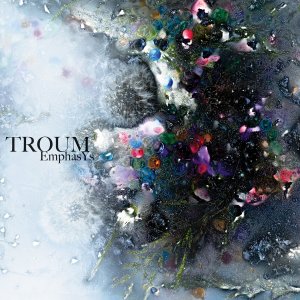 zoviet*france returns with a box set, exhibition and concert at an unrevealed location; The Gate Is Open celebrates 40 years of tape manipulation, collage and soundscape from a seminal band. Act now for tickets and directions; the gate may be open, but you’ll need to know how to find it (Xevarion Institute, March 20)! After 30 years and 30+ albums, TROUM is still going strong as well. EmphasYs has been gestating for a decade and is finally ready to be unveiled. A study of color and texture, the album ebbs and flows and occasionally roars (Cyclic Law/Transgredient, April 24). The album is released concurrently with a new version of XIBIPIIO – In and Out of Experience, TROUM’s 2017 collaboration with raison d’être, now with two bonus tracks.
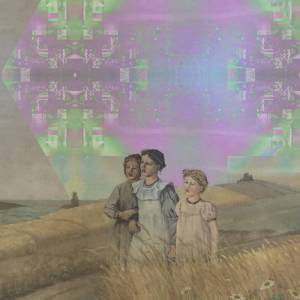 Read the title carefully: it’s Florida, man, not Florida Man (the name of a Cigar City IPA). John the Silent‘s album was recorded after Hurricane Ida, and recalls the destruction and despair with tongue firmly in cheek (Somewherecold, March 20). Dark ambience meets Appalachian drone on Ritual Fever, from the collaborative duo Water Is the Sun (Drekka/Timber Rattle). A smattering of vocals echoes across the sonic field like wind on a prairie (March 21).
Vanity Productions‘ The Vanity Project, inspired by Rauschenberg’s “Hoarfrost” textile works, transfers these creations to sound. Various artists contribute snippets to the collage, and the final track features Merzbow (Northern Electronics, April 10). The wind-driven, lo-fi Thresholds features mangled guitar, distorted electronics, and an appearance by Thor Harris; the brainchild of Andrew Anderson is sure to disquiet (Elevator Bath, April 17). Domiziano Maselli‘s Garden of Eden is packed with contorted electronics, enhanced by double bass and sonically shaped by Ben Frost. One of the season’s darkest albums, it is also one of the most expressive, rife with dynamic contrast (Torto Editions, April 17). But for sheer horror, one must turn to JOHN 3:16 for The Beast, which delves into occult and mystical themes and seems a reflection of the times (Alrealon Musique, June 6).
Richard Allen
 a closer listen
Pingback: A Closer Listen Reviews – Avant Music News