
 All winter we were waiting for the electronic scene to burst, and now it has, with an abundance of offerings prepared to fill headphones and pack floors. Not that winter was entirely quiet, as evidenced by stellar sets from Craven Faults, Placid Angles and Nathan Fake; but the beats were more reticent than normal, as if frozen in place.
There’s great variety here as well, from Tunisian beats to Moroccan moods to Cambodian martial arts music. An 8-piece Swedish collective makes an appearance; a Japanese auteur returns. More than anything, this music implies movement after many months still; even if one can’t go to the club, these albums are guaranteed to get one off the couch.
 Every equinox and solstice, Ceremony of Seasons pairs a new wine with an album from an Asheville, North Carolina artist. Crocus is one of the imprint’s most diverse offerings yet, apparent in the opening minutes, as hyperactive glitch electronics give way to jazz piano, imitating the way a new season arrives: not in a straight line, but in stops and starts. We’re also looking forward to the wine, made with saffron (which comes from crocuses!). The Walker Ferrell tape is released on March 20.
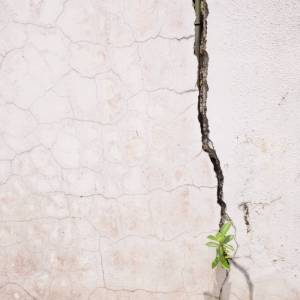
Sajge‘s Forming is very much an album of spring, from the cover image of a green shoot emerging from a concrete crack to titles such as “The Roots Beneath.” Healthy servings of jazz and ambience are sprinkled among the breakbeats (March 20). One can’t get more springlike than Salamanda‘s Basil, which meditates on a day in the plant’s life and is published by Music to Watch Seeds Grow By. Those who enjoy this release should check out the young imprint’s other releases to date (April 16).
 Interstate duo Fields Ohio is famous for their special blend of retro influences and. modern production. A Ghostly Band of Doubts draws from four decades of genres, from trip-hop to jungle, and even throws in a ukulele for good measure (March 20). Bristol duo Pume Orenge makes their debut with Angel by Milo, which combines tape loops, gentle electronics and an occasional breakbeat. Billed as “spectral electronica,” the album recalls the last Bristol era while proposing another (Odda, March 27).
Entidad Animada offers “environmental music” on Pequeño clima doméstico while blurring the lines between ambient and electronic. To this Buenos Aires producer, mood is key (Umor Rex, March 20). Brian Foote and Paul Dickow join forces under the banner Foote/Dickow on High Cube, whose art is reminiscent of the Winter Olympics and whose sound is confident and laid back. The two friends have successfully transferred their relationship to tape (Geographic North, March 27). Alighted‘s Refuge is cool, calm and collected, yielding an early summer vibe, including a brief appearance of chanting children. The EP’s title reflects Buddhist teachings, and includes an Ian Ellison remix (Garden Broom, March 20). Froid Dub offers just what is expected on Positive and Natural, keeping the beats in the 85bpm range while exuding a smoky feel (DELODIO, April 3). Kreidler slows it down for Schemes, with an added dimension of field recording integral to the album. The veteran trio hasn’t lost a step (Bureau B, May 15). Drum and synth duo OD Bongo slow it way down on “monsieur fils,” the first single from Bongoville. Get ready to lurch and sway (Carton, April 17).
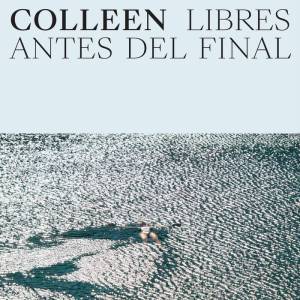 Colleen‘s Libres antes del final was announced so long ago we listed it in our Winter Music Preview, but it’s finally out this week! The ocean blue vinyl is a stand-in for the theme; Cécile Schott was afraid of the water for thirty years before taking the plunge and relearning how to swim. The modular synth imitates the bubbles and waves; the LP is an ode to courage, recovery and the desire to start again (Thrill Jockey, March 20). Microtonal idiophones meet modular synth on METLASR, a rhythmic, improvised offering from Tyler Friedman. The set draws from multiple influences, including gamelan and jazz, with an ear to complexity and subtle shifts (Radicant Editions, March 27). A classic film continues to inspire on SOLARIS, as Brady Matteson offers a 44-minute piece meant to be digested as a whole. While listening, one may feel like one is breaking the space-time continuum (May 1). Brendan Gleeson‘s synth pieces are meant to reflect an “elevated place” or highland; the title may also be read in a spiritual sense (April 10).
 Emil Mark‘s Melletmid is a happy EP, rife with color and tone. The rare album recorded on school room practice organ, the end product should encourage schoolchildren everywhere not to give up on their dreams (Tonal Union, March 27). Dim Grow is a bouncy release from abentis that sounds a lot like early summer. We especially dig the mallet work on “Eachpath” (2++, April 17). Annastasia Kristensen pays tribute to the natural world on Bestiarium Sombre in a way we haven’t heard since Dominik Euhlberg. Magpies, mustangs, ferrets, whales and more each receive their due (Intercept, May 8). Le Millipede‘s Radical Hope is also pleasant and fun, decorated by organic instrumentation, which plays with the electronics like talented children. Ernst Friedrich Schumacher 1973 is the premiere single (Radical Hope, April 30). While Graham Reynolds advertises dungeon synth on The Portcullis, the lead single is actually sweet and upbeat. The album traces the artist’s ancestral journey, which he traces all the way back to the Norman Invasion (Fire Records, May 15). Of all the releases on our list, shen ao‘s cyberspace sounds the most like a video game; specifically, a long lost, recently discovered Atari soundtrack (Kit, April 3).
 We’re used to hearing Loraine James shift back and forth from instrumental to vocal; Detached from the Rest of You is one of the artist’s more vocal efforts, but with the same exquisite sound design (Hyperdub, May 8). Alexander IV‘s Alchemist offers a mix of vocal and instrumental pieces, showcasing a number of guest artists. The music incorporates jazz, soul and hip-hop rhythms, and sounds remarkably like a NYC album given the fact that the artist hails from the Netherlands (Sonar Kollektiv, March 27).
The cover of Invictus Hi-Fi‘s EP The Hacienda Must Be Destroyed screams acid and happy house, but the music is downtempo and mid-tempo, adding hints of house (April 15). Roman duo Mahatmos (no relation to Matmos) makes their debut on Aurora Spectralis, exuding a relaxed vibe that should put listeners at ease (Superonda, April 24). What would The Knife be without vocals? Find out on Olaf Dreijer‘s Loud Bloom, which is mostly instrumental; check out early single “Iris” for a taste (dh2, May 8). Taroug‘s Chott is another instrumental-vocal blend, a tribute to the artist’s Tunisian heritage. The striking video for “Cicada,” seen below, makes a marvelous introduction (Denovali, March 27).
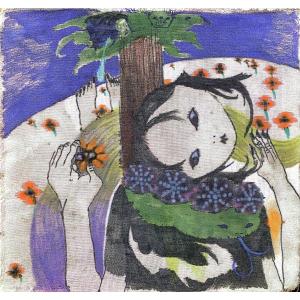 Eight piece collectives are rare in dance music, but this is the case with Gothenburg’s Fauna, who make the most of their diverse talents on Taiga. One can expect not only drums, but flute, saz and jaw harp: an exotic mixture that creates an organic trance. Bland träden (Among Trees) is the first single (Glitterbeat, April 10). Rave At Your Fictional Borders also has the feel of an international ensemble; recorded in Morocco, Analogue Nomadism offers a caravan of sounds that gains nuance and depth as travelers join (meakusma, April 3). Heith & Tarawangsawelas team up for the intense Duori, which melds Sudanese and European rhythms with a sense of intrigue (Stroom, April 30). Rosa Pistola combines Andean rhythms with Nahuatl poetry on Incorregible, a deep tribal album that honors the heritage of real tribes (Eck Echo, April 10).
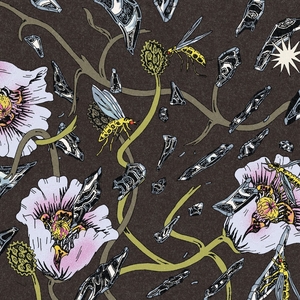 Janus Rasmussen is known as half of Kiasmos, but Inert sees the producer stepping out on his own. One of the last albums in our preview to be released, the LP is released on the cusp of summer (Embassy One, June 19). Max Cooper returns with Feeling Is Structure, the second album this season to address Brutalist architecture. We’re excited about the album, but even more so about the inevitable videos (Mesh, May 8). MARINI‘s Reverie is warm and welcoming, comfortable with a shrinking of horns and a hint of hip-hop. The album cover promises doorways, and delivers (Egoplanet, April 17).
Twenty years is a long time to wait between a debut and a follow-up; any fans of Glissando 70 had likely abandoned all hope. Out of nowhere, the duo has returned with a series of tracks rescued, revisited, remixed and new. G70 2: Bones of Dundasa yields unusual time signatures, hints of math rock, and a host of collaborators (Constellation, May 1). Pye Corner Audio, Kaitlyn Aurelia Smith and more remix tracks from Simon Goff‘s Spark Like Living Mothers on Sparks, pushing the project into areas previously unheard. The EP suggests that a composition may continue to change as it is passed from artist to artist (Grand Chess, April 17).
 The very trippy Cloud Machines is partially inspired by the comic art of Moebius, into which the duo of Berndt / Schmidt breathe aural life. This high-profile collaboration yields fascinating results (Thrill Jockey, June 11). Seefeel returns on Warp with what they are calling a dub album, replete with guitar loops and filtered vocals. Sol.Hz is out April 30.
Squarepusher is back with Kammerkonzert, a blend of organic and electronic percussion, only the latest expression of a multi-decade career (Warp, April 10). n5MD’s Mike Cadoo returns as Dryft with Particle, which continues to explore the boundary between ambient and IDM. The beats may be hard, but the mood is warm (March 20). Also on n5MD, Yulyseas offers a blend of ambience, drone and electronics on Nothing Under Heaven (May 15). Vladislav Delay is now a quintet, as heard on vd5. The album mingles electronics with acoustic jazz, a further extension of the artist’s timbre (We Jazz, May 8). Skittering rhythms appear on Niels Owens‘ Never Again; the artist combats the feeling of “slow nights” with rapid beats (Off Corner, April 17). Russell Haswell may have been recording for 25 years, but his statement “Science fiction is now!” still holds true. LET IT GO is as futuristic as ever, a sign that the artist has always been ahead of the times (Editions Mego, April 30). Manual is back with his first full-length in 16 years; True Bypass holds a little of the old retro sound, proving that everything old is new again (Darla, April 17).
Solid drum ‘n’ bass graces Karkossyn‘s Undergrowth, along with a Pessimist remix; it’s good to hear the classic style done well (Erosion, March 20). Is it dub, dub ‘n’ bass or another unforeseen blend? However one categorizes Chewlie‘s music, Seeking Pattern‘s mood is mysterious and dark, making the April 1 release date seem even more curious (Maloca, April 1). Jungle rhythms permeate Blumenfantasie, from DJ Catherine Backhouse AKA Xylitol. Even the flowers are dancing (Planet Mu, March 20).
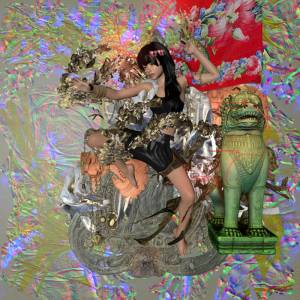 Meitei returns to the Kofū trilogy on AGATE following a left turn into ambience on last year’s Sen’nyū. The new album contains remodeled pieces from across the triology, plus a previously unreleased track (Kitchen, April 17). The wild cover of NEO GEODESIA‘s Oknha Stamina is an apt reflection of the rapid-fire music within. The album is a tribute to Cambodian martial arts music that speaks against genocide and supports women’s rights. That’s a lot for dance music to carry, but the album does so with aplomb (Chinabot, April 14). Yu Su makes an intriguing sort of dance music that uses ambience, dub and snippets of voice; she calls it “in-betweener music.” Seefeel guests on one track of Foundry, unveiled May 1 on Short Span. the FLV. addresses a slice of Taiwanese history on Land of Siesta 午睡島, in particular the background of the Favorlang people. Key to the narrative: a sort of “tropical neurasthenia” felt by early colonizers, which we would call “just desserts” (PFR, March 27). Northern Irish composer Hannah Peel teams up with Chinese percussionist Beibei Wang for a vibrant cross-cultural excursion. The Endless Dance teems with life and is out May 22 on Real World. Van Sur Les investigates his Ingrain roots on Ingrian Tape. Less than 100 native speakers remain in the world, and the artist uses archival recordings and an array of vocalists to reflect the language as it “gradually dissolves into Russian,” leaving but an imprint of its original glory (May 15).
 Polyrhythms proliferate on upsammy & Valentina Magaletti‘s percussive Seismo, which highlights the power of rhythm while upending expectations. The stereo effects are particularly impressive, creating a 3D effect (PAN, April 10). Polyrhythmic music shares the stage with generative video on ECOLOGIES, a multi-media offering from How to See Know and Fall. The vinyl can also be ordered with a zine, completing the triptych (Adhyaropa, April 3). 13 hours of polyrhythmic recording are distilled to the length of an album on B. Chamber (Stratum A), from B. Close. If you like this, there’s plenty more to hear (Impatience, March 20). The new duo C.ling makes a great first impression on Vault With Holes, blending organic and electronic instrumentation with intricate sound design. A light 80s influence is also apparent (Oath, March 20). Beautiful. breakbeats and a bit of dub can be heard on Found Sound, the solo debut of Pugilist. Come for the percussion, stay for the grooves (Ruff Kutz, March 27). Skittering percussion marks Mononoke‘s modular as a bold excursion; the beats never land quite where they are expected, making the album an intriguing listen (tunnel.visions, March 20). Live drums meet electronics on SloGlo‘s In Another Language, preceded by the single “Tapas,” inventing its own language of echo and splice (Flood Music, May 1).
 Looking for a breakup album? Nene H has you covered. Second Skin was born in the aftermath of a breakup, and addresses liberation, transformation and reemergence. The music offers an invitation to catharsis; the beginning of “Cradle” may even remind listeners of Nitzer Ebb (UMAY, March 27). Society of the Spectacle is an influential book by Guy Debord, and now it finally has its score. Surrounding quotes from the book with wild industrial rhythms, Ancient Methods paints a picture of an author who was ahead of his time, and whose commentary is all the more relevant today (April 3). bod kin‘s self-titled release is distorted, loud and abrasive, with a smattering of vocals; the sound design is intricate and arhythmic, more for the headphones than for the clubs (MFZ, March 27). Lomi/Dornen‘s A Sudden Burst of Noise borders on the industrial, a powerful collection of tracks performed together and apart (Brutalism Germany, March 27).
The incantations of Black women feature strongly on TYGAPAW‘ Together You Gather At Power Applied Worldwide, a continuation of the artist’s “ongoing techno opera opus.” Not to fear, there’s far more techno than opera! (Tresor, May 8). Graham Dunning‘s Quern presents his homemade “Mechanical Techno System” of modified turntables and other instruments, which makes these techno tracks more quirky than usual and is responsible for their lopsided appeal (Jollies, April 2). everything is not yet lost, declares Wallis, her techno-dance album preceded by the single bring colour into my world (ARA, April 3). Rene Wise is “in pursuit of the ultimate loop.” Johnson’s Theme is filmic techno, connected to the UFO series on Dekmantel (April 17).
 To be honest, Loud Ambient 2 is not ambient, even if Black Dog insists that it is. Instead, the set falls between house and techno, and was designed for the dance floor (Dust Science, April 3). Lord of the Isles returns with the house-inflected Venus Flux EP, which pulses with club energy but at first listen seems to be lacking the spoken word poetry of prior efforts (Far Blue, April 10). Kavalcade tackles the stages of life on the SIGNAL EP, with four tracks inspired by birth, the teenaged years, middle age and death (Machine, May 1). Billed as “a German man in London,” Dante offers the upbeat New Places, celebrating the joy of travel and the connections made by club culture, no matter the location (April 10). Aārp‘s Kadıköy EP is short, sweet and effervescent, a blend of techno and trance that sounds like a brand new morning – even when played in the middle of the night (InFiné Éditions, April 17). Millsart‘s Whatever the Case EP is punchy and fun, leaving one question: where are you going with that cow? (Axis, April 3).
 Terrain‘s Scatter EP lands on the darker, slower end of techno, making the listening experience a nighttime excursion. Beats and bass lurk around every corner (Livity Sound, April 10). Bass also features strongly on Millia‘s Sprawll EP, which justifies its title over four hypnotic tracks (Future Times, April 3). Shinichi Atobe introduces Silent Way, which of course is not silent, but suggests quiet spaces between the beats (Plastic & Sounds, March 27). The Tendrils 12″ is filled with techno rhythms and futuristic bass, the brainchild of Yraki and the first-ever EP for Lonon’s Goodness imprint (March 20). Deep bass populates Polygonia‘s Ceaseless Motion, which suggests an all-night dance. The artist otherwise known as Lindsey Wang has her finger on the pulse of the future club (Timedance, March 27). Aneosis‘ Idios Cosmos comes at the listener hard, and never lets up; it’s a pure expression of techno at its core (Cyphon Recordings, March 20). AVEM makes music perfect for clubbing or for driving; the propulsive rhythms of Sidelines match the mile markers on the side of the road (Laut & Luise, March 23).
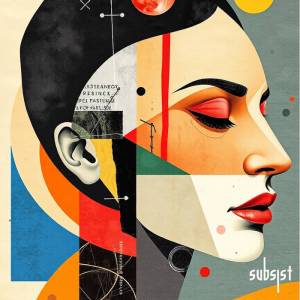 Spanish label Subsist & Faith Disciplines continues to be on a tear this year, with multiple releases in the works and very cool artwork. Already announced for spring: Autonoe‘s Masked Ball, an album informed by classic Detroit techno (April 3); MarekSPolzki‘s Zero Emotional Protoco, a hypnotic set that may produce an emotional reaction despite its title (April 23); Crime as Service‘s Modern Techno Mechanics, a sci-fi excursion with an ambient intro and outro (May 14); and Pont‘s Existence Gateway, whose aliens might not be friendly, but sure know how to dance (May 27).
“The Chase” is the name of a Giorgio Moroder track from back in the day; Blue Hour has chosen a track of the same name as the first single from Selva, and it’s equally propulsive, although swifter and much more aggressive, as one might expect from the techno producer (Blue Hour Music, April 10). We’re not sure that “warehouse destroying” is a good description, as it may prevent agencies from booking JK Flesh Monrella; Shouting the Odds drops May 29 on GIVE/TAKE. Decka‘s When Time Stopped. implies that the clocks are no longer moving, but these propulsive techno tracks are more likely to make one lose track of time (Semantica, May 1). mother (Michelle Roginsky) presents a unique concept on A Simple Procedure, “weaving medical anxieties” into techno frameworks. The end result sounds healthy to us (Delusional, April 3).
The next installment of DJ Kicks comes from Peruvian DJ Sofia Kortesis, who pays homage to Jon Hopkins and Aphex Twin before plunging into a joyful set of floor fillers. The set drops March 27 on !K7. We’d call fabric presents Red Axes competition, save for the fact that there’s no need to compete; why not get them both? Red Axes’ throwback cut comes from A Guy Called Gerald, while the surprise cut of the mix is an edit of The Fall’s “Totally Wired” (March 20).
Richard Allen
 a closer listen
Really appreciate the feature. It means a lot to see the project resonate here! 🌲
Pingback: A Closer Listen Reviews – Avant Music News