
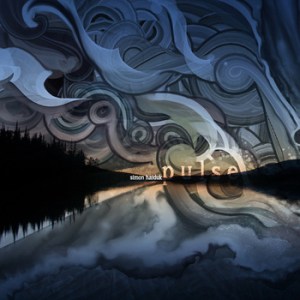
 Pulse is intended to look like it sounds and sound like it looks. The album cover features soft lines at the bottom, clear lines at the top, off-center curves, a logo like a rising sun and a series of shadowed trees. In like fashion, audio-visual artist Simon Haiduk records music with a soft undercurrent, topped by crispness, smooth sonic lines and a sense of emotional emergence, accompanied by hints of shade.
Pulse begins with only smoothness, which for a while obscures Haiduk’s talent; for the first few tracks, the album hides out in the territory of The American Dollar before presenting its deeper side. Just when the album seems to be entering chill-out mode, its energy level begins to pick up. “Balero” provides the first hints of caffeination as synths swirl around a drum pattern that seems desperate to shed its leash. But the choral opening of “Tuvan Call” is the gilded invitation. The throat singing adds a world music element, expanding the album’s horizon to the global. Horn sounds contribute a sense of majesty to the closing minutes. The more aggressive “Epoch” quickens the pace, then breaks down into an unusual bridge, incorporating what sounds like rusted bells and singing bowls. “Forgiveness” sounds like a Baraka outtake, and would make a pleasing background for a global-themed video. The choral elements and birdsong would lend themselves particularly well to such a venture.
The end result is a pleasing album that sneaks in the door without announcing itself, then makes friends with everyone at the party. Its only drawback may be that it never veers from the cordial. Pulse suggests that it aligns itself with universal brotherhood, but its love seems a bit rose-tinted. There’s nothing wrong with this, but a deeper impact can often be made when one incorporates the knowledge of the pain that one is either addressing or attempting to transcend. (Richard Allen)
 a closer listen