
Artwork by Maryia Primachenko
To celebrate the summer solstice, we travel to the Carpathians with Sun Halø, before heading to Kyiv to discuss the ethics of triggering sounds with Ivan Skoryna while Oleksandr Hladun illustrates his sonic diary and new releases. Down in Ternopil, Motoblok discusses separation, Morwan sends us his interview from Berlin, while back in Kyiv BlazerJacket produce angrier music and Eternal Wanderer responds to the destruction of the Nova Kakhovka dam. To close our round of interviews, JANE explains what it means to put on a festival during wartime.
Our featured albums includes new releases by Super Inter, Kadiristy, Hidden Element, Dronny Darko & Red Fog, ногируки, brainhack_musicbox, Re:drum, 58918012, Bez Gruntu and Vlad Suppish.
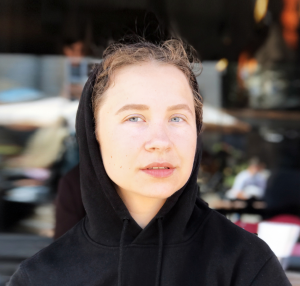
Maryana Klochko
In our viewing room, we have the latest documentary from Suspilne about war crimes in Bucha, Bucha: Crew 111.
We also feature live sets from the Festival of New Music in Bonn with Maxim Kolomiiets and Serhii Radzetskyi, Yana Shliabanska, and Oleh Shpudeiko (Heinali), as well as piano music of the period of the Ukrainian-Russian war from Valentin Silvestrov. Moreover, we look at brainhack_musicbox‘s tour of the Netherlands and Rudnic Ore‘s live set at Kuyalnik estuary.
Plus we have new clips from Otoy, Onuka, and Go_A and trailers of 20 Days In Mariupol by Mstyslav Chernov, winner of the DOCU/Ukraine National Feature-Length Competition, Fragile Memory, by Igor Ivanko who received a special distinction at the same competition and Rule of Two Walls by David Gutnik, recipient of a special prize at the Tribeca Film Festival.
And to open proceedings we have the pleasure of talking film scoring with Mykyta Moiseiev and Maryana Klochko on our monthly UFN podcast, followed by our customary Spotify playlist with featured artists and new releases.
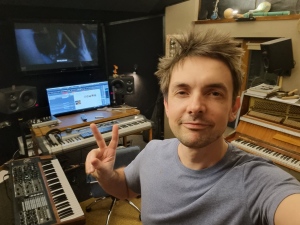
Mykyta Moiseiev
TRACKLIST
Mykyta Moiseiev featuring Maryana Klochko – “Intro” (from Falling OST)
Maryana Klochko – “оченька мої чорні”
Mykyta Moiseiev – “Твій дім”
Mykyta Moiseiev – “One Day in Ukraine OST trailer”
Mykyta Moiseiev – “I’ve learned something” (from Falling OST)
Mykyta Moiseiev featuring Maryana Klochko – “Coffee” (from Falling OST)
Maryana Klochko – “My Girl” (from Stop-Zemlia OST)
Mykyta Moiseiev – “Didukh” (from Ivan’s Land OST)
Mykyta Moiseiev – “Чорнобаївка (Я уб’юсь тєбє назло)”
Maryana Klotchko – “Kvity”
Mykyta Moiseiev – “Intro” Rejected (from Falling OST)
JUNE 15, 2023 – BEREZNE
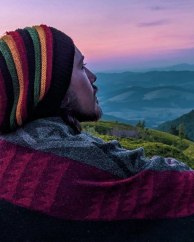
Hello, my name is Petro, better known by the nickname Sun Halø. All my conscious life, I was attracted by something atypical, abstract, and even whimsical, which goes beyond ordinary understanding. The layered experience of the past shaped my vision and sense of the present. This influenced the transformation of the sound of my music.
I combine acoustic forms with cosmic synthesised overtones, embody and weave this into a cosmic pattern in the form of sound. In terms of genre, this music is close to Tribal House and Ambient.
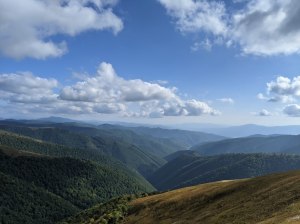 Has the full-scale invasion changed your approach and the way you think about music and sound and has it had an impact on your setup and playlist?
Looking back on the scary morning of the full-scale invasione, I realise how much we have gone through and how much we have grown stronger over the past year. Time flies very quickly. Of course, it affected the mood and perception. In the first few weeks, I didn’t want to listen to absolutely anything, no music, but later everything was restored. I wanted to listen to a lot of the ethnic dark scene, for example Цукров біла смерть or Вежа Хмар, etc. It suited the mood, but there was also hope.
Researching authentic Ukrainian music and watching films like “Shadows of Forgotten Ancestors” by Ukrainian director Parajanov inspired the recording of the mix and the creation of the NFT project around the cultural heritage of western Ukraine. This mix reflects our spirit and essence.
Your most recent album Evfonia combines acoustic and electronic layers and mixes the synthesiser with traditional instruments like the sitar and the djembe. Does the organic undercurrent in your work come from a spiritual drive?
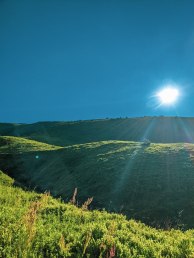 My worldview really influences the construction of my music. I express myself through sound, reflect my emotions and convey experiences. I got to the point where I combine acoustics with electronics, it complements and balances the sound. Makes it more sensual and natural, familiar to us. So yes, my experiences really help shape my music.
The Shipit festival gave me a special impetus. This is a special place in the mountains where hippies, artists, and spiritual explorers gather. The sound of drums, percussion, flutes, didgeridge and other instruments impressed me in time and put me in a certain state of trance. I still remember those impressions. The feeling of returning to your roots, to Mother Earth, total grounding and dissolution in space.
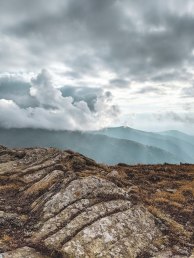 Your work also has a life affirming quality to it, which has not abated even after the full-scale invasion. How did you manage to preserve your positivity?
In addition to all the negative things that Russia has brought to Ukraine, it has also opened a large window of opportunities that will soon become available to us.
My state is developing its cultural and traditional identity now more than ever. Our culture is truly authentic and original, and it is a cause for joy, it makes you want to explore it, it is pleasant to perceive.
The war opened the eyes of many to the situation and uprooted the Russian way of thinking imposed over the years, a remnant of the mothballed Soviet system… I see the ambition of my country and believe in victory. This is inspiring!
Where are you now and have you been displaced by the full-scale invasion of February 24, 2022?
On February 24, I woke up in my hometown and from that moment I still live here. Berezne is located in the western part of Ukraine, it is the Rivne region. It is incredibly quiet and calm, safe, compared to other areas. It seems that Zen can be caught among the richness of the forest. At the beginning of the war, I actively volunteered and helped friends move from dangerous regions to the west of the country.
 How did your life change over the course of the past year, both from a personal and a professional point of view?
Whatever happens to us, it helps us grow and become better. Of course, my life has changed, my outlook has changed. Life goes on, and with it the flow that it carries with it.
Most of my time, I was involved in the development of the music mixtape project – Mangata Aquivera – a cell of music diggers, collectors and enthusiasts. For me, mixing music is a kind of meditation, immersion in a separate world of sounds where magical diffusion takes place, forming the overall composition.
I also released an album – Evfonia. I’m proud of it, I really like it, and I hear a lot of positive feedback. It has both hope and sensitivity as well as confusion and tension. It smoothly flows from one mood to another. They tell me that I made a cool album. Of course it inspires and motivates, it puts a genuine smile on my face)
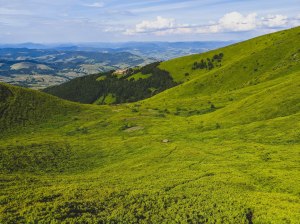 Are there any Ukrainian releases from the past year that you feel have helped you to make sense of current events and, conversely, are there any specific tracks or albums that you now find triggering because they might be associated with specific difficult times or events?
There is something! I don’t know how much it has to do with the events, but the аппекс artist’s album Внутрішня Волинь struck a deep chord and made me experience some kind of wild existential journey into the depths. At that moment it was relevant, deep and powerful.
How do you feel about the inclusion of “war sounds” in recent tracks by Ukrainian artists?
We already hear enough of those sounds.
 Do you suffer from burnout and what do you do to unwind? And is there a specific genre of music or a particular artist / album that helps you “switch off” from daily reminders of the war?
Of course, stress is terrible. I watch many of my friends suffer from emotional exhaustion by falling into dopamine traps. Yoga, Chinese tea and mindfulness practices bring harmony to my life. As well as travel, being in nature and listening to natural live sounds.
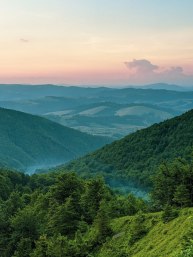
When I want to rest, I listen to natural noise, I don’t listen to music. All music is a remix of silence. I really like our Carpathian Mountains, as well as listening to live, acoustic instruments at musical jams.
What would you say are the biggest misconceptions the West still holds about the full-scale invasion and the worst stereotypes they perpetuate about Ukraine?
At the beginning of the war, the West thought that it was possible to come to an agreement with the aggressor, but nobody believed in Ukraine. And also fear. They were afraid of Russia, but as it turned out, there was nothing to be afraid of. These are all empty words of a sick system and sick people.
 Which book / film / album / song / traditional dish / podcast / blog / artwork / building / meme best captures Ukraine for you?
Book: Shadows of Forgotten Ancestors (film), Kobzar and Signs of Carpathian Magic / Film: films by Parajanov, “The Man with a Movie Camera” / Traditional dish: of course it’s borsch and daruna / The main part of your art is known only to the intelligence of Ukraine, this work right now is written) / Building: hut mazanka
Who should I interview next and what should I be asking them?
I think it will be interesting for you to talk with аппекс, MAKA and someone from Mangata Aquivera, creative, active people.
JUNE 19, 2023 – KYIV
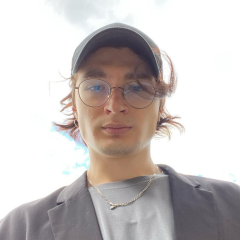
I write music as an experimental music producer, I also work as a journalist, author and art critic. Now I am trying to focus on my music and my yet to happen career.
How did you get into music in the first place?
I don’t have a beautiful story about childhood and so on, and I just downloaded Ableton and I was inspired by avant-guard experimental music of the XX century and I then I discovered also all the other experimental stuff of the later decades and, yeah, I just started doing it.
So you are basically self-taught?
Yeah, exactly. I don’t have any degree or anything, I am literally now just trying to enter university in London, but there are plenty of things to sort out.
So you are planning on coming to London?
It’s a small programme by some Ukrainian company that partners with London UAL (University of Arts London). They like my portfolio but there are plenty of things to sort out for the scholarship as I definitely don’t have much money for education. It’s also a problem to leave the country.
 Fingers crossed. Can I ask you about the full-scale invasion, has it changed your approach and motivation to music and the way you think about sound?
I moved to my Mum’s apartment at the beginning of the invasion and spent lots of time there. I was volunteering and didn’t listen to music for a couple of months.
Has it changed my perspective? It is hard to say. I was trying to implement some political context into my work, and to make some political statements, but to be honest, it doesn’t work that well. People still listen to music for fun and they judge music by some other criteria. I definitely needed to do it, to make a couple of statements about the invasion and Europe’s relationship to russia, but as I see it, people need more of a subjective perspective. So, actually, it did change my perspective, but now I think one should find a balance between making statements and music because judging by social media coverage, if nobody likes your statements for whom have you made them?
 Personally, I do enjoy your music both for content and political statements, so I do think you have achieved that balance.
Yeah, maybe, but if one is talking about one’s own personal experience and putting themselves in the position of the victim, as in “I am so tired of the war, war is bad,” and so on, then people are much more likely to like it and spread it. I think it says something about the nature of art in general or maybe my audience, I don’t know.
How do feel about people who use “war sounds” in the work of many Ukrainian musicians?
I think it’s a natural process. We don’t have any choice but to reflect our reality and it’s understandable that people started using these sounds in their work. Does it have any sense or meaning? I don’t know, it depends on the work and on the style of the artist. Some of these sound can be triggering, which raises questions on whether it is ethical to use these sounds…
 I think it is ethical, it’s a natural process. You reflect. If it comes from people who haven’t experienced it or have left before the invasion and they hype it, then it’s different, but if you are here, why not? And, yeah, it may be triggering like everything else, but you can make a disclaimer.
Also, this question is connected to how people perceive the sounds because many Ukrainians are afraid of these sounds. This is true mostly for those who have experienced some frontline combat, because when you are in Kyiv, or in other big cities that are not shelled that much, you don’t have a choice but get used to it. But yes, it’s an interesting question because we use certain sounds exactly to provoke some emotions, and it’s your choice as an artist if you want to provoke it. I don’t think that everybody who experienced strikes would have PTSD, many wouldn’t.
I think it is ethical, it’s a natural process. You reflect. If it comes from people who haven’t experienced it or have left before the invasion and they hype it, then it’s different, but if you are here, why not? And, yeah, it may be triggering like everything else, but you can make a disclaimer.
Also, this question is connected to how people perceive the sounds because many Ukrainians are afraid of these sounds. This is true mostly for those who have experienced some frontline combat, because when you are in Kyiv, or in other big cities that are not shelled that much, you don’t have a choice but get used to it. But yes, it’s an interesting question because we use certain sounds exactly to provoke some emotions, and it’s your choice as an artist if you want to provoke it. I don’t think that everybody who experienced strikes would have PTSD, many wouldn’t.
Personally, I have been trying to ignore these sounds for a long time now, and it works because you cannot be scared all the time and to preserve your mental health you should ignore them or do something like more than what I do, like join the army. You either do something about it or you don’t. You cannot stay in fear and in this position of the victim forever.
 How would you say the sonic environment has changed since the full-scale invasion, if at all?
I am from Kyiv, so I guess, not much. I was asked this question before and I think this is a question for people who live in Southern parts of Ukraine. Here in Kyiv it was scary for the first couple of months, but now one should overcome it somehow. Personally, I just ignore the shelling. I mean, Kyiv is not so heavily shelled now, I mostly hear the work of anti-aircraft systems, and it’s very unpleasant to be woken up in the middle of the night by it, but if I go to bed early, I sleep pretty well. So, basically, it’s just like our regular sonic environment with some fragments of these new sounds.
Yesterday I actually listened to a video / audio work of a friend of mine, Ihor Babiev. He made a video from Bakmhut, and I guess that’s the place where the sonic environment has changed, and it’s mostly silence because that’s the scariest thing, I guess. In Kyiv, it was silent for a couple of months, but then as it’s the capital it is also one of the most protected cities, so it’s fine here. So yeah, if you’re asking how war changes the sonic environment, I guess the key event is silence which is coupled with everyday shelling.
 At the same time, when you made your track “Midnight Nocturne”, you talk about your longing for midnight walks as something you are no longer able to experience, so I suppose the curfew has introduced a further layer of silence. I don’t know, is the city completely still and silent during curfew hours?
Yeah, kinda. I mean it’s more than a year and I really got used to it. I moved from the left bank of Kyiv to the city centre recently and I guess here the nights before the curfew were much more noisy and on the left bank which is just a regular area with not many cafés, it is silent, and I do enjoy silence at night. It’s a different type of silence, you know.
You were born and raised in Kyiv, has your relationship to the city changed in terms of personal landmark as you were volunteering and digging trenches, which is something you used in your field recording work as well?
 I guess my war experience for half a year is connected to my home district. I moved to my Mum’s at the beginning of the invasion and that area is super stuffed with lots of memories. Now I will write some soundtracks for audio works and also… – I have so many vague plans and cannot be decisive about anything, but I would like to make personal audio walks from my home district because I spent most of my life there and on top of all the layers of memories there are additional memories connected to my volunteering work. That was trenches… I live on the left bank, my house is a couple of… I don’t know, maybe 5-7 Kms, from the end of the city and at the time the russians were in the south of Kyiv behind the neighbouring city and they were pretty close, so we were digging trenches on the outskirts of the city in the park, so I guess that was therapeutic work, ‘cause one doesn’t watch the news, and doesn’t think about anything.
We had lots of plans with my Mum about moving from the left bank if the situation escalated. There were many rumours that russians might take the left bank or the dam of Kyiv could also be blown up and we tried to imagine what to do in case of different scenarios, but none of that happened.
 It has been a year an a half now since the full-scale invasion, and many have talked about burnout, how do people manage to still volunteer?
Many volunteering organisations have become institutionalised now, so people can now take a volunteering job as a regular job. I actually wanted to find a job in volunteering but I didn’t succeed, every organisation was already full about a year ago. Those on the frontlines are running on adrenaline, I guess.
One of the things that people talk about is also that it is very difficult to plan ahead and think of the future, is that a problem for you as well?
I guess so, yeah. I guess my coping mechanism is to freeze. I am beginning to unfreeze now, but yeah, you have to accept the situation. Lots of possibilities are closed to me now, I cannot leave the country, many businesses went abroad. I guess it’s hard to plan now. I am not good at planning in general, so it’s even harder, I guess.
 In terms of music releases, have you been working on any new material, aside from the track that you’ve just completed for the compilation KYUB: this war which just came out on Picet, and are you planning an album?
Hm… I would like to add about planning I guess I became more indecisive because there are a lot of things that put pressure on me like the new layer of responsibility in terms on deciding what useful things I can do for the army, for volunteering and so on, so yeah, it’s a new sphere of life that brings on a lot of pressure which makes me more indecisive.
About music, that release KYUB: this war was made in the early days of the spring, but we had some delays because of the British organisation that financed it, and now I just have some vague plans of making new music.
I am working on developing a style, I guess, developing some crucial instruments effects of my music, because in general I can do whatever I want and that’s great, but I guess, I should focus on something specific because I have the impression that I am not that consistent. I can make a nocturne one day, and some power electronics banger the next day. I mean, I am working on developing an aesthetic frame, so yeah, no concrete plans.
I have some requests for live sets, one for radio, one for another show, but I don’t have deadlines for that.
How do you feel about playing live?
Always excited. I don’t do it often, but it’s always a joy. I would like to play more but I guess the content is the key – sorry for talking in clichés, but that’s it. I do plan to release the album that I imagined before the war, even before the coronavirus times, in 2020, I actually released as live, all of that material is on my cxemacast live I decided it was better to release it in that form, but still the tracks could be improved, and it could make a great release I guess.
Without going into details and without being too personal, has the full-scale invasion affected your personal relationships?
 Talking about romantic relationship no. I don’t have a story here. The last relationship ended two years ago, before the war.
Of course I sometimes miss my friends because the closest friends of mine emigrated before the invasion and many others are serving in the army. They have weekends in Kyiv, but we cannot hang out together.
Talking about romantic relationship no. I don’t have a story here. The last relationship ended two years ago, before the war.
Of course I sometimes miss my friends because the closest friends of mine emigrated before the invasion and many others are serving in the army. They have weekends in Kyiv, but we cannot hang out together.
How does one deal with separation? Hmm… I don’t know. I just freeze. I don’t let myself feel a lot. Now it’s not the time to be super sad about your friends moving. You can be sad, of course, but I have this idea that you should keep your spirits up. It’s kind the duty of a civilian, if you are not on the frontline, you should stay where you are and just be sane.
Do you use music as therapy are there any particular albums you listen to this effect?
The process of creating is definitely therapeutic. I can get lost in Ableton for a couple of hours and that’s wonderful. I guess I listen to lots of stuff I liked from 2019 just because it’s familiar, it calms me.
Are there any tracks that you can no longer listen to because they might be associated to painful moments?
Yes, but not connected to war, more for personal reasons. I don’t associate anything with the war.
 Are there any new Ukrainian tracks or artists that you have discovered?
I am trying to think of electronic music and I don’t see anything new there. I mean Ukrainian music became and is still becoming much more interesting. I was playing at the festival Na Chas (on time) and it’s strange that this festival appeared only after the war because, there were five stages and all of these artists were already around before the war, but no one was interested in them. But it’s great that we can discover new names now. There are pop punk projects, teenage rock things, but nothing really new in electronic music. I feel pretty biased when talking about electronic music because I am friends with a lot a musicians, so I can tell you about my friends or tell you about my guilty pleasure from teenage rock things.
 Can we talk about language? To what extent is Ukrainian language is part of your identity?
I am from a russian speaking family, and my Mum speaks russian. Myself, I was schooled in Ukrainian so I am kind of bilingual, and since Maidan I tried to speak Ukrainian more and more and now I don’t want to speak russian at all, not even with my russian speaking friends.
This is a political question and I think it is super logical not to use this language any more, but so many people don’t get it, and many of them have no time for this, and that is also ok. I cannot argue, for instance, with russian speaking people from Southern Ukraine. I won’t say, “You are not Ukrainian enough if you speak russian,” as they experienced so much more than me. And I guess, the next personal and political step for me would be to ask my russian speaking friends to switch to Ukrainian, but I don’t do this. I think it is important and necessary, but I won’t bother people with this, it’s their choice and they are entitled to their wrong choice.
 And yet, many I have spoken have said that they have since started using the Ukrainian language more and more. Is it noticeable in Kyiv and is it part of your changed sonic environment?
Yeah, I guess so, but I still hear russian language in the streets and many youngster still listen to russian rap and that’s awful. I think it is necessary to speak Ukrainian, it is an important part of cultural identity and this war is without exaggeration existential, as russians really want us to erase Ukraine as a country and Ukrainian identity, so it’s super logical to empower this identity in yourself. Why do people not do it I don’t know.
What are the things the West wrong about Ukraine after a year and a half?
The West didn’t recognise Ukraine in general as a political actor and a subject but to be honest there is progress though this year we really as a country have some subjectivity. At least we are now recognised and that’s great, but I think that when the war ends, Ukraine will finally take its place within the western civilisation. I think it’s Ukrainian fate that it’s on this border between continents and it was always perceived by the West as this outskirt country where some strange, scary things happened. It’s great that we have technologies now because without technologies it wouldn’t be possible and we would end in the same situation as in many wars before.
 In terms of the West, I don’t know… I hate stalinist leftists. I identified as a leftist culturally before, but you know I am talking about “tankies” now [a name deriving from an earlier generation of Western leftists who backed the Soviet invasion of Hungary in 1956 — also defend Russia’s behaviour today] and it’s awful how you can twist the concept so much into supporting russia which is not even democratic, and I am not even talking about communist. That is so strange.
The political situation has changed a bit and many of European politicians show their dedication to Ukrainian resistance and are ready to help, but I know the situation of regular citizens only from my friends who left. In general, I believe that Europeans are more likely to see Ukrainians as victims and are less likely to help us fight back because they just don’t understand the situation. When you live in a country that is torn by the war things are pretty different, and abstract pacifism just disappears. It’s easy to be a pacifist in a country that is not under aggression from real fascists, but it’s very simple either the enemy kills you or you kill them. But for many Europeans the war is bad, it’s long… and yes, it is bad, but when it starts you should something to void being killed, so there is this gap in understanding and you can overcome it only when you are in contact with this context. Pacifism is a privilege.
 At the end of the compilation KYUB: this war, that you took part in, there is a set of questions… [How does wartime routine sound? What to do with the inevitable realisation of a new reality? How to get used to constant separation from close people? How to get used to the curfew and other restrictions of military time? How to deal with the occupation of your home? Why can’t people leave their houses even in a war zone? How to save strength for resistance? How long will the war last, this «9-year-stretched resonance», during which all the cells in our bodies have already renewed themselves, and new generations have grown up in the occupied territories? What will the Ukrainian victory parade look like? What will happen to the terrorist state after the Ukrainian victory?]
I wrote that text.
 Oh, ok, so how would you answer?
How would the parade of Ukrainian victory sound?
For instance…
I guess the people would divide into two groups, those who mourn and those who celebrate. It would be reasonable to make two different dates, because now we only have statistics of russian losses and I am pretty sure that our losses are pretty big, less than theirs, but still…
So you don’t get official stats?
No, of course not, its a rule of the war.
Also, the most interesting question there was, “What would happen to the russian empire after we win?” I don’t think it would change unless it is totally reformed, but it would involve so much effort and would go on for decades after the war.
Also, another interesting question is why don’t people leave their houses at the frontline? That is heartbreaking because people are so… Maybe that is what Europeans lack, I don’t know… Freedom is really the national idea of Ukraine, that is unquestionable for me, you just feel it how people love their land. And why don’t these grandmas and grandpas leave their houses? They don’t want to, it’s their land and they will die there. That is powerful thing when you discover your national identity and that your nation exist and you belong to it.
 Could you pick a book / film / artwork / dish / meme, that for you captures Ukraine in this particular moment in time?
I watched a documentary about the occupation of Mariupol, a couple of weeks ago, it’s super powerful. It’s not a poetic documentary, it’s very harsh. It’s a film by Mstyslav Chernov, 20 days in Mariupol. Chernov is a reporter for Associated Press. He went in Mariupol before the invasion and was there for 20 days. Many journalists left on the 5-6th day. He recorded the evidence of russian crimes. The strike on the hospital in Mariupol is also his footage.
Let’s end on a positive note if at all possible. Can any good come out of the current situation?
I try and look at the brighter side of things. The best things is that Europe and West now recognise Ukraine as a political force, that’s great and I want to believe that Ukraine will join the European Union some day, but there are a still lot of problems.
JUNE 19, 2023 – SOMEWHERE IN UKRAINE
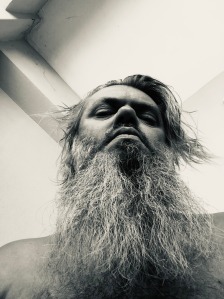 Oleksandr Hladun – Dunaewsky69, Svitovamora
I started getting involved in music in 1996. The initial experiments involved using reel-to-reel tape recorders, cassette tapes, and anything that made noise within reach – I would record and listen to it.
In 1997, I participated in the projects HAIMORITH and Outer Orgasm, and we released two albums. The music we created encompassed genres such as noise core, grind core, and crust core. I played guitar, bass, and drums, and screamed into the microphone. Additionally, I delved into noise experiments – from childhood, I listened to heavy metal music.
In 2000, I got my first computer and started learning software that allowed me to create electronic music, such as Reaktor and Reason. This is when the project Dunaewsky69 emerged.
You can listen to my first live from 27.12.2000 on SoundCloud.
Later on, I began releasing music on physical formats, working with the Kvitnu label, and participating in concerts and festivals both in Ukraine and abroad.
From 2010 to 2012, I studied at the Music Academy in Krakow under the guidance of Professor Marek Choloniewski. It was a grant from Gaude Polonia.
Throughout the twenty years of existence of the Dunaewsky69 project, I have been assembling my studio with instruments and recording a wealth of new material.
In 2021, I started another project called Svitovamora. The first release came out on February 22, 2022, just two days before the full-scale russian invasion of Ukraine.
Has the full-scale invasion changed your approach and the way you think about music and sound and has it had an impact on your setup and playlist?
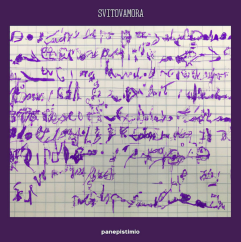 Yes, the full-scale invasion has significantly influenced my approach to music and perception of sound. It has created new contexts and emotional realities that directly reflect in my creative work. War has become an important theme that finds its reflection in my compositions.
Kathreftis, your most recent album as Svitovamora, is a more luminous affair than the previous albums Panepistimo and Strofh.
Without wishing to get too personal, does it signal a shift to a more positive outlook in your music with light prevailing over darkness?
With this album Kathreftis, I am rather restoring balance within myself. It truly turned out gentle and bright. And the most important aspect of this music is the presence of hope that everything will be fine! These are just three tracks out of the 64 that I have released. I will continue to release more albums.
Also, with the use of field recordings rather than archive material, for instance, in the closing track “Skia”, you now seem to be looking outwards instead of inwards, even if a melancholic undercurrent still permeates your work. Would it be correct to say that Kathreftis sounds less claustrophobic than your two preceding albums?
Yes, it can be said that Kathreftis sounds less cryptic than my two previous albums. The use of field recordings allowed me to expand my sonic horizons and explore the external world through sound. This added space and transparency to my music, reducing the sense of compression and crypticness that might have been present in previous albums. However, a melancholic mood still permeates my work, creating a subtext of emotional depth.
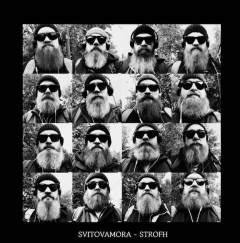 Would you say Strofh is your personal sonic diary of the full-scale invasion and what can you tell us about the making of that particular album?
Strofh can indeed be considered my personal sonic diary of the full-scale russian invasion of Ukraine. The album was created under the influence of the events unfolding during the war. Each composition reflects the emotional state, memories, and reflections associated with fear and courage, hope, destruction, and loss. My intention was to convey not only the external events but also the internal experiences accompanying russia’s invasion of Ukraine.
In the process of creating the album, I employed a wide range of sound techniques to create an atmosphere and convey the emotional depth of the subject matter. This included the use of field recordings, electronic sounds, sound effects, and musical instruments. Each track was carefully crafted in the context of the message I wanted to convey to the listener.
The creation of Strofh was a process of merging individual experience with the larger situation. This album holds special significance for me as it is my way of expressing and narrating what I have been going through during these challenging times.
Additionally, the album includes snippets of tracks that I created for theater productions and films by emerging filmmakers.
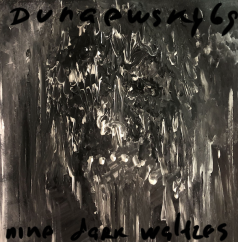 Your work seems to be informed by your fascination with Greek language and mythology. What importance do you give to the references underpinning your work?
References to the Greek language and mythology hold great significance for me and my creative work. The Greek language has a rich and expressive sound that can add musicality and aesthetics to my music. I use Greek words and phrases as sonic elements to create a unique atmosphere and convey emotional content.
Mythology is also an important source of inspiration for me. It carries rich resonance and symbolism that can be reflected in musical compositions. I use mythological images, characters, and stories as a way to express certain moods, emotions, and concepts in my music.
The references to the Greek language and mythology add a layer of depth and cultural heritage to my work. They help create a unique identity for my music and highlight my personal interests and sense of connection to the world around me.
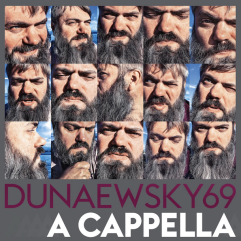 Has your other project Dunaewsky69 gone on a hiatus?
No, I haven’t stopped my project. I’m currently working on a new album. My project Dunaewsky69 is my main project. I strive for each album to be different from the previous one. However, in every album, the listener recognises my signature and style. I simply accumulate enough material and then choose what to release.
Do you suffer from burnout and what do you do to unwind? And is there a specific genre of music or a particular artist / album that helps you “switch off” from daily reminders of the war?
When I make my music, I don’t listen to anything else.
What would you say are the biggest misconceptions the West still holds about the full-scale invasion and the worst stereotypes they perpetuate about Ukraine?
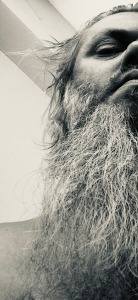
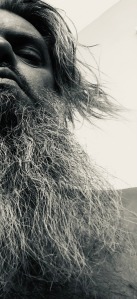 My vision: I believe in Ukraine’s victory in this war and will do everything in my power because the russians have come to kill Ukrainians. If good always triumphs over evil, Ukraine will prevail. The entire civilised democratic world has been actively supporting Ukraine since the first day of the active phase of the full-scale invasion.
The war started back in 2014, but no one wanted to acknowledge it, and everyone thought it would end soon, considering it a temporary conflict. No, it’s not a conflict; it’s a war.
Since 2014, I have lost many friends and acquaintances who went to defend Ukraine in the ranks of the Armed Forces of Ukraine.
Currently, Ukraine is defending itself on its own land. russia wants to seize the history and territories of another country, as it did with Georgia and Chechnya. They aim to destroy the culture, traditions, and identity of Ukrainians. Long ago, my grandmother was sent to Siberia (Magadan) by Soviet Communists of the KGB because she was Ukrainian, spoke Ukrainian, and refused to submit to the Soviet Union’s authority, which was already inflicting a famine on the Ukrainian people. After a year and a half, she escaped captivity and lived a fulfilling life in Ukraine until the age of 92.
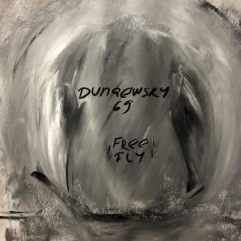 We have a long history of wars with russia. We are different nations, starting from language, history, and traditions, to the fact that russians support military actions on the territory of a sovereign country and justify the killing of innocent Ukrainian civilians while doing nothing to stop it. I have no friends left in russia. No one has written to me or called. It shows that they have made their choice.
russia is a country of terrorists that has no place in the civilised world. Many nations live in russia, but they are forbidden to speak their own languages and uphold their cultures and traditions. For some reason, everyone must speak russian and work for Moscow. But that’s their business. Every russian person is an imperialist at heart, even the opposition, which doesn’t exist there.
Perhaps the West lacks accurate information to understand once and for all that, every russian is responsible for this terrible war. Engaging with russia automatically sponsors a war from the side of the terrorist country – russia.
If russia withdraws from Ukrainian territories, the war will end. If Ukraine stops defending itself, there will be no Ukraine; it will be destroyed. Support from the entire world is necessary for Ukraine.
Who should I interview next and what should I be asking them?
Michael Stadniichuk (aka hitsyourself).
JUNE 21, 2023 – TERNOPIL
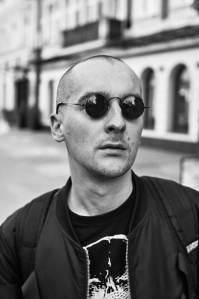
photo by Ivan Polyvoda
My name is Yaroslav Kachmarskyi. I’m making music as Motoblok, dj-ing as DJ Zavgoth, and running a small label Pincet. For the last 20 years I’ve been around electronic music.
Has the full-scale invasion changed your approach and the way you think about music and sound and has it had an impact on your setup as Motoblok and your playlist as DJ Zavgoth?
Actually, no. For sure, a full-scale invasion affected my whole life, it hasn’t altered my artistic approach. I’m not good at composing by purpose, my music has a more abstract nature. Somehow, the sound became more EBM-ish, but I can’t definitively attribute it to the current events.
You have also been running the label Pincet since 2007, which has just released the album KYUB: This War, the culmination of the British-Ukrainian music residency conducted by the Institute of Sound (UA) and IKLECTIK (UK). What can you tell us about this residency and how would you answer some of the questions this album raises, like “How does wartime routine sound?” And, “How does one get used to the curfew and other restrictions of military time?”
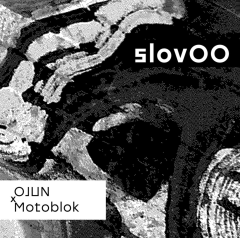 I had the opportunity to participate in KYUB, my first-ever artistic residency, albeit an online one. It was an amazing experience engaging in workshops and listening to lectures by established artists. However, the russian strikes on Ukrainian power plants and infrastructure resulted in limited electricity, making it challenging to balance my participation in the residency with work and family responsibilities. We were talking about how the final compilation would be published and I offered Pincet.
“How does wartime routine sound?” – Here in the deep hinterland everyday we hear air alarms from speakers and smartphone apps. In winter, the sound of power generators filled the air. The curfew has made nights exceptionally quiet, with only the sounds of birds and occasional cars.
“How does one get used to the curfew and other restrictions of military time?” – So, there are no night events, all the concerts happen strictly according to the current restrictions. However, as a grown-up guy, I have discovered a positive aspect to this situation – I can spend evenings at home with my two toddlers.
 How did your life change over the course of the past year, both from a personal and a professional point of view?
When the COVID started it almost killed my artistic career – it forced me to find a regular job, and for the last two years I’ve been a project manager in software development. War brought turbulence to the Ukrainian IT market leading many of foreign clients to avoid working with companies affected by war. So, me and my colleagues were focused to keep the clients and provide the best service we can.
Beside full-time work, there’s everyday routine – participation in crowdfunding for useful stuff for our troops. All the income from Pincet sales and streams, all fees from my two European tours have been dedicated to support the Ukrainian army.
Where are you now and have you been displaced by the full-scale invasion at any point?
I reside in Ternopil, the city where I have spent my entire life. During the initial five months of the full-scale invasion, my wife and sons were in Portugal. The separation was emotionally challenging for both parties, prompting us to make the decision for them to return to Ternopil. Since then, we’re staying here. Our city is pretty far from the frontline so only cruise missiles arrive here, but without bombs or artillery fire.
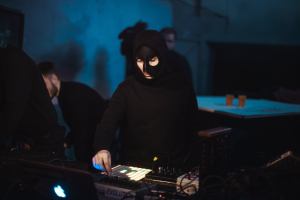 Are there any Ukrainian releases from the past year that you feel have helped you to make sense of current events and, conversely, are there any specific tracks or albums that you now find triggering because they might be associated with specific difficult times or events?
Short answer – no. Long answer – since the full scale invasion started and for the next few months I couldn’t listen to music at all. After, we’ve all got used to events and music continues to do its basic functions – source of self-reflection or entertainment. So no specific association to the war events. The Ukrainian scene produced hundreds of songs and tracks about war, victory, sacrifice, and separation. But most of them do not have an artistic value as for me. Still, there are few good war-related tracks: the best is “Lullaby for an Enemy”.
How do you feel about the inclusion of “war sounds” like air raid sirens in recent tracks by Ukrainian artists?
Air raid sound in tracks triggers me. When I hear the sound I’m immediately checking the air raid app and reading news about the current state. It’s better to avoid using it in the tracks. Also, I believe it’s a kinda cheap move.
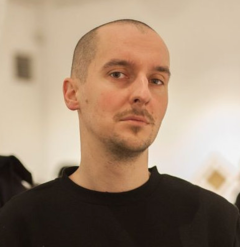 Do you suffer from burnout and what do you do to unwind? And is there a specific genre of music or a particular artist / album that helps you “switch off” from daily reminders of the war?
I’ve discovered the sweet soul (Motown classics and revival) for myself. It calms me down. And the perfect way to get yourself together and regain focus is still hip-hop of the 90’s and its raw energy.
Are you able to think of the future?
I’m aware that the future won’t be easy. After the war Ukraine will face a strong economic, social, and demographic crisis. But I’m ready for them and still see my future and the future of my sons here.

Spyt by Motoblok & Clasps
After more than a year since the full-scale invasion, what would you say the West still gets wrong about Ukraine?
A part of the collective West is still seeking for good russians, looking for compromises, and searching for alternative truth. Whataboutism makes me sick as well. When we’re talking about the electronic music scene most of the artists and audience inhabit in an imaginary world with pink ponies and no real problems.
Anyway, we’re grateful for the support from the majority of Western countries, but If Ukraine had more weapons last year thousands of lives could be saved.
Which book / film / album / song / traditional dish / podcast / blog / artwork / building / meme best captures Ukraine for you?
Album – Kazky by Skriabin
Song – Prayer for Ukraine by Mykola Lysenko
Artwork – Kateryna by Taras Shevchenko
JUNE 22, 2023 – BERLIN
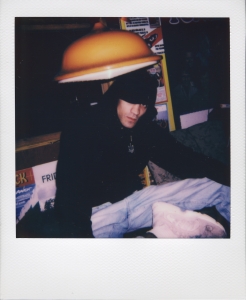
Klub Kalabalik Festival – photo by Nastya Platinova
My name is Alex, I’m 27 years old, I was born in Kyiv. You may know me as Morwan. I’ve been making music since 2016. In the same year I recorded my first album under the pseudonym 563. When I started making music I almost immediately realised what kind of music I wanted to play, mostly post-punk and related styles. The previous project “563” was more of a field for experiments and studying music. So, after 3-4 years of searching for my sound, in 2019 I recorded my first album ‘Ubila mogila’ under a new name ‘Morwan’.
Has the full-scale invasion changed your approach and the way you think about music and sound and has it had an impact on your setup and your playlist?
On the whole, no. The approach and setup is the same as before the war. Except that I became more outspoken and emotional in both sound and lyrics. I began to experiment more often and to be less dependent on the frameworks I had once set for myself.
Nothing has changed with my playlist either. I would even say more, since the beginning of the war I have been listening to less music in general, looking for something new, and being interested in what is going on in the music industry. In the first few months of the war I didn’t listen to music in general.
Your most recent album Svitaye, Palaye, was originally meant to be a lighter affair but ended up dealing directly with the war. What can you tell us about the production process and how difficult was it to find the right approach to speak about the war?

Morwan – Zola-Zemlya
I started working on the album Svitaye, Palaye almost immediately after the previous album Zola-Zemlya in 2020, because I had a lot of unwritten and unfinished songs. I tried to rethink them, and find a new sound. I experimented with dance and electronic music, as well as Arabic folk motifs. The first song I write for the album was “Topoli” in 2021, and it largely determined the vector and the style of the new album. But I still wanted to lighten up and make the sound more accessible and not repulsive, because of that most of the songs in the new album sounded completely different, they were more melancholic, light, in a way even nostalgic. But when russia attacked Ukraine, I had to put the album on hold. After a while I was able to write music again and went back to the album, but I no longer had the emotions that I had originally. I was angry, I was aggressive and I was looking for a place to vent those emotions.
The music on the album is more about the war than the lyrics. The music is as heavy, chaotic, aggressive and as sad as the war. And it is the language of music instead of words that was chosen for this conversation, or rather monologue. It is difficult to describe emotions and thoughts with words. There are no specific stories, descriptions of events or places in the lyrics. These are abstract words that were in my head at that moment. In reality it is very difficult to talk about the war, let alone to sing about it. I’m still learning how to do that through music.
Technically the album was recorded at home like all my previous works. It’s very simple.
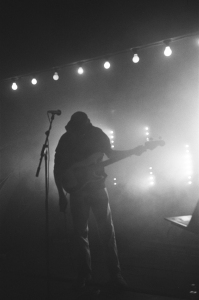
Klub Kalabalik Festival – photo by Nastya Platinova
Are there any Ukrainian releases from the past year that you feel have helped you to make sense of current events and, conversely, are there any specific tracks or albums that you now find triggering because they might be associated with specific difficult times or events?
Unfortunately for me, I fell out of the Ukrainian music scene for a very long time. I haven’t listened or looked for something new for too long in general, not only in Ukrainian music. Now I am trying to catch up, but it is hard enough, because there are so many great artists that it is hard to keep up with them all.
But I can definitely say that I am annoyed by the music that is parasitised by the theme of war. There are a lot of such artists, they know that this topic will be of interest now and they sometimes don’t understand where the line is, and it often comes out inappropriate and offensive.
Where are you now and have you been displaced by the full-scale invasion at any point?
I have been in Berlin for a little over a year now. But when russia started the full-scale war I lived in Irpin, which is in the Kyiv region.
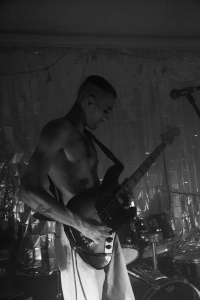
photo by Vvydmy
How does one get used to the constant separation from close people?
I was more or less lucky in that respect, because I left the country with my family and my girlfriend. From time to time I have the opportunity to see people close to me. But on the whole, I am still getting used to it.
Do you suffer from burnout and what do you do to relax?
Physically, I don’t think I am overworked, but psychologically and mentally, I definitely am. It’s hard to concentrate on anything when there’s so much going on around me. It’s hard to understand a reality in which there are two worlds at the same time, in one world everything is peaceful and life goes on, and in the other there is blood, death and ruined lives. And just as you seem to start living and doing your usual things, even trying to enjoy life, reality takes you back. Sometimes it’s very hard to accept.
But it’s all small things compared to what our heroic soldiers at the front are experiencing. And realising this, you immediately try to pull yourself together and continue to do everything for the victory of Ukraine, whether it’s the information war, culture or donations for the army. After all, the price I paid is incomparably small to the price paid by the defenders of Ukraine.
So there is no time for self-pity and suffering, we must use all of our resources for the good and the speedy victory of Ukraine.
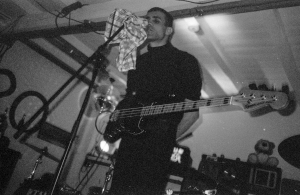
photo by JEN SMITH
How long will the war last and what will the Ukrainian victory parade look like?
I don’t want to predict, but I’m a realist by nature. It seems to me that the war will last for some time, it would be very good if it ended this year with the victory of Ukraine.
About the victory parade, I don’t think there will be one. After all, so much blood has been shed, so many people have been killed, so many cities have been destroyed by russia, I think this day will be a day of mourning for the dead.
Which book / film / album / song / traditional dish / podcast / blog / artwork / building / meme best captures Ukraine for you?
A very difficult question for me, there are too many things. I can’t choose just one.
JUNE 23, 2023 – KYIV

Drive Party 2023. Photo by @vv.photography95
BlazerJacket
Denis Cherryman: I have been on stage since 2009, starting with the post-industrial, dark electro project Dirty Bird 13.
I had the pleasure of meeting Hybri.Mod at my concert in Kyiv in 2016. We struck up a conversation and decided to collaborate on polishing a couple of my old demos, transforming them into a synthwave style. As our collaboration progressed and yielded impressive results, we made the decision to form BlazerJacket, blending various electronic dance music genres with a cyberpunk vibe.
Has the full-scale invasion changed your approach and the way you think about music and sound and has it had an impact on your setup and your playlist?
Yes, the full-scale invasion has made our music angrier, and russian artists have been permanently removed from my playlists. Moreover, I no longer perceive music in the russian language at all, even old russian-language tracks by Ukrainian artists. It’s simply a ban on anything russian, including the language itself.
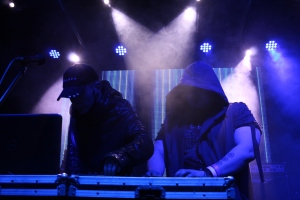
Drive Party2023. Photo by @vv.photography95
How does wartime routine sound?
In the capital, it sounds much quieter than on the front lines. But even here, missiles fly in…
Where are you now and have you been displaced by the full-scale invasion at any point?
Currently, both of us are in Kyiv. Still, I was forced to leave my home in eastern Ukraine in 2014 when russia launched its first invasion of Ukraine, capturing my city, occupying parts of Donbas, and creating quasi-republics like L/DNR.
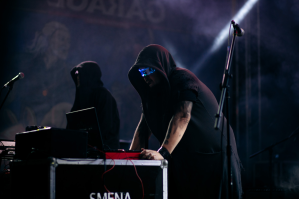
Comic Con Ukraine 21. Photo by @noise_dust_and_scratch
How does one get used to the constant separation from close people?
You can never get used to that.
How does one get used to the curfew and other restrictions of military time?
You need to understand the reasons behind curfews and other limitations. All of this is justified because we have a real war going on in our country.
How does one save strength for resistance?
I can’t exactly advise you on how to preserve your strength, but we hold on to life because we have no other choice. We have no intention of being enslaved by russia. Throughout our entire history, they have tried to conquer us, and now they have decided to try it in the 21st century.
How long will the war last and what will the Ukrainian victory parade look like?
No matter how long it lasts, we will support our defenders until the very end! I know for sure that it depends on the unity of the whole world in helping Ukraine, and russia will stop only when it has nothing to fight with.
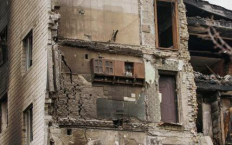 Which book / film / album / song / traditional dish / podcast / blog / artwork / building / meme best captures Ukraine for you?
This photo depicting an apartment of an ordinary civilian in the Kyiv region that was hit by a russian missile. And it’s good if, during this, we are fortunate enough to remain unharmed, just like this kitchen wall cabinet with a figurine of a rooster on it.
JUNE 23, 2023 – KYIV

My name is Anatoly, I am a Ukrainian musician. I have been making music since I was 7 years old, studying at a music school, but I started creating my own after graduating in 2014. One day I dared to share my music with others and decided to create the Eternal Wanderer project. I’m currently working on a jewellery business – I’m also a jeweller and creating silver jewellery with my own design and I’m also writing new music for my project.
Has the full-scale invasion changed your approach and the way you think about music and sound and has it had an impact on your setup and your playlist?
The start of the full-scale invasion changed my music completely. Previously, the images of my inspiration were nature, travels, various emotions, everything that surrounded and inspired me. After 24.02, I decided that I could not continue writing as before. A lot of different events began to happen around me, about which I could not remain silent. It was a transition to a new reality, knowing that life would never be the same again. Therefore, I decided that I would write music only about the events and symbols that surround me now. In this way, I want to communicate with the world and convey to them what is currently happening in our country, both heroic and tragic events.
As for my personal playlist, it has also changed. For the first few months, I couldn’t listen to anything at all, since we spent almost the whole day in a bomb shelter, and I was generally not in the mood to listen to music. Only later, when the rocket attacks became shorter, I began to gradually return to my work and also to music. More Ukrainian artists were added to that playlist.
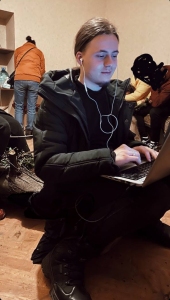 You have been very prolific since the full-scale invasion and have addressed current events in a number of releases, including the destruction of the Kakhovska Dam by russian troops on June 6. Does it feel cathartic to you and can music be therapy?
I started creating music on the first day of the full-scale invasion, the first compositions were written in the bomb shelter on my laptop – it were literally the first hours of the invasion. We spent a lot of time in the bomb shelter, so I decided to put this time to good use. Such productivity is associated with a large number of dynamic events that changed every day, new symbols, new victories appeared, new cities were liberated from occupation, and besides the joy of victories, the picture of the consequences of the inhumane crimes of the occupying forces was revealed.
After the liberation of the city of Bucha, near Kyiv, the city where I live, the world was horrified by what it saw: civilians killed and tortured, houses destroyed and looted, it showed the whole world who the Ukrainians are resisting. I considered it necessary to write music about these and other events, as more attention should be paid to them. For me, it was a certain way of communication, as well as a personal rethinking.
The destruction of the Kakhovska Dam by the russian occupying forces is an extraordinary crime against all humanity, which will have terrible consequences for more than one generation, and in my opinion, the world’s reaction to this tragedy was too restrained, so I decided to talk about this event through my music.
Music can really be therapy, or a way of analysing and rethinking everything that is happening around.
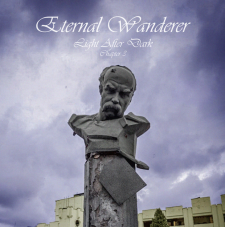
April 2022
How do you feel about the inclusion of “war sounds” in recent releases by Ukrainian artists?
Incorporating the sounds of war is an important element in music that describes war. The fact is that many people in the world have no idea what is happening in our country, so this is a good tool for conveying this atmosphere in more detail. I myself use such techniques, although at first I hesitated, so as not to traumatise anyone with this, but this is an experience that needs to be shared.
The first such move was the addition of an air raid siren to the intro of the first album since the start of the full-scale invasion, called “Siren at 4am“.
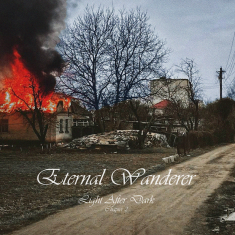
March 2022
Are there any Ukrainian releases from the past year that you feel have helped you to make sense of current events and, conversely, are there any specific tracks or albums that you now find triggering because they might be associated with specific difficult times or events?
Due to the fact that I didn’t listen to much music during the full-scale invasion, it is difficult for me to name a specific artist’s release from last year. Over the first few months, I listened to music that was quite unusual for my playlist, including groups like Go_a and Odyn v Canoe. At that time, I had a desire to listen to more Ukrainian music, and their compositions inspired me with hope and gave me a sense of peace.
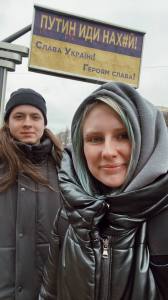 Where are you now and have you been displaced by the full-scale invasion at any point?
Now we live in Kyiv, as it was before the start of the full-scale invasion, but in the first days we were forced to take our family to another city, since Kyiv was regularly under fire and it was unclear what would happen next. After several months, when the Russian troops were defeated near Kyiv, it became safer to live in the city and we all returned together.
But one should not forget that the war itself has not been going on for a year, but for about 9 years. My wife is from the Donetsk region and her city was occupied by the russians since 2014, where a new pseudo-republic was formed, and after two years of living under occupation, after finishing school, she was forced to leave her home and go to Kyiv. During the years of occupation, her city became looted and abandoned. By the way, our marriage was on 22.02.2022 – right before the invasion. So it was our honeymoon – in bomb shelter, under regular shelling.
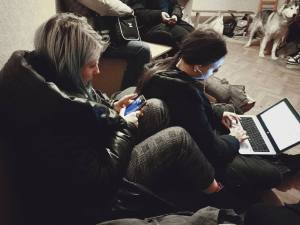 How does wartime routine sound?
Military routine is now part of the life of every Ukrainian. You can’t get used to this, but when you regularly hear explosions outside the window, the perception changes. Ukrainians are now used to daily air strikes, missile strikes and drone strikes, and many adjust their schedules and sleep accordingly.
My wife and I have set up a safe place for ourselves where we can sleep and not be afraid of explosions and rocket debris, so when the air alert is announced, we go to this place and try to sleep if the explosions are not too loud. Unfortunately, with a direct hit to the house, this shelter will not save us and the risk of death is extremely high. Before, during each air raid alert, we went either to the basement or to the subway station, as it is a safer place there, but after the thousandth air alert, one gets tired of going to the bomb shelter every time and hides behind two beds in their house. The launch of ballistic missiles over the city is also a problem, as they arrive in a matter of minutes and people physically do not have time to go to shelters.
Recently, the russians have started launching rockets at night because everyone is sleeping in their homes and the number of potential victims increases, and more civilians killed is one of the main goals of these night attacks.
Back to the routine, the only thing people cannot get used to is human losses. Unfortunately, every day we regularly read the news about the deaths of civilians or soldiers, and it is always difficult. Unlike the aggressor country, we value everyone’s life and any human loss is significant.
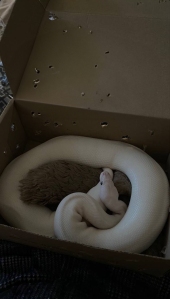
our pet snake
How does one get used to the constant separation from close people?
Fortunately, we didn’t have to part with most of my relatives because we lived in the same city and we stuck together. Even before the start of the full-scale invasion, we agreed with the family on how we would evacuate in the event of hostilities starting in our city, part of our family was to go by car, and the other – by train. In this regard, the first days were the most difficult, because we all had to travel separately and each road was dangerous in its own way, because already at that time there were cases when cars with civilians or trains were fired upon on the way out of the city, and there were also risks surrounding the city at all times.
Fortunately, we were able to leave and take our family to a safer place where we all lived together for a while. Also, all this time we were in contact with my brother, who lives in Poland, he helped us with tickets and information. Now we have contact with him only by video link, but after the end of the war we will definitely meet. My wife’s situation is more complicated, because her parents are now forced to live in the occupied terrotories, as they take care of their own parents, who cannot leave. Staying in those territories is now extremely dangerous, almost every day they try to force them to take russian passports and threaten them if they refuse, therefore, in addition to regular explosions, they are always in danger from the occupying forces.
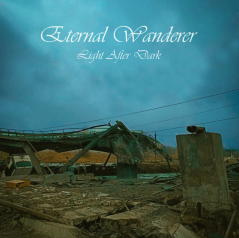
March 2022
How does one get used to the curfew and other restrictions of military time?
This is probably the easiest point to get used to, as most of the restrictions are for our safety. This was especially felt in the first months, because there were regular sabotage attempts. Collaborators or soldiers dressed in civilian clothes were often caught in the city during the curfew, so it was important to follow certain rules, including for your own safety. Or, for example, restrictions on visiting areas where russian troops may have been before, since everything was mined after the escape, even children’s toys. Therefore, we now follow these rules without any problems.
How does one save strength for resistance?
The biggest motivation for Ukrainians is that they have no other choice, because this war is aimed precisely at the destruction of the Ukrainian people, their culture and identity. If someone believes that the war is aimed exclusively at political ambitions or the confrontation of the top authorities, these people should remember what ordinary russians left behind in the territories from which they fled (Kyiv region, Kharkiv region, Kherson region and others). Thousands of tortured civilians, adults and children, destroyed whole cities and all under the slogan “who allowed you to live so well?” Therefore, no Ukrainian should have any doubts about this war, because he is fighting for his own home, for his family, for democracy and his people.

May 2020
How long will the war last and what will the Ukrainian victory parade look like?
As for what victory will look like, it is unlikely that anyone will be able to answer this question before the time comes, because events can change very dynamically, so making predictions here is a thankless task, the only thing I can say is that it will definitely happen.
As for the parade, I think that the best option is to have Ukrainian tanks in the centre of the Red Square. And seriously, I have a rather skeptical attitude to such a concept as “parade”, because usually it is a demonstration of power and greatness, but the victory in this war will not only have a solemn tone, since it will be won at an extremely high price, with tens or hundreds of thousands of destroyed lives. In my opinion, this should be a day to honour those who gave their lives for this victory and for everyone who suffered from this war.
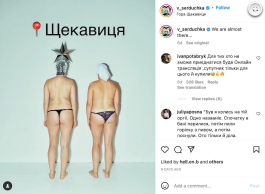 Which book / film / album / song / traditional dish / podcast / blog / artwork / building / meme best captures Ukraine for you?
As for a certain symbol or meme, I would say that this very word meme could describe us well. The fact is that Ukraine is a meme country and no matter how difficult the situation is, Ukrainians still try to keep in good humour and joke. The threat of a nuclear strike? A meme about an orgy on Shchekavytsa Mountain in Kyiv. Another threat from russian madmen? Thousands of different videos and pictures mocking them. Almost every day, we have a lot of new memes that fly all over the Internet. And this is a very important moment, since even in the most difficult conditions, Ukrainians find ways to cheer themselves up, and this is very necessary for maintaining mental health.
JUNE 24, 2023 – KYIV
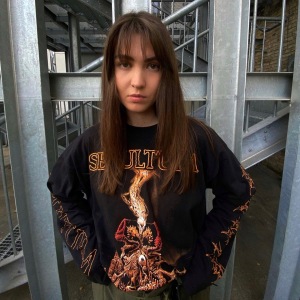
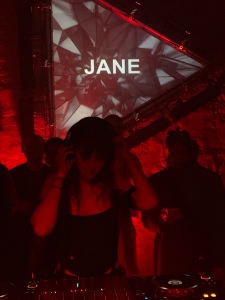
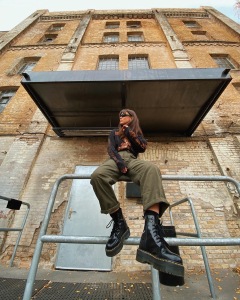
My name is JANE and I live in Kyiv where I was also born. I am a DJ and event manager and also a crew member and organiser at the Брудний пес (Brudnyi Pes) Festival. In addition to that, I help out at various dog shelters.
My encounters with music happened when I was 8 years old. One evening together with my parents we were passing by a music school and suddenly I heard a piano and the next morning I was already a pupil at that school. Then it was solfeggio, piano classes, music theory, academic concerts, drums, and singing in the сhorus at the National Philharmonic of Ukraine. I have always wanted to sing, maybe this is my next step.
Starting from 2015 I started attending various parties with electronic music. Since then I became hooked on deejaying, for the crazy energy that you share with people and the response you get. You are the one who is in control of the crowd’s mood, tempo, rhythm, and atmosphere.
My career started to really evolve after the full-scale invasion of russia.
 Has the full-scale invasion changed your approach and motivation to music and has it had an impact on your setup and your playlist?
Yes, everything changed, not only in music. The beginning of the full-scale war (24.02.2022) coincided with my birthday. Since that day I have had a new life. When you need to fight for your survival your priorities also change. Your thoughts, habits, and perception. I became stronger and stopped feeling fear and anxiety. This influenced my music selection and my creativity.
The war in my country has lasted already for almost 1,5 years and during all this time I experienced personal transformation and growth. At this point, I feel like I am looking for some heavy, groovy, saturated, metal sound with a lot of perc samples.
The introduction to your booking agency page says that, “The denial of indifference — is the central musical idea of Kyivan DJ JANE. Could you expand on this?
For sure. My performance goal is to leave no person emotionally unfulfilled. It is important for me to hear what people want and tell them the story of how I feel and see things. There is a lot going on now and a lot of things that pull us down emotionally. People come to parties to listen to the artists and get a break from the news. So our goal as musicians is to make sure a person has their consciousness refreshed and receives enough energy to cope with everyday fighting and routine in a country that is at war.
 How do you see the electronic music scene in Kyiv developing under present circumstances and has the work of clubs like ∄ had an impact in forging the idea of a more inclusive and safe space within the clubbing scene?
The new musical stage started shaping at the beginning of summer 2022 when significant russian troops were defeated near Kyiv. Since then, day time events started to emerge because of the curfew which now lasts from midnight to 5 am. On June 11, my colleagues from the SVYST promo formation and I opened a studio on Poshtova Square which later became a volunteer centre. That was one of the first musical events in Kyiv and this influenced a lot of things. Soon after there were a lot of daytime events in various clubs and bars of the city. People felt a relative relief after the 24th and I would say that this exact energy was the foundation for the new electronic scene to be formed.
Kyiv and some other cities came back to life. After the first event, we started to organise multiple events and collaborations with other promo formations. When we organised the SVYST POLYGON party it was a real slam with heavy electronic rhythms in the background. People had a lot of negative energy to get rid of. It was something special to observe. The energy was so strong that sometimes it seemed like it could blow you away. No artist was thinking about whether their music was popular or not, they were just following their feelings and were trying to express what they wanted. The same is happening today.
Sometime after that the ∄ club reopened. This gave people a breath of fresh air. There you can hear not only techno that everyone got used to, but also some breakbeat music and even drum’n’bass. People loved the new format and the administration of the club started inviting artists with various musical tastes. My first performance there was on Ground Floor. I was closing the party that day where I was playing bass-dominant music with breakbeat rarely adding techno beats. This performance was very inspiring for me. It inspired me to continue my personal growth and for the next performance at ∄. I am forever thankful for that.
 Tell us about the main idea behind the “Брудний Пес” festival in Kyiv, what are the logistics of holding a festival in wartime (including curfew hours, insurance, food and drink etc) and how does one balance covering costs, paying the artists and fundraising?
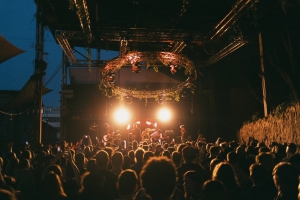
The Brudnyi Pes Festival – a multi-genre festival the main goal of which is to unite electronic and instrumental musicians from different regions of Ukraine. So that they could have a chance to be heard and so they could have collaborations with each other to create new soundings. Why it is “dirty” (Брудний Пес is translated as Dirty Dog)? Because this Dirty Dog is the representation of street culture. The musicians, artists, and all people who were involved in this event or those who went out and those who stayed to “control” those streets.))
It is difficult to organise a festival during a war, even more than in peaceful times but as you can see it is important. We do not organise any event if it is not a charity one after which we donate to the needs of our warriors as it is the only reason we can still do our thing. It is a must-have for our team.
You can also have a balance between expenses and donations but all this is the organisation’s skill.))
We donated to 5 different brigades and left no artist without his/her reward.
For the sake of comfort for our guests, we had all the stages located in Keller Bar. We also organised a market with food and clothes and an entertainment zone. The festival was held for two days from 2pm to 10pm so everyone could get back home before the curfew.
On July 8 we are planning to have the epilogue, a sort of 3d day of the festival. The whole line up consists of Ukrainians only.
 Where are you now and have you been displaced by the full-scale invasion of February 24, 2022?
Now I live in my hometown – Kyiv. When the war started, I was also here. A few weeks prior I also had that weird feeling. Usually, we all plan and can imagine our plans and then we were planning my birthday party on the 24th of 2022, and on the 26th we were planning our performance in Dnipro. The closer we were to the day the more I was sure that this was not going to happen. And yes, it did not happen.
We woke up at 4 am in the morning as we heard some loud explosions and then started getting messages that the war had begun. My boyfriend picked me up and we went outside of the city to safety. We spent three months away from Kyiv.
 How did your life change over the course of the past year, both from a personal and a professional point of view?
The war made us tougher. I feel more confident and feel almost no fear. I realised clearly what I want in my personal life and as an artist. Everything is fine in my personal life, I have a person that I love and recently we got a dog, Badman.
As an artist, I rapidly expanded during this year. I had a chance to have a gig almost every weekend in Kyiv and other cities in Ukraine as well as at the Art –Weapon! festival in Berlin. The values have changed ever since, the ones that influence your everyday choice in different spheres of life.
As an artist, I feel that if you do not honestly and passionately do your thing then you do not need to do that. That is why I try to live in harmony with all this.
Polygon – VOLUNTEERS vol.1 — BLACKOUT
Are there any Ukrainian releases from the past year that you feel have helped you to make sense of current events and, conversely, are there any specific tracks that you now find triggering because they might be associated with specific difficult times or events?
The whole compilation VOLUNTEERS vol.1 — BLACKOUT out on Polygon Records. I cannot say that I liked someone better than others simply because we all exist in the same environment where we all support each other. I can see how hard they work as artists and I am proud of them all.
How do you feel about the inclusion of “war sounds” in recent tracks by Ukrainian artists?
It is important that they are safe for all Ukrainians to listen to, as people react differently. But I really like the fact that russians can hear the sounds of war. I wish all of them to have phantom air raids alarms to the end of their lives.
Do you suffer from burnout and what do you do to unwind? And is there a specific genre of music or a particular artist / album that helps you “switch off” from daily reminders of the war?
 When you live in that crazy life rhythm you do not pay attention and you do not really have any rest. But sometimes burnout happens. When I have these moments I try to recharge myself and then I am back to work. It’s life. I usually think about my goals in such moments, about my plans for the future and my dreams. All this can give us the power and understanding that life gives us only those things that we are able to go through.
There is one album that I listen to in such times, to stabilise myself, and that is Woodland Structure by Isostatic. My top track is “Sycamore Seeds“. Recommended for those who love ambient.
What would you say are the biggest misconceptions the West still holds about Ukraine and the full-scale invasion?
That russia has a chance to exist.
Which book / film / album / song / traditional dish / podcast / blog / artwork / building / meme best captures Ukraine for you?
Home. People. Borsch.
NEW RELEASES
From the East ~ Super Inter
“‘From The East’ is music that has developed by itself. I’ve had a draft for a couple of years now, I’ve played it live a few times, but I couldn’t get it right and put it together. It’s not quite typical music for me, and I was somewhat ashamed of its dramatic and vulnerable nature.
But the last year’s events created a need to direct it somewhere and live the pain they brought. That’s how I realized how to finish this music, what it’s about.
The cover features a photo by me at the Olympic Stadium, where I lived in the last years before the war.
This is a personal release, but I feel many people will understand me.”
Differences ~ Hidden Element
Dedicated to Ilya a musician friend killed by Russian troops, Differences is the follow up to Hidden Element’s previous release on YUKU – Ranges. A life affirming album
“This release is about love, family, friends, parting & relationships. It’s about priceless things which we often do not notice, about losing valuable people forever.”
New Knives ~ Kadiristy
“New knives a debut EP by Kadiristy, is a mixture of tribal-disco and tropical-house with a slight acid touch. It is also an attempt to find inner peace while the full-scale war is happening in Ukraine, affecting everyone in some way.
The idea for the EP originated from a five-minute recording of birds, frogs, cicadas, and who knows what else, made in Serhii’s hometown Starobilsk during the 2020 lockdown. It felt like an orchestra, so in the opening track “Nature rave,” he wanted to imagine how this bird party would sound with added music.
The cover art is an appliqué made approximately in 1997 by a five-year-old Serhii Kadiristy in kindergarten. Like the EP itself, this piece was probably the result of an abstract idea, chosen colors, and forms — pretty much the same way the New knives EP was born.”
album I ~ ногируки
Six tracks with piano lines and loops drenched in reverb, an album with a haunting quality that speaks of nostalgia and beauty.
Digital Violence ~ Re:drum
“Re:drum is back with his new EP ‘Digital Violence’. This is a mini-album which consists of 5 tracks with overloaded and super energetic character in each composition. Its time when Re:drum’s music gradually moves away from his previous styleand becomes more modulated and agressive oriented.”
Stramproy Live ~ brainhack_musicbox
Good to see our friends brainhack_musicbox releasing live recordings from their recent tour of the Netherlands. Stramproy Live is the third of three albums which include the two sets embedded below for our viewing room, also available on their bandcamp page.
Green ~ 58918012
“Hi. If the previous album (Red) is more into dark ambient / drone way of things, then this part of the trilogy is closer to some experimental and even slightly ethnic vibe. It’s a bit softer than the previous one, but still has darkness in its pocket.
I don’t know why but this release provokes thoughts about nature in my head. The tracks are a bit more rhythmical and melodic so to say. At the same time, some parts of it are incredibly strange and anxious (I mean the tracks “Entropy” and “Dead Crater”). But all tracks on this release are organic and natural to me.
As usual, thank you for all your support! Stand with Ukraine and enjoy the music. Peace <3″
Bez Gruntu ~ Bez Gruntu by ОЧІ
“Dull life in pre-war Donetsk is characterized by repetitiveness, but not geometry. Wandering through the chaotic landscapes of this region as a child, we used symbolist poetry and electronic music as a compass. Both, as it seemed to us, referred to the world of ideal things and phenomena. But what reflection in an ideal world can have red flashes in the night sky of a mining town or the womb hum of the signal system of a steel plant? Only hell could be the world to which the symbols and signs of Donetsk region were sent. Idealism helped us to grow, to grow up without destroying ourselves. But only the understanding that the only possible reality exists only here and now became the support on which we now put our work.
This small album is an attempt to describe our escape, which began long before 2014 and, changing the pace and scenery, continues to this day. Heavy monotonous rhythms illustrate systems of enslavement and oppression as the only stable aspect of life in Ukraine, poor melodic patterns – our vague vision of what is desired – a deceptive incentive to move. Chaotic noise structures are the gap between the imaginary and the real.
We are aware that metaphors in the texts of our songs, like metaphors in general, are an unsustainable artistic tool, but with their help we would like to draw attention to the problems of symbolic exchange in the cultural practices of Ukraine and to culture in general as a problem. And if beauty is a suspicious manipulation, then accidental and poor beauty deserves more trust. The space is open. Yours is only what is within reach. Without Soil.”
Dronny Darko & Red Fog ~ Dronny Darko & Red Fog
“An experimental collaboration with Red Fog serves as a small side quest story coming out of my solo album from 2020 called Origin. Experimental palette of sounds and eerie drones captivate a story of a protagonist exploring the unknown alien world.”
Pulsation of Hope ~ Vlad Suppish
“Pulsations of Hope is a continuation and conclusion of ideas from Layers of Rebirth
And this is probably the last release in this format – 4 rhythmic modular meditations, but without an obvious rhythm
I hope these tracks will become a part of the soundscape of your summer and fill you with hope in these overwhelming times
And all funds received from the purchase will be transferred to UA Animals fund”
PODCASTS AND MIXES
VIEWING ROOM
(Gianmarco Del Re)
 a closer listen