
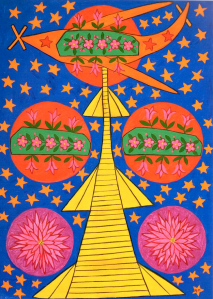
An Outer Space Memory by Mariya Primachenko
Episode 25 of Ukrainian Field Notes sees us travelling to Germany to speak to Lobanov K., Ponura and Travis from Strela about displacement, separation and the logistics and challenges of promoting Ukrainian artists abroad.
Furthermore, we explore the experimental and electronic music scene in Odesa with Galeta Jaira, Phite Noise and Olexandr Hodosevych from Rudnic Ore, while Tarik Stomp talks classical in Kyiv and Alex Pervukhin gives us the lowdown on the outset of the full-scale invasion in Kharkiv.
In terms of new releases, we feature the latest compilation from Gasoline Radio‘s expedition deep into the roots of Ukrainian culture, Спадок, together with new works from Adaa Zagorodnya, Ana Foutel & Olexiy Mikryukov, 58918012, Arctica, Palitra, memories, Revolt, Brume & Edward Sol, and Obskura.
Also, do check out our selection of mixes and podcasts featuring Travis, our Regular Disco residents, NFNR, Elija, Smezkh, Bryozone b2b Mlin Patz, Kopfmann, and Another Perspective on the Ukrainian Cultural Scene.
But to begin with, here’s our UFN podcast for Resonance FM where we had the pleasure of discussing Regular Disco with Katia Stieber and Kadiristy with a cracking selection of music including an unreleased demo. This is followed by our customary Spotify playlist.
Happy listening. We’ll be back in September with a new episode of Ukrainian Field Notes.
Tracklist
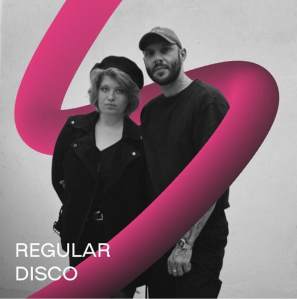 Misha Tsiganoff (intro)
Lobanov K. – Bios Recall
58918012 – Minimal Friction (excerpt – background)
Yaroslav M – Pog (Victor B. Remix)
58918012 – Minimal Friction (excerpt – background)
Clasps – Ex Voto
58918012 – Brainwave
(excerpt – background)
Denys Coin – Flowers of Doom
58918012 – Brainwave
(excerpt – background)
DiSKOP – Phantom
Volodymyr Gnatenko – Reba She (background)
Kadiristy – Sapphire Dream (unreleased demo)
58918012 – Displaced (excerpt – background)
58918012 – Go Under (excerpt – background)
Misha Tsiganoff (outro)
The Doors – The End (ID UA Edit) (snippet)
JULY 11, 2023 – ODESA
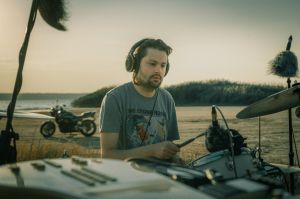
photo by Taras Pyatochkin
Olexandr Hodosevych – Rudnic Ore
Hi, my name is Olexandr, I play in Rudnic Ore. If we talk about my path to music, we can say that I started as a concert organizer and sound engineer. At first I organized concerts at the Odesa Film Studio, then my partners and I opened our own club, More Music Club. At the club, I met new people, musicians, and one of these collaborations was Rudnic Ore.
Even before the club, I played the guitar and could not think that when I began to play with Sergey, I would become a drummer. For us, it was spontaneous jams at night after the club closed. Each time we were looking for some new sound or just hung on some one sound, so the first tracks of Rudniс Ore were like a psychedelic drone without an obvious form, abstract music.
Rudnic Ore didn’t start out as a band with a plan and didn’t really aspire to be a band for a long time. What can now be heard on our latest recordings is a long process of transformation.
Has the full-scale invasion changed your approach and the way you think about music and sound in general and has it had an impact on your playlist?
In fact, we in the group have always believed that our music reflects our condition. Therefore, when we play in our music there is everything that is happening now, this means war is an integral part of us.
My playlist has not changed, if we talk about russian music, I stopped listening to it a long time ago.
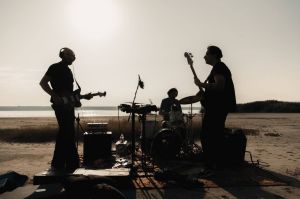
Rudnic Ore photo by Taras Pyatochkin
Your latest release with Rudnic Ore is a live set recorded at the Kuyalnik Estuary. What can you tell us about its production process, the choice of locations and the tracks, and in particular the opening one entitled “Iraq”?
A couple of years ago, we did a small festival called Salt and Dirt, which mainly showcased the stoner doom scene. Since then, Alexander Belinsky, the author of the sAn Live channel, had the idea to shoot a video on this estuary. Therefore, when he called and offered to shoot a video, we immediately agreed, because we knew that the film would turn out to be awesome.
The opening track “Iraq” is one of the new tracks that we wrote with our new bass player Salim when he joined the band. I would say that Salim’s arrival in the band and new tracks, his approach led the band to a more cohesive sound. In particular, “Iraq” is one of these tracks where we create a solid rhythmic landscape.
Why is it called” Iraq”?
We very often call tracks impulsively on the basis of first sensations. Because the first riff evoked a sense of Mesopotamian nature, we named the track “Iraq”.
Where are you now and have you been displaced at any point?
I didn’t move, I didn’t have any thoughts of leaving. From the first days, I had a possibly stupid stubbornness that I would not leave my house. Because it is here that I am useful and can do something. The club continued its work, we began to do charity concerts, raise money for the army, which protects us. And I continued to play music.
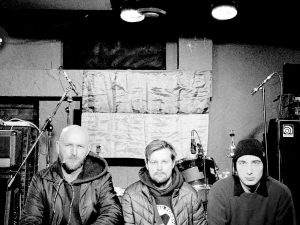
Rudnic Ore – photo by Oleksandr Proletarskyi
Are there any Ukrainian releases from the past year that you feel have helped you to make sense of current events?
I think that many Ukrainian language albums, which I didn’t listen to so often before, have become of great value to me. For almost 10 years I have been working to ensure that the Ukrainian scene is heard and people go to concerts and listen to bands that make music in Ukraine. And I don’t think there is any “sense” here that needs to be understood, as it is obvious. russia is an aggressor country. Ukrainian music inspires and its perspective helps us to move forward to victory.
How do you feel about the inclusion of “war sounds” like air raid sirens in recent releases by Ukrainian artists and do you find them triggering?
I don’t find them triggering. If we are talking about noise music, then in principle this is music designed to take you out of your comfort zone by any available means. If a musician wants to add this effect to their composition, most likely this may indicate that they want to transfer the listener from one state to another. But I think that for people who suffered from a concussion this may have a negative effect.
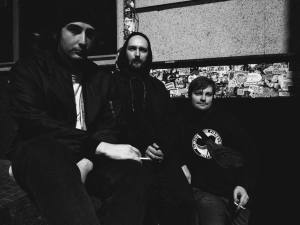
photo by Oleksandr Proletarskyi
How does one get used to the constant separation from close people?
I didn’t see my girlfriend for more than a year, it was hard. She went to Europe, then returned, I adapted to living on my own. For us, it was a test, we passed it.
After almost a year and half since the full-scale invasion, what would you say the West still gets wrong about Ukraine?
For many years, Ukraine was part of an empire led by moscow. Because of the almost century-long occupation and genocide of Ukraine by the ussr, the formation of the Ukrainian nation was postponed. For centuries, the Western world has considered the people from Eastern Europe as one, but in reality this is not the case, we are different. Therefore, at first, it was quite easy for the kremlin to present its aggression of Ukraine to the West as a civil war in which it did not need to interfere. That is, Ukraine was not perceived in the West as a subject. No one knew its history and for a long time no one knew that such a country existed at all and it had a thousand-year history.
Do you suffer from burnout and how do you relax?
Sometimes it is very difficult, but the work and music saves us. We live in standby mode, and this is sometimes more exhausting than night shelling.
JULY 12, 2023 – UKRAINE
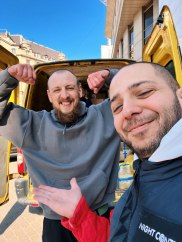
Music always was escape for me. It saved my life coz if u live in a tuff neighbourhood or something like dat u always have a tuff life. But music can save you and change your point of view and give you another opportunity to move.
Has the full-scale invasion changed your approach and the way you think about sound and has it had an impact on your setup and your playlist?
My music became deeper and darker. Aggressive. I have a project in Ukraine called Tysk – it’s a dark grimey breakbeatish music, so this iz da sound of Ukrainian war for me.
Could you introduce your label Laconica and how would you describe the electronic music scene in Ukraine?
The last Laconica release was one year before the war and to tell the truth we need to change something in the concept. But during the war I made some showcase with Closer superhero Borys and we raised some money for our army.
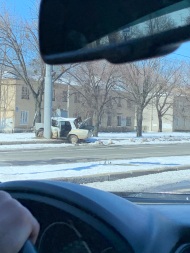 You are from Lviv which was hit by a missile strike on a residential building killing 9 on July 6, 2023. What is the current mood on the ground and how would you say the city has changed since the first few months of the full-scale invasion?
In a first week of war I moved to Kharkiv to help Some People. With my friends Ruslan and Anton we were at hot points and saw so many things. I lost some friends because of the war so rocket strikes for us now are normal life.
But when this strike happened I was not in Lviv.
Here is some video filmed by me from first weeks of war in Kharkiv.
Are there any Ukrainian releases from the past year that you feel have helped you to make sense of current events and, conversely, are there any specific tracks or albums that you now find triggering because they might be associated with specific difficult times or events?
I couldn’t play music for so long. But slowly I understood dat I must do what I can do to help my people. Gain some money for the army (especially since my brother was at the battlefields) so I’m starting to play. I will send you some video and you will see there are a big huge wild nrg on our events right now.
How do you feel about the inclusion of “war sounds” in recent releases by Ukrainian artists
A lot of artist used war sounds but never felt war on their skin. So keeping it real – if u feel make it and we will feel you. But there a lot of speculation on war with dat. So fuck dis shit. War is hyped but dis iz no joke. This iz not only topic that u can read and say yes its terrible. No.
 In the introduction to Sky Above Kharkiv, Serhii Zhadan writes, “War sharply changes ways of seeing, changes feelings. Above all it immediately changes the weight of a great many things, things that seemed necessary and obvious just a day go.” Has the full-scale invasion made you reassess your priorities and are you able to think of the future?
When somebody strikes at your car with a launcher for a few times, it changes a lot of homies. I was into some huge street fights before, but nothing compares to war. It’s a different kind of feeling – sound and vibrations.
So I don’t know if Zhadan was at Severnaya Saltivka during the first weeks – but I was. And it was so terrible. And after a close friend was killed in Marioupol I was changed forever. So it’s a feeling I can’t describe in words.
Which book / film / album / song / traditional dish / podcast / blog / artwork / TV series / building / meme best captures Ukraine for you?
Come to Kyiv and live there for one week, it will change you forever. Or look at this – this is for me the sound of war. We recorded and filmed by ourself. And there’s a lot of pain and resistance in it.
JULY 12, 2023 – Kyiv
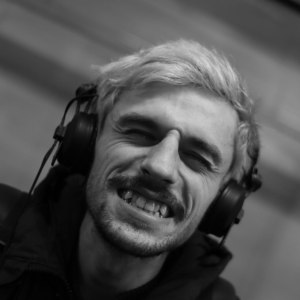
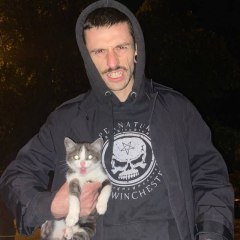
Hello, my name is Taras, I started studying music at the age of five, when I enrolled in a music school to play the violin. I graduated from college, also in violin, moved to Kyiv and entered the faculty of folklore studies, where I completed my bachelor’s degree, and after another year and a half I got my master’s degree in violin at the Academy of Arts. I got introduced to the world of electronic music four years ago, so now I play in the Zgarda folk band, teach the violin and sometimes DJ at parties and record radio broadcasts.
Has the full-scale invasion changed your approach and the way you think about music and sound in general and has it had an impact on your playlist?
My approach to music and my perception of it have not really changed. As for the sounds, in the first months of the invasion the swishing noises, thuds and suchlike triggered me quite a bit, but now everything is fine. My playlist has changed significantly, now there are obviously no tracks written by russians. I also allocated more space to Ukrainian music (quite obvious too))
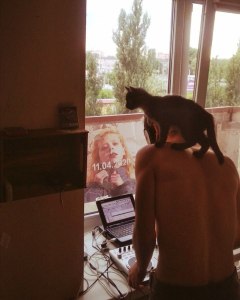 You host the series Classical on Gasoline Radio. What can you tell us about Ukrainian classical music and how aware would you say are Ukrainians of their musical heritage?
I studied academic violin for many years and, of course, in universities and schools we studied Ukrainian composers and their music, but even a person like me really discovered Ukrainian classics only after the invasion of February 24, 2022. Once I was playing chess with a neighbour (we like to put on classical music as we play), and I suggested listening to something Ukrainian. I turned on the 1st symphony of Lyatoshynsky, and after that I was carried away. I started searching and discovered a ton of Ukrainian academic heritage, and it quite surprised me. That is why I decided to record broadcasts dedicated to Ukrainian music, because I was really keen to share the find. I can say one thing about Ukrainian classical music, it is professional, original and self-sufficient, in no way inferior to other European music, especially considering the fact that it has a much shorter history and was written under very unfavourable conditions of Soviet oppression. The majority of Ukrainians have some knowledge of it limited only to fairly well-known works and their composers, but many do not see the full picture. There is a big problem with sheet music and recordings as many great pieces are hard to find freely available.
 How would you describe the electronic music scene in Kyiv and how do you see it developing under present circumstances?
A very broad question) What I can say for sure is that the electronic scene does not stand still in Kyiv. In fact, electronic music is the last thing I would worry about in Ukraine)
Are there any Ukrainian releases from the past year that you feel have helped you to make sense of current events and, conversely, are there any specific tracks or albums that you now find triggering because they might be associated with specific difficult times or events?
A lot of cool releases and albums came out last year, but they didn’t help me to think about current events, probably because I treat music more objectively. There are also no associations with difficult times, because they haven’t passed yet, but maybe in 10 years I’ll listen to some conventional Rusik, and something will dawn on me)
 How do you feel about the inclusion of “war sounds” in recent releases by Ukrainian artists?
I don’t worry about the sounds per se. More importantly the track has to be good on its own, but sometimes when I hear a siren in a track, I cringe a little, because everyone has already used one, “it’s so original”))
Where are you now and have you been displaced by the full-scale invasion at any point?
Originally, I am from the city of Hadiach, but I have lived in Kyiv for 6 years now. When Kyiv was being shelled, I also stayed here.
 Has the sonic environment in Kyiv changed over the course of the past year and How does wartime routine sound?
Personally, three new samples have occurred to me: an explosion, a flight of the Shahed, and a siren.
In the introduction to Sky Above Kharkiv, Serhii Zhadan writes, “War sharply changes ways of seeing, changes feelings. Above all it immediately changes the weight of a great many things, things that seemed necessary and obvious just a day go.” Has the full-scale invasion made you reassess your priorities and are you able to think of the future?
I’m one hundred percent sure there have been some changes, maybe not too drastic, but they are there. Of course I think about the future)
How does one get used to the constant separation from close people?
I visit relatives about once every six months, it’s enough for me so I can’t complain.
 How does one get used to the curfew and other restrictions of military time?
As a matter of fact, I am the kind of person who can find a lot of things to do and have fun without leaving home, but I miss summer nights a lot, it was easier in winter. And you get used to everything else very quickly. I remember that before the invasion, we discussed all these prohibitions once, and in my imagination it was harsh and unusual, but now it is an everyday thing.
Which book / film / album / song / traditional dish / podcast / blog / artwork / building / meme best captures Ukraine for you?
An authentic lyrical song from my native Poltava region “The Widow Went” https://www.youtube.com/watch?v=6d_yoM-SQmw , a very strong and deep song that always brings tears to my eyes.
JULY 16, 2023 – BERLIN
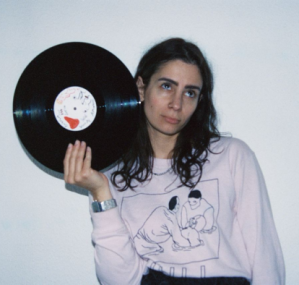
photo @k__o__t__s__a__r
Travis – Strela
Even as a child, I was a big fan of music, listening to rock, rap, and pop tapes for hours on end, writing lyrics to tracks, and going to concerts. My mother didn’t see a creative personality in me, and it wasn’t considered a possible profession at the time, although my father is an artist, but he moved to Argentina a long time ago.
Until I was 24, I worked in PR for a large corporation, but when the first wave of the russian invasion began, I switched to PR for entertainment projects, including Closer. Electronic music in Ukraine was hardly covered in the media at that time, and guests simply had no way to find out about the artists we were bringing, so I decided to learn how to write about this scene myself. I started writing about labels and artists and became a natural nerd, I read a lot about producers and label founders, I was very interested in everything.
In my free time, I learned how to mix tracks with Traktor. I found it incredibly interesting to find tracks that I liked, and I liked even more to find combinations of them. It was 2016, and because I was raising my son alone at the time, I didn’t go out much and stayed home in the evenings, so music became my salvation. That’s when I got my first sampler and started to learn how to make my own compositions. One of the promoters paid me for the promo texts with records. That’s how I started to build a vinyl collection. Naturally, my creative personality began to prevail, I couldn’t stand the fact that I was always helping other projects, sacrificing my own, and in the winter of 2022 I quit my other jobs, deciding to focus exclusively on music. I regret not doing it earlier, but I’ll catch up quickly.
photo @k__o__t__s__a__r
Has the full-scale invasion changed your approach and the way you think about music and sound in general and has it had an impact on your playlist?
Music is indeed the mouthpiece of the people, which can and should be used, through which you can skillfully express your disagreement or gratitude and support. Playing music by Ukrainian producers (and there is an infinite amount of worthy material out there) is my way of supporting them and the entire scene. Not playing music by russians is my protest. These are the smallest examples.
But this support is not out of mourning, everything happens as naturally as possible. We really have a lot of unique producers, and now, thanks to active labels, there’s a new wave of releases where every track is a hit, and some people make self-releases without waiting for invitations. I don’t know how much money I’ve spent on buying albums featuring Ukrainian producers, I don’t have a single podcast where I wouldn’t use their tracks, and of course I play them at parties. Because they’re really cool, not because I “have to do it”.
Recently, I tried to write music using samples with Ukrainian instruments, and only one instrument suited my style, everything else sounded weird to me, or I had to change it beyond recognition. But I used a sample of a Ukrainian boy rapping on stage at a festival in 1995. Before, I would have definitely passed it by, but now I really appreciate our cultural heritage more, and if I can use it and get high from it myself, I take it.
Criminal Practice
You run the Strela booking agency. What has the international music scene response been towards Ukrainian artists, in terms of clubs and festivals, over the past year and what are the logistics of working with male artists still based in Ukraine in terms of travel restrictions?
I would like to explain that I was always the only one actively working on Strela, sometimes I had assistants who managed the tasks, but it was not a company or a large agency, it was more of an enthusiastic project. So after I fled from Ukraine, Strela was on a hiatus for a long time, which was in line with my condition.

Serge Jazzmate
I refused to take booking fees for our artists in Ukraine, and therefore stopped managing local gigs. I objectively feel that if I had been doing this professionally, everyone would have been playing everywhere long ago, because it’s almost the same as doing PR – you push something, find connections, break through, sell, and be in the spotlight. And I’ve already said that I was experiencing burntout. But then we talked to the residents and they were sympathetic to the proposal to reformat the agency into an artist management. That is, they can rely on me for all matters except for the guarantee of a successful event search. But in the future, I plan to do showcases, I know that when I raise myself in the European scene, I will bring everyone I can with me.

victor.b
I also started giving free lectures for all artists, about communication and tools for their own creative growth. I talk about why it is impossible to sit still and expect success to fall into your lap. This is how I keep doing something under the brand’s name.
But the main problem is precisely because of logistics. I’ve even managed to get someone on tour, but it was usually a bit hellish. If an artist isn’t yet commanding huge fees, then traveling 26 hours one way to Berlin to collect 200-400 euros for one gig, this is not something not everyone is ready to do. It was different when one used to be able to get on a plane for 40 euros and spend 3 hours in Berlin and return home the next day.
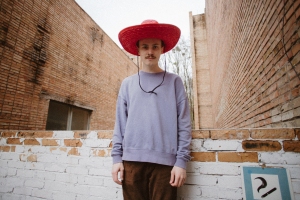
Eazy @pensive.boy
Now consider that I’m alone, it’s not my main task (my assistants didn’t do it either), the artists are from Ukraine and haven’t become mega-in-demand yet (although they’re almost all hyped in Ukraine), the conditions involve an expensive transfer, plus there’s no guarantee that they’ll let you out – so it’s not easy, but I’m waiting for opportunities and interest because I know that people will come to my roster. There are really very unique artists in Ukraine. I could talk about each of them for hours.
The conditions for getting a permit to leave have also become more complicated, but I see that many people are able to go for a gig. The main thing is also what you write in your application to the Ministry of Culture.

Travis with Sibil
What about international deejays going to play in Ukraine?
I find it a very brave and bold decision to make. And artists might do it because of different reasons: to support friends who are stuck there, to play for free and donate, out of curiosity and a desire to see what the situation is really like from the inside, to get a shot of adrenaline, or even out of boredom and if they’re not getting enough dopamine from their touring routine. Or they might be doing it to just get some hype while this hasn’t yet become mainstream. Each and any one of these reasons might be what is motivating them.
I am just saying this because I heard some assumptions about whether this or that artist is going with a true desire to empathize and for altruistic, and not selfish, reasons. Well, no one ever can keep being unemphatic after staying in Ukraine even for one day. And making the decision to travel for 20+ hours one way to a country in the midst of war to play one set not even for a full fee, (and most likely also to donate a large part of it) — would still be a good enough reason even if they were doing it for the hype. So respect and kudos to them.
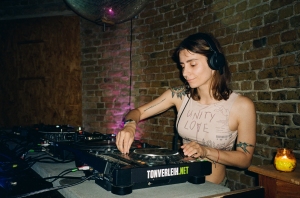 You are also a deejay yourself performing under the moniker Travis. Has the full-scale invasion had an impact on your professional career?
Moving to Berlin has definitely influenced my career.
Everything has become easier for me here, and I immediately became a resident of the System Error label. We met in Kyiv when they were organizing a party in Keller and I was helping with PR. And in Berlin they heard me and liked my style. Now I am one of three residents and party organizers. It’s more than just a party, we have big plans. Not to mention the fact that the label has about 10 sub-labels. That is, releases come out almost every week. For many producers, this label was the first place where they were released, there is no genre affiliation, no restrictions, and you can hear completely different music on one dance floor. And, at the same time, we are a registered company, we constantly attend seminars and events for our own professional development as scene players. I have never seen anything like this in Kyiv. Even when I was working in PR or bookings, I was always drawn to European projects, because we still lack infrastructure, funding, legal framework, and basic experience and knowledge. And I will be happy to help bring all this to Ukraine in the future.
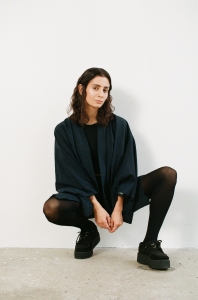
photo Igor Tsarukov
You were part of the Closer Kyiv team. With many deejays and electronic artists having relocated, how do you see the electronic music scene in Kyiv developing under present circumstances?
The scene has been completely renewed. To be honest, until 2022, I thought there was no end to the same lineups. And now half of the residents and regular artists are abroad, and a new generation has taken their place. In Closer, to start playing steadily at club parties, you need to have been an active DJ for about 5 years and also try to be as close to the club’s party as possible. Now I see new names in the lineups all the time, and a lot more promo groups have access to Fridays at Closer. Everyone has relented a bit and realized that they need support from a new audience. At k41, I see new names all the time, and they are also very supportive of artists who do military collections, so you can often find the initiators of the collections in the lineups.
Recently, at the Strichka festival, singer Alina Pash sang the Ukrainian anthem, which before would have been nonsense at an electronic festival. There was almost no unity in the electronic scene, only little by little something was emerging, in small steps, every man for himself. This situation has united many people, I see many unexpected collaborations, everyone has become more open, everyone has the same goal: the development of culture and victory over the enemy. For the latter, almost all parties are aimed at raising money for charity, not self-gain.
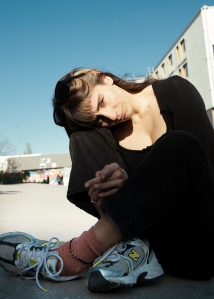
photo @marinazbotelho
I’ve already said that over the past year we’ve had a surge in releases. I think this is connected with the national consciousness and the beginning of the respect for culture, the desire to spread it, including abroad, because if an artist cannot leave, their music has long been there thanks to these releases.
For me personally, a big pleasant surprise was the emergence and active presence of the bass and breaks scene. Because this is what I lacked in my circle of events in Ukraine, I collected breaks records but didn’t even know where to play them. Sometimes I play tracks by modern breaks producers to experienced European producers and their jaws drop. But there are also festivals such as Брудний пес and promo groups like BRUKXT based on labels that release such music, and it’s even reached Berlin, where Ukrainians have also started creating events series that bring Ukrainian record label alumni.
At the same time, let’s not forget about the curfew, they manage to do and develop all this within a limited timeframe ending at 00:00.
Are there any Ukrainian releases / sets from the past year that you feel have helped you to make sense of current events and, conversely, are there any specific tracks or albums that you now find triggering because they might be associated with specific difficult times or events?
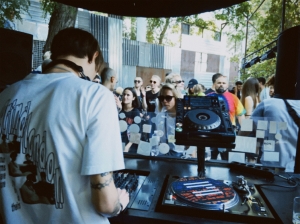
Troy
Nothing triggers me.
Sometimes I ask our sound guy from Closer to send me recordings of the sets that are currently playing there to understand the sound. All the new releases, especially those with Ukrainian vocals, amuse me more, we’ve always been able to make fun of the situation. There’s a lot of irony.
Something more serious:
- Zhupan chornyi by RUSIIICK
- Воїн by Koloah, Туча
Also, this is probably one of the most profound works for me. They’re poems about the war accompanied by electronic arrangements: warнякання by Антон Слєпаков / Андрiй Соколов.
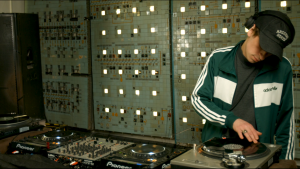
Peshka
How do you feel about the inclusion of “war sounds” in recent releases by Ukrainian artists?
Peshka has a track called TRИVOGA where he recorded and used the sound of a siren. And he’s from Mariupol and he survived the horrors, his family is partially still there. I think that if he used that sound, he knew exactly what he was doing.
I once had a conversation with Borys (Closer’s resident) about this, and he is not ready to hear it yet, he thinks it’s better to change the sound as much as possible so as not to trigger. And I also respect this because everyone has different perceptions. On the other hand, this sound is a part of life now, it’s something that makes someone want to include it in the track and this person has a certain goal and idea, a message to share. Therefore, this issue is still a delicate one. I personally try to avoid it, so as not to hurt anyone. But I once included a track in a podcast in which I didn’t notice the siren sound because I didn’t hear it as often as others. And someone even discussed it. I wish no one would take it personally.
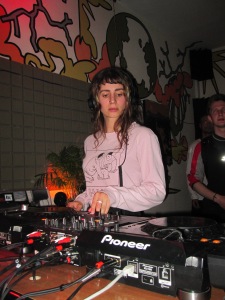
photo @pollinnxx
In the introduction to Sky Above Kharkiv, Serhii Zhadan writes, “War sharply changes ways of seeing, changes feelings. Above all it immediately changes the weight of a great many things, things that seemed necessary and obvious just a day ago.” Even though you are now based in Berlin, has the full-scale invasion made you reassess your priorities in any way?
Lives were turned upside down and radically changed for all those who stayed and all those who left.
At first, there were a lot of negative emotions towards each other: those who stayed hated and shamed those who left. Those who had left were offended and angry about it and also started hating the provocateurs. We stupidly ignored the fact that both of us were fucked up and no one could control their emotions and expressions. The atmosphere was very tense for about a year. We almost lost each other.
Ukrainians have always been united for victory, but if you are dead inside, you will definitely not be able to be useful for the common goal. Therefore, you and your soul must come first. If you feel happy here, in your place with your family and friends, stay, if you are stuck and do not see your own development under such conditions (as it was with me), move, if you want to go to the front line, you go. Therefore, everyone has their own path to happiness, which will result in enormous energy and work for victory from within or without.
It’s not really relevant to the question, but I wouldn’t say I’ve changed much, I left all my things in Kyiv and gave them to charity, but I wasn’t attached to them before.
There is definitely a sense of empathy for refugees, not only from Ukraine. I didn’t understand it before.
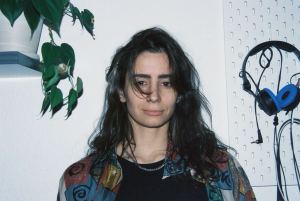
photo @k__o__t__s__a__r
How does one get used to the constant separation from close people?
At first, I was separated from my grandmother for almost a year by covid, and now this.
I can’t visit her often, I go to Ukraine once every six months. I can’t get used to it and come to terms with it, I’m worried about her. And she doesn’t want to move because her blood pressure rises at the thought. I also see my mother once every six months at most. I still have my favorite friends in Ukraine. You can try to re-adjust yourself and think that you are the one who went on a trip around the world for several years and would not see anyone anyway. Because I hope it will end soon.
After almost a year and half since the full-scale invasion, what would you say the West still gets wrong about Ukraine?
I think that only those who have come and seen things with their own eyes understand correctly, but there are exceptions even without visiting the country.
And I understand perfectly well that it is very difficult to realize what the situation is until you are fully involved. It’s just like in 2014, Kyivans didn’t understand exactly what was happening in Donetsk, and in 2023, Lviv didn’t empathize with Kyiv. What can we say about citizens of other countries who are just bored with all this and whine about price increases? But respect to those who understand and support. And respect to such journalists like you.
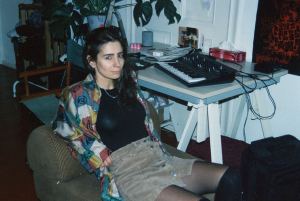
@k__o__t__s__a__r
Do you suffer from burnout and what do you do to relax?
Since I started doing what I love – music – I hardly ever feel burnout.
I can always switch from deejaying to production because it takes place in a more cozy atmosphere. I just realized that it’s difficult for me to play a lot at night or travel with gigs now, because then I miss my productive days, and I want to devote as much time as possible to writing music and creating live shows.
I burn out from routine duties, bureaucracy, taxes, reports, invoices. So I decided that I would devote one or two days a month to this, when I do paperwork.
I also got burned out from communicating with people with an energy that doesn’t suit me, after which you come back exhausted. From people who are constantly whining, gossiping about others, always on the negative side. I cleared all this and it made it easier to live.
Which book / film / album / song / traditional dish / podcast / blog / artwork / building / meme best captures Ukraine for you?
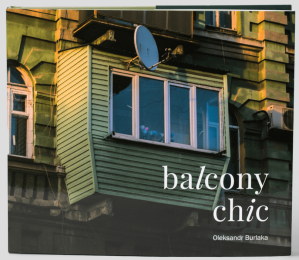 Literature: Les Podervyanskyi is a talented novelist and humorist. He speaks the beautiful Ukrainian language with great precision, skillfully incorporating delicious national swear words.
- Album: THMK – Неформат (Neformat – Curiosities). I recently re-listened to this album, and it’s even more on point now. Real Ukrainian hip-hop. This group was very popular when I was in school.
- Radio: I’d like to mention the new Gasoline Radio, which is making an incredible contribution to the publicizing of the modern Ukrainian electronic scene.
- Book: Balcony Chic. I don’t read much at all lately, this is a photography book by Oleksandr Burlaka in a cool edition. Everyone who has been to Kyiv will recognize these absurd balconies.
- Film: Winter on Fire: Ukraine’s Fight for Freedom. I would recommend to anyone who wants to understand the Ukrainian soul to watch this.
- My favorite traditional dishes are those that my mother or grandmother introduced. Or dumplings with cherries and sour cream.
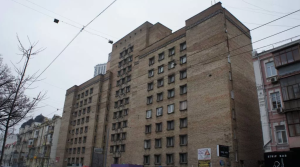 Building: in Kyiv, there is a special project house at 45 Saksahanskoho Street, it’s crazy, but I love it because I used to live there. It’s different from the neighboring buildings because it was built in the 70s, and those were built in the last century, and they’re all so pretentious. But that’s the whole of Kyiv, a lot of contrasts. So this 12-storey building is designed so that all the windows of the actual apartments face the courtyard, and only the front window of the building itself faces the noisy street. That’s why the noise from the street is not heard in the apartment. The poor architects often get onto the top of the lists of the scariest buildings, but stupid bloggers judge it only by its façade.
JULY 17, 2023 – LEIPZIG

photo by Aryna Ostapenko
I have no special story to share, and it is usually hard for me to talk about myself. I’m Yana Ponura and I love music 🙂
Has the full-scale invasion changed your approach and the way you think about music and sound in general and has it had an impact on your playlist?
Well, previously I had never really thought about the significance of promoting Ukrainian electronic music abroad and the underlying meanings and implications it could have, both for myself as a DJ and for the listeners. In those moments, it becomes more than just music, especially when you have fellow compatriots nearby. Now, for me, it has become even more of a cultural exchange, a reminder of who I am and where I come from, and a way to preserve my identity.
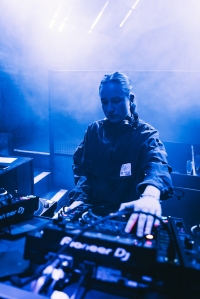
Fabric RA Ukraine Fundraiser photo by @benedictpriddy
Where are you now and have you been displaced by the war at any point?
Currently, I am in Leipzig, Germany, where I have been for approximately a year. However, I frequently travel back to Ukraine.
What impact has the full-scale invasion had both on your personal and professional life?
These days, I have been dedicating more of my time to music-related projects. For instance, the team of Kyiv club Closer, where I’m a resident, launched Brave! Factory Agency to bring Ukrainian artists together and use our platform to promote their exceptional talents on a global scale. I have taken on the role of an agent, recognizing the opportunity to assist artists with their performances, particularly those who may not always have the privilege of freely traveling abroad, unlike myself.
In the current dark but undeniably historic times, I strongly feel the importance of capturing the essence of this era through music. Also being part of the Progressive Future label team, I am committed to promoting and releasing more Ukrainian music during these crucial times.
Are there any Ukrainian releases / sets from the past year that you feel have helped you to make sense of current events and, conversely, are there any specific tracks or albums that you now find triggering because they might be associated with specific difficult times or events?
https://www.youtube.com/watch?v=-WZCd4TypDo&t=45s
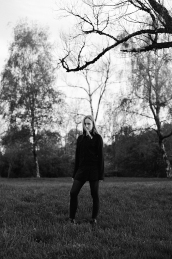
photo by Vitaliy Revenok
How do you feel about the inclusion of “war sounds” in recent releases by Ukrainian artists?
I think that incorporating the “war sound” into musical compositions can serve a variety of purposes, but it is critical to understand the context, place, and time in which they will be played.
Personally, as a DJ, I would refrain from playing music with such sounds at a party, because for both myself and the listeners, it is a time to recharge and celebrate life.
How does one get used to the constant separation from close people?
Never … but I still believe it’s temporary. I’m trying to do my best to remain close and useful to my family and friends.
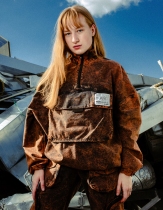
photo by Aryna Ostapenko
After almost a year and half since the full-scale invasion, what would you say the West still gets wrong about Ukraine?
I believe that many people fail to understand that russia is a death machine, and all passengers are accomplices. People tend to justify russia’s actions, but I cannot comprehend why we still try to justify a maniac. It deeply pains me. Similarly, I think not everyone realizes that a war could be on their own territories in just a couple of years. However, many of us have also overlooked other wars, so it is understandable.
Which book / film / album / song / traditional dish / podcast / blog / artwork / building / meme best captures Ukraine for you?
https://music.youtube.com/watch?v=pXY7m_S2XZg&feature=share
JULY 18, 2023 – ODESA
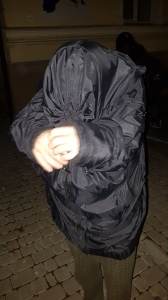
Hi, my nickname on the bandcamp is Galeta Jaira and this is my instagram.
It started when I was a child,10-15 years old, and made a makeshift drum set. Later, I studied at a dance and theater studio. We went on tour once, and there the older guys played some songs, and I liked the sound of the guitar so much that for the next few days it seemed to me that it was coming from everywhere. At the institute, I learned to play the piano, learned the notes to Bach’s Toccata and Fugue in D Minor, and one piece by Mozart.
When I was 25, I had a friend who played Electribe Korg 2 (grow box), so I twisted the knobs a bit with him, but it was too confusing. He didn’t understand who was doing what, and finally told me to buy one for myself. Well, so I did.
Now I play Digitone and Electribe Krog 2 (grow box). I want to solder modular synths. Music for me is a process in which I owe nothing to anyone, where I can experiment for my own pleasure.
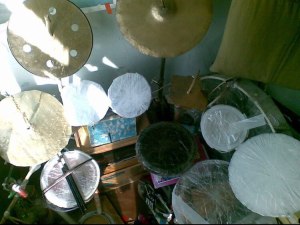 Has the full-scale invasion changed your approach and the way you think about music and sound in general and has it had an impact on your setup and playlist?
Since the beginning of the war, everything I had done before has lost its meaning. It’s like “before and after”, it seemed that I could no longer make music. Only a few months later I was able to play a bit. In general, nothing has changed in the perception of sound for me.
How would you describe the electronic and experimental scene in Odesa and how do you see it developing under present circumstances?
Before the invasion Odesa was full of experimental musicians, and many of them were beginners like me. At parties near the sea I got a taste of experimental music and felt like I belonged somewhere. Now the situation in Odesa has gotten much worse, since many have left, some went abroad and some to other cities. I don’t really want to go to concerts when there is war in the country.
 You have five releases on your bandcamp page from 2023. How do you manage to be so productive under current circumstances?
In this state, you are either more productive due to the adrenaline, the stress… or absolutely demoralized, it is difficult to keep the balance. If you don’t do what you like, it will only get worse.
What impact has the full-scale invasion had both on your personal and professional life?
When you have a war in your country, life becomes much more complicated and in many ways loses the fullness and the meaning it had before. It is impossible to relax and have fun, the knowledge that many people are dying is constantly hanging over me.
 Where are you now and have you been displaced by war at any point?
Twelve days after the start of the war, it became very difficult for me to stay in the city where I lived, mentally draining. The nearby city, 133 km away, was heavily shelled, and it seemed that later one might not have the chance to leave: there were no tickets, the trains were full, and the people were scared. I still have the text which I wrote when I left:
At almost 6 in the morning, I decided to go to bed, I wrote to Dasha that it was time to sleep. She says that she was sleeping and now she woke up. All because of thoughts and collective sense of fear.
– Did you dream about the war?
– Did you hear that?
– Not really (I thought it was a door in the yard)
In major cities of Ukraine, airports and military bases were being blown up. I saw the news and woke up the people in the apartment, I didn’t know what to do.
From that moment days and weeks have gone by.
The countdown started from day one.
On the third day, two guys left and friends came to stay with us until the day 8. We were 9 people in the apartment. Before that it was a test for four, but now in the present conditions, comfort was of little importance. Everything that had happened before ceased to matter, everything I did didn’t make sense any more, and it was impossible to keep on doing it.
Kyiv and Kharkiv are bombed, people stay in basements for five days without water and food. It’s good that there is Internet. The city that you know is destroyed. On the third day a friend cuts his own throat, he is no more.
Everything happens so fast that you don’t know what to do, you don’t understand what’s going on. I’m afraid of dying and can imagine what I’ll say to someone before I die, if there’s anyone around. Then there’s this fear of nuclear weapons. Even if you manage to calm down in the evening, and it seems that everything is the same as before, it’s not. The feeling of uncertainty, the fear are back when you wake up in the morning, and it’s like a waking dream, stronger than all psychedelics. When is this going to be over? I don’t want to kill, I don’t want to be taken prisoner, you forget what you’re doing, where you put your things, people on the street look straight into your eyes. There’s curfew, marks on houses, saboteurs, absolute delusional lies of the aggressor.
The most difficult day for me was the seventh day: there was no buckwheat and no water in the stores, the market was almost closed, it was raining. I bought coffee in the city and the shop assistant asked me three times:
– Do you need sugar?
It was weird, but I understood him. I needed to calm down in order to concentrate, but couldn’t, the fantasy was working up unnatural scenarios, I lost the accuracy of perception.
I’d never had a tantrum, but I felt that I was very close to it, something that I didn’t want was happening to me, and I couldn’t stop. Why don’t they just kill Putin? There was panic and hysteria all around. It was hard not to watch the news, and at night there were huge mushrooms of smoke and light over the cities where your friends are, torn bodies, the great feast of meat and blood, unjustified by anything. You get used to the sound of an air raid siren, it turns into music, and you continue to sleep. There’s no longer any fun in it, military words become commonplace, but will it ever be fine? How is it?
I cried for the first time in 10 years, I dreamed about it, I cried because I love my friends.
 Are there any Ukrainian releases / sets from the past year that you feel have helped you to make sense of current events?
Probably I don’t listen to music that much now, and in general I don’t remember the names of the artists. It’s hard to say.
How do you feel about the inclusion of “war sounds” like air raid sirens in recent releases by Ukrainian artists and do you find them triggering?
There are a lot of triggers about the war, it is impossible to forget, rockets fly into almost all cities. In music it remains a trigger, but it takes on a conceptual meaning, and concepts are the observation of a phenomenon. I’m curious about the forms these sounds can be shaped into. The first things I captured in the “new reality” are somewhat similar to the sounds of explosions turning into a high-pitched noise that fills my ears, and the singing of birds somewhere, something falling under the water, listening from under the water.
 After almost a year and half since the full-scale invasion, what would you say the West still gets wrong about Ukraine?
I don’t know if you have any specific idea in mind when asking this question. I think when a person kills another person it’s not right. One might say that our military is also doing the killing, but it’s them who came to our house to kill us in the first place. We are forced to defend our culture, and justice must prevail. Otherwise, it would turn into an example of freedom taken away unchallenged.
JULY 18, 2023 – GERMANY
 Lobanov K.
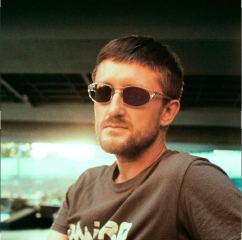
My name is Kostiantyn Lobanov and I have been doing music almost all my life, starting with my first guitar at 14 years old. Particularly with the electronic scene I became a part of it in 2010, I guess. Back in those times I formed a band Blacklazer, where me and my mates made music using portable nintendo ds consoles. After the band split up I began to produce music as a solo artist mostly on analog gear. Later I was part of the duo Spekulant together with Alex Savage. We also started a local Kyiv based label Progressive Future together. And I also have the brand Dnipro Modular where we make Eurorack modules.
Has the full-scale invasion changed your approach and the way you think about music and sound in general and has it had an impact on your setup and playlist?
Mostly not, because the war for us actually started in 2014. The full-scale invasion is a logical following of the aggressive intervention that russia started back then. And of course this period from 2014 had a big impact on music that I made and that I liked, because the overall underground music scene in Kyiv started to develop on furios speed from that time. But what I found strange is that the more brutal dramatic things are happening nowadays around the more light music I started to prefer. I treat it as an escape to this artificial fantasy world where people can live in peace without fear of being bombed and focus on life, emotions, knowledge and relations with the world.
How would you describe the Ukrainian electronic scene and how do you see it developing under present circumstances?
I can describe the Ukrainian electronic scene as a savage garden with almost no rules, no own traditions but beautiful in its wildness. From afar its creative fauna can look seamlessly to what the European scene is used to for ten years but persistent music explorers will find some unseen species there.
What can you tell us about Progressive Future and do you have other releases in store for 2023 following Native Outsider’s Modern?
Progressive Future was started as a with my colleague Alex firstly just for the joy of being a domestic platform for unknown local artists, mostly our friends. You can find there mostly electro, bass oriented groovy music with some healthy dose of experiments. For now, 8 years later, I can admit that there are still the same vibes there. We have 11 releases for now and one new one is also coming this year.
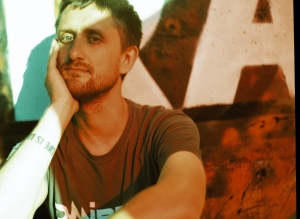 What impact has the full-scale invasion had both on your personal and professional life?
Of course it has a huge impact, I feel a lot of pain and disagreement towards this disaster and every day I am a part of this, whether I like it or not.
Where are you now and have you been displaced by the war at any point?
Currently I live in Germany, and really miss my old life, friends and family in Kyiv.
Are there any Ukrainian releases / sets from the past year that you feel have helped you to make sense of current events and, conversely, are there any specific tracks or albums that you now find triggering because they might be associated with specific difficult times or events?
There was a huge release on the label Sonic Weapons of Love 001 🇺🇦 which contained 45 tracks of Ukrainian artists on it. Also together with my friend Abstract Error we made a release under the name Union of Trident on Progressive Future during the first 3 months of the full-scale invasion. And I also want to highlight this atmospheric track Хор «Осоння» & Whaler – “В темную нічку” from the mystictrax label.
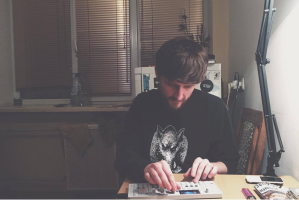 How do you feel about the inclusion of “war sounds” like air raid sirens in recent releases by Ukrainian artists and do you find them triggering?
Sure, this is a part of life now, sadly. So if the music is a language, why not use contemporary words if it is from the heart but not for “effect”?
How does one get used to the constant separation from close people?
It’s the biggest struggle for me now. I just know that this will end sooner or later and don’t lose hope.
After almost a year and half since the full-scale invasion, what would you say the West still gets wrong about Ukraine?
I think this is a time not only for the West but also for Ukraine itself to understand its place in this mad world. Before that, Ukraine was considered a poor post-soviet country. But now things have changed drastically and I am already feeling much closer to EU culture and values and I think both parties will benefit from this closeness after the war. Ukraine has a lot of talented smart hard-working people that can potentially give a strong push to the economical and cultural life of the EU, while the western rich world can give investments, education and fill our space with possibilities.
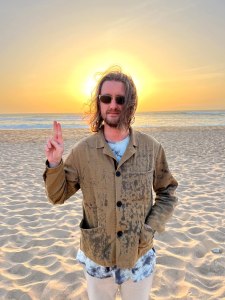 Do you suffer from burnout and how do you relax?
When I feel stressed I like to go outside the city, spend some time with friends, smoking weed, beer… nothing special here). Sometimes I like just to walk through a city alone with headphones and my favourite music playing. When you work hard you don’t need much to relax properly.
Which book / film / album / song / traditional dish / podcast / blog / artwork / building / meme best captures Ukraine for you?
One of my favourite Ukrainian movies is “The Lost Letter” based on a script by Ivan Drach, which shows some authentic archetypes and story tales, and it’s full of sparkling Ukrainian humor.
Who should I interview next and what should I ask them?
Try to do an interview with Zolaa, a Kyiv based artist.
What are you currently working on and when can we expect your next release?
Now I am having an interesting collaboration with a talented Leipzig based mate Tinkah and we are planning to make a release soon, in mid autumn.
JULY 18, 2023 – ODESA
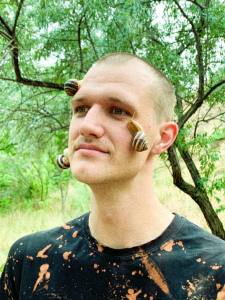
photo by Natalia Marushchak
Actually, my story is quite ordinary. I’m just a regular guy who was born in a small town called Uman in Cherkasy Oblast. It’s hard to talk about a musical experience when you live and breathe music. There are hardly any days in my life without music. I started creating music in my teenage years. I tried my hand at rapping, and then I got a guitar and started writing my own songs. I even had some experience singing in a church choir. As for electronic music, it all began a few years ago when my friend invited me to a party called “Povitrya” (Air). That’s when I discovered the magic of techno. That same year, I attended another party called “Svora” (The Herd), which made a significant impact on my sound. It featured underground, heavy techno that penetrated deep into your bones. That’s when I started learning music production software and the principles of creating techno. Over time, my skills improved, and I began to envision the concept I wanted to showcase. I didn’t just want to make music for parties; I wanted to create art.
Now, let me tell you about Phite Noise and what it’s all about. In the 20th century, large cities became engulfed in factories, roads, and heavy industry. Rapid industrialization made a significant contribution to human development, but it didn’t neglect culture. A whole new cultural movement emerged, known as industrial, and one of its striking representatives is industrial techno, where factory sounds became a primary motif. In the modern world, the impact of heavy industry is less palpable. Digital technologies have taken the stage, and the world has entered a post-industrial period where the digitization of everything is balanced with a desire to preserve nature. This is the moment I strive to capture in my art. Phite Noise represents the delicate balance between nature and the digital world. It’s post-industrial techno art.
Has the full-scale invasion changed your setup and playlist and the way you think about music and sound in general?
As for the playlist, I have completely abandoned music created by Russian artists, no matter how much I used to like them. However, when it comes to sound, it’s more interesting. My perception of sound has changed, just like many of my compatriots. For example, if you pass by a movie theater and hear a bass reverberation, subconsciously you might think of an explosion and your heart will start beating faster. Sometimes, the sound of a refrigerator reminds me of a siren. Not to mention thunder and lightning… I understand that it’s a problem. But I’m afraid it will haunt me for many years to come.
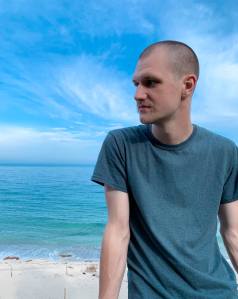
photo by Natalia Marushchak
What can you tell us about your latest ep Inflammation and its production process? Also, I’m particularly curious about the album cover, which depicts a sutured wound. Where did you get it from?
If we talk about “Inflammation,” it’s a story about pathogens and the immune system. In it, I pondered the scenario of computer viruses starting to infect humans and how that would be, or when human viruses mutate to the point of infecting computers. An interesting fact about its creation is that I was finalizing work on the EP during winter, in cafes and restaurants. This was because Russia was carrying out terrorist attacks on Ukrainian power plants, and the whole of Ukraine was experiencing a constant shortage of electricity, with days without power. In reality, I spent quite some time choosing the cover. I wanted it to depict a real inflammation, or even better, a cut wound. I asked my veterinarian friend to take a few pictures for me from his work, and I browsed through numerous medical websites. The most suitable image I found was on a regular stock site that offered royalty-free photos. I incorporated the actual photo into a frame against a backdrop of noise, and I adjusted its colors to be cooler and more serene to convey the idea of it being an everyday occurrence. I was surprised that Instagram blurs it out.
How would you say the club scene in Odesa and Ukraine has changed since the full-scale invasion with the introduction of the curfew and the displacement of many and how do you see it developing under present circumstances?
Unfortunately, the electronic music scene in Ukraine is going through challenging times. Not only are there no night parties at all, but also international artists are not very eager to come for daytime events. In Odessa, there are practically no events happening, while in Kyiv, it’s slightly better, but still not as vibrant as before. Many talented Ukrainian artists have also left and are now playing sets in Berlin. However, there are positive aspects as well. For example, there is increased attention from foreign journalists and labels towards the Ukrainian scene. Additionally, due to the inability to invite international stars, Ukrainian clubs are promoting lesser-known Ukrainian artists, for which they are sincerely grateful.
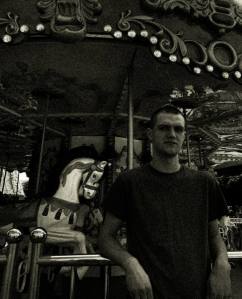
photo by Natalia Marushchak
What impact has the full-scale invasion had both on your personal and professional life?
If we talk about my professional life, the impact has been significant. My main source of income is not related to music, and during the beginning of the war, my actual earnings dropped to zero. I was simply living off the savings I had for vacations and some purchases. It took about six months for my earnings to slowly start recovering, but compared to pre-war times, I now earn three times less when converted to currency. Nevertheless, I’m not complaining because there are people who have suffered much more than I have. On the positive side, being without work allowed me to focus more on music and even enhance my skills. It was during this period that the final concept of Phite Noise was formed, and the first releases were written.
In my personal life, I am extremely grateful to my girlfriend Natali, who kept me sane amidst everything that was happening around us.
Where are you now and have you been displaced by the war at any point?
At the moment, I am in Odesa, but at the very beginning of the war, I went to Uman to be with my parents. I went there to support them during this difficult time and also because Odesa seemed too dangerous due to its proximity to the sea and its symbolic significance for Russian propaganda.
Are there any Ukrainian releases from the past year that you feel have helped you to make sense of current events?
I will say no. In Ukrainian culture, such a term as “bayraktarshchyna” arose. This is when they use the topic of war (consciously or unconsciously) for their own popularization. Such an art looks worthless, and will be forgotten immediately after victory. Unfortunately, this has happened too much in the last year and a half, and if at the beginning of the war, it still seemed normal, now it causes nothing but cringe. Maybe I missed something really interesting among this garbage
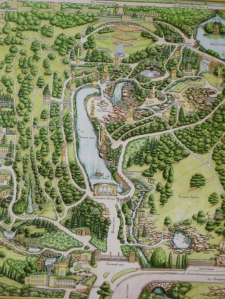
Sofiyivka Park
How do you feel about the inclusion of “war sounds”, like air raid sirens, in recent releases by Ukrainian artists and do you find them triggering?
I hear this every day. I wonder if it evokes any response in people who only hear it in music.
After almost a year and half since the full-scale invasion, what would you say the West still gets wrong about Ukraine?
They are mistaken in thinking that Ukraine is already receiving a lot of assistance. We are trapped in the jaws of a massive fascist shark with nuclear weapons, and in such a case, “enough” is never enough. Some countries also make a mistake in believing that the war can be resolved “peacefully” and leaving some territories to russia. russia only understands the language of force. Every concession only fuels its appetite. Right now, Ukraine is shedding blood for the entire world, so that the machine of terror and fascism does not roll any further. It’s strange that some nations are not willing to give up everything they have and even more to prevent the war from reaching their territories.
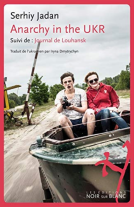 What book / film / album / song / traditional dish / podcast / blog / artwork / building / meme best captures Ukraine for you?
- Book: “Anarchy in the UKR” by Serhiy Zhadan.
- Film: “My Thoughts Are Silent” by Antonio Lukich.
- Album: “Loi” by Hamerman Znyshchuye Virusy.
- National dish: “Ukrainian Breakfast” refers to a plentiful spread of food on the table for invited guests.
- Artwork: “Kateryna” by Taras Shevchenko.
- Architectural structure: Sofiyivsky Park.
NEW RELEASES
Adaa Zagorodnya ~ Bolero
Adaa Zagorodnya’s previous album, Польові Записи з Лютого (Field Recordings from February) was selected as one of the 11 releases to make sense of the full-scale invasion by DTF magazine. It did what it said on the tin in a unshowy way, weaving a fragmented tapistry of everyday sounds into a foreboding soundscape. Bolero is a more heterogenous affair, mixing beats with loops and drones. An album with a sunny disposition and a positive attitude that doesn’t take itself too seriously.
Etudes ~ Ana Foutel & Olexiy Mikryukov
Olexiy Mikryukov, aka King Imagine, teams up once again with Ana Foutel on prepared piano to create a beguling album put together from a set of etudes recorded between Fall and Spring of 2023.
Спадок ~ Various Artists
A musical compilation Spadok became a logical conclusion of Gasoline’s Radio expedition deep into the roots of Ukrainian culture. Recording the everyday life and folklore of the Carpathian region on camera our team gathered a rich collection of audio artefacts in which echoes of the musical tradition of past generations crystallized, as well as recordings of the environment’s shaping worldview. Arranged in the format of a sample pack, these records became bricks for building a bridge between generations and found a new life thanks to the modern generation of Ukrainian musicians and producers.
17 diverse compositions in which fragments of traditional instruments and chants change shape are processed beyond recognition, plunge into streams of synthesized waves or pile up with percussion, becoming pieces of tomorrow’s music – from meditative and reflective ambient tracks to material for packed dance floors.
The compilation is released simultaneously with the massive hutsul sample pack and documentary movie which raises the issue of cultural heritage, its preservation and direct connection with self-identification. Through the prism of reimagining the work of the ancestors, this collection is an important continuation of the history documented by Gasoline team, demonstrating that music exists beyond time and serves as a dialogue between generations.
Blue ~ 58918012
“Hello. I am pretty excited to represent to you the last (the third out of three) releases of my RGB project. Here is the album “Blue”. This one is the lightest one in this trilogy. It’s mostly built on soft beats, lofi tape recordings, dub techno pads, and sweet melodies here and there.
Of course, thru the light vibes of this album, you can clearly hear my dark nucleus (because I can’t rid of it in any case…it’s my nature). But this album will soothe you and relax your mind for sure. I strongly recommend listening to it from the beginning to the end (to feel the overall atmosphere).
I am happy to finalize this improvised trilogy today! Hope you’ll like this stuff as I do. More music ahead… Thanks for being with me. Stand with Ukraine! Peace <3″
Reminiscence ~ Arctica
Two new longform drone ambient tracks from Arctica with cover art generated by AI.
Disarray ~ Palitra
ANKLAV RECORDS is proud to announce the highly anticipated release of “DISARRAY” the latest EP from Ukrainian artist Palitra. Set to captivate listeners with its melodic bass and irresistible groove, this EP not only offers an unforgettable musical experience but also contributes to a greater cause.
We cooperate with foundations that help people affected by the war in Ukraine. (Repair.Together and Kyiv Angels)
Both foundations are humanitarian, which means that the money goes not to the army, but to help the civilian victims of war.
interdimensional garden ~ memories
A gentle and understated album tinged with nostalgia. Opening with languid piano notes, it drifts into trailing clouds of ambient tones slowly dissipating into melancholic echoes of a fugitive past lost in the hazy sunshine.
Mental Ritual ~ Revolt
Revolt, the Lviv, Ukraine producer, is all about exploring the intense emotion found in hypnotic EBM. And with his EP, “Mental Ritual,” the artist reflects his steadfast devotion to this specific subgenre on SYNTHICIDE with three original works and a remix by Kyiv’s LVCERATE.
The title track is cruelly evocative with an intense bassline that is in sync with a swinging melody. “Mental Ritual” aches with tension as its pulse swerves and races to its end. Revolt’s specific concoction of melodic techno—one with a surging EBM bassline—is pronounced through the severity of strict kicks and spellbinding synth pads on “Cynical Defecto.” Finally, “Side Storm” is powerful from the get: a silky groove slithers over the track’s percussive elements as the drama of the suspense builds.
The “Mental Ritual” EP is for the darkest of spaces—music to soundtrack lust and sin, where temptation breeds just before the morning light.
Fade to Grey ~ Brume & Edward Sol
Sound sources by Brume
Composed by Edward Sol
Remaster by Lasse Marhaug
Artwork by Empty House
OBSKURA : Various Artists 3 ~ OBSKURA
“OBSKURA is proud to present its biggest project, the charity release “OBSKURA: Various Artists 3”. The release includes 50 tracks produced by Ukrainian and foreign electronic musicians, demonstrating the diversity and talents of the underground music scene.”
MIXES
VIEWING ROOM
Ukrainian forces de-occupied Lukashivka at the end of March 2022 For 21 days the village was under Russian occupation
Filmed during the volunteer visits to the de-occupied villages of Chernihiv oblast with an initiative Repair Together, Jun2022
Camera: Denys Torchylevskyi – Music: NFNR “Fragility”.
The distribution company Arthouse Traffic has released a trailer for Volodymyr Tykhyy’s documentary Ukrainian Independence about one day in the life of Ukrainians. The film consists of the events of one day — August 24, 2022 — in Kyiv, Lviv, Kharkiv, Mykolaiv, Odesa and at the frontline near Donetsk.
Stay Online is a story about a girl who does volunteer work and is given a laptop. She is asked to install a special application and deliver the laptop to her brother serving on the frontline, but she receives a phone call from a young boy. After the military actions in Bucha he lost his father and tries to find him, and the main character helps the boy in his search, risking the lives of her loved ones.
[Special thanks for help with the translation and adapation of some of the interviews to Anastasia Batyr]
—
UPDATE
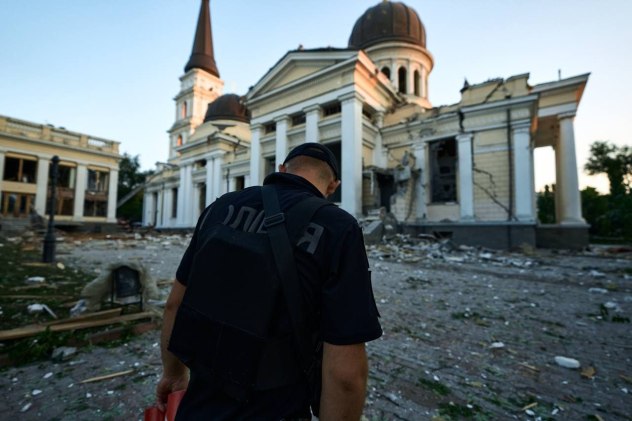
On the night between July 22-23, Odesa was heavily shelled by Russia. We have reached out to the Odesa based artists interviewed for this article and, to the best of our knowledge, they and their families and loved ones are fine.
(Gianmarco Del Re)
 a closer listen