
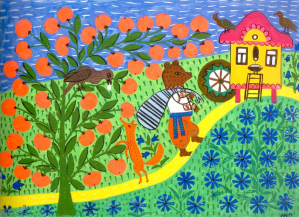
This bear wants to have some flour milled by Mariia Prymachenko
For this month’s episode of UFN, Dubplanet X aka Obriy explains how he transforms anxiety inducing sounds into sonic effects for tracks, Anton Malynovskyi draws a brief outline of the apocalypse, Sony Synth treads the thin line separating genuine from manufactured bayraktcore, and Walakos recounts dealing with blackouts by cooking on the balcony with a portable stove.
Meanwhile, seraphina & no justice reflects on the Ukrainian Nightmare, Artem Baburin (aka SEPTIM) composes a score for a Wounded Land, Oleksiy H / SITKA gives us his take on the hardware vs software debate, Igor Glushko explains why Ukraine being one the most corrupt country is a tired cliché and Nadnova goes all dark ambient on us.
 For the current episode of our UFN Podcast we have a further selection of tracks from the VA fundraising compilation out now on система | system.
Tracklist
Andriy Kiritchenko – “Eyes of Exiles”
Roman Khropko – “Kyiv 17.04.22”
Roman Khropko – “The Moment Of Unity (Sympathetic Mix)”
Myroslav Protsan – “Ravens On The Cemetery”
Myroslav Protsan – “Very Old Piano Improvisations”
Anthony Junkoid – “Drum Vision”
Nightcourier – “Temnivody”
Lena Mirzakh – “A Little Interlude”
Kadaitcha – “Seed”
Katarina Gryvul – “Zemlya”
58918012 – “7e3422”
New releases include new works by ummsbiaus, Rhythm Büro, SVZZ, Natalia Tsupryk, Хвоя будить сов, Sider, 58918012, Svarog, Andrii Barmalii, YLOI and Музи і Грації.
But to begin here’s our latest Spotify playlist featuring our current interviewees.
NOVEMBER 1, 2023 – KYIV
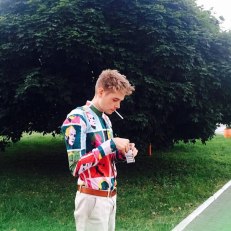 Obriy – Dubplanet X – Pitch Patrol
Hi Gianmarco, thank you for the invitation to be a part of your project, my name is Oleksandr, and I have been a music producer & DJ for more than 18 years. From a young age, I was fortunate to be surrounded by people who were, to some extent, connected to electronic music. Accordingly, I had access to a large library of various electronics. At that time, almost all my friends were making music, and we even had a friendly rivalry, which had a positive impact on my production. I felt myself evolving with each track, transitioning from primitive forms to more complex ones. This was a crucial reason for continuing. To gain a deeper understanding of sound, I took up deejaying and became a resident at a club, playing 2-3 times a week. This gave me the opportunity to test my music, and it was a wonderful experience.
Has the full-scale invasion changed your setup and the way you think about music and sound in general and has it had an impact on your playlist?
At the time of the invasion, I was already an accomplished musician and producer, but now, when I reflect on war themes I can add the sounds of explosions and sirens to my compositions, although in general I do what I did before the war.
My setup is a laptop and headphones, both before the war and after, but it wasn’t always like that, I had a studio with multiple synthesizers, drum machines, effects processors. This was an important experience that led me to the point at which I am now. The war changed me, but not my playlist, my musical preferences have been formed over decades, perhaps this is the reason for my steadfastness.
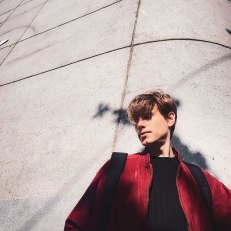 You released two albums over the past few months under your monikers Dubplanet X and Pitch Patrol. Have both albums been produced entirely after the full-scale invasion and if so has the current situation influenced their sound in any way?
The war influenced the organizational aspect of work on releases, and partly the content. I began to value time and make more confident decisions, I see how puzzles are transformed into a picture.
Work on Minimalni Privatni lasted for about 3 years, and before the war I had no idea how to release this material, what tracks should be included in the album. This album was mostly influenced by my collaboration with the electronic project Foa Hoka. I created 2 albums for them, and gained a lot of useful experience for myself, which I applied in many compositions.
If we talk about NEVIDOMI, I created this release quite quickly, over 3 weeks. I wanted to give a sense of security to those who are constantly in danger, who hear terrible sounds and see death. My music is an element of modern Ukrainian culture, a reflection of the reality in which I live.
What impact has the full-scale invasion had both on your personal and professional life?
War inspires horror and fear, it is truly scary, endless casualties and destruction. It has affected my personality, but it is still difficult to understand the scale of it, it is an ongoing process. Now I appreciate the time spent with family and friends, I live in the moment and get psychological relief from working hard, it keeps me in line, so yes, it has affected my personal life and also, partly, my professional activities.
 Where are you now and have you been displaced by war at any point?
I am now in Chernihiv, I was right there for the first month of the war, being under heavy shelling, without light and water, and without understanding how long this could take, so the decision was made to leave the city through humanitarian corridors, I headed to Kyiv, which at that time was also subjected to heavy shelling, but it was a little safer there. After being there for some time, I received an offer from friends to go to Uzhhorod, I agreed, after living there for a while, I met people who were involved in charity events, so I became part of a stand-up series show, we collected money for various funds to help the wounded, I collaborated with them until we left for Chernihiv
Have you noticed any changes in your sonic environment since the full-scale invasion?
I noticed that some noises cause me anxiety. I try to work on these fears, convert these sounds into effects for tracks. The anxiety does not subside, but I quickly come to understand what exactly the sound was: a motorcycle, a strong wind, or thunder, but the first reaction is always alarming, you have to react to all sounds.
 Are there any Ukrainian releases from the past year that you feel have helped you to make sense of current events?
A lot became clear after 2014 and some of my friends who took part in the Revolution of Dignity even went to Donbass. Generally speaking, some of the recent releases could shed light on the details of current events, but in general an understanding of the overall situation has long been formed.
How do you feel about the inclusion of “war sounds” in recent releases by Ukrainian artists and are there any specific sounds you find triggering?
It sounds too exaggerated, and this is normal for an audio campaign. These compositions are more aimed at Western listeners, I don’t know people who listen to them in Ukraine.
 How do you see the electronic music scene developing under present circumstances in Ukraine?
I think the Ukrainian scene is at a very early point of formation, due to the lack of proper media support – everything is happening at a slow pace. If we talk about my city (Chernihiv), where 300,000 people live, we have no clubs or electronic events at all.
After a year and half since the full-scale invasion, what would you say the West still gets wrong about Ukraine?
As I see it, military assistance is significant, but insufficient, and the West has its own reasons for this.
NOVEMBER 1, 2023 – LVIV
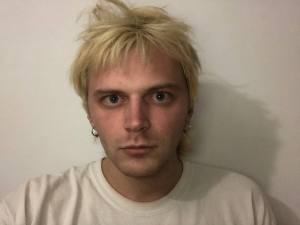
I was born in the small town Snihurivka – it is in the south of Ukraine, in the Mykolaiv region. I have been working as a journalist for about 7 years, I have been engaged in contemporary art for about 5 years and music for six months.
As you can understand, I don’t have a lot of musical experience, I started doing it only in May 2023. Then I spent a lot of time with my friend Max [Максим Баєв] and we joked a lot about the fact that you can start writing noise, purely for fun. Max already had a musical past, and I didn’t understand anything about it.
But gradually the joke turned into interest and I started listening to a lot of noise and experimental music (mostly Ukrainian). Then I thought that it was enough for me to listen, I wanted to create and put some of my own meanings into it, so I started to study music little by little and to write it. Here I immediately want to thank the same Max, because his advice was and remains very important for me.
And although I’ve been doing music for a short time, I can’t say that it’s something completely new. That is, yes, the form and media are new, but the essence remains the same – I continue to create conceptual art, it’s just that whereas before it was visual, now it has moved to an audio format. After all, any track is a separate work with its own meaning, spectrum of emotions and feelings that it can evoke, just like in the visual conceptual art that I am more used to.
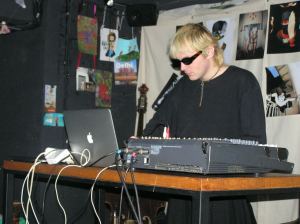
photo by katya drozd
Has the full-scale invasion changed your setup and the way you think about music and sound in general, and has it had an impact on your playlist?
Yes, it has changed a lot. If we talk specifically about the attitude to music, then yes, everything has changed radically, because it was in these conditions that I began not only to listen to music, but also to create it – that’s why the attitude literally changed. However, I remain a listener as well, and there was a period sometime in the summer of 2022 when music helped me a lot to keep me grounded and not let my mental health problems consume me.
Speaking of the playlist, the changes were also drastic. Now it probably consists of 90 percent of Ukrainian performers, and another 10 goes to various artists from Japan, Australia, Germany, etc. What has completely disappeared from there are russian performers. Yes, unfortunately, before the full-scale invasion I listened to some russian artists, however, now I consider it a direct sponsorship of the aggression, because money from royalties through taxes is transformed into rockets.
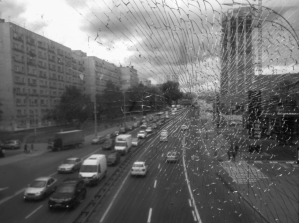
Anton Malynovskiy – from the series “Street”
You are also an artist and back in the fall of 2021 you posted the video Краткая схема Апокалипсиса (A Brief Outline of the Apocalypse), where you hinted at the inevitability of the looming tragedy. How prepared would you say you were to the full-scale invasion?
I quite often think about some global things, as now I often think about possible options for the development of events, taking into account two major wars already. Then it was also like that, I paid attention to the coronavirus, the russian army at the borders, massive forest fires – and thought “maybe things are not so cool.”
And at the beginning of 2022, I wrote several articles about whether there will be a war, and there was a lot of communication with various types of military or military-related people. Many of them said: everyone should decide in advance what they will do if a full-scale war breaks out. If the answer is to go to a safer place, then you need to prepare everything in advance.
Therefore, during the first explosions, my girlfriend and I had a plan to leave Kharkiv (we lived there at the time of the full-scale invasion), which we implemented by leaving for the Cherkasy region.
Does this mean I was ready for a full scale invasion? Formally, yes. In fact, no, because it is impossible to be prepared for the fact that your entire previous life will be destroyed in one moment. To be honest, I don’t even know if anyone was mentally ready for this.
Where are you now and have you been displaced by war at any point?
Now I live in Lviv, before the full-scale invasion I lived in Kharkiv. I didn’t want to leave there, I had a great community there, a bunch of friends, and an understanding of what I want from life.
Due to a full-scale invasion, it all disappeared, so I had to travel around the country a little in search of myself. I lived in Odesa, Kyiv and now I stopped in Lviv. I feel good here, because here I found very good people who have become close to me and an interesting community. By the way, I plan to gradually show this community to Ukraine and the world, creating thematic events with experimental music – so there are a lot of interesting things ahead.
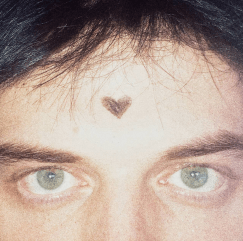
afterlove
You released two albums over the past year, 90 seconds to midnight and afterlove. What can you tell us about their production process and how influenced are these works by the war both in terms of sound and concept?
In fact, the process of creating music is usually very quick and easy for me. That is, I can go a week or two without writing a single melody, and then the concept and sound are put together in my head and I write an album in three days. For instance, afterlove, was literally written in three days. This is a kind of lyrical introduction, in which I understand the topic of love and everything that happens after it. I think it is necessary to talk about such topics during the war, because if not now, when?
By the way, the next album will be about the search for a metaphorical garden – a place of complete harmony, which is also important in the current conditions. This release, however, is not so “quick”, I have been working on it for more than a month.
90 seconds to midnight – this release was already much more connected with the war. Even with two. It was written as a reaction to the spread of aggression in the world. Now, in addition to russia’s war against Ukraine, a Hamas attack on Israel has been added, which entails a possible escalation of the conflict if Iran intervenes there through its proxy forces and the United States, which these proxy forces have been provoking for several weeks.
Looking at this, one involuntarily thinks that such events can lead to the Third World War. And it’s scary to even think what it might be like. Actually, this is what I am thinking about in this release, because “90 seconds to midnight” is the time shown by the Doomsday Clock.
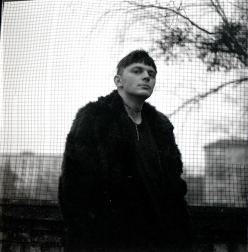
photo by by olya koval
Are there any Ukrainian releases from the past year and a half that you feel can help make sense of current events?
The first – “vomit the heart forget the mind” by John Object. He is one of many musicians who went to defend Ukraine with weapons in hand. He recorded this composition on a broken piano in one of the front-line cities during his service. I was incredibly impressed by the power of this music.
The second is “Russia Delenda Est” by Ivan Skoryna. This is the work of my friend, whom I greatly respect for her political activism and position. Actually, the name of the track is an interpretation of the expression Carthago delenda est – Carthage must be destroyed. For me, this is a military march for our people.

Anton Malynovskiy – from the series “Street”
How do you feel about the inclusion of “war sounds” in recent releases by Ukrainian artists and are there any specific sounds you find triggering? Also, how do you feel about bayraktar-core music?
I am very, very, very against the inclusion of conventional “sounds of war” in tracks. The same applies to the use of such sounds at exhibitions and so on. Because the conditional sound of an air alarm can become a trigger for a person with PTSD causing a most negative experience – I myself witnessed such a situation when a girl heard the sound of an alarm at an exhibition and she started having a panic attack. In this matter, one must be very sensitive and understand that not everything can be done for the sake of hype.
And bayraktar-kor is, of course, a separate type of “love”. In general, I understand that at the time of the beginning of a full-scale invasion, such music was needed to support the general fighting spirit of the people, to show unity, and so on. But when it continues into the second year of a full-scale invasion, it’s already kind of weird. Just parasitizing on the topic of war, nothing more.
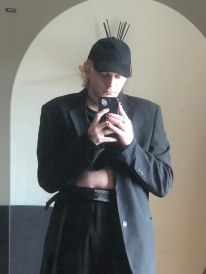 Has the role of music in Ukraine shifted from one of entertainment to encompass the expression of identity, communication, and emotional and physical survival?
Yes, I think so. Although it is probably not worth relying on my opinion, because I am mainly interested in underground projects, where such topics are often of primary importance, it is difficult for me to say much about conventional pop music.
But, definitely, Ukrainian music has become a very important cultural marker. We develop, we become self-aware, we find and show our identity. And this is very important to do, because it is culture that forms a nation, I believe. This is what will show the world how we differ from the russians and why they are not the same thing, this is what will show that we cannot find a common language with them – and will explain why. Because we are completely different, and music can show this.
You have addressed a series of war related topics in your performance art including “common tongue” about the misconception that Ukrainians and “ruzzians” need to find a common language, and “behind the barrier” which takes the sandbags used to protect monument in Ukraine as a metaphor for emotional remoteness. What would you say the West still gets wrong about Ukraine and can art and / or music be more effective as an explainer than many words?
First of all, I am very grateful to Europe and other allies for their help and sensitivity to the Ukrainians who came to your countries, you are saving more than one life. But yes, there are some people who for some reason misunderstand the essence of this war, they think that it is possible to agree on something with the russians, that it is possible to give them territory or something else. No you can not. This is our land, for which our people give their lives. If the russian authorities come here, it will be hell for all residents. Because occupation is not peace, it is a big concentration camp.
Therefore, I convey my opinion as best I can – through art or music. Some people do it in other ways, but this is may own way. It is difficult for me to call such methods more effective than words, because they are metaphorical images – without reinforcement with words, they probably won’t work as well. But they will definitely make you think about what is already good.
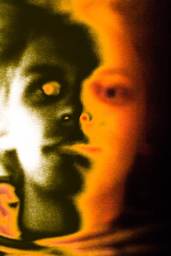
photo by eva fomitskih
Has the sonic environment you live in changed at all since the full-scale invasion?
I can definitely say that my perception of sounds changed, and this happened in several stages. The first stage, it seems that the hearing got worse. You listen to see if something is flying, if there are any explosions, and so on. Then you begin to be frightened even by some simple sounds such as a slamming door.
And then the second stage came to me, when explosions became something of a regular occurrence – this was during my life in Kyiv in the fall and winter of 2022. At that time, russia quite actively shelled the city and all of Ukraine as a whole. The explosions became something so familiar that at some point I stopped even paying attention to them and went out into the corridor. Now somehow loud sounds are perceived differently. It’s as if they don’t exist. The only thought (if it’s not an explosion) – oh, you need to record it and then process it somehow.
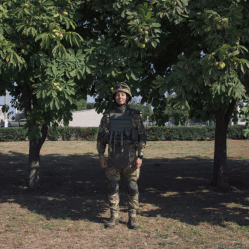 Which book / film / album / song / traditional dish / podcast / blog / artwork / building / meme best captures Ukraine for you?
Here I will make a disclaimer: I will tell you about the meme that best reflects Ukraine, in my opinion, but it is not the meme that I like 🙂
A little background: in the fall of 2022, Margo Reznik, an artist from Kyiv, and I did a project for a residency in which we explored memes. There, we just raised the question of which memes reflect Ukraine. We came to the conclusion that one of the most influential memes is “russian warship – go fuck yourself”.
It was an incredibly unifying action when it began to spread through the network and even reached the official Ukrainian government rhetoric. Therefore, objectively, the meme that spread to all levels of the state can be called the one that best explains it.
By the way, it still lives, for example, in some postironic interpretations.
Who should I interview next and what should I ask them?
Prince Buba. This is the same Max with whom we started making experimental music. He is a musician who played in punk bands in Luhansk until 2014, and now he often interprets the world and his experience through the prism of metamodernism in experimental music. I highly recommend talking to him about memory and his way of looking at the world.
NOVEMBER 2, 2023 – MANCHESTER
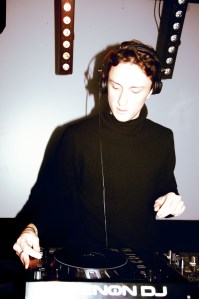 Sony Synth
My name is Borys, I come from the city of Dnipro. My background in music is rather simple – I didn’t study music theory nor did a music degree but I was always fascinated with music and sound itself. I started making music in 2015 when I heard one hip-hop track for the first time and thought to myself that I want to make something similar. Fast forward to 2019 I visited my first underground electronic music club in Zaporizhzhia city and was so hypnotised and amazed by the complexity, harmony and arrangement of sounds in each track that I got inspired to start and keep making electronic music. And in the same year I released my first EP – PURA.
Has the full-scale invasion changed the way you think about music and sound in general, and has it had an impact on your playlist?
I would say so, yes. My playlist definitely became more eclectic and the sound of my tracks became more broad. I started making hard-hitting garage, breakbeats, a lot of rominimal and hypnose-induced tracks as well as old-school hip-hop.
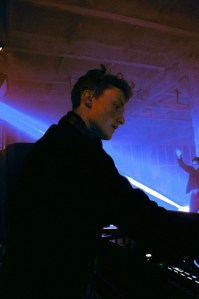
photo by Nastia Rogoza
You are currently based in Manchester. What has your experience of February 24, 2022 been like?
It was very chaotic and unexpected. I was in Kyiv at the time and luckily enough my father was there as well. I woke up to the loud knocking on my door at 6:00 am. As I opened it my father told me that the war had started. At that time my mind was rushing and my heart was racing as I heard fighter jets flying by and explosions going off, so I packed all of my necessities (which are my music gear pieces; funnily enough, I even forgot some of my vital identification) and we started going back to my home city – Dnipro.
As someone living in the UK, how would you say the Ukrainian electronic music scene is perceived in an international context?
Depends on the country overall. For instance, I know Berlin knows very well about Ukrainian rave culture and the underground scene, since the styles are kind of similar. Here in the UK I haven’t met many people who know about the Ukrainian scene in particular but they know Ukrainian artists. I’m sure I’ll find some more connoisseurs very soon.
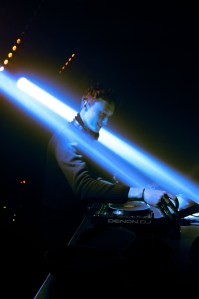
Photo by Nastia Rogoza
Are there any Ukrainian releases from the past year and a half that you feel can help make sense of current events?
Yes. I’ve seen a lot of labels and artists release different EPs, albums, singles and general projects in support of Ukraine. One release that stands out for me is Love for Ukraine by H24 Musique which can be found on Bandcamp. They were able to connect huge artists that decided to help the cause and donate their tracks for this huge and influential compilation, check it out! Also Peshka, who is a DJ and producer from Mariupol, has been doing a lot of stuff to spread information on what is going on in Ukraine. JorDee and David Kareyan are also honorable mentions.
How do you feel about the inclusion of “war sounds” in recent releases by Ukrainian artists and are there any specific sounds you find triggering? Also, how do you feel about bayraktar-core music?
The whole sonic environment of Ukraine has changed since the war started so it is only natural for musicians, artists and sound designers to capture this change and implement it into their art for different reasons. I am lucky enough to have not developed any triggers or PTSD from what is happening at the moment but I know people that did.
Regarding bayraktar-core, in my opinion, there is a very thin line between expressing yourself, your true feelings and emotions through art and using war as a boost for your career. Some songs became almost like national anthems, because they are genuine, while others just feel manufactured and contrived.
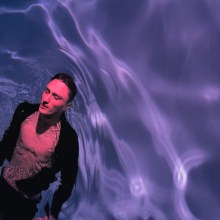
photo by Sophie Tsarenko
What would you say the West still gets wrong about Ukraine and have you had any awkward conversations about the current situation in Ukraine with the UK friends and acquaintances?
The war is being portrayed differently depending on the region. Even though the narrative could be similar and right, some things could be heavily twisted and tweaked. All in all, a lot of people here in the UK, and other countries as well, think of it as a complex issue and are a bit lost on the subject. But the majority of them understand that Ukraine is a heroic country that is doing the right thing.
Who should I interview next and what should I ask them?
Definitely reach out to JorDee and Peshka. As well as the guys from Freeture (@freeture.music on Instagram) – Yung Berkut and Lucian Forseti.
NOVEMBER 3, 2023 – KYIV
 Walakos
I am Andrii Sokolov, an electronic musician, producer, sound engineer and designer from Kyiv. In addition to general track production, I participated in theater performances and wrote music for them. Together with my colleagues, I created modern electronic soundtracks for silent archival films of the Oleksandr Dovzhenko Studio and presented them live. I also created charity concert tours, wrote music for advertising and made sound design for some projects.
Has the full-scale invasion changed your worldview and the way you think about music and sound in general, and has it affected your playlist?
Of course, the full-scale invasion has changed all of us, including me. Now the Ukrainian people are more united than ever. At least the conscious part of it. Very polar emotions are boiling inside everyone, from unity, desire for justice, strong empathy for the defenders, despair and grief at the losses to hatred and rage towards the enemy, anxiety for our own and fear during massive missile attacks on our cities. Such emotions push me quite far from the inner balance I could afford in peacetime. Therefore, my own music is now becoming a rather therapeutic tool. Basically a canvas on which I can throw out what’s bubbling up inside with sound. It really changed the sound into a more assertive and dramatic one at the same time. Whole instrumental stories come out. But the playlist, on the contrary, has changed just in the direction of more soothing, viscous and ambient tracks, because there is enough intensity of emotions around.
In January 2023, you released your solo album unplugged. What can you tell us about its production process and how much did the full-scale invasion influence the creation of its sound?
I delayed my own release for a very long time because I was always involved in many projects at the same time. That’s why my good friend from Wroclaw gave me a birthday present… a deadline)). I took it as a challenge and got to work. And then the massive shelling of the Ukrainian energy infrastructure began – the country plunged into a blackout. And I found myself in a dark room on the 17th floor without heating, water, or internet. I cooked on the balcony with a tourist’s cooking stove and during the hours when the power was on, I washed dishes, cleaned, stored water and worked, and charged the power station, which can power a laptop and one synthesizer for several hours. Then the light would go out again and I would sit down to make music. My windows overlook the forest, with Irpin and Bucha beyond. I could not have wished for more ideal conditions for reflecting on negative emotions. I met the deadline, describing the whole maelstrom of emotions of the time in 6 tracks – so my friend paid for the technical work on the release.
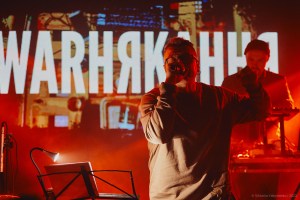 You have released three albums together with Anton Slepakov. In particular, the last one, Varniakany, became one of the most poignant albums about the current situation. Could you describe how you work together and how you approached the creation of music for Anton’s lyrics in this particular case?
When the full-scale invasion began, of course we all did not believe it, it was unrealistic for civilized humanity in the 21st century, when there are more serious challenges facing all of humanity. However, I was able to quickly get involved in work and volunteering, but Anton was in a kind of stupor for about a couple of weeks. And when I saw his first post with a poem on Facebook, I realized that Anton had started to reflect and I suggested that we can use the usual method (poetry and electronic music) to reflect on the events of the war, at least for ourselves, but on a regular basis. So we started releasing about 2 tracks every 2 weeks. Anton came to my house on foot to record vocals, we mixed it all and released it on bandcamp. People started buying these tracks, because as they said it was the first music they could listen to in the new reality. We donated the money we earned by selling tracks to the military and volunteers we knew, and we still do so today. At the end of spring 2022, we gave our first concert in the basement of the volunteer headquarters, and then the second one in public. So far, the project has played about 70 concerts, several tours, including a European tour in cities in Poland, Austria, Germany, the Netherlands, and Norway.
How important are visuals in your musical practice?
For a contemporary artist, I think it’s essential. That’s why all my performances are always accompanied by visuals. Conditionally, you create a world into which your listener plunges. And in this world, your audience should not be blind. This is a comprehensive approach. And if technology comes to involve other sensory channels, I will be happy to use them as well.
Where are you currently located and have you been displaced by war at any point?
I have been in Kyiv since the beginning of the war. Just like in peacetime, I visit my relatives in the city of Dnipro and also had tours across Ukraine. In these year and a half, I’ve been on tour 5 times in Europe, but my inner feeling is that I should be in Ukraine right now.
Are there any Ukrainian releases from the last year and a half that you think can help us understand current events?
There are a lot of such releases, but I would personally highlight Palindrom’s album Вигадано в черзі (Invented in the Queue), the single “Next” by Kurs Valüt (Dnipro), a lot of angry and assertive flow from Kyiv rapper Rusiiick, and many others.
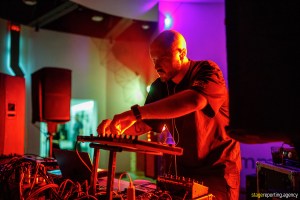 Based on the previous questions, are there any specific tracks, albums, artists, or genres that you associate with certain moments or events in the development of the full-scale invasion that you find difficult to listen to now?
I can’t think of one, except that the general mood and sound of the music I listen to has become softer and more viscous. The reality is that a slamming door involuntarily makes you duck and move away from the window, so I wouldn’t want to “irritate my PTSD” even more in the music I listen to).
How do you feel about the inclusion of “sounds of war” in recent releases by Ukrainian artists and are there any specific sounds that evoke certain associations for you? Also, how do you feel about bayraktar music?
To be honest, I don’t have a very good attitude towards it. In some regions of Ukraine, sirens and explosions happen several times a day. Adding this to the music is somehow too much.
Bayraktarshchyna exists somehow in parallel, I just noticed that it exists and that’s all. It doesn’t arouse my interest at all.
Has the role of music in Ukraine changed from entertainment to expression of identity, communication, emotional and physical survival?
For the most part, it has. At least for the artists I follow. The biggest functions of contemporary Ukrainian music I would highlight are reflection, therapy, and uplifting the spirit of the people.
Of course it has. What I enjoy most is just the silence, without the app’s alerts of air raids, sirens, and explosions. This is a luxury from the past. But the reality is often different. Especially not in the capital. I recently gave a performance in Kharkiv, and at night, the explosion from the arrival of a missile occurred 20 seconds after the alarm was announced. You don’t even have time to get out of bed.
What do you think the West still gets wrong about Ukraine?
I think it’s just that the West doesn’t fully understand the context. To realize it, you need to have this experience. And you certainly don’t wish that on anyone. Europeans who come here and learn the wartime have a little bit of an idea. But just take my word for it – it’s terrible. Every day people are deprived of their lives, children, relatives, homes. It is hell. The cruelty with which the occupiers do this is especially surprising. Torture, bullying, rape, traps with explosives, massive mining of the territories. Or look at the prisoners of war that Ukraine is returning to russia and the people who are being returned to us. These photos say it all without words. The civilized world should not have found itself in this situation, but it did. So I would like everyone to understand that russia’s appetites do not end with Ukraine. I really don’t want to think about scenarios of who will be next in the worst-case scenario.
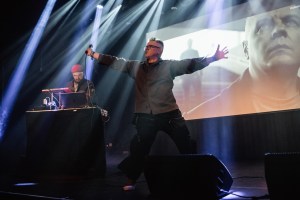 What book/movie/album/song/traditional dish/podcast/blog/artwork/building/meme best represents Ukraine to you?
Book: for me, it’s now 2 parts of Ukraїner, a very interesting study of each region of Ukraine
Movie: from the current “20 Days in Mariupol” – every Ukrainian and the whole world should see it. The Associated Press staff risked their lives for this footage in the now-destroyed city
Album: I would recommend listening to The Road by DakhaBrakha for those who have not yet done so. Qirim by Jamala. And from the actual, although it’s not very modest, I would recommend Warнякання – we recently mixed it for a vinyl release and I listened to it all together. It’s stunning.
Track: Palindrom feat. Ship Her Son’s single “It’s Not So Bad” – very much in the spirit of the present, with a powerful sound and a colorful emotional component
Dish: For those who are getting to know Ukraine, I would traditionally advise you to try homemade borsch – a classics that brings you back to your childhood like a mother’s hug)) Also Transcarpathian banosh, and for desserts, probably Galician cheesecake somewhere in a coffee shop in Lviv.
Architecture: something like:
– Fedkovych National University in Chernivtsi
– The actor’s house in Kyiv and the house with chimeras also in Kyiv
– The State Industry Building in Kharkiv
Meme: a still relevant “Russian ship” that has finally reached the place where it belongs.
Who should I interview next and what should I ask them?
– Anton Slepakov is my friend and co-author of Warнякання.
– Yevhenia Vidishcheva is a very talented and hardworking young theater director and producer.
– Stanislav Ivashchenko [si_process Ukrainian Field Notes IX] is a very interesting one-man-band performer who combines live drums and high-quality electronic music.
NOVEMBER 7, 2023 – KYIV
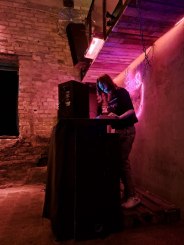
Performing in Kyiv
My name is Anna and I am the person behind seraphina & no justice. I am from Kharkiv. I started studying music at the age of 7 when I was sent to a music school. After graduating from music school, I also studied at the college of arts. What I studied there was primarily classical music and classical singing (and a little jazz in college). I gained some music theory knowledge and an outlook, but it wasn’t exactly the field I wanted to work in. At the age of 19 I decided to try my hand at electronic music. Electronic music has been my passion since I was a teenager, and I used to be a little shy about it because there were no people with similar tastes in my environment. At a certain point, I simply realized that this was my life and only I would have to live it, and I decided to do what my soul was striving for.
Has the full-scale invasion changed your setup and the way you think about music and sound in general, and has it had an impact on your playlist?
Not really. I think that nothing has changed here.
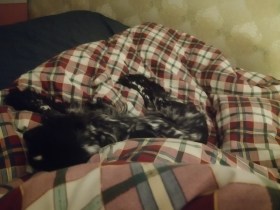
The first day of the war, I’m home alone in Kharkiv with my family’s dog
You just released the album Embodiment, which is the fourth work of yours to come out since the full-scale invasion, if I am not mistaken. Could you give us an idea of your production process under present circumstances and is the process cathartic to you? Also, you use snippets of spoken words in your music, how do you go about selecting these texts?
My production process is almost the same as usual. Most of the music was made in my current apartment in Kyiv, some was made while traveling. There are also various field recordings from different places, cities and countries. Music is pretty much the only thing that gives me the motivation to live when everything else can disappear at any moment.

Me and the outsider street art in Kharkiv
The selection of the texts… well, this process is very emotional and irrational. Words are not the primary thing in my music, they are rather another instrument. Some of them were heard somewhere and recorded, some were born in my head, some were written by my friends. These are thoughts, fragments of someone’s consciousness, elements of someone’s life. It’s something about eternity.
Where are you now and have you been displaced by war at any point?
I am currently living in Kyiv. I moved here in March 2022, when it was still under attack. But after the liberation of the Kyiv region, everything became calmer and life began to return to the city.
How do you feel about the inclusion of “war sounds” in recent releases by Ukrainian artists and are there any specific sounds you find triggering? Also, how do you feel about bayraktar-core music?
I used some “war sounds” myself in my EP Ukrainian Nightmare (mostly the stretched air-raid siren sound). I believe it’s okay to use them on a reasonable scale, when you need to represent a certain state of mind, emotions, experience.
I despise bayractar-core music because it’s very primitive and downplays the horrors of war, but I fully understand the reason why it exists.

Street art in Kharkiv
Has the role of music in Ukraine shifted from one of entertainment to encompass the expression of identity, communication, and emotional and physical survival?
I believe it has. And it’s no more relevant to make music just for entertainment, every artist tries to add at least a little meaning (even if there’s none). I feel that people in the music community have become closer to each other and show more mutual support, and that’s exactly what we need in these dark times.
Has the sonic environment you live in changed at all since the full-scale invasion?
The days feel like usual, only there are fewer people. If there is no missile attack, then the nights are incredibly quiet. I hear nothing when I open the window at night. Because of the curfew, there are no noisy drunken crowds or motorcyclists on the street. But sometimes there are missiles, air defense, drones, sirens and other things.

Picture taken on the street in March 2022 when Kyiv was still under attack
What would you say the West still gets wrong about Ukraine?
Apart from the really important military and humanitarian supplies, there are many misunderstandings. I think that a lot of ordinary people of the West haven’t comprehend the tragedy which is happening right now, they see it more like a game where you should pick a side, or a fashion trend that will soon be outdated. It really hurts when I see that way of thinking. I’m not sure there’s anything we can do about it. We just have to keep fighting.
Which book / film / album / song / traditional dish / podcast / blog / artwork / building / meme best captures Ukraine for you?
A lot of things. We have so many memes, I don’t even remember them all.
I like the artist Mykhailo Skop (NEIVANMADE). His artworks perfectly capture Ukraine for me.
There’s the film “The Lost Letter” (“Пропала грамота”) which really is one of the best Ukrainian films and it is very close to depicting the soul of Ukraine.
Who should I interview next and what should I ask them?
I see you already interviewed a lot of Ukrainian artists, so this question is difficult.
My talented friend Konstantin Poveda, he’s a modular synth enthusiast!
NOVEMBER 9, 2023 – KYIV

photo by By Diana Batii
Hey everyone, I’m Artem Baburin, aka SEPTIM. Thank you very much for the invitation. My journey in the world of music started back in my childhood when I began to learn the violin at a music school. After finishing school, I played in a youth ensemble orchestra and performed on big stages in Ukraine. However, I decided not to pursue a conservatory after school and instead enrolled in university to become a sound engineer. That’s when my career as a sound engineer and sound designer began over 10 years ago when I first delved into the world of movies, commercials, and music projects.
I had been experimenting with music composition for a while, but it was only a few years ago that I realized I wanted to do it professionally and continue to grow in this field. Now, I create not only electronic music but also soundtracks for movies, commercials, and more. Then, I felt the urge to be back on stage, just like in my childhood when I played the violin, so I started deejaying, and I’m incredibly passionate about it right now. I hope these feelings never leave me!
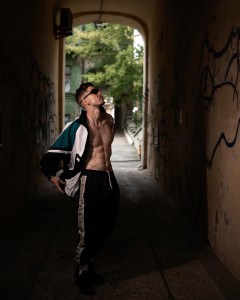
photo by By Alona Dziuba
Has the full-scale invasion changed your setup and the way you think about music and sound in general, and has it had an impact on your playlist?
In times like war, a lot of things change. Some doors in life close, while others open. I won’t go into too much detail about the war, but during this time, my perspective on my needs and desires, as well as my sense of time, has shifted significantly. It’s like everything has become clearer, and I’ve come to understand myself better. I’ve gained a vision of what I really want to do in life. I’ve decided to take my music more seriously and professionally. My friend and I set up a music studio to take our production to a whole new level, and I finally started learning academic music composition.
russian music has completely disappeared from my playlists, even though there wasn’t much of it to begin with. Right now, I’m diving into the world of soundtracks. The soundtrack genre, in general, is incredibly fascinating to me because it has no restrictions on musical style. Composers can create anything, however they want, as long as the music sets the mood. Every soundtrack is an interesting story and an exciting journey for me.
In electronic music, I’ve also broadened my horizons, especially when it comes to the local scene. I’ve discovered some cool Ukrainian artists for myself.
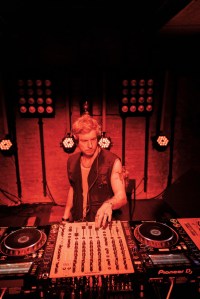 You recently released the EP Hero together with Xymera. What can you tell us about the production process? Also, the title tracks seem to be programmatic, “Gothic”; “Queers”; “Mass”; and “Hero”. What was the concept behind the EP?
Once, I was invited to create a track for a gothic erformance by Xymera during a techno party. I gladly accepted because I loved everything about it – techno parties, gothic vibes, performance art, and the opportunity to produce music for it. That’s how the first track, “Gothic,” came into being. The performance was fantastic, and it led to more invitations to other events. So, I ended up composing three more tracks for different parties with this performance ballet. Each track was like a unique production with its own costumes, message, and purpose. That’s why all the tracks on this EP are a little different. It was an incredibly rewarding experience collaborating with such talented individuals, and I’m confident that we’ll work together again in the future.
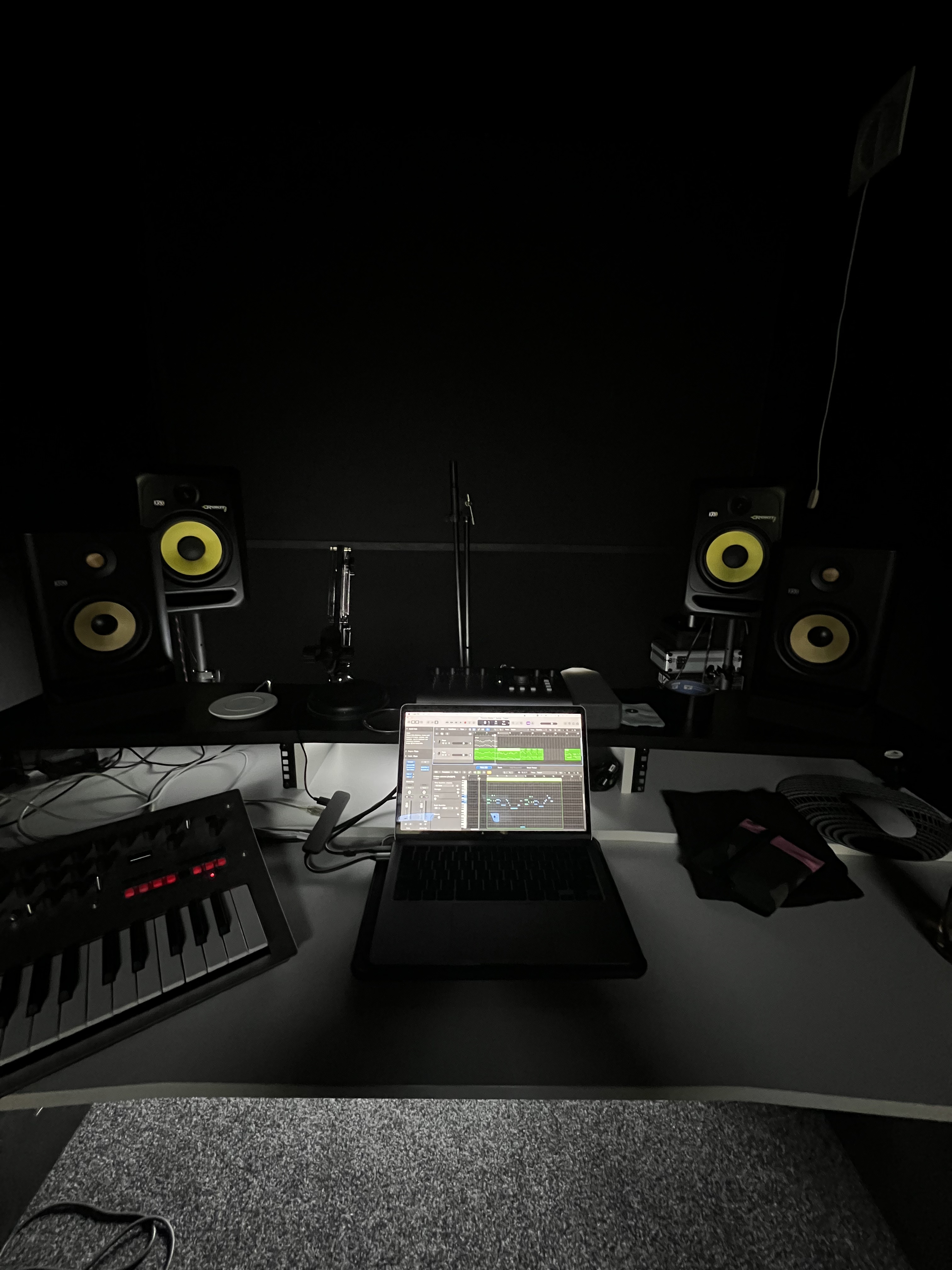
My studio
Aside from your techno output as SEPTIM, you also compose soundtracks, most recently for the documentary Wounded Land. What can you tell us about your film composing process?
Talking about myself, I’ve always been drawn to soundtracks, and I’ve always wanted to compose music for movies or games. While working on the Insiders Project with my friends, I wrote several tracks for it. My first full-length film soundtrack was created in collaboration with the Ukrainian producer Dmytro Avksentiev aka Koloah for our documentary film Breaking into Baikonur. (I’ll be releasing this album soon).
Regarding Wounded Land, my friend, the cinematographer Artem, recommended me to its director. They faced issues with music copyright, and they wanted me to create 45 minutes of music within just 35 days. It was undoubtedly a significant challenge for me. But I set aside other tasks and immersed myself in this project. Despite the difficulties, that month became one of the most interesting periods of my life in many years.
Also, there’s one character in the film that talks about “War Depression”. This is when an individual feels guilty because they are not taking part in a military operation. How common would you say is this?
It’s hard for me to talk specifically about “War Depression.” I, along with my friends, initially felt that way at the beginning of the war. We discussed it multiple times, but it quickly became overshadowed by other feelings, and I no longer felt it. Such a dreadful war triggers various psychological issues, far more serious than just “war depression.” I’m convinced that every person in Ukraine has suffered psychological trauma, even those whose families that haven’t been directly affected by death.
You have contributed to the recent Obskura compilation. What would you say are the key elements for a successful fundraising compilation?
I think it’s a great selection of artists. Obskura label has already released three compilations with a mix of very interesting local and international artists. I highly recommend checking it out!

My dog
Where are you now and have you been displaced by war at any point?
Right now, I’m at home in Kyiv. During the first week of the war, I was at a cottage near Kyiv, and then I went with my family to my girlfriend’s parents’ place near Kropyvnytskyi city. After about a month and a half, I returned home to Kyiv.
Are there any Ukrainian releases from the past year and a half that you feel can help make sense of current events?
One album that comes to my mind immediately is Exploration Of Hidden Knowledge by Weird Rider. I really enjoyed that EP. I’m not sure if the war had any influence on the artist, but the album really captures moods well. Also, the incredible track “Travesty of One’s Self” by our artist LVCERATE from the compilation Lethal Aid. And last but not least, the interesting compilation Construction vol. 2 by Kultura Medialna.
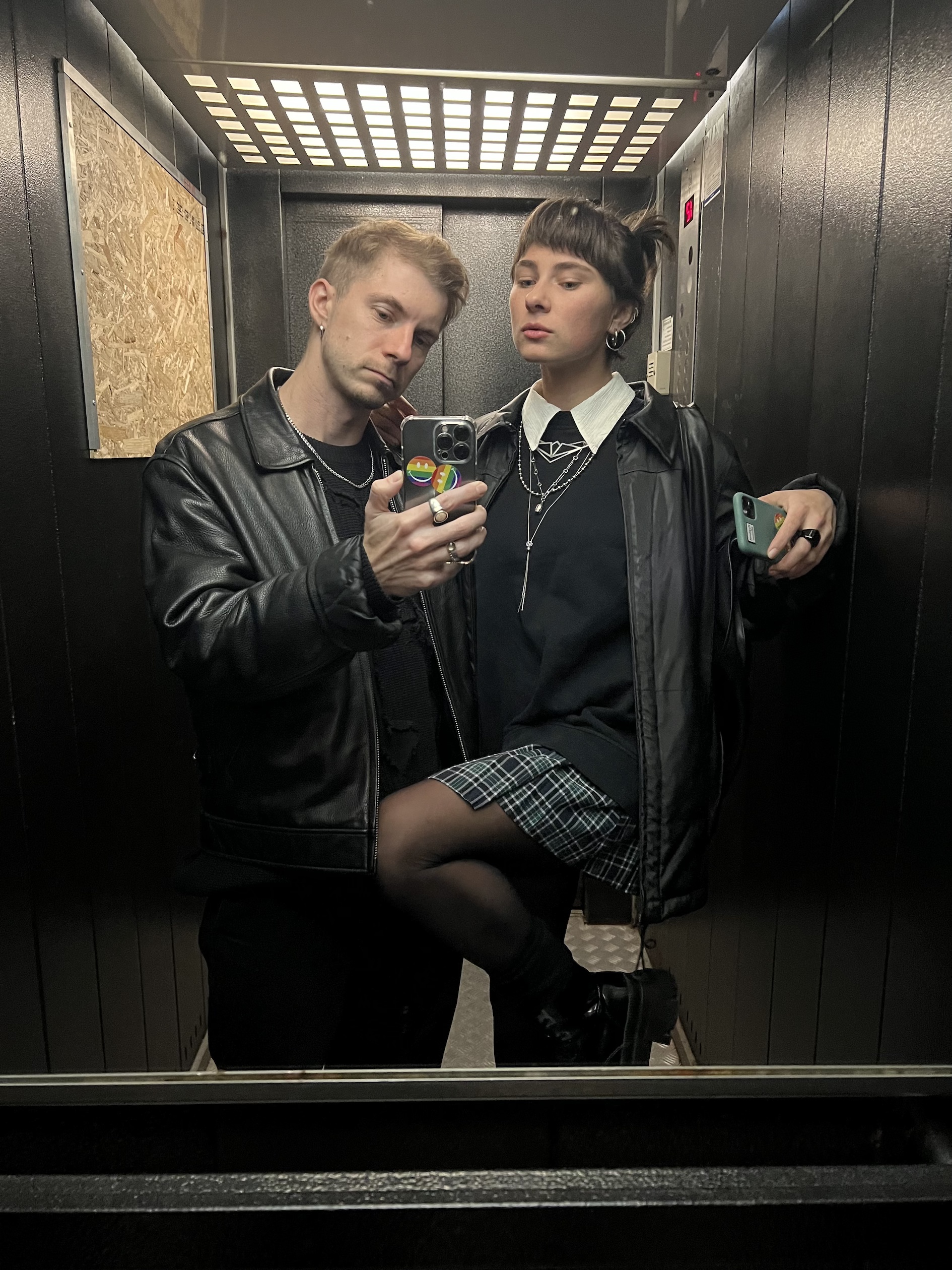
Me and my girlfriend Diana Batii
Following from the previous questions, are there any specific tracks, albums, artists, or genres that evoke particular moments or events in the development of the full-scale invasion for you and that you now find difficult to listen to?
Honestly, there’s nothing like that, and I’m very glad about it. But as I mentioned earlier, my sense of time and myself has somehow changed. I’ve started listening to more music, analyzing and filtering it for myself. I don’t let anything through that I don’t at least slightly enjoy; I don’t have time for that.
How do you feel about the inclusion of “war sounds” in recent releases by Ukrainian artists and are there any specific sounds you find triggering? Also, how do you feel about bayraktar-core music?
It’s a complex question because every Ukrainian experiences this war differently. Some have lost everything, while others have lost nothing. Some have grown tired of the sirens, while others experience panic attacks every time they hear one. Personally, I don’t like these sounds; they evoke unpleasant feelings in me. But I understand that some artists might use them to influence foreign listeners. Our country depends on the support of international partners, so it’s essential that the Ukrainian issue doesn’t get forgotten. That’s why tracks with such “sounds” may help with this.
If there’s pop and mainstream music, there should also be bayraktar-core, why not? For me it’s more meme music. I don’t listen to it, so I can only offer a general opinion on the matter.
 Has the role of music in Ukraine shifted from one of entertainment to encompass the expression of identity, communication, and emotional and physical survival?
Oh, yes, right now Ukrainian society and art are rapidly developing in a cultural sense, and it’s incredible. I see the most significant push in terms of cultural identity. It’s a pity that a major war had to be the reason for this, but that’s how it turned out.
Ukrainian culture has a very long history, but for most of that history, it was oppressed and restricted. The most significant oppression came from the russian Empire, the USSR, and russia.
Now, our culture is experiencing a kind of “rebirth,” and it’s crucial for the government to support culture because it has a profound impact on identity, mentality, and the nation as a whole. Our culture has a lot to show and tell the world.
 Has the sonic environment you live in changed at all since the full-scale invasion?
Over the course of more than a year and a half of full-scale war, you get used to many things. But at the beginning of the war, the sonic environment certainly changed. The first sirens I heard sounded terrifying, and then came the sounds of explosions, rockets, planes, helicopters, and so on – huge adrenaline rushes. During the first week, I was at a country house near Kyiv, close to military actions, and we tried to speak quietly, avoid making noise, and be aware of what was happening around us.
Then winter came, and Kyiv sounded different. Due to attacks on critical infrastructure, there were many places without electricity, so the noise of generators was heard everywhere. For me, winter in Kyiv is associated with the sound of generators. But otherwise, thanks to the titanic efforts of the Ukrainian military, everything was as usual.
Now, when I walk around Kyiv, I’m constantly filled with anxiety, and all the colors don’t seem as vibrant. Maybe the sonic environment of Kyiv hasn’t changed, but my perception of it has. And I understand that this is my reality now, and I accept it. These are strange emotions, a strange state, but they give me some sort of push to create music.
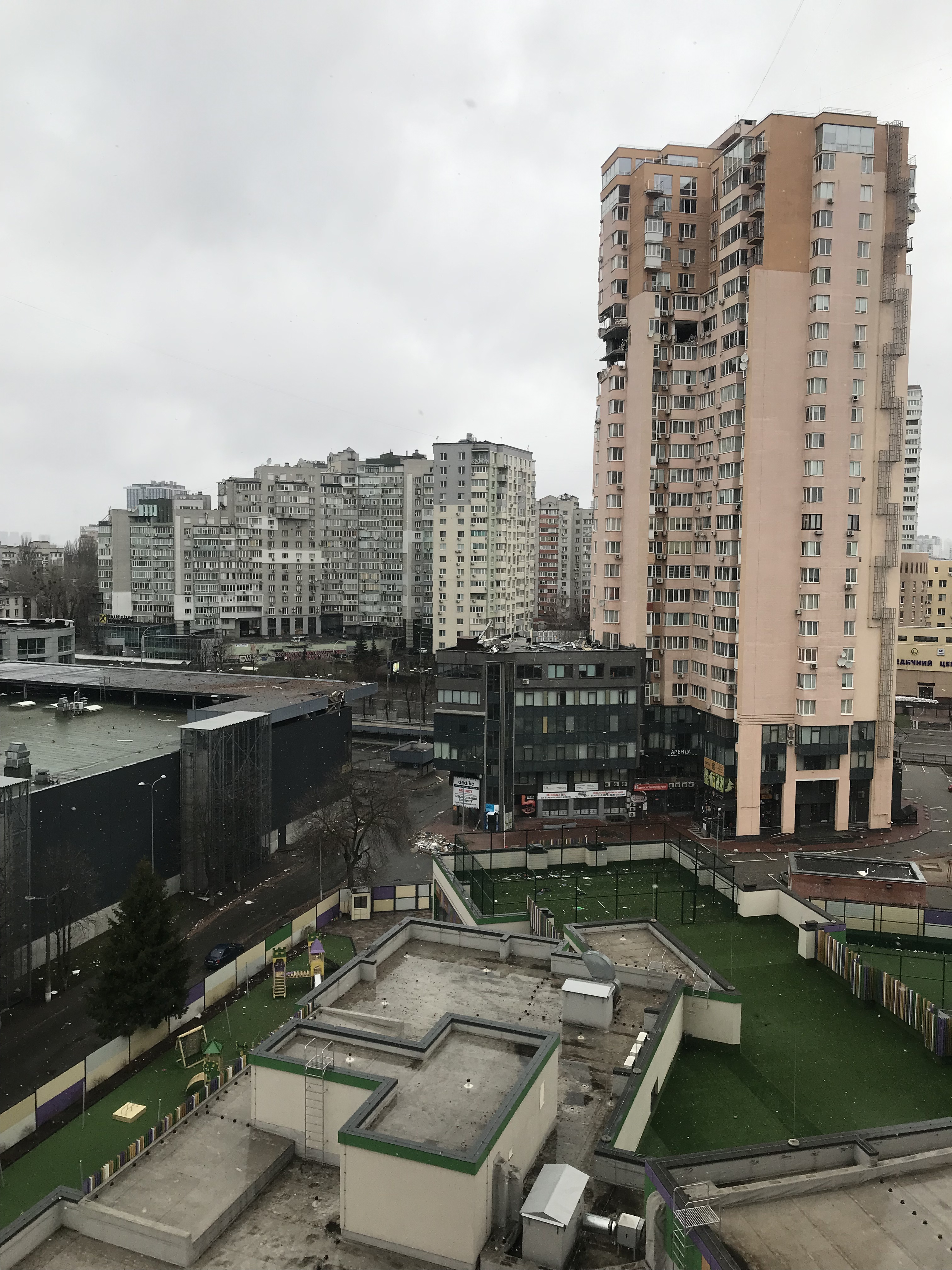
Wiev from my window when I came to Kyiv
What would you say the West still gets wrong about Ukraine?
I get the feeling that many foreigners think of Ukraine as some part of the USSR that broke away and became independent in 1991. I’ve traveled a lot, and sometimes I’ve heard this narrative, but that’s not the case at all. Ukraine has a very long history; we just had the misfortune of having russia as a neighbor, which has tried to destroy us throughout its existence. Many prominent Ukrainian figures were claimed by Russia as their own – writers like Nikolai Gogol, Anton Chekhov, artists like Ivan Aivazovsky, Ilya Repin, Kazimir Malevich, and others, from what I know. If we consider scientists and other fields, I think the list would be even longer.
By the way, the world’s first democratic constitution was created by Ukrainian Hetman Pylyp Orlyk in 1710. Unfortunately, it didn’t fully come into force, but it indicates that over 300 years ago, Ukrainians already had a vision of democracy.
So, I would really like the West to look at us differently, but I understand that we need to earn that respect. Right now, Ukrainians are working towards that with their blood.
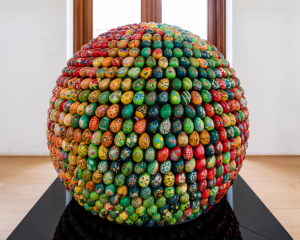
Oksana Mas – Sphere of Good and of Spiritual Renaissance
Which book / film / album / song / traditional dish / podcast / blog / artwork / building / meme best captures Ukraine for you?
Composers – Mykola Leontovych, Boris Lyatoshynsky, and Serhiy Pilyutikov (who is my current teacher. I recently attended the opening of the Ukrainian Philharmonic and heard his orchestral composition, which was incredible. I’m very excited to be studying academic composition under his guidance).
Music – Braty Hadiukiny, Fantom 2.
Artists – Oksana Mas, Ivan Murchuk, Ilya Chichkan
Writers – Serhii Zhadan, Myroslav Dochynets
YouTube – Kult: Podcast (https://www.youtube.com/@kult_podcast) and T.G. Shevchenko (https://www.youtube.com/@imtgsh)
Who should I interview next and what should I ask them?
I think you can speak with Nobody, he’s the best Ukrainian beatbox artist and he is also a huge music producer. Now he is working on his EP and its sounds amazing.
Also, try to reach out to Mykyta Moiseiev. He’s a fascinating person and an incredible film composer. You can find his work on SoundCloud.
NOVEMBER 13, 2023 – KYIV
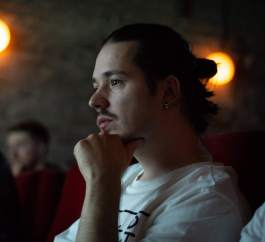
photo by Sofia Ruda
My name is Oleksiy Hrachov. I am from Kyiv. I’ve been making music since the early 00s. I’ve played in bands (I play the guitar) and made a lot of music solo, deejayed and played live electronic sets. I always found it hard to stick to a particular genre or sound, so you can find all kinds of music on my SoundCloud, from trip-hop and kraut-rock-inspired stuff to some experimental, noisy industrial.
I also build Eurorack synth modules under the brand Sitka Instruments.
Has the full-scale invasion changed your setup and the way you think about music and sound in general, and has it had an impact on your playlist?
My playlist didn’t change much, but I can’t say the same about the setup.
I’ve spent the first months of the full-scale invasion away from home and my usual setup. Making music on the laptop didn’t click with me at that time. However, I was bored during the long air raid alerts and decided to explore how I could make music on my phone. The Cuistic app turned out to be a nice option, so I wrote some tracks and sketches using it.
On the other hand, later, I got into modular synths during the war. I had some hardware synths and groove boxes before, but I was a little afraid of getting into modular synths territory (I think that’s a common “fear”). So it’s kinda a thing from my “bucket list”.
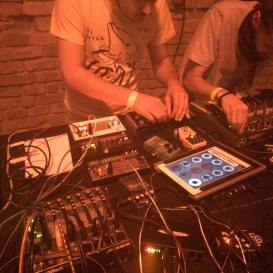 Could you introduce Sitka and give us your perspective on the digital vs analogue debate within the Ukrainian context?
Sitka started out as my electronic music project around the end of 2021. I envisioned it as a dubby, noisy blend of broken techno and jungle. But since the full-scale invasion started, I find it hard to sit down and produce tracks, so there are no official releases yet; now, I spend more time live jamming and improvising “in the moment” than polishing and finalizing the recordings “for the future” (although I’m slowly getting back to it).
I’m quite a tinkerer, and since I got into modular synths, I started designing and building my own modules. So recently, I also launched Sitka Instruments as a brand for the modules I make.
As for the digital vs analogue, I think it’s better to frame this debate as hardware vs software (as a lot of modern hardware synths are, in fact, digital) or even broader – physical vs virtual. Physical stuff is usually more fun, but it’s a luxury, especially now in Ukraine. Lots of us live with a packed backpack so we can leave home quickly when something happens. I doubt that there are a lot of hardware synths or vinyl records in those backpacks. You don’t need vinyl to listen to music, and nowadays, you can make electronic music even on a half-decent smartphone.
Where are you now and have you been displaced by war at any point?
I am in my home in Kyiv, but I’ve spent the first months of the full-scale invasion in the western part of Ukraine.
Are there any Ukrainian releases from the past year and a half that you feel can help make sense of current events?
- From Wreck And Ruin by Symonenko & Liza Aikin that is made from the field recordings from the first days of the russian invasion.
- Piano by John Object that was partly recorded on a piano in the abandoned house near the frontline.
- “Який день війни” by Stas Koroliov that has the lyrics composed from the questions Ukrainians were searching in google in the beginning of the full-scale war.
Following from the previous questions, are there any specific tracks, albums, artists, or genres that evoke particular moments or events in the development of the full-scale invasion for you and that you now find difficult to listen to?
I listened a lot to Being Human Being by Erik Truffaz & Murcof in the shelter during the air raid alerts in the first months. I wouldn’t say that it’s hard for me to listen to it now, but it does bring up memories.
photo by Nick Odintsov
How do you feel about the inclusion of “war sounds” in recent releases by Ukrainian artists and are there any specific sounds you find triggering? Also, how do you feel about bayraktar-core music?
I wouldn’t use them in my music, but I understand that for some artists, they might be the means of expression, so I have nothing against it. I already mentioned From Wreck And Ruin by Symonenko & Liza Aikin, that is made almost entirely from “war sounds”.
It’s not specifically a war sound, but sometimes “riser” tones in electronic music confuse me, making me think it’s an air raid siren.
As for “bayraktar-core”, I personally don’t like it, as well as most artificial mixes of “folk” and “modern” music (not only Ukrainian). But if this music helps some cope with everything that’s going on, then it’s great. It might be interesting to revisit it after a decade to see how it aged.
Has the role of music in Ukraine shifted from one of entertainment to encompass the expression of identity, communication, and emotional and physical survival?
Entertainment and self-expression are just two sides of music; they have always been there. Both are equally important, and I think both are still present in Ukrainian music today.
Has the sonic environment you live in changed at all since the full-scale invasion?
I don’t think it changed much, apart from obvious stuff like air raid sirens and occasional explosions. The nights became quieter, thanks to curfew. Last winter, during the blackouts, the sound of generators was a big part of Kyiv’s soundscape.
What would you say the West still gets wrong about Ukraine?
Most people from the “West” in my information bubble are very supportive. But sometimes, I see some talk about the “situation in Ukraine” as if all this happened by itself. It’s important to remember that the “situation” is, in fact, the russian aggression against Ukraine.
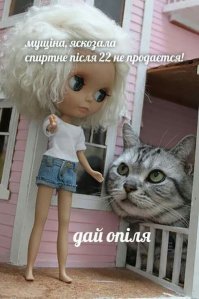 Which book / film / album / song / traditional dish / podcast / blog / artwork / building / meme best captures Ukraine for you?
This question makes me realize how much I’m outside the loop when it comes to anything that is not music 🙂 I’ll try to cover at least some parts.
Song – Океан Ельзи – “Я не здамся без бою” [Okean Elzy – I will not give up without a fight]
Traditional dish – Sushi (I think it can count as a Ukrainian dish)
Meme – Let’s select the one not related to war [see embedded image]
Who should I interview next and what should I ask them?
NOVEMBER 12, 2023 – KYIV
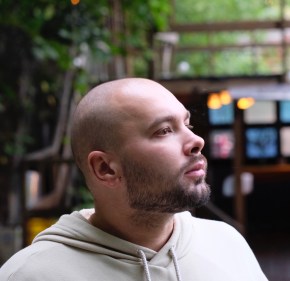
photo by Danylo Mykhailov
My name is Igor Glushko, I was born in Kyiv in 1986, and am still based in this city which I love with all my heart. Professionally speaking, I am leading a double life: I have a full-time job in the IT company, running the 180-people strong outsource project for a large US-based client, but I’ve also been involved with the nightlife scene in a number of different roles for almost 20 years now. I attended my first party at the age of 15, and probably around 2006 I organized my first-ever event, together with a bunch of friends.
I have also worked as a music journalist between 2008 and 2011, and by the year 2013 I would also have been part of several different local promoter groups in Kyiv to varying degrees of success (but mainly unsuccessful, lol). That period of failures and overly romantic view of the scene helped shape the current version of my persona, and gave me tons of useful experience.
Since 2015, together with my partners Vera Logdanidi and Oleksandr Pavlenko, I’ve been running Rhythm Büro, and am also the guy behind the music label of the same name. The same year I also became a resident DJ at Closer, and I still hold that residency today.
Has the full-scale invasion changed your setup and the way you think about music and sound in general, and has it had an impact on your playlist?
I don’t think that my general approach to music or the way I think about it has changed, but my “out-of-the-club” playlist has definitely deviated from its previous state. Firstly, I have to mention that I stopped listening to music completely after Feb 24th 2022, and it took me nearly 5 months to restore interest in it, and even more than that to go back to buying records. Nowadays, in my daily routine and outside of the club context I rarely listen to house or techno tracks, as my attention naturally shifted to a more diverse playlist. At home I’m more likely to put a needle on a Fela Kuti record, or an album from Sumac Dub or Thievery Corporation, than turn on some club sounds. This is not some conscious decision, but something that happened organically. I still treat music as a functional instrument though, the one that can emphasize or change your mood, depending on circumstances. It may be a somewhat egocentric approach to music, but at least I’m being honest here.
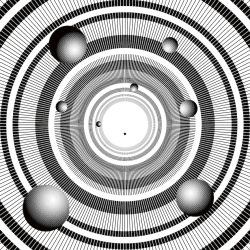
VA – There Will Be Light by Rhythm Büro Rec
You lead Rhythm Büro Rec which is releasing There Will Be Light, a compilation that delves into deep listening and ambient music. This is a double vinyl album that has been three years in the making and that mixes Ukrainian and international artists such as Sebastian Mullaert, Anthony Rother, Priori, John Beltran, Vera Logdanidi, Na Nich and more. Could you give us an idea of the logistics involved and how this project developed under present circumstances?
The underlying idea was born several years ago, perhaps even in the pre-Covid times. I wanted to come up with the compilation of non-danceable music that helps fight anxiety and gives the listener a piece of mind. I envisioned it like a soundtrack to the 90’s chillout rooms, which I never experienced myself. Then, around the late 2020, I started working on the project: I prepared a description of the concept that I had in mind, accompanied it with some reference tracks, and sent the initial few emails to some of the artists whom I either knew personally or understood how to get in touch with. At the time, I didn’t have the full picture in mind: I wasn’t sure if it was going to be an LP or 2xLP, I didn’t know how many tracks I’d end up with, nor did I have a clear deadline in mind. I think that in the first phase my approach to this compilation was quite laid back, but this changed in late 2022, when I started getting my shit together after the initial shock from the full-scale war breaking out in my country. By Feb 2023, all the tracks were finished.
How do you see the Ukrainian electronic scene developing under present circumstances?
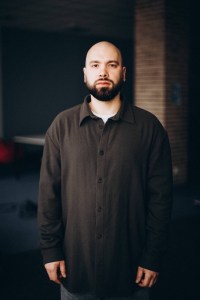
photo by Ganna Ginda
My personal worldview over the years has always been such that the music scene should not be limited by nationalities or the color of your passport. While I definitely agree that all over the world there are different local flavors giving their impact on this or that scene, I think of the music community as a global phenomena rather than local. That being said, I also don’t deny the obvious fact that naturally people who are shaping the scene are also grouping according to their local habits and/or trends: I am myself part of the Kyiv scene, albeit I still perceive it as a small part of the global scene.
It’s difficult to pinpoint just one or two factors that characterize the current status quo on the Ukrainian scene, but I can share some observations of mine about what’s happening in Kyiv. First of all, the impact of many people fleeing the country should not be underestimated: some of those who have ridden the wave previously now live abroad, while other people (perhaps from different towns and cities) are moving in and ‘replacing’ them.
Secondly, I think we are finally past the point of no return when it comes to cooperation between Ukrainian and russian scenes – this is gone for good. The ties were already loosening after the Euromaidan and the breakout of the first phase of war in 2014 that led to the occupation of Crimea and fighting in Donbas. But even then they didn’t disappear completely, and – admittedly – I take partial blame for this too, as I continued playing gigs in russia and even inviting russian artists to our events in Kyiv. This was a serious mistake on my part (and many others’ too) which I have lots of regrets about. We were kind of instrumental in the ‘creeping’ cultural colonialism, when the side that maintains more resources and considers itself an informal ‘metropoly’ has a huge impact on what they think of as a ‘colony’.
That kind of description is overly generalizing, but I’m pretty sure many people from Ukraine would agree with me on the main point: the fewer ties there were historically with russia, the more thriving the scene in Ukraine at that given moment was – this is the case for both the pop music echelon and a relatively ‘underground’ scene (for the lack of better term). I bet most of the readers didn’t even hear anything about the Ukrainian electronic music scene prior to 2014 or so, and there was a valid reason for that. I hope this has changed forever.
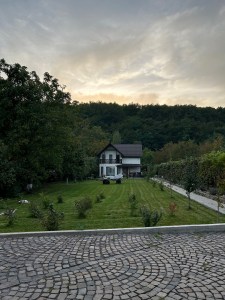
The house I used to live in while temporarily residing in Transcarpathia
Where are you now and have you been displaced by war at any point?
I was displaced for 3.5 months at the start of the war: I lived in the Transcarpathian oblast, which is the Westernmost region of Ukraine. Since June last year I’ve been back in Kyiv.
How do you feel about the inclusion of “war sounds” in recent releases by Ukrainian artists and are there any specific sounds you find triggering? Also, how do you feel about bayraktar-core music?
Honestly, I have no idea what bayraktar-core is, lol. I personally wouldn’t include the “war sounds” in music, but that’s just me. If this helps serve a certain purpose to some people, that’s completely fine with me. To each their own.
Has the role of music in Ukraine shifted from one of entertainment to encompass the expression of identity, communication, and emotional and physical survival?
I think this is inevitable in circumstances like ours. Just to set some context: the Ukrainian society currently experiences the biggest war on the European continent since WW2. I may not like some of the specific works or trends on the music scene, but I can definitely understand why they came to life in the first place. When we win this fucking war, we’ll end up with a completely different set of symbols for out national and cultural identity, music included.
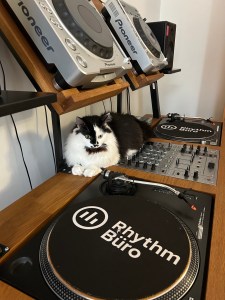
My cat Boniface
What would you say the West still gets wrong about Ukraine?
There are many things the West gets wrong about Ukraine. I think it’s just impossible to clearly get the sense of what is going on in a different country, so I can probably understand this. However, there are some things that piss me off more than others. First of all, I cringe every time I read or hear the reference to Ukraine as ‘one of’ or ‘the most corrupt country in the world’. Yes, there are issues in that regard, but we’ve made such significant progress during the years of our independence, and especially since Euromaidan, that many societies in the West just cannot comprehend this.
If you think about the entirety of what the USSR consisted of with the exception of Baltic countries, we are one of just a few states with undoubtful succession of power which is based on the democratic election process. I know this may seem like a given in the West, but in our region this is something you have to fight for, and we have paid a bloody price for this. We have also managed to establish the system of anti-corruption agencies and sets of checks and balances that make corruption on the higher levels of government if not impossible, then at least highly visible in case it takes place. The free media in Ukraine with all its power nowadays acts like the fourth branch of the government: it is impossible to get involved with high-scale corruption without the negative consequences for you.
 Yes, we still hope for certain improvements to happen, no doubt about it: for instance, some people who were the embodiments of corruption in highly publicized cases managed to escape imprisonment, albeit losing their political prospects altogether. But if you put this on a historical axis, then it will become evident that what we’ve done within the last 9 years is equivalent to what countries like the US spent decades or even centuries on. It is especially tragicomic to hear accusations of corruption coming from or influenced by the russian sources. The pot calls the kettle black.
The second thing that is completely misunderstood in the West is that the language factor doesn’t put you on either side of the pro-russian/pro-Ukrainian divide. You may be russian-speaking, but under no circumstances does this necessarily make you pro-russian. For instance, Kyiv has for many years been the predominantly russian-speaking city, but it always deviated towards the pro-EU and pro-democracy swing of the political pendulum. I’ve spoken russian as a main language for most of my life, although I’m also perfectly fluent in Ukrainian. Now I’m using Ukrainian as the default language in my daily life, as do many other former russian-speakers. I’ve heard statements from the likes of Elon Musk et al who judge about political or national alignment of certain regions of Ukraine solely based on the language factor. This is dead wrong!
Do you suffer from burnout and are you able to think of the future?
I wouldn’t call it a burnout, but I definitely feel a lot of psychological and emotional pressure. I’ve changed my dietary habits and started doing more exercise since last year, so I guess this somewhat helps me offset the damages done by life in the time of war. I see changes in the behavior of a lot of people though: basically, most of the country has PTSD. When the war ends, we’ll have to deal with this as one of the main problems for Ukraine.
I definitely think about the future, but I cannot do much about it. To put it simply, everything I’ve worked on and put my time and energy into during my adult life is now jeopardized by the war triggered by the barbarian neighbor of ours. I am still hopeful though.
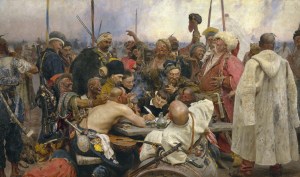
The Zaparozhye Cossacks Writing a Mocking Letter to the Turkish Sultan – И.Репин 1880-91
Which book / film / album / song / traditional dish / podcast / blog / artwork / building / meme best captures Ukraine for you?
I would address this question from two different angles. Symbolically, I think that the legend of Cossacks writing letter to the Ottoman sultan, which also got famous thanks to the painting by Ilya Repin, captures the worldview of Ukrainians: we despise powers forced upon us externally, and we can also have fun while dealing with this. Long story short: we Ukrainians, with all of our flaws and oddities, love freedom. In a more serious and at the same time tragic way this is displayed in the national anthem of Ukraine: the words ‘Ukraine’s glory and freedom have not yet perished’ and ‘Soul and body shall we lay down for our freedom’ definitely resonate with all of the Ukrainians today.
On another hand, I like how Timothy Snyder describes the formation of Ukraine as a political rather than monoethnic nation. Just to remind you: the Euromaidan revolution in 2013 started from the call to action by Mustafa Nayyem who is an Afghani-turned-Ukrainian journalist; the two of our our most recent presidents are both of the Jewish descent; our current Minister of Defence is a Muslim Crimean Tatar. All these examples shape the image of Ukraine, which symbolizes freedom and justice, as a political purpose rather than the country based on one ethnicity and one culture.
Who should I interview next and what should I ask them?
I suggest getting in touch with the guys behind Detali, the group from Ivano-Frankivsk who became volunteers since the start of the war; and Kultura Zvuku, the community from Kharkiv, which is the city being ravaged by russian aggression almost daily.
NOVEMBER 16, 2023 – KYIV
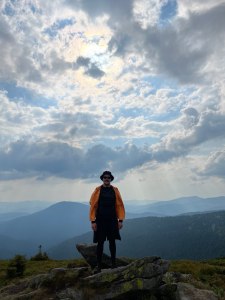
Me and the wonderful Carpathians
Hello, my name is Yevhen Shevchenko and I create music under the name Nadnova.
I started playing music when I was a child: I played the guitar, then I got interested in the bass guitar. At school I started playing in a band, we were together for a long time and later, I became interested in electronic music. I began to explore this world and after attending first parties, I realized that I can and want to do electronic music. It all started with writing a couple of tracks in Ableton live 10 lite. The more I practiced, the better I became at putting my thoughts into music.
Has the full-scale invasion changed your setup and the way you think about music and sound in general, and has it had an impact on your playlist?
Of course! It had a great impact and continues to do so. From the first days I couldn’t write or listen to anything at all, I wasn’t up to it. Later I tried to distract my brain a little and sat down to write something, and a couple of tracks came out: “Страх 28.02” (Fear 28.02) and “Ненависть 3.03” (Hatred 3.03) in the first album during the war Відчуй (Feel). Later, I switched to dark – ambient.
The music I listen to now is almost the same as before, but I have almost stopped listening to hard techno and started listening more to such genres as: metal-core and death-core. Maybe I have become more cruel? 🙂
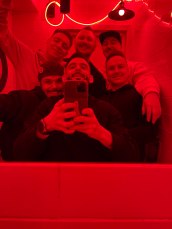
Me and my friends having fun at a bar, 7 hours before the start of full-scale invasion
You just released the album Не остання ніч (Not the last night). What can you tell us about its production process and how influenced by current events would you say it is?
This is a dark ambient album, but not completely. Rhythm gradually appears in the tracks. In these tracks I fully showed my worrings, thoughts and just my state. I don’t tie each track to a specific event, the listener has to feel something himself, draw a picture in his head, what he sees, what he hears, what he experiences, and if his/her thoughts can’t find a way out of the darkness, the last track “Надія” (Hope) will help to clear the mind, still this is the only track that has a more cheerful vibe than the other ones.
How do you see the Ukrainian electronic and experimental scene developing under present circumstances?
I work in the rental of lighting and sound equipment as a lighting engineer, and I am pleasantly surprised that the amount of events has not decreased. Of course, in the first months, no one risked throwing any parties, and if someone did, they could get a lot of hate. But today we often have some kind of events, all the coordinators certainly donate a part of their profit to help the army. More new musicians and DJs have appeared, the line-up generally consists of only Ukrainian musicians, and I believe that this is an opportunity for young artists to emerge. Also new labels appeared that distribute the music of young Ukrainian artists and encourage them to create, for example, the ОЧI (OCHI) label (which I am a resident of) was created during the war and we all support each other there.

meme
Where are you now and have you been displaced by war at any point?
From the very beginning of the war, I was in Kyiv and never left, except for this summer when I went to the Carpathians.
Are there any Ukrainian releases from the past year and a half that you feel can help make sense of current events?
I believe that many musicians have tracks or songs that describe their condition during the war, from which you can understand what we Ukrainians are going through now. Not everyone, for sure. Some show their pain, some fear, some hatred through music. It can be both songs of pop artists and little-known underground musicians. So if you take the releases of all the musicians of our label, especially for the first year, it will be very easy to understand everything there.
Following from the previous questions, are there any specific tracks, albums, artists, or genres that evoke particular moments or events in the development of the full-scale invasion for you and that you now find difficult to listen to?
There are no such releases that I cannot listen to because of the emotions they might trigger. I can also listen to my track “Киянин” (Kyyanyn) where sirens are constantly wailing and I will be fine, I just transfer myself to the time when it was written and experience these emotions again, the same with other music.
There is a band Один в каное (Odyn v kanoe) and their track “В мене немає дому” (“I have no home”) – this track was released back in 2018, but I heard it at the beginning of the war with a video sequence of explosions, russian rockets hitting civilian buildings, scary footage of shelling, and now I can’t perceive this song in any other way: I feel these emotions now every time I hear this song. Sometimes I listen to it on purpose…
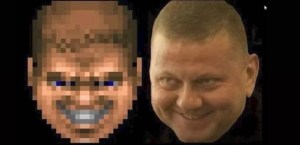
More memes. On the right side – face of Valerii Zaluzhnyi
How do you feel about the inclusion of “war sounds” in recent releases by Ukrainian artists and are there any specific sounds you find triggering?
I use sounds of explosions, heavy machinery, children’s cries, people’s screams and (as I mentioned before in track “Kyyanyn”) sounds of air-raid sirens, and I will continue to use them. I believe that if a musician wants to express his opinion to the listener in this way, that’s ok. Also, listening to such music is a personal choice.
And how do you feel about bayraktar-core music?
Bayraktar-core is a very interesting name, I hear it for the first time) I guess you mean these patriotic songs. Let’s put it this way, it is an integral part of any wars, there were, are, and new ones will be written, whether you like it or not. If it helps people to experience the events that are happening now in Ukraine and it helps them, then it’s fine, but I personally don’t listen to them.
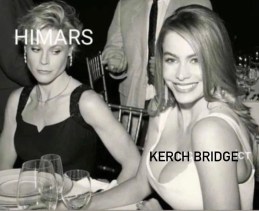
I believe you can understand that without any caption
Has the role of music in Ukraine shifted from one of entertainment to encompass the expression of identity, communication, and emotional and physical survival?
I believe that people who went to the parties just to have fun before the war – they do the same now, it’s not bad, but I would be happy to know that they understand at what cost they can now listen to cheerful music and live a carefree life. Everyone makes their own decisions, but I see that now more often concerts are held where people come to listen to music, feel it and understand what the musician is trying to express.
Has the sonic environment you live in changed at all since the full-scale invasion?
Sounds of air-raid sirens almost every day and less often the sounds of explosions.
And, of course, bayraktar-core on the radio in taxis or establishments))
What would you say the West still gets wrong about Ukraine?
That Ukraine can be at peace with russia. Ukraine and russia are not brother nations and will never be.
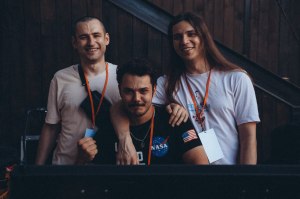
Me with the artists Splinter (UA) and Louwave
Which book / film / album / song / traditional dish / podcast / blog / artwork / building / meme best captures Ukraine for you?
If the building then it’s Motherland Monument, memes about Patron the dog, the Carpathians, ethnic music and trembitas, the plane Mriya, bands Skriabin and Okean Elzy – but this is all very superficial because it is impossible to single out one thing, you need at least to communicate directly with Ukrainians.
Who should I interview next and what should I ask them?
I recommend talking to our founder of the OCHI label Be_ca_di, also the band “Ziferblat”, artists Splinter (UA) and Louwave. To be honest, the list can be very long.
NOVEMBER 18, 2023 – KYIV
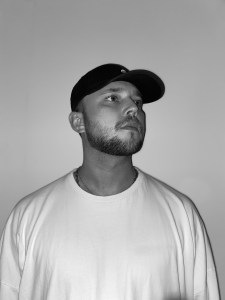
Hi! My name is Max Malahov!
My life is full of different creative projects that relate to advertising shoots, the development of brands, the processes of the fashion industry and most importantly to my music projects. So I will tell you about them! I have been engaged in sound production for more than 10 years. During this time I managed to write music for a large number of ads, did sound design for films, games and applications.
I have been deejaying for more than 7 years and have played throughout Ukraine and beyond, including several countries in Europe. But I have been working with music since childhood! I was lucky !)
My mum is a professional pianist and she started teaching me to play the piano at the age of 3. At the age of 5 I went to a music lyceum, where I learnt musical literacy, and to play several musical instruments, including accordion, piano, guitar and many others.
When I was 14 years old, I formed my first rock band with my friends. At first we played covers for bands like Korn, Nirvana, Rage against the Machine, Led Zeppelin, Muse, and Radiohead. After learning how to compose songs, we started to create our own music and recorded our first ever album. After we released it, we immediately started touring Ukraine. It didn’t last long, because after we finished school, we left for different cities to study.
At the age of 17, I went to university as a sound engineer / sound producer. And that’s where the fun started, from working as a sound engineer for TV channels, to recording symphony orchestras and working as a producer! A bit later, when I got into sound design for adverts, I started to delve quite deep into the process of sound creation itself! And it inspired me in a whole new way! At that time I was playing in a post-rock band called Goodbye Earth.
And when I started to give myself not only to live music, but also to synthesising sound, and I started to explore and delve into electronic music in more detail, it was like I was born again, I became a new me!
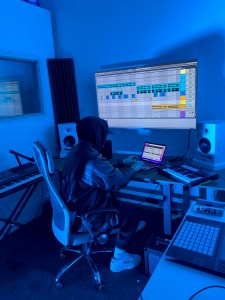 Has the full-scale invasion changed your setup and the way you think about music and sound in general, and has it had an impact on your playlist?
When the war started, on the 3rd day we were ready to meet the enemy at our recording studio of my promo formation SVYST, which is located in the centre of Kyiv But thanks to our army, which repelled the enemy from Kyiv, the studio continued to exist and turned into a volunteer centre for some time. But for the first 2 months I couldn’t listen to music, much less write it. We constantly had to be concentrated on the sounds of war that surrounded us, on the air alarm, which was followed by a missile or a drone. There was a saboteur sweep in the city, at any moment something could happen! One had to be constantly on the lookout!
Over time when Kyiv began to return to life, I went back to music. I started to gradually return to my old projects, and to write new music, which became a little more aggressive, filled with heavy beats, with a touch of metal and a hard atmosphere, but still I did not lose my basic musical core.
The full-scale invasion, and war, has changed my attitude to reality, to people, to our country and to myself! And all this had a great impact on my attitude to music! I finally realised the importance of musical energy, how it can save us, set us up for something important or just relax us. I see it happening to people during my DJ sets, I see how everyone started to respect and appreciate themselves and their emotions.
My playlist has become more dynamic throughout my DJ sets. I started to add rough synthesis, instrumental inserts, accent punch on the bass line. All this in order to make people feel the music with their whole body on the live sound!
I started to work out in my sets the structure of a symphony, where there is a beginning / development / side part / climax / decline / end. In this way I hope to teach the listeners to listen to the music properly !
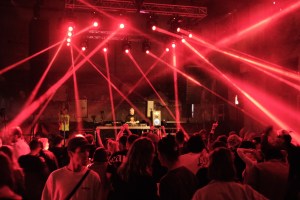 You are co-organiser of the festival Брудний Пес (Dirty Dog) and co-founder of the label SVYST. What can you tell us about the festival and the organisation of events during the war?
In June last year, our community began to think about organizing a big festival. For the first time, we thought not just about a party with a good sound and a good sound system, but about the unity of all the young people who stayed in Kyiv together! A lot of people were under stress, everyone experienced their psychological breakdown differently. It was necessary to support each other! And we decided to organize a festival, which we called Брудний Пес (Dirty Dog)! This name became the embodiment of our street culture ) In 2022, we had 3 stages, more than 50 artists of different genres, over 2 days! It was something unforgettable! It gave us a good boost to start other series of parties, as well as a green light to our colleagues in the community to organize events. We came back to life again! We started writing music, accumulating music material, and buying pieces of vinyl again! Everything slowly started to come back!
Already this year we had more than 100 artists of different genres performing at the festival. We had like 5 stages! And we managed to make the festival several times bigger and cooler! In 2024 we plan to surprise Kyiv and the whole Ukraine even more! So get ready and wait for Брудний Пес 2024!) In every event organized, there is one more important part!
From every party, we donate almost the whole income to our army and continue to do so!
 Your latest EP Perception was released on Polygon Records. What can you tell us about its production and its concept?
This album was recorded in the midst of winter shelling and large-scale blackouts all over Ukraine. I had about 4-5 hours of light per day to be able to record at least some material for this album. In such cold and dark moments of life, you are like an exposed nerve. Every sound that was around me I perceived very sensitively and even a little bit irritated. I started to think about synesthesia! Synesthesia is the ability to have unusual sensory reactions to stimuli, sometimes even in different senses. Seeing a shape, for example, can trigger a strange taste or smell, or listening to a particular note played by a record makes such a person perceive a certain color or taste or feel a piece of fabric on their body as in my track “Velvet” does this with the 808 bass punch.
The album title “Perception” – is a sensual cognition of the world around us. This is the concept of the album! At that moment I was surrounded by only very irritating sounds, so there were not many major notes and no deep atmosphere in the album! I tried to clearly work out the change of form, change of state, and flavor. In the first track “Sequence”, a man falls into a changed form that accompanies him throughout the album! A tight bass line acts as a foundation adding a rich percussive shape! From above we have a soft synthesis of sound that takes us through the saxophone playing in “Velvet” to “Reflection”, where the synthesis opens up toward the end of the track. And we get into the tunnel in “Wider” where we just spin! In the end, we have the conclusion of the whole story. We can talk about the track “Synesthetic” for a long time, but it’s better to just listen to it and you will understand everything!
The cover of the album also conveys all the states of perception of sound waves in a human being. The first time I played this album in a club ∄ (K41), and when I saw the reaction of people, I realized that everything worked out! The album was released on the POLYGON label, owned by my friend Harry Pledov. The label was recognized as the best electronic music label in Ukraine according to MixMag Ukraine.
 Three months after the full-scale invasion you released the track “Genotype“. How does one convey complex feelings about the current situation through music and did it feel like a cathartic process?
My first track after the beginning of a full-scale war! The mood of the track fully conveys all my inner state at that moment! It was my first catharsis soaked with pain and hatred for everything that was happening! I never thought that it would affect my people, me, my family, my friends, and everything we have! So yes, it was the first catharsis transformed into a sound synthesis after the 24th of February!
Where are you now and have you been displaced by war at any point?
Now I’m in Kyiv! As I was before February 24, 2022 and on the night of the full-scale invasion! I have no intention of leaving Ukraine, it is my home!
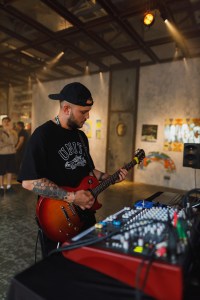 How do you feel about artists who left Ukraine and do you feel there’s something of a divide now between those who left and those who stayed?
Every artist who left has made their choice! Each person is in charge of their own life! We can only draw conclusions and move on with those who stayed here!
Are there any Ukrainian releases from the past year and a half that you feel can help make sense of current events?
All Ukrainian releases with all the top artists of electronic music that I would recommend in order to comprehend current events are collected on the label POLYGON. Enjoy listening !)
Following from the previous questions, are there any specific tracks, albums, artists, or genres that evoke particular moments or events in the development of the full-scale invasion for you and that you now find difficult to listen to?
 My track “GENOCIDE.” It contains the emotional depth that I would never want to return to. The track starts with a poem by Lesya Ukrainka, and the track itself features the vocals of the Ukrainian folk singer Nina Matvienko.
How do you feel about the inclusion of “war sounds” in recent releases by Ukrainian artists and are there any specific sounds you find triggering? Also, how do you feel about bayraktar-core music?
This is a very strange move, a very cheap attempt at hype! I think that the sounds of war can be included in the sound design for documentaries or videos in which we want to show what surrounds us in recent times. I think that with music we should save people from what surrounds us and not plunge them deeper into war! We are surrounded by so many beautiful sounds that can change us for the better, we need to listen to them, not the sounds of war in a record. I don’t understand it and neither do I understand bayraktar-core.) It’s crap !).
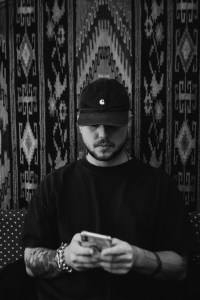 Has the role of music in Ukraine shifted from one of entertainment to encompass the expression of identity, communication, and emotional and physical survival?
Music in Ukraine has become a direct emotional expression, evoking emotions that help us to survive! It’s true! Sound producers started not just writing tracks like before, but put a whole concept into them ! And the same goes with deejays and their sets! I think it’s because of the amount of emotions we experience every day! It sharpens the process of creation and each project is invested with much more meaning. The listeners feel it and thus also change. There is a very strong synergy!
Has the sonic environment you live in changed at all since the full-scale invasion and how would you document the current situation through sound?
There is a confident calmness in the air, which at any moment can turn into some kind of storm. It feels like listening to a Brian Eno album but being ready for the sudden introduction of a SLIPKNOT verse. It’s inspiring! And now I’m working on my new album, which is coming out in January 2024. It will answer that question better than me!
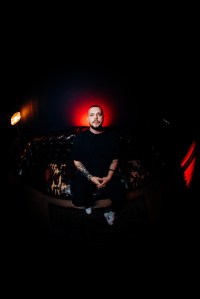 What would you say the West still gets wrong about Ukraine?
It is very strange to understand something when you are in a completely different country where there is no war. But I am grateful to every country that supports Ukraine! The West should not forget that we are fighting a common enemy and that thanks to our army we will not only free Ukraine but also the whole world from this cancerous tumour.
Which book / film / album / song / traditional dish / podcast / blog / artwork / building / meme best captures Ukraine for you?
Book: Mykhailo Kotsiubynskyi – Shadows of Forgotten Ancestors.
Film: Chasing Two Hares.
Song: ever since childhood I have adored Leontovych’s “Shchedryk”
Traditional dish: banosh, diruni (potato pancake with mushrooms), borsch.
Who should I interview next and what should I ask them?
Igor Zadorozhniy, co-organiser of Брудний Пес, co-owner of SVYST formation, only vinyl DJ, military officer and my friend!
NEW RELEASES
Snovyda Suite No. 1, Op. 4 ~ ummsbiaus
“Snovyda (The Sleepwalker) is a four-movement electronic suite by ummsbiaus. It can be heard in a dark room that is gradually transforming into a long corridor, creepy and untrodden as liminal space. When your stressed-out brain makes you feel drowsy, its functions are AI-like. Before fully shutting down, it creates its own world somewhere in-between sleep and wakefulness.”
2023 – Щоденник янгола ~ Хвоя будить сов
The art project “The Needle Wakes the Owl” brings to your attention the work “Diary of an Angel”, which is dedicated to the works “The Angel of the Western Window” by Gustav Meyrink and “The Diary of an Addict” by Aleister Crowley.
Recorded in the ranks of the Armed Forces during rest hours during 2023.
Exp Ep ~ SVZZ
This EP contains a variety of tracks that I made during the year and that will not be released except at my bandcamp.
I make the release free so that people can choose the price themselves.
30 percent of sales will go to donations
do nestyamy ~ Natalia Tsupryk
Piano and strings EP from Natalia Tsupryk, mournful without being maudlin, elegiac in tone, a tribute to the fallen soldiers through a whispered voice.
VA There Will Be Light ~ Rhythm Büro
“The artists featured on ‘There Will Be Light’ are a cast of Rhythm Büro’s long-time collaborators as well as a few new names, both Ukrainian by origin and international. Igor Glushko, the label’s head, has managed to transform the initial idea for the compilation into a real collaboration of like-minded artists contributing to the cause, the project has taken around three years to complete. Each track is released for the first time and has been produced by such artists as: AES Dana, Priori, John Beltran, Saphileaum, Artefakt, Anthony Rother, Vida Vojic, Johanna Knutsson, Volodymyr Gnatenko, Asyncronous, Arthur Mine, Sebastian Mullaert, bvdub, Zavoloka, Nikolaienko, and Rhythm Büro co-founders Vera Logdanidi & Na Nich.”
it’s all about the garden ~ anton malynovskyi
“I stopped looking for a home, instead I started looking for a garden while working on the album, I thought about the role of myth in human life. What is a myth? Isn’t he a direct signpost, including for me?
A standard hero goes on a journey to find something that has no clear location, shape, or image.
He walks, encounters obstacles, does not understand whether this path will end until a transformation takes place with him. He becomes stronger, continues his search, transforms again and again.
And when he grows it above his previous self for the last time – he understands that the path and its changes are the garden he was looking for.
So I begin my journey, my search for a garden.”
Kholodna Strava ~ Sider
A «Cold Dish» is a mini-album from electronic artist Sider, his work over the past few years. The cunning interweaving of ethnic and breakbeat with electro became his master’s trick long before it became some kind of a mainstream, but, obviously – he do it better than anyone else. Only check out his records on the Day by day label, and the remix of the track «Zroby Sebe Sam» by Lostlojic. Incredible melodies, mysticism, and super powerful break drums – a real work of art! Each of his tracks is a reminder of the depth of Ukrainian roots and faith in victory over the Russian invaders.
autoportrack ~ Andrii Barmalii
Inventive and ebullient debut electronic album from famous Kyiv saxophone player and producer Andrii Barmalii. Darting off in many directions with a “retro-futurist” sound and a hauntological drive, this is one of the discoveries of the year, a truly stunning album.
the album without a name, meaning, concept, philosophy, beginning, or end ~ 58918012
Hello, guys! As I promised, here is my new ambient album! Every composition in this release is out of the current context. It’s like random fragments of life in a different/parallel reality. Honestly, there are much more questions than answers.
I think that the title of this album says everything by itself. There’s nothing more to say about it. Well, maybe except for the fact that this one is incredibly dark, noisy, and psychedelic. If you are ready to dive into the dark and warped dimension then good luck and enjoy your adventure. Stand with Ukraine! Peace ❤
від Іоана 5:35 ~ Музи і Грації
“The construct of historical memory is very fragile, but this does not save us from the consequences. Soviet dissident Ivan Svitlichniy passed away 31 years ago, but as his wife recalled, “Physically, Ivan died in his bed in October 1992, but as a creative person, he died in August 1981 in exile in Altai.” This album is another attempt to preserve the connections between people and events that, despite the pressures and obstacles, did so much to give us our identity.
All proceeds from this album will be donated to the Armed Forces of Ukraine.”
Still Life ~ Postman
“In the new album ‘Still Life,’ Kostiantyn Pochtar ventures into uncharted musical territories, skillfully blending the soothing acoustic notes of the guitar with the pulse of electronic beats and synthesizers. Some of the songs, however, feature a regular live backing band. Drawing inspiration from tropicalia, early David Bowie, and impressionist aesthetics, the songs have somewhat a painterly quality, resembling soft brushstrokes in pastel colors on a canvas. This new style and musical approach go far beyond the acoustic guitar folk for which Postman is mainly known. The lyrical hero in the new album also undergoes changes, becoming more distant, while the lyrics appear more abstract and allusive. These compositions capture the fragility and fleeting beauty of existence, portraying us, as people, doing our pirouettes in this eternal uncertainty.”
Unified Whirl | BAHN033_EP ~ Svarog
“The Unified Whirl symbolizes the idea that everything exists in an indivisible connection and an endless stream of consciousness, life, and energy. It reminds us that we are all particles of one whole, interacting with each other and influencing one another. In this whirl of consciousness and life, we understand that every action has consequences, every decision impacts the world around us.”
PAUSE IF YOU MUST, BUT DON’T STOP. ~ YLOI
Greetings, friends. It is with great pleasure that I present to your attention the new album:
“PAUSE IF YOU MUST, BUT DON’T STOP”
Despite the fact that I am in the ranks of the Armed Forces of Ukraine, I continue to create music, get inspired by the world around me and do not stop. This album is very important to me. Special thanks to Oleksii Shatalov (Leftie) for the nice bonus to the album. I hope for your support, comments, repost. Save Ukrainian culture🇺🇦
VIEWING ROOM
 a closer listen