

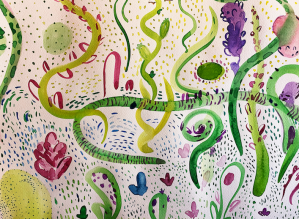
artwork by Mariia Prymachenko
Bumper episode after the Summer break. Unfortunately, there was no respite in Ukraine with at least 184 civilians killed and 856 injured in August alone, making it the month with the second highest number of civilian casualties in 2024, after July. And once again, the number of musicians being drafted or volunteering has also been steadily increasing.
This month Ross Khmil talks about moving to an all-DAW setup, Dalek confesses to having had maaany different synths in his teenage engineering years, while Kate Lizzered is beyond happy to be deejaying.
Meanwhile, Iris Forest makes her first EP about war, Potras23 bemoans the fact that there are almost no fans of electronic music in his regiment, НІХТО makes individual tracks for different military units setting his goal at 40, Trinidad Shevron realises the helpless nature of any art before the threat of destruction, and некрохолод explores empty houses frozen in mournful sadness.
Moreover, Anatoly Belov passes his English Integration Course for Ukrainian Refugees level A1, while Oleksandr Rybalko speaks in tongues, Rewind goes digging the archives, Pallas Athena makes music as a ritual, POTROX recharges his inner batteries with sports & sleep, whereas Vladyslav Putistin has hot flushes, and Andrii Ushytskyi has goosebumps while listening to music.
There are many gems in the new releases section, including impressive offerings by Heskbo, Eazypoluse, Oleksii Podat, Revshark, Ternocore, hjumən, Корисні Копалини, Tetyana Haraschuk, Kojoohar, Wiseword.Nidaros, Monotonne, InnerLicht, Tongi Joi, ummsbiaus & Difference Machine, Foa Hoka & Fedir Tkachov, and Lectromagnetique, alongside two compilations by KYIVPASTRANS, Vortex and Hybrid Moment.
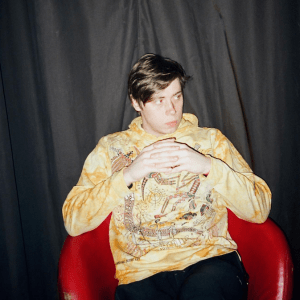
Whaler
But to begin with our monthly podcast for Resonance FM where we talk to Whaler about resistance, fundraising and the music scene in Kharkiv, Kyiv and Lviv. This is followed by our regular Spotify playlist.
tracklist:
- NINA EBA – DOVES (Whaler Remix)
- Whaler – Unity
- Whaler – Tanok
- Whaler – Underwater
- Whaler – Викид
- Potras23 – Kotuky (feat. Sofia Leshyshak)
- Whaler – The Event Horizon
- Whaler, Хор “Осоння” – В темную нічку
- Група Б – Нічні кімнати
AUGUST 7, 2024 – KYIV
Has the full-scale invasion changed your setup and the way you think about music and sound in general, and has it had an impact on your playlist?
For me, the process of making music has changed during the war a few times, the first thing to note is the idea of using the minimum and learning to extract the maximum from it. Starting with giving up any hardware and moving towards an all-DAW setup with just 3-4 VSTs. This way, in case of anything happens, the project can always be saved, opened, and continued on another laptop. There’s no need to worry about not being able to do something during forced relocations due to the real danger always being nearby. There’s no need to spend time searching; instead, you immediately create or learn to create almost anything from nothing.
For a while, I was fortunate to observe how my friend Ars works, and I saw that everything described above is possible in practice. So, I simply told myself that I wouldn’t download any plugin or instrument until I reach a pro level within Ableton. It was a lot of fun in our practices, we invented jams where, in five-minute steps, we would sequentially create a track from one sound, like in the old step-by-step strategy game Heroes of Might and Magic, but with music. Or we did DJ mashup jams where we used only the laptop’s touchpad for live remixing and blending tunes. In this way, I significantly improved my skills, and for that, I thank Ars a lot.
The second method of making music that I discovered over the past year is doing everything from start to finish on a phone. This is how I recorded “Selected Beats for AR from Nowhere,” which was recently released on Vortex. There, I used one phone to record the sound from another phone jamming live music, and that was it.

What can you tell us about your label Pinkbox Teleport and what projects have you got in store?
Regarding Pinkbox Teleport, the label was on pause for three years until I felt how to integrate it into the new reality. In 2024 we start with cyberpunk meta-jazz post-fusion opera, a journey where the heroes of the Mario Bros. universe, Princess, Mario, and Luigi, find themselves in an alternate medieval world labyrinth, we recorded together with Anthony Junkoid and Andrei Strakhov.
The second PBT album is Enchanted Story, a magical dance electronics project from the Danish duo Nasest Knarzfunk.
There are plans for several more releases, including a continuation of the Highway Dept project, created seven years ago in Poland and now continued in the outskirts of Kyiv.
Also, Bad Seeds of Human Future our duo Anthony Junkoid – Ross Khmil, and an avant-garde piece, “Music for New Year’s Mood,” recorded on December 31st by me and Ars.
All releases are live recordings, varying in style and method, from magical, listener-friendly electronics to frenzied laser gnomes laughing amid overloaded electric guitar riffs.
Plans also include the first MMORPG about artists, where you can play as Ars, Rostik, or both, like in the game Requiem for Plague. We’ve already devised and implemented some possible aspects, like the mission “Against the Clock IRL,” but this might be postponed to 2025 due to the complexity of the project, as we can’t afford any mistakes.
Are there any Ukrainian releases from the past year and a half that you feel can help make sense of current events?
Thinking about this at the beginning of the year, my friends and I, artists who stayed in Ukraine, created the radio show “Ukrainian Forces of Light,” where we share music monthly that resonates with our life here in time of war, radioshow created by artists who decided to stay and live here now, laying the foundation for a new Ukrainian culture despite the horrors accompanying the transformation from where we were to something new, real, and pure.
How do you feel about bayraktar-core music?
Things like “Bayraktarcore” represent an old mentality tied to traditionalism. It can be funny and entertaining, but enough has already been created in that vein. Now, we face new challenges that require a new mentality and It’s important not to miss this chance im sure.
I don’t know the story of the dog Patron, and I’ve never worn an embroidered shirt (vyshyvanka), and I don’t want the entire civilized world to talk about these symbols when discussing Ukrainian culture in 2024 when things are very serious, dangerous, and uncertain. Therefore, I try to create something more interesting, as I feel it, using forms that can shake consciousness, help to wake up for someone, to do a step out of the comfort zone, not be afraid to be oneself because only this way new horizons be discovered.
Has the role of music in Ukraine shifted from one of entertainment to encompass the expression of identity, communication, and emotional and physical survival?
Music, like all true art, possesses great power. It is especially important to recognize this now, during wartime, as it allows for creation of forms that help people perceive what is happening in the right way, gain the strength to endure it, and the energy to engage in the process in their unique way. If this happens and everyone wakes up and if everyone takes even a small conscious step in the direction their individual mission, it will bring victory closer, and sooner or later, we will find ourselves in our dreamland.
What would you say the West still gets wrong about Ukraine?
Statements like “you can’t please everyone; there’s always someone will be dissatisfied” are nonsense because the simple truth is that each of us just wants to be happy feel warmth and love.
AUGUST 30, 2024 – UKRAINE

If it doesn’t really needed to name myself, you can sign me like Dalek, most people call me dat in civil life and also in the military. My background started from buying Nintendo 3ds XL which included the official emulator of Korg MS-20 called Korg DSN-12. This music manager app is HUGE and wholesome world of possibilities, which encouraged me to search for my own sound and explore the world of synth music. This was when I worked in the music club Module in my home city [Dnipro]. In this club there were a lot of different types of music events, so I have many different types of inspiration and different possibilities to take some experience from mature musicians like Stas Tolkachev or from some local noise artist.
 What can you tell us about the production process for asmr for ptsd and what was your setup?
When I made “asmr for ptsd” I tried to assure myself that I could do some music shit to release in case I would die in a counter offensive action last year, as I was engaged on the frontline. My main objective was to introduce my inner emotions to the listener and show them what I felt inside trough the music and some field recordings that I took with my phone and later used as audio line to our commander’s comments about our work which I combined with music what I also played in live to feel free all emotions I have about that.
In my setup I had maaany [sic] different synths, but in most there was products from “teenage engineering” and some stuff from korg which I combined in one line via 3.5 mini jack cable and then recorded all this stuff in live motion with my dictaphone on my smartphone. Later I asked my buddy to master this to correct some sound frequency for better user experience, coz my dictaphone had really bad quality recordings.
I understand you are currently serving in the military. What role does music have on the frontline and what are the listening habits of people in your squadron?
For me music was and still is like an oasis of peace for my mind and for my soul also. My squad doesn’t really understand my music workflow, but they respect me and do not say anything bad about it.
 Are there any specific tracks or albums that have come out since the Russian full-scale invasion that have managed to capture current events for you and how does one convey the experience of war to an international audience through sound?
There are many pieces of music that were released after the start of this full-scale war and they are great and also represent the soul of my people. For now I think this is like a new wave of Ukrainian music and also a new line of history which represents how our people feel right now and how they try to represent their emotions.
Especially this mood we can see in underground music which is much better than that music which we can hear in the charts or on the radio where there are more patriotic or commercial things .
A third of military personnel suffers from acoustic trauma and hearing loss. What is your experience and how do you feel about the inclusion of war sounds in electronic music?
In my personal history I had concussion and lost 20-30% of my hearing, but that didn’t affect my relationship with music and also gave me some push in effect to move forward .
Has the role of music in Ukraine shifted from one of entertainment to encompass the expression of identity, communication, and emotional and physical survival?
At present, the music of our artists has, for me, much more force than political stuff or anything else in the world arena. Our musicians right now represent our spirit and soul which truly describe who we are and what we feel right now, to ensure we have our own identity and freedom in it .
SEPTEMBER 1, 2024
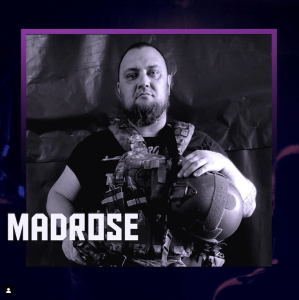
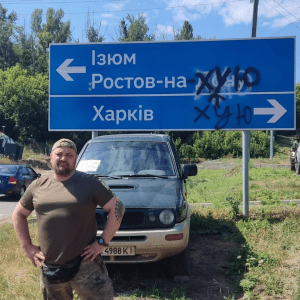 Potras23 – Madrose
My name is Kyrylo, I’m 40 years old. I’ve spent more than 20 years deejaying, having started back in 1998 in Berdiansk (now it’s under russian military occupation). I began to write music after my injury in 2020, so I have next to no experience in production.
Has the war changed your setup and what can you tell us about the production process for your album PTRS and how did you get Sofia Leshyshak involved?
The war has changed many things. Truth be told, in 2014 I didn’t think that much about what was going on in Ukraine as I saw myself as apolitical. However, all my “political indifference” was really just fear and lies reserved for others. I stopped lying to myself, joined the marines, carried out combat missions, I still perform combat tasks despite having the prosthesis. I started working on the album back in 2021, though it didn’t come to much: I composed only two tracks between 2021 and the russian invasion in 2022. I made the rest almost in one go, and all of that along with the military service.
I heard the track “Kotyku siren’ky” performed by Sofia at home during my leave, when my wife was putting my youngest son to sleep. She kept playing it to him and he fell asleep listening only to this song). The melody got stuck in my head and I decided to develop the arrangement for it. Sofia sang it a cappella, so I decided to write to her and ask for her permission. She listened to the demo and agreed.
 Your album is released by Dnipropop. The music community from Dnipro revolving around the Module club has actively been engaged in the war. How do you see the electronic music scene developing in Dnipro under present circumstances?
People will always create music, regardless of the circumstances – such is the nature of creative people. As for the development of electronic music, probably now is the time of transformation in all aspects of it. One can sense it. Because of my service, I can’t always follow the events in Dnipro, don’t always have the time and the opportunity to listen to music of other producers, but from what I’ve heard, the music has acquired an aggressive and minor tonality. I like it so)
 Hearing loss and injuries affect one third of military personnel. Has warfare changed the way you think about sound and what is your feeling about the inclusion of war sounds in electronic tracks by Ukrainian artists?
I use the sounds of war in tracks myself. Most often they are disguised as percussions and complementary parts of the composition. I’ve also experienced partial hearing loss. Unfortunately, this is irreversible, but what’s to be done?) My overall perception of music hasn’t changed.
The only thing I’d like to add about the use of the sounds of war – one shouldn’t abuse it as all of this is very personal.
In My Music, My War, The Listening Habits of U.S. Troops in Iraq and Afghanistan the author, Lisa Gilman, states that the men and women she interviewed described music as “being everywhere” throughout their time at war. Is this your experience and if so, what were and are the general listening habits of people in your regiment and what role would you say music played in their lives?
In our regiment the tastes differ so much, it even makes me mad) most often you can hear Ukrainian patriotic or war-themed music. There are almost no fans of electronic music)
Music distracts you from that fucking mess that surrounds you 24/7, it doesn’t let you go mad, quite literally.
 Following on from the previous question, Lisa Gilman also writes in My Music, My War that music plays a big role in resolving existing or potential conflict within the military, as troops listen to music across various social boundaries or otherwise bridge differences though participating in musicking. She also notes that music plays a big part in helping combat veterans process, heal, and reintegrate into civilian life. Has that been your experience?
I can’t tell for sure, most of the time the conflicts are resolved differently. Music and music creation have helped me to accept the new me. I don’t want to discuss the details as it’s a tough and painful process.
You have returned to active combat duty even after losing a limb. Having recently visited Superhumans in Lviv I have been impressed by the strength and resilience of those who’ve been injured. What would you say has helped you the most in recuperating and preserving your mental health?
There is only one answer to the last question – my family!
SEPTEMBER 2, 2024 – KYIV

So, I always loved to make stuff up, I have a bright imagination, and I’m a music nerd. I have drawn and made up stories since childhood. To me, all forms of art are intertwined, and it’s really hard to define myself in some specific media – I just tell stories. As a finished product it can look like music, dance, videoart, poetry, short story, music, sculpture, an event/performance. To me it all stems from the same thing. I just feel strongly and I need to express that.
At this point, I’m beyond happy that I have an opportunity to share my inner world as a DJ. I started DJing in February 2024, after finishing the Music Diversity Platform course.
Before that, I would never think that my music nerding and constant search for something unique and underground, would lead to anything like that. I could only enjoy it myself, and sometimes share with friends – who usually react with “WHAT is that sound, my head is dizzy from it, turn it off”. No judgement, avant garde music can feel like a psychedelic experience.
Regarding the visual arts, at some point I just started experimenting. I guess I started taking it seriously around the age of 18 – I made abstract paintings, I started creating sketches for a comic book, and I enjoyed creating crazy sculptures with random garbage and a glue gun.
At the time, I was following a classical “gifted kid” pathway – meaning I used to be smart, but in the 10-11 grades I was depressed, failed all the classes, I didn’t go to university, and my parents forcing me to take a drug test became a usual thing. It took me a long time to rebuild my self-esteem, and start to believe I actually deserve something in life.. At 23 I got to the Arts Academy in Lviv. I enjoyed it for a while, I dropped out after 1.5 years, because I can’t stand some old dudes evaluating my art and telling me what to do. Honestly, I think the only reason for me to go there was gaining confidence. Now I feel free to make my art ugly and funny, amateur-looking – I’m an art student, you can’t tell me what to do.
I really don’t want to create a romanticized image of my life. Art has always been the basis of my personality, but, for the last few years, inspiration hasn’t visited me much, and my life at the moment is mostly struggling to find enough money, without having to attend a job I hate. I think I’m moving forward with it, but it’s a slow process.
I enjoy DJing, partially because it’s still an artistic process, but I don’t need much inspiration or energy to do it, it’s easy for me. And at the moment it’s one of the last straws that connects me to my old, inspired and energized self I’m looking for.
 Has the full-scale invasion changed the way you think about music and sound in general, and has it had an impact on your playlist and your setup?
For me every party, every happy moment feels like a “fuck you” to them.
 How would you say your acoustic environment has changed since the full-scale invasion if at all?
Some obvious things would be – air raid alarms, explosions, emergency services (e.g. ambulance) – feels like there’s more of them. I also have a subjective feeling that the world has become more noisy.
I’ve always been sensitive to sounds, and last year I discovered I’m autistic, somehow it made me even more sensitive and I just prefer being in silence or having a steady background noise. The more stressed and exhausted I am, the louder the world seems. So to me it feels like my environment is overflown with random noise, and it’s stressful.
I think now I only listen to something really important. In order to enjoy music, I need to feel that it speaks right to my soul, that it was created with care. Generic, thoughtless music annoys me and feels like an offense to music itself. I don’t want to name any examples, I understand that I may simply not like it, but to someone else it’s the best song they’ve ever heard.
I only listen to music when there’s something specific I want to hear, or when I do my research for a DJset. The rest of the time I listen to white noise just to block out the sounds.
 Has the role of music in Ukraine shifted from one of entertainment to encompass the expression of identity, communication, and emotional and physical survival?
I never speak for anyone but myself. So, I can’t tell you anything about Ukraine in general. But for me – yes, absolutely. Now it feels like I should choose the sounds carefully, to put a specific, deep message there. Already mentioned it in the second question.
Do you find war sounds and air raid sirens in recent pieces by Ukrainian artists to be triggering and how can one best convey the war experience to a foreign audience through sound?
I haven’t actually encountered any music with triggering sounds made by Ukrainians. But I live in my own world and I often miss something.
To convey the war experience… I think the only way to convey any experience is to express your genuine feelings. To put your soul in it. Sometimes it doesn’t say anything directly, but you just know.
On the other hand, I feel it very strongly when the music is just “Oh, I want to make a song about war”, but it came from their mind, not their heart. I can’t listen to that, it doesn’t feel sincere, and it’s annoying. So, just express your actual state. It doesn’t need to have direct hints to war. When you live in war – even if you moved away physically – anything you make conveys your war experience.
Are there any specific tracks or albums from the past two years and half that have captured current events for you?
I can’t explain why, but that would be album kvitla – Поки не скінчиться кисень [Poky ne skinchyt’sya kysen’ – Until the oxygen runs out] and all of the music made my Maryana Klochko. They don’t say anything about the war, they don’t have war-related sounds. But the feeling of striking sadness, together with hope and clarity, is what does it for me.
 How aware would you say Ukrainians are of their musical heritage and did the full-scale invasion made you personally rediscover any unsung names from the pre-independence days?
Our heritage was wiped out. Many people were never much aware of our culture, mythology, history. In school it was taught in a way that presented Ukrainian culture as silly, boring, depressive, and after 11 years of studying Shevchenko’s poems many people developed a strong aversion to Ukrainian culture. I believe it was done on purpose and has been a part of Soviet propaganda, to take away our identity.
Ukrainian heritage is actively being re-discovered right now, and it makes me happy. This is the point where we need to be really careful with words, to not put it as if it happened “thanks” to russia. It was our active choice, and many people were working on discovering and saving Ukrainian heritage long before the full-scale invasion.
Personally, I’ve discovered a lot of hidden gems of the Ukrainian underground music scene of the 20th century thanks to Anthony Junkoid. He makes a lot of selections of solely Ukrainian underground music, and it’s amazing, I’ll include a link to one of his shows.
 Having recently visited Ukraine I was really impressed by how vibrant the experimental and electronic music scene is with so many festivals and parties going on in spite of the blackouts and curfew. Due to the current mobilisation law, how do you see the electronic music scene developing in future?
Many Ukrainian artists have told me that in the first few months of the full-scale invasion they were unable to play music, let alone compose or perform new music. Do you share this experience and if so, what were you listening to, once you went back to music?
Before the full-scale war I started making monthly playlists on Spotify, that was just music I enjoyed, I shared them on social media. And I still have the first one I made since the full-scale invasion, that was April selection. It consists mostly of spiritual jazz, it brings me a really tranquill and light mood, as if all the beauty in the world becomes visible to you and the world lets you in on its secrets. I still enjoy it and listen to it regularly.
Where are you now and have you been displaced by war at any point?
At the beginning I lived and studied in Lviv, after the start I went to my now ex-boyfriend to Lustk, and then we moved in a village to his parents. I returned to Lviv by the fall of 2022.
Right now I live in Kyiv, I moved back here in November 2023, leaving the university and all my old life, to pursue DJ career.
 Do you suffer from burnout and what do you do to relax?
I do, heavily. I recently went to a therapist because online tests showed I have severe depression, but together we came to the conclusion that it is just exhaustion. At this point I don’t want anything, and I want to cry almost every time I hear an air raid alarm, let alone the explosions.
I would love to say I do yoga and meditation to relax, but at this point I’m so burnt out that all I can do is use Kratom or drink alcohol, and listen to podcasts where people read reddit stories, or eat fast-food.
More healthy things that help me are: being with people I love, journaling, being in nature, especially near water. Studying and working on my personal projects in graphic design also helps to distract myself, but I have a hard time focusing on anything for long enough.
I’m planning to leave for a couple of months to rest from this atmosphere, because I don’t have any mental resources to deal with it anymore.
Which book / film / album / song / traditional dish / podcast / blog / artwork / building / meme best captures Ukraine for you?
Stop-Zemlia. It’s a lovely movie through which I discovered the music of Maryana Klochko. To me it perfectly captures the feeling of being a Ukrainian teenager. Though, the movie shows a much healthier environment than many of us experienced (and I’m glad, I wouldn’t want to watch it otherwise), but the feeling is really striking for me, and I relate heavily to the main character. She gives me strong autistic vibes, and seeing her made me remember my own awkwardness and alienation as a teen in school, in a really self-compassionate way. And the movie is just beautiful and dreamy, I loved it and would watch it again and again.
SEPTEMBER 2, 2024 – Kharkiv
 Hello! My name is Mikhail, I myself am from Kharkiv, and at the moment I am known more as a photo-art creator and music performer. My beginning of creating music started in the fall of 2022, as an exploration of another way of sublimation besides photo art and visual creativity. It was important for me to express my inner feelings and worldview in something and as deeply as possible, so I felt more alive, and it was this aspect that pushed me to master writing music. In fluctuations and experiments between genres I came to writing ambient, because only these sounds are the most synergistic with what I feel. So by spring the first released albums started to appear.
Has the full-scale invasion changed the way you think about music and sound in general, and has it had an impact on your playlist and your setup?
I don’t think so. My playlist was a second home to me, it always calmed me down and inspired me to do something, listening to music was like a meditative ritual, and the peaceful sounds in it at the time helped me repeatedly. It was important for me to hear the sound of something warm and cold embracing me, not explosions.
You already released two albums this year, Fragments of Edward Munch’s “The sick girl” and Elegy of Faded Glass Eyes. What can you tell us about the production process and how important is narrative for you?
By far these 2 albums are the most difficult and longest, especially Elegy of Faded Glass Eyes, which took half a year to write. The album was assembled from pieces, fragments of what was seen, experienced, felt, it was written under the influence of stories of people who survived the war, whose fear was frozen in the past, but came back echoing every night. Echoing sounds are often depicted in the compositions as a symbolism of some echo of the past, some desolation and mute sadness; I remember walking closer to night in the desolate and smoldering Kharkov, before me there was only darkness, empty streets and a single burning light in the windows. Empty houses frozen in mournful sadness, where for someone there was home and there was life. Stepping on broken glass on the ground on my return home, I sat down at the piano and wrote the feelings of the reflection of what I saw. With echoes of heartfelt sadness, I was creating a mirror with sound.
A mirror of past moments of forgotten stories and lives. A mirror reflecting in sound the sight of empty and glassy eyes looking at the slowly dripping blood on faded letters. A mirror of the silent scream frozen in me. At times reality and dream intertwined. The album gradually fragmented and began to take shape. It had no initial concept, it was written with sincere and straightforward feeling, without a plan, preliminary genres and outlines. It contains both drow compositions that depict gloom and peace in one, and acoustic compositions that depict the echoes of lives and the desolation of the present, and undoubtedly the noise composition – the apotheosis and emotional culmination of what is felt in the turning events of those very faded lives, the symbolism of the chaotic, merging into a single noise of air raid, explosions, requiem, supply machines and the reading of letters at the end.
The narrative is directly not only a part of me, but also a part of what is seen only in the desolate eyes, the war-smoldering cities, and the quiet, forgotten fates of those left behind. For me, this narrative is something that cannot be evaluated in any way.
Where are you now and have you been displaced by war at any point?
Yes, after 2 months of war I had to go to the Czech Republic, where I was a refugee for some time. After a while I returned back to Ukraine, where I was in another city with less shelling, under the same status. At the moment I am in Kharkiv.
 Many Ukrainian artists have told me that in the first few months of the full-scale invasion they were unable to play music, let alone compose or perform new music. Do you share this experience and if so, what were you listening to, once you went back to music?
My music writing is based on sublimation, expression of feelings from what is going on and worldview, and has always been so. So in those moments when I had the opportunity to create, it was important for me to express what I was experiencing in music. As for listening to music, it was also always important for me, meditative and soothing, which, on the contrary, was lacking in those moments.
Do you find war sounds and air raid sirens in recent pieces by Ukrainian artists to be triggering and are there any specific tracks or albums from the past two years and half that have captured current events for you?
I am in favor of any free creation and use of sounds, and the use of sirens and so on, can on the contrary show the impact of what is happening in people’s lives, unless of course these sounds are not used in commercial compositions so another way to make money – in that case I treat it very negatively.
The tracks that capture current events for me are:
Worrytrain – Hospitalized
Bonini Bulga – Sealed as One
øjeRum – Untilted Forgotten Works 4
Has the role of music in Ukraine shifted from one of entertainment to encompass the expression of identity, communication, and emotional and physical survival?
I think so, but only a part of it that was able to gain public acceptance against the backdrop of the fighting. In general, according to my observations, 60% of the messages remained about the same as they were.
 Do you suffer from burnout and how do you preserve your mental health?
Burnout is unlikely, rather it is more often a kind of loss of everything in the background of what is going on, from which the ability to function sanely is undermined. Frankly speaking, I don’t know what to answer about how I keep my mental health, because I can’t even give myself an answer to this question, it is rather a combination of several factors, partly dissociative perception of what is going on, and in particular my structure of perception of the world, and also what was with me around.
Which book / film / album / song / traditional dish / podcast / blog / artwork / building / meme best captures Ukraine for you?
- Film – 20 Days in Mariupol
- Album – øjeRum – Forgotten Works
- Song – Terminal Sound System – (-)
- Artwork – Edvard Munch “Moonlight” / “Anxiety”
SEPTEMBER 2, 2024 – KYIV

photo by Lisa Koval
Max Kovalchuk – Trinidad Shevron
My name is Max Kovalchuk. I was born in Odesa and lived there until 2016 then moved to Kyiv. I graduated in cultural studies and philosophy. My thesis was about the history of the scientific method, its impact on cultural anthropology, and how objects of culture can be measured and valued with different scientific methods.
I am a member of My Personal Murderer – a melancholic rock band from Odesa, and also a former Hunt member – a live drum’n’bass duo from Odesa.
As a visual artist, I am a member of the Temporary Group, a free association of artists from different cities of Ukraine for situational projects, with constantly changing participants (among them Anna Bekerska, Sergiy Petliuk, Maryna Talluto, Albina Yaloza, and others). TG projects were done in different media: actions, installations, videos, etc. The focus of the group was on the Maidan processes, the first russian invasion of eastern Ukraine and people who were injured and got disabilities during it, and the decolonial processes in Ukraine. The group is temporarily paused.

temporary group – from how to call to odesa
Since 2012 I have worked in visual arts as an art manager, curator, and artist at galleries and museums in Odesa and Kyiv. My focus of expertise is in contemporary Ukrainian art and Ukrainian modern art of the second half of the 20th century, Odesa nonconformism and conceptualism artistic movements. In my curatorial activities, I combine work with young Ukrainian artists and artists whose works make up the cultural heritage of Ukraine — author of articles about art, compiler of catalogs, and art books. Now I am a curator and director at Dymchuk Gallery in Kyiv.
I bought my first Elektron machines when COVID happened. Everybody started to learn something so as not to get crazy. I chose to learn synthesis and mixing. As a result, I released my first techno music in 2021, a Regrets and Restrictions LP and an August EP under the Trinidad Shevron moniker. The moniker comes from latin name of a tropical spider that name reminiscence to me of the first anthropologic expeditions by Claude Levi Strauss to the native people of South America. And combines the passion to explore the unknown and the irony of its failure.

at Closer Connections studio
Has the full-scale invasion changed the way you think about the visual arts, music and sound in general, and has it had an impact on your practice, your setup and your playlist?
When the full-scale invasion happened I stayed for a few days in Kyiv, then took my cat, headphones, and laptop and moved to the village where stayed there until late spring 2022. I was so worried something would happen to my friends and my gear and apartment in Kyiv I could not sleep. I realized I should not depend so much on instruments. It is great to have them but I started to learn how to make music entirely in DAW. Now I don’t use much hard gear and see it rather as an investment for selling in case something happens. I realized the helpless nature of any art before the threat of destruction.
photo by by Renata Kazhan
You have been quite prolific as of lately releasing three EPs over the past few months, Loyalties (out on Eclectic Limited), Possessions (on Alhena Records) and Treason (on Airsound Records). How do you manage to be so productive especially considering all the blackouts?
Constant feeling of danger and unpredictability lit fire under my ass. All can end for me anytime, although making nighttime music is not a solution for anything but it can give some metaphorical feeling that something has been thrown into the abyss and the reactive force from this act gives the sensation of temporarily floating above it. Soon it subsides. All the music released this year was made in two or three sessions in the autumn and winter of 2023. Something also will come out till the end of the year.
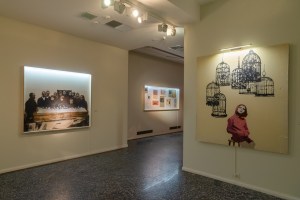
from Constellation project, works by Mykola Lukin, photo by Maksym Bilousov
Many Ukrainian artists have told me that in the first few months of the full-scale invasion they were unable to play music, let alone compose or perform new music. Do you share this experience and if so, what were you listening to once you went back to music?
It is true for me as well. After deoccupation of the Kyiv region and seeing the tragedy of Bucha and other places, I was drowned in grief. I couldn’t even hear the music. Any art seemed pointless. Once I took a taxi to the center and the driver put on the radio. Every 5-10 minutes it played the Ukrainian anthem and it felt so brutal and so offensive to do it so mundane and so humiliating without being able to stand up and put your hand on your heart.
I love old music of 16-17 century, both sacred and secular. It transcendents me and It was the first that I was able to listen after a long break.
Do you find war sounds and air raid sirens in recent tracks by Ukrainian artists to be triggering and how do you feel about bayrakart-core?
I do. I am not a fan of using air raid sirens in tracks. It is triggering as well as hearing russian language in public. Since the full-scale invasion, many people I know learned to listen carefully. And they can distinguish the sound of an anti-aircraft missile from an enemy missile.

temporary group. parts and a whole. 2015. gypsum, Odesa Museum of Modern art
Are there trigger equivalents to the air raid sirens in the visual arts that you can think of?
Really, surprisingly, it didn’t occur to me right away. In visual art, since the beginning of the full-scale war, there have also been plenty of triggers from authors who took their ideas from the news and the Internet: literal images of human suffering, torn-off arms, and legs, crying elderly people and children, all kinds of devastation. I receive many such offers as a curator.
Are there any specific tracks or albums from the past two years and half that have captured current events for you?
For me, it needs to take some time before we can merely realize and understand what happened.

photo by Oleksandr Popenko
You are also the artistic director of the Dymchuk Gallery. There is a growing awareness of Ukrainian contemporary art thanks to the inclusion of Ukrainian artists in the Venice Biennale and other international shows. Do you feel it has managed to successfully forge its own identity since independence?
It is yet to come. Since independence, the Ukrainian government hasn’t realized the value of art and culture in general. Simply put, for them, culture is leisure in their free from work time. As a result, we have a completely failed cultural policy as part of foreign policy for all the years of independence. People in the world do not care who we are and how we differ from russians. It is great that decolonizing processes finally started but as one can see we have to fight even for the borshch not to be called russian.
SEPTEMBER 6, 2024

photo by Anton Shebetko
I’m Anatoly Belov – the first artist in Ukraine in whose art gay-queer theme is the main theme of his art. I am a multidisciplinary artist, in my artistic practice I use different media – drawing, painting, musical performance, electronic music, cinema, work with texts. I have been working in contemporary art since 2004.
I came to music through musical performance, gradually delving deeper into the musical environment and over time, since 2017, I began to make my own repetitive psychedelic electronic music. My artistic practice was also my activist work for the visibility of Ukrainian LGBTQ+ people in Ukrainian society. Together with Gosha Babanski in 2012 we founded the first Ukrainian pop group with a gay-queer thematic focus. Now I continue to actively work as an artist outside of Ukraine.
Has the full-scale invasion changed the way you think about the visual arts, music and sound in general, and has it had an impact on your practice, your setup and your playlist?
The full-scale invasion certainly affected me and my art, but my views on art and my ideals on life remained unchanged. All my favorite Russian-language music disappeared from my playlist, except for one track by the group Poshlaya Molly, which I still listen to and it does not trigger me. After the full-scale invasion, my art practice stopped for a while. At first, I did almost nothing for a long time, then after a year and a half I made a book English Integration Course for Ukrainian Refugees level A1 under the impression of my refugee experience and at the end of last year I began to actively do oil painting. Oil painting in color is a completely new medium for me, before that I once did black and white or dark, almost black, paintings on canvas, but now my interest has completely changed. For myself, I am rediscovering painting and working on my new plastic language.
Has the role of music and the visual arts in Ukraine shifted from one of entertainment to encompass the expression of identity, communication, and emotional and physical survival?
The role of art in a country at war has changed noticeably, there is an expectation and demand from Ukrainian society that it (art) should bring the news of war to the world, remind that the war is still going on, in one way or another. To receive a response, solidarity and support for Ukraine from the whole world through art. Art is a universal language of communication and influence. It is used as a tool in the fight against Russia by the Ukrainian government, among others.
The situation with art and culture in general has changed greatly within the country. A lot of new Ukrainian-language content has appeared. All Russian-language art has disappeared from view and is practically impossible now. Along with sincere reflections and personal statements about the war, a lot of opportunism using the military theme, or outright propaganda, has also appeared. Some of the artists paused their artistic work and went to war, while others, on the contrary, strengthened their positions and are developing their careers.
Music and visual art are actively used as a political tool, but not all artists use it clearly. Artists, one way or another, continue to work with topics that are important to them. For some, art and their work have become a battlefield and a tool for fighting enemies (external and internal), but some have withdrawn from the visible field of art and, if they work, do it privately, doing their work “for the drawer.”
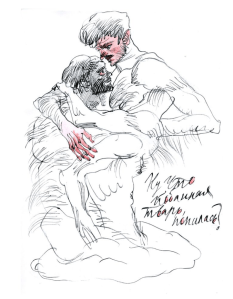
Anatoly Belov – from the series Psychedelic Forest
Between 2008 and 2012 you produced The Most Pornographic Book in the World presenting the nonlinear story of a gay man. How would you say Ukrainian society has changed over the course of the last 10 years or so in this respect and what would you answer those who claim that now is not the time to be concentrating on LGBTQIA+ rights?
Before the full-scale invasion, Ukrainian society gradually became more tolerant and open, this was especially noticeable among the youth, now I do not know how things are, I have been living outside of Ukraine for more than two years and I can only watch from the sidelines and in my opinion things are worse now than they were before. My news feed periodically shows news about intolerance and attacks on gay queer people in different Ukrainian cities. The rights of not only queer people but also biological men are “on pause”, trans women in Ukraine are not officially considered women and are now at additional risk with the remaining high transphobia in society, there are many known cases of death of queer people and biological men while trying to illegally cross the Ukrainian border. Most Ukrainian society strongly condemns such attempts to escape and few sympathize with the victims or those killed as a result of the escape.
LGBTQIA+ rights should undoubtedly work, since LGBTQIA+ people are citizens of Ukrainian society. LGBTQIA+ people also fight on par with other Ukrainian people and die. It is cruel, unfair and absurd to limit the rights of fellow citizens of their country based on sexual or gender identity. But I know that now, when officially “the constitution in Ukraine is on pause” and biological men aged 18-60 have been deprived of their constitutional rights based on their gender marker, it is naive to believe that at the same time Ukrainian queer people will be given the rights that they were not given in peacetime, for decades of active struggle by LGBTQIA+ activists. The ongoing time of lack of rights negatively affects everyone in Ukrainian society and queer people, of course, too. Now the main voice and visibility of Ukrainian LGBTQIA+ people are Ukrainian LGBTQIA+ military personnel who are now fighting not only with an external enemy but also for their rights in their country, for the future.
To those people who claim that now is not the time to focus on LGBTQIA+ rights, I want to say that they are wrong and they know it very well, but they don’t care what I tell them or what anyone else tells them and will provide arguments and facts, because these people follow their selfish conservative or political beliefs. There is a lot of manipulation on this topic, and it will continue if the state does not have the political will to solve this problem. Now, for the Ukrainian authorities, this political will is obviously absent and the issue of LGBTQIA+ people’s rights has been lost in the bloody and lawless routine of war. People survive as best they can.
How inclusive would you say the arts and electronic music scene in Ukraine is?
In recent years, before the full-scale invasion, the visual and music art scene has become more inclusive. Thanks to the work of Atelienormalno, artists with neurodivergence have become visible, new names have appeared on the Ukrainian Queer scene like Bodzhi (Bogdan Moroz), Vlad Shast, Vladislav Plisetsky, Masha Volkova, the Kvirtet collective and the group Tseloye, theme parties like Veselka, underground queer parties have appeared… The queer community before the full-scale invasion was more visible and inclusive. I don’t know how things are with inclusivity now, after the big changes, there is probably much less of it due to the various restrictions that wartime brings.

from the textbook “English integration course for Ukrainian refugees. Level a1”
In your English Integration Course for Ukrainian Refugees series, you asked refugees to tell you what they learned or realised during their refugee experience. What were your main takeaways from that series?
My main conclusions are that through this book I can communicate with very different people – both with other Ukrainian refugees, I give them the opportunity to speak out and make the Ukrainian refugee voice more visible on the pages of my book. And with this work I give the Western viewer the opportunity to see from the outside the communication problems, conflicts and misunderstandings that arise among Ukrainian refugees.
With my book I participated this summer in a conference dedicated to migration and refugee issues in Tutzing, where I had the opportunity to present my book to specialists in this field and officials who directly influence Ukrainian refugees with their work. My book was received well and attentively, the reactions to it were different, but no one remained indifferent. In my plans there is a desire to continue working on the next book. There is already new material and it is constantly being updated with new stories.
Where are you now and have you been displaced by war at any point?
I don’t want to specify my location. Ukrainian refugees, especially men, receive a lot of hatred from other Ukrainians in Ukraine and I feel vulnerable and unprotected and try to minimize it. Lately I have practically given up my public statements and comments, I don’t see the point in it now.
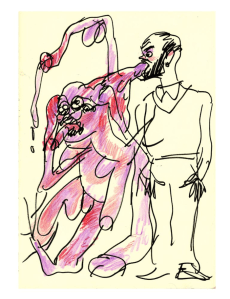
Anatoly Belov – from the series Notes During the War
How aware would you say Ukrainians are of their visual arts and music heritage and did the full-scale invasion made you personally rediscover any unsung artists and composers?
In my opinion, there is not a very good connection between generations of artists in Ukraine, which is why names are lost over time, the history of art is forgotten for decades. Because of which, over time, the heritage of the past is devalued and gradually lost. This can be seen in the example of decommunization, when many artistic artifacts of that time were destroyed during the fight against the Soviet past.
In Ukraine, there is a small group of activists who are trying to preserve this Soviet heritage, but these are private initiatives, without funding and support from the state, the gradual destruction of these objects continues. But still, thanks to the joint efforts of activists, something has been saved for now. Now the history of new oblivion is repeating itself again. Before the full-scale invasion of Russia in Ukraine, there was a fairly large layer of Ukrainian Russian-language art, now it will be a forgotten, displaced and marginal culture for years to come. I know that now in Ukraine after a full-scale invasion there are completely new young artists, some of them are making wonderful initiatives with fresh enthusiasm, thinking that they are pioneers and discoverers, not suspecting that 10 years ago something similar was done by their older colleagues in the shop. And that was just recently!
Yes, on the wave of new general Ukrainization there is a rethinking of practically forgotten names like Alla Horska, whose large retrospective exhibition could be seen this year in the Ukrainian House. In the international context, Ukrainian art is being reconquered, which for many years was called and perceived as Russian art and Russian artists like Malevich or Repin. The Ukrainian voice has become much more visible in the art world than it was before.
As for me, I have discovered for myself many new young Ukrainian artists whom I did not know before the full-scale invasion and some of them are really very interesting to me and evoke great sympathy. As for Ukrainian electronic music, even before the full-scale invasion, the Ukrainian label Muscat was searching for and archiving Ukrainian electronic music of the past, remastering old tracks and giving them a new life. I know that professional musicians and DJs outside of Ukraine know about it and value it very much. The Ukrainian music community also values the Muscat label very highly. I highly recommend all fans of interesting electronic music to get acquainted with the music released by this label, both archival recordings from the Shukai series and recordings of modern Ukrainian artists.
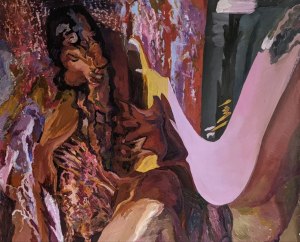
The Person and the Body 2024
Many Ukrainian artists have told me that in the first few months of the full-scale invasion they were unable to play music, let alone compose or perform new music. Do you share this experience and if so, what were you listening to, once you went back to music and when can we expect something new from Cybele?
Yes, I am no exception in this case, after the full-scale invasion I did not think about art but solved various problems of survival, periodically between things I made quick sketches and wrote down my thoughts and impressions in my small notebook. Already in Austria, the first country where I arrived, six months after the invasion, I gradually began to work with texts and drew a little. Later, a year later, I began working on my book English Integration Course for Ukrainian Refugees, Level A1 comprehending my refugee experience through it. I started making my art more actively only this year. I rediscovered oil painting. And now I am mainly focused on painting, at least these six months I have been doing mainly only painting.
It is a very inspiring practice for me now. I still have not started making my new music. Periodically, not often, I played my live shows at various cultural events, but this was my old material created back in 2019. Now I finally feel that I am ready to make my music again. But I can’t say now when there will be something new from Cybele, I still need time to recover, I need time and practice. But I want to please the fans of “Lyudska Podoba” that Gosha and I have recorded new material, our new songs in Ukrainian and one in English, which I am wildly delighted with! And Gosha is currently filming and editing a video clip for one of these songs. I hope that by the end of the year, maybe earlier, we will release it.
Do you find war sounds and air raid sirens in recent tracks by Ukrainian artists to be triggering and how do you feel about bayrakart-core?
I hate the air raid siren sounds in the tracks and I don’t like “war” music in general, the sounds of war, it really triggers me. I don’t listen to bayrakart-core and I don’t want to listen to it.
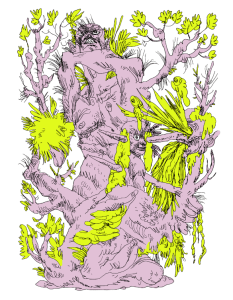
Tree from the series Psychedelic Forest
Are there any specific tracks or albums from the past two years and half that have captured current events for you?
Yes, of course there are such tracks. Music really helped me to unwind and get vitality and positive emotions. Basically, I listened to classical pop music of the 80-90s, but also modern pop music, of course. If before the full-scale invasion I was constantly looking for new modern music, then after the invasion I listened and continue to listen mainly to classical pop music. It seems to me that this is such a defensive reaction of my subconscious to return to the past, when there was no war in my life.
The pop culture I grew up on has been preserved in the fragments of my lost civilization, my world that no longer exists. I listen to this music again and again, periodically finding new musical treasures that I did not know about before.
From my recent musical discovery, this is the group Fleetwood Mac, you will probably laugh, but I did not know anything about this legendary group, and now I am listening to their track “Dreams” on repeat, I especially like the remixes from Deep Dish. Another of my recent discoveries is the amazingly melodic track “Courage” by Talking Drums.
I love listening to early Iryna Bilyk, especially the songs “Pislya kohannya”, “Ti angel”, “Lishe tvoya”. I listen to Poshlaya Molly – Pornhub Christmas Club (slowed + reverb) as I said earlier, this is the only Russian-language track that I still listen to, perhaps because it is a track by a Ukrainian artist, but not necessarily, because there is a lot of Russian-language Ukrainian music, and only this track remains in my playlist. I don’t listen to the rest of the tracks by this group, but this track is a masterpiece)
I constantly listen to such classics as Inner City – “Good Life”, Bizarre Inc – “I’m Gonna Get You”, Nightcrawlers – “Push The Feeling On”, Fleetwood Mac – “Everywhere”, Talk Talk – “Life’s What You Make It”, Ric Ocasek – “Jimmy Jimmy”, Liza Minnelli – “Don’t Drop Bombs”, K.W.S. – “Please Don’t Go”, Madonna – “Who’s That Girl”, Madonna – “I’ll Remember”, Madonna – “Rain”, Madonna – “Bad Girl”, Madonna – “Ray Of Light”, and of course Madonna – “Where’s the Party” (I listed these main Madonna tracks that I listened to on repeat, because they are really very important to me, because they saved my psyche when everything was collapsing before my eyes)
I will also mention significant tracks for me: “Where Is My Man” by Joe T Vannelli Vs Eartha Kitt, Mylène Farmer – “Désenchantée”, Mylène Farmer – “California”, Ruff Driverz Presents Arrola – “Dreaming”, Gwen Stefani – “What You Waiting For?”, Cocteau Twins – “Heaven Or Las Vegas”, Goldfrapp – “Utopia”, Placebo – “Running Up That Hill”, Eirin Peryglus – “Y Dyn Newydd”, Savage – “Don’t Cry Tonight”, Ice MC – “Easy”, Orbital – “Halcyon On and On”, Robin S. – “Love For Love”, Pogo – “Forget”, Simple Minds – “Don’t You (Forget About Me)”, Tubeway Army / Gary Numan – “Are ‘Friends’ Electric?” All Saints – “Pure Shores”, Flight319 · “070 Shake”, S’Express – “Superfly Guy”, Yves Tumor – “Secrecy Is Incredibly Important To The Both of Them”, Sneaker Pimps – “Low Five”, A Long Ride to Fargo – “The Push”, Die Dämmerung von Nanotech – “Der Zyklus”, Kendrick Lamar – “Money Trees”, Virginia — “Follow Me…”
Some of the more modern music have become iconic for me: Lost Souls Of Saturn – “Mirage”, Grimes – “So Heavy I Fell Through the Earth”, Charli xcx – “Apple”, Palmbomen II – “Boy I Can Dance feat. Kid From Amazon”, Fixed Our Love (feat. queenie) (Extended Version), Peggy Gou – “(It Goes Like) Nanana”, katy perry – “harleys in hawaii (s l o w e d)”, Megan Thee Stallion – “Movie (feat. Lil Durk)”, Doja Cat – “Paint The Town Red”, Lana Del Rey – “Chemtrails Over The Country Club”…

Guy with big nostrils – 2024
What needs to happen for Ukraine to overcome its inferiority complex?
You speak as if all of Ukraine has an inferiority complex, but I do not agree with this judgment as a general one, since quite a lot of people in Ukraine, whom I know, are self-sufficient and do not have this inferiority complex. But if we develop the idea of what should happen to those who experience this complex, I think that a humanistic and cultural ideological revolution should take place in the consciousness of the whole society – when it will perceive and value the personality of another person. When the authorities in Ukraine will treat their fellow citizens and their rights with respect and trust. Seeing them first of all as people and not a resource. When officials will not have a desire to deceive for their own enrichment, but will be solidarity with society in improving the quality of life and raising the standards of life of this society.
Perhaps I am talking about some unrealistic utopian fantasies, but this is my dream of the Ukrainian society of the future. Usually after wars there are fundamental rethinking and reformatting of society within the country. But sometimes these rethinkings do not happen. What will happen to Ukrainian society after the war, we will see later.
Having recently visited Ukraine I was struck by how vibrant its electronic and experimental music scene is. How do you see the scene developing under the current mobilisation law?
Yes, the Ukrainian electronic and experimental music scene is a great treasure of Ukraine and a self-sufficient world-class phenomenon. I am happy that I know this musical community from the inside and am a part of it. I have no forecast for how the Ukrainian electronic music scene will develop under the mobilization law. I know that some musicians left Ukraine, some musicians went to fight at the front, some musicians tour and collect money to help the military, for their needs. Some people lost the opportunity to earn money with music and went to work in a job unrelated to music … at the same time, new young names appeared. Despite everything, musical events of various scales take place in Ukraine. Musical life in Ukraine continues, but you can understand and learn the peculiarities of this life only from the inside. I do not have such an opportunity now.
Which book / film / album / song / traditional dish / podcast / blog / artwork / building / meme best captures Ukraine for you?
I’ll try to answer)
- Book – Ukrainian folk tales.
- Film – Kira Muratova Asthenic Syndrome
- Album – Irina Bilyk I will tell
- Song – Iryna Bilyk “Starry night”
- Traditional dish – borsch
- Podcast blog – I don’t follow it.
- Work of art – Alexander Gnilitsky “Daddy, the helmet is crushing”
- Building – Flying saucer by architects Florian Yuryev and Lev Novikov
- Meme – I’m fine
SEPTEMBER 9, 2024
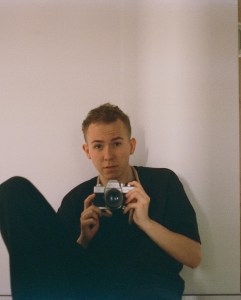
My self-portrait – March, 2022
My name is Andrii Ushytskyi, and I work as an Editor at Solomiya Magazine, a printed publication that explores the Ukrainian context through cultural and artistic perspectives. My background is in literature, and I primarily focus on writing. When the full-scale invasion began, I started posting my texts and reflections on my wartime experiences on Instagram. These gained significant resonance, leading the magazine’s founders to notice one of my posts and invite me to join the team.
As the editor, I began collaborating with many visual artists, although I wasn’t very exposed to visual arts before. I had briefly tried my hand at fashion photography, but it didn’t last long. I’m much more drawn to print, publishing, and text.
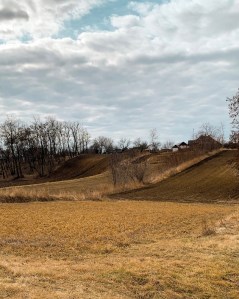
First days of the full-scale war. I was surrounded by fields in Western Ukraine – Photo by Andrii Ushytskyi
Has the full-scale invasion changed the way you think about the visual arts as well as music and sound in general?
I’ve started paying more attention to sincerity in artworks. My personal criterion for a powerful artwork is that I can feel the artist’s presence behind it. Beauty has become less important to me. Aesthetics have also become less important. What touches me deeply is when artists show their way of approaching a topic—how they struggle with it and try to find ways to work around it—and are vulnerable enough to show it to the viewer.
The same applies to music. Sounds, in particular, have become more interesting to talk about because war is very much about sound. There are sounds that signal danger—air raid sirens, explosions—and my body has become very reactive to them. Whenever a song samples the sound of an air raid siren, my stomach tightens. It makes me think about how unaware we might be of how music and sounds literally impact us, our bodies, and others. So whenever I am in a pop mood and want to listen to Beyonce’s Alien Superstar, I have to be mentally prepared that I will hear an air raid siren sampled there.
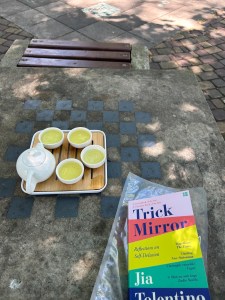
Drinking tea in the park across the street from the place where I live – Photo by Andrii Ushytskyi
Has the role of art in Ukraine shifted from one of entertainment to encompass the expression of identity, communication, and emotional and physical survival?
I would not say that Ukrainian art before the full-scale war was purely entertainment. The history of Russian imperialism toward Ukraine spans more than 300 years. Even when Ukraine was under Soviet occupation, artists who spoke about the notion of an independent Ukraine were deliberately persecuted. Yes, I agree that contemporary Ukrainian art portrays the current struggles that Ukrainians endure; however, it is also a way to make sense of wartime reality and an attempt to foster a sense of relatedness among Ukrainians. Even though Ukrainians share the common ordeal of war, each experiences it in their own way. These different wartime experiences can deepen the chasm between Ukrainians. And this is where art comes in: it tries to find threads that connect us.
To answer your question: because Russia was so omnipresent in Ukraine before 2022, it dominated much of the cultural and artistic stage here. With the onset of the full-scale war, many Ukrainians decided to eradicate everything connected to Russian culture from their daily lives as an act of resistance. This created a significant cultural void that had to be filled with new art and values. That’s why the idea of retracing the roots of Ukrainian culture and heritage became so powerful. Imagine being raised on a song by a Russian singer, only to later realize that you know it because it was part of Russian cultural and military expansion. It pulls the rug out from under you, and as you try to stand up again, you need to rediscover yourself anew. It takes time, effort, and lots and lots of grieving for not being able to return to those times.
 You are the editor of Solomiya art magazine. War has obviously featured in many works by Ukrainian artists, what would you say is the most effective way to convey the war experience to an international audience and could you give a few examples of how this has been more effectively achieved for you?
It’s one of those big questions, and as a magazine team, we constantly ask ourselves that. I think it’s important to observe how the war evolves and changes us, our lifestyle, and how it’s perceived globally. War is so multifaceted that there is no clear-cut answer. In the first issue of Solomiya, we featured a text titled Mono-No-Aware, written by Vsevolod Kazarin, one of Solomiya’s co-founders, in which he discusses how the perception of time changes when you suddenly find yourself in the middle of a war. As you continue to reflect on what is happening, you also begin to learn things you didn’t know and question why you didn’t know them—or why you chose not to know them. This is particularly relevant when considering how the war was overlooked by most Ukrainians and the world back in 2014. So, if there is a best way to talk about war, I think it is one rooted in honesty and humility. It may take a long time to truly understand what you have to say. Especially because truth can be so painful to accept.

Koloah – Serenity
What role does music play in your life and are there any specific tracks or albums from the past two years and a half years that have captured current events for you?
I love music. I cannot imagine my life without it. As for recommendations, I suggest Serenity by Koloah. For me, apart from anger, war is a lot about numbness, silence, and that looming feeling of catastrophe that crawls very quietly until it’s loud and deafening. I think Koloah captured that perfectly. An interesting story: I have always been very sensitive to music and regularly experienced goosebumps when I heard something I liked. When the full-scale war broke out, I lost this sensitivity and became emotionally numb because I was in a deep state of shock. But a year later, as I was listening to this album—which wasn’t my first time hearing it—I suddenly got goosebumps. That’s how I knew my sensitivity was back. But with it also came anger, grief, and pain that was repressed by shock.

Our first public selling of Solomiya magazine. July, 2022 at Kashtan Coffee in Kyiv – Photo by Vsevolod Kazarin
How aware would you say Ukrainians are of their artistic heritage and did the full-scale invasion made you personally rediscover any unsung artists from pre-independence days?
I cannot speak for others, so I will remain subjective here. I have always been interested in Ukrainian cultural heritage and have made efforts to discover artists from the pre-independence era. However, I wasn’t as aware of the early independence period, particularly the Ukrainian avant-garde music scene of the 1990s and early 2000s. Thankfully, I now have many friends connected to music who introduced me to artists like Svitlana Nianio and the band Cukor Bila Smerť . Such a magical sound! A hundred percent recommendation
Where are you now and have you been displaced by war at any point?
I am based in Kyiv, but I was in my hometown in Western Ukraine when the invasion broke out. I had arrived there two weeks before February 24 just to make sure that I was in a relatively safe space in case the Russians attacked. And when they did, many people started fleeing their cities and moving west. So I was that person who helped the IDPs find shelter in the first weeks of the full-scale war. I got back to Kyiv in July 2022.
Which book / film / album / song / traditional dish / podcast / blog / artwork / building / meme best captures Ukraine for you?
I have so much love for Ukraine and the Ukrainian people, so it would be a song that channels that love. So, “Люби” by Trio Marenych. One of my favorite songs ever.
SEPTEMBER 9, 2024 – KYIV

photo by instagram.com/anhelinenko
I am a hell-bent DJ, who loves art, sport & buying expensive records just for one track 🙂
Has the full-scale invasion changed the way you think about music and sound in general, and has it had an impact on your playlist?
The full-scale invasion didn’t change my understanding of music or selection: it had broadened my perspective. In evacuation I didn’t have an access to my records & I went to pieces after all things were happening around. But in April 2022 it was my comeback to Discogs & wax digging. That time gave me an understanding of how I can go on with the music as a DJ. Thus was born the idea to create my own project.
Your project REJOICED has a residency on LYL Radio (Lyon, France). Could you tell us more about it?
First and foremost, it all revolves around a vinyl-only radioshow with the art-based core. There are tons of dance music which are available only if you’ll buy the record. My idea is to show DJs I’m personally inspired by & who support this wax culture doing the labels, producing the music & organizing parties. When I realized it’s not enough to reveal the talents through the 1hr mix – the zine interviews were born.
Parties-wise, it was only a matter of time. Our first season was released on Kyiv’s Gasoline Radio: we did 12 episodes, 6 interviews and 3 showcases, but sadly the radio station was put on hold. LYL Radio offered me the residency, so here we’re 🙂 Laurence with OOZ Records, Piers Harrison – a co-founder of Mysticisms & DJ Sotofett (Sex Tags Mania) were our guests recently.
Also the visual side of REJOICED is made by Ukrainian artists: they paint covers for episodes and posters for the showcases we do. Some of these artworks we sell & I’m happy to help them to be noticed worldwide.
Gasoline Radio has been very important for many Ukrainian artists. What did you personally take away from that experience?
It has happened at the right time and place. Gasoline illuminated Ukrainian talent & gave us the platform to express ourselves. As for me, I was aware of the direction I wanted to go as a DJ, the limitless capabilities in creating & working under the pressure of ongoing war. In addition to this, seeing the radio’s operations gave me some insights on how to build a big project, to manage team work & to be true to yourself.

photo by instagram.com/mind1k
You recently made a Scene City podcast dedicated to Kharkiv. Is there such a thing as a specific “Kharkiv sound” and if so how would you describe it? Also, how would you say the electronic music scene in Kharkiv differs from that of Kyiv or other Ukrainian cities like Odesa and Lviv?
There’s one main difference between Kharkiv & Kyiv: one keeps the “no-borders-in-music” philosophy and the other one’s building trends by making people follow it.
Kharkiv sound means you’re free in what you play & produce; from techno, drum’n’bass and house to psy- trance, juke and schranz: if you do it great – you’ll be heard. Mostly it works this way thanks to Zhivot (the legendary Ukrainian nightclub from Kharkiv), whose motto “different club – different music” and diverse-in-sound parties have raised two generations of open-minded clubbers, musicians and DJs.
Kyiv has a great trendsetting system: the club promotes its sound diligently; DJs follow it to be capable to play there & it may blur the artist’s identity in some sort of way. In the meantime, it works as a filter of the deejay’s intelligence & how the artist understands the party’s context. Now there are 4 main trendsetters in Kyiv & I would love to see more. Odesa and Lviv have a strong local community with a good understanding of European trends. I’ll never forget my first visit to DSK Port: shades, trippy electro and candles kept a mysterious mood inside the club. You could easily recognize this place by its distinctive sound even with your eyes closed.
The geographical position of both cities makes it easier for artists to travel and to learn from the experience they had in Western Europe. At the same time, this fact can force people to remove to Kyiv and other big European capitals easily in search of career opportunities. However, it doesn’t hinder the local communities like TSEKH33, Night Ambassadors and Ganok to foster the scene steadily.
Has Ukrainian music finally moved from the periphery to occupy a more central stage over the past two and a half years?
We are still on our way. The full-scale war has taken DJs & producers from Ukraine all over the globe & this fact inspires, motivates and creates the opportunities to be heard. I would like to have another reason for this extensive Ukrainian musical expansion than the war, but it is what it is.
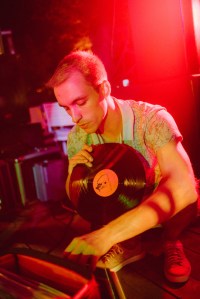
photo by instagram.com/monastyrskyi_vadym
Has the role of music in Ukraine shifted from one of entertainment to encompass the expression of identity, communication, and emotional and physical survival?
Yes, definitely. We live in the imbalance of bad emotions, the endless stress & the possibility of being killed any minute. The meetings with friends & colleagues on the dancefloor distract the mind. Furthermore, a lot of parties do fundraisers to Ukrainian military forces splitting the entrance fee, so you’re not just having fun and keeping your mental health, but helping our soldiers with funds.
Identity-wise, there’s a lot of internal and external attention to Ukrainian producers from the past. You can check prices of records with Ukrainian folk & pop music from the 20th century: some of them skyrocketed in last 2,5 years. The war made us realize that we have strong musical roots & tradition; it also reminded us to respect our local scene, to support & cultivate its talents. & that’s what we do step-by-step.
What Ukrainian releases have inmpressed you the most since the full-scale invasion?
Borys – Voice In My Head EP (Wicked Bass), Qzzaargh – Lost But Found EP (Detali), Lostlojic – Mamay LP (Tech-um), Komponente & Kurilo – Defenders EP (Trance Pandemic), all releases by Tancido & Chivalry labels, shjva – WAR1209 EP (Warning), Cukor Bila Smert’ – Recordings 1990-1993 LP (Shukai) & Kiddmisha – The Game EP (Domesticated).

photo by instagram.com/xepaces
Most artists I have spoken to have told me that over the first few months of the full-scale invasion they were unable to listen to music. Has that happened to you and, if so, what did you listen to when you first went back to music?
Yeah, as most Ukrainian people, I was only listening to explosions & news about the war. It took me 1,5 months to get back to the music. It was Discogs, new releases on deejay.de and some stuff on Soundcloud, I don’t remember exactly. But I do remember that since the full-scale war started, I feel physically terrible when I hear russian music or music of those who support this war. That’s one of the reasons I don’t buy it & I don’t play it anymore.
You regularly take breaks from social media. Has it helped you preserve your mental health?
Just a little. The war news is 24/7 around us & it damages much more than the socials. Altogether it makes your brain overloaded & unfocused that affects the quality of work you do. So my recipe is to leave social media for 10 days or more every 6 months. Add sports, normal sleep & regular live chat with the loved ones – your inner batteries can be recharged.
Which book / film / album / song / traditional dish / podcast / blog / artwork / building / meme best captures Ukraine for you?
My Ukraine is in the desserts from the occupied Luhansk, in the photos by Daria Svertilova, in old Ukrainian pop rock from early 2000 that I was listening to every morning before school; in artworks by Kateryna Bielobrova and Zhanna Kadyrova; in all-night-long parties at Kultura Zvuku and Zhivot in Kharkiv; in traditional vyshyvanka from Poltava; in The Derzhprom building and the chocolate-waffle cake Kharkivskiy.
SEPTEMBER 9, 2024 – BERLIN

My name is Iryna, and my stage name is Iris Forest. I am an electronic music artist from Kharkiv, Ukraine, currently living in Berlin due to the full-scale invasion that russia has launched against my country. I work as a one-person project and previously performed using only two instruments: piano and voice. My friends used to describe my music as dark minimalist pop. It has since evolved into a more electronic and somewhat experimental genre.
Has the full-scale invasion changed the way you think about music and sound in general, and has it had an impact on your practice, your setup and your playlist?
Yes. I started seeing very clearly how the statement “music is outside of politics” had been used by russia for years as an invisible weapon in the context of ukrainian-russian relations and beyond. Consequently I fully stopped separating music from politics. There are now zero russian music artists/bands on my playlist. I hadn’t been listening to them much before anyway, but now I’ve completely stopped consuming any russian music or anything russian since it creates a common context with the country that wants to conquer mine and wipe off my nation. And having a common context with the country that wants to conquer and wipe off one’s nation is messed up and dangerous I find.
Full-scale invasion also did have an impact on my setup. A rapid shift from acoustic to electronic had occurred. I had been fooling around with digital instruments out of curiosity before but never dared to just change the direction of my music. But unforeseen circumstances drive to unforeseen actions. People under constant missile attacks often operate by principle “But when, if not now?”. Although separated from home I applied this principle in my music. Since the form I used to work with before the invasion had suddenly become, solely according to my subjective feelings, irrelevant after, I quit piano and started the work on my first electronic EP about war, which I eventually released on WAAGE records on December 20, 2023.
 What can you tell us about the production process for your album 3:40 and how have you managed to translate your experience about war into sound?
I fled from Kharkiv to Dresden when the European Centre for the Arts HELLERAU began offering a month-long residencies to Ukrainian artists affected by this war. I was fortunate to receive one and deeply thankful for the opportunity. Every day, I went to the room provided for me to work, spending about an hour composing music. It gave me a brief pause from the constant stream of horrible news from my homeland, a short break from never-ending grief and loss. That’s how I began “3:40”.
After the residency, I moved to Berlin and continued composing. I wouldn’t say I intentionally tried to translate my experience of the war into sound—it simply consumed me. When someone creates while having images of people suffering and crying beneath rubble constantly in their mind, what they produce inevitably reflects that devastation.
Has the role of music in Ukraine shifted from one of entertainment to encompass the expression of identity, communication, and emotional and physical survival?
Music in Ukraine continues to serve various purposes, but its primary focus has now shifted to encompassing the expression of identity, communication, and emotional and physical survival. Many artists are now creating music that captures the realities Ukrainians are experiencing, with the aim of ensuring these experiences are not forgotten by the international community and seeking support.
 Many Ukrainian artists have told me that in the first few months of the full-scale invasion they were unable to play music, let alone compose or perform new music. Do you share this experience and if so, what were you listening to, once you went back to music?
As mentioned, I composed music. I also performed my piano pieces for a while, though I felt quite detached. It felt more like mechanical work rather than an interesting process. I couldn’t and did not want to party, and attending social events in general was challenging, a situation that somewhat persists. I also couldn’t listen to as much music as I used to. When I eventually returned to music listening, I don’t remember the specifics, but I believe I listened to what my boyfriend occasionally shared with me and some old post-punk bands, which I tend to gravitate towards regardless of the situation. Perhaps it gives me a sense of illusory stability.
Are there any specific tracks or albums from the past two years and half that have captured current events for you?
First thing that comes to mind is “my mom sends me photos from relatively safe places” by oleksii podat.
 How aware would you say Ukrainians are of their musical heritage?
I would say that being well aware of one’s own musical heritage is not easy, if a neighboring country has been systematically demolishing it for centuries by persecuting and murdering its brightest minds, and promoting russian music. However, I see how much effort we are putting into preserving and revitalizing our heritage.
How does one deal with separation?
I wish somebody could teach me that. I suck at that. Psychotherapy I guess.
Do you suffer from burnout and how do you relax?
Yes. Burnout is my second name. And I suck at relaxing too. But recently I have been trying to use the skills from DBT therapy to prevent burnout. This way, I can avoid needing to find ways to relax while already experiencing burnout. When burnout does occur, I simply suffer and accept it, unable to function well, and wait until it passes.
SEPTEMBER 10, 2024 – KYIV

photo by Denys Matafonov
My name is Vladyslav Putistin, I am a Ukrainian DJ and producer. I started playing about 18 years ago, my style varies from Italo disco, EBM, New Beat to Trance. I recently started producing music and already have two releases in collaboration with Lvcerate.
Has the full-scale invasion changed the way you think about sound and has it had an impact on your playlist?
Stylistically, the war didn’t have much of an impact on my music and how I perceive sound. I remain faithful to it. But somewhere at the very beginning of the full-scale invasion, I couldn’t listen to anything at all for several months. Not a single track.

photo by Ihnat Aliiev
After 10 years of experience deejaying you have ventured into production and have released a couple of EPs with Valera aka Lvcerate. You seem to be a fast learner as the production process on both your EPs seems to have been remarkably quick. What is the secret to your collaboration and what would you say was the most difficult thing for you to make the transition from DJ to producer?
It turned out very interestingly that I actually asked Valera to teach me how to work with Ableton. Since I knew we liked the same music, it was easy for me to find a common language with him. Then I proposed to write something together and it turned out very well. Our secret is that we combine my love for dramatic/epic lines in the composition with Valera’s love for a heavier and darker sound.
The very transition from a DJ to a producer was logical for me, because I like to develop and it was only a matter of time when I would sit down to write my music and there was nothing difficult in this transition, only enthusiasm for the work.
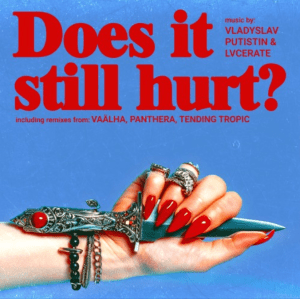 Also, Does It Still Hurt? came out hot on the heels of Hot Flushes. Although the two EPs are released by different labels they share a common sensibility not just in the sound but also in the artwork. Do you have an album planned together or are you going to concentrate on solo stuff?
Yes, we are already planning to sit down for new tracks in October. In addition, my first solo EP will be released this year and I plan to release an EP in collaboration with Sharlese, she will record her voice for me. Valera will also have his solo EP out next year.
photo by Yevhenii Khromov
You have played at Veselka and K41 amongst others. How would you say the Ukrainian LGBTQAI+ community has been developing over the past few years and how inclusive would you say the electronic music scene is towards the queer community and does it do enough to provide a safe and inclusive space for all?
I can say that today what we have is already a good result, but there is still work to be done. You can definitely feel free and protected at their events.
Is it fair to say that Italo disco seems to be popular in Kyiv, with Regular Disco and other parties embracing its sound and if so, how would you explain this within the context of Ukrainian electronic music?
Unfortunately, Italo itself does not have the required scale in Kyiv. Large venues do not often invite artists of this genre to play. And we don’t have that many DJs who play Italo. But the reaction of people is always positive and they are interested in it, because it is a completely different sound from dance music. Regular Disco is currently releasing good stuff with Ukrainian artists and you can hear Italo among them. Unfortunately, their parties are currently on hiatus, but I hope they will return in the nearest future. Here I want to say a big thank you to the Stezhka formations where I am also a resident, Hybrid Moment, Laboratorium, Closer club and the festivals they organize where we can hear artists playing Italo and EBM music.
Where are you now and have you been displaced by the full-scale invasion at any point?
I am now in Kyiv, I live and work here. I go abroad from time to time for performances and then return back home. I am from Kyiv, therefore, unlike millions of Ukrainians, I did not live through the terrible experience of forced relocation to other regions.
 Did you also find it difficult to listen to music in the immediate aftermath of the full-scale invasion like many of your peers? If so, what kind of music did you come back to and is there anything you now find difficult to listen to because it might be associated with difficult times or traumatic events? And do you find war sounds in electronic music tracks triggering?
At first it was very difficult to listen to anything. I moved away from this state gradually, starting with listening to something light and calm.
In addition, I stopped listening to anything in russian and deleted all music with this language. Also, I don’t play any music by russian electronic artists.
In terms of sound triggers, it’s hard right now, for example, if there’s a siren somewhere in the track, my body immediately reacts to it.
Are there any specific tracks or albums from the past two years and half that have captured current events for you?
I cannot single out one or several albums or tracks. I started listening to Ukrainian music a lot, I have separate playlists and depending on my mood, I turn on one of them and go for a walk around the city.
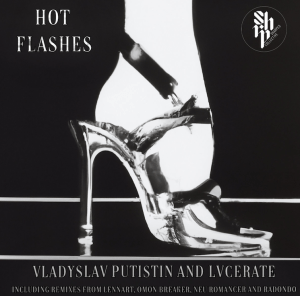 How aware would you say Ukrainians are of their musical heritage and did the full-scale invasion made you personally rediscover any unsung composers or works?
It seems to me that people in general began to immerse themselves more in Ukrainian music, to be interested in it, to search for it. The Great War became an occasion for many to explore their roots more deeply. By the way, a wonderful collection of Ukrainian music from the 70s – 90s is coming out soon on the American label Light in the Attic. Of course, it still takes time, but the fact that there is an impetus to the publication of such collections is a very good sign.
photo by Vova Neronov
Having recently visited Ukraine I was struck by how vibrant its electronic and experimental music scene is. How do you see the scene developing under the current mobilisation law?
Nothing stops, people write music, publish it, play it at parties. If they are mobilized, they go to war. It seems to me that everyone lives in the moment, plans conditionally for today, for tomorrow. Plus – a person is arranged in such a way that they adapt to conditions. And the same process is happening with us. No matter how it sounds, and no matter how much it hurts us from what is happening, we adapt and move on. I hope more hardened.
Which book / film / album / song / traditional dish / podcast / blog / artwork / building / meme best captures Ukraine for you?
My grandfather’s borscht is the tastiest thing I’ve ever eaten, I hope I’ll cook it the same way someday.
SEPTEMBER 11, 2024 – UKRAINE

My name is Artem Nazarenko and i have been involved in music for 23 years. I began my creative path in a music school with bandura classes. After that, I became interested in rhythm, specifically beatboxing, and in 2012, I became the first beatbox champion of Ukraine.
In 2013, I went to China and worked in the club scene. In 2020, returned to Ukraine and started working as a technical director at a recording studio in Kyiv. In 2022, I created and education music programs for youth as part of a UNICEF project.
Composed music for the film ETHOS, a full-length documentary about the 3rd Regiment of the Special Operations Forces named after Sviatoslav Horobrui.
Produced an album as part of a UNICEF project.
Author of the collection of tracks ШТУРМ dedicated to the Ukrainian warriors.
 Has the full-scale invasion changed the way you think about music and sound in general, and has it had an impact on your practice, your setup and your playlist?
My attitude towards music has changed a lot. Music is a powerful tool of emotional influence, and in times of war it should work to motivate and support soldiers, to unite people around a goal, and musical practices are aimed at mental recovery, especially the mental health of children. This direction seems to me to be more important than the entertainment.
 Has the role of music in Ukraine shifted from one of entertainment to encompass the expression of identity, communication, and emotional and physical survival?
Yes. A lot of similar and not very high-quality material has started to appear. But I think it’s good, it’s a process, and some of it will crystallize into a high-quality form, some will fall off, it’s a path whose results will be manifested in a few years, maybe more.
Earlier, we had a lot of music that was aimed purely at entertainment, and, what’s worse, it was targeted at entertaining the enemy country. Now, on the contrary, many bands and strong performers are emerging, focusing their work on our cultural identity, unity, and important social issues. Many are appearing, but I believe we need even more because we are now in circumstances where we urgently need music that will bring people together and tell them who we are and what our values are.
 The main concept of the ШТУРМ (assault) project is the unification of the living and the non-living. The living part is beatboxing, representing a person, a warrior. The non-living part is synthesizers, representing technology, weapons — what helps the warrior destroy the enemy. The primary goal is motivation for completing combat missions, while the secondary goal is creating a separate track for a specific unit so they can use it for their purposes — whether it’s for gatherings or eliminating the enemy, essentially anything they need to use it for in their content. I’ve made six tracks, but I’ve already released the seventh and am now mixing the eighth. My plan is to make as many tracks as possible, and I’ve set a goal of 40 tracks. We’ll see if I reach that number because after releasing this collection, five more units contacted me asking to make a separate track for them.
It so happened that we faced the war in a large recording studio. Fifteen of us lived there, half of whom were artists. In addition to actively volunteering, we realized the importance of music for the consolidation of society. I was working on sound recording for the Armed Forces, and one of the first tracks we recorded was called “Kamenyari”.
I think that culture should develop in any case. And the mobilization state is a circumstance without which our scene will not develop, if we are destroyed, there will be no one to develop the scene.
In August I volunteered for the army and I know many artists who did the same.
SEPTEMBER 12, 2024 – IRPIN

I am Pallas Athena, electronic music artist, DJ, producer, and resident of the label Ochi.
My story begins in the industrial atmosphere of Donbas. It was here, inspired by classic house and techno rhythms, that I first started making music.
For me, music is an attempt at a kind of psychological interaction with the listener, bringing them back to a primal state. I believe that classic 4/4 techno has a deeper spiritual impact on a person. In my hands, it’s a tool with whichI try to immerse people in the depths of their consciousness and give them anew experience.
My discography includes one album, podcasts on Ukrainian platforms, and a series of parties on local stages in Donbas, Kharkiv, and Kyiv region.
Currently, I’m planning a new release with be_ca_di and a subsequent album where I’ve achieved the exact sound I’ve been striving for over a long time. I can confidently say that it will be a very striking release.
Has the full-scale invasion changed the way you think about music and sound in general?
Unfortunately, war changes every aspect of life. For me, the biggest change has been my approach to understanding the music creation process. Since the war began, I create to prove that I am alive. To create means to be truly alive.
Has the role of music in Ukraine shifted from one of entertainment to encompass the expression of identity, communication, and emotional and physical survival?
Of course, since the start of the war, electronic music has gone beyond being a purely entertainment phenomenon. Today, rave culture is an important part ofUkrainian identity, drawing global attention to the issue of the war inUkraine. Despite all the horrors happening today, I am glad that our community finds the strength to actively develop and support defenders. I also try to support the military, so I donate 100% of my profits from releases to the needs of the Ukrainian Armed Forces. With my previous album, my label and I launched a fundraising campaign to purchase equipment for a military unit.
 Back in October of 2023 you released the album RITUALS OF HONORING ATHENA INCLUDED SACRIFICES OF LAMBS. In the liner notes you wrote that “The album was created around spiritual themes and minimalism and was prepared for two years – clear ascetic rhythmic parts create an atmosphere of sacredness and eternity. This is a return to the roots of techno music, but at the same time a look into the future – how modern Ukrainian electronic music can sound.” After almost three years since the full-scale Russian invasion, how do you imagine the future of electronic music in Ukraine?
I believe that the future of Ukrainian electronic music will be born from our new reality. This sound will be infused with the experience of war, yet it will strive to find light and hope, which are sometimes in such short supply.
Are rituals still important to you in terms of your musical practice?
For me, the process of creating music is a kind of ritual that requires a special inner focus. No matter how my day went or how I’m feeling, in the moment of creativity, I am completely free from all thoughts, and my mind is fully concentrated on the process. Only when I enter this state do I begin the search for an artistic image and experiment with form, onto which I later layer an emotional shell.

Do you still live in Kharkiv and if so, what is the current situation on the ground? I understand that a residential building was hit today (August 29) with a number of civilians dead.
I left Kharkiv in mid-spring due to frequent missile attacks. That city truly became my home, which is why it’s so difficult to process the recent news. The death of innocent civilians is a real tragedy… I hope that everyone responsible for this event will face the punishment they deserve.
Now I live in Irpin, Kyiv region, and work for a construction company that focuses on rebuilding homes damaged by the war. The urban landscape of Kharkiv has been replaced by the dense forest near my new apartment, and I believe this will be a very interesting chapter in my life’s journey.
Do you find war sounds and air raid sirens in recent pieces by Ukrainian artists to be triggering and how do you feel about bayraktar-core?
Unfortunately, as someone who has heard these sounds in real life more than once, I find them to be very harsh triggers, which is why I choose not to use them. I tend to think that incorporating these sounds can sometimes feel like a cheap trick to provoke emotions in a crude way. That said, I have nothing against it in general—every artist knows their audience best, and perhaps in their case, it makes sense. The key is not to overdo it.As for Bayraktar-core, honestly, I haven’t delved deeply into this issue. I know there are people who actively use it in their work, and there are those who consider it cringeworthy. But I’m not really interested in it.
Do you suffer from burnout and how do you relax?
Burnout and stress are very real issues right now. Work pressures, constant thoughts about the war, and everyday life all combine to make me feel drained. It’s a difficult question for me because I haven’t yet found a clear answer on how to cope with this state. I’m just searching. Sometimes, a simple evening walk is enough to feel better, while other times, getting out of this state requires much more effort. I believe that in such circumstances, the most important thing is to always remain a sensual person, to accept and not lose touch with yourself.
SEPTEMBER 15, 2024 – KYIV

My name is Oleksandr Rybalko. By ethnicity, I am half Ukrainian and half russian. I am from Ukraine. Since 1995, I have been living in Kyiv. However, I was born in Donetsk. Donetsk Oblast (administrative region) is a home to the ethnic group called North Azovian (or Mariupol) Greeks. Since my student years, I got interested in their culture and languages. Recording their music was part of my interest. I am not a professional musician at all though.
Where are you now and have you been displaced by war at any point?
I was born in Donetsk in 1969. In 1973, my parents brought me to Novocherkassk, which is in Rostov Oblast of russia. After finishing a secondary school there, I returned to Donetsk in 1986. I graduated from Horlivka Institute for Foreign Languages, located in Donetsk Oblast. In 1995, I moved to Kyiv, where I live now. Before the Russo-Ukrainian war started, I frequently visited both Donetsk Oblast in Ukraine and Rostov Oblast in Russia. Not now, of course.
Are you still in touch with your friends / family / community in the Rostov Oblast and what is their outlook?
I have a step brother and a step sister with their children there. They never contacted me since the war started. I never called them either. Sad, but predictable. I guess they are victims of their ugly propaganda… whatever…
Has the full-scale invasion changed the way you think about language, sound and music in general?
We all are aware that this war is nor for territories, but for minds of people (and probably money as well(((( Therefore, the role of the native language and music is very important in cherishing ones original culture and identity.
Could you introduce the North Azovian Greek community and music project?
I believe that the North Azovian Greeks is a separate ethnic group having two languages: Roumean and Urum. As a separate ethnic group, they formed in the Medieval times in Crimea, where they split into two languages groups: Roumeans speaking the Roumean language (Roumeku glosa), which is close to the Modern Greek, but has many Turkic borrowings, and Urums speaking the Urum language (Urum dıli), which belong to the Turkic group. In 1778, they were forcibly moved from Crimea to the northern shore of the Sea of Azov, where in 1779 – 1780 they founded first settlements.
This project was initiated and implemented by the government of the russian empire. Imagine, russians intervened into affairs of the independent state (Crimean Khanate) and resettled part of its population to another territory. In 1783, russia annexed Crimea… Since former Crimean Greeks settled down on the northern shore of the Sea of Azov, where they founded dozens of villages and city of Mariupol, these Greeks are called now North Azovian Greeks or Mariupol Greeks. I prefer to call them North Azovian Greeks.
During my visits to places where North Azovian Greeks lived, I collected various information and sometimes music recordings. I made some recordings by myself. Now I am trying to publicize them. My fiend Andrii Levchenko from the Rys Project helped me a lot with advice and arrangements. I am very grateful to him!
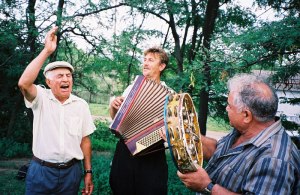 How would you trace the development of the North Azovian Greek community in Donetsk after Ukraine gained independence in 1990?
It is a very complicated question. In early Soviet period, there was a policy of the “nativisation”, when the Crimean Tatar language was tought in Urum villages, and Dimotiki was taught in Roumean villages. However, none of them were native for our North Azovian Greeks. Shortly after that, in 1930s, soviet regime repressed and killed many N.A. Greek poets, artists etc. In 1960s, NAGreeks started to write literature, create music bands again.
During all these recent years, the Modern Greek was introduced and promoted in schooling system and local university. Local native Rouman and Urum were neglected. Therefore, for me it was important to record pieces in the languages, which are severely endangered now. Now I do not collect anything, I do not travel to Donetsk Oblast. Now, almost all NAGreek villages are under russia’s occupation…
Mariupol was founded by Azovian Greeks who were forcibly removed from Crimea. What is the future of the community after the Russian occupation of the city and of the Greek villages of the Donetsk region?
I have no idea…
The community historically spoke two languages. Roumean, similar to modern Greek, has five dialects while Urum, a Turkic language closer to modern Crimean Tatar, has two along with four subdialects. Minority languages have by and large been absent from the language debate in Ukraine. You have released albums both in Roumean and in Urum but what is being done, and what can be done, to preserve the languages and dialects of the North Azovian Greek community and do you get any support from the institutions?
No support from institutions, unfortunately, as they do not have capacity. We need to codify these languages, create educational materials, promote speaking events where young people could learn, but is difficult to do outside of places of their compact residence… we are thinking on what can be done…
How did you manage to preserve the music and cultural documents from the community and how do you go about digitising the material?
I keep these archives, hire sound engineers and graphic designers to make this music sound better and look better)
On a general level, would you say that the role of music in Ukraine has shifted from one of entertainment to encompass the expression of identity, communication, and emotional and physical survival?
I would agree that now traditional music became much more popular among young people in Ukraine. And this is great.
SEPTEMBER 17, 2024 – LVIV

So, I’m Kostiantyn Vidmotaj (“rewind” in Ukrainian) a multidisciplinary artist, researcher of popular music from the 60s – 80s in socialist countries, especially Ukraine.
I have been studying visual arts for the past 10 years or so, and graduated with a bachelor degree this year. I’ve been working mostly with analogue photo and assemblage and different forms of found objects for the past few years. In art I focus on the perception of reality through the prism of history, especially the period of communism occupation, the cold war and how this still influences our everyday life. This also explains my interest as a music researcher. Soviet propaganda in the sphere of popular music is a very interesting story, because popular culture is one of the most formative sources of influence on the mindset of people.
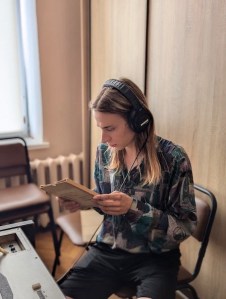 Could you tell us about your work as a researcher at the House of Music in Lviv? How did this come about and what is the aim in digitasing the archive?
It started quite chaotically and strangely. My initial interest was really just to dig around and see what was out there. Before the start of our collaboration, TV and radio archives seemed to me to be treasure troves of popular music (which of course wasn’t available anywhere on the net) but completely inaccessible. So, when I started working at the House of Music, I had an inkling as to what I was going to find, but I was mostly looking for information about the artists and their compositions. There are a large number of records that have not been catalogued, but that remain an important testimony of the music of the time.
Another aspect I wanted to explore was the “Sound letters” (Звукові листи). An analogue of the more famous Polish Pocztówki dzwiekowe – music recordings on flexi records, which were sent as postcards. Mistakenly, I thought these were recorded here at Lviv radio. However, the original audio-tapes were produced with local radio and television funds. While collecting and digitizing such letters, I came across recordings that were not released by the Soviet label Melodya and have no online presence. Often it was not even possible to identify the musicians. I still continue to collect information on this topic. Some of the recordings have already been identified. Some have probably survived only on such letters which is actually one of the main reasons for the need of digitalisation. Also magnetic tape is degrading more and more every year, which significantly affects the sound and playback quality. At this stage, many of the tapes can often tear from the tension of the tape recorder, the tape itself disintegrates, etc.
If we talk about the value of the archive in general, not only it has historical significance but it also shows society’s interest in popular music versus the expected picture of reality managed by the soviets. In general, the analysis of history and everyday life through the prism of music is very interesting and important. Moreover, the soviet regime was aware of the propaganda potential of music and actively used it.
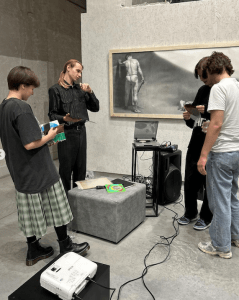
As a researcher you have come across the work of obscure and forgotten bands and names from Ukraine. Many of the artists I have spoken to have told me that they only started discovering their musical heritage after the full-scale invasion. What has surprised you the most and what would you say was specific to the Ukrainian scene before independence?
Prior to the full-scale invasion I did not see such interest in this archival research which has now significantly increased. As for surprises, there are still a lot in store. There’s only a small percentage of material made at the time that is readily available to the public. One of the reasons for this is that most of the music existed only offline. And there was a lot of it. Even through the prism of popular music, virtually every house of culture, educational institutions, and even military units had their own ensembles. We are talking about thousands of bands.
The level of creative freedom has been the most pleasant discovery. When I was just beginning to be interested in the topic, the discovery of the album with Ukrainian songs by the Marenych Trio came as a shock. I grew up in a paradigm where I had an understanding of life in the Soviet Union as one that categorically did not allow any Ukrainian culture to be represented, but everything is much more subtle as the citizens had to preserve an illusion of freedom. Therefore, that Ukrainian album was very surprising. And it aroused a lot of interest in this topic. It’s good that the witnesses are still alive. People are still the greatest value.
However, if we highlight such specifics, then it depends on what we compare it with. If we compare before and after independence, then this is also very specific depending on the place and time. Even if, for example, we compare Ukrainian music of the early 50s and late 60s, these are completely different things. Very big difference in conditions. Plus again, we know very little. And even less has been heard.
One thing that needs to be noted is that probably the most interesting music of the time wasn’t even being recorded. Many musicians didn’t even think about it.

Грайливе Відлуння
When it comes to the visual arts, you also work with archival images. Do you see points in common between your practice as an artist and your work as a sound researcher?
Yes, these are very related areas. Despite the visual/audio media difference, it’s still a source of a multitude of stories. Now I am actively looking for ways to develop and work on this.
There is indeed a lot of perspective material which could be used, but the difference in format requires new tools and a new way of working. However, there are still a lot of similarities. In both cases, they are still data media. And in both cases, these are works of art, and the only difference is in the way the artists’ ideas are captured.
Another very interesting field is the recording of local stories. This is the greatest interest of home archives, but unfortunately the context is mostly lost. Especially if it is a single photo or audio tape. Moreover, the material is often very difficult to interpret. A few months ago, for example, I found part of an archive from the Department of Linguistics of a university with dozens of audio recordings in different foreign languages and a large amount of propaganda – mostly texts about lenin. This material has a lot of potential for artistic works but I still need to find the right approach.
 Has the full-scale invasion made you rethink your relationship to sound and are you triggered by “war sounds” in the work of young electronic producers?
In some ways, yes. Associations with many sounds have changed a lot. And in fact, it is now very problematic to perceive loud music in general. Some sense of control is lost and has become emotionally hard. I even try to avoid live performances as much as possible for this reason. But even in urban sound environments, there are still a lot of sound triggers. The right music can sometimes stifle the anxiety. One such discovery was Oleksandr Yurchenko’s Symphony N1. Лічи до ста (count to a hundred). This works really well for me, and brings a sort of relief.
Do you experience burnout and if so, what do you do to unwind?
This happens from time to time but doing what really brings one pleasure, getting feedback and combining it with relaxation minimises burnout.

with Ostap Manulyak
Which book / film / album / song / traditional dish / podcast / blog / artwork / building / meme best captures Ukraine for you?
Thank you for this question! It’s actually very interesting to try to look from the outside at what represents us. The first association is a series of works from the 30s by Kazimir Malevich depicting peasants. These works are sort of the quintessence of all Ukrainian folk traditions. Collection of all the principles of art that was formed by centuries, all weaving taken together, folk songs.
At the same time, there is also a very influential moment in the formation of our identity, the Holodomor of the 1930s. However, further analysing this, I came to the conclusion that this is an image of a pre-digital, pre-internationalised Ukraine. One that is already archaic, an important part of our identity, but which has been greatly transformed during the XX century.
For a transitional work I wanted to choose the composition of VIA Arnika -” Lullaby for Marianka” (Колискова для Мар’янки) which was based on a poem by Mike Johansen (and was signed for the censors as V. Mukhomelo).
Also, music by Victor Morozov and with vocals by Vika Vradiy (known in the 90s for the reggae-rock project Vika). It is beautifully inlaid with folk melodies in a funky wrapper, a very successful ratio of folk influence in contemporary popular music for that time. As such, the development and continuation of these ideas for some reason, is associated with the composition “Untitled 4” by Oleksandr Yurchenko and Svitlana Nianio from the album Znayesh Yak? Rozkazhy. To some extent, this is already a search for folk motifs after the global technological changes of the XX century. The fixation, preservation and development of the principles inherent to Ukrainian folk. A reminder about the existence of this in us to this day. Even after the strategies of the Russian authorities to simplify and diminish this by turning it into “sharovarshchyna”.
NEW RELEASES
V/A ~ Drones for Drones Volume 3
Third instalment from the ever reliable KYIVPASTRANS label. All proceeds from the sale of this cassette and digital album will be donated to Fallout Noise Volunteer Collective for the purchase of drones for friends and colleagues serving in the Armed Forces of Ukraine
Vortex ~ Reincarnation Ability V/A (VORTX008)
36 techno tracks from the sonic labyrinth label run by Vladyslav Deboshyr.
Oleksii Podat ~ лагідні стосунки зі світом на дні землі
This album is about the need for unconditional love, a need that has intensified in me, as in many others, against the backdrop of full-scale war. At its core, it reflects how desperately people seek intimacy with others, hoping it will shield them from the constant pain of loss and destruction, pushing that pain into the background. In such circumstances, the longing for closeness becomes stronger than ever. Yet, when these bonds, formed in the midst of war, are broken, it creates a multi-layered space of loneliness and fear, apathy, and inertia, from which it feels impossible to summon the strength to escape.
hjumən ~ Project_08-24
This is my debut EP. It was planned a long time ago, and now — it’s alive. I can say, it’s quality modern underground techno stuff with some tasty old-school acid influences. Enjoy.
Ternocore ~ This Hardcore is for You, Ukraine!
To celebrate Ukraine’s Independence Day, we present the mini-album “This Hardcore is for You, Ukraine” by the Ternocore project. In this album, Andriy Kapusta reimagines Ukrainian pop classics, songs that have shaped generations of Ukrainians, in his signature hardcore style.
All proceeds from the album will be donated to the Musicians Defend Ukraine fund, which supports musicians on the frontlines.
Eazyopoluse ~ Air Siren
We welcome Ukrainian producer and live performer Eazyopoluse. Deeply immersed in exploring the Eurorack modular system, creating enigmatic experimental music that he records live to convey his inner groove and energy.
Lectromagnetique ~ Eschaton
Have a nice doomsday everyone.
Heskbo ~ Surface. Stich. Skin.
Intricate and highly atmospheric, taking unexpected turns, mixing percussive with industrial sounds on layers of disquieting drones, Heskbo’s latest adds field recordings to produce a beguiling soundscape where nothing is ever what it sounds like.
Revshark ~ Simulacra
Revshark is back on Mystictrax, delivering a new chapter in his evolving bass chronicles with «Simulacra». After his «Integrity» album and participation on the «Code» compilation on our label, Slava release a stunning ambient EP on система | system label called «Loose Ends». But now he is back with a powerful breakbeat and basslines.
Foa Hoka & Fedir Tkachov ~ More Light!
Twelve eclectic dance compositions filled with drive, industrial rhythms, nostalgic colours and sonic reflections. The music was created in three studios in the city of Chernihiv.
Tetyana Haraschuk ~ Until the Sun Comes
During the past 22 months, I interviewed many Ukrainian refugees, analyzed the interviews, conducted research, learned more about my culture, wrote, arranged and recorded an album of music that expresses the stories that were told to me. This is the result. I hope you can find meaning in this music. Thank you for listening, and a huge thank you to everyone who was involved in the making of this album.
InnerLicht ~ Ingegärd
Hypnotic electronic album by composer Maxim Kolomiiets inspired by Ingegerd Olofsdotter, also known as Irene or Anna (1001 – 10 February 1050), a Swedish princess and the grand princess of Kiev from 1019 to 1050 and the wife of Yaroslav the Wise.
Here’s what Maxim told us about the album.
“Unfortunately, we don’t know much about this woman. As well as about those times in general. But I was inspired by the imaginary image of Ingegärd standing on the seashore, gazing into the distance, looking for a far, far away unknown country beyond the horizon, with which her entire future life would be inextricably linked, and whose rule would become a legend for all future generations for thousands of years. This image touches and fascinates me. With its majesty. By its vastness. Power. Love. Perhaps, such an experience is the greatest thing a person can comprehend. And it was this complex emotion that I tried to reproduce in my music.
In no way did I claim to be authentic to the music, timbres, or everyday life of the time. No matter how hard we try, we cannot reproduce the language, voices, and sounds of objects of those times. We cannot imagine the aspirations of those people. Even using texts of the time will not help: no matter how authentic we find texts, they will be interpreted differently by us than by the people who wrote them. But I set out to create a hermetic spatial and acoustic world in which any characters’ actions turn into a thousand-year history, leave their reflection in eternity, and look majestically into it.
So this album is an imaginary sound story of the life of the ancient princess Ingegärd. The story of her experiences, emotions, and aspirations. The story of her meeting with infinity.”
Kojoohar ~ Refractured
In a fractured world, identity splinters and reality pulses with unseen energy. Transformation here is both chaotic and creative, reshaping existence from the remnants of the past. Refractured invites you to explore the blurred boundaries of self and sound in a dance with the unknown.
Recorded live at ZAVOD industrial music festival in Zaporizhzhia, Ukraine, in 2018, Refractured captures Kojoohar’s most refined solo performance. Evolving from its debut at Buddha Noise, Refractured showcases the evolution of Kojoohar’s sound, merging balanced elaborate textures with electrifying live energy.
Wiseword.Nidaros ~ Три книги
Mykolayiv Wiseword.Nidaros project presents their ninth album – “Three Books”. This album is an epilogue to the “Historical Dilogy” consisting of the 2013 LP θανάτῳ θάνατον and the 2017 LP Battle Songs of Orthodoxy. It can even be said that from now on there is a complete and complete “Historical Trilogy”.
Hybrid Moment ~ MUTATION ONSET
Hybrid Moment is a party series and community in Kyiv. To celebrate our first anniversary, we are releasing “Mutation Onset” — a compilation of tracks by Ukrainian and foreign producers to raise funds for the Musicians Defend Ukraine Foundation.
13 artists presenting a blend of different musical genres united by a dark flavor. From gloomy indie dance with catchy vocals and electronica with old school trance motifs to groovy glitch electro, classic EBM and techno.
Monotonne ~ Related
New release by Yuriy Bulychov availing himself of the collaboration of Anastasia Symonovych/Troxellemott, Margarita Kulichova/Grisly Faye, Marko Medvedev/Parking Spot, Alina Stamenova, Khrystyna Kirik, Irina Lazer/Mavka, Maxim Andrukh/maxandruh, Elizaveta Drach/Ummsbiaus, Evelina Stebelska/ногируки, Natalia Bahrii/Tik Tu, Eugene Gordeev, Ana Pasko and Igor Yalivec.
Tongi Joi ~ 8
“8” is the debut EP by the band Tongi Joi (Danya Tkachenkо and Sanya Lyashenko, Kremenchuk) featuring songs written during an eight-day stay in an old cabin in a nature reserve in the Poltava region. There, surrounded by dusty icons and carpets, they set up a makeshift studio. When they weren’t building fires or exploring, they created music that mixes psychedelia, pop, lo-fi indie, and folk influences.
ummsbiaus & Difference Machine ~ Neodvorot
The circular motions of life – every new iteration is a familiar path. Like turning a corner in a maze, only to be faced with more of the same. With no chance of escape. Every stage without novelty, only the distortion of time, only the familiar vortex of modernity, far from home.
The concept of “hometown”: is it a bustling city with smiling faces? Or is it empty streets and ruined houses? Is it possible to catch a train and be there overnight? Or maybe there’s nowhere to return to, and this place has become a myth. This concept is of a home that can be both physically destroyed and psychologically distorted.
“Neodvorot” is a neologism that can be interpreted in different ways: as a point of no return; as the inevitability of neo-destiny; or as the inability to detach from modern realities.
This EP features 3 songs written by ummsbiaus & Difference Machine, featuring lyrics by ummsbiaus, dedicated to her home city of Kyïv, combined with poetry by Lesia Ukraïnka.
This release was created in between daily rolling blackouts in Kyïv, at a time when regular russian attacks are continuously damaging Ukraine’s energy infrastructure and killing people.
VIEWING ROOM
(Gianmarco Del Re)
 a closer listen