
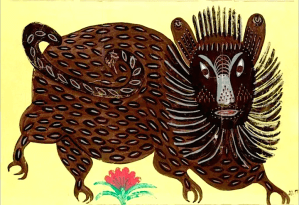
Beast of War by Mariia Prymachenko
For the last episode of 2024 we discuss the metaphor of a bomb’s impact zone with Alexey Shmurak, we get to hear a modernist self-portrait from Alisa Zaika, and we chat about a “lost generation” with Mixmag Ukraine’s editor in chief Sasha Varenytsia. Furthermore, we get updates on the clubbing scene strike in Tbilisi, from Gogla Kovziridze at Ravegram.
But to begin with, here’s our latest podcast for Resonance FM with Antuanetta Mishchenko, aka the muse of Maidan and Natalie Beridze focusing on current developments in Sakartvelo (Georgia) with contributions from Nikakoi, Nina Simonishvili and Anushka Chkheidze.
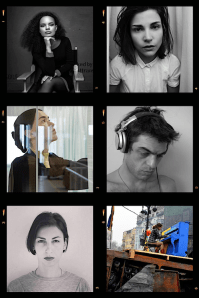 We last referenced the political situation in Sakartvelo back in 2023 with interviews with sTia and Rezo Glonti as the country was fighting against the planned introduction of the Foreign Agent law, or Russian law [Ukrainian Field Notes XXI]. Sadly this has now passed together with anti-LGBTQIA+ legislation and fresh elections saw the ruling Georgian Dream party taking the larger share of the vote against exit polls. The EU has called for a re-run of the elections under international supervision. In the meantime, the clubbing scene has gone on strike and thousands of Georgians have taken to the streets.
Tracklist
Dmytro Radzetskyi – “Ukraine On Fire” performed by Antuanetta Mishchenko and Maja Nußbaumer
Nikakoi – “Lullaby for Tanya” (background)
Natalie Beridze – “Holes”
Nina Simonishvili – “Meanwhile”
Anushka Chkheidze – “War Generation, Again”
Our Spotify playlist includes artists from Sakartvelo as well as a number of tracks from Mixmag’s selection for the month of December making this our most varied UFN playlist. In our viewing room we have the latest from Пиріг і Батіг [Pyrig and Batig]. And to round things up we feature a bunch of new releases by the likes of Myroslav Trofymuk aka AЙKTRONER, Andriy K., usurper of Debenham, ОЧІ, Dnipropop, Mystictrax, Regular Disco, Closer Connections, Mia Zabelka / Tungu / Stefan Strasser, Symonenko’s students, Ukrainian Improvisers Orchestra, sleep in the fire, Ostudinov, Cornrows/Saturated Color, Alex Gordiy, SVET, 58918012, Andrew Deme, and Fedir Tkachov.
December 23, 2024 – KYIV
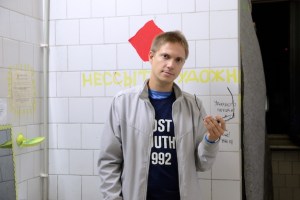
photo by Alex Kyyashchenko
I was born in 1986. As a child, my parents sent me to a fairly good music school, and I received a solid classical music education as a pianist and composer. This continued until university. As a student, in 2007 I began my musical career. My colleague Maxim Kolomiiets and I founded a group Ensemble Nostri Temporis that performed music by twentieth-century composers as well as contemporary classical composers from Europe and Ukraine. In 2011-13, when I was 24-27 years old, I felt and realized that the standard career of a pianist, composer and manager of contemporary classical music did not fully satisfy me. I started experimenting with electroacoustics, improvisation, performativity, expressing myself through words and through songs.
The songs need to be mentioned separately. In 2013, I started writing quite specific songs (in Russian). I sang in a deliberately non-vocal voice (unprofessionally), accompanied myself on the piano or keyboard, recorded in low quality and processed the recordings in a strange way. I called this project Hysterical Dog (“Истерический дог” in Russian). These songs contained a lot of vulnerability, self-irony, black humor, infantilism, and a feeling of being an outsider. As part of this project, I wrote many poems for the songs myself, and also used poems from many contemporary Russian-speaking and Russian poets. The project almost ended in 2017 when I felt that writing songs in this way was not enough for me. But the influence of this project on my identity remains to this day.
In 2015-16 I felt an identity crisis, and this led to me doing almost no composing contemporary classical music between 2017 and 2021. At the peak of this identity crisis, I even denied myself that I was a musician. I called myself a post-composer, and in my projects I often did not use music or even sounds at all, but worked more with performance, space, words, sometimes with visual media. I could call it a certain denial of myself. Since 2017 I no longer play other people’s composers’ music, and thus ended my career in management and performance of contemporary classical music. In contrast, during this period I collaborated a lot with artists and writers. But, at the same time, this crisis period gave me invaluable experience of other thinking, for example, visual, body-oriented, theatrical, verbal. However, I did not completely abandon music during this period: I expressed myself musically through electroacoustic improvisations and multidisciplinary performances.
It should be mentioned separately here that I am not an electronic composer in the strict sense. I do not have an analog synthesizer, processing pedals. I do not even have a digital audio workstation on my computer. In 2013-19 I made electroacoustic music together with my colleague, an electronic and electroacoustic composer Oleh Shpudeiko aka Heinali. Our collaboration was based precisely on our differences. I was responsible for instant reactions, pitch thinking, structure and dramaturgy, and for performativity, too. I played acoustic piano, keyboards, amateur winds, drums, sound objects, and also experimented a lot with my voice. Oleh was engaged in sound production, timbre thinking, and, since about 2016, when he switched to a modular synthesizer, for the flow of generative improvisation. In 2020, we decided to end our musical collaboration, but circumstances prompted us to make a joint album in 2021-22.
It is also important to mention the role that verbal activity plays in my life. In 2015, I first tried to give lectures, based on a broad range of interests in both music and literature. In 2019-20, Oleh and I, quite unexpectedly for me, began collaborating as bloggers in the field of music education. At first, these were videos on YouTube, and in 2020, due to a sharp drop in activity during the Covid period, we, on Oleh’s initiative, started making a podcast АШОШ (ASHOSH), which became quite important for several thousand listeners.
In conclusion of this introductory block, I will say that in the last 3-4 years I have been combining writing composer music, film music, creating sound installations for museums and galleries, giving lectures, writing articles, and making electroacoustic performances. In quantitative terms, the intensity of my activities in 2022-24 is clearly higher than in 2019-21.
Has the full-scale invasion changed the way you think about music and sound in general, and has it had an impact on your playlists?
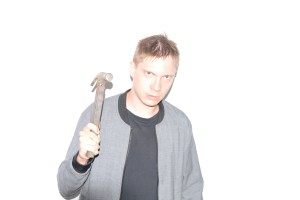
photo by Luca Basov
I think the metaphor of the bomb’s impact zone is helpful here. It incinerates at the epicenter, then causes severe damage to health, and so on. At a sufficient distance from the bomb’s epicenter, a person simply hears an unpleasant loud sound, but his body does not suffer very much. What I mean by this is: depending on the degree of involvement in events, my attitude towards sound and music changed. In the first days I reacted very strongly to the sounds of explosions. In the first months I could not listen to music. But gradually the explosions and air raid sirens became the norm. My brain adapted. That’s why I get so much deep pleasure from music now.
As for playlists: I have completely excluded Russian music for myself – from Glinka to modern rappers and independent artists. I stopped following and unfriended on social networks all Russians who remain in Russia or remain part of the Russian cultural context – at least, those associated with it for me. It’s a question of mental comfort. I find it easier to think that this cultural context simply doesn’t exist than to observe it.
It should be mentioned that I continue to be Russian-speaking, like many Ukrainians. In my case, it is not so much a question of linguistic environment as of cultural memory. I studied in a Russian-language school, read a large corpus of texts in Russian, communicated and collaborated with Russian-speaking and Russian poets in 2007-2019. I do not reject this part of my cultural memory. At the same time, I respect my audience and care about their feelings, so since 2022 I have almost never written songs in Russian, with rare exceptions.
At the same time, due to the fact that there are more and more Ukrainian-speaking people around me, and I myself speak Ukrainian a lot and often in lectures and lessons, the Ukrainian language is gradually becoming closer and closer to me. Over the past 4 years, I have been working with Ukrainian-language texts by the Baroque poet Ivan Velychkovsky, the early eighteenth-century political figure Ivan Mazepa, the modernist poet Volodymyr Svidzynsky, the second-half-twentieth-century translators Vasyl Mysyk and Petro Rykhlo, and the contemporary poet Oleksander Andriyash.
I still can’t write poetry in Ukrainian like I did in Russian in 2007-2022, and I’m not sure I’ll be able to do it in future, because in order to write poetry, you need to have a deeper and more natural sense of language.
One of your most recent projects is the album Liebestod, part of your long standing collaboration with Oleh Shpudeiko (aka Heinali). What can you tell us about the production process for this album now that you live in different countries and what is the common denominator between Ivan Mazepa, Volodymyr Svidzynsky, Inger Christensen, and John Keats?
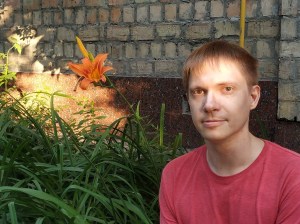
photo by Luca Basov
The creation of this album is the result of a confluence of specific circumstances. In 2021, the music producer Sasha Andrusyk, who works with contemporary classical and experimental music, decided to create a music label that releases music that interests her. Oleh and I collaborated with Sasha in 2014-18, creating a number of musical performances. Sasha suggested that we create a joint album. At the time of her suggestion, Oleh and I had not made any music together for almost two years. We got down to work pretty quickly and prepared the project in a few months. It had two tracks on English romantic poems (one of them by John Keats), one in Ukrainian (Volodymyr Svidzynsky) and several in Russian. Therefore, as paradoxical as it may seem, the two tracks from the album (“Quietly” and “Ode to a Nightingale”) that are most associated with the approach of death and war were written almost entirely in 2021, six months before the start of a full-scale war.
We were supposed to play these prepared tracks at a concert in the fall of 2021. The project was supposed to be called Fog Hymns. Due to organizational circumstances, the concert with this project was delayed for a long time. Then, unexpectedly for us, a full-scale war began. Oleh moved to Germany. And only after that I reminded Sasha about the idea of the album. Sasha organized the Kiev Dispatch festival in December 2022 in Germany (Stuttgart), where I came as an artist. And 2-3 days before the joint performance, Oleh and I finalized the album. Instead of one of the tracks with English-language romantic lyrics, we placed a Ukrainian-language track with the words of Ivan Mazepa. We removed all the tracks with the poems of Russian and Russian-language poets. And we added a track with the words of Inger Christensen. Therefore, it is hardly possible to call this album created remotely.
As for the unifying principle for all the lyrics included in the album, these are the themes of death, anxiety, fate, vulnerability, impending danger, thirst for life and desire for control. All these tags describe well how I felt in 2021-22. And the general name Liebestod also accumulates all these meanings well.
Technically, the album cannot be classified into any one specific genre. It contains jazz improvisation, generative polyphony, modern classical music, simulation of dance music and pop music. These features of the album, such as genre diversity, humor, fragility, the juxtaposition of the serious and the comic, the dialogue of different languages, the combination of composer’s calculation and performative presence, are inherent in me as a person. Such features, by the way, are also present in my favorite literature – for example, in Stanislav Lem – and in my favorite cinema – for instance, in Bertrand Blier.
Since the russian full-scale invasion there have been other works based on poems from the Executed Renaissance. Do you see this, coupled with the inclusion of motifs from traditional folk songs in electronic music, as a necessary part of a nation building process and a statement of Ukrainian identity?
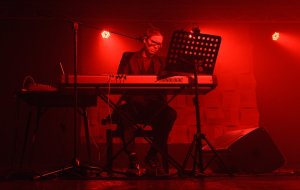
photo by Lena Samoylenko
I would suggest a wider frame. In general, a process of revision of cultural heritage and historical memory is taking place. To achieve this, it is necessary to reconsider and re-actualize the period of the Middle Ages and the Renaissance no less than the modernist period. That is why researchers and music producers popularize and perform the music of Ukrainian composers of the seventeenth and eighteenth centuries, such as Mykola Dyletsky and Andrii Rachynsky. Personally, in my electroacoustic performances of 2024, I worked with the texts of the experimental baroque poet Ivan Velychkovsky.
As for the modernist period, it is important to reassemble the musical canon (as well as the cultural canon as a whole). It is not only about making visible the crimes of the Soviet regime against Ukrainian culture. It is also important to understand and examine how we imagine what normal Ukrainian music or normal Ukrainian poetry of that time is. The Ukrainian educational system is still built on uncritical copying of the Soviet canon. I dedicated a series of lectures to this topic, “The History of Ukrainian Composer Thinking.” Pianist and researcher Tymish Melnyk uncovers scores and promotes performances of forgotten Ukrainian modernist composers such as Pavel Senytsia and Borys Yanovsky. It is important to see another breath, an alternative picture of Ukrainian musical modernism.
Regarding motifs from traditional folk songs that sound in electronic and other music: I have a very skeptical and critical attitude towards the thoughtless use of folklore material in modern music. Folklore songs are part of a complex and integral ecosystem. It is necessary to study and popularize it, and not crudely culturally appropriate it for the sake of media hype. The same applies to the topic of hype on the poets of the Executed Renaissance. The hype will subside, the media environment will change.
I don’t think that Ukraine can be magically transformed into a perfect match for the wet dreams of nation building. Ukraine, if it survives as an independent state as a result of this war, will be a country with a multidimensional, composite identity. Neither the Russian-speaking population nor the Russian-speaking part of Ukrainian cultural history can be erased or cancelled. The Soviet modernist legacy also cannot be cancelled. I think the real cultural process of post-war Ukraine will include different elements and narratives. I understand the feelings and desires of many Ukrainians (and my friends too) to break with the past, to “cleanse themselves”, but the psyche does not work that way, and the collective psyche does not work that way either. What I propose is not to ban and cancel, but to reconsider, to build a complex picture, to create new connections and narratives, to discover new meanings in forgotten artists and phenomena. In the current conditions, only dictatorships such as North Korea, China or Russia can afford a monocultural project.
What compromises can be made in art for the sake of money, success and safety?

photo by Tasya Shpil
The question sounds so cautious, as if I can answer what compromises other people make, not me. But if we talk specifically about me, I don’t feel like I’m forcibly adapting myself to the needs of the market or some community. I would not call it a compromise, but a mental adaptation. I have learned through many years of trial and error to formulate my thoughts more clearly and effectively for lectures. In musical creativity, I have separated the ideas that work from those that do not. In simple terms, I am interested in effective communication, I enjoy when I feel that the audience has understood what I wanted to say and has enjoyed the shared experience.
At the same time, there are things that I feel uncomfortable with. I don’t do commercial music. I don’t do bureaucratic work for the state or any institution. I don’t make art with flat, one-dimensional, obvious and safe content. This is not only my desire, but it is also an opportunity that I have, because I have been developing my skills and my social capital for many years.
Is there music without political overtones, is there subjectivity in artists, and how can one influence the political dimension in art through one’s own behaviour?
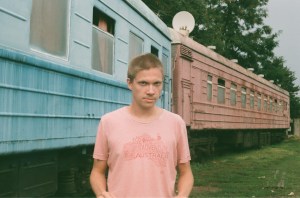
photo by Tasya Shpil
These are several very difficult questions; I will try to answer each of them briefly.
Political overtones appear in music not because of how it is done technically, but because of the context. It is possible to write music and ignore the context, but to do so you need to have the appropriate mental organization or economic opportunities. For example, the institution or even the entire system that finances you pays attention only to the meanings of A, B and C dimensions and at the same time ignores the meanings of D, E and F dimensions, and, therefore, you have the possibility to ignore them as well. But as soon as your economic situation or worldview changes, these dimensions, previously hidden from you, will become visible to you. This has happened to me more than once, and I had to re-assemble my attitude towards a certain type of music, both other artists’ and my own. So, there is no music without political overtones, but there are situations in which you don’t notice certain political overtones because you don’t need them.
Regarding the subjectivity of artists: There are economic systems where certain artists are allowed to have subjectivity, as long as it does not contradict the general framework of the system. Subjectivity outside any framework is hardly possible in full economic terms. For example, some of Stockhausen’s statements regarding 9/11 or Lars von Trier’s statements regarding Nazism were not received favorably, or even calmly, by the corresponding economic systems. So, to sum it up, I will answer this way: subjectivity exists, but at the same time, manifestations of subjectivity must be supported by the corresponding influence and opportunities. Of course, no one prevents one from being a freak and an outsider, but such a position will have its consequences. At the same time, I respect those people who were outsiders for decades before they received the respect they deserved. I mean people like Erik Satie or Charles Ives. Sometimes, however, this respect comes only after death and only partially, as, for example, with Cornelius Cardew or Julius Eastman. I feel that I have enough mental and economic opportunities for my own subjectivity. I lack influence and fame, but this is already a question of accepting the limitations of the real world.
Regarding the influencing the political dimension in art with one’s own behavior: I think I can’t influence big systems like international relations, mass production, media market and so on. I think it’s the new technologies that change this, not the behavior of individual artists. At the same time, what every artist can do is create connections and contexts, unite like-minded people around some space or cycle of events, and not be afraid to discover the possibilities of new approaches and technologies. This seems more important to me than parroting other people’s thoughts after the mainstream, even if these other people’s thoughts seem right.
What would you say to those who find Valentin Silvestrov’s music too comforting and comfortable?
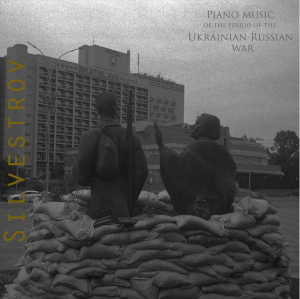 I just recently gave a lecture for the first time in my career specifically about the music of Valentin Silvestrov. Silvestrov’s music has different dimensions, one of which is precisely the soft, sleepy sound that you are probably talking about in your question. But there are other dimensions to Silvestrov’s music, such as compulsive repetition, manic detailing, the magmatic viscous liquid into which Silvestrov immerses all impulses and elements. Not all of Silvestrov’s music seems comfortable to me. If someone lacks dissonance and anxiety, I recommend listening to his Fourth Symphony, Serenade for Strings, Meditation for Cello and Orchestra. But in any case, Silvestrov is a very specific composer; he is definitely not about the standard satisfaction of expectations.
Noise Every Wednesday has become one of the most popular events of experimental music in Kyiv. How would you explain the rise of popularity of noise in a country affected by the belliphonic?
I would like to clarify that this event is not focused on noise as a genre. It is more of a platform for experimental performances. I am a regular attendee of this event and I have heard performances in the genres of modular improvisation, various forms of alternative dance music, deconstructive club music and many other genres. There are also noise performances at this event, but it is rarely hardcore noise.
As for the relationship between wartime and noisy sound at these events, it seems to me that the saturated sound helps to physiologically distract from the unpleasant news, from a feeling of powerlessness, from the impossibility for many men to travel abroad. This saturated sound helps to feel unity and intense pleasure.
December 25, 2024 – LONDON
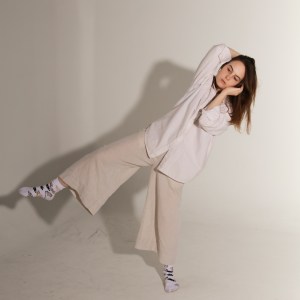 Hi, my name is Alisa, I am a composer, and I come from a piano performance background. Currently I study a master’s in composition and minor in orchestral conducting at the Royal College of Music in London, UK. I do not work in any particular “style” and don’t think of it as a necessity, rather developing my own individual language and a certain set of “tools” that work for me as a composer. I guess that my writing has been affected by lots of piano playing, but I’ve been working a lot on broadening my knowledge of orchestral and choral repertoire in the last few years.
Has the full-scale invasion changed the way you think about music and sound in general, and has it had an impact on your playlists?
I tend to divide the music that I write into rather “objective” pieces in which I study the sound / techniques or explore certain concepts that don’t have personal value to me, and “subjective” ones that translate my own emotional state or certain personal themes. I have definitely turned to writing this “subjective” music more since the start of the full-scale invasion as a natural response to pain and the realities of war and genocide committed by Russia on my country.
Regarding the playlists – as ashamed as I am to admit it, I haven’t even closely understood the value of my nation’s musical heritage (of all sources and styles) before around 2021. I don’t really blame myself as I was a teenager and didn’t have a proper understanding of national values at that age. But especially since the start of the full-scale invasion there was suddenly so much more exposure of Ukrainian music, everyone seemed to wake up and realise how much culture we own. It’s just a huge shame it took us a FULL-SCALE war to do that. There has been a big improvement in our media – I really respect the input of platforms such as Ukrainian Live Classic and organisations like the Liatoshynsky Foundation and the Ukrainian Institute.
Aside from the classical playlist, I currently quite enjoy the new Ukrainian “doomer wave”: artists such as SadSvit and Sad Novelist.
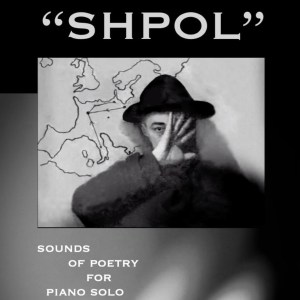 Your recent work is inspired by Ukrainian poets from the Executed Renaissance. What can you tell us about the compositional process for Geo’s Avtoportret, an adaptation of Heorhii “Geo” Shkurupii’s poem Self-portrait, and SHPOL, a solo piano piece dedicated to”Yulian Shpol”, the chosen pseudonym of Mykhaylo Yalovyi (1895-1937)? artwork / building / meme best captures Ukraine for you?
Composing “SHPOL” was quite an emotionally painful piece of work as I was trying to process the first few months of the full-scale invasion. At the time I was in London, so knowing that my entire family is in Ukraine and there is nothing I can do about it was difficult – it was partly my way of processing that. But mainly, it was the first time I turned to working with poetry from the Ukrainian Executed Renaissance and started realising the size of the artists’ generations we lost to Soviet and Russian terror, the tragedy of it and how much we need to do to give these artists a chance to be known. On the other hand, “Geo’s Avtoportret” (based on a poem from another repressed and executed Ukrainian writer) was an attempt to purely play around with the essence of the artist’s work and, in this way, pay tribute to his brave experimentation. I didn’t want this piece to be about tragedy. These artists would want to be remembered for their amazing creations, not as victims.
 Since the russian full-scale invasion there have been other works based on poems from the Executed Renaissance. Do you see this, coupled with the inclusion of motifs from traditional folk songs in electronic music, as a necessary part of a nation building process and a statement of Ukrainian identity?
I definitely see this as a necessity, and I am so glad it’s happening. It should have been already happening a long time ago, now we must keep working on this with double power.
Would you say that since the full-scale invasion the role of music in Ukraine has shifted from one of entertainment to encompass the expression of identity, communication, and emotional and physical survival?
Surely, so much more of our music now is about strengthening the national identity – it’s also about taking inspiration from the ancient folk genres of war songs that keep the spirit up and songs that mourn deceased soldiers. However, I would say that now people also need entertainment more than ever – it’s impossible to survive in such a harsh reality without humour and fun.
 You are currently based at the Royal College of London, and you are also a conductor for the LIHTAR Orchestra and Choir. What can you tell us about this and how aware would you say the international music community of Ukraine’s musical heritage?
Yes, I currently study at the RCM in London. Lihtar Orchestra and Choir is a very dear to me project, created together with my partner and colleague Max Levytskyi, who specialises in orchestral and choral conducting. This orchestra and a small choir consist of students and young professionals – both from Ukraine and internationally. We play stylistically diverse programs which are always build around modern or older music from Ukraine, most of our concerts are fundraisers for different Ukrainian charities that supply military and humanitarian aid. We try to include very unknown pieces that are surely new to the British audience. Even though currently there are quite a few organisations that work on promoting Ukrainian culture abroad, the extent to which most of it still remains behind the “iron curtain” is huge. I greatly appreciate any foreigners who take interest in our musical heritage!! Whatever that may look like – attending concerts of Ukrainian music, taking part in them or collaborating with artists from Ukraine.
 Do you find war sounds and air raid sirens used in electronic tracks as well as pieces by contemporary music composers to be triggering, and how can one best describe the war experience sonically to a foreign audience?
I honestly think that incorporating air raid sounds into electronic pieces is one of the best ways to at least partially transmit the “sense of war” to someone who has never experienced it themselves. Of course, that won’t even nearly transmit the full horror of it, but it can give a vague idea without traumatising the listener. However, trigger warnings must be given in announcements of these performances and the interested audience should take responsibility to decide if they might not want to attend due to health conditions or other reasons.
Are there any specific tracks or albums that have captured current events in Ukraine for you since the Russian full-scale invasion?
An important piece of work that comes to mind is the “War Psalms” by Yevhen Stankovych, it’s a large composition for orchestra and choir. However, I would say that many history-defining pieces are probably still in the making, since it has only been around 3 years of the full-scale war.
Which book / film / album / song / traditional dish / podcast / blog / building / meme best represents Ukraine for you?
 Book – Amadoka by Sofia Andrukhovych (this has become a classic of modern Ukrainian literature which to my shame I still haven’t read but absolutely need to mention it);
- Film – Stop-Zemlia by Kateryna Gornostai (it really shows the life of Ukrainian teenagers from the inside in a very raw way)
- Album and song – Cassette by SadSvit
- Traditional dish – borshch OF COURSE
- Podcast and blog – @vally_v on Instagram, one of the most informative and interesting blogs about Ukraine for the international audience
- Artwork – honestly, any work by Veronika Kozhushko, she was a phenomenal 18-year-old artist killed by a Russian guided bomb strike on Kharkiv this summer
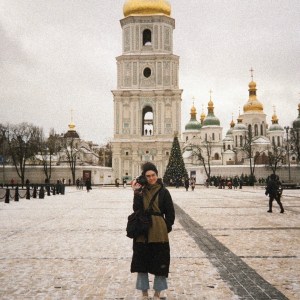
- Building – St Sophia’s Cathedral
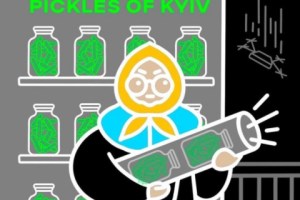
- Meme – probably the one where a Ukrainian grandma takes down a Russian drone with a jar of pickles, very representative
December 26, 2024 – KYIV
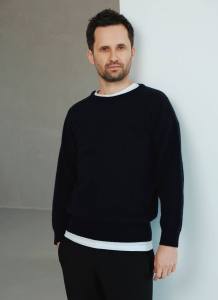
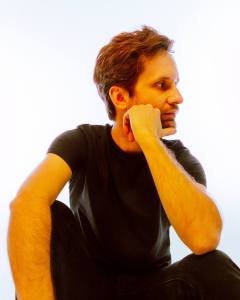 Hello! My name is Sasha Varenytsia. I am the head of Mixmag Ukraine and co-founder of Go West, a small boutique agency promoting Ukrainian music and music tech projects in the West. I also help my wife, Olya, develop her amazing electronic project Ready in Led.
Has the full-scale invasion changed the way you think about music and sound in general, and has it had an impact on your playlist?
At first, like most people, I was in shock and didn’t listen to any music at all for three to four months. But then, I rediscovered its therapeutic effect and immersed myself deeply in digging for music. I hadn’t been this passionate about searching for music since my student years (in the mid-2000s) when I worked at a music store in my hometown, Donetsk.
Until 2022, I had spent six consecutive years working with top stars of the Ukrainian scene. I debuted as a PR manager for ONUKA and then worked with O.Torvald, Alina Pash, Bloom Twins, BRAII, YUKO, Alyona Alyona, Kalush, and Oleg Skrypka. Very different artists! From pop bands like KAZKA to avant-garde jazz groups like DZ’OB.
Within the industry, you have different criteria: Will this song be picked up by radio? Can the artist sell concert tickets? Is there a single on the album? Back then, I thought I was too old for music fandom. But when all of that disappeared, I realized that my previous mindset was complete nonsense. It was merely the influence of my environment—managers and producers who perceive music purely as a business. In the circles where I worked, it was even slightly shameful to admit that you were a passionate music fan because “too much romanticism hinders a sober perception of market trends.”
Surprisingly, since 2022, I’ve been experiencing a second musical youth, which continues to this day! During this time, I’ve compiled about 50 themed playlists on Apple Music, each with 30 tracks. I’d be happy to share them! There are separate playlists for morning spa sessions, nighttime spa sessions, cooking, and, of course, my favorite one for working on texts. It features something like B12, Jan Jelinek, To Rococo Rot, and Burnt Friedman.
 What have the biggest challenges been of opening and running Mixmag Ukraine in Kyiv during the full-scale invasion?
The launch of Mixmag in Ukraine was a purely emotional decision. My team — my brother Oleksii and my friend Max — and I simply wanted to be helpful and inspire musicians and the scene. At the same time, I immediately considered the worst-case scenario. I thought, okay, we’ll start, pay the annual license fee, cover the team’s work—editor, SMM, freelance authors, photographers, designers. But what if the media doesn’t monetize at all in the coming years? We calculated the costs and realized that, while tight, Go West could afford to maintain the media. That’s how it’s working now.
So, there aren’t any specific challenges because the main challenge is the lack of a path to success. We’re a media outlet about nightlife in a country where a curfew is in place due to war. It’s the perfect storm. At this stage, Mixmag Ukraine is 95% subsidized by Go West. We know how to collaborate with brands, organize offline events, sell ads, and create merchandise. Thankfully, we can still afford to grow slowly and wait for the moment when such activities become feasible again.
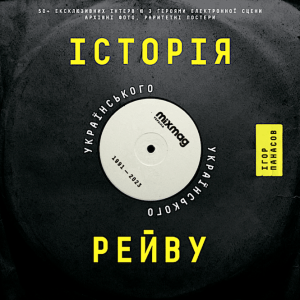
A History of Ukrainian Rave by Ihor Panasov
Mixmag Ukraine has published History of the Ukrainian rave by Ihor Panasov. Are there plans for an English language edition? Also, how would you describe the pivotal moments of the evolution of the Ukrainian clubbing scene and what are your own personal highlights?
No, we don’t plan to release an English edition for now. On the contrary, we’re considering translating our favorite English-language music books into Ukrainian. My wishlist includes Discotheque Archives by Greg Wilson, Dream Machines: Electronic Music in Britain from Doctor Who to Acid House by Matthew Collin, Future Sounds: The Story of Electronic Music from Stockhausen to Skrillex by David Stubbs, Synthesizer Evolution: From Analogue to Digital by Oli Freke, and many others.
I dream of launching several Mixmag Corners in about a year or a year and a half (maybe sooner) — little music-lover corners featuring books, vinyl, and souvenirs branded with our trademark.
 The clubbing scene landscape in Ukraine remains diverse and vibrant despite all the challenges. There are pros and cons to this, on the one hand the international exposure of Ukrainian artists living abroad has helped shine a spotlight on Ukraine, but on the other, the scene within the country has become forcibly insular with international artists, by and large, staying away. While many new local names have been able to emerge, they might lack the mentoring support of more experienced artists and with male artists being prevented from performing at international festivals their reach remains somewhat limited. How do you see the scene developing under present circumstances?
A year ago, we wrote a major article titled The Lost Generation: Is There a Chance to Revive the Ukrainian Electronic Scene? The piece faced criticism and outrage, though many people wrote us lengthy letters of thanks for daring to publish it. My mistake was not considering how prolonged doom-scrolling had affected people’s perception of information. Wordplay, symbols, layered meanings, and details went mostly unnoticed. People read quickly and react instantly — emotionally and often negatively. Most just read the headline and took it personally. But the article wasn’t about the new wave of artists staying in Ukraine and fighting daily to keep the scene alive — not at all! We deeply respect and support them. We’re here primarily for them.
The piece was about older, more experienced colleagues — the 2014-2022 generation when they created the phenomenon of the Ukrainian rave scene, now recognized worldwide. Not everyone, but most of them actively support Ukraine — either financially or by keeping Ukraine in the global spotlight, which unfortunately is fading. However, they’ve stopped communicating with the part of the scene that remains in Ukraine out of fear of judgment. We saw this clearly when many Ukrainian artists, who had been featured in other countries’ mixmag editions, declined our interview requests. It felt absurd, and when we realized the seriousness of the situation, we feared losing these artists altogether. If that happens, they’ll become an “expatriate scene,” something separate. That’s where things seem to be headed. There’s still a small chance for a happy ending, though. At the same time, I fully understand people’s emotional reactions. My initial response when I see photos of acquaintances partying in Ibiza while I’m taking cover during yet another drone attack or sitting in a dark, cold office during a blackout is, of course, also resentment. But then I try to analyze it more objectively. Yes, it’s a manifestation of inequality. Some bribed their way out or received privileges from the Ministry of Culture and left. Others stayed here, continued developing culture, and bore the full burden of the war. Still others went to the frontlines. There are many DJs and artists in Ukraine who fall into this last category, and some of them are no longer alive.
 The gap between those who play in Ibiza and those who age ten years in one is enormous. And I understand perfectly well that a simple call to “let’s all get along” won’t bridge it. We simply wanted to convey that those who are “in Ibiza” understand this as well. Female artists are more open to dialogue. Korolova, Taly Shum, and Miss Monique all told us the same thing: sometimes they perform while wiping away tears. They’re in front of thousands of happy people on the dancefloor, but all their thoughts are with home, where a new tragedy unfolds every day.
You know, if one group were to say: “Please understand me. The war caught me at the peak of my career — I worked for 10 years to secure a global touring schedule, and I made the difficult decision to leave. But I truly believe I can do much more good from here than if I lost everything, stayed at home, and couldn’t find the strength to start over. Please, understand me and accept my sincere help — this way and that way.”
And if the other group were to respond: “I don’t hold a grudge against you. You, me, all of us deserved a better life. But we don’t choose our fate. Things are very hard for me right now, and I admit that you’ve become the nearest object onto which I project my anger.” That would be a difficult conversation, but it could release a huge amount of creative energy — the kind we had in 2022 and have almost none of now, which is why we’re losing this war in other ways.
This might sound naive, or maybe it’s just my professional background speaking. After all, I’m a psychotherapist by education, not a journalist.
How do I see the development of the scene under current circumstances? I don’t see opportunities for growth, but fortunately, I see chances for the scene’s survival. These chances are given to us by certain individuals who are still here, still doing something, and not losing their enthusiasm. There are quite a few of them. I think around 2,000 people whose daily work gives us faith in tomorrow.
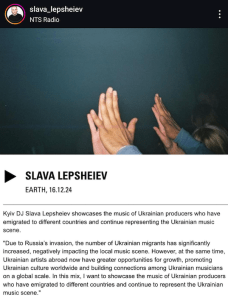 Slava Lepsheiev has recently made a playlist for NTS featuring Ukrainian artists who left the country which was intended as a call for unity within a growing divide between those who left and those who stayed behind. However, as you commented on social media, the introduction of the classifier “music from the Ukraine emigration” by NTS can be seen as problematic in itself. Could you articulate your position on this?
That thread also touched on our article where I drew an analogy with football, as it’s a relatable example. Ukraine has stars in both electronic music and football who represent the country at the highest international level. In football, there’s a term — “legionnaires.” Some players stayed in the Ukrainian Championship, while hundreds went abroad. Occasionally, they come together as a united team — Team Ukraine, cheered on by everyone. I’d dream of Mixmag Ukraine being a platform where the “national team” of the Ukrainian electronic scene could gather. Then, we could include all the strongest and best in our projects, reviews, and rankings, and people would feel proud of that. There’s plenty to be proud of!
But as I said earlier, this is currently impossible due to the atmosphere of fear, mutual resentment, and judgment fostered by some activists who thrive in destructiveness—that’s their element. They’re not great at building ecosystems, but they excel in tearing things down.
War is a time of black-and-white thinking. A time of simple slogans. A time for statements with exclamation points rather than analysis, psychoanalysis, or balance. I fully understand that my position is now marginal. But I won’t change it. I can only continue building ecosystems with those who share this view. Thankfully, there are many such people, both in Ukraine and beyond.
 Vlad Yaremchuk recently posted on social media his disappointment in the number of international artists who still play in Russia, even amongst those who once supported Ukraine. Do you share his frustration and do you put this down to “War Fatigue” or are there other reasons, including financial considerations, in your opinion as to why some artists seem less sensitive to the issue?
The phrase “war fatigue” from Europeans sounds like mockery to Ukrainians. In this particular case, even more so. Artists grew tired of bans on performing in a terrorist state, couldn’t bear such “restrictions,” and went back there? I will never understand that.
This is despite how vast the free world is and how many opportunities it offers beyond performing in Russia. Choosing to go there for (obviously) higher fees now is either stupidity, greed, or both. Unfortunately, we see this at all levels of business and politics. Europe is our partner and ally in this war. Numerous European countries provide us with critical military and humanitarian aid. But from energy trade to individual decisions, we see double standards at all levels — something incomprehensible from here in Ukraine. A few days ago, fragments of a ballistic missile damaged a picturesque church in central Kyiv.
If a Russian missile fell at 7AM near the Madonnina in Milan, Notre Dame, or the Sagrada Família, perhaps some artists would open social media to look up the nearest shelter and, while sitting there with plenty of free time, read about who’s trying to kill them. After just two or three connections, they’d link the Kremlin to the owners of Russian nightclubs.
So yes, it’s a mix of greed and stupidity with the latter, ignorance — probably accounting for 70%.
On a general note, would you say that the role of music in Ukraine has shifted from one of entertainment to encompass the expression of identity, communication, and emotional and physical survival?
Right now, we’re preparing selections of the best albums and tracks of the year in Ukraine. Having listened to about 4,000 releases, I can confidently say that your phrasing, Gianmarco, is very accurate.
One-third of the releases directly address issues of war, identity, and the human condition in extreme circumstances. And this isn’t just in “complex” genres. It’s not only IDM or dark ambient with news samples. It’s not just harsh techno tracks named after weapon models. Even in EDM, there are many spoken word inserts with thoughts about the war, inspiring calls for stoicism, and belief in oneself and a brighter future. It’s reminiscent of what Maxi Jazz did with Faithless — sermons over festival rave soundscapes. There’s a lot of that in Ukraine right now.
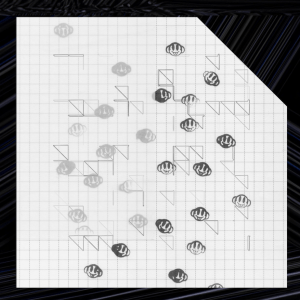
Andrii Kunin – Lost Toys
Do you find war sounds and air raid sirens used in electronic music tracks to be triggering and is it ever useful in describing the war experience sonically to a foreign audience?
Delia Derbyshire was inspired by the sounds of air raid sirens during the bombings of her hometown Coventry in World War II. It influenced her deeply, and she studied the nature of those sounds. That’s essentially where the history of electronic music in Britain began. Can this sound evoke an emotional uplift? Traumatic experiences can also transform into something powerful. People with PTSD often experience a mix of pain and pleasure in a single stimulus. J.G. Ballard explored this in Crash, which was later adapted into a film by Cronenberg.
In Ukraine, there are artists who similarly dive deeply into the sounds of war, exploring their impact on the psyche and subconscious. For instance, Andrii Kunin created an excellent album, Lost Toys, featuring sounds from toys abandoned by children fleeing with their families from war. It’s haunting, piercing, and beautiful at the same time.
In 2023, we named Kyiv Eternal by Heinali as the Album of the Year—a record that captures Kyiv’s atmosphere during the first year of the war. Labels like Dnipropop and Mystictrax have released numerous fascinating projects in this vein. Of course, there’s also the Ukrainian Field Notes compilation, which you initiated — a profound and important exploration with significant historical value.
At the same time, exploiting the theme of war for personal gain is triggering. Unfortunately, that also happens. I’ve seen many attempts to promote mediocre music by leveraging Ukraine or the war as a token. It’s embarrassing when our artists do this for a Western audience.
As someone once wisely said: “An artist can do anything on stage, but they shouldn’t complain or beg.” Artists are role models, opinion leaders, stars! They should carry themselves with dignity.
Sadly, I hear a lot of music that’s rushed, with no real effort put into sound quality (and I’m not talking about intentional lo-fi), yet the press release is packed with messages designed to evoke guilt if you ignore it. Then you realize it’s a cynical form of manipulation, and there’s nothing wrong with your perception.
When it’s genuine, you don’t have time to analyze — you’re moved to tears immediately. And it’s genuine when the artist conveys their personal experience through the music — a unique experience in the context of war. That’s how it works in music, film, and literature.
 Were you also unable to listen to music over the first few months of the full-scale invasion like many of your Ukrainian colleagues and if so, what were you listening to, once you went back to music?
When I started listening to music again in 2022, my taste became more complex. Previously, I listened to mixes by CC:Disco and Raphael Top-Secret, Bandcamp Weekly podcasts, or something like The Heliocentrics — modern Ethiopian jazz, great for work.
Now my playlist includes Porcupine Tree, David Sylvian, late David Bowie (he was incredible in the ‘90s!), Brendan Perry from Dead Can Dance, Morphine, Spoon, Gustavo Cerati, Talk Talk, Madrugada, and Nine Inch Nails.
From electronic music, it’s a lot, but I’ve rediscovered psy-dub like Ott, psy-trance like Shpongle, William Orbit, Recoil, and xPropaganda. Of course, I keep up with all modern global releases, but for well-known names like Jamie xx, Barry Can’t Swim, Fred Again…, Bicep, and Overmono, I mainly admire the quality of their marketing and the work of their mixing engineers.
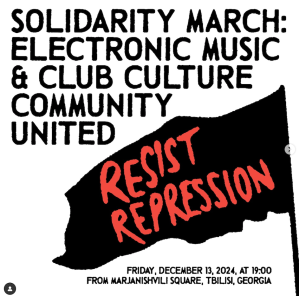 Have you been following recent events in Sakartvelo (aka Georgia) and what can the clubbing scene do to survive and preserve its diversity especially after anti-LGBTQIA+ legislation being introduced?
Yes, of course, we’re all following the street protests in Georgia. I sincerely hope they can become a truly free and independent country moving swiftly toward European integration. The new generation of Georgian youth is talented, progressive, and modern. They deserve to be part of a united cultural space with the West and have so much to offer to global culture because they are such a musical and soulful nation. In that sense, we’re very similar. We’re well aware of Georgia’s strong techno scene. Clubs like Khidi and Bassiani have already become international phenomena.
Unfortunately, I currently don’t see any positive developments for Georgians. The price of freedom is the blood of civilians on the streets of Tbilisi. A very high price. We’ve been through this ourselves, and I see a complete déjà vu of Ukraine’s Revolution of Dignity in 2013. Ukrainians went all the way back then, and we had numerous casualties. The war with Russia and its influence in our government began on Instytutska Street in central Kyiv, where over 100 demonstrators were killed by snipers in February 2014 as they stormed the government quarter with wooden shields in hand. This war has been going on for 11 years.
Ukraine is struggling, but it stands strong and will ultimately prevail — I have no doubt about that. But Georgia is ten times smaller. I just don’t understand how they’ll be able to overthrow this clearly pro-Russian government without intervention from the Kremlin’s special forces, infiltrated agents, and later overt deployment of Rosgvardiya, OMON, private military companies, and other tools of this regime.
 Which book / film / album / song / traditional dish / podcast / blog / artwork / building / meme best captures Ukraine for you?
- Book: Do Oxen Low When Their Mangers Are Full? by Panas Myrny. I read it at my grandmother’s village when I was 14. It’s a heavy, dramatic story about a Ukrainian family. At that age, it was difficult to read, but it’s brilliantly written.
- Album: O Vesna, Vesna by MLADA (2005) — Ukrainian renditions of folk songs styled as nu-jazz. They weren’t the first or last to combine folk and modern styles, but I still haven’t heard anyone do it better.
- Song: Pikkardiyska Tertsiya / Піккардійська терція – Plyve kacha / Пливе кача — a male a cappella group. This was the song played during farewells to fallen heroes on Maidan. It awakens something deep inside you that you might not even realize exists. You’re paralyzed by its melody, as if your ancestors are speaking to you through it.
 Dish: Borscht! A good borscht — with garlic and black bread — should feel like a duel with the dish itself. It should be spicy and hot, make your eyes water, and your mouth burn. But that only makes it more delicious!
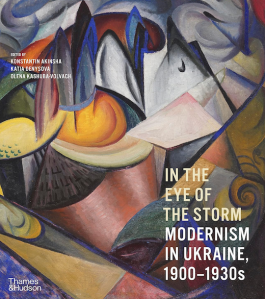
- Piece of Art: There are many. A great book in English is In the Eye of the Storm: Modernism in Ukraine, 1900–1930s. I highly recommend it. It visually proves that even back then, during the early Soviet Union, Ukrainian culture had its uniqueness — something truly visionary, bold, and even futuristic.
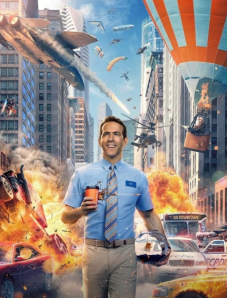
- Meme: The movie poster for Free Guy starring Ryan Reynolds. It perfectly describes life in Ukraine right now. No matter how much chaos is happening around us, we don’t lose our enthusiasm.
December 26, 2024 – TBILISI, SAKARTVELO
 My name is Gogla Kovziridze, and I am the founder and Editor-in-Chief of Ravegram, a platform dedicated to promoting Georgian electronic music and club culture. Ravegram began as an Instagram-based project, offering ravers an accessible hub for discovering weekend parties, connecting with the community, and exploring in-depth interviews and features through our magazine. Over time, it has grown into a multifaceted platform, not only celebrating the underground music scene but also addressing broader cultural and social issues.
Given the current situation in Georgia, Ravegram has expanded its focus to include political news and awareness. This shift reflects our commitment to fostering dialogue and supporting our community beyond the dancefloor.
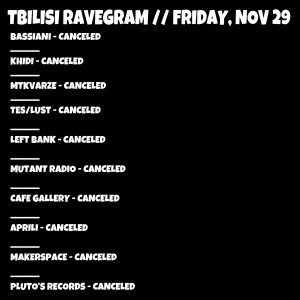 You are one of the many artists / venues / promoters to have signed the recent manifesto declaring Georgian Dream to be an illegitimate government, and emphasising a joint refusal to participate in government events. What has the response and feedback been from the international music community and how informed would you say people are about the current situation in your country?
Yes, I signed the manifesto declaring Georgian Dream to be an illegitimate government. For me, this was not just a political statement but a necessary stand for the values of justice and freedom that our community deeply cherishes. The response from the international music community has been overwhelmingly supportive, with many expressing solidarity and a genuine interest in understanding the challenges we face in Georgia.
I would say that while some are informed about the situation, there is still a significant gap in global awareness. This is one of the reasons I created Ravegram—to bridge that gap and provide a platform to spotlight not only the vibrant electronic music scene in Georgia but also the political realities we are confronting. Through Ravegram, I aim to connect the global electronic music community to these pressing issues, and I believe we’re succeeding in making a meaningful impact.
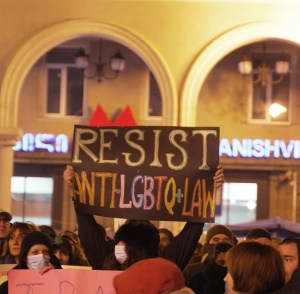
Photo: მაუწყებელი / Mautskebeli (Tbilisi Club Scene solidarity march)
With clubs like Khidi, reopening for one night for fundraising purposes, is the current strike from the Georgian clubbing scene and Georgian musicians sustainable and is the international music community doing enough to support you?
A strike like this is undoubtedly a challenge, but it’s also a powerful statement of unity and resistance. The decision by clubs like Khidi to reopen for one night for fundraising shows the resilience and creativity of the Georgian clubbing community. It’s not just about taking a stand—it’s about finding ways to support the scene and the people who rely on it while staying true to our principles.
As for sustainability, it depends on the collective effort of both the local and international music communities. While we’ve seen incredible solidarity from our peers abroad, there’s always room for more support. Awareness campaigns, sharing our story, and incorporating Georgian artists into lineups worldwide can make a significant difference. This isn’t just about us; it’s about protecting the cultural spaces and values that electronic music represents globally.

Kesaria Abramidze
The day after anti-LGBTQIA+ law was passed in Sakartvelo, Kesaria Abramidze, a popular trans woman, was killed. With clubs like Bassiani facing an uncertain future, what hope is there for the queer community in Sakartvelo and for diversity within the clubbing scene?
The tragic murder of Kesaria Abramidze, a prominent transgender model, just one day after the enactment of anti-LGBTQIA+ legislation in Georgia, has cast a profound shadow over our nation. This heartbreaking event underscores the escalating dangers faced by the queer community, who now confront heightened prejudice and violence.
If this government remains in power, I honestly cant see a sustainable future for our scene. Their policies are systematically dismantling the values of freedom, equality, and self-expression that define both our music community and our broader cultural identity.
Despite these challenges, the resilience of Georgia’s queer community endures. Grassroots organizations, Our clubs and activists continue to advocate for equality and human rights, striving to rebuild and preserve inclusive spaces. International solidarity and support are crucial during this time, as they can amplify these efforts and help safeguard the progress achieved thus far.
While the path forward is fraught with obstacles, the unwavering spirit of the queer community and its allies offers a beacon of hope. Through collective action and persistent advocacy, there remains the possibility of reclaiming and expanding the safe, diverse environments that are essential for the flourishing of Georgia’s clubbing scene and the well-being of its LGBTQIA+ individuals.
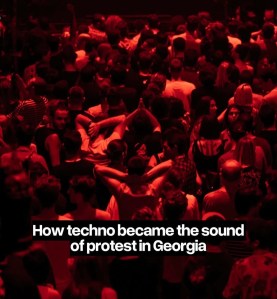 In the Dazed article “How techno became the sound of protest in Georgia”, Barclay Bram asks why electronic music, and particularly techno, took off in Tbilisi. What would your personal answer be?
Techno in Tbilisi has always been more than just music, it’s a language of resistance and liberation. Our country’s complex history, from Soviet oppression to ongoing political struggles, has deeply shaped the psyche of its youth. In a society often constrained by conservative values, electronic music became a way to break free, and to reclaim individuality.
Techno resonates here because it thrives on raw emotion, intensity, and a sense of community. The industrial, hypnotic sounds reflect the resilience and defiance of a generation unwilling to accept silence or submission. Tbilisi Clubs didn’t just emerge as places to dance; they became cultural hubs where activism and music collided, and where freedom of expression found its loudest voice.
It’s also about accessibility and universality. Techno’s lack of lyrics allows it to transcend language barriers and speak directly to the soul. In a place like Tbilisi, where many feel unheard, that direct connection is incredibly powerful. It’s not just about partying—it’s about creating a movement, a safe space, and a shared vision for a freer, more inclusive future.
Solidarity to ukraine rally // 2022 Tbilisi, Georgia – Photo: Publika / პუბლიკა
Many Ukrainian artists have been posting about Georgia on social media and waving the Georgian flag just like many Georgians have been demonstrating with both Ukrainian and EU flags. Considering Russia has de facto occupied 20% of the Georgian territory and that the two countries have been openly at war most recently in 2008, what would you say are the similarities and / or differences between Ukraine and Georgia and what lessons can be learned by the current situation in Ukraine?
A key similarity lies in the struggle to resist authoritarian influence while striving to align with European values of democracy, human rights, and freedom. Both Georgians and Ukrainians understand the high cost of this path, yet we remain steadfast in our determination.
However, the international response has been markedly different. The world has rallied around Ukraine with unprecedented levels of support, from military aid to humanitarian assistance. In contrast, after the 2008 war, Georgia was left to navigate the consequences largely on its own. This disparity underscores an important lesson: early and decisive international action can alter the course of such conflicts and save countless lives.
For Georgia, the situation in Ukraine is a stark reminder of what’s at stake and why we must continue to fight for our sovereignty. For the world, Ukraine’s courage serves as a powerful lesson in standing united against imperialism. The resilience and unity shown by both nations prove that even in the face of overwhelming odds, the human spirit and the desire for freedom cannot be silenced.
 Can you see a time when Georgians will be calling for a ban on Russian producers and artists like the Ukrainian electronic music scene did following the Russian full-scale invasion?
Given Georgia’s own history with Russian aggression, the idea of banning Russian producers and artists has been a recurring topic of debate within our community. While many Georgian artists and venues have already taken steps to distance themselves from Russian-affiliated figures, it hasn’t reached the same widespread, formalized movement as in Ukraine.
This difference partly stems from context. In Ukraine, the full-scale invasion galvanized an immediate, unified response, making such boycotts a necessary act of resistance. In Georgia, while the occupation of 20% of our territory is an ongoing reality, the lack of an active, large-scale conflict has led to more nuanced discussions about how to approach cultural ties with Russia.
That said, the sentiment is growing. Many Georgians, especially within the electronic music scene, are increasingly vocal about the importance of standing in solidarity with Ukraine and opposing any form of normalization with Russian entities that fail to take a clear stance against their government’s actions.
Ultimately, it will depend on the broader political climate and how much the international electronic music community aligns with the principles of accountability and resistance to oppression. If the current situation escalates, I believe Georgians will likely adopt a more definitive stance, similar to what we’ve seen in Ukraine.
Are there any specific tracks that have become “popular anthems” for the protests over the past few months?
I really like Kordz – “Shecdoma,” and Kordz – “AntiGeorgianDreamAnthem.”
Which books, artworks, plays, films, dishes, landmarks best represent Sakartvelo to you?
Sakartvelo is best represented to me by the paintings of Niko Pirosmani, Elene Akhvlediani, and David Kakabadze. For dishes, khinkali and khachapuri are quintessentially Georgian, embodying the warmth and tradition of our culture. The movie – Blue Mountains, or Unbelievable Story and the book – poem by Shota Rustaveli “The Knight in the Panther’s Skin.”
NEW RELEASES
ОЧІ ~ AMBIENT // compilation [ОЧІ 049]
A compilation of ambient tracks from all ambient releases of our label, also highlighting VA FUNDRAISER COMPILATION 24.2.23 for Musicians defend Ukraine and our first release, “residents mixtape # 1”.
Andrew Deme ~ Fake Hope of a Moth
This album includes 7 tracks that were written in 2024. In most of the tracks, the author experiments with story-like lyrics that were originally written as text in the early 2000s and voiced by AI just before recording.
Svet ~ Trial Run
Producent : SVET
Artwork : SVET
No vocal, no lyrics, no master.
I have paws.
Lubomyr Melnyk ~ The FAST BUTTERFLY
Previous releases of BUTTERFLY had me playing at a relatively “slow” pace .. but really, the piece is a delight for the Running-Wild Fingers where they can flow through the air at break.neck speed. This is one such recording … the FAST Butterfly.
Alex Gordiy ~ Textures
“Textures” EP is a new release from Ukrainian producer @alex-gordiy featuring five tracks that combine groove and hypnotics in an original sound. Each of them opens its own side, drawing you into the rhythmic and at the same time deep, atmospheric quintessence of distinctive techno.
Ostudinov ~ Live at Otel’ 2024
Ostudinov is back with a new live set from Otel’.
Cornrows/Saturated Color ~ Sound & Fury EP
New EP from HEY YOU! Recordings.
Fedir Tkachov ~ At My Window
One of my biggest struggles in life is finding meaningful creative work. But this year I was lucky to get involved in the art project “At My Window” by Jim Vecchi – a suite of fifteen videos, capturing different scenes of city life through the lens of Jim’s window and his personal reflections and experiences.
My only task was to be myself creatively, and to come up with a soundtrack to a video “An Extravagance Of Crows”, which is a single shot of a cityscape and swarms of crows moving around, as the day fades into the night.
I wrote two very distinct, polar opposite themes to represent two visions of the project I initially considered, but a decision was made to use both of them, rather than selecting one and expanding it to the full twenty minute duration of the “Crows” video.
For the first track I went into dark jazz realm, using various playing techniques on fretless bass, as well as electric cello. The second track is unapologetically electronic orchestra of synthesizers, soaring sky high with it’s hopeful energy.
I’m releasing this music now to end a quite challenging year on a high note.
You can learn more about “At My Window” and Jim Vecchi here: www.atmywindow.com/about
My statement with deeper insights about the process can be found here: www.atmywindow.com/tkachov
VA ~ Symonenko Students VA
Debut release on DISK_D Symonenko students VA (DSKD-D001) is a compilation of various artists works, which are tracks made by beginner electronic music producers who took lessons in production from Symonenko in 2022-2024. For some of them it is their first music publishing ever. 7 original works made under russian rocket and drone attacks in Kyiv will be a short presentation of what will be coming out on label in the next 2025. Sound is mostly techno, but you can also find special sound designs and oldschool beats on the VA. Made with love to music and our most unforgettable years of life we value that much now.
Dnipropop ~ Альбом року
A compilation by the residents of the Dnipropop label, with proceeds going to support the label’s co-founders, who are actively defending Ukraine against russian occupiers.
Voluntary charitable contribution for the needs of Module Squad via card number 4441111052429481
PayPal – vleshkav@gmail.com
VA ~ The Remixes
We have always been in love with remix culture as it is always a unique opportunity to experience tracks from a completely different perspective. That’s why, to celebrate this productive year for the label, we are highlighting remixes from each of our 2024 releases. The compilation features an additional remix by Kadiristy for Paloven’s “Vanguard,” which was previously unavailable for purchase.
Thank you for listening, and fasten your seatbelts—2025 is packed with exciting plans!
Ukrainian Improvisers Orchestra ~ Accidentia
𝑇ℎ𝑒 𝑐𝑜𝑛𝑐𝑒𝑟𝑡 𝑜𝑓 𝑡ℎ𝑒 “𝑈𝑘𝑟𝑎𝑖𝑛𝑖𝑎𝑛 𝐼𝑚𝑝𝑟𝑜𝑣𝑖𝑠𝑒𝑟𝑠 𝑂𝑟𝑐ℎ𝑒𝑠𝑡𝑟𝑎”, 𝑤ℎ𝑖𝑐ℎ 𝑡𝑜𝑜𝑘 𝑝𝑙𝑎𝑐𝑒 𝑜𝑛 𝐽𝑢𝑛𝑒 𝟷𝟾, 𝟸𝟶𝟸𝟺 𝑎𝑡 𝑡ℎ𝑒 𝐷𝑜𝑣𝑧ℎ𝑒𝑛𝑘𝑜 𝐶𝑒𝑛𝑡𝑒𝑟 𝑖𝑛 𝐾𝑦𝑖𝑣, 𝑤𝑎𝑠 𝑡ℎ𝑒 𝑜𝑛𝑙𝑦 𝑝𝑒𝑟𝑓𝑜𝑟𝑚𝑎𝑛𝑐𝑒 𝑜𝑓 𝑡ℎ𝑒 𝑜𝑟𝑐ℎ𝑒𝑠𝑡𝑟𝑎 𝑖𝑛 𝑡ℎ𝑒 𝑙𝑎𝑠𝑡 𝑎𝑙𝑚𝑜𝑠𝑡 𝑡𝑤𝑜 𝑦𝑒𝑎𝑟𝑠– 𝑡ℎ𝑒 𝑝𝑟𝑒𝑣𝑖𝑜𝑢𝑠 𝑐𝑜𝑛𝑐𝑒𝑟𝑡 𝑜𝑓 𝑡ℎ𝑒 “𝑈.𝐼.𝑂.” 𝑡𝑜𝑜𝑘 𝑝𝑙𝑎𝑐𝑒 𝑖𝑛 𝑆𝑒𝑝𝑡𝑒𝑚𝑏𝑒𝑟 𝟸𝟶𝟸𝟸 𝑤𝑖𝑡ℎ 𝑎 𝑙𝑖𝑣𝑒 𝑎𝑐𝑐𝑜𝑚𝑝𝑎𝑛𝑦𝑖𝑛𝑔 𝑜𝑓 𝑡ℎ𝑒 𝟷𝟿𝟸𝟿 𝑠𝑖𝑙𝑒𝑛𝑡 𝑈𝑘𝑟𝑎𝑖𝑛𝑖𝑎𝑛 𝑓𝑖𝑙𝑚 “𝑃𝑖𝑔𝑠 𝐴𝑟𝑒 𝐴𝑙𝑤𝑎𝑦𝑠 𝑃𝑖𝑔𝑠”. 𝐴𝑛𝑑 𝑡ℎ𝑒 𝑝𝑒𝑟𝑓𝑜𝑟𝑚𝑎𝑛𝑐𝑒 𝑖𝑛 𝟸𝟶𝟸𝟺 𝑡𝑜𝑜𝑘 𝑝𝑙𝑎𝑐𝑒 𝑛𝑜𝑡 𝑏𝑦 𝑐ℎ𝑎𝑛𝑐𝑒 – 𝑤𝑖𝑡ℎ𝑖𝑛 𝑡ℎ𝑒 𝑓𝑟𝑎𝑚𝑒𝑤𝑜𝑟𝑘 𝑜𝑓 𝑡ℎ𝑒 𝑜𝑛𝑙𝑖𝑛𝑒 𝑐𝑜𝑛𝑐𝑒𝑟𝑡𝑠 𝑜𝑓 𝑡ℎ𝑒 𝐾𝑂𝑅𝐴 𝐿𝑎𝑡𝑒 𝑁𝑖𝑔ℎ𝑡 𝑆ℎ𝑜𝑤, 𝑖𝑡 𝑤𝑎𝑠 𝑡ℎ𝑒 𝑓𝑖𝑛𝑎𝑙 𝑠𝑡𝑟𝑒𝑎𝑚 𝑜𝑓 𝑡ℎ𝑒 𝑠𝑒𝑎𝑠𝑜𝑛. 𝐴𝑛𝑑 𝑎𝑙𝑠𝑜, 𝑎𝑚𝑜𝑛𝑔 𝑜𝑡ℎ𝑒𝑟 𝑡ℎ𝑖𝑛𝑔𝑠, 𝑖𝑡 𝑤𝑎𝑠 𝑎𝑛 𝑢𝑛𝑜𝑓𝑓𝑖𝑐𝑖𝑎𝑙 “𝑐𝑒𝑙𝑒𝑏𝑟𝑎𝑡𝑖𝑜𝑛” 𝑜𝑓 𝑡ℎ𝑒 𝟷𝟶𝑡ℎ 𝑎𝑛𝑛𝑖𝑣𝑒𝑟𝑠𝑎𝑟𝑦 𝑜𝑓 𝑡ℎ𝑒 𝑜𝑟𝑐ℎ𝑒𝑠𝑡𝑟𝑎, 𝑏𝑒𝑐𝑎𝑢𝑠𝑒 𝑡ℎ𝑒 𝑓𝑖𝑟𝑠𝑡 𝑝𝑒𝑟𝑓𝑜𝑟𝑚𝑎𝑛𝑐𝑒 𝑜𝑓 𝑡ℎ𝑒 𝑂𝑟𝑐ℎ𝑒𝑠𝑡𝑟𝑎 𝑡𝑜𝑜𝑘 𝑝𝑙𝑎𝑐𝑒 𝑖𝑛 𝟸𝟶𝟷𝟺.
𝐹𝑜𝑟 𝑡ℎ𝑖𝑠 𝑐𝑜𝑛𝑐𝑒𝑟𝑡, 𝑡ℎ𝑒 𝑂𝑟𝑐ℎ𝑒𝑠𝑡𝑟𝑎 𝑎𝑠𝑠𝑒𝑚𝑏𝑙𝑒𝑑 𝑎 𝑙𝑖𝑛𝑒𝑢𝑝 𝑜𝑓 𝑤𝑜𝑛𝑑𝑒𝑟𝑓𝑢𝑙 𝑚𝑢𝑠𝑖𝑐𝑖𝑎𝑛𝑠 𝑓𝑟𝑜𝑚 𝑐𝑜𝑚𝑝𝑙𝑒𝑡𝑒𝑙𝑦 𝑑𝑖𝑓𝑓𝑒𝑟𝑒𝑛𝑡 𝑑𝑖𝑟𝑒𝑐𝑡𝑖𝑜𝑛𝑠 – 𝑝𝑟𝑜𝑓𝑒𝑠𝑠𝑖𝑜𝑛𝑎𝑙𝑠 𝑖𝑛 𝑗𝑎𝑧𝑧, 𝑐𝑜𝑛𝑡𝑒𝑚𝑝𝑜𝑟𝑎𝑟𝑦 𝑚𝑢𝑠𝑖𝑐, 𝑒𝑙𝑒𝑐𝑡𝑟𝑜𝑛𝑖𝑐𝑠, 𝑟𝑜𝑐𝑘 𝑎𝑛𝑑 𝑒𝑡ℎ𝑛𝑜 𝑚𝑢𝑠𝑖𝑐. 𝑀𝑎𝑛𝑦 𝑜𝑓 𝑡ℎ𝑒 𝑜𝑟𝑐ℎ𝑒𝑠𝑡𝑟𝑎 𝑚𝑒𝑚𝑏𝑒𝑟𝑠 𝑝𝑙𝑎𝑦𝑒𝑑 𝑖𝑛 𝑡ℎ𝑖𝑠 𝑐𝑜𝑛𝑐𝑒𝑟𝑡 𝑓𝑜𝑟 𝑡ℎ𝑒 𝑓𝑖𝑟𝑠𝑡 𝑡𝑖𝑚𝑒 𝑎𝑠 𝑝𝑎𝑟𝑡 𝑜𝑓 𝑡ℎ𝑒 “𝑈.𝐼.𝑂”, 𝑎𝑛𝑑 𝑡ℎ𝑖𝑠 𝑎𝑑𝑑𝑒𝑑 𝑛𝑒𝑤 𝑖𝑛𝑡𝑒𝑟𝑒𝑠𝑡𝑖𝑛𝑔 𝑖𝑑𝑒𝑎𝑠 𝑎𝑛𝑑 𝑠𝑜𝑢𝑛𝑑𝑠, 𝑤ℎ𝑖𝑐ℎ 𝑤𝑒𝑟𝑒 𝑠𝑢𝑝𝑝𝑙𝑒𝑚𝑒𝑛𝑡𝑒𝑑 𝑏𝑦 𝑡ℎ𝑒 𝑝𝑒𝑟𝑚𝑎𝑛𝑒𝑛𝑡 𝑚𝑒𝑚𝑏𝑒𝑟𝑠 𝑜𝑓 𝑡ℎ𝑒 𝑜𝑟𝑐ℎ𝑒𝑠𝑡𝑟𝑎. 𝑇ℎ𝑖𝑠 𝑡𝑖𝑚𝑒, 𝑡ℎ𝑒 𝑜𝑟𝑐ℎ𝑒𝑠𝑡𝑟𝑎 𝑐𝑜𝑛𝑠𝑖𝑠𝑡𝑒𝑑 𝑜𝑓 𝟸𝟻 𝑚𝑢𝑠𝑖𝑐𝑖𝑎𝑛𝑠. 𝑇ℎ𝑒 𝑐𝑜𝑛𝑑𝑢𝑐𝑡𝑜𝑟 𝑎𝑛𝑑 𝑓𝑜𝑢𝑛𝑑𝑒𝑟 𝑜𝑓 𝑡ℎ𝑒 𝑜𝑟𝑐ℎ𝑒𝑠𝑡𝑟𝑎, 𝐷𝑚𝑦𝑡𝑟𝑜 𝑅𝑎𝑑𝑧𝑒𝑡𝑠𝑘𝑦𝑖, 𝑐ℎ𝑜𝑠𝑒 𝑡ℎ𝑒 𝑣𝑒𝑟𝑦 𝑓𝑖𝑟𝑠𝑡 𝑔𝑟𝑎𝑝ℎ𝑖𝑐 𝑠𝑐𝑜𝑟𝑒 𝑓𝑜𝑟 𝑡ℎ𝑖𝑠 𝑐𝑜𝑛𝑐𝑒𝑟𝑡, 𝑤ℎ𝑖𝑐ℎ 𝑤𝑎𝑠 𝑤𝑟𝑖𝑡𝑡𝑒𝑛 𝑠𝑝𝑒𝑐𝑖𝑓𝑖𝑐𝑎𝑙𝑙𝑦 𝑓𝑜𝑟 𝑡ℎ𝑒 𝑂𝑟𝑐ℎ𝑒𝑠𝑡𝑟𝑎’𝑠 𝑓𝑖𝑟𝑠𝑡 𝑝𝑒𝑟𝑓𝑜𝑟𝑚𝑎𝑛𝑐𝑒 𝑖𝑛 𝟸𝟶𝟷𝟺 – 𝑎 𝑤𝑜𝑟𝑘 𝑢𝑛𝑑𝑒𝑟 𝑡ℎ𝑒 𝑔𝑒𝑛𝑒𝑟𝑎𝑙 𝑡𝑖𝑡𝑙𝑒 “𝐴𝑐𝑐𝑖𝑑𝑒𝑛𝑡𝑖𝑎”, 𝑡ℎ𝑒 𝑚𝑎𝑖𝑛 𝑖𝑑𝑒𝑎 𝑜𝑓 𝑤ℎ𝑖𝑐ℎ 𝑖𝑠 𝑡ℎ𝑒 𝑜𝑟𝑐ℎ𝑒𝑠𝑡𝑟𝑎’𝑠 𝑓𝑟𝑒𝑒 𝑖𝑛𝑡𝑒𝑟𝑝𝑟𝑒𝑡𝑎𝑡𝑖𝑜𝑛 𝑜𝑓 𝑐𝑜𝑛𝑣𝑒𝑛𝑡𝑖𝑜𝑛𝑎𝑙𝑙𝑦 𝑝𝑟𝑒𝑝𝑎𝑟𝑒𝑑 𝑒𝑝𝑖𝑠𝑜𝑑𝑒𝑠-𝑝𝑎𝑟𝑡𝑠 𝑜𝑓 𝑡ℎ𝑒 𝑐𝑜𝑛𝑐𝑒𝑟𝑡, 𝑖𝑛 𝑤ℎ𝑖𝑐ℎ 𝑟𝑎𝑑𝑖𝑐𝑎𝑙𝑙𝑦 𝑑𝑖𝑓𝑓𝑒𝑟𝑒𝑛𝑡 𝑖𝑑𝑒𝑎𝑠 𝑎𝑛𝑑 𝑡𝑒𝑐ℎ𝑛𝑖𝑞𝑢𝑒𝑠 𝑜𝑓 𝑖𝑚𝑝𝑟𝑜𝑣𝑖𝑠𝑎𝑡𝑖𝑜𝑛𝑎𝑙 𝑚𝑢𝑠𝑖𝑐 𝑎𝑟𝑒 𝑚𝑎𝑛𝑖𝑓𝑒𝑠𝑡𝑒𝑑: ℎ𝑒𝑟𝑒 𝑦𝑜𝑢 ℎ𝑎𝑣𝑒 𝑓𝑟𝑒𝑒-𝑗𝑎𝑧𝑧, 𝑎𝑛𝑑 𝑠𝑜𝑛𝑜𝑟𝑖𝑠𝑡𝑖𝑐𝑠, 𝑎𝑛𝑑 𝑟𝑜𝑐𝑘, 𝑎𝑛𝑑 𝑛𝑜𝑖𝑠𝑒, 𝑎𝑛𝑑 𝑝𝑒𝑟𝑓𝑜𝑟𝑚𝑎𝑛𝑐𝑒.
Mia Zabelka/ Tungu/ Stefan Strasser ~ the confidence of one swimming against the current
This project, spearheaded by Ukrainian artist Sergiy Senchuk under his Tungu moniker, showcases a unique collaboration that melds the diverse artistic voices of three creators united by a vision to push the boundaries of sound.
The collaboration began during the global isolation of the pandemic, connecting three artists—Senchuk from Ukraine; Zabelka from Austria; and Strasser from Germany—each bringing a unique approach. Yet it was amid the escalation of the war in Ukraine that this project took on a new level of resilience and urgency. Working from his hometown of Chernihiv, Senchuk found the act of creating music to be a testament to persistence and strength. The album’s title, ‘the confidence of one swimming against the current’, captures this spirit of defiance and perseverance in the face of both personal and collective adversity.
‘the confidence of one swimming against the current’ features a mixture of intuitive improvisation, samples, field recordings, live instrumentation and electronics. The album defies conventional genre boundaries, offering listeners a dynamic exploration of sound that is bold and adventurous. The title embodies the spirit of the album—independent, daring, and confident. Each track reflects the trio’s shared vision while maintaining their individual creative expressions.
VA ~ Fantastic Year
The best trax of 2024 in one compilation, included Revshark, Echodive, Bakunn, Ryndin, Bicycle Ride, Distortion (UA), Clasps, Whaler, Lostlojic, Helleroid and 18uah. Thanks to all who supports our artists ❤
Alexey Shmurak and Oleh Shpudeiko ~ Liebestod
The first record of an emblematic Kyiv duo, Alexey Shmurak and Oleh Shpudeiko (recording solo as Heinali), Liebestod is a surreal journey through a kaleidoscope of song and dance tropes, poetic worlds, and languages—a meta-verse of a work.
Written throughout 2021-2022, it refers to Richard Wagner’s love-death in its title: an ambivalent mood between ecstatic delight and anticipation of death. The heroine of Tristan and Isolde lives through hours of unsettling discord before breaking into a final, rapturous union with her dead beloved and lifelessly sinking on Tristan’s body in a “vast wave of the world’s breath.”
In Shmurak and Shpudeiko’s interpretation, love-death represents music that speaks to the end of a small person’s intimate story while heralding an encounter with a macro-narrative—history. The fragility of relationships and lives, the anxiety about the safety of loved ones, the separation, the nostalgia, the yearning for tranquility, the looming terror of what’s to come, and the acceptance of its enormity—these are the themes of this album.
Texts by Ivan Mazepa, Volodymyr Svidzinsky, Inger Christensen, and John Keats are woven into a conversation between a vulnerable, self-deprecating voice and electronics that gradually exert increasing pressure on the voice before inundating the entire space.
usurper of Debenham ~ some velvet morning ‡ some leather night
recorded, produced, and mixed in summer–fall 2024 in Vienna, Dnipro, on the train, and elsewhere—never at home—except Cindy, one day, recorded on a windy Sunday in September, at home in Kyiv.
Special thanks to those who allowed themselves to be usurped:
Reini for the greenhouse, Natasha and Yura just because, Andrii for the working group room, and Sasha for leaving the guitar lying around.
Myroslav Trofymuk aka AЙKTRONER ~ DUB @ BUW (Live at The University of Warsaw Library)
Some cuts and remastered tracks from my summer session in the garden of the University of Warsaw Library, also known as BUW (Biblioteka Uniwersytetu Warszawskiego). This place has been one of the most important spots in Warsaw for me since 2004.
This year, I went back to BUW to play some of my sketches on my Digitakt. I’m slowly preparing my Techno-Trance-Dub program, and this set marked the beginning of the journey. It continues with my autumn live session at the Audio Art Festival in Krakow. You can find this album here as well as on streaming platforms.
Another story connected to BUW will follow soon, as I’m working on another studio album—one I’ve been planning since early 2009. Stay tuned!
Myroslav Trofymuk aka AЙKTRONER ~ 4A (LIVE AT THE AUDIO ART FESTIVAL)
This album represents the natural evolution of the DUB @ BUW Session. My journey with this project began during a visit to the Audio Art Festival, where I was kindly invited to join the festival’s afterparty event. Two years ago, in 2022, the festival hosted its first-ever afterparty event, and I had the privilege of performing there.
Some of the tracks on this album are also featured in the SON album, which you can explore alongside other releases here.
The album blends the hypnotic atmosphere of trance with the deep, resonant foundation of dub techno, capturing the essence of a live session performed on the rooftop of BUW in Warsaw. While these songs are still being developed further, this November 2024 version offers a glimpse into the work-in-progress.
sleep in the fire ~ нескінченна застава
Recorded live at the more music club in Odesa.
Andriy K. ~ Poetry of the Vanished Territories
‘Poetry of the Vanished Territories’ is an audiovisual exploration of central and southern Ukraine’s landscapes, capturing memories of fading places that linger between what was and what remains.
Using open source data and field recordings from the corresponding locations, Andriy K. and pryvyd layer abstract compositions with fragments of reality, blending nature and memory.
The journey begins with ‘Lybid,’ a tribute to one of the oldest rivers in Kyiv, that endures in its fight for existence.
The diptych ‘Kinburn Before’ and ‘Kinburn After’ tells the story of a sandy stretch in the northwest of the Kinburn Peninsula, nestled between the Dnieper-Bug estuary and the Black Sea.
Continuing the path, ‘Ozon Dub’ transforms matter’s state, with water gradually giving way to gas, only to revert back to the salty depths on ‘Oily Sea’.
An archive of the transient, ‘Poetry of the Vanished Territories’ invites you on a journey through the spaces in-between.
Closer Connections ~ Various Connections Vol. 2
Our second compilation comes from Closer Connections friends, students and teachers. All funds will be collected for our fundraising for ZSU and our students at the frontline.
58918012 ~ Protracted Silence
Here is a short story of this album. I am a pretty closed and inner-oriented person. My world is built (mostly) around dialogues with myself. One of the most important (in my opinion) things that I discovered during the years of my life — is to be silent. If you are an extrovert then you can’t even imagine how many interesting things you can open for yourself if you just try to stay silent for some time. To be clear, I understand that my personal experience is only mine, and it may not work for you.
In any case, this album was born out of silence, and its sounds are nothing else but those inner dialogues between me and myself. I hope you will find something for yourself in this music.
Last but not least, I can’t believe it, but it’s my 50th release! Once again, thanks for all the support, friends! Stand with Ukraine! Peace ❤
VIEWING ROOM
(Gianmarco Del Re)
 a closer listen