
 Size matters! Ukrainian Field Notes has gone extra large having now reached episode XL with 300+ interviews to date!
To celebrate, UFN has partnered with Music Export Ukraine, an independent initiative, which helps Ukrainian artists to build international presence 🇺🇦. MEU is also the founder of the Eastern European Music Academy a hybrid capacity-building project that helps independent music professionals advance their careers.
In this episode we travel to Crimea with Tetiana Khoroshun, we get into a whirlpool of Ukrainian poetry with DakhTrio, and we visit what has effectively become a ghost town with Delirium.
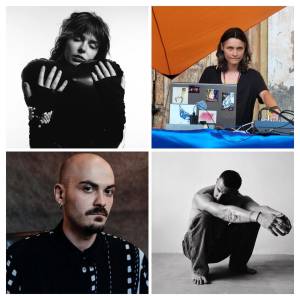
Human Margareeta, Lenoczka, Vladyslav Putistin
We also explore LGBTQIA+ rights and the queer club scene in our latest podcast for Resonance FM together with Human Margareeta, Lenoczka, Lvcerate and Vladyslav Putistin.
Tracklist
- Vladyslav Putistin & Lvcerate – Between Joy and Fear
- Lvcerate – Velvet Suspense
- Lyudska Podoba (Lyric & singing: Arthur Snitkus, Сomposer: Gosha Babanski) – Petite Mort (excerpt)
- Human Margareeta – Kryshtal
- Lenoczka – Just chilling in a hammock over the abyss
- Heinali – Beatrice (excerpt)
January 5, 2025 – LJUBLJANA, SLOVENIA
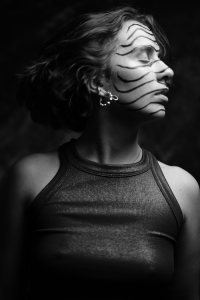
photo by Elza Loginova
I am a composer, sound artist, and performer. I was born in Yalta, Crimea, Ukraine, and grew up in a deeply musical family. My great-grandfather was a conductor who was repressed in Kharkiv in 1938 by the Soviet government. His daughters also chose musical paths. Ultimately, my father, mother, brother, and sister all became musicians, so for me, music could never simply be a hobby 😁.
I studied in Kyiv at the National Music Academy (still shamely named after Tchaikovsky). Now, I am pursuing my master’s degree in Ljubljana, Slovenia, where I am currently under temporary protection. I work in the fields of electroacoustic, electronic, contemporary, and experimental music, including live performances, sound installations, and music production for theater, cinema, computer games. In collaboration with other Ukrainian composers and musicians, I have completed several music projects, such as the electroacoustic duet GUMA (with Yana Shliabanska) and Daraba Studio (with Andrii Merhkhel and Serhii Vilka).
Has the full-scale invasion changed the way you think about music and sound in general?
Absolutely. I actually started composing electroacoustic music when the war began in 2014, with the annexation of Crimea. My first piece was written in Crimea during the blackouts. That was the first time I heard air raid sirens, and my hometown, Yalta, was filled with the buzzing sounds of electricity generators—like thousands of bees. I also remember the first days of the full-scale invasion. It was incredibly hard to concentrate, and the pressure was immense, so I needed to focus on something. I ended up writing a track. It wasn’t electroacoustic or experimental; it was something simpler, closer to synth-wave.

photo by Kseniia Nizyaeva
You are a composer from Crimea, and have been displaced twice already, where are you currently based and what would you say are the most common misconceptions about Crimea?
Oh, what a great question! Since the war started in 2014, I’ve been returning to these kinds of reflections constantly. Crimea is undoubtedly a highly dense geopolitical region, historically complex and often contentious. It is an incredibly interesting, culturally dense, naturally beautiful, and diverse place, full of power. In Crimea, you can find UNESCO heritage ancient Greek ruins in Sevastopol (now partly destroyed by russia), an amazing Crimean Tatar culture (also being destroyed by russia), unique modernist architecture (mostly abandoned and unpreserved), the best beaches, and the most beautiful mountains. Yalta, my hometown, used to be a major port, bustling with international cruise ships and tourists from all over the world.
In 2012, I finished high school and moved to Kyiv to study, full of dreams of returning to raise the cultural profile of my own Yalta—to organize concerts in caves, live performances on the beaches at sunset, and invite top artists to this amazing region. Then, in 2014, the annexation began, and Crimea turned into a “gray zone.” Yes, Crimea is still alive in some ways, but it has become isolated, cut off from the rest of the world. Now, it only connects with russia, and russian propaganda fills the air in Crimea, fueled by russia’s deep-rooted fear of losing it. The situation is not even as tense in Sochi; my Crimean familiars go there on vacation to take a break from the constant propaganda.
It’s also very important to understand that Crimea is full of Ukrainians. Many may identify as Crimeans first, but they stayed there for various reasons. My parents stayed. My mom organized a composers’ competition in Yalta, which was held with a Ukrainian jury until 2022. My father always said, “Who will greet Ukraine in Crimea if we leave?” Unfortunately, he never saw Ukraine return to Crimea—he passed away in 2019, and we buried him in Zaporizhzhia, the capital of the Ukrainian Cossacks.
russia started erasing the Crimean identity from the very beginning of Ukraine’s independence. Crimea not only hosted the russian navy in Sevastopol but also thousands of institutions, festivals, clubs, and businesses with russian influence. For me, as a young person in the 2010s, this was invisible, but we were unconsciously part of it all along. When Crimea was annexed, it became a sacrifice for a broader Ukrainian identity. Because everybody saw the real face of our “brothers”. For more on this, I recommend Pavlo Kazarin’s book The Wild West of Eastern Europe.
photo by Marina Sarycheva
How would you say your origins influenced your musical practice if at all?
I worked on this in my latest project, landscape_people. I made a piece out of it, a sound performance and immersive theatrical performance. In this project, I focused more on the feeling of home or just familiar places—how they appear in our minds as a background for thoughts, and how other people perceive the same experiences.
The last one, an immersive performance, is called landscape_people:zwloki. Zwloki in Polish is the remains. Those parts that remain in the landscape after us. And those from which we mold ourselves into new forms-carbohydrates, proteins, compounds, minerals, stardust, remains of prehistoric ancestors, tree roots, sticks, cones, smaller stones, larger stones, obscure objects of memory. The kind that draws us to them, the kind that are only available at home, because we have a similar chemistry, a similar phenotype. Like a natural wine that has absorbed the taste of cypress that dissolves in the soil. So, do we see the landscape when we look at it, or is it the landscape looking at itself? Under “my origins” I understand really concrete things from home. And as time passes, with deep sorrow I realise how hard it is to imitate them somewhere, but not at home.
I am Ukrainian by origin and was born in Crimea, which is Crimean Tatar land. As a result for me, experiencing Crimean Tatar culture felt closer than Ukrainian culture, which I mostly absorbed from my family and later in Kyiv. I think that, like many Ukrainians, I am now building my identity more sincerely, connecting very different and sometimes dramatic things.
Now I’m working on the sound walk VRTATYS’, which also processes these ideas through a cultural and linguistic journey. The project explores the themes of home, return, and identity by intertwining Ukrainian and Slovenian heritage, using sounds and texts from Hryhorii Skovoroda, documentary stories and linguistic studies. My origins deeply influence my musical practice, blending Ukrainian, Crimean, and other absorbed, with reflections on belonging and displacement, as seen in VRTATYS’.
Your artistic practice is multifaceted and takes on a variety of forms, you score documentaries, do installations, write orchestral music as well as game and commercial music. What would you say are the main defining traits of your sound and which field do you feel most at home in?
Maybe in every project, I try to reconnect with parts of myself and communicate with others. Voyage or journey is perhaps the most accurate description of what I do, and sometimes I discover completely new ways to approach it. If these journey results are sincere – I’m satisfied, even if they are not perfect. Right now, I am deeply interested in not only musical work but also in performative pieces, theater, poetry, video, and so on. I’m greedy for all kinds of experiences—I try to ‘inject’ myself with everything I can, and sometimes I just burn out. But most of the time, it leads to interesting results.

photo by Stepan Rudik
Would you agree that the role of music in Ukraine has shifted from one of entertainment to encompass the expression of identity, communication, and emotional and physical survival?
Definitely. It changed immediately from the first day of the war. I was very stressed during those days, so I decided to start working on a track just to focus on something. I really felt that I was doing it not only to express myself but to recover myself and support my close friends, with whom I spent the first days of the war. Now, every Ukrainian event, concert, research project, or exhibition is a space to say that the war is here and not over. It’s about making people feel what is happening, not just informing them. And sometimes that’s the hardest thing—because you need to be both soft and strict.
Most artists were unable to listen to music during the first few months of the full-scale invasion. Was it your case as well and if so, what were the tracks of artists that you listened to when you went back to music?
We were silent, as I remember. Or we listened to something very vital, very rhythmic, sometimes absurdist. Soon after, as I recall, I played Bach a lot and sang Ukrainian folk songs.

photo by Katya Schigol
Are there any albums / artists that have helped you make sense of current events and helped you process your feelings?
Mostly, I listen to my friends’ music and discuss it with them. Together with my colleague, composer and friend Andrii Merkhel, we created war-themed performances such as the multimedia concert Temporary Protection, the quasi-opera Scene Buffer, and the post-documentary performance Hiraeth. In 2022, in Poznan, together with Yana Shliabanska and Liubov Plavska, we presented the sound installation and live performance Grain from Chaff, which explored the differences between the Russian and Ukrainian languages.
I truly admire works recently created by Ukrainian composers: Sonetto che si dissolve tra i monti by Boris Loginov, …and only reed glistens in the sun… by Alla Zahaykevych and Hommage à Danylo Pertsov by Andrii Barsov. I was happy to participate in a few podcasts by Nina Eba and Kliker Klub—I really appreciate the work they have done so far. I visited the KCMD concert tv:void in Berlin, with pieces by Albert Saprykin, Anna Arkushyna and Ihor Zavhorodnii. I was glad to listen to glorious music and to see my friends. I’ve discovered many Ukrainian projects abroad, such as ishallsinguntilmylandisfree, Hotel Continental – Art Space in Exile, and OCHI Label.
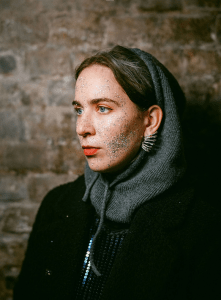
photo by Stepan Rudik
What does being Ukrainian mean to you?
To be Ukrainian now means to keep going, to donate, support each other, and to not remain silent.
How do you manage “to turn to sun despite all the darkness”?
Hard to say that I managed that:) Sometimes I fall into darkness, and it’s totally ok. Negative psychoanalysis helps. Maybe the best way to get out of this feeling – to take a nap, to have a sincere talk with your closest friends, to donate and to directly help people through your actions. Resist.
Which book / film / album / song / traditional dish / podcast / blog / artwork / building / meme best captures Ukraine for you?
That’s a hard question! Ukraine is so big, so diverse, so dense. I could name something for every region! From this list, I’d probably pick any artwork by Anatoliy Kryvolap and Concerto Misterioso by Leonid Hrabovsky.
January 7, 2025 – KYIV
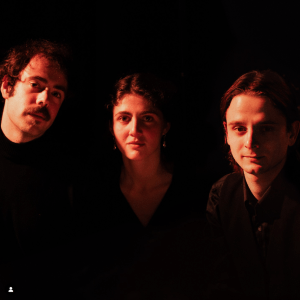
Volodymyr: Composer and multi-instrumentalist. My mother, a piano teacher, gave me a strong technical foundation and a deep appreciation for music. My primary instruments are piano and saxophone, and I later added the cello while studying in college.
Sofiya: Soloist. I initially studied jazz singing but realized it wasn’t my path. I met Ihor (double bassist and playwright of DakhTrio) in the metro, which brought me to Dakh (Dakh Theatre in Ukraine, Kyiv). I studied traditional singing with Hanna Okhrimchuk and later explored medieval and chamber singing. I see the voice as an instrument capable of expressing anything.
Ihor: Double bassist and playwright. I played guitar in a punk band called Cyanide Tile, which was fun but led me to search for something deeper. When Volodymyr began composing for the play Stus: The Passerby (2020), I found a broken double bass in the theater, repaired it, and started learning. It has been five years now, and I continue to develop my skills.
Has the full-scale invasion changed the way you think about music and sound in general, and has it had an impact on your playlists?
Volodymyr: The invasion fundamentally changed the way I perceive sound. Some tones and soundscapes now evoke intense associations and emotions, often triggering memories. For instance, certain glissando techniques used in our music now feel like echoes of sirens or alarms. We instinctively respond to these elements in our compositions.
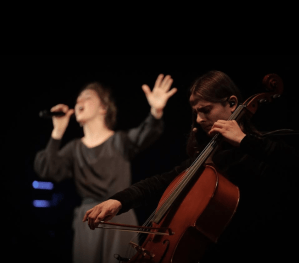
photo by @palchyk_oleg
What can you tell us about the production process for Tychyna: Fenomen doby, the second album in your planned trilogy about Ukrainian poets?
The idea originated with Ihor Dymov during his time in the Territorial Defense Forces at the beginning of the invasion. Surrounded by chaos, he felt a resonance with Stus’s line, “In this whirlpool – in the kingdom of Satan.” Sofiya brought Stus’s poetry to the TDF, and Ihor carried Kobzar (by Taras Shevchenko – the main poetry book of Ukrainian people) and Pavlo Tychyna. Stus represented acceptance, Shevchenko gave historical insight, and Tychyna embodied hope.
Volodymyr built musical worlds around the text and melodies. Remarkably, events inspired specific songs: Topoli was written during Kharkiv’s liberation, Narod on the day Kherson was freed, and Svitaye mourns Mariupol. Each piece grew organically out of the current moment.
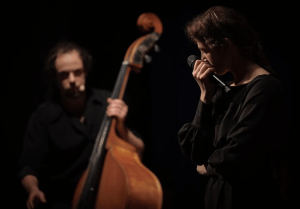
photo by @palchyk_oleg
Your previous album, drawing from the work of Vasyl Stus, was released before the full-scale invasion. Do you see the recent focus on Ukrainian poets as a necessary part of nation-building and a statement of identity?
Forgetting history leads to repeating the same mistakes. Before the invasion, our first album was sometimes criticized as too somber. People avoided confronting suffering. Now, there’s a shared understanding of pain, enabling a deeper connection to past traumas.
Our work with poets isn’t about asserting identity but exploring truths about ourselves, including shadows and struggles. By embracing reality, we believe individuals, nations, and the world can achieve meaningful transformation.
Will you be experimenting with electronics or inviting electronic musicians for remixes?
Yes, we are venturing into electronic music. On January 6th, we released a song where only Sofiya’s voice remains acoustic, and the rest is Volodymyr’s electronic composition. This piece was conceived in a bomb shelter in spring 2022 and is now ready to be shared with the world.
Has the role of music in Ukraine shifted from entertainment to encompass identity, communication, and survival?
Absolutely. While entertainment remains popular, there’s a growing demand for music that offers reflection, cultural exploration, and intellectual depth. People are reconnecting with their heritage, and this has increased interest in our work.

photo by @palchyk_oleg
Were you able to compose or perform music in the first months of the invasion? What did you listen to when you returned to music?
Sofiya: In the chaos of war, survival instincts took over. Music, food, and other non-essentials faded into the background. I first listened to Renaissance music during a project in Poland. It was cathartic, helping me release months of tension through tears.
Where are you now, and have you been displaced?
We are all in Kyiv. At the start of the invasion: Volodymyr volunteered locally. Sofiya and Ihor joined the TDF [Territorial Defense Army]. Sofiya briefly went to Poland for a music project in April 2022 but returned to resume work with DakhTrio. Ihor toured in 2022 but hasn’t been able to perform abroad since then. Our domestic tours have also paused.
How do you see Ukraine’s electronic and experimental music scene developing under current circumstances?
The future is uncertain, given that many musicians are now serving in the army.
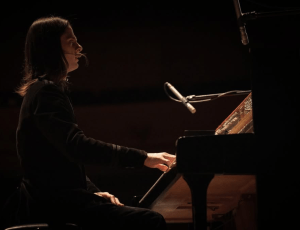
photo by @palchyk_oleg
Do war sounds and air raid sirens in electronic music trigger you, and how can the war experience be conveyed sonically to a foreign audience?
Sofiya: War sounds can trigger trauma, especially for those with post-war experiences. For example, a friend with multiple concussions can only sleep listening to recorded artillery shelling. These sounds evoke visceral reactions and illustrate the war to foreign audiences. Sound is universal, bypassing language barriers to foster understanding and compassion.
Are there specific tracks or albums from the past two and a half years that capture current events for you?
Our upcoming release on January 6th captures this period profoundly. Songs like Topoli and Svitaie were born out of the liberation of key Ukrainian cities and reflect the spirit of resistance and mourning.
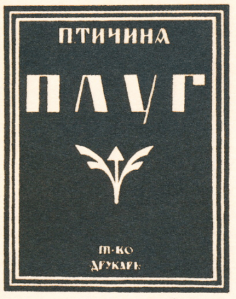
The Plow by Tychyna
What book, film, album, song, traditional dish, podcast, blog, artwork, building, or meme best captures Ukraine for you?
- Book: The Plow by Tychyna, though Kobzar by Shevchenko remains timeless.
- Film: Shadows of Forgotten Ancestors by Paradzhanov.
- Album: Light by Dakh Daughters.
- Song: “Chernobyl Zone” by Taras Petrinenko.
- Dish: Syrniki.
- Podcast: ASHOSH (about music).
- Blog: The Kapranov brothers’ history channel named after T.G. Shevchenko.
- Artwork: Anna Arkushyna’s “…En Ciel Enflammée” for soprano and live electronics, based on Lessia Ukrainka’s Contra Spem Spero.
- Building: St. Nicholas Church or St. Sophia Cathedral in Kyiv.
- Meme: Ostap Vyshnya’s Chukhraintsy and their five traits.
January 11, 2025 – SLOVYANSK
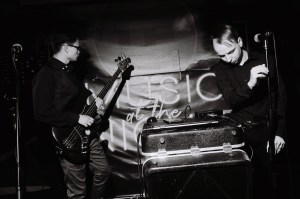
Ivan: Delirium is my only band; I founded it in 2017 and started my creative journey. During its existence, many members changed in the band until we came to the most well-played and long-lived, as they say, “golden” line-up: me on vocals, Yehor on bass and Roman (who has now stopped making or playing music) on guitar. That’s when we started giving concerts not only in Slovyansk, we began to be invited to various cities of Ukraine, so we actively played at gigs from the end of 2020 until the beginning of the full-scale invasion.
Yehor: My past was quite turbulent, I played in various local bands, at this stage my main bands are Delirium and Brief für frau Fisher.
Has the full-scale invasion changed the way you think about music and sound in general, and has it had an impact on your playlist?
Yehor: In general, the changes are indirect, our musical ideas were quite democratic even before the full-scale invasion.
Ivan: After the start of the full-scale invasion, we did not have the opportunity to play with the classic line-up, since everyone ended up in different parts of the country. Therefore, my friends from different bands helped me record the singles – this greatly influenced the sound and style of the songs, each musician brought his own signature sound and vision to the music. After reuniting with Egor, we also took a course on rethinking the sound, gradually moving away from the otherworldly darkness, replacing the sound with a more realistic melancholy.
As for the changes in the playlist: I am constantly trying to look for something new, so the playlist is steadily increasing regardless of what is happening outside the window.
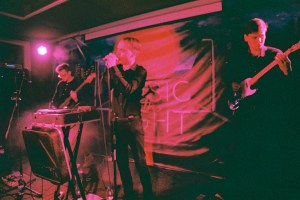 What can you tell us about the production and writing process for your latest album Схід?
Ivan: Before we started creating the album Схід (East), our core line-up took a nearly two-year break from writing songs together. Our last joint release was the previous full-length album Некролог (Obituary), which came out a month before the full-scale invasion.
After that, our paths diverged, we occasionally communicated, keeping in touch. The rest of the guys decided to take a break from the band’s activities, while I continued making music with friends from other bands, thus releasing several singles and touring the country with a number of gigs.
But still, at the beginning of 2024, Egor and I came to the decision that we needed to continue our creative work, and began to come up with new songs.
Yehor: Схід is the result of our work that we began in the spring of 2024. Having resumed our communication, in one of our conversations we spontaneously thought: “why don’t we record something?” After the start of the full-scale invasion, the band released only singles, and the last full-length album was released 2 years ago. Therefore, we decided to record a new album with a predominant guitar sound.
Having started writing with the development of “Годинник”(“Clock”), we eventually got a full-length album. Song after song, demos were made, sent to Ivan and at the same time he wrote the lyrics while I was choosing the sound and arrangements. I was writing the music, and Ivan was writing the lyrics, but there were exceptions. So, the work was very easy, fun and warm, albeit remotely.
The album tells about our region where we grew up and fell in love, what happened to it in the last years of the brutal war, our pain with all the modern twists and turns. Therefore, it is very relevant.
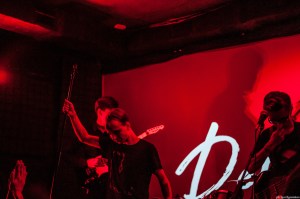
photo by Igor Egorenkov
How would you describe the post punk and dark wave scene in Ukraine and how do you see it developing under present circumstances?
Yehor: The post-punk scene is still pretty meager, there’s a lot of sameness and we’re seeing a decline in interest compared to the end of the 2010s.
Ivan: The post-punk and darkwave scene in Ukraine is experiencing a noticeable crisis. We have a small number of bands that continue to release albums and create music despite the ongoing war, but the public and local media are pretty indifferent to this genre.
You are from Slovyansk which has been on the frontline of the war since 2014. Are you still based there and what can you tell us about the current situation on the ground?
Ivan: I was forced to leave Slovyansk in 2022, so I can learn about what’s happening there from my family, as well as from Yehor, who continues to stay in the city. I think he can tell you about the current situation better.
Yehor: I live in the suburbs of Slovyansk, it’s quieter here. The city is deserted. Of the 100,000 residents, about 40,000 remain, the infrastructure continues to operate despite everything, but the atmosphere is frontline, explosions are constantly heard, and the news regularly reports another missile hit.
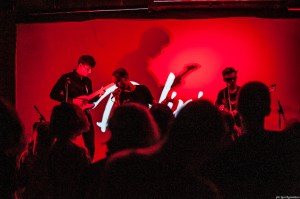
photo by Igor Egorenkov
Many Ukrainian artists have told me that in the first few months of the full-scale invasion they were unable to play music, let alone compose or perform new music. Do you share this experience and if so, what were you listening to, once you went back to music?
Yehor: Yes, there was a crisis of activity associated with complete apathy, this state occurs during all wars, due to one’s helplessness in an uncontrollable situation. One sees a horrific reality and cannot influence it.
Ivan: Since in 2014 we already experienced first-hand what it is like to be in a city where military action is actively taking place, the beginning of the full-scale invasion was perceived with the reaction of CJ from GTA: “Ah shit, here we go again”. We definitely didn’t stop composing, but playing was problematic – the city’s transportation, pharmacies and shops were very poor, not to mention the rehearsal spots, so any joint rehearsals were out of the question at that time.
I never stopped listening to music, because without it it’s empty and boring.
Has the role of music in Ukraine shifted from one of entertainment to encompass the expression of identity, communication, and emotional and physical survival?
Ivan: Definitely. Almost every artist expressed their emotions from being in a state of war.
Yehor: We do music not for the sake of entertaining ourselves or others. The bet has always been on giving people the opportunity to think.
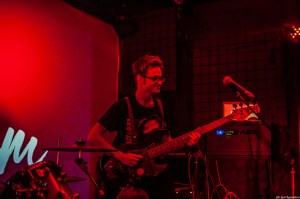
photo by Igor Egorenkov
Do you find war sounds and air raid sirens used in electronic music tracks to be triggering and how can one best describe the war experience to a foreign audience?
Ivan: They rather cause boredom, because the original and dramatic technique, if repeated a thousand times, turns into an uninteresting and uncatchy mainstream.
Yehor: Our experience of war is the most long-lasting, since we are from the city where it began not in 2022, but in 2014, when we were still forming as individuals. We know what explosions, shooting, life in fear, and death are from the very beginning. So, it definitely influenced our music.
Are there any specific tracks or albums from the past three years that have captured current events for you?
Yehor: When you are in this, there is not enough time for other people’s perceptions of events. Later it will be clear what captured this time better.
Ivan: The Last Passenger – “Втрачене літо” (“Lost Summer”). All these three years of a full-scale war feel like a bad dream, as if you fell out of life, and it goes somewhere past you, without your participation. This song hit the nail on the head with that feeling.
How aware would you say Ukrainians are of their musical heritage and did the full-scale invasion made you personally rediscover any unsung musicians or works?
Yehor: I don’t think it made us, we’ve always been curious about the history of music in our country and our region, we’ve always dug into retro bands of the Ukrainian underground, especially in the new wave and post-punk styles.
Ivan: If we take the Ukrainian audience as a whole, people are now more actively listening to domestic music, both modern and previously released. Regarding us, I agree with Yehor’s answer.
NEW RELEASE
For many years I have been collecting vinyl with Ukrainian reggae. And here it is in front of you. Usually reggae is music about love and happiness. But in this mix reggae is the music of the struggle for independence. Here you can hear special songs that reflect pain, struggle and indomitability. Among them are a reggae composition by Kuzma, a song from the album Kazak System and Taras Chubai, as well as tracks from a collection dedicated to my friend who died at his combat post. This mix is not just music, it is history, memory and gratitude to our heroes.
Хвоя будить сов ~ 2025 – Обрій духу тільки у дорозі
This album was recorded during the war in 2024 from the first take.
Thank you to my friends who took part in this work: Artem, Oleksandr, Andriy from “Kojoohar” project, Nata from “Casa Ukrania” band, Michael from “Art Abscon” project, “Stein” band. It is you who inspire with your example to immerse yourself in the world of melody and sounds and wonderful hours of immersion in yourself while working on the album. And let it not be calibrated, let the sound jump and in places the beat go crazy, but every note is played by hand, every word from the recorder is a part of history. The DIY principle. Someday, perhaps, I will regret that I did not make the album and the project at least minimally commercial, but I no longer regret the days of recording. And, listening to the album again, I rejoice.
SHARKO ~ Rybníček – Zastávka Reného Matouška a dalších libereckých signatářů Charty 77
Hello, dear listener,
This work represents the first creative attempt by a Ukrainian migrant, A. Sharko.
The project has been in the making for many years. Initially, it was named after the album’s title.
The title refers to a real tram stop in the city of Liberec, where the author resides. My fascination with this long name led me in my youth to study the Charter 77 and eventually to draw parallels with Ukraine’s own struggles. This connection is clearly reflected in many of the samples used in this project.
I come from the small city of Kherson, and I firmly believe in Ukraine’s heroic triumph.
And you, dear listener, keep fighting against evil with all your strength. Light is destined to prevail.
Thank you for supporting the local scene.
Cluster Lizard ~ Herts
The pulse of the path.
In a massive heartbeat, daring waves rise one after another. The unbreakable tide of the lightning dance, where life and death collide in the eternal vibration of consciousness.
In previous centuries, Ukrainian warriors invented an audacious macabre ritual called Herts, a courageous death dance. Before the battle, a few ruthless Cossacks would leave their ranks to perform a mocking dance right in front of their enemy lines, laughing and shouting insulting indecencies at them. Herts, a mixture of laughter and death, was a psychic attack to crumble and degrade the enemy soldiers’ morale.
And today our ancient Herts have returned to Ukrainian fighters to stand once again in front of the enemy, facing and mocking its grey unconscious masses of non-beings with fierce laughter.
This album is dedicated to those who can stare into the abyss with a smile. Fighters of the fight, for their home and their heart.
Saturated Color ~ Unknown People
Volodymyr Prysich aka Saturated Color is an electronic music artist based in Vinnytsia, known by his albums on Mystictrax – «Everybody Feels It» (2019) and «Phenomena» (2022), presents us his «Unknown People» EP – touching & weird breaks that organically intertwines drums and cascades of synthesizers into love lyrics. «This album is about parties in my native Vinnytsia, meeting people I don’t know… the feeling when you’re on the dancefloor and there are people around – that rarely happens in our city, but the idea came when I was playing this summer, and there were a bunch of people I didn’t know, and I’m was like damn I need to call EP like that 🙂 Everyone is dancing, chatting, and I’m standing there watching and vibin. I don’t know practically anyone :D»
Hockins ~ Bootlegger Stuff Part 4
The fourt part of the original #uagarage bootlegs!
equii ~ demos 2023-2024
some jams and explorations recorded during late 2023-2024
in-between spaces is heavily inspired by Eliane Radigue, Coil’s Time Machines, Eleh and is an exploration on minimal oscillators and liminal spaces
nostromo and sao juliao when the sun sets are variations on the same patch but recorded with different moods and settings
for Mika Vainio were heavily inspired by his work, R.I.P.
Natalia Tsupryk ~ bipolar
‘bipolar’ is a piece of modern classical music for two solo violins and a string ensemble of six violins, three violas, and four cellos. It is my reflection on the war in my home country, Ukraine.
Almost three years into the horrible Russian invasion of Ukraine, I find myself struggling to explain to my foreign friends the feeling of “bipolarity” we very often get in our daily lives. You rarely read anything about this war, or if you do – it is all about how Ukraine needs to negotiate and how tired everyone is. When I get asked, “How are things going?” I never know if I should tell the truth or nod. I usually nod. People struggle to understand that, despite it being very tough and grim, we still laugh, love, make art, eat good food and live each day just as it is. But we also see our dearest friends go to war. We see them come back with no legs. Often, we bury them. We have missiles and drones trying to kill us when we are asleep. When I hear, “You should give up/do anything to stop this”, I think about those Ukrainians who lost their lives and calmly accept that only people far away from such events can give this simple-sounding advice. Some say, “So many have died – stop this to prevent more deaths.” But we say, “So many have died – let’s make it not in vain.”
Living in today’s world feels bipolar.
Vlad Yakovlev ~ Пісні Повітряних Тривог
The indefatigable Vlad Yakovlev is back with an angst filled EP. Four tracks built on slow burning cello based drones teetering over the abyss. Only towards the end the tension seems to dissipate.
SETS
VIEWING ROOM
(Gianmarco Del Re)
 a closer listen