
 Over at Ukrainian Field Notes we have long been delving into Russia’s colonial history and have been finding the output of Ored Recordings, a label that has been unearthing music from the Caucasus for over ten years now, an essential tool in helping deconstruct the complex history of this troubled part of the world.
Originally hailing from Nalchik, the capital of the Kabardino-Balkarian Republic, Ored Recordings’ main focus is the music of the Circassian people, although they are happy to stray beyond the confines of Circassia to encompass the whole region, from Dagestan to Sakartvelo.
Founded by Bulat Khalilov and Timur Kodzoko from the band Jrpjej, Ored Recordings takes traditional music not as a historical artefact, but as a constantly evolving, living and breathing organism.
Their extensive liner notes are an integral part of their releases. To give a flavour of the context within which they operate, we reproduce an extensive quote from a pdf available as a free download with the album Şefitse: Circassian Songs of XX Century.
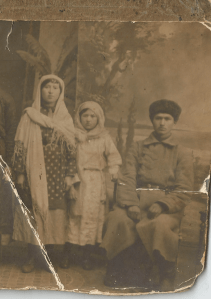
image from: Jrpjej – Şefitse- Circassian Songs of XX Century – Jrpjej Black Milk
“The 20th century is an important period for Circassians from a decolonial perspective. The consequences of the Russo-Caucasian War, Soviet cultural policies, and later contemporary language policies have created a set of problems with Circassian self-identification, self-exoticization, and the image of Circassians for others.
Perception of Circassian culture and history is largely built on the romantic and colonial narrative of Russian writers and officers, as well as European travelers, diplomats, and agents of the 18th-19th centuries. Circassians themselves read about themselves the thoughts and conclusions of those who either came to conquer the Caucasus or looked at the region with sympathy, but still with arrogance and condescension.
In addition, the inability to have public scientific or public discourse on the colonization of the Caucasus creates new complexes and traumas. Genocide and victimhood have become part of the identity of many Adygs. In the public consciousness of Circassians, the period of the war for independence and pre-colonial life is romanticized, and all events of the 20th century and the present are perceived as a continuous process of degradation.
We wanted to show that nostalgia and imposed romanticism do not allow us to see the obvious: our culture is not a museum exhibit, not a utopia, but a living practice.”
To discuss the above and related matters, we have reached out to Bulat Khalilov.
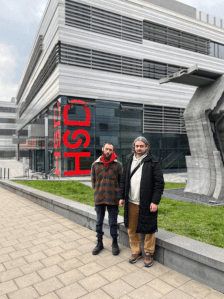 Could you introduce yourself and tell us about your background in music?
I met Timur when we were in our early 20s and started diving into the underground together. But even before that, we were both very interested in music. However, in my native Nalchik it was difficult to get interested in experimental music: in the 90s we didn’t have the internet, we didn’t have normal music media, and there were no good music stores. We just looked at cassette covers with skulls on them and something about “darkness” in the title. Timur grew up on Black Sabbath and especially Led Zeppelin. I was a goth and listened to everything I could find, from early Lacrimosa or Tiamat to The Sisters Of Mercy and Bauhaus.
Later, when we got to know each other, we discovered noise, industrial and black metal. Darkthrone and early Mayhem are still in our players and hearts. And there was also a lot of dark folk like Current 93 and various near-folk indie music: Sigur Ros, múm and stuff like that. In general, we had little interest in Circassian and North Caucasian music. Because it was mostly pop songs, and I was more interested in harsh noise wall and power electronics.
Ored Recordings is considered “an active player in cultural resistance, memory preservation and updating, and decolonisation efforts in a region with a complex history of Russian colonialism and oppression.” Do you consider yourselves activists rather than musicologists?
In the classical sense, we can hardly be called activists. Activists go to protests, openly express dissent and help those in need. For a long time we tried to be apolitical and to raise political issues only in passing. Perhaps some part of our activity can be called activist: since 2015 we have been talking about Circassian genocide, Russian colonialism and the colonial structure of the world music industry. And since 2022 these topics are our priority. In general, if we take the Circassian context, I believe that any deep work with one’s culture, history and modernity is already part of activism and resistance. But it is also important to try to break down internal Circassian colonial attitudes – self-exoticization, nationalism and myth-building.

image from Jrpjej – Şefitse- Circassian Songs of XX Century – Jrpjej Black Milk
Is it fair to say that the Soviet cultural policy was designed to erase regional diversity in favour of a homogenised version of folk music and if so, is it possible to differentiate between genuine and artificially constructed traditional music?
Timur and I see Soviet cultural policy as unambiguously colonial. But in reality we cannot call “Soviet traditional music” artificial and not real. It was created not only by ministers and officials, but also by Caucasian musicians who sincerely shared Soviet ideals and tried to do something new in this aesthetic. So today we are trying not to find some “true” culture, but to show all the diversity of approaches to culture in the region. The problem with the music supported by the state at that time was that this specific kind of music filled all the space and squeezed out all other practices.
In one interview with Struma+Iodine you stated, “The more you work with music, the more you understand the political context. The colonial reality becomes more and more unpleasant.” I often find myself arguing with people who consider Russia’s aggressive defence of its sphere of influence an inalienable right. In your opinion is this down to the superiority of Russia’s PR machine, a misplaced allegiance by those on the left who remain nostalgic about the idea of the USSR or just sheer ignorance?
All together. And it’s also part of Western colonialism, which looks at the whole world through state borders and passports. The Western world is used to trusting the system and official data, and according to official data the whole territory of the Russian Federation is a monolithic territory and everything that happens on it is an internal process. I have a Russian passport and in the nationality column everywhere it says Russian. But in Europe in general the concept of nationality and ethnicity are mixed up, so for everyone here I will be Russian. It doesn’t matter how much it corresponds to the historical context or my self-identification.
People don’t know and don’t want to know because the picture of the world becomes even more complex and it’s as if it’s impossible to sort out. I would accept this fact calmly if those people who don’t want to understand these issues would stop actively debating on these topics.
How does one avoid the traps of orientalisation?
It’s hard. I think even we at Ored Recordings share some Orientalist clichés about our culture without knowing it. I think it’s important to try to seek out information and different perspectives. Education is important. The only thing is that you have to stop looking for confirmation of a point of view. You have to stop thinking of your people as savages to whom the empire brought civilization. And you also need to stop thinking of your ancestors as super beings who were the wisest in the universe with the most unique and best culture in the world. Both of these vectors are destructive.
How does one avoid the “museification of traditional music”?
We need to stop treating traditional music as a sacred artifact from the past. This is our culture, which can be approached in different ways. It’s no big deal if someone (like me) finds new interpretations vulgar, bad, or boring. It’s much more dangerous when nothing happens to traditional music.
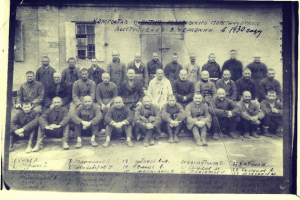
image from Jrpjej – Şefitse- Circassian Songs of XX Century – Jrpjej Black Milk
There are 21 republics within the Russian federation although by 2017, the autonomous status of all republics was formally abolished, making the republics politically equivalent to the other federal subjects of Russia. What can you tell us about the status of indigenous languages within those republics?
I will only talk about the Circassian situation. Officially everything is great. Our language is considered the state language in 3 republics. And recently in Moscow they even signed some program to support the languages of the peoples of the Russian Federation. But all these official statuses have no actual force. The state does not support the language in any way. Everything rests on activists and horizontal ties. We are usually told to stop whining, because language begins with the family. This is true, but what is the state for if it will not help people with this issue?
While watching one of Vincent Moon’s documentaries about Circassia I was struck by one of the interviewees stating that some of the words used in their songs were no longer in usage. Does the preservation of musical traditions guarantee the preservation of a specific way of life?
I don’t think we should reclaim the pre-colonial period and focus heavily on restoring a “specific way of life”. Cultural preservation and development is more about building a new future. Much that has disappeared is worthy of oblivion. But the fundamental point is that we have to figure it out for ourselves and decide what from the culture of the past is interesting to us, and what should be left behind. This should not be decided by the colonial government or business. Besides, working with traditional music is about culture that is alive now, not centuries ago.
Now that Ukraine has also recognised the Circassian Genocide on January 9, the second country to do so after Sakartvelo, do you see further countries following suit?
Well, for me it’s great news. But I don’t think a lot of countries will do the same. On the papers everybody support people and stand against dictatorship, but in reality Western countries will not recognise Circassian genocide because they are ok to have good relationships with Russia. But I think it’s another really important step for Circassian people!
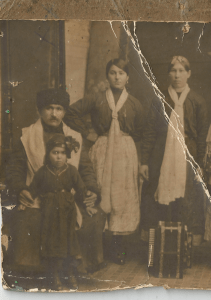
image from Jrpjej – Şefitse- Circassian Songs of XX Century – Jrpjej Black Milk
What are the greatest challenges you faced on your field trips and in recording music?
The majority of traditional music performers in the Caucasus are outside the music industry and do not see themselves as musicians at all. The main task and difficulty is to set them up to perform whole compositions for us, not pieces. People are used to being recorded by television, which needs a minute and a half of fragments with beautiful mountain landscapes as a background. It’s a challenge to set them up to work for a long time. It’s also important not to drink yourself to death during the recording.
From post-punk, cold wave, industrial and noise your interest moved to folk and traditional music. How do you feel about younger generations using folk motifs and elements within electronic music to create “turbo-folk” hits and can this be defined as cultural appropriation?
I don’t think this is about cultural appropriation. Young (and not so young) North Caucasians make music that they like. Or the music that can make money. I can’t listen to most turbo-folk or pop in the Caucasus. I think there are a lot of simplifications and oriental clichés in this music. But that’s just my opinion. In the same way you can accuse Ored Recordings of moving local music in the direction we like. Just because we sound more like Lankum and quote Mayhem doesn’t mean that modern Irish and Norwegians from the 90s are closer to the North Caucasus than the post-soviet estrada and images of Caucasian hooligans. It’s just that we construct narratives and aesthetics that are closer to us.
What album, amongst those you have released, are you most proud of?
We’re really proud of all of them. We can be dissatisfied with our past liner notes or the way we recorded the sound. But in terms of context, history and music – all the albums are interesting. In terms of our curating and producing, the most complete albums are the two Jrpjej releases. Taboo and the first half of Sefitse.
Has the adoption of the foreign agent law sound the death knell of Sakartvelo and how do you see the country being able to retain its independence under present circumstances?
It is better to ask the Georgians here, not us. But we spent a year and a half in Georgia and this country gave us a lot when we needed it. Absolutely all of our friends in Georgia oppose this law and the current corrupt government. I hope that the people of Georgia will be able to defend their future.
Finally, what is currently on heavy rotation on your playlist and what were the most interesting musical discoveries you made in 2024?
We have only recently been able to exhale and get a stable status in Germany. So it wasn’t much time for new music. I’ve been trying to catch up on everything lately though. Absolute favorites of 2024 for me are Hmot, Kali Malone, Shovel Dance Collective, Stick In The Wheel, Lusor.
The Caucasus scene has been harder to follow from here, but glad to see the Circassian scene evolving. Look out for Chapsh, Shible, Bashir Khatsouk, Vynd, Arash, Is Gucho and Myst.
(Gianmarco Del Re)
 a closer listen