
 Over the past three years we have covered many genres, with Ukrainian Field Notes often looking more like Mixmag than ACL. With the current episode we stray into KERRANG! territory, so maybe this should have been called Ukrainian Field (Metal) Notes.
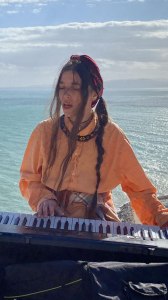
But before we venture into the largely uncharted (for ACL) waters of grindcore and extreme metal we return to Crimea with Aziza Eskander and pop over to Dnipro to talk to Toucan Pelican, fresh from his debut album Toucan.
Following from there we discuss nationalism with Mikyola Jack from White Ward, and V.E.L. a one man metal act from Odesa while Ezkaton pays tribute to his own brother and to a fellow musician who both died on the front line with Frontcore knocking on Hell’s Gate.
 Back on “safer ground,” we chat to Pøgulyay about making music with instruments created from military ammunition, we hear how Hillmer learnt to produce with GarageBand on his phone in Mariupol together with Valmaid and Moon Projection reveals his multiple aliases.
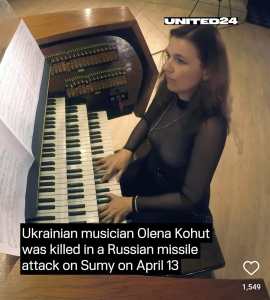
Over at the frontline city of Sumy we chat to Bondeni about the local scene, – this only a few days before a ballistic missile killed dozens on Palm Sunday in the city centre including Olena Kohut, a soloist and organist of the Sumy Regional Philharmonic.
In the meantime, Schattenfall abandons the German language in favour of Ukrainian, in Dnipro Dada vs Evil understands music his own way and They Came From Visions don their twilight robes, while Act Now Records calls a gathering of friends, and Vyr Muk notices malfunctions in his general thinking process due to the constant shelling of Kharkiv.
Furthermore, Deepswarming Bloodmagik see mosh pits becoming less violent, while True Tough experience the exact opposite.
To round things off, Olha Marusyn learns a piano tune over the sound of waves, Anton Sominaryst likes to soften his tracks with a touch of opera and folk music and Death Pill talk about the making of their long distance sophomore album.
There’s no podcast this month, we’ll be back in May. In the New Releases section we find the latest from XCTLVR, 58918012, monodont, Oleksiy H / Sitka, Tsatiory, Human Margareeta, Shadow Unit, Brainhack Musicbox, and the fourth installment of the VA fundraisers Drones for Drones from Kyvpastrans.
MARCH 28, 2025 – UKRAINE
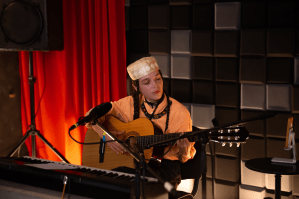
I am a Crimean Tatar Ukrainian artist who creates paintings, theatrical performances and music, an activist and volunteer who dedicates every moment of my life to the emotional mental physical liberation of my Motherland. My love for music began in childhood, when I studied Crimean Tatar folk songs, and took an example from the most brilliant singer Sabriya Eredzhepova. I also listened to my dad’s favourite rock music. In tenth grade, he even formed his own rock band and wrote his own songs. But fate turned out differently, he became an engineer and also devoted his whole life to returning to his Motherland and to the survival of his family in the aggressive environment of Crimea where Crimean Tatars were treated as strangers.
As a child, I never thought of becoming a musician. I was fascinated by theatre. So, after school, I enrolled in the theatre faculty at the Kotlyarevsky University of Arts and studied for 5 years at the animation theatre in Kharkiv. This unique art form turned my worldview upside down. It taught me to create a living plastic story from the world of fantasy and symbols.
In 2011, I took part in the Ukrainian version of the X-factor. On the stage of my first big performance, I realized that music is what I love most of all. I could live without theatre, but not without singing. In the same year, I recorded my first album to the words of the Kharkiv musician Dityna Doshu. This was the stage of creating rock music under the influence of a truly specific Kharkiv musical community. In parallel with the main project, I created an ethnic experiment with a Kharkiv electronic musician – it combined folk Crimean Tatar music with electronic music. I began to see music in the geometry of movements and colours, and melodies emerged from space itself. I understood that I was a synesthete. Gradually, I realized that I wanted to leave Kharkiv and return to Crimea to create Crimean Tatar folk music. In 2012, I took part in the festival “Eastern Bazaar”, where I experienced my first big disappointment. I was faced with corruption, and with a condescending attitude towards the modern interpretation of traditional folk music.
In 2012, at the invitation of my friends, I decided to go to Moscow to find those who would understand my view on music. In 2013, I created my first artistic project “Mystic Rose”, and began work on my first album Will in the style of ethno-trip hop inspired by Massive Attack. The album included 3 Crimean songs and 11 songs in russian.
Everything changed due to the occupation of Crimea in 2014. My whole world changed. My songs gradually turned into a deep study of war and freedom, although still mostly in russian as I hoped to inspire russians to resist and fight through music. By 2015 I stopped singing in the russian federation, and in 2016 I moved to Ukraine, because I understood that I had to make a choice. I wanted to see the renewed Ukraine after the Revival. I envied my friends who saw everything through their own eyes.
Then, in 2018 my father died. I never met him on free land. I did not sing to him. This was the second blow for me. For a while I lost my meaning because I realized that I was making this music for him, I wanted him to be proud of me. I wanted him to be sure that he had given me life and cared for me for a reason. I really believed that this was possible. The year 2022 represented in a way also my death, the death of illusions, and the death of meaning. I couldn’t eat or drink, I couldn’t sing. I started drawing a lot, and shared my views on the present, the war, Crimea and Ukraine. I talked to the whole world through drawing, demos and poetry. Then, after long reflections on the unimportance and weakness of art during this time, I finally realized that if art were unimportant, then our enemy wouldn’t have killed the best people for centuries, wouldn’t have appropriated names, and wouldn’t have stolen artifacts and treasures. I completely switched to Ukrainian, translated russian songs into Ukrainian, began writing new music in Ukrainian, as well as Crimean Tatar and other languages of the world. And that’s when Aziza Eskender was born.
 Has the full-scale invasion changed the way you think about music and sound in general, and has it had an impact on your musical practice and your playlist?
Yes, absolutely. First, I thought about the meaning of art. I realized that even if you are a brilliant artist, if you serve evil, your art is worthless. And many artists whom I respected betrayed humanity and sided with absolute evil. This made me think about my values, about who I really am, and why I exist. At some point I realized the insignificance of my life; if I die, Ukraine will continue to fight, if Ukraine disappears, there will be nothing, there will be no meaning. I began to see the world as a whole and perceive every person as myself, close and dear. I realized that everything I did before was a mistake, step by step I understood the naivety of my efforts to change the russians, because the war was not happening because of putin, but because of the will of the russians, their imperialism and the slavery in their hearts. If you delve deeply into russian culture, you will find the same narratives that putin talks about.
The complex of a small person who does not influence anything and most importantly does not want to influence is manifested in everything. Even the best examples of russians who spoke out against putin are full of this irresponsibility, attempts to whitewash russians, trying to lift sanctions on oligarchs, just to continue to have investments in their culture. I realized that by creating art in the russian language, I was a part of this monster. I began to speak Ukrainian, to create in Ukrainian. However, many of my old songs in russian absolutely covered the present, although they were written eight years ago, ten years ago, they were simply written in that language, so they did not reach the their intended audience.
Also, through the Ukrainian language, I began to discover the Crimean Tatar language for myself and gradually began to create songs in my native language. For me, this is something unique, something that no one has heard before, Crimean Tatar trip-hop, music in my native language that speaks of broad meanings.
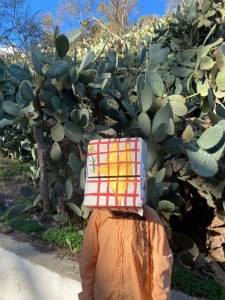 What can you tell us about the making of and the production process for Colony, your project about the struggle for one’s own identity, one’s own freedom and the freedom of one’s people through art?
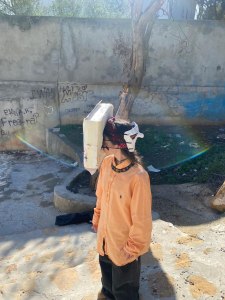
Colony is a project about me, a colonized person, about a colonized land that is now held hostage by the russian federation, about Crimean prisoners. This is the story of a person without a face and without an identity who has lost their roots, but is trying to recognize, to recognize their truth. This is a synthesis of native art, animation theatre, dramatic theatre of dance, music, painting, performance. Because in essence, I have been going to this project all my life.
In it, a person with a box instead of a face, in a box in which a free bird lives, tries to escape from the cage, and it is through fantasy, through his own art, that he is freed in the middle and dies. I created this project with the support of the Goethe Institute and the team of «Rollers» of the famous Ukrainian blogger Rick the Ukrainian, and took this project to Tunisia, to an Arab country, because I wanted to talk to someone who knows nothing about Us, and doesn’t know about Muslims being deported, and discriminated against by the russian federation. I went by bus and ferry, because it was an ecological project. I travelled 4000 km to talk about our culture on the African continent. The thing is that I believe that it was the imperialism of the world that allowed russia to occupy Crimea. Therefore, we must decolonize the world so that humanity understands that we can no longer live like this if we want to see our future.
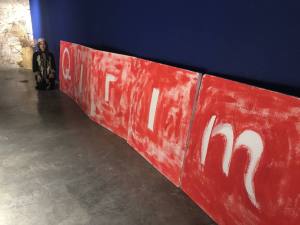 What are the most common misconceptions about Qırım (Crimea) you find yourself having to counter?
For different regions of the world – these are different misconceptions. On the African continent, I found that people in general believed that the war was over, did not know anything about Crimea, and even more so did not know that Ukraine has its own Muslims, who are the indigenous people of Crimea.
For Turkey, the narrative is that we are Turks, that we are brotherly peoples, and are no different is quite widespread. However, this is absolutely not the case, there are no more than 9% of us of Turkic origin. We are the indigenous people of Crimea.
Among Ukrainians, there is sometimes a stereotype that we are traitors (still old narratives of the Soviet era), that we burned Kyiv and are descendants of the Golden Horde. Many Ukrainians are still afraid to grant us a special status in Crimea, because they think that in this way we will betray Ukraine with Turkey. And this is also stupid, although Turkey is a partner for us, with some imperialist threats.
For the russians – we are total enemies, stupid, and second-class citizens. In their chauvinistic stance there is no place for us, as free and educated people.
Russia still does not recognise Crimean Tatars as an indigenous nation, so how does one decolonise own’s own mind?
It’s not that they don’t recognize us, it’s that we don’t recognize them. How can they recognize us if they are the occupiers? With this question you legitimize their power in Crimea [Russia considers Crimean Tatars a “national minority,” and is yet to recognize them as the indigenous people of Crimea].
Decolonizing the russian federation is possible only with the victory of the free world and the liberation of Crimea by military means because the aggressor lives by war and will continue to destroy all living things. My people are still afraid of repeated deportation and total annihilation.
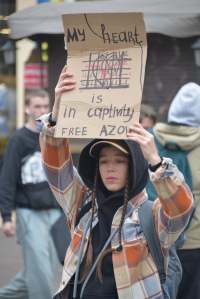 For the uninitiated, how would you describe the Crimean Tatar musical tradition and how have you been approaching it in your own work? In other words, do you believe in preserving the purity of folk traditions or does it benefit from a modern approach?
Why do I adore Crimean Tatar folk music? Because if you play the most famous Crimean Tatar dance melody “Haytarma” slowly, you get a very tragic song. Crimean Tatars, thanks to their music, have turned their own history into brilliant works.
Genius in the combination of fast rhythms with deep symbolism, Sufi symbolism, when some simple life meaning turns into brilliant lyrics. From the very beginning of my journey, I saw the future in the combination of ancient music with participants’ understanding, but so that the tradition would not be destroyed, and modernity would allow this music to be heard by the whole world, to become the achievement of many peoples, and therefore not to be dead, but to continue to live in the hearts of people.
The unique music of the Crimean Tatars was born from the unique nature of Crimea and its thousands of years of history.
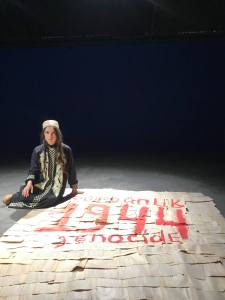
Jamala is probably the most popular, or internationally renowned singer of Crimean Tatar origin, having won the Eurovision Song Contest back in 2016 with the song “1944”. How important was her win?
I am not a great fan Eurovision. In most cases, the music is derivative. In addition, I am not into competitive thinking. I dream about music that is alive, unique, strange, different. That said, the performance of Jamala was inspiring and of huge support for my people, because it told the true story of Crimea to all those watching Eurovision around the world. It was a moment of great happiness!
 On March 13, Ukrainian president Volodymyr Zelenskyy took part in a state Iftar in Kyiv alongside Muslim Ukrainian servicemen, representative of the Crimean Tatar Mejilis, diplomats and religious leaders. The event, initiated by Zelenskyy in 2023, has since become an official annual tradition. Russia has also been waging a war against religion which is not something that is sufficiently discussed. How important would you say is it to embrace Ukraine’s multifaith and cultural diversity?
It seems to me that Ukraine is making great strides in this direction. Although russia is constantly pushing the rhetoric of Ukrainians as “Nazis”. Ukrainian nationalism, which used to be so feared in Europe, is about the freedom of all nations and respect for all religions and confessions, as long as people who profess different visions respect the laws of Ukraine and honour its culture. It is about mutual love. Of course, as a country that went through the occupation of the Soviet Union, genocide, famine, and repression, we still have many remnants of the Soviet Union, but I see very positive changes in this direction. Also, the Crimean Khanate – Crimea – is an example of a centuries-old peaceful coexistence of Muslims, Christians, Jews, “Krymchaks” and Karaites. Crimea – can become an example for the whole world.
The world must also understand that the moscow Patriarchate is an organ of the FSB. It has long since transformed and has probably been an organ of putin’s government and the spread of russian Nazism from the very beginning, which Ukraine is now fighting against.
 I don’t know when you left Crimea, but how would you describe life there before the annexation?
Before the annexation, life was different in different periods and for different generations. When our parents and the older generation of those who were deported returned to Crimea, they were happy to be back in their homeland. They did not pay attention to the problems they encountered upon their return. Our parents sold their property in Uzbekistan for a song and started building on bare ground. The Crimean Tatars were not given back their property, where they once lived, mostly in the centre of the old parts of the cities and on the southern coast. By and large, we were given plots in the steppe and central part of Crimea, in the so-called ghettoes, on the outskirts of large cities and villages. When my father returned to Crimea, he spent a whole year eating only pea porridge to be able to build the walls of a house for us to live in.
The russian were afraid of us, they called us “black-assed”, “churky”, not russians. My mother, who is an obstetrician and gynaecologist, had to work as a waitress and a saleswoman, and so after a while she simply lost her skills. Only after some time she became a doctor at the emergency room and worked there for 13 years. My father had to work as a seller of salt, although he was a skilled builder from Uzbekistan. It was only after some years that he began to work again as a builder of mains pipes.
When we returned, we immediately began to hold demonstrations to commemorate the 1944 genocide, we were proud to be Crimean Tatars. I remember as a 4 year old reciting the words of the prayer, even though I didn’t know the language. But already as a teenager I felt this attitude from the russians who had taken over our houses. We were a threat to them and treated as aliens not as the indigenous people. But as a child, you don’t understand this, you try to be like them, to be better so that no one will call you stupid.
When I took part in the Ukrainian version of the X Factor, a very famous music producer at that time did not want to hear a song in Crimean Tar, a language that he did not understand. At that time, Ukrainians knew almost nothing about us. I taught at the Kharkiv National University of Arts and my friends did not know anything about my people, and Crimea was a resort for them.
But in Crimea, Ukrainian culture and language changed the russian chauvinists. Pro-russian people got used to the Crimean Tatars, understood that we are qualified professionals and a very peace-loving people. They also got used to a free Ukraine, although Ukraine and Crimea were still under the influence of russian propaganda. The essence of Ukrainian philosophy changed their worldview, especially that of young people who began to identify as Ukrainians.
 On a general level, would you say that the role of the arts in Ukraine has shifted from one of entertainment to encompass the expression of identity, communication, and emotional and physical survival?
Ukrainian art has always been deep, about the struggle for the liberation of one’s own identity as Parajanov’s films and the poems of Vasyl Stus, who was tortured in the camps, testify.
Ukrainian artists have always been of international standing with a great vision. But because of the russian terror and the ban on the Ukrainian language, we lost many. No one in the world knew about our executed artists, but they knew about Pushkin, or about Zvyagintsev. Since the full-scale invasion, more people realized how russian culture works with russification, soft power, appropriation of artists, theft of valuables, artifacts and history.
However, Ukrainian culture is in a great renaissance. Every day is a struggle for the survival of the country. And culture is the basis of statehood. We manifest our independence through philosophy and meanings.
I can also highlight how incredible documentary film has become now. I am simply sure that the best documentary films are now being made in Ukraine.
Are there any albums since 2014 and the annexation of Crimea and the full-scale invasion that you feel have captured the unfolding events in a meaningful way?
In fact, a large part of the music of the Crimean Tatars is the history of the terror of the russians, which has lasted for centuries. Especially now my music is a reflection of modernity, war, colonialism, death and birth. I used to think that only music and art can be a manifesto, and the person remains in the shadows, without banners and slogans. But now I am deeply convinced that everything, every little thing of life, creativity and movements should serve the liberation of my homeland and help our soldiers.
 Which book / film / album / song / traditional dish / podcast / blog / artwork / building / meme best captures Crimea for you?
To be honest, I don’t know at the moment what would be the best way to portray Crimea, because as a colonized person I am trying to learn about Crimea step by step. But I can recommend some wonderful works:
Book – “Kraina Crimea” by Oleksa Gaivoronsky, in it you can learn about the civilization of Crimea, about the crimes of the russians who destroyed and razed to the ground the memory of this civilization, and how important it is to de-occupy Crimea as soon as possible in order to protect what is left.
Music – the legendary singer Sabrie Erezhepova, and her performance of folk songs is what inspired me to sing our songs. She is a genius and a figure valuable to the whole world.
Song – Listen to the song by Sabrie Erezhepova – “Erezhebym.”
I drank the best coffee in the world in Crimea, in my hometown of Kezlev. Coffee is not only about the beverage, it is about tradition and meanings. Coffee can tell a lot about my people.
The best dish is my dad’s salad, I don’t know if I can find anything tastier in this world. I also remember how my mother used to cook manti with pumpkin onion and black pepper for me as a child. It is incredibly tasty.
Building – A unique building can be found in my city – Tekiye Dervishes, which translates as Dervishes’ monastery, XV-XVI centuries. The historical monument consists of three buildings: the khanaqah (tekiye), the Shukurla-Efendi mosque and the madrasah. This is a complex of monuments of national importance.
Film – Alim is a Ukrainian Soviet silent black-and-white film about the struggle of the Crimean Tatar peasant Alim against the rich in the 19th century. The film was shot in 1926 at the 2nd State Film Factory in Yalta of the All-Ukrainian Film and Photo Department.
MARCH 31, 2025 – DNIPRO
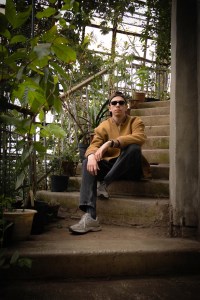
My name is Illia Masko. I work full-time as an interior designer and music is my long-time passion. I started creating music in 2019 with my first trip hop project – Postfactum. We’ve released several albums but I’ve decided that I want to move on to something more experimental and raw.
Has the full-scale invasion changed the way you think about music and sound in general, and has it had an impact on your setup and your playlist?
Yes, but mostly on songwriting (which doesn’t apply to this album). Now I can’t think about writing lyrics in any other language than Ukrainian. Before the invasion all my lyrics were written in English. But now I finally understood how important the language really is. It is our duty as Ukrainian musicians to spread and develop our culture. And using our language is a key element.
My playlist is leaning more toward our local scene now. We have a lot of awesome musicians.
What can you tell us about the production process for your latest album Toucan?
I recorded a lot of takes and samples. Usually, I like to see the music as LEGO set. Where I take different parts and arrange them in some particular way. I like to “bake” the audio, cut it manually and rearrange it to create some interesting sounds, transitions and effects. The downside of it is that I lose all my MIDI files in the process. Most of the tracks are short and have different sections so the listener won’t get bored with them.
 In the liner notes, you mention you recycled field recordings and synth jams. What can you tell us specifically about field recordings? Did you use them for their texture or rhythmic qualities, or do they convey the echoes of specific locations for you? Also, would you say your acoustic environment has changed in a significant way since the full-scale invasion or at least your relationship to it?
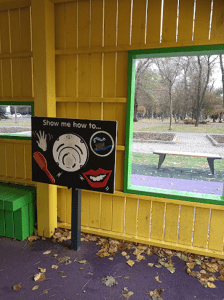
Every time I go outside, I try to take a recorder with me. For example, there’s an interactive playground near me with a lot of interactive things – you press a button, and some robotic voice tells you what to do. From there I recorded a voice sample for “can you point”.
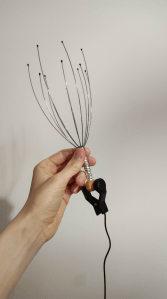
In “plastikBird” the sound of the bell is actually a head massager to which I attached a contact microphone.
Or sometimes I record some background textures. People in the shopping mall making noise, doors closing, the printer sounds… and so on. My main goal is not to highlight some specific location with field recordings but rather add some textures and life in the robotic electronic sound. To make it warm like fire in the fireplace.
 How would you describe the music scene in Dnipro and how do you see it developing with so many of its actors being in the military?
It is struggling (like any non-mainstream electronic scene here) but it keeps the quality on a very high level. Many musicians in the military continue making music. For example, Potras23 album (PTSR) is one of my favourites from last year.
The album is mastered by Yuriy Bulychev, a well-known musician in the Dnipro scene. Would you say there is a specific Dnipro sound?
Maybe. For me Dnipro should sound raw, industrial-like, a bit minimalistic (like Ship Her Son music or Kurs Valut). Considering that I used field recordings made on the streets of Dnipro, it really sounds a bit like Dnipro. But my main focus was on the music, not the location it was produced in.
Has the loss of nightlife due to martial law had an impact on the electronic music scene and how has that impacted you on a personal level?
Before the invasion we had events to relax and dance, now it’s different. Every show I visit is made to raise funds for the army and of course it has an emotional impact. Still I think we could lose our minds without these distractions and having a living electronic music scene helps maintain a balanced mental state.
Are there any Ukrainian albums from the past three years that you feel have captured current events in a meaningful way?
I absolutely love Warнякання by Anton Slepakov / Andrii Sokolov. For me this is the most important release of the last three years. And I highly recommend buying it on vinyl.
 Are there any specific tracks or albums you have stopped listening to because they might be associated with difficult moments over the past three years since the full-scale invasion?
I think that applies to any war-related songs or albums. I am not ready to listen to these songs while the war is still going. But they are very important, especially for future generations.
Is there a specific genre of music you listen to to unwind, relax or simply forget about current events even if that might not be possible?
Oh yes. I love to listen to DJ sets on YouTube (mostly techno and house) when I am working on my design projects or simply relaxing.
Which book / film / album / song / traditional dish / podcast / blog / artwork / building / meme best captures Ukraine for you?
Ukraine is very multidimensional to me. It’s a beautiful country with beautiful people, going through very hard times. So, it’s hard for me to pick something specific.
What I love about Ukraine is our sense of humour and willpower. We can create memes even during the war, we volunteer, we help each other. And we are also very hospitable.
APRIL 2, 2025 – KYIV
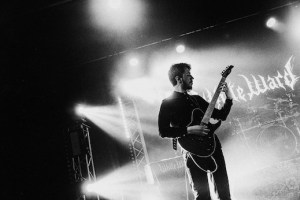
My name is Mykola Previr. I am a professional software engineer, but also do music. I was born and raised in a small town of Skvyra, which is in the Kyiv region. I don’t have any musical education whatsoever. In my teenage years I picked guitar due to my older brother. After graduating school, he moved to Kyiv to study in the university, where he started playing bass and joined a couple of bands. Of course, he would often come home to Skvyra and bring his or his friends’ instruments with him. I played around with them and decided to teach myself to play the guitar.
Later, when I myself entered university and moved to Kyiv – I started playing in a band and writing some music. Eventually me and my brother formed Zoanthropy (he is on vocals), and later I joined one more band White Ward. Funny thing is – White Ward band members are mostly from Odesa, which is almost 500 km from Kyiv, so it was a drastically different format for me compared to Zoanthropy.
Has the full-scale invasion changed the way you think about music and sound in general, and has it had an impact on your setup and your playlist?
I don’t think full-scale invasion affected my music taste or playlist much. I listen to pretty much the same music I’ve been listening to before 2022. What I noticed is that I don’t seek and discover new music, like I used to. But I think it’s mostly due to my age. Somewhere on the Internet I read that on average a person stops looking for new music around 30. That describes me perfectly. Of course, I am listening to the new albums of the artists I like, but I can hardly name any new music discoveries in the last 3 years.
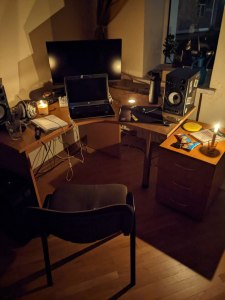
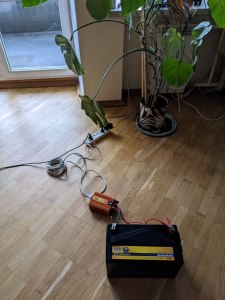
blackout setup
What can you tell us about the production process for your EP Covey which was produced during breaks from blackouts and what can you tell us about its instrumentation which includes the use of the cello?
I am sincerely and pleasantly surprised that someone is interested in my post-rock EP, besides my friends and Instagram subscribers. So, thanks for asking.
Besides playing in Zoanthropy and White Ward – I was writing some music just by myself, whether it is just a riff or a full demo. Most of that material never saw the light of day and is just stored on my hard drive (and backed up to the cloud of course). Until 2023.
The story goes like this: White Ward had a big European tour planned for the Spring of 2023. A month-long tour was agreed on and booked, we applied for UK visas and were ready to go on tour using a permit from the Ministry of Culture to leave a country, like we did before in Autumn 2022. Because as you might know male citizens of Ukraine aged 18 to 60 are prohibited from leaving Ukraine during the period of martial law.
But suddenly, right before the tour, the rules for artists were changed by the ministry, and we had to cancel our tour due to inability to leave the country.
So, with tour, necessary preparations and band practices out of the picture – I had more time to myself. And now when I was picking guitar – I could just fuck around, record some pieces on the phone or onto my computer via the audio interface (if there was power at the moment).
Speaking of which, blackouts in Ukraine started around October 2022, when russia started targeting civil infrastructure before the upcoming winter, using the comparatively cheap Shahed drones to increase the scale of attacks. I remember the first time seeing one on the 17th of October when a few of them hit a power station around 1 km from where I lived at the moment.
blackout setup 2
In time most of the families and households assembled their setups to be power independent for days, if not weeks. Generators, car batteries, power-stations, StarLinks, you name it – it became an average commodity for a Ukrainian in 4-5 months after blackouts started, when the deficit for those items dropped down. But in the beginning, it was different.
The EP production process looked like this: I would go through my musical drafts folder I mentioned earlier, pick one that caught my ear and tried to develop it, add more meat, and make a complete song of it. When there was no power – I would light up candles, play the guitar unplugged and record some bits on my phone.
Now to the story about adding cello. While working on Zoanthropy songs with the guys we were adding more neocrust components to our sound in the new songs. One of the ideas was to have cello accompaniment to the heavy low-tuned riffs, which is pretty common for the genre. But we never had a chance to record those songs, because the full-scale war started, and our drummer, Oleksandr, joined the army.
You can definitely hear neo-crust influences on “Prison Walls”. As for other songs – I hope we will record them someday, when times are easier and Oleksandr returns back from war.
So, this lingering idea to write a guitar-based music with cello added to it was on my mind. I wrote a simple cello line in GuitarPro, found a Ukrainian cellist on Fiverr (it appeared that we have some friends and acquaintances in common) and asked him to expand that line for my track. He recorded what I wanted from the second try, I believe. I didn’t even use all the stuff he recorded, so it wouldn’t be too much for such a minimalistic track. I really enjoy the resulting track, and it’s probably my favourite one to listen to on the EP.
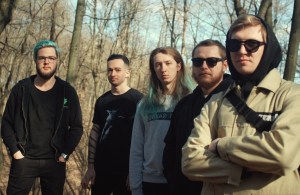
Zoanthropy (2019)
How would you describe the metal and post metal scene in Ukraine and are there any specific characteristics that set it apart? Also, how do you see it developing under present circumstances?
Well even before the full-scale invasion there weren’t many post-metal bands in Ukraine. I could name a few besides Zoanthropy: Nug, Nonsun, Amber Platypus, Zlyden, Mother Witch and Dead Water Ghosts, Dreadnought in the Pond and some more. Back in the day post-metal bands were usually playing gigs together with stoner bands (the genre became pretty popular in Ukrainian underground in the early 2010s after Stoned Jesus success), sludge, post-black metal.
Metal, in general, was doing pretty good, with bands like 1914 and Ignea having massive tours with gigs on major festivals.
As you can imagine – things changed drastically since the start of the full-scale war. First the looks on the metal scene were pretty optimistic. Ukrainian listeners turned to Ukrainian artists, since no one else would visit the country. And even with some hardships – Ukrainian bands could tour outside the country, if they were more or less proven as a “real deal”.
Metalcore genre in particular became very popular in the Ukrainian scene, with bands like State 62, Grayshapes, Sick Solution, 0% Mercury getting much more attention.
But as the full-scale war enters its 4th year – I don’t have much hope for the bright future of the metal scene in the near future. Musicians and listeners die at war, leave the country, join the army, or just stay home without going out much struggling to live normal life.
Bands cannot tour outside Ukraine. There are multiple war-related issues with touring inside Ukraine.
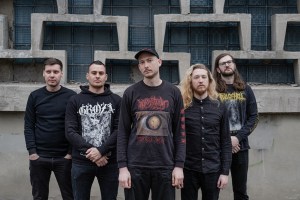
White Ward
With White Ward, in particular, we had to cancel 2 tours already, and also as of April 2025 – we are cancelling all upcoming tours, because we won’t be able to cross the border due to new restrictions. Of course it takes its toll, since a lot of effort is put into planning and preparing for the tour. Not even mentioning that it is a reputational loss, both in the eyes of the promoters who booked us and the audience who wanted to see us live and already bought tickets. Also, our sax player is currently in the army from 2023.
So unfortunately, perspectives are not very bright, and we decided to put White Ward on a pause indefinitely. Until the situation in Ukraine changes drastically, and we’ll have opportunities to tour again.
I don’t want to sound desperate. Music is just one part of my life. And I am having it pretty easy, compared to a lot of my friends and acquaintances who are in the army, and who have given up the comfort of everyday life to protect their country and loved ones. Many of them have given their life for that.
Yes, it sucks that the trends of the musical scene in Ukraine are not very optimistic, but it’s not the end of life.
You played with White Ward as well as Zoanthropy. What would you say is the secret of the success of an album like False Light?
I’d say that White Ward had a potential from the start, due to the pretty unique blend of post-black metal and saxophone. In my opinion one of the secrets of the success is that the metal part itself is good. It’s not just the background or filler between sax parts – the riffs are really cool and catchy. This, tours and promotion by Debemur Morti results in bigger success in each upcoming release.
Futility Report and Love Exchange Failure were recorded before me, so I had an opportunity to form my opinion of White Ward as a listener. With Zoanthropy we even shared a stage once or twice back in the day.
 Have you noticed a change in the energy of the mosh pits over the course of the past three years?
I am not a mosh pit guy. The last 8 or 9 years for sure. Seeing mosh pit from the stage during White Ward concerts from time to time was and is a pretty regular thing, so no changes there. But as I mentioned before – metalcore and even beatdown hardcore have been pretty popular the last 3 years in the local scene. And of course, moshing gets pretty intense and physical at those gigs. Even young I never liked that karate bullshit in the mosh pit, but I guess that comes in a package with a genre.
Some metal acts have incorporated the use of traditional Ukrainian instruments in their music, is this a direction you might be interested in exploring?
Not really. It’s not the kind of sound we aim for with White Ward or Zoanthropy.
Using traditional Ukrainian instruments just for the sake of it—or to appear more Ukrainian—feels a bit forced to me, even in bad taste. That said, if someone can genuinely blend those instruments into their music in a way that feels natural and powerful, I respect that. It can also help spread awareness of Ukrainian culture, which is always a good thing. But if you just slap a sopilka or bandura on top of a mediocre song, it won’t magically make it meaningful. From the top of my mind, I can name few artists I listen to regularly who utilize traditional instruments: Drudkh, Onuka, and Dakha Brakha.
russian TV
Do you think metal is sometimes unfairly criticised for being nationalistic and do you see this as inevitable under present circumstances?
The word “nationalistic” can be interpreted in multiple ways depending on the context. Is it nationalistic to love your country? Is wanting your culture and language to survive nationalistic? That’s one interpretation.
Or is wanting to grab more territory for your country nationalistic? Or attack and kill people in the name of your nation nationalistic? That’s the other darker version.
Some people mix both versions together, often from the comfort of a couch somewhere in a NATO country.
Here – it’s different. Speaking Ukrainian, embracing your culture—those things alone can get you tortured or killed by russians. Ordinary people—plumbers, musicians, engineers, even hipsters working in coffee shops — had to pick up weapons and go fight off invaders in order for the rest of us not to be deported, exterminated and “re-educated” in camps. That’s not a metaphor—that’s our reality.
For me personally, it felt deeply unfair when some Ukrainian bands were labelled as “nationalist” before 2022.
But since February 24th, 2022, every Ukrainian has been forced to choose: run away to another country; stand your ground—fight or support your army and embrace your identity; or abandon your culture and language and let the russians do whatever they want to you and your land.
Since then – I don’t give a fuck. Call every Ukrainian nationalist, me included.
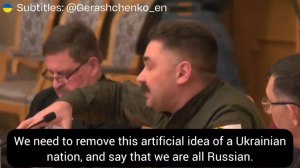
Above is a screenshot from russian State TV. On March 27, the first conference of an organization called “an international Club of People’s Unity” took place in Moscow. Its topic was called “A direct dialogue on the future of the global order” and it focused on Ukraine and russia’s vision for Ukrainian future.
Kyiv – UFO building
Are there any Ukrainian albums from the past three years that you feel have captured current events in a meaningful way?
- KAT – Poklyk (2022). There are a lot of reference to literature and cinema in the songs, still the album is heavily influenced by war, and war is its central theme. Song “Atlantyda” refers to the Ukrainian 2019 movie about the war of the same name. This song captured the human feelings during current events the best.
- Small depo – Terpinnya EP (2024). The first song on the EP – “Vtecha” – is about the feelings of the guy “running away” (as the title of the song says) from Kyiv in the first day of a full-scale war
- The Unsleeping – “Zhyty” (Single, 2022). The theme of the song is the difference of the life before and after the start of a full-scale war.
Are there any specific tracks or albums you have stopped listening to because they might be associated with difficult moments over the past three years since the full-scale invasion?
Probably just one album: Møl – Diorama (2021).
I listened to it for the first time a week before the start of the full-scale invasion. And it was the first music I listened to after it. And throughout the March of 2022 I was re-listening to this album almost exclusively.
It’s a great album. I tried playing it a few times since, but now I just can’t stand the sound of it due to the memories attached.
boryviter
Which book / film / album / song / traditional dish / podcast / blog / artwork / building / meme best captures Ukraine for you?
- Book: Voroshilovgrad by Serhiy Zhadan
- Film: My thoughts are silent
- Song: VV – “Vesna“
- Album: Tartak – Systema Nerviv
- Traditional dish: Borshch
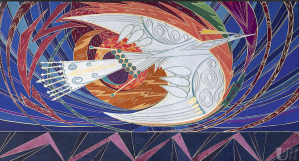
- Artwork: “Boryviter” mosaic by Alla Horska
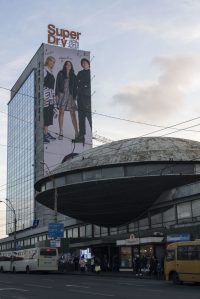
- Building: Kyiv “UFO” building
APRIL 2, 2025 – ODESA
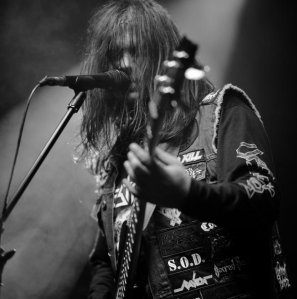
photo by @tumbleweed_092
My name is Kyrylo, and I am a musician. I play in the band Eternal Messiah, which is my main band, and I also have my own one-man band project, which is called “V.E.L.” (the abbreviation stands for “Violent Endless Lobotomy”). I have always been interested in music, but my huge interest in it appeared back in middle-school, around the 8th grade. I was gradually drawn to something heavy and driving. And it just so happened that it was metal.
Has the full-scale invasion changed the way you think about music and sound in general, and has it had an impact on your setup and your playlist?
The full-scale invasion of the aggressor country at the beginning of 2022 plunged many musicians into shock, because it was not clear what would happen next. It meant that each subsequent day is like a test and a check of your strength. There was no time for creativity at the very beginning of the invasion, since all thoughts were concentrated only on the survival of myself and my loved ones. At first, I listened almost nothing, and I didn’t have a playlist as such. Only after some time, closer to the middle of spring, I somehow began to slowly listen to music again, re-listen to my favorite albums, among which Agent Orange by Sodom, and many other thrash albums. I will not hide that I also re-listened to Holy Moses a lot, namely the album Reborn Dogs.
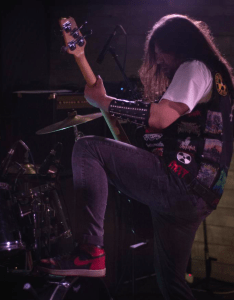
photo by @bohne.ph
What can you tell us about the production process for your album Skrutni Chasy, which has been in gestation throughout the full-scale invasion and has it been cathartic for you?
The process of creating the mini album Skrutni Chasy was a long journey. And it was long because during its writing, a lot was rethought. Something was rewritten; something was written in a newer way. I will immediately note that the song “Nezlamni” was written first. When its concept was in my head, and I recorded it, it was my first attempt to write a thrash metal song in Ukrainian. And since at the very beginning of the full-scale invasion, almost the entire country switched exclusively to the Ukrainian language, the choice was obvious. So, in fact, many of our musicians began to revive our Ukrainian underground metal scene. But let’s get back to writing my EP. The thing is that after recording the song “Nezlamni” I did not think about releasing it as part of the EP or a full-length album. I initially thought of it as a single. But then I decided to try to make other songs in Ukrainian, and here it is. “Nezlamni” is about the struggle. The struggle of our people.
Then I recorded the song “Skrutni Chasy”, which is the same name on this release. The song talks about the hard times of the Holodomor. These are black pages in the history of our people, and I decided to honor the memory of the victims of that time, so to speak. As for the song “Protystoyannya”, it is just about the full-scale invasion of the aggressor into our country. Everything is clear here. The struggle for freedom and independence of our nation. The instrumental “Na Ruyinakh Mynuloho Zhyttya” is dedicated to all the victims of this war. To all those who lost their loved ones, lost a roof over their heads. It is about everyone who left their former life in ruins. Hence the name of it.
The lyrics of the album address the full-scale invasion head on, with the track “Protystoyanna” acting as a call to arms,
“And here we stand in the swamps of Moscow
Successfully breaking through them
For Ukraine! Brothers forward!
We reached the goal together
The Kremlin Palace stands and burns
And the scum that are in it
The bunker grandfather shot himself
Fortunately for all the people”
Would you say that the role of music in Ukraine has shifted from one of entertainment to encompass the expression of identity, communication, and emotional and physical survival?
Not really. For example, the song “Nezlamni” is about the struggle of our Slavic ancestors. Their struggle is a mirror image of our current struggle for freedom. So, to speak, through the prism of centuries. The lyrics of the song “Skrutni Chasy” are dedicated to the Holodomor of 1932-1933. It was a very dark time, when people ate their own kind in order to survive. Women, children, anyone. These are, as I said earlier, the black pages of our history. Such was the time. If we consider the lyrics of the song “Protystoyannya”, yes, partly there is a call to action. The lyrics were written just at the beginning of the full-scale invasion, so I tried to convey the mood of every Ukrainian at that time.
How would you describe the metal scene in Ukraine in all its shades and have you noticed an increase or a decrease of metal albums over the course of the full-scale invasion and how do you see it developing with many musicians currently serving in the army?
Metal music in Ukraine is constantly evolving. Some sing about entertaining topics, where there is complete madness and sloppiness, and some try to put serious topics first and cover them in their work. Of course, someone can express their identity and commitment to something in this way. However, I do not undertake to speak for everybody, I will only say that I myself am not trying to prove anything to anyone. I write songs in which I describe different stories. These can be historical events, or they can be events that influenced me and my environment. In particular, the mini album “Skrutni Chasy” absorbed historical events that are intertwined with our harsh reality. Roughly speaking, the ratio is 50/50, but I think this is a completely justified decision.
Do you attend metal gigs, and if so, have you noticed a change in the energy of the mosh pits over the course of the past three years?
Oh, I try to attend metal concerts often, especially when my friends and colleagues on the stage to perform. Here in Odesa, where I come from, we have a club, a kind of underground base of our city. So, when I’m free, I can easily come to a concert, support my friends or listen to some band from another city. Many people come to us from neighboring cities, from the capital, and in general, I think that since the beginning of the full-scale invasion, the underground scene in our country has begun to develop rapidly. It is encouraging that new bands in various genres appear every day, and the underground is gradually filling up with new names.
Are you talking about the More Music Club?
Yes.
Some metal acts have incorporated the use of traditional Ukrainian instruments in their music, is this a direction you might be interested in?
There are such performers in our country who add various traditional instruments of our people. In simple terms, they try to convey our ethnicity in music. We have a kind of Ukrainian black metal, mixed with folk. I am not really a fan of such bands, but they do exist.
Do you think metal is sometimes unfairly criticized for being nationalistic and do you see this as inevitable under present circumstances?
Nationalism is a common thing these days. It’s been 3 years since the full-scale invasion began, and bands are writing songs about it, because it’s still relevant for our country. I think every performer just screams in the lyrics about what’s on their mind. It’s freedom of speech through music, that’s all. You scream about it because you want to be heard. It’s always been like that, and it remains like that.
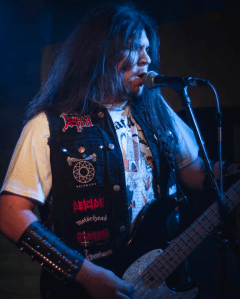
photo by @bohne.ph
Are there any Ukrainian albums from the past three years that you feel have captured current events in a meaningful way?
Hmm, interesting question though… The band Mortal Vision from the city of Dnipro comes to mind with their album Mind Manipulation, which was recorded back in 2021, before the full-scale invasion. I believe that this album in some sense predicted the subsequent events for our nation, and in fact this makes it prophetic. But it is worth noting that the guys did a great job.
Are there any specific tracks or albums you have stopped listening to because they might be associated with difficult moments over the past three years since the full-scale invasion?
Honestly, there are no albums that I would not listen to and would not give a damn about at all. I try to listen to a lot of things that I like. This is thrash metal, death metal, black metal, heavy metal, punk (many of its varieties), etc. Sometimes I can listen to something very light, but it depends on my mood.
Is there a specific genre of music you listen to to unwind, relax or simply forget about current events even if that might not be possible?
As I noted in the previous question, I listen to a lot of things that I like from metal, so many things relax me. I can fall asleep to both fast thrash riffs and viscous stoner doom. Depending on my mood, of course.
Which book / film / album / song / traditional dish / podcast / blog / artwork / building / meme best captures Ukraine for you?
I might be judged for this, but in the current times I would say that George Orwell’s dystopia “1984” perfectly describes our situation. Now is the time when freedom of speech and the constitution of citizens, along with their rights, are on hold. Someone will say that this is all a forced measure, and that there are reasons for this, because we are at war. Everyone has different thoughts on this matter, I just try to fully concentrate on creativity and do my job. And politics and other things do not concern me.
APRIL 4, 2025 – ZDOLBUNIV
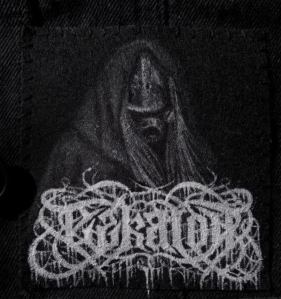
Hi, I’m Roman, and I’ve been deep into music for about 20 years now. It all started when I was 10, getting obsessed with metal through Guitar Hero 3. That game flipped a switch for me — I went from messing around on a keyboard to wanting to play real instruments. I started writing music, and my first big step as a composer was with a band called Colotyphus, where I wrote “At the Eternal Horizon.” Things just snowballed from there. Now, I’m fully hands-on — I write all the music for my compositions, and with my latest work, Synaesthesis Monologue, I’ve even taken on vocals myself. My taste’s pretty broad, though. I vibe to Lana Del Rey’s moody stuff and Elton John’s classics — it all depends on the day!
Has the full-scale invasion changed the way you think about music and sound in general, and has it had an impact on your setup and your playlist?
Honestly, the full-scale invasion didn’t completely flip how I think about music or sound, but it definitely left its mark. Music’s always been my way of processing the world, and when everything started in 2014, it became even more of an outlet. I didn’t stop creating — if anything, I leaned into it harder. With Synaesthesis Monologue I was already exploring deeper, more experimental vibes, and the invasion just amplified that need to express something raw and real.
As for my setup, it hasn’t changed much technically — I still write (but not recording) everything myself, instruments, vocals, all of it. But I’ve started recording more vocals, like in Synaesthesis Monologue, which was a shift. Maybe it’s because I wanted to hear my own voice in the chaos. My playlist, though, took a turn.
I used to bounce between Lana Del Rey’s dreamy stuff and Elton John’s classics, but lately, I’ve been digging into heavier, moodier sounds — more metal roots showing up again, stuff that matches the intensity of what’s happening. I still love variety, but the invasion made me crave music that hits harder emotionally. It’s like my ears needed something to match the stakes.
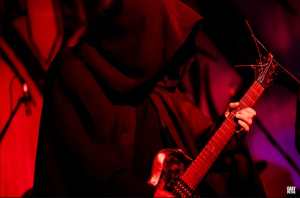 In the liner notes to Synaesthesis Monologue you state that the first half of the album was written before the full-scale, with the rest of the second half being completed after February 2022 which explains why the album turned out to be so diverse since “the worldview changes a lot during the war,” and this is reflected in the music. Could you expand on the impact of the full-scale invasion on your music and detail how your sound has changed?
Yeah, the full-scale invasion absolutely shaped Synaesthesis Monologue in ways I didn’t expect when I started it. The first half — tracks like “Veil of Twilight Shroud” and “Lost in Realms” — I wrote before February 2022, and they’ve got this introspective, almost dreamy vibe. I was in a headspace of exploring melodies and experimenting with atmosphere, kind of building on my metal roots but softening the edges.
Then the invasion hit, and everything changed — not just the world around me, but how I felt about music. The second half — “Synaesthesis Monologue”, “Solace,” and “Forevermore” — was written after, and you can hear it. There’s this shift to something heavier, more urgent. My worldview got flipped upside down, and I think that chaos seeped into the sound. I started layering in more saddest riffs, darker tones, and even my vocals got rawer — I’d only just begun recording them myself, and suddenly I had all this pent-up emotion to pour out. Like, “Solace” has this relentless energy that I wouldn’t have gone for pre-2022 — it’s almost like the music had to match the stakes of what was happening.
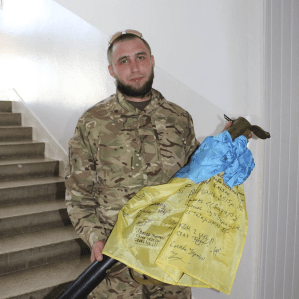 In the album you play tribute to your brother who died in the war against Russia before the full-scale invasion. You sing about “a symphony of pain” and “a symphony of grief.” How difficult was it for you to confront your loss in music and do you see music as therapy?
That tribute to my brother on “Synaesthesis Monologue“ — it’s probably the heaviest thing I’ve ever put into music. He died fighting against russia before the full-scale invasion even started, and that loss… it’s not something you just get over. There were days I’d sit with my guitar or at the mic, and it’d just hit me all over again — I’d have to stop because I couldn’t even get the words out. But I had to do it. It wasn’t just about honoring him; it was about letting that pain breathe somewhere outside of me.
Confronting it in music was like walking a tightrope. You want to feel it, to make it real, but you don’t want it to swallow you whole. I’d say it took everything I had to finish those parts — especially the vocals. But yeah, music’s absolutely therapy for me. It always has been, ever since I was a kid smashing buttons on Guitar Hero. With this, it was like I could take the mess inside me and turn it into something — not beautiful, exactly, but true. It’s not like it heals you completely, but it gives you a way to sit with it, to make sense of it. And maybe that’s enough.
You are from Zdolbuniv in the Rivne Oblast. Is there a metal community there you feel part of?
Zdolbuniv — a small city, about 24,000 people, and pretty conservative, so it’s not exactly a hotbed for metal. Growing up, I had just one friend there who was into metal like me. We’d spend hours swapping new stuff we’d discovered — everything from what I found on Guitar Hero 3 to whatever obscure bands we dug up. That was my ‘metal community’ back then, just the two of us geeking out. For years, I didn’t really run into other metalheads in Zdolbuniv — it’s a quiet place, not big on that kind of scene.
But a few years ago, I started noticing a shift. Some musicians who’ve made a name for themselves began popping up locally, and there’s this small, growing community forming. It’s still not a full-on metal thing, though. If I want that real scene vibe, Rivne — the oblast center — is where it’s at. Way more going on there, with a bigger crowd that gets it. Zdolbuniv’s got its own charm, but for metal, I’ve mostly connected with people beyond it, especially now with Ezkaton taking off online.
 How would you describe the metal scene in Ukraine and how do you see it developing under present circumstances with many band members being mobilized?
The metal scene in Ukraine is a fascinating mix of raw energy, resilience, and diversity. It’s got a strong underground pulse — black metal, folk metal, and death metal are big, with bands like Drudkh, 1914 and White Ward setting the tone historically.
Pre-war, it was thriving in its own way: festivals like Carpathian Alliance and Taras Bulba pulled crowds, and bands were starting to break out internationally. There’s this unique Ukrainian flavor too — a lot of acts weave in history, folklore, or just the weight of living here, which gives it an edge you don’t find everywhere.
Now, with the full-scale invasion and mobilization, it’s a different beast. A lot of musicians — myself included — are still creating, but the reality is brutal. Some band members are on the frontlines; others, like Mykola “Amorth” Sostin from Drudkh, have even fallen in battle. That hits hard. Gigs are rarer, venues are at risk, and curfews or blackouts mess with everything. Yet, the scene’s not dead — it’s adapting. Online releases keep things alive, like with Synaesthesis Monologue, and festivals like Faine Misto still fight to happen, even if scaled back. I’ve seen musicians turn volunteering into a lifeline for their art, raising funds or awareness through music. The war also lit a fire — more lyrics dig into resistance, loss, or identity, like my own shift to heavier, darker stuff post-2022.
Development-wise, it’s tough to predict. Mobilization’s pulling talent away, and resources are thin. But Ukrainians are stubborn as hell — the scene won’t just fade. It might shrink or go more digital for a while, with fewer live shows and more Bandcamp drops. Still, every track released now feels like a middle finger to the chaos. Long-term, when we get through this, I think it’ll explode again — all that pent-up rage and pride will fuel something massive. For now, it’s about survival, and the metal scene’s proving it’s got the guts to hang on.
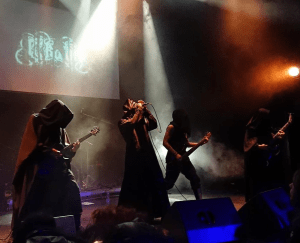 Have you seen an increase in interest in metal since the full-scale invasion or is this a music genre that is still underrepresented in Ukraine?
Since the full-scale invasion kicked off in 2022, I’d say there’s been a noticeable uptick in interest in metal — at least from what I’ve seen through Ezkaton and online chatter. It’s not like metal’s suddenly gone mainstream in Ukraine, but the war’s brought this hunger for something intense, something that matches the anger and resilience people are feeling. I’ve had more folks — even outside the usual metal crowd — reach out about Synaesthesis Monologue, saying it hits them differently now. Bands like 1914 have also gotten more eyes on them internationally, and that’s trickled back here. Metal’s raw energy feels like a natural fit for processing everything — I mean, ‘a symphony of pain,’ like I wrote about, isn’t just my story anymore; it’s a lot of people’s. That said, it’s still underrepresented compared to pop or folk here.
Growing up in Zdolbuniv, I barely found one other metalhead — it’s not like Kharkiv pumping out headbangers left and right. Big cities like Kyiv or Lviv have their scenes, sure, but across Ukraine, metal’s still niche. The invasion might’ve sparked more curiosity — especially with bands tying their music to the war, like 1914’s historical stuff — but it’s not overtaking the airwaves. Pop and patriotic songs dominate, which makes sense given the mood. Metal’s
growing, though, quietly but fiercely. Online platforms like Bandcamp help, and every new release feels like it’s carrying more weight now. It’s not underrepresented because it’s weak — it’s just that its audience is still finding it, and the war’s speeding that up a bit.
Have you noticed a change in the energy of the mosh pits in Ukraine over the course of the past three years?
Over the past three years, I haven’t really noticed a huge shift in the energy of mosh pits in Ukraine – at least not in the vibe itself. The war’s thrown everything off, sure, but the people who show up — they’re still bringing it, slamming with that same fire. What’s changed, though, is the crowd. Way fewer people are coming out now. With curfews, blackouts, and so many guys mobilized — some even from bands — gigs just aren’t pulling the numbers they used to. I’d say it’s less about the energy dropping and more about there being fewer bodies to keep it going.
Do you think metal is sometimes unfairly criticised for being nationalistic and do you see this as inevitable in Ukraine under present circumstances?
Yeah, metal gets flak for being nationalistic sometimes, and I think it’s unfair — at least partly. People hear stuff like black metal or bands pulling from history, and they slap a ‘nationalist’ label on it without digging deeper. Take Ukrainian acts like Nokturnal Mortum – sure, there’s pride in where we’re from, and tracks might carry that weight, but it’s not about chest thumping or exclusion. It’s more about identity, roots, and survival, especially now. Metal’s always been a megaphone for what’s inside, and when you’re from a place like Ukraine, that’s gonna come through. Critics who don’t get the genre might miss that it’s less political and more personal.
Under present circumstances, though? It’s almost inevitable it’ll lean that way here. Since the full-scale invasion, everything’s heightened — people are fighting for their lives, their homes, their culture. Metal’s a natural fit for that defiance. Look at 1914 with their war-themed stuff got darker post-2022 — it’s not nationalism in some narrow sense; it’s a response to what’s happening. When your brother’s gone, like mine, or your country is under attack, you’re not gonna write bubblegum pop. The war’s made Ukrainian metal louder about who we are, and if that gets called ‘nationalistic,’ fine — but it’s not the whole story. It’s just us refusing to disappear.
 Are there any Ukrainian albums from the past three years that you feel have captured current events in a meaningful way?
Over the past three years, a few Ukrainian albums have powerfully captured current events. Drudkh – Shadow Play (2025) channels the war’s melancholy and resilience through atmospheric black metal, THEY CAME FROM VISIONS – The Twilight Robes (2025) evokes a mystical defiance, and Floscule – Ї (2025) quietly yet potently reflects identity and survival. These works show how music in Ukraine rises as a voice amid chaos.
Are there any specific tracks or albums you have stopped listening to because they might be associated with difficult moments over the past three years since the full-scale invasion?
Not at all — there’s nothing I’ve stopped listening to since the invasion started. Some tracks hit hard, stirring up emotions I can barely hold back, but that just makes me love them more. They’re like fuel, not baggage.
Which book / film / album / song / traditional dish / podcast / blog / artwork / building / meme best captures Ukraine for you?
For me, the thing that captures Ukraine most right now is this one song, Тут кулі летять [Bullets Are Flying Here] — a track recorded at my place by Serhiy Kosenko, a warrior and a friend who was insanely talented. He died at war right before the full-scale invasion and it’s become this anchor for me. I don’t even know if it’s out there online for anyone else to listen — I haven’t checked, honestly — but every time I play it, it’s like Ukraine itself is speaking through those notes. It’s rough, yeah, recorded at home with whatever gear we had, so the quality’s not pristine, and I can’t find the raw files to clean it up or remix it. But that rawness? That’s what makes it real. Serhiy recorded the vocals, and I accompanied him and made the recordings.
Bullets are flying here
Bullets have been flying here for years,
And the mines have smoked the snow.
Don’t blame your mum,
For letting them go
That she sent her best falcons
To defend you.
She let them go to defend the house,
That father did not protect.
Here the blood flowed like a river
And dogs tore the bones.
My unknown heroes,
Who fell into the trap.
And the steppe hid their bodies,
And God took their souls.
Don’t blame your mother,
He begged in agony.
They did their job.
They went back to herd
The black flock
That came out of Moscow.
They killed a lot of bastards
Torturers and traitors
‘Thank you, Mum.
I’m sorry we didn’t save you.’
APRIL 6, 2025 – POLAND
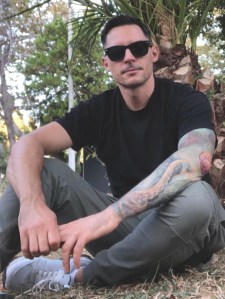
Frontcore is a Ukrainian jungle/metal/hardcore project (one-man band) from Odessa. Its main feature is tracks featuring vocals from guest singers and a powerful guitar component. All of this is combined with broken jungle rhythms that do not stand out in the overall mix but rather emphasize the vocals and guitar riffs, harmoniously blending into the track.
I have been making music since 2006 and have created several projects – Lawyer, Spazm, Alishainwonderlend, and the band Electric Pigs. However, Frontcore has always held a special place in my heart. The project has never been prolific (only three albums have been released), but it stands out for its consistency and determination.
What can you tell us about the production process for your album Hell Gate?
Originally, Hell Gate was planned as an EP for the mini-album 9 Circles of Hell (hence the name of the album). Tracks were gradually added, and the idea of making a double album emerged. However, it turned out that this task became too complicated for me, so I decided to dedicate more time to it and work on everything calmly, releasing it as a separate release.
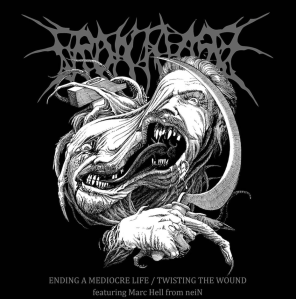 Would it be correct to say that consciousness and self-awareness are running themes in the album?
Of course, it is very important for me that the album has a concept and an idea. The main role here was played by the lyrics of Marc Hell from the band neiN; his amazing texts provided the foundation for the entire album. I actually have a separate story with these guys from neiN; it all started with a remix of their track, and subsequently, our collaboration laid the groundwork for this album. I also want to thank Illya Maliuk, Eugeny Tymchyk, Mirko, and Lord Szop. All of them contributed to this project.
How would you describe the metal and hardcore scene in Ukraine and are there any specific characteristics that set it apart? Also, how do you see it developing under present circumstances?
I grew up in the Odesa hardcore scene, which was truly special due to the large community (band members often changed and replaced each other) that were passionate fans of the New York hardcore of the ’90s. There were many great bands, concerts, and of course, our special event, Mayak Fest.
In the current reality, everything has changed. Many guys are on the front lines, and for those who stayed home, music has become a tool to help their comrades and a way to distract from the harsh reality.
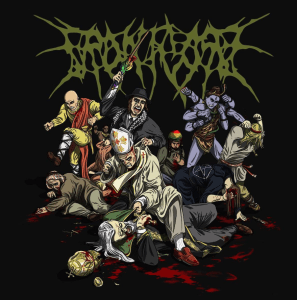 How would you describe the music scene in Odesa in terms of labels and venues, and do you feel part of its community?
I can only reflect on the past right now, as I have been living in Poland for almost ten years.
In Ukraine, I was torn between two cultures – the hardcore punk scene and the electronic scene. In electronic music, I was captivated by the novelty and energy of broken rhythms in jungle / drum and bass. In hardcore, I was drawn to the sense of community and the ability to convey thoughts and perspectives to my listeners through creativity. The emerging breakcore scene in Odesa became the platform where I could bring all my experiments together. Although I can’t really be called a breakcore producer, at the very beginning of my creative journey, I did have some breakcore tracks. However, due to concerts and releases on labels, I became a part of this community.
Which book / film / album / song / traditional dish / podcast / blog / artwork / building / meme best captures Ukraine for you?
Here, I won’t be original. It is undoubtedly borscht and dumplings, and during the winter holidays, watching the fantasy film Evenings on a Farm Near Dikanka. This is the foundation that Ukrainians absorb with their mother’s milk 🙂
APRIL 7, 2025 – LVIV
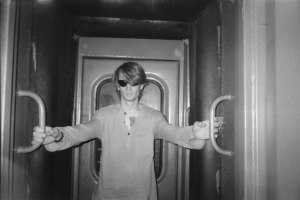
Photo by Oleg Lahetko
My name is Oleksii, I’m 23 years old and I’m from the city of Sumy. I’ve been making music for about eight years now. It all started with reggae songs, then I moved on to blues, rap, and techno. My favourite instrument used to be the classical guitar. I remember when my father had a bar, and around 2 AM, when it would get crowded, he’d ask me to play something. He really loved Spanish motifs, something along the lines of “Carida.”
Interestingly, my first guitar was actually left behind at my father’s bar when I was just a child, and years later I decided that picking it up and learning to play was a great idea. I was self-taught for a long time, but one night, during one of those performances at the bar, a man approached me. I played him many of my songs, and he offered to introduce me to a maestro. I agreed, and we left together around 5 in the morning. I simply told my mom, “I’ll be back soon, wait for me.”
We worked until sunrise. We arrived at a filthy apartment, and the people living there looked like they were homeless. One of them was lying in bed with two broken legs — it turned out that he would become my first and last teacher.
At first, I paid 100 UAH per lesson and would play for four hours non-stop — mostly pentatonic and very basic things. But through these simple exercises, he taught me far more advanced techniques. Later, I began paying him with a couple of bottles of hawthorn tincture. He drank to keep his hands from shaking. It was true underground. I was very young back then.
At one point, I saw his brother having an epileptic seizure right on the floor. That moment really scared me, and after that, I stopped going to those lessons.
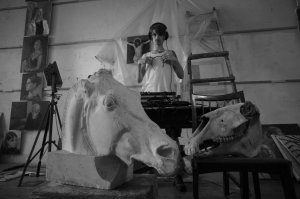
Photo by Oleg Lahetko
Has the full-scale invasion changed the way you think about music and sound in general, and has it had an impact on your setup and your playlist?
I started making electronic music a year before the war. I released my first techno track “Buddha” on May 19. Most of that early music has since been deleted. Back then, I used the alias lesha3p.
At the beginning of the war, I collaborated with a producer named Dima Raketa on an album called Shalom. It was a multi-genre project that combined rap, shoegaze, and reggae. It was only available on SoundCloud, but I eventually deleted it because I was singing in russian at the time.
In early 2023, I got my first laptop and began making more techno tracks. I haven’t released most of them, but there is one album on Bandcamp: Valence on Bandcamp.
It already shows the beginning of some experimental tendencies in my music.
In early summer 2023, I bought my first drum machine and started building my setup, focusing on straight rhythm. I spent the next year buying synthesizers and learning how to use them.
There’s a place in Sumy called the Green Theatre. Before the war, it used to host parties with over 2,000 people. It wasn’t strictly about electronic music culture, but the scene was definitely growing. After the war began, the place was abandoned. I would go there and play alone — for myself and a few friends — sometimes for up to five hours. We’d gather, play, talk. There are still a couple of guys who keep coming there to play.
I played my first live set at a party organized by the Sumy-based collective Kashtany: Pogulyay Live @ Kashtany (SoundCloud)
Later, I performed at Noiz shcho Seredy (Noise on Wednesdays) — it was still techno. But as I kept going there and listening to the music, I slowly and subconsciously began moving towards more experimental sounds. Some of the tracks from my current album were written during that period. I took a break from structured music and began experimenting more freely.
I also worked with a theatre director on a performance based on one of my concepts, but after moving to Kyiv, we weren’t able to bring it to life. However, that fall I composed music for one of his theatrical readings. Now I’m working with him as a composer.
I can say the war definitely influenced my direction. Otherwise, I would probably still be playing techno on the dancefloor — because that would have been possible. Right now, though, I see more potential in the experimental scene and its evolution.
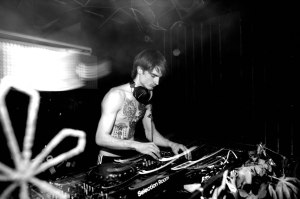
Photo by Oleg Lahetko
Could you talk about the production process for balancing on a needle? Also, in the liner notes you say that, “During a period of constant stress, the music was composed as a way to calm down and focus.” Do you consider music to be a form of therapy, and did you find making this album cathartic?
The first track I wrote for theatre was “Holovne Ropochaty” (“The Main Thing is to Start”) — it was used in a production of Alice in Wonderland. That was a relatively calm period in my life, and I wasn’t yet overwhelmed by stress.
The second track I composed as a form of self-soothing — at that time, I was only listening to ambient music because I was feeling a certain anxiety. That track became a truly cathartic experience for me.
And it’s been like that with most of my tracks. Some of them I wrote a long time ago, without even thinking much about what I was doing. But at some point, I realized it — for me, music is not only a way to express thoughts or respond to certain events, but also a way of cleansing.
My latest live performance, I believe, is my strongest yet. I poured into it all the emotions that had been building up inside me over the past months.
A few artists have told me that noise and ambient have become the most popular genres in Ukraine since the full-scale invasion. Your album seems to illustrate this. What would you say are the reasons for this interest in both ambient and noise?
That’s definitely true — in Ukraine, there are many musicians who are genuinely curious about discovering new music. They’ve already heard plenty of electronic music and are now open to exploring new sounds.
When I go to experimental music parties, there are always many musicians there — either directly involved in creating this kind of music themselves or connected to it through friends. But there are also plenty of others who simply feel the need to let go and immerse themselves in calming ambient or noise.
These genres really do have a unique impact on people and their emotional state.
photo by Oleg Lahetko
Could you illustrate to us your performance Acclimatization which was held in Sumy and which tackles the process of adaptation to stress in wartime? And how did you go about creating musical instruments from military ammunition?
Acclimatization came to me as a sudden idea — I remember first discussing it with a friend during one of the Miasma concerts. Later, I brought it up with a theatre director, and he also wanted to incorporate musical instruments made from ammunition. That’s how they came into being.
It took some time to figure out how exactly to make them, as I had many different ideas. Eventually, I realized they could resemble a tongue drum (or “glukophon”). When a strong idea comes, everything around it begins to take shape.
I really wanted to take this project to Europe, but I struggled with managing the logistics — it was the first concert I had ever organized myself. I was extremely nervous and unsure how it would work out in Sumy. I didn’t want to trigger people who already hear explosions regularly. I was afraid it would feel like mockery rather than art. So, I approached it very carefully.
I received mixed feedback, but one response in particular captured what I was going for, “There were moments of real beauty — I wished they would last longer. But there were also moments when I wanted to scream, tear my hair out, run out of the room.”
To me, that’s a perfect reaction to a performance about stress. That was exactly the point.
Sumy isn’t very familiar with alternative electronic genres — not even techno, really. So, what I was doing felt very bold. The philharmonic had never hosted electronic music before. But I’m committed to helping grow the cultural scene in Sumy.
I have a strong desire to bring Acclimatization to Europe and share it with people who don’t really understand what war feels like. There, the performance could be presented in its full form, without the need to hold anything back or limit myself.
But I don’t know how to make this tour happen — crossing the border is difficult, and I honestly don’t know where I could perform this piece.
Are there any Ukrainian albums from the past three years that you feel have captured current events in a meaningful way?
Kyiv Eternal by Heinali
How would you say the loss of nightlife has affected the music scene in Kyiv?
I think that’s exactly what led to the growing interest in ambient and noise. This kind of music is easier to engage with even during the daytime, while dance genres require a deeper level of immersion.
To be honest, I hadn’t attended many parties before the war, so I might not be the most objective observer. But from the outside, it seems like parties are becoming less relevant now.
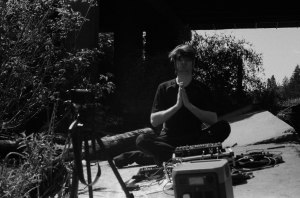
photo by Oleg Lahetko
How would you say your sonic landscape changed since the full-scale invasion and are there any specific sounds you find triggering? Also, are there sounds that have disappeared from your aural environment, or sounds that once alien have now become an integral part of it?
I’ve started listening to more calming music — overall, everything has slowed down for me. I now gravitate toward more textural and experimental sounds, whereas before, rhythm used to be my main focus.
Sirens are particularly triggering for me — even more so than explosions. Although, I must say that certain sounds I hear on the street, even here in Lviv, sometimes remind me of the explosions I heard in Sumy. But the moment it happens, I realize it’s not an explosion — that sound is impossible to confuse with anything else.
Some people get triggered even by loud door slams. But for me, sirens are the most distressing.
As for comforting sounds, I think it’s silence and birdsong — anything that reminds me of nature.
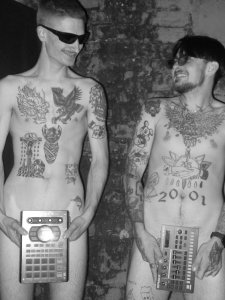
Photo by Oleg Lahetko
How many tattoos do you have and what do they signify for you?
I have more than 15 tattoos — I started getting them at a young age. Each one holds a personal reminder or meaning for me. One of them is a factory with the words “Work without me” written underneath.
Before the war, I loved traveling around different cities in Ukraine and getting tattoos from various artists. I always choose a design that comes directly from the artist — something that resonates with me in the moment.
At the beginning of the full-scale invasion, I got a tattoo of a crucified Jesus, hoping that everything would turn out okay. Once I complete it, I plan to add a devil — a symbol of balance and harmony.
When it comes to faith, I wouldn’t say I strictly follow any one religion. I like aspects of all of them. One day, I’d like to have a large tattoo on my back that brings them all together — the Devil and Jesus sitting at a bar, being served drinks by Buddha, with lots of girls around.
Which book / film / album / song / traditional dish / podcast / blog / artwork / building / meme best captures Ukraine for you?
From literature, I think it could be Zhadan’s Depeche Mode, from the movie The Matrix (first part), from songs — Kholodnyi Dim – Ukraine without you. From food — borsch with horilka.
APRIL 7, 2025 – KYIV
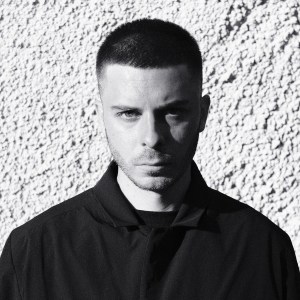
My name is Oleh Ivanov (Hillmer). I’ve been writing music for 5 years. During this time, I have passed an interesting path, which I am glad to share with you! The path that began with writing music on the GarageBand phone to the author’s live performances.
Has the full-scale invasion changed the way you think about music and sound in general, and has it had an impact on your setup and your playlist?
Maybe it’s strange, but no, the music and sound haven’t changed. I tried to continue doing what I like. Write mystical, fabulous and minimalistic music. And there is more sentimental music in the playlist.
 How would you say your sound and setup evolved from those early days?
Probably the story with GarageBand is my favorite) quarantine has begun. My friend Misha “Valmaind” showed me the Garage Band program. At that time, I didn’t have a laptop and the ability to write music normally. That’s why the phone is all I had. At that time, I was still looking for myself and my sound and style, but I realized that I already had something to share with people. I was very inspired by Cercle, I imagined how I performed there and it motivated me incredibly.
Could you talk about the production process for Bront?
I would describe the album Bront simply: a book from an ancient regiment in the library.
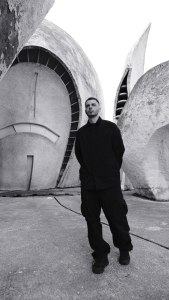 Could you introduce Demure Records and your first VA compilation?
Demure Records is my inspiration. The label I created 2.5 years ago. The concept of the world of Demure was inspired by the painting by Hieronymus Bosch “The Garden of Earthly Delights.” I wanted to do something unusual and interesting and I was lucky to meet friends Eva and Kostya, who helped make my ideas come true. And Juliana, my friend from Germany, who helped me create a label. For each release of tracks, we do our best. Each visual is a new story from the world of Demure There are also limited editions of Merch. Which are inspired by music and visuals in the issues.
 You are currently based in Kyiv. How would you describe the electronic music scene there and how do you see it developing under present circumstances?
I don’t think now is a good or better time for the electronic scene in Kyiv. But people do their best to develop musical culture in this difficult time.
How do you feel the loss of nightlife due to martial law has affected the nightclubbing scene and have you experienced a different energy on the dance floor since the full-scale invasion?
The loss of nightlife is felt. You know, I don’t even remember how it is to dance or perform at night. I can say that now I get great pleasure from daytime and evening events, festivals, parties. You can have a good look at people, location, and feel the atmosphere. I get maximum pleasure.
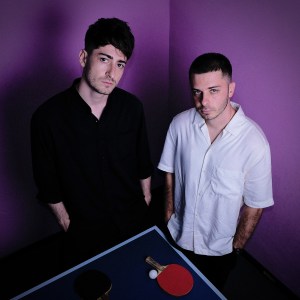
With Valmaid
In a post on Instagram where you introduce your friend Misha (Valmaind) you talk about Mariupol helping to shape your musical taste. Could you elaborate on that and could you talk about the Mariupol music scene before the full-scale invasion and would you say there was a specific Mariupol sound?
Mariupol was such a wonderful city. I remember the time when I lived there. 2009-2013. I was 13-17 years old at that time. We tried to break into nightclubs just to dance. The music was so stylish, minimalistic. There was a lot of Minimal Techno, which helped to shape my musical taste in many ways.
 Are there any particular acoustic memories you hold of Mariupol and any specific sounds that take you back to the city?
The track “Time” by Victor Ruiz teleports me to Mariupol.
Which book / film / album / song / traditional dish / podcast / blog / artwork / building / meme best captures Ukraine for you?
Film: Shadows of Forgotten Ancestors.
APRIL 7, 2025 – MYKOLAIV
Moon Projection – home studio
My name is Armen Akopov, a.k.a. Rùnar Kristinson. I am the producer behind projects such as Unusual Cosmic Process, Moon Projection, Acoustic Levitation, Free Floating Rotation, Phantom Sentinel, Psiyheric, Photosphere, Himars, and Optical Report.
I’ve been a music lover since childhood. I started working as a DJ at a nightclub in my hometown back in 2001. In 2006, I began creating my own tracks — initially focusing on trance and psytrance. Soon after, the Unusual Cosmic Process project was born, followed by Psypheric and Optical Report.
My first official release came in 2008 — a track called “Smooth Turbulence“, which appeared on the compilation True Stories.
In the beginning, I worked in a very niche and rather primitive program called Jeskola Buzz. It was far from convenient, but eventually, I found the strength to switch to a more professional DAW — Cubase.
Nowadays, I mostly produce ambient music. In the past, my sound was more dance-oriented — including psytrance, psychill, and other related styles.
Phantom Sentinel – dj set
Has the full-scale invasion changed the way you think about music and sound in general, and has it had an impact on your setup and your playlists?
As you can imagine, the full-scale invasion of Ukraine by russia — the eruption of war in its most brutal form — has left a profound mark not only on my artistic journey, but on my life as a whole.
And yet, despite the weight of the times, the suffocating atmosphere, and the seeming hopelessness, I continue to create music — and I strive to make it more meaningful, more refined.
It was in 2022, amid the chaos, that the idea for my Himars project first emerged. The debut release came out that same year, with themes deeply rooted in the war and everything it stirred inside me. Now, the second release is already on the horizon.
That year also saw the birth of Moon Projection, another outlet for expression born in the shadow of conflict. In the end, it is music — or rather, the act of creation itself — that gives me strength, that brings a sense of purpose and light in these darkest of days.
You have been quite prolific since 2023. How would you describe your working process?
Oh yes — during that period, I managed to create a great deal of new material for upcoming releases. Most of it leaned toward drone ambient or pure ambient soundscapes. It’s hard to say exactly what sparked this creative surge. Maybe I simply had more time on my hands, or maybe it was the peak of inspiration. But above all, that chapter offered me something deeply important — the chance to disconnect, even briefly, from the overwhelming stress of war. Creating music became a kind of refuge, a way to breathe amidst the chaos. And in the end, it brought something meaningful — a body of work I’m truly proud of.
Would you agree, as some say, that since the full-scale invasion there has been an increase in interest in both ambient and noise?
All in all, it makes perfect sense. Ambient music, perhaps more than any other genre, has the unique ability to soften stress and guide the listener into a state of calm — gently steering the mind toward more positive, peaceful thoughts. It’s also a powerful aid for meditation. I’ve experienced this myself firsthand.
I’ve also observed how animals — especially cats — respond to this kind of music. It soothes them, brings them to a place of rest and quiet. And I believe it touches humans in much the same way — bypassing the noise of the world and speaking directly to something deeper within us.
Unusual Cosmic Process – live set in Kyiv’s event
How would you describe the music scene in Mykolaiv and do you feel part of its community?
I would love to describe the musical life in Mykolaiv, but unfortunately, I find it difficult to analyze — simply because I’m an introvert by nature and don’t communicate much, even with fellow musicians.
Still, from what I’ve observed over the past ten years, the scene can be roughly divided into two distinct periods: before and after the war began. Before the full-scale invasion, there were a few more events, a bit more movement.
But when it comes to the electronic scene specifically, the truth is — sadly — it has never really existed as a system, neither before the war nor now. And I’m not even talking about trance or ambient collectives — those are virtually unheard of here.
There have been a couple of musical projects over the years that were active for a short time, but currently, there’s nothing happening. If any events do take place, they are usually either performances by the symphonic orchestra or small-scale pop concerts held as charity events in support of the army.
(On a side note — my wife is a violinist with the regional state philharmonic. 
It is said that most Ukrainians suffer from some form of PTSD. How do you personally preserve your mental health and do you see nature, that features heavily in your work, as a refuge?
Unfortunately, these challenges are an inevitable part of life in countries at war — and the closer you are to the front line, the more frequently this kind of psychological toll appears.
As for me personally, the situation has definitely had a negative impact on both my health and the well-being of my family. But over time, the body — and mind — begin to adapt, even to something as intense as this.
Nature, of course, has always been a source of healing for me. Spending time outdoors, walking through fields or forests — these moments used to lift my spirits, bring clarity and calm. But sadly, I have to admit that lately, escaping into nature has become a difficult and dangerous quest.
There are mines and unexploded ordnance hidden in the ground, and many areas are off-limits altogether.
So nowadays, I draw most of my inspiration from memories — from the quiet beauty captured in old videos and moments preserved in my mind.
Are there any specific tracks or albums you have stopped listening to because they might be associated with difficult moments over the past three years since the full-scale invasion?
You know, I don’t think there are any specific limitations on that. I’ve always listened to music based on my mood, and I continue to do so. The only thing I can add is that lately, I’ve found myself gravitating more toward calmer music.
Are there any Ukrainian albums from the past three years that you feel have captured current events in a meaningful way?
Unfortunately, I haven’t been keeping up with music closely lately.
But from what I’ve had the chance to hear, I’d probably mention the music of the band “Charkes”.
Psypheric – live set in Kyiv’s event
How would you say the sonic environment has changed in Mykolaiv since the full-scale invasion and are there specific sounds that have now become part of your daily acoustic landscape, other than air-raid sirens, or sounds have disappeared?
It’s hard to say. Not much has changed. I don’t hear any new sounds. The only thing I hear every day is the sound of air-raid sirens — sometimes more frequently, sometimes less.
Perhaps, overall, the general soundscape has become a little quieter.
Which book / film / album / song / traditional dish / podcast / blog / artwork / building / meme best captures Ukraine for you?
- The book is “Kobzar” by Taras Shevchenko.
- The film is “Shadows of Forgotten Ancestors”, directed by Sergei Parajanov.
- The musical composition is “Shchedryk”, arranged by composer Mykola Leontovych.
- And the national Ukrainian dish — Borscht.
- But the most important symbols of Ukraine are courage, struggle, and indomitable spirit.
APRIL 9, 2025 – KYIV

My name is Mikhail Mikhailovich Valkovoy, and I am currently 29 years old. I was born in Mariupol, Ukraine, and for the past five years, I have been living in Kyiv with my wife, Maria. She is also from Mariupol and is 23 years old.
Everything began with one moment that completely changed my life.
When I was 17, I first discovered electronic music through Tomorrowland. I listened to progressive house artists like Hardwell, Swedish House Mafia, and I had some exposure to the underground scene—Boris Brejcha and Dusty Kid, who played minimal techno at the time. But one day, I stumbled upon a video of Mike Lévy (Gesaffelstein) performing at Rex Club in Paris. His style—a classic image with a cigarette, dark techno sound, demeanor, energy, and mysterious gaze—compelled me to sit down and realize that I wanted to be just like him. Right away, I started thinking about a DJ alias and searching for all his tracks to understand what DJing truly was.
 I downloaded Virtual DJ, compiled my first tracklist, and began learning how to mix using just a mouse and keyboard. Within a week, I had gotten quite good and started posting my mixes on Ukrainian platforms like TopDJ.ua. That site no longer exists, but back then, it was a place where you could listen to Ukraine’s top DJs and try to break into their charts. At that time, artists like Miss Monique, Spartaque, and Nastia were highly relevant—it was the golden era of minimal techno and techno in general.
Later, I entered a competition for young DJs from CIS countries through TOPDJ.UA. I submitted a mix and finished second place out of 40 participants under the age of 18—after only two months of DJing with a mouse! The competition was held in Crimea, in the Artek children’s camp. It was the last year before Crimea was occupied. My cousin convinced me to teach him how to mix, so we went to compete together to showcase our city’s level and the techno culture that I wanted to present to the judges. Choosing to perform dark and minimal techno for kids aged 10–16 was impulsive but meticulously thought out.
Here’s a video from the competition, where I played Gesaffelstein – Rocket №9, remixed by me with an increased tempo and altered tonality.
For participating, we were gifted training at Ukraine’s top DJ school at the time. In November 2013, I traveled to Kyiv for two weeks of training. After completing the course, I returned to Mariupol, and on November 21, the Revolution in Kyiv began. I had just been given a job as a resident DJ at a club in Mariupol, but by the spring of 2014, fighting broke out in my home Donetsk region. The occupiers took over Donetsk and Luhansk, and life in Mariupol became militarized —everyone understood that war was near. Venues, bars, and clubs began shutting down, fearing that the occupiers would eventually reach us.
In the spring of 2014, rumors spread through my city that “Banderites” were coming to take over. This was russian propaganda, targeting elderly people who had lived in the Soviet Union and didn’t understand what Ukrainian identity, sovereignty, and culture truly meant — something the Soviet Union and communists had tried to erase for centuries.

in combat gear on the day of Mariupol’s liberation
In June 2014, occupiers entered my city, and battles began. My comrades and friends from Azov fought fearlessly in the city center, pushing back the mercenary forces of the DNR and LNR. When our city was liberated, we knew it was only the beginning, but people still tried to live, do business, and develop Mariupol.
At 19 years old, due to the situation, I dropped out of Mariupol University and moved to Lviv, Ukraine’s cultural capital. There, I performed house music at “Intelligent Parties”, where the dress code was strict—everyone arrived dressed in evening gowns and suits.
When things settled in Mariupol, I returned home in 2017 and started organizing weekly events with friends.
By 2019, I had the opportunity to perform at the largest festival in Eastern Ukraine, held in my city. I played for a thousand people, performing techno — but not my own tracks. At the time, I couldn’t afford a proper setup for producing music. That’s when I had the idea to compose music on my phone using GarageBand — the start of my career as a composer rather than a DJ.
 Despite the war’s devastation, we tried to rebuild Mariupol’s music culture. Here’s a YouTube DJ set recorded in my hometown, featuring four tracks I composed, reflecting a mystical and impulsive atmosphere. The set was recorded at Izba4i — a bar, café, and reading space that was destroyed. In 2022, when Mariupol was occupied, my friends hid there from bombings.
incidentally, a track that I associate with my hometown is “Prepare” by Stimming.
In 2021, six months before the full-scale invasion, I moved to Kyiv, bought proper equipment, and my tracks finally became more structured and professional.
For 12 years, I learned everything on my own—no guidance on deejaying, production, or using different devices. No one showed me how things worked. But after years of trial and error, I finally released my first track — exactly how I wanted it.
With Oleh (aka Hillmer)
Thanks to my friend Oleh (“Hillmer”), we wrote and released that track—it was the defining moment I had been waiting for.
Currently, I’m preparing a new release in Ukrainian, including these lyrics: “Faith, fear — you began your journey.” A tribute to my friends on the frontline, who risk their lives every second, armed only with faith overpowering fear.
After 5 years in Kyiv, I see that cultural life is on the edge of survival, and Ukraine’s event industry is in a dire state.
1) Artists leaving the country. We have lost at least 40-50 percent of all artists due to their migration to other countries.
2) Men of conscription age being unable to leave. Due to territorial recruitment centers (TRC), men of draft age cannot go anywhere — not just outside the city, but even outside their district. People are caught and forcibly detained without any legal grounds or authority to do so. There have already been dozens, maybe even hundreds, of fatal incidents caused by beatings in TRCs. As a result, artists simply do not travel to perform.
3) Inflation and visitors’ inability to pay. For example, “Closer” was on the verge of shutting down due to high rent costs, and similar cases are happening everywhere. The dollar keeps rising, and with it, rental prices increase as well. Raising entrance fees — already quite high at $20–30 — would be unprofitable, as people simply won’t attend.
However, even under these catastrophic circumstances and daily shelling, we are starting to grow again and create events that are not just on par with European ones but perhaps even surpass them in atmosphere, attendance, and the unity of people who come together.
One example is the Strichka Festival. I attended it this year, and the three dance floors were so packed that it was impossible to raise your hands. For the first time in a long while, everything was at the highest level—both in terms of attendance and organization. Another venue, Kureny, operates on a weekend-only format, allowing artists to find a golden middle ground where even those who prefer more commercial sounds can relax.
Winter was extremely tough — both in terms of event attendance and Kyiv’s general morale. But now, over the past week, I’ve visited these two venues and can proudly say that this summer season will be a cultural renaissance for Kyiv.
Since the start of the war, I stopped listening to russian artists like Cream Soda aka Locked Club. These people used to perform at our Mariupol festival in 2020–2021 and were good friends of our underground and techno community. But when the war began, they remained in russia and are now tolerant of their country’s policies. Moreover, they promote everything related to their national identity and flag.
 The saddest part of all this is that, despite sanctions and the current situation in their country, moscow still hosts events at a higher level than Ukraine. DJs and artists continue to perform there and don’t see anything wrong with what is happening. They don’t feel the war, and for someone like me who has been living in it for more than 10 years, this is deeply demoralizing.
Ultimately, for us — rational-minded Ukrainians — everything happening feels like a dystopian nightmare, straight out of an Orwell novel or the Chipollino cartoon: total lawlessness, the highest mortality rate in the world, and complete uncertainty about the future.
But all of this has only made us stronger. Living in darkness — both literally and figuratively — has taught us to preserve the flame of our happiness and hope, no matter what, and to cherish small moments that make us smile and remind us that everything we endure is for the future of all humanity, not just our country, Ukraine.
APRIL 10, 2025 – SUMY

ZzuppamanN
We are an independent label based in Sumy, collaborating with the best musicians in the city. The people in our community have insanely strong musical backgrounds, but honestly, we don’t give a damn — we’re here to create new music.
Has the full-scale invasion changed the way you think about music and sound in general, and has it had an impact on your playlist?
The full-scale russian invasion hasn’t affected our perception of music at all. Sumy has always listened to amazing music — and still does. The only real change is that the lyrics of our own songs are now mostly in Ukrainian — but definitely not in russian.
How would you describe the music scene in Sumy and is there a well developed and functioning music community or has this been fragmented by full-scale invasion?
The Sumy music scene is known across Ukraine for its avant-garde, marginalized expressions — think Хамерман Знищує Віруси, Холодний Дім, Валя Котик, Площа Мопса, Simple Pimple, Ambulance, and more. At the same time, we have several educational institutions that provide a solid foundation in academic and jazz music. Our goal is to take the best from both worlds and create something new.
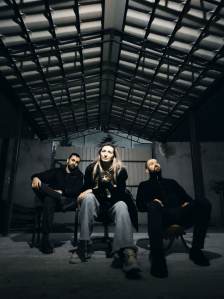
Гурт Тварини
How would you describe the main acts on your label such as Гурт Тварини and ZzuppamanN, Den Samota, etc and what would you say they share in terms of sound and lyrics, if anything?
Our studio is based in Sumy. We make music at home — not abroad, not in safety. That’s why all our projects and artists (Гурт Тварини, ZzuppamanN, Den Samota, Art Sopin, and Гурт МіксДаун) share a lot in terms of sound and lyrics: honesty, independence from trends, cynicism, and dark humour.
Is there a noticeable increase or decrease in music activity in Sumy since the full-scale invasion, and what can you tell us in terms of venues and live events?
The stagnation of live music venues in Sumy peaked during the full-scale invasion. Safety issues and a total lack of funding killed even the boldest initiatives. Still, this year we’re thinking about organizing a mini-festival by our label for City Day — July 25.
What is the current situation on the ground in Sumy after the most recent strikes and how do you view the ongoing negotiations?
Sumy is under constant shelling and the threat of a russian offensive. We’re fully aware this won’t end any time soon. As for the so-called “negotiations” — they actually inspired a few lines in a new track by Гурт МіксДаун:
Світ йобнувся в черговий раз.
Трамп — довбойоб, Маск — підорас.
Чи навпаки. Це вже не так важливо…
Translation:
The world’s lost its shit once again.
Trump’s a dumbass, Musk’s a dickhead.
Or maybe the other way around. Not like it matters anymore…
Are there any Ukrainian albums from the past three years that you feel have captured current events in a meaningful way?
ZzuppamanN’s 2024 album RAGGABABAGALAMAGA was actually written between 2015 and 2019, but it foresaw current events by reflecting on russia’s 2014 invasion. That’s why we decided to release it now — it’s still painfully relevant. The next two albums from the project also sharply portray Ukrainian society today, just like the debut album from Гурт Тварини.
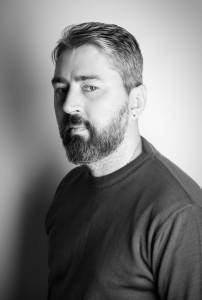
Art Sopin
On a general level, would you say that the role of music in Ukraine has shifted from one of entertainment to encompass the expression of identity, communication, and emotional and physical survival?
Even though there are Ukrainian artists ready to process and express the war and its consequences now — not in hindsight — the overall function of the music industry hasn’t changed. It’s still about entertainment. And that’s okay.
It is said that most Ukrainians suffer from some form of PTSD. How do you personally preserve your mental health?
The urge to process the world through songwriting is stronger than alcohol or weed. But yeah, living in a frontline city kind of removes a lot of boundaries.
нахуй = fuck
Which book / film / album / song / traditional dish / podcast / blog / artwork / building / meme best captures Ukraine for you?
Life in Sumy today feels a lot like the plot of Don’t Look Up by Adam McKay. Musically, this period in Sumy’s existence is being captured on the second album by Гурт Тварини, coming out this year.
As for the world — it’s absurd enough. And the meme that best captures Ukraine right now definitely comes with a clear message [see attached picture]
APRIL 12, 2025 – GERMANY
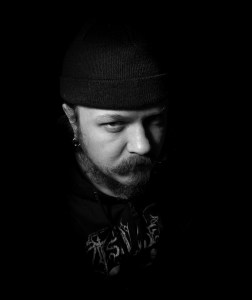
Hello. I am Vladimir and I am the only member of such projects as Schattenfall and Der Ghul.
My path in music began around the end of school (16-17 years old, I assume). I started with the guitar, studied it on my own, later, already at the university, I discovered the bass guitar and actively participated in various bands in Odesa. I experimented a lot and tried to play different kinds of music.
My path to black metal began with the White Ward band. Yuriy Kazaryan invited me to record the bass line for the first EP (we had already played death metal with him before). Honestly, at that time I listened to and played such bands as Death, Atheist, Cannibal Corpse and others. I didn’t take that recording session really seriously, but after that I began to delve into the black metal genre. Subsequently, I will remain in it.
Later I started working on solo material, which grew into the Schattenfall project. Over the years I have mastered many different instruments, including vocals.
Has the full-scale invasion changed the way you think about music and sound in general, and has it had an impact on your playlist?
Yes. The war has definitely affected me. Although I have been in Germany for many years, my family and friends were and still are in Ukraine.
If you look at my discography, it becomes clear that from 2020 until the full-scale invasion, I had no releases. I was in a severe crisis, both creative and personal. To tell the truth, I did not plan to make music again at all. But on February 24, everything changed. Since I was in a state of shock, fear and other unpleasant emotions, I did not know what to do, how to help my family, other people living there and what was happening in general. As a result, I made a charity release, on the 4th day of war, with one of my very first tracks “Die Klagen von Grau”, which helped to raise a solid amount, which I sent to help the victims in Ukraine. This helped me stabilize and understand that music is important. Which essentially brought me out of that crisis.
If we talk about my playlist, the changes were more towards adding rather than subtracting. I started listening to more ukrainian music, taking an interest in it. At the same time, I was never drawn to the russian black metal scene or any russian performers, so there was
nothing to change.
On “Oh Wind, mein Bruder” you sing in Ukrainian. Has this been a natural move for you, or an affirmation of Ukrainian identity?
I would say this is both a way to draw people’s attention to Ukrainian culture and my personal love for Ukrainian poetry.
As I mentioned earlier, I was not going to do any music until February 2022. When the war came and changed everything, I faced a choice: to look for a session vocalist (as it was before) or to try to record the vocals by myself, and if so, then in what language. The choice was obvious to me. But also in 2024 I released an album of the Der Ghul project, where the lyrics were in English.
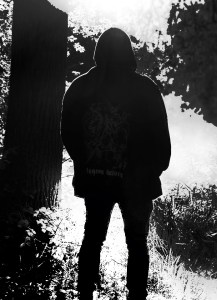 You are based in Germany, what would you say are the most persistent misconceptions about Ukraine, and are you part of any Ukrainian community in Germany?
That Ukraine is russia, or part of it. I heard something similar many times when the war just started. The same about the language, that Ukrainian and Belarusian are russian. In general, I noticed a tendency here that the Slavs are divided into russians or Balkans. For me, this is very strange and sometimes I have to explain to people “on my fingers”
Are there any Ukrainian albums from the past three years that you feel have captured current events in a meaningful way?
I think every album on this topic has its own weight. Music is emotions, and everyone has their own, so music is a unique product that comes from a mixture of different spectrum of emotions experienced by the artist at the time of creation.
APRIL 13, 2025 – DNIPRO
Hi, I’m Constantine, Dada vs Evil (DvE for short). I’ve started this project in 2016 just for myself, in some way for fun (hence the project name), in other just from boredom. Writing is my mainly art activity, was and still is. I’m working on my first short stories’ collection.
So, it was 2016, I’ve studied at the university (I’m a master in philosophy) and just played with sounds, that’s all. It’s not bad, I still find it kinda funny in strange ways.
I’ve never learned how to play properly and never see myself as a musician. I still play the guitar I bought when I was fifteen or sixteen. I like it. It’s a cheap guitar from a company nobody has heard of. It’s just figuring out what you want to hear from your instrument.
I’m trying to work on my notation so I can write something down in a more comfortable way. It’s mainly from laziness – I just don’t want to study music, so I’m trying to understand it in my way. Maybe I should have taken musical lessons. hahaha
Has the full-scale invasion changed the way you think about music and sound in general, and did it change your setup and your playlist in any way?
I don’t think so. My understanding about music is in constant development as you’re listening or working on your own. Music can be whatever you want. Only one thing: Ukraine need more bold, “riot” music, like Ramleh or Einsturzende Neubauten (or Tiny Tim). Sound and fury, beauty in a distorted way.
Right now I’m listening to Keel Her (recent find), so it’s going to be stuck on my playlist for some times.
 Is your latest album, SunBringer, the flip side of SunEater, and what can you tell us about the production process for both albums?
SunBringer is loosely related to SunEater. Loosely, because the albums don’t have lyrics, and I’m not sure how well I’ve translated my idea into sound form. Maybe someday I’ll start writing lyrics. For now, I just don’t want to work with words. On SunBringer I wanted to try to do something softer, with more light. In my head, the connection looks like a journey of the soul through life (SunEater) to beauty, light (SunBringer).
In terms of production, it is as lo-fi as you can imagine. I use one guitar, a pedal (one, yes, I use effects in different programs) a midi keyboard and occasionally some other instruments like banjo, lyre. Everything is done on my laptop. I like an idea of old production with huge amount of pedals, tapes and other things, but it is expensive and… I already don’t have space in my room.
I don’t write music per se. On SunEater everything is improvisation. On SunBringer almost everything.
You have been quite prolific since the full-scale invasion. Do you consider music a form of therapy, and is it ever a coping mechanism for you?
Yes, I think music for me is therapy, when the words don’t work I try to express myself through sounds. But every art form is therapy in some way. Although, my kind of music is easy to make hahaha
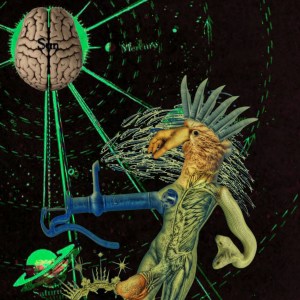 How would you describe the experimental music scene in Dnipro, and and would you say there is a specific Dnipro sound different from that of other cities like Kyiv, Lviv, Kharkiv or Odesa?
Unfortunately, I can’t really say. I have a bunch of Ukrainian bands that a like, but they are mostly, if not all, from the past: Ivanov Down, Sugar White Death (Цукор Біла Смерть), Kazma Kazma (Казма Казма), RabotaHo etc.
To be honest, I don’t follow much of the modern soundscape. It’s not like I’m only into old stuff, but I find fascination with the old and strange and so different.
Back in the day, when I wasn’t even an idea in my parents heads, you could hear so much beautiful and weird stuff on the radio like Kraftwerk, The Buggles, Wall of Voodoo even The Cure or (god forgive me) The Smiths. Some kind of modern bands, I like the band Viy.
Dnipro is an industrial city. It was an industrial city. This “industrial” character is like a ghost or a shadow of everything here. I’ve often heard from people that Dnipro is so bleak, so empty, so gloomy. It’s partially true. Maybe because I’ve lived here my whole life and settled my own myth around about different places in the city. I find Dnipro like a liminal space, with this plastic “modernish” architecture, like you’re sitting in an office, but, as, I think, anywhere else, you can find beauty in it.
 How would you say your acoustic landscape has changed since the full-scale invasion and are there specific sounds you find triggering and conversely others that you find reassuring?
Sirens. It’s like you get used to this sound as much as you can (it’s still scary), but with time, I’ve begun to find it scarier when you are watching a film or playing a game and hear sirens in it. It’s unexpected, It reminds you of danger (as sirens should), and I think this sound will be haunting me (and every one else) for decades. Of course, there are sounds like that of a loud car that remind me of the sound of a flying missile or drone. But me and sound have always had, not an issue, but a complicated relationship. From reassuring sounds like that of the wind when it plays with leaves, or that of the river, the birds, and the old modem buzz, to some strange small noises from bugs and other things, alive or not. Most of all, I like silence. Deep night silence or the bright silence at sunrise.
Has the role of the arts in Ukraine shifted from one of entertainment to encompass the expression of identity, communication, and emotional and physical survival?
From my point of view, I don’t see any deep shift. There must be, but I just don’t see it. I mean in times like these you expect to see or to hear angrier and more transgressive art, more introspective, more naked and vulnerable and honest. We have various artists who write about war, but they do not sounds sincere, at least to me, of course. As I’ve written earlier, I don’t follow much of the soundscape of modern music.
Are there any Ukrainian albums from the past three years that you feel have captured current events in a meaningful way?
I don’t think so. Nothing comes to mind.
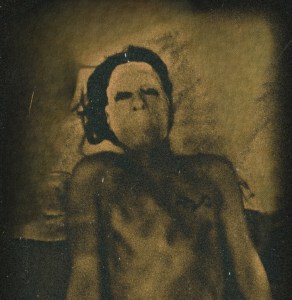 Are there any specific tracks or albums you have stopped listening to because they might be associated with difficult moments since the full-scale invasion?
Even before the war, I didn’t listen to much russian music. I don’t like the way it sounds. So my playlist hasn’t changed much. Yes, I like some russian bands, but they’re gone now, and I don’t know what the remaining musicians are doing now. And it doesn’t matter to me.
Which book / film / album / song / traditional dish / podcast / blog / artwork / building / meme best captures Ukraine for you?
I don’t like memes too much, so I don’t have any.
Films: The Lost Letter (Пропала грамота, 1972), Fuzhou (Фучжоу, 1993), Pamfir (Памфір, 2022).
Books: poetry by Vasyl Stus, Ukrainian dumas (it’s a form of oral folklore).
Music: Viy – “I walked by the Sky” (Вій – “Йшов я Небом”).
Although I think that to understand what reflects well one’s own country (be that a book, a film and so on), one needs to live outside of it, to have a change of perspective.
APRIL 14, 2025 – KYIV
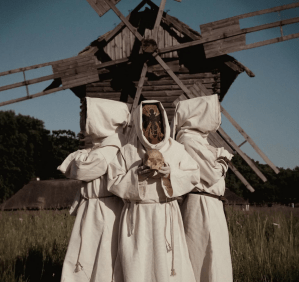
We are an anonymous black metal collective of three musicians from Kyiv, Ukraine. All of us have been or still are involved in multiple bands with considerable live and studio experience.
Has the full-scale invasion changed the way you think about music and sound in general, and has it had an impact on your setup and your playlists?
Our project was initially conceived during the COVID-19 lockdowns, so we have always been studio-focused. We considered starting to play live shows in support of The Twilight Robes, but the invasion has put an end to these plans. For the first few months we were barely able to listen to any music at all. To this day, all of us have much less energy to actively seek and discover new music – the familiar and comfortable bands have taken a significant place in our playlists instead.
From the creative point of view, the war has added a sense of urgency and desire to get things done as soon as possible. You never know what could happen to you in the next months, weeks, days, so if you have any ideas worth letting out into the world, you’d better work on them while you can!
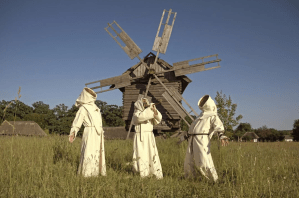 Could you talk about the production process for The Twilight Robes which came out on the second anniversary of the full-scale invasion?
The drums, guitars and vocals were recorded some months before the invasion. When things stabilized enough for us to be able to continue making music, we recorded the bass parts and started working on the mix. It was a welcome distraction from the realities of war and helped us stay sane.
We commissioned the artwork from the talented Ukrainian artist Mykhailo ‘NEIVANMADE’ Skop – we were familiar with some of his previous work and knew that his style would be an ideal match for our sound. Since the invasion started, Mykhailo has been doing a lot of war-themed art, trying to raise international awareness about the russian army’s crimes and Ukrainians’ heroism and defiance.
The album opens with the instrumental track “Lughnasadh”, which is a Gaelic festival marking the beginning of the harvest season. Is this a way of placing your album in the pagan medieval metal tradition?
Our project has been inspired by Folk Horror themes from the beginning; however, we wanted to convey the folk element not through the use of traditional instruments or melodies, but rather through the guitar sound, riff style, and overall atmosphere. The introductory track is the only exception – it sets the stage and establishes the mood, but it is the only composition on the album to actually use the hurdy-gurdy or the folkish melodies.
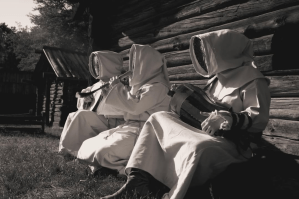 How do you see the inclusion of traditional Ukrainian instruments in the music of some metal bands and references to Slavic myths and the Carpathians?
We welcome the use of traditional instruments in metal music, and the bands still include them relatively rarely beyond the occasional sopilkas or other woodwinds. Inclusion of traditional music and instruments tends to be limited to folk/pagan metal, which is not a huge niche, and it would be great to hear such instruments used more often in other metal genres.
Lyrical references to local folklore and mythology are themselves a well-established tradition in metal all over the world. The tales of our land and people are a natural source of inspiration for some, or a way to explore and reestablish the connection to the nation’s cultural heritage for others.
Also, do you think metal is sometimes unfairly criticised for being nationalistic and do you see this as inevitable in Ukraine under present circumstances?
It does seem that metal bands, and particularly Ukrainian ones, are often unfairly scrutinized and criticised. No country and no scene is free from certain hateful individuals and malignant ideologies, sadly; but it often feels like Ukrainians are subject to much more suspicion and prejudice than the others – despite the fact that violent and hateful movements are on the rise in many Western countries, where they often have much more political power than in Ukraine.
How would you describe the metal scene in Kyiv and how would you say it compares to that of other cities like Kharkiv, Dnipro, Lviv and Odesa?
Ironically, we are not all that involved in the Kyiv metal scene at the moment, and it’s not easy for us to see it as a specific entity or point out its unique characteristics.
Kharkiv is a birthplace of Ukrainian black metal, and has always had a tightly-knit and well-known metal scene. A lot of the bands from the 90s are still active, but at the same time there doesn’t seem to be many new bands joining the ranks. Considering what the city is going through due to its proximity to the russian border, it’s not surprising that the cultural development has slowed down to an extent.
Odesa, on the other hand, has produced a lot of talented young bands in the past few years – following in the already famous White Ward’s footsteps, bands like Mortui Vultus and Labyrinthus Stellarum are showing impressive skill both on stage and in studio.
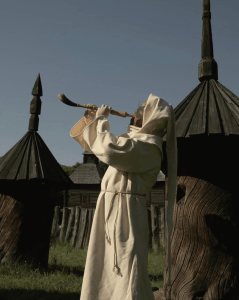 How do you see the scene developing under present circumstances with many bands being on a hiatus because of their members serving in the military?
It’s a bit early to talk about development while merely survival would be a success. While the scene is indeed alive, the situation is far too unpredictable to consider any stable development perspectives. The situation is especially hard for the professional musicians in more popular bands who had been relying a lot on the international tours – some members of the bands like 1914 had just quit their day jobs shortly before the COVID-19 quarantines hit, and then, just as the situation began to improve, the russians invaded.
Talking about the live scene, have you noticed a change in the energy of the mosh pits in Ukraine over the course of the past three years?
It feels like there’s a lot more teenagers and young people at the shows than before, though it’s hard to say if that is a real change in the metal scene demographics, or we are just getting older ourselves!
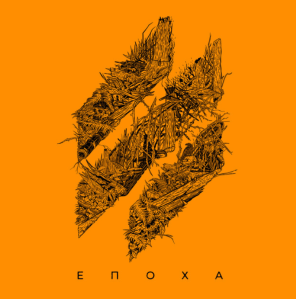 Are there any Ukrainian albums from the past three years that you feel have captured current events in a meaningful way?
A very significant album of this time is Epoch, a fundraiser compilation album created by 8 Ukrainian bands and artists for the 3rd Assault Brigade of the Armed Forces of Ukraine.
Which book / film / album / song / traditional dish / podcast / blog / artwork / building / meme best captures Ukraine for you?
Considering how vast, diverse, eclectic and idiosyncratic our country feels to us, it’s very hard to represent it with just one, or a handful, of things. Here are just a few from the top of our minds:
Thickets – a Youtube channel dedicated to exploration of little-known and underrepresented places, showing Ukraine from an unusual perspective
The Lost Letter – a 1972 musical comedy film based on M. Gogol’s adaptations of Ukrainian folk tales, full of folk music, colorful characters, and meme-able quotes
Тінь Сонця – Меч Арея – an epic folk metal song based on I. Bilyk’s historical fantasy novel, one of the unofficial anthems of Ukrainian warriors since the start of russian aggression in 2014.
APRIL 15, 2025 – KYIV
Hello! My name is Serhii and I’m a basic hardcore scene kid since I was 12. I play in such bands like Blindfold and Wallflower, interested in horror movies and obsessed with my labrador named Luna.
Has the full-scale invasion changed the way you think about music and sound in general, and has it had an impact on your playlist?
Sure thing. I stopped to listen russian punk bands like the most of my friends. IMO, no band can sing about unity and friendship and still make concerts that feed the dictator death machine. The only good russian punk band for me is a disbanded project because otherwise they are just a bunch of hypocrites.
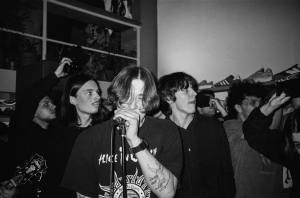
Superglow – photo by Alina Grotesque
You are a hardcore punk label from Kyiv. How would you describe the scene in terms of labels, venues, acts and community and how would you say it compares to that of other cities within Ukraine like Kharkiv, Lviv and Odesa?
Here we have a large community of friends that somehow manages their hardcore punk / metalcore / shoegaze projects and sometimes travels across the country. I guess it will be fair enough to say that a big part of heavy hardcore are now created in Kyiv. In Odesa we have a skatepunk and old school hardcore (Left, hi!) and in Lviv we have screamo, black and death metal (Andrii & Seira, hi!).
Also, there is an organization here in Kyiv called Soul Service Events aka SSE. These guys make a huge part of all hardcore punk events across the city. They make concerts in not so ordinary places like small sneaker shops, underground bars, etc. Much love and respect to all SSE family.
Blindfold – photo by Jenn Zenn
How is the label run and how do you see it developing under present circumstances?
This label is kinda new (almost 1 year old) and honestly it still runs on low. First of all, the main reason of it is war. Some scene kids went to war, some others went abroad. It seriously damaged variety of active bands and potential possibility to create a new one. Secondly, a lot of underground musicians can’t tour freely due to obvious reasons and not so many bands come here to play. Because of all of the above, it became really hard to find a band to work with but hope still lives.

Mosh – photo by Polly
Have you registered an increase of interest in all things hardcore since the full-scale invasion or has this decreased or remained steady? And what would you say has been the golden age of punk and hardcore in Ukraine, or is that yet to come?
I guess that “the golden age of punk and hardcore” is yet to come. Obviously, there were some iconic hardcore punk/metal festivals in Odesa (Mayak Fest) and near Zhytomir (Burn The Scene For Fun) and even in the Crimea (Metal Heads Mission with Agnostic Front and Pro-Pain), but it should be mentioned that since the good old days a lot has changed. And not always in the bad way: even now, during war, we still somehow get new bands.
My favourites are Blindfold (not because I am a bass there, lol), Діло Дрянь (aka Dope Doze, cool guys from Odesa), Superglow (honestly, I’m not a fan of all this shoegaze revival at all but their shows are sick), Terminal Wound (people kill people in the pits, really cool) and Light of Mine (Odesa 90s hardcore, love them). Also, I mentioned that before, we have Soul Service Events. I guess, this organization kinda restored an interest to this culture. A little, at least.
Talking about the live scene, have you noticed a change in the energy of the mosh pits in Ukraine over the course of the past three years?
Well, I couldn’t really say, because I’m not a moshkid myself.
Are there any Ukrainian albums from the past three years that you feel have captured current events in a meaningful way?
Sure, check this out:
- Subscum – Massgrave Summit (2025)
- Mauser – Одним днем (2023)
- Repress – s/t (2023)
- Concrete Control – Vision (2021)
Repress – photo by Polly
Are there any specific tracks or albums you have stopped listening to because they might be associated with difficult moments over the past three years since the full-scale invasion?
Actually, no. If cancelling all russian oi! / hardcore punk bands for myself doesn’t count, then no.
How would you say your sonic landscape changed since the full-scale invasion and are there any specific sounds you find triggering? Also, are there sounds that have disappeared from your aural environment or sounds that once alien have now become an integral part of it?
When you have heard real explosions, thunders will sound different. Raid alerts in some songs became to feel different too, because almost every day I hear real ones. Sometimes we hide in shelters, sometimes not. And I haven’t heard fireworks since the beginning of 2022.
Which book / film / album / song / traditional dish / podcast / blog / artwork / building / meme best captures Ukraine for you?
For me it will be a song, “The gathering of friends” by Wallflower. A friend in need is a friend indeed, you know, and this song is about unity and friendship. And I believe that with helping each other we could be saved from all hard times of this world.
APRIL 15, 2025 – KHARKIV
My name is Vlad Blizniuk, I am from Kharkiv, Ukraine and I have a black/death, ambient, dungeon synth project called Vyr Muk. I created Vyr Muk in the end of 2023 and released my first demo single, it was my first step in music creation. Before that, I just played guitar for myself and made covers on songs I like, so to tell the truth there is no much background. At this point, I have 4 EP, 3 singles and 1 LP which was release 10 April 2025. Main genre for the project is black/death metal, but sometimes I do releases in ambient or dungeon synth styles.
Has the full-scale invasion changed the way you think about music and sound in general and did it change your setup and your playlist in any way?
The full-scale invasion became one of the reasons why I decided to start writing music. All songs that have lyrics are closely connected to things that are happening now in Ukraine. Also from the start of full scale invasion I started intentionally searching for Ukrainian bands who write music in the styles that I enjoy, and as of now my current playlist is 98% Ukrainian bands.
 What can you tell us about the production process for Crimson Fields of Sorrow and in what way do you see this as the logical continuation of Тіні, що Падають на Мертві Міста (Shadows Falling on The Dead Cities)?
At this moment the process is almost the same for me, I record everything at home, and use VST instruments for the drums and orchestral instruments. For me writing/composing process starts from writing guitar parts with drums, after that goes bass and synth (if I want them in the song) after all instruments are done I write lyrics and record vocals. Crimson Fields of Sorrow is logical continuation of my previous black/death metal EP because it touches almost the same topic – things that happen in Ukraine right now. But at the same time it broadens the EP, because its not only about the war, songs are dedicated to different topics such as greed and voracity, inhumane conditions on the front line, how rotten modern society is, and sorrow for the died/killed.
You have been quite prolific since the full-scale invasion. Also, you frequently address the war in your work. Is making music a form of therapy for you and do you find it cathartic?
Yes, writing music is a kind of therapy for me, because I can expose my negative emotions, my worries and fears trough music. Without music, my mental state would be much worse, so it helps a lot in this case.
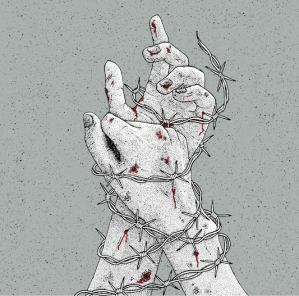 How would you describe the metal scene in Kharkiv and how would you say it differs from that of Kyiv, Dnipro, Liviv or Odesa?
From my point of view Kharkiv is very well known for its black metal scene, we have lots of great and well know black metal bands from Kharkiv and Kharkiv region and there are very good new bands and projects as well, such as Sarnath Eternal, 1310M and others.
Many have told me that since the full-scale invasion there has been a growing interest in ambient and noise music. Has this been your experience as well?
Personally, no, I listen to different genres of music, but mostly metal. Ambient and noise music take very small part in my playlist.
Are you still based in Kharkiv and if so, how would you say the changed acoustic landscape of a frontline city has affected your mental health?
Yes, I am still based in Kharkiv. Everyday shelling affects me in negative way only. When you don’t have proper sleep for a long period of time, your brain does not function very well. I would say that I mostly adapted to explosions, but I still feel stressed when something explodes quite close to me. The worst consequences that I can see now is that my memory and general thinking process became worse.
 Has the role of the arts in Ukraine shifted from one of entertainment to encompass the expression of identity, communication, and emotional and physical survival?
In general yes, big number of artists make tours to support people and to gather donations for different purposes, I think its great phenomena. Even those artists who have more entertainment style use their opportunities to fundraise money for important needs of society.
Are there any Ukrainian albums from the past three years that you feel have captured current events in a meaningful way?
Yes, these are Floscule – Ї, Прозак released different singles, also releases of Драгва, ERAI – Шрами. There are many more but these are first that came up to my mind.
Are there any specific tracks or albums you have stopped listening to because they might be associated with difficult moments since the full-scale invasion?
I only stopped consuming any russian and russian speaking content, I hope there is no need to explain why.
Which book / film / album / song / traditional dish / podcast / blog / artwork / building / meme best captures Ukraine for you?
- Book: Kobzar by Taras Shevchenko
- Film: Shadows of Fogotten Ancestors
- Album: Drudkh – Blood in Our Wells
- Traditional dish: borsch
- Artwork: works of Ivan Marchuk
- Building: Golden Gates in Kyiv
APRIL 18, 2025 – KYIV
Hello there! People mostly call me Yegor and I founded Deepswarming Bloodmagik with my friend Matviy in 2021. We were members of various Death Metal / Black Metal bands and projects. I personally was part of plenty of bands, but “the biggest” for now is Mulyfication, that was started in 2018.
Has the full-scale invasion changed the way you think about music and sound in general, and has it had an impact on your playlist?
Interesting question. I don’t think the russian full-scale invasion changed something in Death Metal for me, because this genre seems pretty emotionless. I think the genre is more about playing instruments than making statements. But my personal playlist changes once a year, so it’s hard to spot differences he-he.
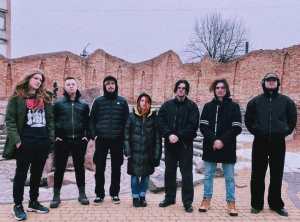
In Cherkasy
Could you introduce DEEPSWARMING BLOODMAGIK and explain how it is run on DIY ideas and how it supports local bands of extreme and grotesque genres?
Me and Matviy were writing music, and we simply needed a platform to store all our material. So, we registered page on Bandcamp and started to upload our music there. After that some local bands of similar genres wanted to join our initiative to form a community. The DIY aspect is about doing everything by yourself or ask your friends to help. We print merchandise in cooperation with small workshops, people we know personally. Same with cassettes, concerts – we work only with people we know personally and people we see as friends.

Tornrot
How popular would you say extreme metal and grind core are in Ukraine and are there significant differences within the different regions and cities like Kyiv, Kharkiv, Odesa, Lviv, Dnipro and smaller towns like Khmelnytskyi or Chernivtsi?
Of course, in bigger cities there’re more people that could enjoy so niche genres as we play. Metal music is pretty popular in Ukraine, but I believe, that we represent super-underground movement and lot of people simply don’t understand this.
In Ukraine we have some regional scenes: like a Hardcore-Punk scene from Odesa, Black Metal scene of Kharkiv or Black Metal scene of Chernivtsi, Emo / Screamo scene of Khmelnytskyi. I mean we have cities, most bands from there represent a specific genre and that’s great!
Have to mention last year phenomen – bands Kerath and Barbarik Torture from a small city called Kalush. They both play really sick and angry Deathgrind.
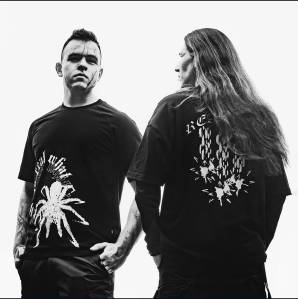
Gore Carnage
Has there been an increase in interest in extreme metal and grind core since the full-scale invasion or has the scene remained constant throughout?
There is, but I don’t think that it’s related to the full-scale invasion. Metal music becomes new trend in aesthetics, clothing and some bands (in world and I Ukraine) start to make metal music in formula of pop music. Which works, I have to admit.
In terms of the extreme metal live scene, have you noticed a different kind of energy coming from mosh pits since the full-scale invasion?
About mosh pits… Personally, I see that it got less violent, soft. I think it’s because mosh pits now, mostly, consist of “kids” and teenagers, because adults who could be violent are on the frontline. That’s depressing honestly.
Barbarik Torture
Many of your release seem to be from one-man bands. Is this because with internally displaced people and mobilisation it has become more difficult for bands to rehearse and release new material or because existential themes together with horror and destruction are more easily addressed by individuals working on their own?
The main reason it’s one-man-bands is because it’s hard to find people with same mindset, so it’s easier to achieve sound you want without dealing with other people.
dpswrmngbldmgk
Most of the lyrics and titles from your releases are in English, with the exception of the Krov by Her Pale Skin from 2021. Is this an attempt to place Ukainian extreme metal and grindcore within an international context?
I don’t force bands to choose language (only to avoid russian of course). So, it is their own will.
Which book / film / album / song / traditional dish / podcast / blog / artwork / building / meme best captures Ukraine for you?
I don’t think we can capture the consequences of war because it hasn’t ended yet. So, we need to wait until the end and then discuss. Ukraine is so much deeper than any film, book or meme !
APRIL 18, 2025 – KYIV
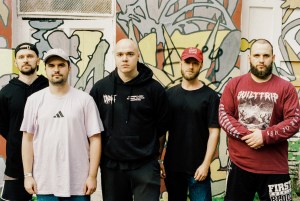
photo by Alinele Grotesque Photography
Hi! First of all, True Tough is a five-piece group of friends – and all of us had some background in metal music before TT. Our drummer, Denis, and lead guitar, Rostyslav have been playing together since adolescence in Mordox. But Mordox went on hiatus, and True Tough was born. At the time, our rhythm guitar Dmytro “Shport” was among the most active visitors of Kyiv hardcore shows – that is exactly where they met him. Our bass player, Dmytro, had played with Denis even before Mordox, so inviting him to TT was a no-brainer. Roma, our vocalist, played in a band during high school. So, we all had some understanding of heavy music before the band.
Has the full-scale invasion changed the way you think about music and sound in general, and has it had an impact on your setup and your playlists?
Yeah, changes were drastic – at the start, we didn’t even know if the band would exist in the first place. So, when we survived for about half a year and got back to rehearsals, we felt the urge to make music with more death metal influences because, at the time, it correlated better with the world we lived in. The process of creation at the time was very concentrated cause we felt that we could die at any second. You know, it is not possible to run from rockets. We wrote a lot of music and released less, but only songs that reflected our inner state the most survived to release, so it’s ok. Metal music helped us not lose our minds completely when it all started, so we also wanted to help other people.
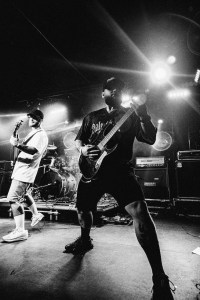
photo by Yuri Gryaznov | Kirai Gigs
What can you tell us about the production process for your album Panopticon and why did you feel it necessary to revisit your work?
When we released the album’s first version, we didn’t have the skills to create it as it should sound, but we loved the songs, and so did our audience. Production went smoothly cause we already had ideas of what to change. The vocals were the most time-consuming process, but that is the all-time problem we face every recording. People missed the songs, and we got asked about them too often during the first tour, so it matched our growing skills, the fans’ requests, and the lyrical themes on the songs. We could finally play these songs how we wanted them to sound during the first release. We also wanted these songs to be in Ukrainian. It just felt right.
You often sing about consciousness or the “prison of consciousness” (В’язниця свідомості) as you state in your track “Invaders Will Die”. This seems to be a common theme in death metal and hardcore bands. Has the full-scale invasion made it even more relevant?
When you live in a world of war, you feel so many emotions every day that, at times, it is not even possible to differentiate and understand what your feelings or thoughts are and what some form of collective consciousness is. On the other hand, you quickly understand that running from yourself is impossible, and all you can do is either survive and grow stronger or start losing your true self. So yeah, it could not be more relevant than it is right now if we’re being honest.
Have you noticed a change in the energy of the mosh pits over the course of the past three years?
Yeah, they got more violent, but everyone seems to love that.
Some metal acts have incorporated the use of traditional Ukrainian instruments in their music, is this a direction you might be interested in?
The band had some discussions about this topic previously. But we don’t think we can incorporate them into our vision of our music right now. But maybe somewhere in the future.
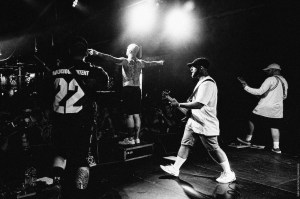
photo by Yuri Gryaznov | Kirai Gigs
Do you think metal is sometimes unfairly criticised for being nationalistic and do you see this as inevitable under present circumstances?
Metal can be more pure and raw regarding the senses it incorporates in the lyrics /concepts. It reflects all possible things, and that’s why you can find some inclusions of both right and left ideas in metal – it’s the music of protest, after all. Understanding the difference between far-right ideas and just love and dedication to your country is also very important. Ukraine is fighting for its life right now, so it is understandable why our bands can write something as a reflection on that. But in general, 95% of metal/hardcore-related music is apolitical. Many people try to escape the horrors of war and find some sort of escapism from reality in music.
How would you describe the metal scene in Ukraine and is there anything distinctive about it, and how do you see it developing under present circumstances?
Happily, we see a lot of new bands that consist of young people, yesterday’s listeners, and scene enthusiasts becoming today’s musicians. And that is a sign that interest in the scene is yet to be. We hardly suggest you try the new wave of beatdown bands: Step down, Second Strike, and Boanthropy. They are all fire, especially in life!
You have performed at Otel’ among other places, which also hosts the popular Noise Every Wednesday party series. Why do you think there has been an increase in interest in noise and other related forms of “adventurous” music?
People feel the need to find new ways to understand themselves and to see how to reflect on their emotions, feelings, and thoughts. And as we live in the moment of history happening while we have our everyday routine, it can be overwhelming at times – so old, more classic art forms may be insufficient to do that. Kyiv has always been a huge hub for all sorts of stuff, from metal and hip-hop to techno and other electronic music, so you can always find here what your soul seeks.
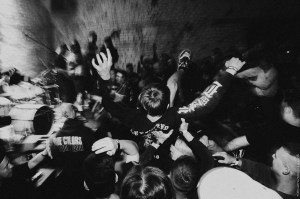
photo by Yuri Gryaznov | Kirai Gigs
Are there any Ukrainian albums from the past three years that you feel have captured current events in a meaningful way?
For now, we need to live through the war till the end to reflect meaningfully.
Which book / film / album / song / traditional dish / podcast / blog / artwork / building / meme best captures Ukraine for you?
“Black Square” (Chorniy Kvadrat) by Kazimir Malevich: While the artist connects to other cultures, his Ukrainian origin and this groundbreaking abstract work are part of Ukraine’s artistic legacy. And in the current state of the world, it’s never been more relevant.
APRIL 18, 2025 – KYIV

My name is Olha Marusyn. I wasn’t trained as an artist. It is just how my practice developed especially over the last couple of years.
You are a multidisciplinary artist. How would you say your artistic practice has changed since the full-scale invasion?
My practice didn’t radically change. I was organising my activities around events that I felt were important and had some value in them or trying to create circumstances for the event to happen. The full-scale invasion and the things that happened because of it, had a very big impact. For me it became a necessity to react and do things. Many doubts disappeared and maybe now I am more at ease with doing whatever I feel like doing and not looking for a reason to do it.
You stated that in the second year of the full-scale war, you realized that the only thing that interests you is “the search for eternal life”. Could you elaborate on that?
Of course. It’s pretty much straightforward. It is because of death that was surrounding me. I thought about death and everything connected to it. I took some time thinking about death, writing about it, and grieving, and on so on, but then this idea was exhausted, and I decided to think about the opposite. It’s more like an impossible quest, which I think most of the arts are dedicated to, knowingly or unknowingly. I liked the idea of creating this quest that would keep my interest going for at least some time. This question is big enough for me to be busy with it for at least 300 years!
 You stated that you perceive the acoustic space of Ukraine as a drone, “droning of generators, sirens, and of drones – physically and the buzzing of intense informational and emotional field – maybe also somewhat physically.” How would you say the transformation of the aural landscape has affected you, and does it have a significant impact on the mental health of Ukrainians in your opinion?
I used to travel a lot abroad, back and forth from Ukraine so, of course, this idea that the acoustic space of Ukraine is a drone came to me when I got back from I don’t remember where. It was at the time of the electricity outages, and I was in Lviv. I was trying to catch the atmosphere and what had changed during the time when I wasn’t there. There was no visible change, but in a day of two it felt like I can hear the drone of war.
My ears became sharper, and I think this is common for many people because you are looking for information about danger, or about mental states, or about the intentions of other people. It is good to have this information, but it’s also exhausting, so, if you want to keep sane, you develop some kind of defence mechanisms, and you become half deaf at some point. Then you go back to sensitivity, or you go to rest, then you come back and you learn to live with this atmosphere again. It changes all the time.
So, it does have a significant impact on your mental health, but it doesn’t necessarily destroy it. It can also make you more flexible and resilient with keeping the sensitivity and your acute ear for later or opening it up and listening really closely. That would be the best outcome.
.
 What sounds do you find triggering and conversely are there any specific sounds that have disappeared or have changed significance for you?
I don’t know, I don’t feel myself in a trauma space now. I was there but now I’m kind of past that. It was my decision to stay in Ukraine and I don’t think there is anything that triggers me especially. Of course, when I hear the air raid sirens, I look for the sound of drones when there is an attack on Kyiv. I was learning to shoot, so I was adapting to having this very loud sound and what it is doing to you.
I don’t know, it looks like you are implying that there must be some trauma response, “triggering,” but I don’t feel anything like that by now.
You have taken part in the latest Drones for Drones VA compilation. What can you tell us about your track, “Shipbuilding (for Nana)”?
This track was created very fast in a week as a part of the soundscape for the performance of Nana Biakova that took place in Khanenko Museum here in Kyiv. This track is the field recording that she made on the banks of the river Pivdennyi Buh in Mykolayiv where she is from and on top of it I was learning to play music by Johannes Tetzel that Nana’s sister used to learn in musical school. I took this from the video archive of her family. There was a short video recording of her sister playing the piano. For the recording I was learning to play it from the score on my synthesiser to the sound of the waves of the river.
A big ship yard was located there at the time of the Soviet Union but since independence it closed down. Nana is an interior designer for ships. She knows how to design the interior for ships, but this education didn’t give her anything because that ship factory doesn’t work anymore. It was a very big shipyard that used to build ships for the Soviet Union, but then it lost its purpose. Nana’s performance is about memory and about the city losing its purpose.
The track for the performance was longer than the version included in the Drones for Drones tape. It was almost 20 minutes long and Nana was performing to it, so it was more like an environment for her memory to open up. I cannot repeat this track. I cannot play it again in the same way, because to do so, I would have to unlearn the music and learn it again while recording it.
There seems to be an increase of interest in both ambient and noise music currently in Ukraine, with Noise Every Wednesday at Otel’ in Kyiv being one of the most popular events. Is this something that is reflected in your own listening habits and how would you explain this?
I am not listening to music that much. Maybe I play it more. I like to play the piano and also, whenever I get the chance, to play the synthetiser or to jam with other people.
Like all things in the cultural field of Ukraine, noise and ambient are developing. We have a lot of new information and for those who are still able to remain in the city this is important to exchange.
Of course, noise and ambient music are something that helps to channel the emotions that need to be processed. So, there is an audience who wants to listen. I was going to many of those Noise Every Wednesday events. There are many people who want to share what they did through music. I think this way of channelling emotions is maybe more effective than listening.
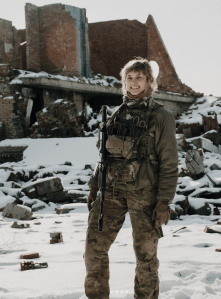
Marharyta Polovinko
One of the latest casualties from the artistic community is Marharyta Polovinko who died at the front. Since the full-scale invasion she had been using her own blood and inkless ballpoint pens to express the intense physical pain of the new reality.
Has the role of the arts in Ukraine shifted from one of entertainment to encompass the expression of identity, communication, and emotional and physical survival?
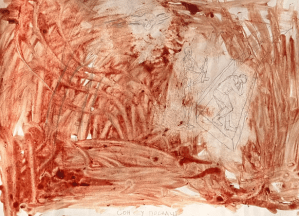
artwork by Marharyta Polovinko
I don’t think the arts in Ukraine were for entertainment before the full-scale invasion. Also, if you look at the word “entertain,” it could also mean to put something in action, to entertain a thought. So, art could be something that entertains the thought of an artist and of the audience as well. In this sense it is always about entertainment.
With Marharyta, I love her drawings, and my perception is that what she did with her blood was in line with reality. What she is saying is the truth, truth written in blood. It’s like a metaphor that many people know.
Are there any Ukrainian albums from the past three years that you feel have captured current events in a meaningful way?
I don’t know, I was listening more to live shows.
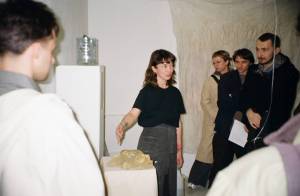 Are there any specific tracks or albums you have stopped listening to because they might be associated with difficult moments since the full-scale invasion?
I did rethink some of the music I was listening to. I had to say goodbye to many russian musicians, as many other people did.
Which book / film / album / song / traditional dish / podcast / blog / artwork / building / meme best captures Ukraine for you?
 I don’t know you should come and visit, the book that you write in Ukraine captures Ukraine best, the album that you record in Ukraine, the song that you make, the dish that you eat, the podcast that you take part in Ukraine, and so on, and so on; the building that you live in Ukraine captures it best for you.
I don’t think art can really translate anything or that it can replace the real experience. People shouldn’t make this mistake and think that if you have seen something in art you have captured it. It is impossible to capture, you have to have your own experience for that.
APRIL 21, 2025 – KYIV
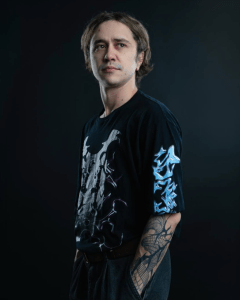
Kyiv-based producer, combining electro and breaks with sounds of deep and superficial Ukrainian cultural life.
Has the full-scale invasion changed the way you think about music and sound in general and did it change your setup and your playlist in any way?
Yeah, for sure because before the full-scale invasion, I was a drummer and was a part of different bands. I played rock music, metal and stoner, etc but I had a dream to make my own solo project connected with electronic concepts. And, you know, when the full-scale invasion started, I understood that I could die at any moment and that’s what motivated me, the thought that it would be a real pity if I died without having tried to make my dream real. So, I think, after six months I already made my first release, and six months later I got different promoters to listen to my stuff and that’s how I started my career.
Your latest album Qualia has been over a year and a half in the making. What can you tell us about its production process?
I’m a really a big fan of sampling and I like to combine these with synths. For me it’s really interesting process because you take a sound from any part of your life and reassemble that, pitch it, I don’t know, make some saturation or reverb, then it becomes a completely different sound. So, each song undergoes a really big production process. I always look for new sounds around me, and I have my recorder which is my really big helper. So, I can steal any sound around me and put it in some song.
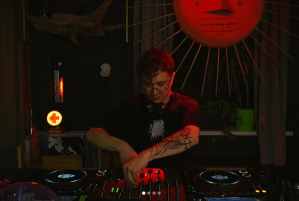 There are several markers of “Ukrainianness” in the album, with snippets of folk music in 303ulya, and public announcements on the metro in Kyiv in “Metro Oblon”, amongst others. It is not the first time you include sounds of Ukrainian culture. How important was it for you to geolocate Qualia?
I really love the dirtiness of the basslines which I made, and the percussion, because it gives energy and confidence to my songs. And when you put something from folk or opera into a song it gives it a bit more softness. This combination of dirtiness and softness is, for me, like magnificent combination. I love producers who like to experiment with these two different vibes.
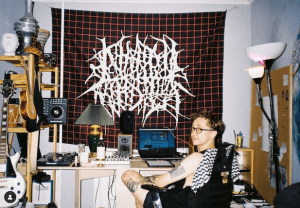 Folk music already appeared in your previous release on Mystictrax, Bezsonnia. Is this an affirmation of identity, a way of reclaiming your cultural heritage, an attempt to construct a narrative thread?
Rather than reclaiming it’s a way of reminding myself of my cultural heritage because I know it, I feel it. And I want to share it with people who also have it but maybe they need to be reminded about that. And this music gives you this moment, this possibility.
Also, you ask me is it an attempt to construct a narrative thread? No, no. It’s my concept of Qualia of that experience which you cannot transmit to another person.
But folk music maybe is just my soul, or a part of my soul, which I really want to share. Introducing samples from folk is simply a way to make my songs more beautiful.
What can you tell us about the making of the video for “Qualia” which includes hand drawn animation?
Yeah, first, I met a girl, Sasha Tuz. She’s a really good film director and I think that in the future she will show us more and more works. So, I started creating the concept and the screenplay with her.
To make the video, I needed to sell my drum set because I didn’t have enough money at the time. That was a good option because I hadn’t used it for maybe a few months and when I sold it, I finally had a budget that was three or four times bigger. But that’s completely another story.
Anyway, so we made this video. We had two filming days. Then, I just went to another friend, the artist Anastasia Vesna, and we decided to combine the footage with mix media animation. So, we would print a few screenshots from the video and paint over them and scan them to make an animation. Altogether we painted over about 500 screenshots. And finally made that clip. And that was a really deep process. And really long.
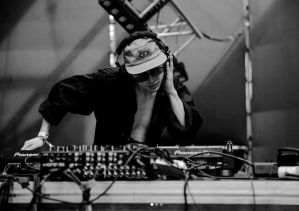 It is said that most Ukrainians suffer from PSTD on some level. You reference both insomnia and ADHD in work. How would you say three years of full-scale invasion have affected your artistic practice?
Of course, the full-scale invasion affected me as a person who resonates from the things which are happening around me. Yeah, I feel it in a really strong way.
For example, when you hear some motorcycle on the streets, the first mental image that your brain conveys is that of a drone flying from russia. Or when you hear a grandfather on the street cleaning his carpet with a hose and the first thing you’re thinking is that it sounds like an explosion.
Of course it affected my work. For sure. I have a lot of sounds which I steal from life and some of the sounds are part of everyday life for us, which is part of the war. But for me, right now, it’s not the time to use military sounds or explosions inside our songs. Maybe in some years we will be ready to do so but now it’s not necessary. Of course, it’s really cool when you hear some rap songs and you hear like, “boom boom boom.” That’s cool but it’s not about our context. And sorry but most of the people who make that music, they never hear the real sounds of war, and it all depends on the context.
For example, here in Ukraine, in some parties it’s completely forbidden to play any tracks or songs with sirens or explosions in them. As you know, break beat, techno and electronic music contain many samples with those sounds, so one has to be really careful when selecting a track to play at a party.
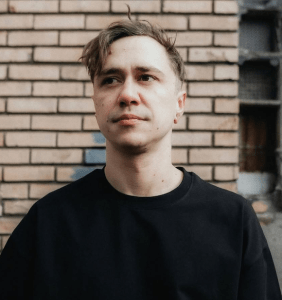 How would you describe the electronic music scene in Kyiv and how would you say it differs from that of Kharkiv, Dnipro, Odesa or Lviv?
The first thing I have to say about Kyiv is that you have a lot of choices and possibilities here. It’s the main thing. In Odessa they are they’re trying to be more like Kyiv in the level of parties, organizations and in the selection of music.
If you are a performer in some genre, you can find your community here. Kyiv is not better than other cities, it is just bigger, and most people are trying to make their careers here coming from all over Ukraine. That’s why here we have these big communities.
But I really respect my friends who try and improve the culture and the electronic music scene in their own cities, places like Zhytomyr or Chernihiv where whenever there is a party it feels like a breath of fresh air.
And in Kyiv, you can choose where to go from up to 10 different clubs and places every weekend.
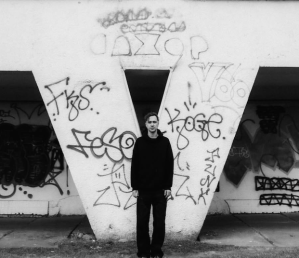 How would you say the loss of nightlife because of martial law has affected the clubbing scene?
As someone who started their career during the full-scale invasion, I cannot imagine being a deejay and playing at 6 am. I started my career at twenty-seven with these kinds of lineups. But of course, yeah, it’s not nightlife. It’s evening life actually. But anyway, the level of our evening life is really high. For many years they used to say that Kyiv was the new Berlin. And even now, even with these restrictions, we make the most of it and try to improve our level.
Has the role of the arts in Ukraine shifted from one of entertainment to encompass the expression of identity, communication, and emotional and physical survival?
Interesting question. In general, I don’t think that role of art is one of entertainment because art doesn’t have to make you feel comfortable. It’s about how an artist reacts to the way the world resonates with them.
Maybe it’s better to say that of course here all the artists have mostly understood that they need to speak about the war. We have to speak about that because we have an audience, no matter how small that might be, so shy not use that influence?
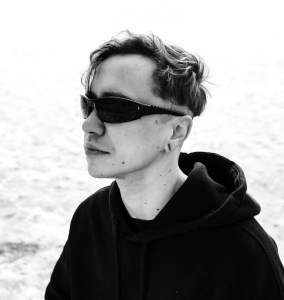 Are there any specific tracks or albums you have stopped listening to because they might be associated with difficult moments since the full-scale invasion?
Yes, I completely stopped to stop into listening to any russian music because for me, right now, when I hear something from that country, I feel cringe and I don’t want to be connected with that.
APRIL 22, 2025 – KYIV, AUSTRALIA, SPAIN
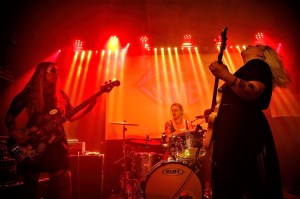
Death Pill • The Lexington 14-06-23 • Photo: Talie Rose Eigeland
Death Pill
Anastasiia: I’m Anastasiia, drummer. I think I’ve been tied with music all the time: I was playing in a hardcore punk band before joining Death Pill, and also I had a black metal side project: Crackpot and Vidmershiy Shmat.
Mariana: I’m Mariana, I’m the voice and guitar in Death Pill. Also, I am a guitar teacher and currently play bass in surf-punk band KRAKEN LANDAU.
Nataliia: I’m Nataliia, bass and backing vocals in Death Pill. Background in music: saxophone, jazz orchestra, rock/cover bands (piano/saxophone). I also have a bachelor’s degree in sound design, so my background and current work/hobbies are connected with music, film, and sound. Currently, apart from work as an AV technician, I sing in a Ukrainian traditional ensemble and church choir in Australia and have a couple of students that I teach music theory to.
Death Pill acoustic gig 2021
Has the full-scale invasion changed the way you think about music and sound in general and did it change your setup and your playlists in any way?
Anastasiia: it changed the way I feel this world. It didn’t change the way I feel music, except that I started to feel everything even more deeply. Music kept supporting me through the hardest moments. As for the sound, I don’t know — I’ve always loved extremely heavy sound anyway. Sometimes I just want to find something so powerful that it could squeeze out all the sadness and pain that’s stored inside me. But for now, the only thing that helps is playing our music.
Nataliia: The setup for me personally has changed by excluding any russian and russian-related artists. Music is a huge cultural indicator. Since the invasion, I have rediscovered a lot of old traditional songs. All their riffs, lyrics, and ideas have a new, more impactful meaning for me now. And after all the horrible things I went through, listening to music now is the thing that makes me cry the most.
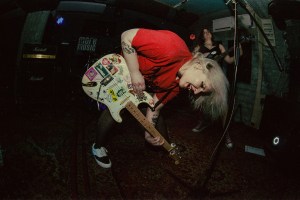
Death Pill 2021 Odesa (Mariana)
Many Ukrainian bands are currently on a hiatus due to mobilisation and displacement. What can you tell us about the production process for your latest album Sologamy considering you live in three different countries and continents?
Mariana: When I think about it, I understand that there is no band in the world that is cooler than us. If we were not stopped by the war in our country and 13053 km between us – nothing can stop us now!
The difficulty is that we have no rehearsals at all. And we can’t listen to how this or that musical move/riff on the guitar/breakdown will sound live. For me it was like I was making an album blind (in Guitar Pro). At first, I thought “what’s the big deal? Yes, it will be a little more difficult than recording the first album, but we will manage it, because we’re still recording each of our instruments separately” – but believe me, it was one of the hardest challenges of my life (making this album from a distance, I mean).
Nataliia: The production process was complicated for us as a band and for the team, because of the time difference and no rehearsals.
First, we locked the drums in Guitar Pro, and while Anastasia was preparing to record drums, Mariana and I were working on details. We had drums recorded before our trip to the UK (where we had our movie premiere in 2024), and during this time we had our first rehearsal with the new material. This rehearsal gave us more questions than answers. During autumn and winter, we recorded at home, separate from each other, and sent versions back and forth between us. The songs on Sologamy went through at least three versions each and an unimaginable number of Zoom calls with the band and the team. It was fun, but exhausting.
We all went through a couple of emotional moments and breakdowns, because all the time you’re imagining how much easier and enjoyable it could be if we didn’t have russia as a neighbour.
You are the subject of the documentary Go Your Way with the title taken from one of your tracks from your debut album released on the first anniversary of the full-scale invasion. How did this come about and what can you tell us about touring since the full-scale invasion and have you encountered any persistent misconceptions about Ukraine?
Mariana: Luckily, a friend of our label (Dan Baskerville) wanted to make a film about us. It was his initiative, we just gave our consent. He followed our car in his car when we toured the UK and filmed our every step with a big video camera. I remember at first I was angry, because I couldn’t enjoy solitude, but we became friends with Dan on the second day and now we have a wonderful friend! And a film.
Anastasiia: We carry a huge responsibility — representing the Ukrainian heavy music scene. Unfortunately, many of our bands can’t fully tour right now, and it breaks our hearts, because we believe that musical representatives must travel, must keep telling the world about the war in Ukraine, about the prisoners of war, about the children who’ve been killed. We need to keep screaming it out loud to the world. Because there are still people who believe there are Nazis in Ukraine and that it wasn’t russia who started the war. Yes, we’ve encountered that. That’s why touring and speaking the truth has become our duty now.
You have re-recorded in English two tracks from your first album that used to have lyrics in Russian. Do you envisage writing tracks in Ukrainian at some point?
Mariana: Why not! Maybe we’ll make a punk rock version of some Ukrainian folk song.
Photo: Talie Rose Eigeland – Anastasiia
There are a number of female fronted metal acts in Ukraine, including Tatiana Shmayluk from Jinjer, Helle Bohdanova form Ignea, Stacy Armandarian from VELJA, and Olena from 0%Mercury but you are probably the only all riot grrrrl band. Your first release, Miss Revolt (2018), is prefaced by a programmatic statement, that every girl is a riot girl. How inclusive would you say the punk scene in Ukraine is?
Anastasiia: the Ukrainian punk scene has traditionally been pretty inclusive, especially in the major cities like Kyiv, Kharkiv, and Lviv. It tends to attract people who are anti-authoritarian, anti-fascist, pro-LGBTQ+, feminist, and strongly against imperialism (especially russian). Many DIY collectives and punk shows actively promote these values, and there’s a strong political consciousness in the scene, especially since 2014 and even more so after 2022.
That said, like anywhere, inclusivity can depend on the specific crowd, sub-scene, or region. Some smaller towns or less politically engaged circles might not be as progressive or welcoming. But in general, the war has pushed a lot of punks and hardcore kids toward solidarity, activism, and building safe, inclusive spaces — not just in the music itself, but through mutual aid, volunteering, and direct support for marginalized communities.

Mariana plying with KRAKEN LANDAU
Has the role of the arts in Ukraine shifted from one of entertainment to encompass the expression of identity, communication, and emotional and physical survival?
Mariana: To be honest, the role of art in Ukraine has always been ambiguous, since here everyone does what they want and expresses their individuality as they want – it has always been like that. But since we are a “third world country” – it is not an unknown fact – most people in Ukraine most often do not care about art at all.
Even before the full-scale russian invasion, they were concerned with survival/difficulties with work, money – and what is happening in society now is generally … indescribable. What I feel now is that everyone has united against the enemy. I do not know of a single event now that would be FULLY commercial. Always some part of the income (or all the income) is donated to our army. Everyone understands everything well and everyone does what they can to defeat the enemy.
Photo: Talie Rose Eigeland – Nataliia
Are there any Ukrainian albums from the past three years that you feel have captured current events in a meaningful way?
Mariana: Joseph by Obrij. This isn’t exactly about current events, but if you really want to understand the situation in Ukraine now – be sure to read the lyrics and descriptions of their songs!
Nataliia: Пил – Guerillia Noir (2024). It’s a storytale style album, exactly about current events. It’s in Ukrainian, and lyrics play a big role, but even for non-Ukrainian speakers, the pain, loss, and feeling of horrible things the character had to go through in this album are present.
Are there any specific tracks or albums you have stopped listening to because they might be associated with difficult moments since the full-scale invasion?
Mariana: All songs of russian bands.
 Which book / film / album / song / traditional dish / podcast / blog / artwork / building / meme best captures Ukraine for you?
Nataliia:
- The film Earth (Zemlya) – Olexander Dovzhenko, 1930.
- For a song, any orchestral Cossack march, or more romantic songs such as Намалюй Мені Ніч (1965)
- The traditional dishes – of course – vareniky (dumplings) and borsch.
- Building: The Sophia Cathedral in Kyiv and Zaporizhzhian Sich, in my hometown.
NEW RELEASES
XTCLVR ~ B̴̺̞͓͐̓̒O̵̡̺͓͛̒͋O̸͚̝̙̔̐̚S̵̒͋ ̻̦͜T̴ ͔̫̻͑̽E̴̡͔̻̒͐͊D̴̘̻͚͋̐͑ R̸̻͓̔̽É̸̝̪̦̒Á̴̠̼̫̐͠L̸̟̪͉͒͛́Ḯ̴̞̦̝͛T̸ ̼̞̺̓̚Y̵̝͕̫͊͐
Glitchy broken beats cushioned by expansive ambient overtones. The parental advisory explicit content sticker on the artwork gives it an ironic finish.
VA ~ Drone For Drones
Fourth instalment from the Kyivpastrans label fundraising for Fallout Noise Volunteer Collective for the purchase of drones for friends and colleagues serving in the Armed Forces of Ukraine.
58918012 ~ Pulse
Hello. As you all probably noticed, I sometimes release albums with beats (I mean, less ambient and more electronic stuff). This album is one of those.
The overall vibe/mood of the album is kind of cold and robotic. You know, I’ve tried to put some machine shades into the music this time. Even though the tracks are pretty melodic and atmospheric in some moments, they still sound like computer language to me — a bit repetitive, monotone, and not very dynamic. That’s the point of the release — to create a beautiful album that will sound less like a human so to speak.
The idea and concept of the album were born a long time ago (somewhere in the middle of summer 2024), and since that time, I have begun to work on the tracks one by one. I’ll be honest, It was pretty hard to maintain the same vibe for all the tracks (because they were written with big time gaps), but when the album was finished, I beheld that it sounded incredibly tight from the beginning to the end. All tracks perfectly supported each other.
I know that you unlikely will listen to the whole album without breaks…but I strongly recommend you to do so 🙂 As usual, thanks for your support! Enjoy the music and stand with Ukraine! Peace ❤
Oleskiy H / SITKA ~ Blackouts
These tracks were collecting dust on my HDD for a couple of years. I’m releasing them as is. They’re not “finished”, don’t expect a great mixdown or mastering. They are just raw demos, not pretending to be masterpieces. Despite all this, this is quite important and personal release for me.
I wrote tracks 1-3 during the blackouts of winter of 2022-23, when russia damaged Ukrainian energy infrastructure and the whole country was living on a tight schedule—having access to electricity for only a couple of hours a day, just enough to charge the gadgets and power banks. I’m a hardware guy, and I like to use hardware synths in my recordings, but, obviously, I didn’t have a chance to use them without electricity. So these tracks were produced fully “in the box” on my laptop while the battery lasted. I also don’t usually like to limit myself with genres, but here I decided I’m gonna try to fit the dub-techno frame. So, all this became kind of a getaway and an exercise in production.
Tracks 4 and 5 are from different “session”. I wrote them during the first months of russian invasion of 2022. I was away from my Kyiv home, and while taking shelter in the underground parking lot during long air raid alerts, I decided to keep myself distracted by making music on my phone. The results are these two tracks: one dubstep-like and another harsher experimental techno style.
Monodont ~ We are waiting for our time
We are simply waiting for the fall of the monopolistic control structure of humanity.
Tired of the endless amount of entertainment intoxicating our minds we are slowly building an underground revolution. Death to all pigs and thieves, death to cheaters – freedom to all slaves.
We must belong only to ourselves!
Tsatiory ~ Desire Paths
Desire Paths is a musical journey through the shifting space between the unknown and the power of inner light. Through sound, the album explores how we move through the space of the unknown and the hidden, how we perceive a world that seems hostile, and how we eventually realize our ability to transform it by simply shifting the focus of our attention.
This release was born in the flow, in November 2024, at the intersection of personal and collective experience. As a musician and artist originally from Ukraine, the main theme of my creative research is the phenomenon of how the experience of beauty can be a response to violence. War leaves traces, but even in the darkest moments I have the space to find harmony and inner peace. Desire Paths is an act of trust in yourself, in your own way of exploring desires, in the harmonious ability to go forward even when the path seems blurred and uncertain.
From the first steps in a ghostly fog to the moment of realizing oneself as the main subject in this space, the album leads the listener through textured soundscapes that change from tense anticipation to a state of contemplative balance.
Noise, fragmented voices, electronic waves, and natural rhythms intertwine to create an acoustic scene of transformation. This is a story about how clarity can be born out of anxiety.
Dada vs Evil ~ SunBringer
The butterfly lives for several weeks.
It flies from flower to flower.
It flies among the leaves.
It plays with fire, scattering ashes.
It does not see the future.
It does not create the past.
And then, after a few weeks,
it quietly becomes like flowers, leaves and ashes.
Human Margareeta ~ Broken
Broken is the debut album by Kyiv-based producer human margareeta, released on Iriy Records. Written during the full-scale war in Ukraine, Broken is an album shaped by anxiety, fragmentation, and inner dissonance — a search for musical form within emotional instability. This is not a record about resolution. It doesn’t follow a linear path or offer catharsis. Instead, Broken moves through sharp turns and fractured structures, built on broken rhythms and unpredictable transitions. It reflects a world where nothing feels solid, and everything can change at any moment. The album doesn’t aim to express one emotion. It’s about coexistence — anxiety, calm, anger, exhaustion, intimacy — layered, conflicting, alive all at once.
Regulardisco ~ Rainbow Railway: VA Pt.II
Meet Regulardisco’s second compilation: bigger and juicier than ever. As always, we aim to showcase the bright side of the Ukrainian electronic scene — one that doesn’t often get the spotlight — while raising funds for the needs of Ukrainian defenders.
This time, alongside Ukrainian artists based both in Ukraine and around the world, we’ve invited some international guests: Hola Olas (Belgium), Martin Zetta (Brazil), and Good Catch (United Kingdom).
This compilation is truly a multi-genre piece, telling a story that flows smoothly from leftfield, rather abstract music to indie dance, with a detailed stop at Italo, space disco, and dark disco. From there, we journey through Chicago house and acid house, before ending with fast, dreamy progressive house seasoned with a breakbeat flavor.
Shadow Unit ~ Rainbow Spill EP
Meditative and chill — like the warmth of April.
Brainhack Musicbox ~ Lo-Fi Organ
Recorded straight to bad old tape for our first live at Noise Every Wednesday in 2023.
Respublika Biloho Svitla ~ Utopia No.233
“Earnest naivety has led us to failed utopias again and again. This is a dedication to one of those attempts at creation.”
VIEWING ROOM
(Gianmarco Del Re)
 a closer listen