

Artwork by Mariia Prymachenko
The current episode of Ukrainian Field Notes is dispatched directly from Ukraine. I am writing this introduction from Lviv, where for the past three days I have been attending the Lviv Media Forum. As usual this has been an informative and thought provoking experience.
Many familiar topics were discussed with different narratives being suggested and with semantics playing a large part in shaping new approaches. So, for instance, instead of decrying the “good Russian” trope, one panel discussion proposed to look at Russians as “useful” or “not useful,” and to view the idea of Russians not in terms of ethnicity but in terms of gender, as one can always change gender. But it’s not just enough for a Russian to be against the war, they need to be for Ukraine’s victory.
Also, cancelling Russian culture, is now seen by some as ineffective and bringing only emotional satisfaction (think of Anna Netrebko and the London Opera). Instead, one should cancel the weaponistation of culture.
Moreover, Ukrainians should be attending panels with Russians, not to argue, but to put their point across. And there should be more attention given to Turgenev and less to Pushkin, according to Dmytro Zolotukhin who singled out Turgenev’s short story “Mumu” as epitomising the passive subjugation of Russians to authority.
As for the acronym “FIMI” [Foreign Information Manipulation & Interference], the general consensus is “no thanks” whereas Ilana Bet-El suggested replacing the term “corruption,” with that of “mismanagement” or “bad management,” to differentiate Ukrainians from Russians.
These were all considered controversial ideas not that long ago, but the Ukrainian weltanschauung is dynamic and adaptable.
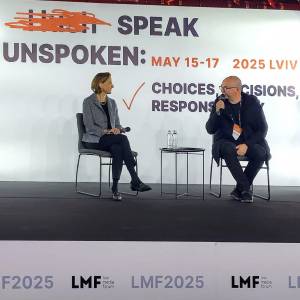 One of the strengths of the LMF is the presence of foreign guests giving their own perspective and sometimes provoking hilarity. Anne Appelbaum asked for a show of hands from those who believed there would soon be a ceasefire. The audience responded with laughter. Aida Čerkez recounted her experience of the siege of Sarajevo and warned that to achieve peace one needs the courts. If the perpetrators of war crimes are not brought to justice, the risk is of developing a strong sense of victimhood which can turn the victim into a future aggressor. She also framed culture as a tool not just of survival but of self-preservation.
Luckily it wasn’t all work and no fun. The reunion gig by Tik Tu proved to be a highlight, together with the premiere of a double bass concert by Maxim Kolomiiets at the Lviv Philharmonia, and an organ recital featuring three compositions by Alex Shmurak.
And that was just in Lviv. I then traveled to Odesa and Dnipro, before heding to Kyiv, but that’s for next month’s episode. For the current Ukrainian Field Notes, we return to metal with Khors who lament the indifference of the Ukrainian music media when they released the album Where the Word Acquires Eternity inspired by the Executed Renaissance before doing so proved all the rage, Svyatoslav Lunyov wonders how long it will take Ukrainians to start classifying sounds into aesthetic categories again, Farba Kingdom reject the idea of music as entertainment, while Kindracoma considers music a tool for survival and Anna Dovhan counts elephants as a cure for insomnia. Last but not least, Принц Буба [Prince Buba] talks about reconstructing landscapes that are no longer accessible.

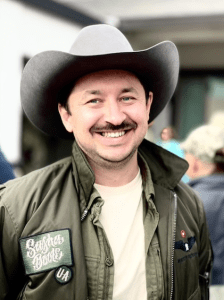
Dmytro Kumar (1914) and Sasha Boole
This month we also feature not one but two podcasts recorded while in Lviv. The first, recorded for Resonance FM, mixes metal with country music courtesy of Dmytro Kumar from 1914 and Sasha Boole. Not such an unlikely combo after all, they talk about trenchcore and performing for veterans. [Full transcripts of their interviews to be found in the interview section below]
Tracklist:
1914 – “War In”
1914 – “Coward (ft. Sasha Boole)”
1914 – “…And a Cross Now Marks His Place (ft. Nick Holmes)”
1914 – “War Out”
Sasha Boole – “Плющ (Ivy)”
Орест Лютий (Orest Lyutyy) – “Я, кум, дві лопати”
Beton
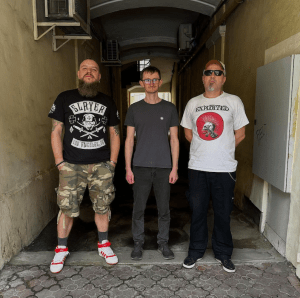
The second podcast with the punk band Бетон [Beton] is an ACL exclusive. I met them in the rehearsal space they share with the band 1914. [Full transcription of their interview available below].
Tracklist:
Бетон [Beton – Concrete ] – Нічого Святого [Nichoho Svyatoho – Nothing holy]
Бетон – Тільки Для Своїх [Tilʹky Dlya Svoyikh – Only for their own]
Бетон – Kyiv Calling
Бетон – Ми Несем (ft Albert Tsukrenko of HZV) [My Nesem – We Bear]
Бетон – НОРМАЛЬНО [NORMALʹNO – Normally]
Бетон – Став Матку Боску (ft Dmytro Kumar of 1914) [Stav Matku Bosku]
 To round things off we have a bunch of new releases, mostly collaborations by the likes of 58918012 with ummsbiaus, Heinali with Andriana-Yaroslava Saienko, Eazyopoluse, Kindracoma, Super Inter, Bayun the Cat and JD Roberts, Natalia Tsupryk & Neil Cowley, mires, and Kyivpastrans.
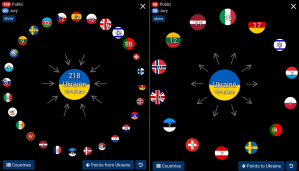
In the Viewing Room we have Ukraine’s Eurovision entry by Ziferblat (spoiler, they came 9th) and Tvorchi (a previous contestant on Eurovision), plus the latest from Dnipropop courtesy of Monotonne.
NFNR
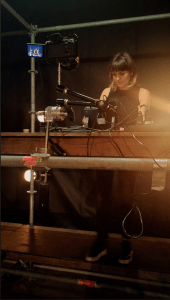
Post-Scriptum – I arrived this morning in Kyiv from Dnipro. As I put this episode to bed, so to speak, I am having to make my own bed in the corridor as they are predicting another night of ballistic missiles and drones on Kyiv. And yet, there was a defiant vibe at the Laboratorium Spring Festival earlier today, where old UFN friends Vlad Suppish, Burning Woman and NFNR were performing. One of the headliners for tomorrow (25/05/205), the French producer Shlømo has cancelled at the last minute over safety concerns. But the party will still go on. Symonenko has already been asked to move his set to fill in the gap. This, to me, sums it up.
APRIL 28, 2025 – KYIV

Hi! I’m Khaoth, drummer for Khors since the band’s very beginning. Over the course of my musical career, I’ve been involved in many bands and projects. I love metal in its various forms, primarily its more extreme styles like death metal, doom metal, black metal and so on.
Has the full-scale invasion changed the way you think about music and sound in general, and has it had an impact on your setup and your playlists?
The full-scale invasion has definitely changed everything, including my playlist. To be honest, there’s a lot less music in it now.
Could you talk about the production process for Letters To The Future Self which you started working on before the full invasion? Also, how did you go about selecting the text by Volodymyr Vakulenko who was executed by the Russians in the first few months of the invasion?
We simply chose the text by Volodymyr Vakulenko that resonated with us the most.
As you already mentioned, we started working on the album before the war — we recorded four tracks before, and the other four during the war. You can hear the difference in the sound.
Ever since the full-scale invasion there has been renewed interest in the Executed Renaissance with many artists adapting their poems in their lyrics. Back in 2020 you released Where the Word Acquires Eternity, a concept album dedicated to the events that took place in your native city of Kharkiv in the 30s of the XX century. In particular you reference Slovo House, where many of the poets executed by the Soviets used to live, and which was the subject of a recent film. Is it fair to say that the full-scale invasion has encouraged younger generations to rediscover and embrace their cultural legacy?
The full-scale invasion has definitely drawn renewed attention to the history of the Executed Renaissance, to the works of Ukrainian poets, and to the history of that era in general. It’s a pity that when we released that album, there was practically zero attention from Ukrainian music media — their interest was, sadly, non-existent.
How would you describe the metal scene in Kharkiv and how would you say it compares to that of other Ukrainian cities like Kyiv or Dnipro?
Residents of Dnipro might be offended by this, but the metal scene in this big city, practically a million-strong, is almost non-existent. Concerts there are almost always poorly attended, and I can’t recall a single internationally significant band coming from Dnipro.
The situation with Kyiv is a bit different — most of the live scene naturally takes place in the capital. There are lots of clubs, lots of bands, and far greater opportunities for musicians. Although there’s an interesting point worth noting: all the major Ukrainian bands are either not from Kyiv originally, or their members are not from Kyiv.
As for the Kharkiv scene, in my opinion, by the time the war started, it was drifting toward Dnipro’s situation. After the beginning of the war, it almost completely disappeared. We’ll see what happens next, but unfortunately, I don’t yet see any trends pointing toward a renaissance.
Talking about the live scene, have you noticed a change in the energy of the mosh pits in Ukraine over the course of the past three years and have you made special adjustments to your live sets in in order to avoid triggering people suffering from PTSD?
No, we have never really thought about this question before.
 Do you think metal is sometimes unfairly criticised for being nationalistic and do you see this as inevitable in Ukraine under present circumstances? Also, how do you see the inclusion of traditional Ukrainian instruments in the music of some metal bands like Drudkh?
I don’t think that the theme of nationalism as a creative foundation for the band is something bad. It’s a different matter when it comes to Nazism or, as some media like to call it, neo-Nazism. This is precisely where the confusion of these concepts occurs, and everything ends up being labelled as Nazism, national socialism, racism, and so on. This is, of course, infuriating.
As for folk instruments — to be honest, I’m absolutely not a fan of folk instruments in extreme metal. Sometimes this combination can be quite successful, but other times this eclecticism simply doesn’t resonate with me.
Are there any Ukrainian albums from the past three years that you feel have captured current events in a meaningful way?
I can’t think of any. There are too many songs and albums on this topic to single out just one.
 How would you say your sonic landscape changed since the full-scale invasion and are there any specific sounds you find triggering? Also, are there sounds that have disappeared from your aural environment, or sounds that once alien have now become an integral part of it?
All sounds associated with war and military actions are triggering for us and are unlikely to ever become a part of our creativity.
Once, after the full-scale war had already begun, we were playing at a festival held on the grounds of a sports airfield, and at one point, a training plane flew right over our tent, which was serving as our backstage. It was an extremely unpleasant experience. I can’t even imagine what our soldiers on the frontlines go through. They, of course, deserve endless honour, praise, and glory.
Which book / film / album / song / traditional dish / podcast / blog / artwork / building / meme best captures Ukraine for you?
The project Ukrainer, DakhaBrakha, the Konotopska Vidma theater, borsch and varenyky when it comes to national cuisine — as clichéd as it may sound. The works of Taras Shevchenko, historical podcasts (there are many of them).
It’s hard to list everything in one answer, especially since a lot of new things keep appearing, much is being rethought, and much loses its relevance over time.
MAY 5, 2025 – KYIV
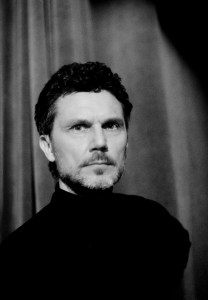
photo by Vasylyna Vrublevska
Could you begin by introducing yourself and telling us about your background in music?
My past is dark, my present is shaky, my future is unclear.
Has the full-scale invasion changed the way you think about music and sound in general and did it change your working process in any way?
The realization that everything could soon end gave rise to a desire to try new forms and genres.
On May 25, 2022, you uploaded on your YouTube account the work POST captioned by a J’accuse in several languages. Was this written as a direct reaction to the full-scale invasion or was it already written by then and what can you tell us about its instrumentation and compositional process? Also, would you say that composing POST helped you bring order to your thoughts?
Yes, it was a direct reaction. Started three days after the invasion began. It took three months to write and was understood to be possibly the last thing you would be able to tell the world.
I would like to note in parentheses that by “several languages” you mean the speakers of all EU countries.
Is the function of an artist that of a medium, and do you feel hostage to current events?
Yes and no. If you are on a moving bus, your thoughts may be completely different from the driver’s or any of the passengers’ thoughts. But you are unlikely to end up in a different place from them.
In Tristium you draw from Ukrainian folk tradition for the first movement. Since the full-scale invasion a number of young electronic musicians have been rediscovering their musical heritage and using themes and refrains from folk motifs and songs in their own works. Do you see this as an affirmation of national identity?
For many, this is true. I wanted, as you say, to identify myself as Ukrainian, and for the anniversary of the invasion I wrote “Fierce January” (35 songs based on poems by Ukrainian poets – something I had not done in the previous 60 years of my life).
Following from the previous questions, musicians from all genres, from metal to electronic music, have been inspired by the works of the Executed Renaissance. Is this to be interpreted as an expression of emotional and physical survival and what can you tell us about the way you approached Ukrainian poetry in Fierce January ’23?
Fierce January ’23 contains 2 poems by Vasyl Stus who died in a Soviet camp in 1985 and one by Mykhail Semenko who was shot in 1937. The remaining 30 poems were written by Ukrainian poets in the 80-90s and do not directly relate to current events. But in a certain artistic sense, the word “today” differs from the word “yesterday” only in the set of letters.
The blood spilled by Ukrainians in the 1930s is little different in color from that spilled in the last three years (as well as three hundred years before that).
In an interview from 21.04.2024 on your YouTube channel, you mentioned the documentary about Silvestrov where his daughter speaking about her father says that Silvestrov burns kettles. In other words, the water only boils when one is working for concentrated periods of time. This is not meant to be a provocative question, but did the blackouts produce “ideal” working conditions, in the sense that artists were forced to work according to unpredictable time for a specific number of hours?
Yes, that’s what I meant. Sometimes it gives you the opportunity to write two hours of music in two months. But I would prefer that there were fewer such situations in everyone’s life. To bear a full-fledged child, a certain period is needed. But it is impossible to cancel the birth of children during war.
How would you say your acoustic landscape has changed since the full-scale invasion and are there specific sounds you find triggering and others that you find reassuring, sounds you miss, and sounds you found?
Two days ago, I was at a music festival in Ivano-Frankivsk. We were drinking coffee on the terrace. A plane flew by with a characteristic sound. I didn’t even understand what happened, but my wife was shaking for about ten minutes. I don’t know how long it will take before the people of Ukraine start classifying sounds into aesthetic categories again.
With international commissions, are Ukrainian composers pressured to produce works
reflecting current events?
I have no idea.
Are there any Ukrainian works from the past three years that you feel have captured current events in a meaningful way?
In my opinion, neither the period in which a work was written, nor its declared or hidden programmatic nature are criteria for its conformity to the spirit of the times or its quality.

photo by Igor Malakhov
One of the questions I always ask my interviewees in my Ukrainian Field Notes series is, “What book, film, album, song, building, dish, meme, etc best represents Ukraine for you?” I lost count of the number of people who picked Shadows of Forgotten Ancestors. Could you articulate for me why that film is so influential?
I think it is a mirror that flatters everyone. The mythical beautiful Ukraine seen through the eyes of the genius Parajanov is further confirmation that beauty lies in the eyes of the beholder.
What are you currently working on?
I’m always working on several things. But I can rarely say what exactly. That is, which of them will appear first.
MAY 10, 2025 – LVIV
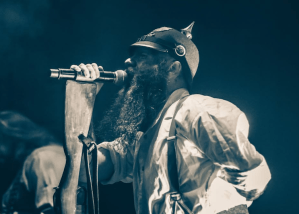 Dmytro Kumar – (1914)
My name is Dmytro, I’m from the band 1914 from Ukraine. How I came to music? I was a teenage punk and dreaming about making punk music. I started playing in 1997. We started as a typical punk rock band and from that time I play different types of music, some industrial stuff, stoner, sludge stuff, hardcore punk…
For over 20 years I have been playing hardcore punk, and now for 11 years I have been in 1914 and we paly metal based on the war period because I have a background as a war archaeologist, so I am digging dead soldiers, we bury them, I am a military collector I have a some bombs, shells, grenades, deactivated, like, you know, military collection, belt buckets, helmets typical stuff from the war, and I just combine my two passions archaeology and music and that’s how 1914 started.
Ok, perfect. Could you give me an overview of the metal scene in Ukraine?
You know we are a typical post-soviet country in Europe in this case, not only in this case, in many cases, but we have never had a scene so it’s not like growing up in Europe. You know, in Germany, in Great Britain, you have a doom scene, a hardcore punk scene, you have an electronic scene, here in Ukraine it’s really complicated, we have a few awesome bands, but no scene. We didn’t have any venues, like metal venues or hardcore punk venues, we didn’t have normal vinyl shops, you know, labels and blah blah blah. Only right now we just started with everything. You got it back in the 70s or earlier, we just now after 50 years we just try to dig into this culture.
Would you say it coincided with independence?
You mean Ukrainian Independence?
Yes.
You know, I don’t even know how to explain. Since the independence, we didn’t have any huge name in industrial music, for example, or electronic music, or hardcore punk music we just didn’t have them. We have a few famous bands, probably in the UK you know DakhaBrakha.
Yeah.
We have a lot of interesting folk bands, world music, but as I said previously we didn’t have a scene, and we didn’t have an industrial scene any metal scene and that’s why pour music didn’t grow we just had bands and mostly Ukrainian bands tried to leave Ukraine if they wanted to grow to spread the message and become huge so they had to leave Ukraine because they had no opportunity for growth. That’s a shitty situation. That’s a shame but that’s our reality.
Would you say there’s a difference between Kyiv, Kharkiv, Lviv, Odesa in terms of metal bands?
Probably in Kyiv there’s a better situation, probably but as I told you in Lviv we didn’t have any rock, hardcore punk venues, we didn’t have them. Lviv always said, “We are the cultural capital of Ukraine.” Come, on, show me this, which culture? No. Kharkiv, ok, the city has always been known for its black metal. We have a lot of black metal bands from Kharkiv, but let me be honest, show me a huge venue or a huge label for black metal from Kharkiv, they have just one festival. You know, Ukrainian metal culture is like a foetus, and we spend a lot of years in this foetus condition.
 You described yourself in an interview as “The archaeological and shrapnel ensemble of trench music named after Josef Schweik.” Does that definition still stand?
Probably not because in the time of the great war right now, of our great war, I have just cut everything about shrapnel metal or trench core because it is not fair because I am not in the trenches, that’s why I don’t even wanna play in Ukraine because I don’t wanna disrupt… like you know we are playing in uniforms, we are playing war music, and we are not soldiers, so that’s not fair for me. So, a lot of times, we don’t wanna play in Ukraine. And a lot of my friends are soldiers on the front from the trenches just explained to me, “Shut the fuck, play music here and raise the money as a donation. So, this is your power, you can use it, so do this.” But if we talk about the naming, I just cut off everything about shrapnel, trench, metal and blah blah blah. We are just musicians.
In your music you use ambient sonic war sampling…
Yeah, sure. A lot of.
From the….
From the different periods, I am trying to find in some archives, I try to find a lot of old movies, about the First World War, which most people forgot and I cut a lot of samples from there because all these sounds are my part of my work, lyrics, concepts, sounds, this is my part in the band. I love it. To me, it gives you a chill and an understanding of this was environment. You listen not only “ratatatata” but you listen to some screaming, and shouting, and some firing, and a lot, or even some old march, and it gives you an understanding about those old period.
How do you feel about the inclusion within electronic music of war sounds?
I am fan of electronic and industrial music, yes? In every one of our albums, I want to use it as much as possible because my guys didn’t like it, actually… (laughs). So, I am trying to make some industrial mixes, just one or two, but in every album. Just a small part of electronic mixes. For example, in our last album, we have some, we call it trench pop remix, we have some industrial remix of the regular songs, in the previous one we had the same and now in our new album which will be in November we have two noise martial industrial !! remixes. 10:05. Every time I try to push it in our album. Really, I am not a huge fan of metal music, I am a punk who loves electronic music. I am not a huge fan of metal so that’s why I am trying, “Please, just one song with industrial remix, please guys.” (laughs).
Are there any sounds that you think might be triggering and that you wouldn’t use now?
Good question. I talked to my friends who spent already three years on the frontline, and I am asking them, “Ok, guys, here are the samples, how about it, how do you feel with this?” And one friend of mine told me, “It’s ok, it gives me just a feeling that I am still alive, I can hear it and for me it’s ok, it’s not triggering. I am asking about it. Right now, for the new album I involved a few soldiers, my friends from the trenches. In the new album, there are some speeches, some photographs, and I asked them to listen to it, and they told me, “It’s good, nothing disturbing, nothing triggering, everything is good.” So, I am trying to figure out with regular soldiers, if it is ok for you or not. I don’t want to harm and disturb with my music our soldiers. But we received really tons of messages from the frontline guys, “Thank you for the music, we are riding across the battlefields with your music in our cars, we are going into the trenches with your music…” Come on! I saw a lot of pics and a lot of videos with our soldiers with our t-shirts, just guys in the trenches with our t-shirts. It gives me a lot of chills and inspiration.
You have collaborated with many different artists and one of them is Sasha Boole who is also in the military…
Yes.
How did that particular collaboration come about, because he is more into country music…
As I told you, I don’t like metal music… (laughs). No, it’s not that I don’t like it, I am not a huge fan of metal music. So, I tried to collaborate with different styles, with non-metal music, so country music, awesome! In the new album, you will hear, non-metal stuff, we have a lot of. And I wrote this song, so these are my lyrics, and when I wrote it, I understood this must be a typical soldier’s song that you can sing in the trenches, sitting by fire and singing it, like with small clapping. And in my head, I went, “Tunk! It could be Sasha Boole with his banjo, with his harp, it would a fucking awesome idea, ok let’s do this,” so I just asked him, “Do you want it?” “Of course.”
 Within the metal music scene there is maybe this idea that there are different recurring themes like paganism and nature with the Carpathians, and history linked to ideas of nationalism. How do you feel about that, and do you think that maybe Ukrainian bands are unfairly criticised for being nationalistic?
You know, it’s fucking bullshit, because I can talk about a lot of black metal band from Norway or Sweden, they kill people, they sit in jails, they kill gay people and burn churches and blah blah blah. We know a lot of bands from France like Peste Noire [a band associated with the NSBM scene] and what? Does everyone claim that French metal is nationalistic? No. So why do so with Ukrainian music because we use our old symbols? Come on, it’s bullshit.
It’s a huge part of russian propaganda, because they spend money to discredit the Ukrainian nation and culture, and we are part of this small movement, that’s why they to blame us in any way, “They are nazis.” So, if you say “Slava Ukraini,” you are “fucking nazis.” Come on! But if you say, “Hail France,” or I don’t know, “Glory to England”, are you a nazi? No, you are just a typical guy who could be saying “Glory, Glory, Man United!”
As for me it’s bullshit. Of course, like in every country, we have some percentage of people with nationalistic ideas, with nazi ideas, with commie ideas, with some totalitarian bullshit ideas, yes, we have it, but we are the same as in Italy, France, Germany. Come on! I saw a lot of photos from Italy last year, hundreds of men doing the Sieg Heil, you know it… And have you seen a huge movement to blame Italy? No. So, it’s bullshit.
There is another trend in Ukrainian metal is the use of folk instruments and themes, I am thinking of Nokturnal Mortum and Drudkh, for instance, how do you feel about that?
It’s ok, I am not a huge fan of their music but they are really awesome and well known bands in Ukraine, they are huge names. And I think they are making awesome and interesting music and they use old Ukrainian instruments and try to integrate our old culture in their music and spread the word about Ukraine and this is really brilliant work that is needed.
As you know we are singing about the First World War and not too much about Ukraine, but we are changing this. The new album will be completely about the Ukrainian soldier from Lviv in the First World War. But those bands did a brilliant job to spread Ukrainian work and music. Someone can blame them as nazis and nationalistic and I can just say, “Fuck off”.
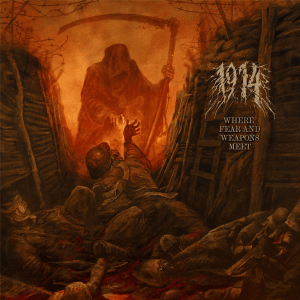 Before we move to the new album, a couple of questions… I wanted to talk about your album Where Fear and Weapons Meet, you stated that it’s not about death but it’s about life. Could you elaborate on that?
First of all, the artwork, Death is standing near the soldier who is still alive. The soldier reaches out to death and asks to stop it, but Death does not want to take him. They are mostly songs about hope, about heroes who went back home, and they have a life after the war, because in the previous album mostly everyone dies in the trenches, so just bloodshed and the grinder of war. But with this album we are singing about hope and life.
There’s also a song about a mother writing to her son…
The Letter.
It’s song with Nick Holmes from Paradise Lost. How did that collaboration come about?
You know, I grew up as a punk kid, but I really loved their music and I grew up with Paradise Lost, and not only them, Anathema, My Dying Bride, and UK doom metal. I grew up with this music and I am a huge fan of Paradise Lost and when I found that letter, one out of thousands, probably in a few minutes I combined it in my head with music. And I though, ok, it can be sang by Nick Holmes, because he is British, it’s a part of his culture, it’s a part of his history, so probably let’s talk to him about it. And he said yes, and it was a fucking awesome blast. Just a shitty band from Ukraine wrote a letter to a metal legend. “Can you collaborate with us with these lyrics?” “Sure.”
Did you meet up or was it done remotely?
It was done remotely, but we met a lot of times in different festivals across Europe. He’s really a great guy but it was done remotely.
Before we move to the new album. We were talking about electronic music, you released a single with Ship Her Son under the moniker Barney Hines, and it’s a cover of a Prodigy song.
One of my favourite bands. I was a few times at their gigs, it was incredible, and I cannot forget about. It was a huge blast in my life. I have all their vinyl, all their CDs and tapes. I love it.
So it was your idea?
Of course. I am a huge Prodigy fan, and they have a song, “Invaders Must Die.” Come on! It’s win, win, 100%. Let’s cover it! Ok. And I collaborate with Ship Her Son because he is a brilliant industrial musician from Ukraine. I have his vinyl and when I heard his music, I thought, I wanna collaborate with this guy. I love his way of thinking and the way he makes his music.
If I am not mistaken, he is from Dnipro but has relocated to Lviv?
Yeah. We had a few rehearsals, and I sent him a few ideas and he said awesome stuff, let’s do it. It was awesome.
So, the new album, what can we expect and how difficult was it to make since the full-scale invasion?
It was really difficult for us, because we lost a lot of our friends, we buried them, I don’t even know how to express it. It’s our reaction, how we live through the war, how we deal with all these deaths and loss.
With this album, I wanna spread a little bit Ukrainian history and the war in Ukraine worldwide, that’s why we made it about the Ukrainian soldier in the time of the Great War. He started from Lviv, because one of the biggest battles in the First World War – many people in Western Europe know nothing about it, about the Przemyśl siege, the Carpathian Winter Operation – and here in Ukraine we had one of the biggest battles from the First World War. The losses from the Carpathian Winter Operation were even greater than the Verdun battle, but Europe knows nothing about it, and I wanna talk about it, about this part of history and Ukrainian history, about this Ukrainian soldier and his way of thinking, how he reacts and goes through all this war collision.
But about the music I don’t want to say anything. It will be a surprise because we changed our musical style.
Since the full-scale have you played many gigs?
We played in a lot of festivals in Europe, we’ve been touring a little bit but mostly our gigs and touring have been cancelled by the Ministry of Culture, the just don’t understand that metal music can spread the word and can earn money as donations to the army. They just don’t understand, they live in a post-soviet era period where only the big artists can perform and earn money. To me it’s a stupid position but we cannot do anything about. So we played a lot of festival in 2022 and 2024 but it’s not enough to spread the message about the war.
Ukrainian metal bands are not touring because they are not allowed, but russian metal bands are. So a lot of russian bands like Arkona they are touring in Europe and the US without any problems and to me that’s bullshit. We cannot spread the word about war and invasion and we cannot collect money for the amry but russians play with no problem.
Have you been asked to share the stage on the lineup with Russian bands at festivals?
You know, it’s really simple, if as a russian band you are still silent after all these years, did not spread any word about the full-scale invasion and about the fucking putin regime, and said nothing about it, you are shitty cunts. So, no, I don’t want to play with you because you are cunts, but if the russians do something, spread the word about the aggression, call the war war, and donate to the Ukrainian army, ok, I can share the stage. But let me be honest, have you seen in Europe a huge russian demonstration against the war? (laughs)
I heard a lot of bullshit like, they are afraid, they will go to jail if they protest. Where in Europe, are you fucking kidding me? Can you show me any huge russian antiwar demonstrations in Germany, in Britain, in France, in Italy? No, they just don’t give a fuck about it. War is part of their culture, they are imperialist pigs, and they love it, they love all this Soviet Union stuff, “we are russians, we are from the biggest empire, we are the second army in world and blah blah blah.” They just love all this bullshit.
So, if a russian band is not silent against the Putin politics and do something against this war, ok, I can play with these people, if not, fuck you. That’s all. I think it’s honest.
There are some Ukrainian artists have told me that even if a Russian artist has been outspoken against the war, they are still unable to share a stage because it sends out this message of a brotherly nation.
No. It’s not about brotherhood. You know, if a russian band is performing and you are not, then you lose, because you lose a part of the audience and the opportunity to spread your message. You just lose it. So russian bands are performing, fuck it, we go to the stage, and we talk to the people and spread our word. We must have our own propaganda. It’s a shitty word; I hate the word “propaganda” but we must have it.
Sorry, just to be clear, have you played in Ukraine since the full-scale invasion?
Yes, three times.
Did you notice a different kind of energy in mosh pits?
First of all, I can talk about my energy. For me I feel a little bit ashamed, because I am on the stage and I am singing and at the same time, a lot of our people are dying in the trenches, and I am a singer standing and singing about war and I feel like an idiot.
About the crowd and the mosh pits, but there are a lot of soldiers and military guys at our gigs that are moshing and having fun.
Are there any albums or bands that have captured current events for you?
About the war?
Yeah.
We have some brilliant albums from bands like Zwyntar, or new songs from Sasha Boole, but if talk about the whole album about the war probably we don’t have it. Maybe we do, but I just don’t know.
Any particular albums not about the war from Ukraine that you’d like to highlight?
For example the last Drudkh is an interesting album. Not my cup of tea, but really good. Ship Her Son, Zwyntar. I even don’t know… I should look at my CD collection.
Is there anything you’d like to add?
You know we have just one short message and we spread it during the festivals, “Fuck war, fuck imperialism, and fuck Putin.” That’s all.
 Last question. I read somewhere that just before the pandemic you gave up your day job to concentrate on your music.
And we lost it all.
Is it at all possible to make a living just by making music in Ukraine?
No, in Ukraine it’s not possible. I must work on my day job and that’s all.
MAY 10, 2025 – LVIV
 Sasha Boole
My name is Sasha Boole. I am a singer-songwriter, country musician. I am also member of an international band called Me and That Man. It’s a band started by Adam ‘Nergal’ Darski from Behemoth, his side project. So, since 2017 I have been playing in Me and That Man. I also started doing music back in 2012 as a solo musician, just me and my guitar, harmonica and singing.
Unfortunately, because of the full-scale invasion, since the very beginning of war I am also in the military. Right now, I am a captain of the Ukrainian Armed Forces. I spent almost a year on the frontline. Now I am here mostly doing press jobs for the military, I am a press officer because I graduated from the university as a journalist that’s why right now, I am working in the communication field. And I hope the war will end soon and I can be a full-time musician again.
How did you end up being a country musician and is there a country music following here in Ukraine or are you the only…
Right now, there are some bands doing country and folk music. When I started, I was the first one. There’s a couple of reasons. I was born in 1989 the last years of the soviet union and I was raised in this post soviet Ukraine surrounded by shitty russian music and shitty soviet music. Because we’d been behind the iron curtain for too long, literally Western music was prohibited here. You could get in trouble if you listened to Western music like jazz, rock’n’roll, etc.
My grandfather, unfortunately he passed away three years ago, but he was a huge fan of Western music. And when it was dangerous in the second part of the XX century, he was smuggling vinyl, listening to Western music from the receiver, doing some home-made amplificators for the receivers so you could catch the signal from abroad and recording these tunes he was part of this underground subculture. When I was young, he made me discover Western music, he was playing some vinyl with, I don’t know, Elvis, or some jazz standards. I was just simply blown away. I was like, wow, a completely different reality. You had this shitty music all over the place and you had something much better. I couldn’t understand the lyrics, but I loved the vibe, I loved the emotions, this music is basically mostly about emotions, and that’s how I got involved in this Western music. I was also a fan of western movies, like some classic western movies.
And then, when Internet started to be a normal thing in Ukraine, in every house, of course I started to dig a lot on the internet listening to some rock’n’roll bands, garage bands. Then I started going deeper to blues music delta blues, country, folk music singer-songwriter stuff, and that’s why when I bought my first guitar the first thing I started playing were simply country music songs with three chords, and just kind of story telling and I was trying to tell the story of my life through this music I was playing the harmonica, then I started touring around the country, then I was touring abroad, and kind built a scene around myself and now in some festival in some huge festivals sometimes there are three or four country music bands playing.
I am really proud I started this shit here in Ukraine, because I remember when I started doing it, a lot of people were sceptical about it. My colleagues were telling me, “Hey dude you are a talented guy, but don’t you feel like you are losing yourself in this senseless genre? No one here will listen to country music. Most of these people don’t know about this genre at all, they don’t even know this music exists, because we’ve been behind the iron curtain for too long.” But, you know, partly I am dreamer, that’s why I started doing it, because I had a dream. I love this music, it’s my passion. I was slowly step by step building my popularity and it worked. Two years ago, my song was one of the top songs on Ukrainian radio, it’s a country song about war, actually. I got the biggest Ukrainian music award with this song, and I made this culture partly here.
 Has the full-scale invasion made you rethink the role of music and sound in Ukraine?
Of course. My personal music I started to write less complicated songs because being on the frontline I figured out the folks in the trenches don’t want to hear anything like extra skilful or something like this, they want to hear something humble, like pure songs about what’s going around. And if five ten years ago, when I was composing a song, I was trying to do complicated harmonies and add some tricks, since the war started, I don’t give a fuck about these things. If it’s a simple song, let it be a simple song. If there’s a chance that a guy in trenches could grab a guitar, out of tune, shitty, out of shape and he’s able to play three chords and sing my song and lift the spirits of the guys around him, I am happy with it. That’s folk music, it should be easy to understand, it should be easy to learn how to play these tunes, and that’s my goal right now. I am not searching for some kind of new formulas. Of course, it’s always about making music that is attractive to yourself first of all, because it should be interesting to you, it’s a game, but I mean, I am not trying to make things more complicated as they can.
One in three servicemen suffer from hearing problems, how would you say your whole perception of the sonic landscape affects…
There is another problem that is affecting our society more than hearing problems, it’s PTSD. For a lot of friends of mine even if they are on a vacation from the frontline and even if they want to go to a show, for them it’s pretty traumatic to be surrounded by a lot of people with loud noises, because their nervous system is pretty broken. They cannot enjoy music in a normal concert, because it’s too loud for them. It’s too stressful for them. Light, sound, a lot of people, crowd, and it’s causing a lot of bad associations in their brains. So, a lot of my friends for example they started to listen to more calm music at home or using headphones but something very calm on a low volume and voiding things like live concerts.
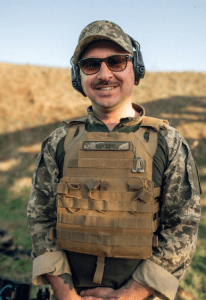 How do you feel about the inclusion of war sounds in electronic music?
I don’t think it is something forbidden. Art is always about causing an association and trying to grab some emotions from you. I think it’s ok. For example, these guys [1914], I love their project, I know them pretty well, we have a song we wrote together. It’s specific music. For some people it would definitely be traumatic to listen to something like this. Because it would grab some bad things from the bottom of their heart, from the bottom of their brain. But for the other people it’s art. You know, a lot of us like horror movies, it’s a weird feeling because it makes you stressed and as human beings, we try to avoid stress but then we are watching some horror movies to get some stress artificially. It’s the same with music. It’s a tool and it’s up to artist how they use it.
What role would you say does music play within the military?
Huge. I played a lot for the guys on the frontline sometimes you can change the whole kind of surrounding with music. You see the faces, grey faces, from the guys in the trenches and you see how music is transforming them, because it’s giving them the possibility to get their brain to some other places and even travel to visit their home because music is causing some association, to think about their beloved ones, to think about the values they are fighting for.
In general, culture is one of the main things in this war, because we are fighting for our lives, but we’re also fighting for our culture, because what russians want from us is to kill our culture and then kill us physically. So, when you are shooting the enemy, you are not just shooting to save your life, you are shooting to save Ukrainian poetry, Ukrainian music and traditions, Ukrainian painters, and actors… because music is the soul of the nation.
 Iraq war was the first mp3 war. Nowadays with streaming, it’s even easier to access music. I know you all probably had very different musical taste, but did you share and exchange music?
You mean war songs?
Not necessarily.
A lot of songs me and my brothers in arms were listening to were songs from the Vietnam war. Creedence Clearwater Revival, “Run Through the Jungle”, “Fortunate Son”, and some other songs, anti-war songs… It’s funny, guys at war pretty often listening to anti-war songs! (laughs). It was like this in the Vietnam War and it’s like this in Ukraine. It’s modern songs Ukrainain songs about war, of course.
Also, I was listening to a lot of Alice in Chains on the frontline. I don’t know why. I was listening to Alice in Chains from time to time, but for two months I was listening to Alice in Chains on repeat. I don’t know why. It just caught the flow to stay in some kind of normal condition emotionally. But it’s different. Some guys are into rap songs, there is even like a subgenre, trench rap, guys in the army they are writing their own songs almost on the frontline, very shitty production, very bad cheap beats, and they rap about how they kill the enemy in the trenches like forest fights etc.
There are a number of musicians in the army.
Yeah, plenty. A lot. Classic musicians, opera singers, conductors, symphony conductors, to some kind of underground stars. Different kinds.
I believe there was also a military orchestra in Mariupol that has been held in captivity…
Yeah, they are prisoners of war, there are still, as I remember, 22 of them captured by russia and that’s nonsense, because they are non-combatants, just guys from the orchestra. And they are still holding them. They’re it’s russians, holding civilians. Kidnappig them to exchange.
You are also a writer.
Yeah.

With Andiy from Бетон
Do you want to talk about that?
I love story telling. Stories are the main thing for me, if there’s someone who can share a good story with me, I can spend the whole night with this person, drinking beer, coffee, tea, just talking, walking, talking. I love to tell the stories, I love to listen to the stories, and that is why I love folk music because that’s the way how you can tell the stories through the music. But some stories are too complicated and huge to be told through the music, so you need a different formula. That’s why I started to write a novel, it’s a dystopian novel, it’s called Ivy.
The thing about my novel is that I kind of predicted the full-scale invasion because in my book the full-scale started in February 2022, and I wrote the book in 2020. So when the full-scale invasion started, I thought, “Woah, like in my book!” And the other creepy thing is that during my service I did almost the same that route that the main character of the book did in his journey. I have been directly in the same places where he’s been. It wasn’t my will, because it’s about the commanders giving you an order where you should be and every time there was an order and thought, “Goddamit another point from my book!” I got shivers on my back. And kind of partly repeated his path.
I started working on the second part of the book during the full-scale invasion, but I don’t have the possibility to end the book because like I am mostly occupied by my service, so I don’t have time to write. But when the war will be over, I will probably write the second part. And the second part is even worse than the first part, so I am worried it will be foretelling (laughs). I don’t want to get the world into trouble!
Last question, do you have time for music?
Partly, yeah. It’s easier with music, because you can write music from time to time. With a big literary form, like a novel, it’s hard. You should work on it on an everyday basis, build this world in your head, and live inside this world. It’s impossible to do it in the military. But with music I am still writing some songs, composing. Unfortunately, because of the accident [Sasha Boole had a biking accident and broke his arm], I am out of music for probably half a year. But we’ll see, I hope to get back to playing music.
 Did they operate?
Yeah, I have a huge piece of titanium inside of my arm, and eleven or twelve screws. Painful shit.
Any final words?
Definitely this war is the most documented war, you can see live streams with drones tearing people apart, all those footages from the treelines, from the GoPro action cameras with the guys shooting each other. The only thing I always want to… the message I want to get to the people for the western world, for the people who only see the war through the screen of their phone or laptop, is always remember that there’s like a human being behind that footage, and each one of them is a guy like me who wants to write music, wants to write books, have fun, walk with his dog, build a family and create something good.
We are forced to fight because we have no other choice, actually. We are fighting for our existence. I really don’t want that our war will become like something like entertainment, you know, because it’s footage from somewhere. Always remember that it’s live people there, they are suffering, they have dreams, and unfortunately, they are dying. russia is a terrorist state, it’s a huge threat, and the world should act together to stop this plague otherwise, you see, like when the war in Ukraine started, russia had no allies in the world, right now they have a lot of allies. And right now, some other conflict started just because other guys sitting in bunker thinks, “Ok, if Putin can do it, why can’t I?” I also, will go and invade some independent country. It’s like a bacteria, it’s spreading, and we should do something about it together.
I know it’s difficult to make predictions, but what are your feelings about the negotiations?
I think there will be some changes soon in the war, and maybe there will be some kind of pause, but it won’t be for too long, maybe after that it will be something much more global. For Ukrainians, we are already prepared. For people from other countries, you better get ready. Buy yourself a gun. Do some doc med training and think of what you are going to do when the sirens start sounding in your city.
MAY 13, 2025 – LVIV
 Бетон [Beton]
Andriy Zholob: My name is Andriy, I do guitar and vocal in our Beton band. Beton is concrete in English. We are a three-piece band; we’ve been doing it for a big part of our lives. Together with Bohdan we’ve been doing it for 20 years and had one other band before Beton. Now we have Beton and Oleg has been with us for I suppose 10 years.
We are not only musicians we are not only friends we are something like brothers. Together we go to vacations, together we help each other with some repair jobs. Together with Bohdan we ride our bikes and so on, this is our idea of rock and roll, this is how it looks like.
Oleh Hula: My name is Oleh, bass guitar player in Beton band. We were familiar for more than 20 years. I am the youngest in the band. We play what we want, we go where we want, and I suppose the main thing is that we do what we want.
A: We do it for fun.
O: Yeah.
A: It’s very interesting that people like what we do we have some audience we have some fans somebody is buying our records, somebody is asking to play sets, so we are happy about it.
Bohdan Hrynko: Hello, my name is Bohdan, the drummer and also do vocals.
A: Oleh is also doing vocals.
Do you have any formal training?
A: We do our trainings every week…
No, I meant, do you have musical education?
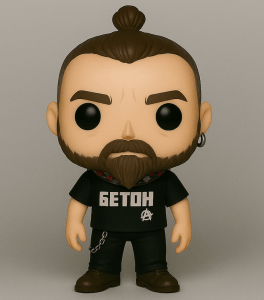
Andriy
A: For me it’s a long story. When I was 12, I heard Unplugged by Nirvana, I wanted to play Kurt Cobain. I attacked my father, please find me a guitar teacher, my teacher was so clever that he asked me, “What do you want to play?” And I said, “Nirvana!” “Ok, let’s use Unplugged in New York like your study course,” and song by song we were learning the chords from every song on Unplugged in New York and that’s how my teacher helped me to love guitar not to play that classic and so on but to play the thing I wanted to.
O: As for me it was more… So, St Nicholas brought me a guitar, I sent a message I want a guitar, I was 15 so St Nicholas brought me a guitar I started copying my friends who played somehow on guitar, so I just tried to copy some riffs and just listening new songs, so it was CDs very rare thing to have some new wave new music, so I just wanted to repeat..
A: To make covers?
O: To make covers, I wanted to play something familiar, something similar to what I heard so I just found my neighbour who was a drummer and guitar player so we started as students to play pop punk, we played a lot of concerts, touring, Donetsk, Kyiv, we started in 2000s, and somehow we grow, but I am not professional I have no professional music education…
A: None of us has professional music education.
O: We are amateurs…
A: When you are playing for a long period of time, there are two possibilities, or to stop the existing of the band or to play long enough
B: And get better and better!
A: I had an experience of playing in black metal bands, in doom metal bands, and then suddenly everything crossed, and now we can use our love to some trash metal, to punk rock, to hardcore and do something like a mix of it in our music. We don’t have you know only correct way how punk rock looks like and no way out. Somebody says, “It’s not real punk rock what you play.” But who cares? We play it how we like it.
O: And how we can.
A: And how we imagine it. We bring some new songs so rehearsal let’s try to do it. Now it wouldn’t work, in two months we try to do it once again. Ah, I have an idea! And we remake it, make something new, maybe we are going to do some lyrics, no idea about lyrics. Two weeks until recording we have a song without lyrics and we sit together, and think who will invent lyrics? And, then Bohdan has an idea and he writes in our messanger, I have an idea, we say perfect, great text, great lyrics.
O: So music is just a result of what we are talking about in chats, in life…
A: We are joking, we are smiling, we are criticising each other, we are shouting maybe at each other…
B: It’s our favourite hobby, something like that.
A: To drink beer together, to shout…
B: It’s a part of our lifestyle.
Sorry, silly question but where does your name come from?
A: When we finished with our previous band, because our vocalist, she said I have enough, I am too adult to play this music, or something like that, so we had to make a decision, or to finish it all or to reinvent something new then we started our new band, then in some months here comes a live show and we still don’t have a name. We had an idea, something like “beetroot”, but when our friend who was announcing us in the concert asked, “How should I introduce you?” we say, “Ah… maybe Beetroot…” “Beetroot? Hmm. Beton!” Ok, let it be Beton.
Ok, can I get an idea of what the punk rock scene is like in Ukraine and in Lviv in particular?
A: Do you mean, do we have a punk rock community here?
Yes.

Oleh
A: We had. Now I suppose we are the only presenters of punk rock in Lviv, I suppose 20 years ago we has a poster where Dmytro Kumar from 1914 was vocalist, we had Looser…
B: We had a lot of punk rock bands. 11:52
A: We could make a city punk rock festival of 10 bands, 12 bands. Now we don’t have that I am even going to say more.
B: Or we don’t know, because we are older.
A: But we don’t see announcements of concerts.
O: It’s under the radar, we don’t have a transparent community right now…
A: It not popular to be a musician, amongst youngsters it’s not popular to have a band, maybe if you are a musician it’s easier to be at home to input your sound card, to play at home guitar, to add drums, and to be a composer for yourself. We are addicted to old school to amp marshals to live drums, and so on, so we do it the old way and we are happy that there are still musicians in Ukraine who do it the old way. So really, we meet in concerts we meet them in some clubs, we had feeds with musicians from other bands and that’s great but now we do not have a punk rock community.
I suppose friends from our generation they don’t have time, they are too busy. I cannot say we are not busy; Bogdan is an architect, I am the head of the veterans’ office in Lviv, I was a doctor for 18 years. Oleh is an owner of a sound rental company, and of a military company, so… yeah, we are busy guys but all in all we have our own time without our wives here, sometimes with our kids. Our wives know that every Tuesday we are here to play punk rock and no, music like ours is not an environment in Ukraine, we do not earn much money with our music. You know it’s a hobby that helps us to pay for this rehearsal room, maybe to buy some food while we are on tour, maybe to print some new merch and to make a new record.
O: First of all is like a therapy spending at least two hours a week playing is like a neuro-massage, something like that.
A: Oh, yeah, now almost every week we play a concert, we decided to make ourselves a tour, we do not work with some label, we decided to work with some pub in different cities in Ukraine, “Can we play at your place? Yes.” And this is how it works. It’s DIY. There we sell our merch. This is the hobby that can pay for itself. And that’s great.
O: Yeah, It’s not about money…
A: We are happy that we can make some money, we just put it in our band bank and we use it for some rental…
O: We are happy we can do it and play shows…
A: To meet new friends…
O: Sometime I think it would never happen again, these times, a lot of concerts, old friends.
A: Now these friends, some of them are in the military, others have left the country. For me as a veteran this music is like a therapy because I can spit out my demons and I am happy about it. When I was working with a psychotherapist she said, you are happy person, you have your music, and that’s a positive trigger for you as a veteran.
Do you mind if we talk about the full-scale invasion? Many artists told me they stopped playing in the immediate aftermath of the full-scale invasion and that it took them a while to get back into music. Also, especially with bands, with internally displaced people it was difficult to make new music. Has you experience been similar?

Bohdan
A: Yes, for maybe the first two months…
B: We were happy to make a cover version of The Clash’s song London Calling as Kyiv Calling.
A: It was an idea of a friend who lives in Kyiv and has connections with charities all over the world and he wrote to me with an idea of getting permission from The Clash to remake the song as Kyiv Calling and change the lyrics into Ukrainian reality so together with Professor Brian Brivati from London we remade those lyrics and then suddently it exploded so every day we had some questions from different media from different newspapers from Japan, from Southern America, we were in Rolling Stone Magazine!
B: It was how we survived and went back to music.
A: It was for us like a trampoline, it just pushed us. Then I went to the army and during that time, they guys were helping our forces. Oleh was working with military equipment, Bohdan was bringing cars from abroad for the military.
B: I heard our song on the Polish radio…
A: Something very strange.
B: It was a miracle for me! Our band playing on the Polish radio!
O: It was really hard to restart playing for two months, because it was a brig pressure. For example, on the 5th day of the full-scale invasion, Bohdan and I we went to the recruiting office and we signed up as volunteers, but nobody called back.
A: I got my call to arms. I was not as a volunteer; I went to the army as a military surgeon. I did some music there. The guys had some rehearsals like drum and bass guitar here in Lviv. And during all my service we had some ideas, I did some recordings and sent them to them, and they sent me some videos to me and for two years we survived as a band, and when I returned, I just came to rehearsals, and we just started playing as nothing had happened. So, I suppose it was for me the main thing about returning to civil life, the main signal of civil life.
So, you are a surgeon?
A: Hmm-hmm.
Is that your day job?
A: It was, because after returning from the war, I had enough of blood, of entrails, of broken hands and legs, of decapitated bodies… I had enough. Now I work as the head of the veterans’ office helping veterans to resocialise to return to work, to families, to help with psychotherapy with environment, with law problems and so on…
And who helped you?
A: My boys, my family, and my motorcycle.
What role would you say music has in the military?
A: Do you mean near the frontline?
Yes.
A: I had two guitars there, I was the commander of the medical unit and every evening after our work I was playing some Pink Floyd, some Bon Jovi to my boys. They were reading books, watching TikTok and I was playing, and they would say, “Man, it’s something like, you know… something impossible.”
Also, every day I was listening to music and even if shelling was all around, we were in some shelters I was listening to death metal, to Cannibal Corpse. That music helped me, it just cleared me.
I was told that metal is one of the genres that is most played in the military.
A: No. That was about me. Mostly people there listen to some hip hop, to Ukrainian hip hop. Now there are many hip hop bands, and many hip hop vocalists are also servicemen. That is why it’s very important. In every military car you can listen to some Kalush or to something like that. About metal, I like metal, I maybe know two more among servicemen who like metal.
So it’s not…
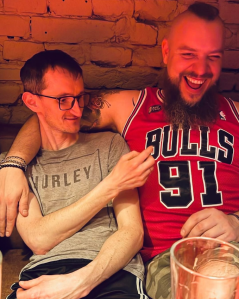
Andriy and Oleh
A: No. I understand that for example in the US veterans like Five Fingers Death Punch or something like that.
We need to improve that, we need to work more with our music, to make it more popular to others. And I happy that veterans that at our concerts we can see veterans, they are coming, they are singing with us, they feel that unity. When my wife asks me, “Are there any girls hugging you after your shows?” I say, “No, there are big sweaty bearded boys with tattoos that hug us,” because it’s true. Our fans are big drunk guys.
B: As we are
A: Yeah.
So, has you fanbase changed?
A: I think no. Now more veterans come to our fanbase, but it is mostly because there are a very big number of veterans among us. And very strange thing, people have started taking their kids to our show. We sing with explicit lyrics, and they bring their kids, and when I ask them why, they say, “It’s better is they hear it from you than from some shitty guys.” And kids want to buy our t-shirts. “Can you sign me the t-shirt?” They tale photos with us. Something strange, we never thought we would play for kids, but we are happy to do it. It’s very strange that now we have a decreasing age of our audience. Our audience, in YouTube I search from time to time, and it was between 37-45 years old and now it became 28-35 years old. It’s great that younger people listen to our music.
We now have four albums, we can play an hour and a half, if needed, but mostly we play an hour and ten minutes. We are ready to play concerts and festivals, but the only wish is our victory, because we are sure that after our victory, we will have the biggest festivals and the biggest shows.
Is there any moshing going on during your shows?
A: Yeah! We have traumas on our concerts, broken legs! Our fans are very aggressive…
B: Not aggressive… (laughs)
A: It’s a positive aggression. Sometimes they break arms.
Did you notice a different kind of energy after the full-scale invasion?
A: No, but it’s a therapy now. Before it was just fun. I suppose when people get tired after those mosh pits, they fall, they help each other to stand on their feet. It helps. Again, it something about unity. It’s the very main thing our nation needs. Unity. All our nation is now in a mosh pit, we are helping each other and if we are gonna stay alive after this show, we will be one of the strongest nations, but if we will survive, because I am not a pathetic veteran saying we are winning… It’s a very hard and heavy struggle. And our enemies are very cleaver, they are empty minded and full of propaganda, and they will not stop just because we ask them, or somebody asks them. Diplomacy doesn’t work…
B: With russians.
A: Yeah.
B: For many years. It’s history.
A: Don’t waste paper when signing anything with russians.
O: Otto von Bismark.
A: Yes, its’ from Otto von Bismark. It’s a waste of paper.
So, you are not optimistic…
A: I am realistic.
O: You know in history, this has been repeated from the First World War, the Second World War…
A: Nothing changes.
B: It’s from the Middle Ages… My grandfather died while fighting russians, so I am just continuing his work. In every family of ours we have a grandmother or grandfather who were victims of the russian empire, of the soviet empire. If you wanted to be Ukrainian, listen to Ukrainian music, read Ukrainian books, trying to find your Ukrainian history, immediately you were sent to Siberia. This is how grandmothers and grandfathers mostly ended. So this hos we are now in a process of a big social experiment while trying to keep our nation alive. I suppose our music and our punk rock gives us this energy.
Are you all from Lviv?
A: Yes.
B: From Lviv and our families from the Lviv region.
A: All three of us were born in Lviv.
So Ukrainian is your first language?
A: Yes.

Andriy and Bohdan
And how important would you say is the language issue?
A: You mean Ukrainian and russian? russian language is a plague. Our land is infected by russian culture and language.
B: It’s a part of the russian war and propaganda and of russian genocide.
A: We cannot accept to being Ukrainian and speaking russian. Those russian speaking Ukrainians are victims of russian propaganda and genocide. Even 10 years ago, the most popular music stars in Ukraine were singing russian songs. We were not surprise that Kirkorov, Pugachova were playing shows in Kyiv in Lviv. They were playing in our opera house. I suppose it’s something like an infection.
O: It’s an imperialist narrative just repeating in the language question, in business, so it’s a very complicated question. For me there is no language issue, it’s mostly propaganda.
B: But now most of people understand that russian is the language of the enemy and our warriors on the frontline try to speak Ukrainian because when you hear the russian language on the frontline you understand that there is the enemy.
So, what can you tell us about your latest album?
A: It’s called Unity. We invited our friends musicians, who are either servicemen or helping the army, to do features in our songs. Dmytro from 1914, Sasha Boole, Albert Tsukrenko of HZV, and Oleksandr from VV
B: He’s a legendary Ukrainian punk rock musician.
A: Our album is rather short as always.
B: Twelve or seventeen minutes.
A: We cannot play long songs and our Ukrainian radio stations say thank you for your short songs because it’s a good radio format. We play fast, we play loud. Sometimes Oleh screams, and we are always happy to present our music to our audience.
 Why did you feel it was important to do collaborations?
A: It was about unity to find again those chains that connect one musician to another. When we were asking Albert, Oleksandr to be guests, no one denied us, everyone said, “It’s great”. It’s about friendship, connection, communication and unity.
Any last words?
A: I suppose I would like to say that we really want to whole world to know that in Ukraine there are great professional bands. Just try to listen to Ukrainian music, it’s on all the streaming platforms. Do not stereotype Ukraine, do not think that Ukraine is the same as russia, and just please understand that Ukraine is not a beggar country but a partner country, and special core inside that helps us with our punk rock, that helps other bands with metal with hip hop. We have some speciality now with our experience, because many Ukrainian musicians are on the frontlines, are veterans. It’s an interesting musical and social experiment.
MAY 14, 2025 – ROMANIA

photo by Valeriya Cooper (Odesa)
We are Farba Kingdom, we do conceptual music and related art. At the moment I am very into industrial, you will be able to hear it in the new LP album Latest Model, which is coming out soon.
Has the full-scale invasion changed the way you think about music and sound in general and did it change your setup and playlists?
russia’s invasion of Ukraine hasn’t affected my attitude to sound or my playlists in any way, because there was no russian content there to begin with. Even as a child, I realized that russian content is very secondary, and I have never managed to find anything truly original in it.
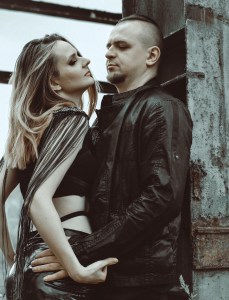
photo by Valeriya Cooper (Odesa)
You are a husband-and-wife duo, how does your collaboration work?
How our collaboration works is a mystery to both of us. Everything that happens between us is often irrational. Because we have quite different musical backgrounds. That’s probably why we are often told that Farba Kingdom’s music is so eclectic.
How would you describe the dark-wave scene in Ukraine and how would you say it relates to that of neighbouring countries?
I can say that in Ukraine there is quite a large constellation of groups with the so-called post-Soviet sound in the spirit of Molchat Doma. This direction is not very interesting to us. But sometimes we come across groups whose music really touches. For example, the Kiev duo Garden Krist. There are few such groups, but there have always been few of them everywhere.
Back in March 2022 you released the track “War”, which was followed by other war related tracks. Would you say that the role of the arts for Ukrainian artists has shifted from one of entertainment to encompass the expression of identity, communication, and emotional and physical survival?
I can’t speak for other artists, but for me art has never been entertainment. I was very offended when I encountered people in life who considered art entertainment. For me, it is a natural and long-established way of life. It is closer to spiritual practices. Can a spiritual ritual be called entertainment? Probably yes, but I was not interested in such people. Of course, many people after the upheavals associated with the war found great support in art, but since I cannot imagine my life outside of art even in peacetime, it is difficult for me to answer for others who come there as guests.
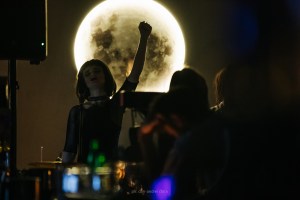 You are currently based in Romania. How would you describe your experience of the full-scale invasion?
If I had to describe the events that took place at the time of russia’s attack on Ukraine, it would be trivial, because we acted like everyone else: we drove west in large columns from the bombings in Odesa, stopping at all military checkpoints. There are already many such stories on the Internet. But I think that our emotional experiences were similar. In such extreme situations, people often become similar to each other. I am very glad that I am Ukrainian, because in critical situations our solidarity with each other only increases. It seems that everyone around you becomes your relatives.
Does nostalgia have a role in your music and what songs and sounds best remind you of Ukraine?
Nostalgia doesn’t affect our music because the genres we play were around long before we were born (lol). But when we listen to our old songs, we certainly remember the events associated with them.
What are the most persistant misconception about Ukraine you have found yourselves having to counter while touring?
Very often, when people meet Ukrainians abroad, they think that Ukrainians receive huge financial support, do not pay rent, etc. For a long time now, we have all been renting housing here with our own money, spending it in local stores and have not received any benefits for a long time. All our Ukrainian friends work and invest their money and time in the local economy. It is a pity that people do not understand this.
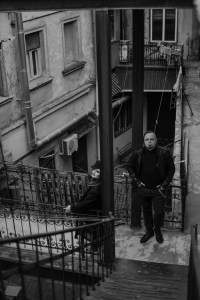
photo by Alena Gulyak (Arad, Romania)
Are there any Ukrainian albums from the past three years that you feel have captured current events in a meaningful way?
I just listen to certain music, without tying it to any country. I don’t really understand how music can reflect events, music is not about events, it is about emotions and spiritual practices. Events are best reflected by news feeds.
Are there any specific tracks or albums you have stopped listening to because they might be associated with difficult moments since the full-scale invasion?
We are not very pleased to listen to our songs written in the first months of the war. That is probably why I have never listened to the song “War” again since then and I don’t remember well how it sounds.
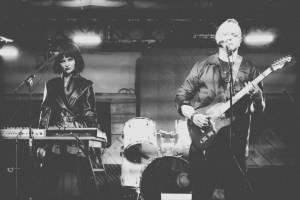
photo by Albac Anelise (Arad, Romania)
Which book / film / album / song / traditional dish / podcast / blog / artwork / building / meme best captures Ukraine for you?
Since I can list for a very long time, I will try to answer with an associative series: Тигролови – Іван Багряний, Пропала грамота / Загублена грамота, каштани, ринок Привоз, гурт Вій, Меч Арея, Тіні забутих предків, Василь Стус, Тайстра Чугайстра, Воля, оселедець, Нагнибіда, Івасюк, Миколайчук, химерний etc. [Tiger Hunters – Ivan Bahryanyi, The Lost Letter / The Lost Letter, chestnuts, Pryvoz Market, Viy Group, Sword of Areya, Shadows of Forgotten Ancestors, Vasyl Stus, Taystra Chugaystra, Volya, herring, Nagnybida, Ivasyuk, Mykolaychuk, whimsical etc.]
MAY 17, 2025 – BERLIN
My name is Serhii Pylypchak, and I perform under the name Kindracoma. I come from Ukraine—my hometown is Dnipro—and for the last eight years before russia’s full-scale invasion of Ukraine, I lived in Kyiv.
I started playing piano at the age of 7. But I was getting bored with all the classical stuff kids are taught in music school, so when I heard Nirvana for the first time—oh boy, it had an impact on me. Farewell, piano—here comes the guitar!
Since I was around 13 years old, I got into music production and formed my first band with a high-school classmate at the age of 15. The band was called Them Bones, and for the next eight years, we played in genres of indietronica and live electronica, combining live instruments with computer programming, synths, and drum machines.
Dnipro has always been on the edge of rave and rock underground scenes, where you could hear everything from classic rock and alternative/nu-metal to IDM, drum’n’bass, breakcore, and experimental. I was heavily involved in the underground scene—both as a listener and as a performer. We knew how to party, and we were brave enough to experiment with all sorts of genres and formats.
Live performance on the roof of a residential building? Sure. Legal or illegal rave in an abandoned or semi-abandoned factory? Easy. Open-air event on an island on the outskirts of town? Why not? Experimental noise rave with no prep? Yes sir.
I participated in many bands in Dnipro—Jacuzzi Project, TAU, sleepingawake, Silent Orchestra, Them Bones to name a few—and collaborated with Submatukana, Ozverin&Merzopak, Jungleman, and others.
After I moved to Kyiv, I tried a few different collaborations and then formed Kindracoma with my good friend Andrii Sokolov (a.k.a. Walakos), mostly performing in trip-hop, electronica, and IDM. The band struggled through multiple line-up stages, and now it’s just me. But we’re all still good friends to this day.
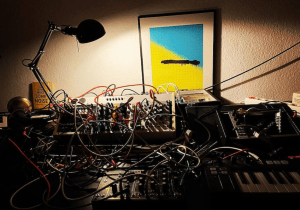
Once I was musically on my own, I had to decide whether to continue or not. There was always someone with me who knew how to record and arrange music—while I was mostly the ideas generator, music and lyrics composer, and instrumentalist—but never a producer. I learned Ableton, and within a year I already had a full table of synthesizers, drum machines, and all sorts of controllers.
 Has the full-scale invasion changed the way you think about music and sound in general and did it change your setup and playlist?
The full-scale invasion changed everything. I moved to Berlin just 11 days before the war began, and for the first few months I couldn’t do anything musically. It was a blinding disaster that no one ever teaches you how to deal with.
The first sounds I was able to produce were harsh noise—just using my synth as a therapy tool.
Everything changed: new reality, new language, new society, unfamiliar people on one hand; lack of friends and family on the other. And the refugee status—the fact that I had never been a refugee and never even thought that this could or would happen to me—yet here I was. And there were thousands just like me around me.
Confusion, depression, frustration, pain, psychosis, panic attacks, gnawing guilt, internal contradictions, all-encompassing hatred, derealization.
All of this affected me deeply. I used to sing, but I don’t anymore.
Before, I played IDM, psy-chill, and cinematic downtempo. Now, my music has turned darker, harsher, angrier, noisier. Subtractive synthesis with polished, warm, nicely filtered sounds couldn’t do the job anymore.
So I dove into modular synthesis, focusing on the Buchla-style approach: FM, wavefolding, complex oscillation, heavy distortion, function generators, resonators, and more—moving away from predictable form into experimental territory.
 I Am the Ender is your first album as Kindracoma. It has been six years in the making. Has the full-scale invasion spurred you to release it and how would you say the final result was influenced by events on the ground?
The name I Am the Ender is quite self-explanatory. I got a message from a friend on the front line who said that there may just not be another chance to finish the work in progress. He didn’t mean me in that message, but it resonated – things need to be completed. That’s when I knew I had to overcome perfectionism and complete the album.
I had material for three more albums, but I selected the tracks that resonated most at the time, then finalized, mixed, mastered, and released them.
To end it. End the process. End the fear of imperfection. End the thought that if I’m gone tomorrow, no one will ever hear it. So I did.
The album includes material from three core musical phases. The track “phytosedum” was written by my first band Them Bones around 2005, restored from old Fruity Loops projects that somehow survived nearly two decades. “Modular” was the first track I wrote entirely by myself. “Anxiety” and “Easternumb” were written in Berlin. Other tracks were created in Kyiv, when I finally felt I could make music on my own.
At the time, I wasn’t sure I’d continue making music, so this album had every chance of being my first and the only release—both the start and the end of Kindracoma.
That same attitude resonates with the Frustratio label’s status—a label originating from city of Mariupol. My release is their only one so far, with no clarity on whether it will continue.
What can you tell us about the production process for Skiftjan, your sophomore album, and how did the new circumstances you found yourself in affect its darker and more distorted sound?
The word Skiftjan refers to “changes” in several languages. This album reflects the shift from melodic and soft music to something more aggressive and dark—from melancholia to depression, from the reality before to the one after the invasion.
The track “CTFS (Close The Fucking Sky)” was the first music I produced after the war began—harsh noise, using synths to recreate the sounds of bombing and destruction. “Gråter” reflects the transition from life to death—more like a bardo state of existence, not the afterlife. “Last190731borders_passed0099” and “Plastik That Never Find Its Way Out” capture the feeling of frustration and mark my shift from a pre-defined compositional approach to a more intuitive, live-recorded one—where instruments resonate with my inner state. “Tension” closes the arc from fear to frustration to anger in the album.
I knew I had to release this album, to make it heard. I wanted to interact with one of my favorite labels — I Shall Sing Until My Land Is Free. And I did.
 Your latest release Mara is characterised by a saturated sound. The album “explores the sense of death, walk on the otherside, making the way thru hallucination, dissolve in the surrounding ambience, end of existence, a bardo.” Do you feel yourself in a state of limbo and has the making of this album been cathartic for you?
I must admit Mara was the most emotionally difficult release so far. It was also my first attempt at conceptual art. Each track had a clear idea before being written, and I embedded many Easter eggs in the release—timelines, track names and positions, number of tracks, those excluded, the planned vs. actual release date, cover art, album name. It all has meaning. Nothing is random.
But this time, I decided not to explain it. I believe my listener is smart enough to figure it out, emotional enough to feel the hidden meanings, or abstract enough to invent new ones.
I had rough times writing this album and wasn’t sure I even wanted to release it. But just like with I Am the Ender, I decided to finish it and close the gestalt.
It was a rewarding experience to work with KYIVPASSTRANS, an experimental music label with dedicated people who encouraged me to complete the release.
What can you tell us about the Dnipro music scene and how would you qualify the Dnipro sound?
To me, the Dnipro sound today is represented by the label DNIPROPOP and the artists around it (not all of them are from or currently live in Dnipro itself, but all definitely have deep connections to its cultural bubble). The label was initially established by members of the Module club community—an art formation and initiative aimed at providing space for all sorts of artistic expression: from a rave club to production studios, from a state-of-the-art falafel spot to a vinyl records store, etc.
Definitely electronic at its core—but not limited to it—Dnipro’s music scene today is full of incredible (and I’m not exaggerating here) artists: Igor Yalivets, Monotonne, Walakos, Kurs Valüt, Gamardah Fungus, I.iteration, maxandruh, Warнякання, Ship Her Son, Klenova, MC Brehunets, DZ’OB, Toucan Pelican, Parking Spot, Soundots—to name just a small fraction.
To me, Dnipro is now the epicenter of diversity and modernity in electronic (but not only electronic) music within Ukraine.
 Are there any Ukrainian albums from the past three years that you feel have captured current events in a meaningful way?
If I had to choose the most important album in terms of capturing Ukraine’s timeline over the past three years, it would undoubtedly be Warнякання by Anton Slepakov and Andrii Sokolov. This work expresses, in words and music, what was—and still is—happening, from the perspective of actual participants in the events. It scrapes the reality into lyrics and sound. It is an incredible work and an important one—not only for its artistic or cultural weight, but because it documents things happening from a first-person point of view. Someone simply had to do it.
But I also want to highlight a few more releases that have captured the present moment equally well:
- Monotonne – Unrelated and Related albums.
Unrelated captures the sense of vacuum—a state of mind I believe is very familiar to all Ukrainians.
Related features many artists and gives a good overview of what today’s Ukrainian music scene looks like. - Walakos – Unplugged, an album recorded while cities had no electricity due to missile strikes.
- Troxellemott – Ankht, an album that unexpectedly ends with the sound of a missile strike, destruction, and broken glass—quite accurate representation of how that moment felt.
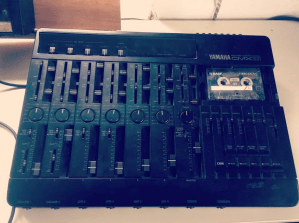 Are there any specific tracks or albums you have stopped listening to because they might be associated with difficult moments since the full-scale invasion, like albums you might have been listening to during the first few months of the full-scale invasion and that you are now unable to play?
There are tracks and albums that became difficult to listen to after a few months—but things went deeper than that: I stopped listening to music altogether. Well, most of the time—I just don’t listen to music anymore. It’s difficult to explain, and I wouldn’t categorize it strictly as “associated with difficult moments since the full-scale invasion.” Rather, the war changed something in my internal chemistry and aged me significantly. I no longer experience joy from listening to music—if I can use such a term.
Music has become a tool. A tool to survive these dramatic days and changes brought by the war and this completely new environment—by producing music and expressing it out of myself. Or a tool to hear what my fellow musicians feel and express. It’s no longer leisure. Sometimes I listen to Autechre or Kotra just to get something going—using it as fuel. Other times, this same music brings discomfort, and I have to turn it off.
There is definitely trauma behind this, and I’ll need to work through it. But for now, music has changed its function for me.
Which book / film / album / song / traditional dish / podcast / blog / artwork / building / meme best captures Ukraine for you?
- Films: Shadows of Forgotten Ancestors (“Тіні забутих предків”) by Serhii Paradzhanov; Cyborgs (“Кіборги”) by Akhtem Seitablayev; Pamfir (“Памфір”) by Dmytrok Sukholitkyi-Sobchuk; 20 days in Mariupol (“20 днів у Маріуполі”) by Mstyslav Chernov
- Traditional dishes: Borsch; Varenyky; Banosh
- Books: Depeche mode by Serhii Zhadan; Tiger Trappers (“Тигролови”) by Ivan Bahrianyi
- Album: DakhaBrakha, Yagudky
- Tracks: Курган – крик душі; ДахаБраха “Закарпатський реп”; Otoy “Enemy”; Тол “iii ki” Onuka “When I met you”
- Podcast/Blog: Сергій Стерненко
- Artwork: Art by Jewhenija Haptschynska (Gapchinska)
- Meme: “russian battleship – go fuck yourself”
MAY 21, 2025 – KIYV

I’m Anya. I work with various artistic practices — visual or mixed-media. A bit of everything, so my self-representation is usually unclear. Lately, I’ve been working with stop-motion animation, fine art, self-publishing printed zines, and sewing different clothes. Now I realize that these practices usually arise from a specific idea. I explore a new medium when I feel that it fits a particular idea best.
That’s how my musical path began: I was struck by how the sounds of the city changed after the war began, and I started thinking about how I could contribute to the reflection on soundscapes and my emotional perception of these changes. At first, I wrote diary entries, then once did a performance during a residency at Nida Art Colony and eventually turned to a DAW. That’s when I started manipulating and sampling urban sounds — especially the air raid sirens.
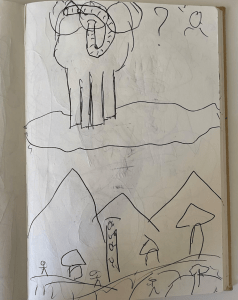 How would you say your acoustic landscape has changed since the full-scale invasion and are there specific sounds you find triggering and others that you find reassuring, sounds you lost, and sounds you have discovered?
Hearing the sirens every day felt absolutely delusional and apocalyptic.
The first months of the war were filled with deep, unknowable experiences and emotions I couldn’t grasp — and couldn’t find words for.
Before the war, I loved different kinds of music and wanted to make it too — but it was always at least a bit entertaining I think.
After the invasion, my environment changed extremely. I lived in Lviv, which became the biggest rescue ship for people from the eastern regions. New friends appeared — they listened to music that felt much closer emotionally. Music about eternal chaos, sorrow and despair, emptiness, loneliness. Maybe I began to perceive music more contextually… now I need a “special mood” for entertainment music — not the other way around. I also think that since the war, my hearing has become overloaded, so I want to listen to something really simple. In general, a lot has probably changed. But memories of life before the war are slowly fading.
You are also a visual artist and have made two animations, “Elephant and Dog” and “Once upon a time, there lived two elephants.” These could be considered existential works. Would you say that the role of the arts in Ukraine shifted from one of entertainment to encompass the expression of identity, communication, and emotional and physical survival? And why the elephants?
No, the contemporary art of Ukraine that I’ve followed has always been political and heavy. And I think that’s what really sets it apart from Western art… or maybe it’s just my involvement and emotional attachment to the Ukrainian context.
Since 2022, I’ve started occasionally traveling abroad, visiting galleries and experimental music events. And it all felt so different. Mostly because Western artists and performers often experiment and play directly with form, with color or sound… they explore the problems and limitations of artistic language itself. Whereas here — it’s always about life problems. About bureaucracy, poverty and the economy, past connections to the Soviet Union, post-imperial things, suffering, problems, suffering.
The Little Elephants project started in the summer of 2022, when I had insomnia. I was counting animals to fall asleep. Children often count sheep. I was counting elephants — like the character from the Ukrainian Soviet cartoon Petryk Pyatochkin (How Petya Pyatochkin Counted Little Elephants, 1984). When it helped me fall asleep for the first time, I was amazed — and I wanted to draw them.
I’ve always been into dream-related imagery and aesthetics, but even more than that — I loved the idea that the image of elephants helps me sink into a state of escapist sleep.After the drawings, I wanted to make an animation. I found some archival fairytales written by Oleh Holosiy, and based on them, I made two stop-motion animations. That became my diploma project at the art academy.
Are there any Ukrainian albums from the past three years that you feel have captured current events in a meaningful way?
лагідні стосунки зі світом на дні землі by Oleksii Podat is really great.
 Which book / film / album / song / traditional dish / podcast / blog / artwork / building / meme best captures Ukraine for you?
Some of my specials:
- an article «Another Road Beside the Peace Avenue» by Borys Filonenko
- SOLOMIYA Magazine
- I love a film director Roman Liubyi and his films Iron Butterflies and War Note
- «Ситуаційні клумби» project about creating flower beds that will become memorials to those we have lost, those who have left, those who have been taken away
- An album Transilvania Smile, 1994 by Svitlana Nianio.
- An album Liebestod by Alexey Shmurak & Oleh Shpudeiko
May 24, 2025 – SUMY
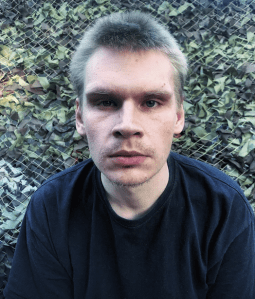 Принц Буба [Prince Buba]
Hi there, I am known as Принц Буба, currently a serving member of the UAF and a sound artist/musician.
Has the full-scale invasion changed the way you think about music and sound in general and did it change your setup and playlist?
Well, I started my practice—more specifically, started sharing my own music/art (I mean, before that I played in some bands as a bass player and tried to write some electronic/industrial music but never had the courage to share it)—somewhere right after the full-scale invasion took place, after I met my now dearest friend Anton Malynovskyi, who at the time presented himself as a conceptual artist and had no relation to music or sound design whatsoever.

With Anton Malynovskyi
First, it started out as a joke, like “what if we started making noise music and became known and regarded as noise artists?” (because, you know, everyone who has anything to do with arts and music is a noise artist nowadays), but then through a series of meaningful conversations, live performances, and collaborations with other artists, we both felt that sonic experimentation might be a thing—that it might be the medium we were looking for to channel the things we care about—as it involves constant practice in search of new techniques and ways of expression to maintain the experimental nature of our music.
(I personally follow Cage’s definition of experiment in music—so yeah, you have to change your method from time to time, otherwise your output turns homogenous and each piece becomes indistinguishable from another. On the other hand, gently tweaking something within a single method may give you a variety of results, so in my opinion it’s kind of a balanced approach.)
Which is kind of an entertainment for the artist (and an entertained artist tends to produce more artistic output), but also applies some restriction (like, it has to be something that has to do with sound, right?), which provokes you to look at common and trivial concepts from a different angle without focusing too much on the medium itself.

Lanivshchyna: The Land of Fields
You created the Audio installation on reel-to-reel and cassette players Lanivshchyna: The Land of Fields at the LVF 2025. This is a “spatially extended sound composition covering an imagined square kilometer of steppe in Donbas—detached from the current military context. Sounds of birds, wind, insects, and industrial machinery, each recorded on separate tapes, gradually decay with every playback on individual tape recorders, illustrating how our memory of what was once fundamental and essential fades and shifts over time.”
Could you talk us through the production process, are these found sounds for instance and where did you source them from? Also, how did the whole project came about?
Actually, in terms of production, this piece is very similar to Reconstruction, as I’m once again restricting myself from using any samples or pieces of field recordings or anything you might consider “authentic” sound in relation to the scene portrayed. All individual sounds are synthesized. For the most part, I used software wavetable synths, as I’m fond of their flexibility when it comes to semi- or fully generative input to control the parameters, which I think mimics the chaotic nature of actual soundscapes, as perceived by the spectator.
My primary goal in shaping the method (for both projects) was to strip the workflow of any authenticity—like how an actual memory is a re-imagining of events, often distorted to a certain degree. In Lanivshchyna, however, we can also witness a decay of a physical medium in real time, which serves a multiple purpose: it both serves as a metaphor for the loss of actual memories of a place and contrasts the digital (or, for the sake of concept, better put—“synthetic” or “synthesized”) nature of the material itself.
I first came upon the idea for the project when I heard a clip from Kraftwerk’s Autobahn, actually—like, the way it captures the zeitgeist and the feeling of the place “represented” in the piece without being “sonically authentic” fascinated me. I’d also cite Varèse’s Amériques as an indirect inspiration for this series, as in some way it made me look at rhythmically complex landscapes imitating real-life environments as a music piece.
 It is difficult not to think of William Basinski’s Disintegration Loops in the way decay is an integral part of the work, but Heinali’s Kyiv Eternal also springs to mind, with its attempt to capture a soundscape that has been lost.
This is nothing new to you, though as your project Reconstructing Luhansk from Memory testifies. Can one talk about sonic identity and is nostalgia part of the process?
As I said before, my work focuses more on the nature of authenticity, but I think the same may be applied to other artists that share the IDP experience—artists in refuge, or anyone who channels their experience of being forcefully moved to another place of temporary/permanent residence and not able to return to their homes/safe spaces into their art. The recreation of a specific place, or a certain aspect of a specific place from memory—even if an artist uses something that is a direct depiction of the place itself in their work (like videos, photos, or recordings)—is still a reimagining as long as it is curated by an artist and therefore might be considered nostalgia-driven. It’s just that my work specifically highlights this aspect.
I have been talking to Victory Beats, an organisation using music therapy with both veterans and civilians in rehabilitation. I have been told that during a session with 10 women survivors of captivity, two of them identified the sounds of birds, as triggering. What are your own triggering sounds?
Well, recently I went to the Minecraft Movie with my girlfriend (there’s not much to do in Sumy), and there’s a scene where a creeper blows up, and I literally had an unconscious physical reaction to the sound of the explosion played through the movie theater’s massive sound system. And, although I never had a major concussion or anything, the positions my unit held back in February 2025 were constantly shelled and attacked by drones, so yeah—that’s my sound of choice. Not a sound specifically, but the vibrations you feel with your whole body. I think it’s a common shared experience for a lot of people here.
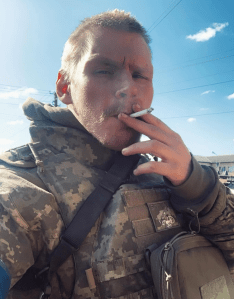 Back in 2024 you released the album про птахів і пчіл where you explore concepts of both nature and sexuality. What can you tell us about the making of that album and is exploring sexual identity part of the creative process for you?
Well, conceptually, it’s not about the sexuality of an individual but about sexuality on a larger scale. It paints a whole-nature-wide landscape of sexual intercourse between other of God’s creations, and as it also broadly touches on the theme of birdwatching, it kind of places you both outside of and in the middle of the act—assigning the listener the role of the observer, rooting you in a sort of cucking chair in the middle of God’s plan to procreate.
Back then, when I was writing material for the album, I overheard on a podcast or something that if you hear the sounds of your neighbors upstairs having sex, it makes you a participant of the act (which, in the context of said podcast, was an unwanted participation). And I was like, yeah, that’s it—that’s the role of the listener in this work. A mix of awkwardness that a maybe-or-maybe-not-willing participant of an intercourse might feel, and the urge to continue the observation despite it.
Also, the album’s name references “the talk” (a basic sexual education talk given by parents to their children), which—despite its usefulness—is kind of an awkward moment for a lot of people who experienced it in their childhood, so it kind of interpolates with the main theme.
You have performed at Noise Every Wednesday in Kyiv. How would you explain the popularity of such an event?
I think it’s kinda same to why people attended rave parties back when we were first introduced to them: looking for a community that proclaims freedom of self expression as its core value and looking for a sonic experiences, like the one that passes your cognition and addresses your body directly, and yeah, although “noiseschoseredy” space can rarely be considered a dance floor or a moshpit, i think still it is an overwhelming body experience, and yeah, in my opinion, experimental music community tends to be more inclusive and non-restrictive in terms of how you look or how you move than a rave community nowadays.
You are currently serving in the military. What are the sounds you miss the most and the sounds you find most problematic aside from the obvious warfare sounds? For instance, John Object talked about the snoring of his fellow soldiers as proving to be difficult for him to deal with.
 Well, I’m okay with people snoring. I would even say it kind of fascinates me—the unmoderated, unconscious sound output that a body produces. It kind of turns a person’s nasopharyngeal system into a musical instrument tuned by the internal obstructions of airflow in itself, so snoring is fine.
Back in the days before military service, I also liked how FPV drones’ engines sounded, but now it inflicts unspeakable horror on me.
Regarding the sounds I miss, I’m kind of lucky to have the opportunity to live in the city during my weekends, so I occasionally have access to my usual gear and a chance to be in a familiar urban soundscape from time to time. I kind of miss going to events—currently, not much is happening in Sumy in terms of music-related events. The go-to place for that, called Pogrib (a “cellar” in Ukrainian), is currently closed as they’re looking for a new place to rent. So yeah, that’s pretty much it.
One in three soldiers suffer from hearing problems. What is your own experience and are there any specific frequencies you now avoid?
Despite being present at a position my unit held that was under artillery fire—and with several glide bombs impacting in close proximity—I luckily haven’t had any major concussions and can’t really say I’ve experienced any noticeable change in my hearing.
I do see it in my unit, though. Most of them suffered concussions to various degrees, and they do experience the loss of hearing, so my regular speaking voice is too quiet for them to hear—I have to pump up the volume a bit.
What would you say is the role of music in the military and what are the listening habits of those in your own unit?
The army is a cross-section of society, so a variety of listening habits occur. The saddest of all is that from time to time you encounter fellow servicemen who tolerate Russian-language or straightforward Russian music—sometimes with lyrics directly referencing Russian culture, like landmarks, cities, etc. (At least once during my time in service I heard a chanson-de-russo rendition of some song referencing Russian military personnel, which is totally absurd.)
Can’t blame them though, as Russia colonised Ukraine for generations and it certainly left its scars on our society. De-colonising is a tough trial—even when it comes to civilians.
 Are there any Ukrainian albums from the past three years that you feel have captured current events in a meaningful way?
Honestly, I’m not really listening to a lot of music—even when it comes to the scene I’m literally a part of—so yeah, I don’t have much to recommend.
Over time in the UAF I’ve overheard a bunch of military-themed rap music, which kind of perfectly encapsulates the moment we are currently living in, but I won’t be mentioning most of it as usually the views of the artist don’t align with my personal views—so no promotion for them.
I mean, you could go with cybermykola, as his release кривавий гопачок is pretty neutral in its simplistic approach and mostly focused on modern military mythos and touches on themes of awareness and acceptance of one’s own death, which is extremely relatable for fellow servicemen.
Which book / film / album / song / traditional dish / podcast / blog / artwork / building / meme best captures Ukraine for you?
Okay, this might be a controversial one, but hear me out: watch the full pilot episode of the most recent season of the Ukrainian rendition of The Bachelor TV show. It literally is a postmodernist masterpiece capturing the very essence of the complex timeline we live in.
The bachelor himself is a veteran who lost both his legs in action, and the scriptwriters of the show try so hard to fit the war narrative into a soulless product—you can literally feel the struggle—and it comes out so unnatural and forced, it’s kind of hard to watch. Not to mention it literally lasts 7 hours! Strongly recommended.
NEW RELEASES
Natalia Tsupryk & Neil Cowley ~ There Was a Field
A new collaboration between British pianist Neil Cowley and Ukrainian violinist Natalia Tsupryk, this collection features music created without editing, discussion, or hesitation.
КИЇВПАСТРАНС ~ Drones for Drones, dakh (дах): selected works
In 2025, the Drones for Drones project was selected to be showcased as a sound installation for the exhibition DAKH: Vernacular Hardcore, the Ukrainian Pavilion at the the 19th International Architecture Exhibition of La Biennale di Venezia, curated by Bogdana Kosmina, Michał Murawski and Katya Rusetska.
This collection, curated by Clemens Poole and the curators of the pavilion, draws from from the 5 volumes of Drones for Drones to create a durational sound installation.
All proceeds from digital sales of this edition will go to purchase drones for Ukrainian defenders.
“Dakh” in Ukrainian means “roof”. The roof is the most basic form of architecture. It provides shelter from the fickle elements and it cocoons the mundane routines of everyday life. But in the perilous conjuncture of full-scale war—a fight fought in large part in the skies, by drones and missiles—the roof also becomes the first point of impact for hostile projectiles.
DAKH: Vernacular Hardcore juxtaposes the “heritage vernacular” of traditional Ukrainian village housing with the “emergency vernacular” of self-organised reconstruction work carried out under wartime conditions. We understand “hardcore” in its original sense as a (vernacular) builders’ word, which refers to the assorted bits of debris and clinker that are crunched together to form a building foundation. We appeal for an ethics—and politics—of rebuilding, which is rooted in the fragile, but unyielding, hardcore of the Ukrainian (and planetary) commons; and which makes manifest the structures of care, repair, solidarity—and resistance—that sustain it.
As part of the pavilion, DRONES FOR DRONES links the evolving efforts of Ukrainians to shelter themselves from Russian aggression through diverse networks of fundraising, solidarity, and technology. In the multitude of defense and resilience initiatives active in Ukraine today, volunteers fluidly move between repairing roofs to assembling drones to cultural outreach. DRONES FOR DRONES is just one point in the constellation of efforts to defend Ukraine that is on view in the exhibition.
Kindracoma ~ Mara
Mara explores the sense of death, walk on the otherside, making the way thru hallucination, dissolve in the surrounding ambience, end of existence, a bardo.
Bayun the Cat and JD Roberts ~ Clarinets of the Moon
“Clarinets of the Moon” is an album by Ukrainian artist Bayun the Cat and English artist JD Roberts. “Clarinets of the Moon” is a light, ethereal conversation between reeds and electronic sounds – between artist and landscape. This sonic diary album blends soundscapes, woodwinds, organs, cinematic, and intimate elements.
We hear geese flying overhead, a friend’s heartbeat, and reeds whispering in the wind. In moments, the clarinet sounds almost human – fragile, meditative, searching – as if humming to itself in solitude.
Bayun the Cat (Dmytro Postovalov) is a Kyiv-based musician, exploring the adjacent territories between ambient, classical, experimental, improvised, and world music. Music curator of the multi-disciplinary project Blue and Yellow through Black and Gray.
JD Roberts (Jonathan Roberts) is a British ambient composer and woodwind player, co-founder of the Ambient Leeds monthly festival.
“We started working on Clarinets of the Moon before the full-scale war, but the bulk of the material was composed in 2022. This is music about accepting what is difficult, if not impossible, to take; about regretting what humanity hasn’t learned while admiring the resilience of the human spirit; about the deliberate growing of meaning and hope seemingly from nothing; about small joys that heal great sorrows; about searching for strength and inspiration in nature, history and the best of human qualities; about reflection and beauty, and finding a place for these even when everything around you screams that it is not the time for such things.
The album emerges mainly from ambient, but is also inspired by folk and neoclassical forms, with soundscapes, woodwinds, and organs blending cinematic and intimate elements into a single reflective sound. Sometimes melancholic, sometimes calmly joyful, this album remains reflective throughout, immersing the listener in an array of varied soundworlds.” ~ Bayun The Cat and JD Roberts
58918012, ummsbiaus ~ Moving Rearwards
Hi, friends! This album (or EP…whatever) is a result of one of my most interesting collaborations so far. It’s called “Moving Rearwards” and it’s my and ummsbiaus’ tribute to the time.
You can clearly hear our signature sounds and styles on this release. Here are five beautiful and deep compositions about love and love’s death (at least I think so, because all lyrics were written by ummsbiaus and their meaning is in her mind).
ummsbiaus’ voice will touch your hearts and souls literally from the first seconds. Meanwhile, the blend of electronic beats and ambient backgrounds will teleport you into another dimension, where you will forget about the real world for some time. Last but not least, check out the lyrics of each song to fully dive into it. Honestly, I don’t know what more I can say here. Just click “play” and immerse yourself in the music. Personally, I love this work!
As usual, thank you all very much for supporting me! Enjoy the music and stand with Ukraine! Peace ❤
Heinali & Andriana-Yaroslava Saienko ~ Гільдеґарда (Hildergard)
When a Russian missile struck the ground not far from my studio in Kyiv, I vividly remember how my body reacted to the explosion, milliseconds before my mind did. That traumatic explosion reduced my essence to a primal state. There existed nothing but dread—the kind that, in scripture, accompanies the appearance of angels announcing, ’Be not afraid’.
The visions of 12th-century Abbess, composer and mystic Hildegard von Bingen were preceded by bright, excruciating flashes of light. Modern medicine reduces them to cluster migraines, one symptom of which is the retinal aura, often accompanied by blurred vision and blind spots. Hildegard’s music can place great demands on the bodies of its performers, emphasizing uncomfortable intervals and the wide distance between the lowest and highest pitch. In comparison, Gregorian chant, the liturgical standard of the time, represents a tempered attempt to grasp God intellectually; indeed, Hildegard’s music was once described as a stick of dynamite thrown into a Gregorian chant.
This album is not a historically informed performance. Hildegard’s persona and music are a starting point—a distant mirror, akin to the shield of Perseus, used to reflect Medusa. It allows us to reflect, comprehend, externalise, and transcend traumatic wartime experience, reinstating the embodied origins of Christianity, which contained suffering but also offered the promise of transcendence. Andriana-Yaroslava Saienko emphasises this physical aspect of Hildegard’s music by drawing on authentic Ukrainian folk singing, a form that survived despite efforts by the Soviet occupation to replace it with a simulacrum that is naive, harmless, and devoid of contradictions—an attempt to ‘civilise’ the body by disembodying it.
The musical approach is also informed by my ongoing practice of reimagining early music in modular synthesis. I accompany Andriana-Yaroslava’s fiery singing with drones—extended sounds that also occurred in medieval music. The drones alternate with improvisations, one taking its starting point in medieval polyphony, the other working with the concept of the interchangeability of sound and light, referring both to Hildegard’s visions and the space in which we recorded the album: the Cistercian abbey of Sylvanès in Occitania, known for contemporary stained glass windows whose patterns reference the dispersion of acoustic waves inside the church.
The album features two compositions by Hildegard von Bingen: “O Ignis Spiritus Paracliti” (“O Fire of the Spirit and Defender”), dedicated to the Holy Spirit, and “O Tu Suavissima Virga” (“O Sweetest Branch”), in honour of the Virgin Mary. Both pieces are performed radically slower than usual, expanding in time and space. On vinyl, the compositions are designed to reflect one another and can be listened to in either order. In the digital edition, there is a bonus track titled “Zelenaia Dubrovonka” (“The Green Oak Grove”). Based on a Ukrainian folk song from the Polissia region, Andriana-Yaroslava adapted the lyrics to reflect our contemporary reality. The green oak grove does not rustle with the wind; instead, it resonates with a different sound—perhaps the missile that struck near my Kyiv studio.
Heinali, April, 2025
Super Inter ~ Synonyms
The third release by Ukrainian-born musician super inter explores how the past and the present, personal and global intertwine, conflict, and merge. Airy textures and underwater movements, tranquility and drama, emptiness and overload stand side by side and seem inseparable, almost synonymous.
The tracks were selected from the music composed in the past 7 years and reflect the multiple overcomings, departure and arrivals, joy of finding one’s voice and sorrow of letting go.
Nastya Vogan / Phase Fatale ~ Transitioning Practice
Journeys are never just about distance. They stretch time, reshape perception, and demand transformation. With its latest vinyl split EP, Standard Deviation presents four tracks by Nastya Vogan and Phase Fatale that serves as a vessel for tracing displacement, memory, and the liminality of return. These melancholic yet powerful techno cuts serve both the concrete dance floor and moments of intimate self-reflection.
Two artists—Nastya Vogan and Phase Fatale—approach Kyiv from different trajectories, but they both keep returning to the city. Vogan, a Ukrainian musician and resident DJ of Kyiv’s ∄, and Phase Fatale (Hayden Payne), Berlin-based producer, Berghain and Khidi resident and founder of BITE Records, share a longstanding musical friendship. They’ve played B2B sets at K41 and Vogan appeared on BITE’s “Shedding Skin” compilation in 2023, and they share a vision for music selection, from aesthetics to philosophy.
Vogan’s ‘Transitioning Territory’ and ‘This Is Not a Love Song’ unravel the psycho-geography of transition. The first track captures the 24-hour journey to Kyiv as a rite of passage where ‘time seems to fold; you are profoundly present yet paradoxically far from the world you left.’ In this suspended state, memories surface and ordinary life recedes as the train’s rhythm becomes its own meditation. Her second track explores Lacanian limerence—consciously falling for something not fully known, filling absences with personal projections as a way to discover what lies within oneself.
Phase Fatale’s contributions capture movement and distance with mechanical precision. ‘Kekkai,’ takes its name from the Japanese word for boundary, echoing ∄’s ‘respect my borders’ ethos while reflecting on crossing into wartime Ukraine. The term also suggests a protective force field in Buddhist thought—much like Kyiv’s current aura of resistance. ‘Neosyazhna Rosa’ (Unreachable Rose) honors Payne’s Ukrainian grandmother Rose, weaving family history into his present connection with Ukraine. Both pieces balance melancholy with light, their sound palette of lush pads and rhythmic breaks crafted with K41’s dance floor in mind.
The EP’s artwork, created by CROSSLUCID, translates the artists’ references into visual form, extending the record’s thematic territory beyond sound. This release marks the label’s return to vinyl, continuing Standard Deviation’s tradition of collaborating with visual artists who share meaningful connections with the musicians.
Eazyopoluse – SUBSIST.267D ~ The Immigrant
Eazyopoluse is a Ukrainian producer and live performer. For many years, he has been deeply immersed in exploring the Eurorack modular system and other musical instruments, continuously upgrading his setup to create and evolve his music. He crafts mysterious, experimental soundscapes, recording them live to convey his inner groove and energy.
His album, released by Subsist Records, was written over the course of three years during his immigration journey across Europe. Each track holds deep personal meaning. While working on the album, he aimed to express the emotions he experienced living in three different countries—places that inspired and shaped both him and his musical path.
His music reflects resilience and the constant push beyond his comfort zone.
Vladyslav Putistin ~ White Moustache EP
After crossing the Galaxy and leaving the orbiting colony of Sinewave IX behind, the ship’s crew receives a cryptic transmission. A single signal, repeated endlessly: a grainy image of a cosmic face adorned with an enormous white mustache.
Interstellar databases do not register any such entity, but the elders of the Sound Academy speak of the White Mustache: an ancient vibrational intelligence, born from the collision of two pulsars and fueled by grooves forgotten in time.
Guided by the magnetic rhythm of low waves and broken beats, our explorers enter a forbidden quadrant, where every sound is distorted, every frequency a challenge. It is there that they discover the truth: the White Mustache is not just an entity. It is a state of mind. A transfiguration of rhythm in pure form. A soundtrack for those who dare to lose themselves in the unknown.
Alla Zagaykevych, Elizaveta Solovyeva, Georgiy Potopalsky ~ Landscapes of Silvestrov
A breeze of flower petals… a tree… a lake… a clearing…
the open horizon… a starlit sky…
Symphonic works of Valentin Silvestrov often unfold like symbolic solitary walks through landscapes both intimate and expansive.
The path is familiar. A forest, then perhaps a field of flowers? Along the way, familiar views emerge — their presence reassuring, their silence either soothing or subtly unsettling.
Musicians engaging with Silvestrov’s sound-world emphasize its deep kinship with techniques of instrumental synthesis — echoing principles of electroacoustic music and electronic sound design.
Like Silvestrov himself, they carefully define each sonic source, trace the spatial journey of every “sound event,” follow shifts in timbre, texture, and density — gradually sketching out an imagined artistic terrain: Silvestrov’s Landscapes.
mires ~ charm shatters / white petal shades
Moving from ambient and drone textures, mires explores broken rhythms and shattered groves, pulsating with glitchy energy spread over two new EPs.
Demian Feriy ~ Fusionhood
“Fusionhood is an album about my experience in the Kyiv underground scene. Over the past few years, my creative activities have been in constant contact with the people of this musical and artistic community. Often spontaneous, chaotic, eclectic, yet filled with obscure humour and a general sense of optimism despite all adversities. Most of the tracks on the release are crafted from fragments of performance preparations and improvised drafts that found their own identity. This music isn’t a direct illustration or reference to the musical landscape but rather an embodiment of the spirit and character shaped by my musical thinking.”
Brainhack Musicbox ~ Brownian
Managing entropy while stuck in textures, Brainhack Musicbox return in an expanded lineup to deliver a toxic burger wrapped in junk science. Best enjoyed chilling in a lunar lounge while watching the digital snowfall. Featuring Dmytro Arzumanov – guitar (left), Maksym Trianov – guitar (right), Andrii Brahin – guitar (center), Stanislav Bobrytsky – modular synth, Pavlo Lisovsky – sax
Chromatic fashion ~ Various Artists Vol 1
Chromatic fashion releases the first compilation of works by Ukrainian electronic musicians and figures, who are living testimonies of reality and it’s changes.
Lostojic ~ Anomaly
Inspired by downshifting cyberpunk originating from Chornobyl, the album Anomaly from Kyiv native Lostlojic is a true artifact in electronic music: firstly, it is a unique combination of trance synthesizers with deep smoky dubstep, interspersed with the sounds of nature from the Carpathian Mountains, and echoes of the cultural heritage of folk songs. Spatial sounds penetrate the secret places of your brain in a completely natural way, like cordyceps, creating unexpected neural connections. Secondly – it’s a unique creative collaboration between a photographer Julia Coda, a tattoo artist Anton Kresan – master of dark tribal genre, musicians Lostlojic with Tadan on the remix – who’s tactile sounds will reward the receptors of the attentive listener with a dose of dopamine, technologies of the fleeting past and nature. We invite you on a journey through textures!
Vlad Suppish ~ Live at Kyrylivska 60
Originally this was played live at ‘MachineRoom v2.0’ event, May 12, 2024 which took place at ‘Collider’ venue, Kyiv, Kyrylivska str. 60
Always trying to record my live performances. They are always unique despite of the outcome and never to be repeated again. Even with the same patch on my trusty Euro(crack) modular system – it’s always different.
This one was particularly atmospheric, with actual fire burning in the yard. And sometimes there are seeds of new inspiration which are laying hidden beneath the most chaotic improvisations. So hearing the recording afterwards gave me the hint on what to do next with my music.
In particular – ‘Slow Yet Steady’ LP was partially born from this live:
telesmarecords.bandcamp.com/album/slow-yet-steady
Anyway you’ll hear some old sonic tricks here – tribal rhythms, Berlin School-ish mellotron and sequences, hypnotic rumbling of William S. Burroughs’ voice and other field recording’s sound dissection. And some new ones as the first appearance of prepared loops from mighty Yamaha FS1R, which proved my long-term affection for FM synthesis a rather rewarding experience.
So enjoy this blast from the past and come to all tomorrows parties and live gigs while you still can.
Pymin ~ Axiomatic
Hybrid Moment is a series of parties and community in Kyiv inspired by dark shades of music, slow and heavy beats. The first album for the label and the second solo release by Pymin is techno built on analog rhythms, wrapped in a multi-layered texture where noise transforms into sharp melodies, reflecting the confidence and determination that are so necessary right now.
Pymin is a Ukrainian musician, composer, and electronic producer working in various musical directions, combining electronic sound with live instruments. He released his debut album Ultrashell in 2021. He has performed at festivals such as Brave! Factory and Black! Factory, as well as at clubs ∄, Closer, Kultura Zvuku, and at events by 20ft Radio.
Axiomatic is a reflection of improvised evenings with the Moog DFAM and Korg ARP Odyssey, where every sound is born in the moment, like a wave that will never repeat. It’s that moment when music becomes a living, dynamic substance that the artist seeks to tame, feeling its rhythms and moods. Sometimes control is lost, and the artist becomes an observer, letting the sounds lead the way. It’s an experience where chaos and order alternate, creating a new reality.
VIEWING ROOM
(Gianmarco Del Re)
 a closer listen
Pingback: ACL 2025 ~ Top Ten Modern Composition | a closer listen