
 Most of this month’s interviews were recorded when I visited Ukraine back in May.
In Lviv I had the privilege of taking part in a jamming session with veterans held by Victory Beats at the Superhumans Center, a specialist clinic for the treatment and rehabilitation of war victims. Under the guidance of Volodymyr Nedogoda, Rost Tatomyr and music therapy advocate Nigel Osborne veterans were encouraged to play instruments or just relax in a friendly atmosphere in a well stocked music room, mostly courtesy of Nedogoda himself.
I followed that up by chatting to Zhenia Skripnik and Andreas Boesch about EnterDJ, a training program in Kyiv that improves mood and well-being through recreational DJing. Skripnik was also on hand to unleash the beast while Boesch explained the wordplay behind HVLV.
But before traveling to Kyiv I stopped over in Odesa where I reconnected with Oleksandr Hodosevych and Lu Joyce at the More Music Club for a rehearsal of their band Rudnic Ore. Furthermore, I discovered a new venue, Vitalnya. Also from Odesa, Proletarskyi talked about poetry and wide ranging collaborations.
But for those who prefer to listen to our guests directly while enjoying some music, here’s our monthly podcast for Resonance FM featuring both Victory Beats and Enter DJ.
Tracklist:
* Potras23 – Big Sun
* Zymosis – Fatal Contraption
* Diogo – Move Me (Tsuri Junglyze Remix)
* Enforcer and MURR – Mystery
* Boris Brejcha – Schleierwolken (Original Mix)
* Anaïs x LEVi – Tekkers
Also, please enjoy our usual pick of the latest releases, including new titles from Limanenko, Ivan Samoukrutkin, Emotional Anhedonia, Anton Malynovskyi, Unusual Cosmic Process, 58918012, Na Nich, äsc3ea, Jabro Grow, Julian Kytasty and Viktor Pushkar and некрохолод.
And to close proceedings we have three new videos from Roman Baranskiy, Resilient Resistance, and Parking Spot.
MAY 13, 2025 – LVIV
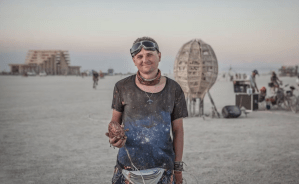 Volodymyr Nedogoda – Victory Beats
My name is Volodymyr Nedogoda, I work with music therapy for rehabilitation centres and special groups of people after captivity. Also, my project helps organise retreats for veterans’ families. We collaborate a lot with the scientist community and doctors with different specializations to help people who struggle after the full-scale invasion to regain their mental health because [in Ukraine] we all suffer from PTSD. So, music and music therapy help to treat these mental conditions.
Your charity is called Victory Beats. Could you give me an overview of your activities?
Victory Beats is a charity project which aims to involve musicians and deejays from around the world to help Ukrainian volunteers. We already involved 150 artists around the world to support Ukrainians. We started in 2023 and in 2024 we started our music therapy project.
Do you have a background as a musician, or do you have a scientific background?
I mostly have a background as a cultural manager. I am also an artist, and I organise a lot cultural events and art events. I am author of a programme of renovation of cultural places in my native city of Dnipro, and we did a lot of good stuff in public spaces for museums etc. And as an artists I also did a lot of art projects including the Burning Man and that has all given me more than 20 years of experience of working with art and people and seeing how art changes the mind and helps people sometimes so it doesn’t just give the emotions by has a serious impact on their feelings and thoughts and sometimes changes something inside of them.
 You are based in Lviv, can you tell me what kind of organisations you work with? I mean, today we have been to Superhumas…
So yeah, we work with two rehabilitation centres now, it’s Superhumans in Lviv and First rehabilitation hub this is the place where people try to return to normal life after the long process of rehabilitation because sometimes it could take months and even years.
For those who don’t know, could you introduce Superhumans?
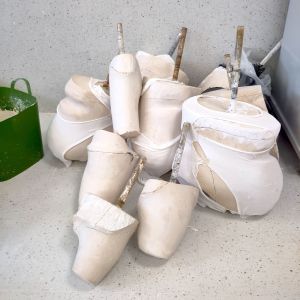
Superhumans is a charitable organisation and rehabilitation centre where people can get the whole cover of the rehabilitation programme for free this includes the prosthetics, some kind of surgery and psychological help. So, they don’t just obtain the prosthetics but get the whole programme of care including surgery, including rehabilitation and psychological aid and it also provides psychological help for the families of patients because that is also important, and they provide this help even after leaving the centre and what is the most important thing is that all the services are free.
As far as I understand, Superhumans is not state funded…
It’s a private foundation.
 So, they rely on donations…
Yes, this a completely private foundations that relies on donations from sponsors. Anyone can make a donation. And thanks to people and organisations who support them because it costs enormous amounts to bring back people to normal life after serious injuries, especially when they lost arms or legs and in Superhumans they make kind of miracle bringing people back to normal life.
So, Superhumans works mostly with veterans…
No, it works with veterans and civilians. Obviously most of those who suffer from serious injuries are veterans but it’s sad to say but missiles don’t choose where to target and a lot of civilians are affected by serious injuries too and Superhumans helps everyone.
How did you approach Superhumans and how receptive were they to the idea of music therapy?
I already had some knowledge about how music therapy works, I already had some experience in music therapy before the full-scale invasion when we didn’t have so much troubles, so I thought that I must do something if I am not on the frontline for my country for the people who protect me and my family and then I came to Superhumas and proposed to organise music therapy and they said, “Let’s try.” So, we had a first, then a second, and a third session and got good results and they said, “Yeah, it could work,” and they greenlit the project. I am grateful to them because now we have hundreds of patients who visited our therapy sessions and most of them say that they forget about the bad thinking, about the bad mood, about the problem with sleeping, some of them forget about the phantom pain. You also witnessed this today. Music provides so much good for people. It’s not about the pills or the rehabilitation process, so we must spread it as much as possible, so it’s not the magic cure for everything but it’s very helpful in the rehabilitation process.
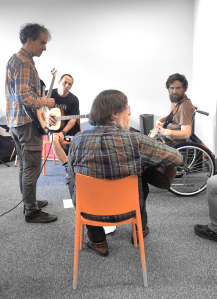
With Rost Tatomyr and Nigel Osborne at Superhumans
How are the sessions organised and run?
We provide a first screening for every new patient, we have a discussion to understand their feelings, does he or she have any issues which they want to share with us, sometimes they provide a clear request of what they expect. Sometimes they talk about their problems, their sleep deprivation or pain or whatever. Sometimes they prefer not to say anything, but we check their overall condition.
Also, we get information from specialists, like physiotherapists and psychotherapists, about specific conditions and moments where we need to be careful. Then we check the sounds, if there are specific sounds which can trigger patients, because the trauma is unique for everyone. Sometimes even absolutely common sounds like birdsong can sometimes cause a serious trigger for a patient and if we understand a sound can cause a problem, we cut it from the programme, and we try and rebuild the programme so as to make the patient feel as comfortable and relaxed as possible. Sometimes we discover these triggering sounds during the programme.
We use different approaches of music therapy, relaxation, playing music instruments, imagination and others. Sometimes people are very open, and we can use all of them because approach has its own specific results and work with our nervous system in a different way, but sometimes it is not so easy. For example, a patient can say, I cannot relax, and I don’t want to, I prefer just to play guitar. So, it’s always individual, there is no standard cure programme, it’s always something new but anyway our goal is for people to open up to themselves and dive inside themselves.
The results are amazing. Our patients tell us about the disappearing of anxiety and bad thinking and bad mood they start sleeping well without the pills, they start being more communicative, they say that their memory works better. It’s very good practice for physiotherapy after damaging fingers legs of hands because you need to work with strings or buttons or event pedals on drums. Also, we try to make a very positive atmosphere, it is not the atmosphere of the medical chamber.
So in our therapy events we try to create an absolutely safe space, we are a crowd of positive and wide-open people where our patients can feel as comfortable as possible. The time they spend in therapy is like playing in a playground, like kids in a playground. We spend a few really good and positive hours together. That is the goal to relax your nervous system and feel better and positive and have fun, as that is also a very important part of life. It’s not just therapy.
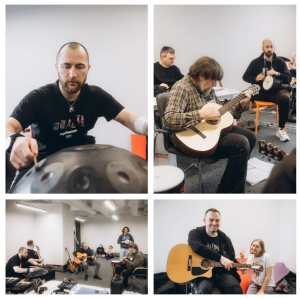 You work with amputees, how do you adapt some of the instruments and what arrangements are in place for them?
What we tell our patients is that the amputation is not a block for them to live a normal life and play instruments. Of course, sometimes is pretty hard, but we try do our best and provide some research to find solutions. For example, we had a patient without arms who plays guitar. We constructed a special guitar pick for them, or for the patients with legs amputee we try to improve their ability to play drums so that they can learn better how to work with prothesis, etc.
It depends on the requests from our patients. We work with doctors in finding the best solutions and best approach to make them return to “normal life” and playing instruments. We even have a guy without fingers who plays the organ. Sometimes it’s impossible to renovate this functionality, but our patients often say that they forget about phantom pain when they listen to relaxation music or when they play the instruments.
One in three veterans suffer from hearing problems and hearing loss and develop tinnitus and other conditions. What is your approach in such cases?
Yes, unfortunately almost every veteran has a problem with hearing because of explosions and sometimes music can do nothing but sometimes music can do a lot like with tinnitus. There are approaches that help treat it by finding the right frequencies that teach the brain to cut these frequencies from the overall soundscape and forget about this issue. So, now we are working with doctors to apply to this program in Superhumans and I hope we will start to work with veterans very soon in this way.
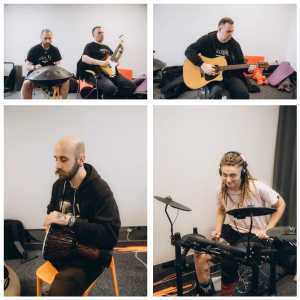 In terms of frequencies are there any specific frequencies, maybe low frequencies that affect people to a greater degree?
Like I said, it’s always individual but we have a very interesting story about it, so sometimes, bad things can lead to good solutions. We had a patient with serious brain damage and when we tried to do relaxation therapy it was really bad for him, he had serious triggers because of the low frequency sound and he couldn’t stay even for one minute and he refused to play on any instruments because his left hand almost didn’t work, but one day he asked us to show him the DJ console and it was like a miracle because he sat for 30 minutes at this console playing something, adding something, and he forgot about any high or low frequencies, he was just diving deep inside the music. He even tried to do something with his left hand that almost didn’t work and it was like a sign, so that we decided to make a program for therapeutic deejaying so we show people that deejaying and electronic or whatever music played on a deejay console could be a therapeutic approach too and we had very good results. Our patients discovered that the music they played can be transformed into a story, something that they cannot tell through words. Sometimes there are things that you cannot put into words, but music helps you with that and our guys recording the sets, playing in public and even starting to teach some new patients how to use they DJ console.
Last week we even started a new special project called EnterDJ which is all about therapeutic deejaying and we try and spread it across Ukraine and to show people that this is a very easy and interesting way of diving into your emotions and which help to make your mental state much better.
You also work with people who have been in captivity, do they have specific issues and how does music help them to address their traumas?
It’s a really hard field to work with these people because of really terrible trauma and we had for example a case where we provided a session for women after captivity. There were about 10 women and most said that everything was amazing and that therapy was really good for them and that they felt really positive and calm after the sessions, but two of them said that everything was fine until we played the sound of birds, which made them feel very uncomfortable. This is like the sound of the air raid siren, which we can hear right now, which is a trigger for me. Sometimes you cannot even imagine that some regular sounds, like the sounds of birds could be triggers for another person, that is why we are not just playing the music but check at every moment the conditions of our patients and avoid anything bad. It’s not easy all the time, but the more experience we gain, the more problems we avoid in future during our sessions.
So, you will start a collaboration with the Lviv Philharmonic Orchestra, how did this come about and what do you expect from these events?
It was a bit surprise for us when the Philharmonic called us to propose a collaboration. They found it very interesting to help to spread music therapy and help war victims in some way through art therapy. We had some discussions, and we found an interesting way to collaborate, and we are now preparing a huge season, almost 36 weeks of music therapy. There will be different events, a combination of modern technology and classical instruments a combination of therapeutic approaches big sessions with big groups of people in the Philharmonic and almost private sessions in the rehabilitation centre.
Our goal is to show “loudly,” if I can say so, that music therapy exists, it works, and it helps people. We want to involve people because since Soviet times here in Ukraine mental health is somewhere behind social understanding. We understand if someone breaks a leg, but we don’t care about their mental health. We only started to understand how important is to look after our mental health now because of the war at a time when all of us are under huge mental stress and have serious problems, 40 million people need help and I believe that the more we can do, the better we can achieve results in future.
It might be egoistic, but I want to live in a “normal society,” in a “normal country,” in a safe country and that is possible only when we care about the war consequences which cause mental problems to the whole nation. This is something we all must think about and do our best. Thanks to the Philharmonic I hope this will be a good example to make similar events and programs.
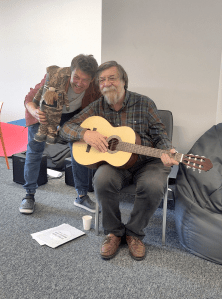 The programs will combine repertoire music and soldiers’ songs?
Yeah. Nigel Osborne will be able to tell more about it because it’s his program and vision, but soldiers are very open and trustful, if I may say so, they are written by people on the edge of their feelings and it’s song about some pure feelings and dreams and we hope to write a few songs with veterans and involve the Philharmonic to make these songs sound… how to say… give me a second. It’s not about making hits, something that will be number 1 in the pop charts. Now in the war we start to understand the meaning of the words and phrases that we were so loath to use, like “friendship,” “love…” These words have become like marketing patterns in the modern world. Here, during the war, we start to understand them in a whole new way, it has become more clear what friendship means, what it means to care about each other and these songs they are very real, and we want to make them heard and felt by everyone.
Also, we want to combine ambient music and classic instruments and show how modern classic electronic music can be helpful and can be a cure for our souls, because modern because electronic music is a very important part of culture for the last 40 years or even more. It can have a big a positive impact on society. It is not only about the club parties; one can enjoy electronic music by themselves at home. It’s not about some specific genre, electronic music is an endless universe of genres, and anyone can find something for themselves and that is what we want to show with the Philharmonic. We hope to make to make 10 weeklong projects over the next year and between 10 and 50 small projects for civilians, veterans and we expect to get good healing results.
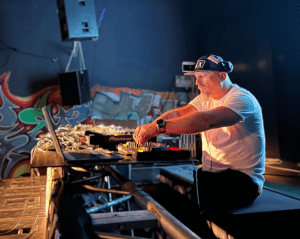
Roman’s performance at the charity DNB party of Hospital Records and Sounds of Ukraine
In terms of clubbing, do you do have events with the veterans, do you go clubbing together?
Like I said, we get really good results with our therapeutic deejaying and some of our guys are now pretty skilled to play in public and even more our good friends, the London label Hospital Records together with our other good friends Sound of Ukraine, which helps musicians and charity projects like us, will make a big party in Lviv soon [this event took place in mid-June] and they will present a very important documentary about Ukrainian musicians during the war. They will also have a cool Drum and Bass party with deejays from Gret Britain and our patient Roman Cherkas will open the evening with his own Drum and Bass set. So, music therapy also makes dreams come true, because we met with Roman absolutely randomly. I met him on site in Superhumans just walking around and asking him if he wanted to play guitar and he said, I dream of becoming a deejay and now he will play with world stars! Roman has said that when he plays, he forgets about the phantom pain and for me it’s the biggest gift for all this humble work we are doing for veterans.
What have you learnt about yourself from this experience with Victory Beats?
I would like to say that after 20 years of experience in the cultural field, after a lot of very good projects, after Burning Man, which changed me a lot, I can say that Victory Beats and music therapy is the most important thing I have done in my life. It makes me wake up every morning and kick my ass to do the best I can because when I see these people and what they are doing and how strong they are, how much strength they have in moving forward. It’s inspiring and I am so happy that I can do at least something for them and that these things make them happy. And when they are happy, I am happy too.
MAY 29, 2025 – KYIV
 Zhenia Skripnik and Andreas Boesch – ENTERDJ
Zhenia Skripnik: Hello, my name is Zhenia, I am from Sloviansk, Donetsk region, Ukraine. my main role is as head of the NGO Shum Rave. We do a lot of projects connected to music and cultural heritage.
Andreas Boesch: Hello, my name is Andreas I am Swiss, I live in Kyiv, I am the owner of some night venues, one of them is called HVLV. I am also involved in other cultural and music activities. And I live here full-time since this year.
Could you introduce EnterDJ for us?
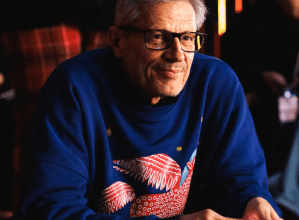
Andreas Boesch
Andreas: I wasn’t there from the beginning, but I joined because we have a common friend called Vlad Fisun and one day he told me, “There is a project about music therapy with a friend in Lviv,” and I went to visit Victory Beats. I assisted to two three sessions with the guys and then it clicked for me, and I thought this is something that really fits. We should have it in Kyiv. Well, we should have it in many places, but I was first thinking we should have this in HVLV, in our bar, because HVLV is not just a bar or a music venue, it is a cultural hub. It was a project I wanted to work with for a long time. It’s all about music therapy. I thought it was really great, and we found a formula. We made a presentation. It’s not only for veterans it can be for anyone with PTSD, whatever, depression, which is probably 90% of Ukraine right now. In general, EnterDJ is not just a deejay school, it’s absolutely different. It’s about developing your mind.
When I was at the Superhumans centre [in Lviv] with Victory Beats, I thought there is a lot more to it than just deejaying. I became pretty close to the veterans who were practicing and participating in the program, and the results were amazing, to say the least. We also had some scientific visitors who more than approved it, and also explained what music actually does. It is a fascinating project for me. I am not a music practitioner; I am a music collector. I am also involved in all the cultural activities in HVLV, and I understood that this is something we have to spread all over Ukraine, ideally.
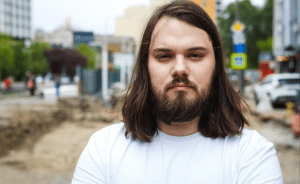
Zhenia Skripnik
Zhenia: I was also invited to this project by Vlad Fisun. I met Vlad in Sloviansk and for Vlad deejaying was always not just about the music, it was much more. I heard from Vlad about music therapy I think from Covid times when he developed a small program for people who were at home and going through a hard time. So, Vlad has been thinking about this project for quite some time, and when he invited me to EnterDJ, there was a lot that had already been put in place by both Vlad and Vova [Volodymyr Nedogoda head of Victory Beats]. They already had results and the results were amazing. When the veterans talked about the results in HVLV, it was like… I don’t know how to say it in English, but it made me cry. It was amazing, and it’s just deejaying but in a new way, it’s when you use music as therapy, like when you make this journey in your mind to forget the pain.
Andreas: And Vlad is really good at it. That’s how I started to deejay as well, for me it helped me a lot in life, I should say, because I was just a music collector, but, you know, when you see Vlad, first, his technical skills are extraordinary, and I am a vinyl DJ which is hard enough, but it was also about the music, the music selection, the digging, it was about discovering the culture behind the whole process, and I can understand that it helps because it helped me definitely. So, yeah, I think it’s the most beautiful project I am currently involved in.
 You mentioned that there was some scientific background to it, could you elaborate on that?
Andreas: I saw the first results [of music therapy] when I was at the Superhuman centre in Lviv. There were two guys I got to know, Sasha, who lost a leg, and Roman who lost both legs, and there was also another guy who could not use his hand, and every doctor would tell him, “You won’t be able to use your hand,” but now he just plays like a rock star on the guitar, which means it’s all in head.
And when we had Nigel Osborne [MBE, British composer, teacher and aid worker] visiting, – he’s a great gentleman, – he explained simply that it’s not a miracle, that’s proper neurons going, and it works, and he did a few sessions with the guys.
So, we are not having a scientific approach, but it is nice to have backing from a scientific opinion saying this isn’t a miracle, these are proven facts and there is a lot of research going on right now. So, it will be interesting of course for me to read as well about it, but in general we are not trying to prove for us scientifically because we have the results. We are more involved on a human basis with the guys, but it is nice to hear that there is a real proven affect from it and that’s what we felt, and what we saw, and to have backing like this is great…
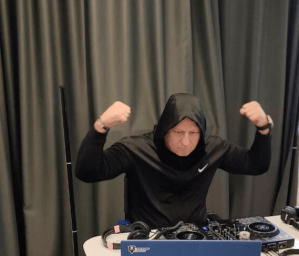 In Lviv Victory Beats works with Superhumans, what is the situation here and who do you work with, do you have partners?
Zhenia: Here in Kyiv we just did a presentation of the project. We are now trying to work out how to make the offline groups in Kyiv, so probably for someone who will read this and wants to join us, we will find a way how to help. That is also why we invited HVLV and Andreas to the project, because HVLV is not only about the bar, it is more of a cultural place and we want to make the offline courses in HVLV. During the presentation we made a lot of contacts with people who want to join us as teachers, and not only deejaying, music production, some partners…
Andreas: Yeah, and by the way, just to mention, we opened the original HVLV nine years ago, but seven years ago we also opened the upper club, and we built inclusive. It was never used until now, but now we have it and it has become very useful obviously. Now we are also at the stage of finding partners for funding because it is a project that obviously cannot live without funding. It is not huge, but if we want to make it bigger and spread it across Ukraine, we definitely need funding, we need people to work full-time on it.
Right now, at this stage, as Zhenia has said, we are trying to get access to the people who want to participate in the program. There will certainly be a combination of offline and online, but in general we should be the hub. I have already contacted a lot of friends of musicians and composers, and all of them are happily participating in sessions, a lot of them are ready to make music with the veterans or whoever wants to participate. And it will be free to participate, so we need the funding. We already found possible interest with someone and that’s where we stand right now.
A couple of things, let’s start with the funding, are you looking for private funding or institutional funding as well?
Zhenia: I think basically, we are looking for funding! And then it depends. It would be cool if private companies and businesses would join us and support us. Also, as a registered NGO we will be able to apply for grant programs.
Sorry, just to clarify, are you already a registered NGO?
Zhenia: This will be done in the next few days.
Andreas: As EnterDJ, because Victory Beats already is.
Zhenia: Yes. So, we are looking for different ways to fund this program and if you want to donate…
Andreas: We are definitely looking for institutional funding as well, but we will see how it goes. We know that we will do this whatever happens. I am person who will go through the walls… It is fine, the project is in a good way, and we did it already for two years on a volunteer basis, so it not as if we need funding tomorrow to continue, but yes we do need funding because we have ambitions to make it much bigger.
 Ok, when I visited Superhumans with Victory Beats, I got the impression that it’s like a drop in centre and people come to it when they feel like it, when they are ready for it, but you have been talking about courses and proper teaching as well, so how is EnterDJ structured?
Andreas: Obviously that is the huge advantage to have a centre within a clinic. It can be a model that we can replicate, but HVLV can also work very nicely. What we don’t know yet, is the approach with the veteran hubs as there is a logistical issue because you have actually to get there, but we will manage.
Vova is mainly the person looking at that as he is in contact with all the veteran hubs. I am here to arrange whatever needs to be arranged, but yes, we have a logistical issue, but we want to organise offline classes with live music, deejaying…
Ok, when you speak to veterans and maybe civilians what are the main things they tell you? Do they come with expectations, and what are the reasons they give for participating?
Zhenia: From what I saw from the presentation, the people come because they are interested in deejaying and then they got this experience that this stuff helps their mental health.
Andreas: I think the most important thing is to respect whatever they wish. Some of them are more extroverted, they have already overcome some of their social fears maybe. From the two guys that came here and that I know very well, Sasha is very open already, he came to one of my deejays sets and was jumping on the dance floor. Roman, on the other hand, I couldn’t have imagined when I first met him, that he would be doing public speeches in HVLV in front of 30 or 40 unknown people. So, there is a huge impact.
I am super proud as well, about how good they became in such a short time, they are really into it, and they love it. You can see their development and progress. Vlad obviously helps them, he gives them music to dig into, but the guys are incredibly talented and passionate about it, digging into the music and developing their skills, and it takes their mind off everything else.
This is just an aside, but can you tell me where the name HVLV comes from and what it means, as I never know how to pronounce it.
Andreas: One of our founders is very good with names.HVLV is pronounced as Khvylʹovyy [Mykola] who was a Ukrainian poet and secondly “khvylya” also means “wave.
All our venues have a double name. We have also БАР БАГРЯНИЙ [Bar Bahryanyy] and Ivan Bahrianyi was also a Ukrainian poet. Obviously, all of them suffered in Soviet Union times. Also, “bahrianyi” is a specific shade of red… Crimson red, and we you visit it you will notice it is crimson red.
And the third one is КИЙ Більярдний, Kyi Billiard. Kyi is the founder or Kyiv but is also the name for the billiard cue. So that is the background.
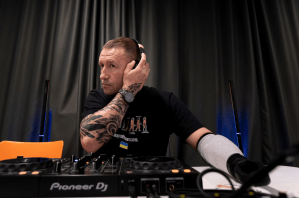 I noticed sometimes people are shy about talking to veterans and fear they might retraumatise them. What is your approach?
Andreas: For me, coming from Switzerland dealing with veterans is completely normal, because people in wheelchairs are treated like everyone else. Switzerland is a great example of a country where there is enormous support. Whether one is blind or deaf or in a wheelchair, all of them get fantastic help from the government. This is something that there is still a lot of work to be done here in Ukraine.
In terms of approach, I have no hesitation to speak to someone in a wheelchair, and this is probably something that will help me in the program, I am sure. Veterans can have a deeper trauma, but we have a lot of people with various issues. I am trying to understand more what the life of a veteran is, because I understand that the financial support is small to non-existing, so there are areas of concerns I would like to look into.
Zhenia: As I am from the Eastern Ukraine where the war started 10 years ago… no, 12, we saw a lot of veterans coming to Shum Rave in Sloviansk, for example. For me it is normal to communicate with veterans at events, but there is a problem with inclusive places all over Ukraine, which is why HVLV is a good place, as it is an inclusive venue, and after the full-scale invasion this is important.
When we had our presentation in HVLV, there was a hard rock concert there on the same day and the audience for this band included many veterans, something that one could see from their t-shirts, their patches, so we need more concert places that are inclusive, and to make the country more inclusive as well…
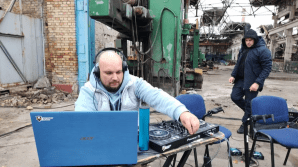 When you say inclusive, do you mean accessible to wheelchairs or inclusive in terms of gender, sexual orientation…
Andreas: Community…
Zhenia: I mean everything. It must be accessible to people on wheelchairs and with prothesis and also people need to feel free in these places, because there are a lot of veterans and a lot of soldiers from different communities, with different music tastes, different sexual orientation, different priorities on how they want to spend their leisure time, someone might want to listen to rock music, others might want to chill and drink tea. So, when I say “inclusive” I mean that it must be good in every way.
Andreas: And I think it is also important to have veterans present in a mixed public because this isn’t supposed to be a freak show and the more veterans are present in music venues with other people, the more they will feel comfortable and other people also feel comfortable and it will become a daily thing, which I wish it wouldn’t be the case, but that’s a reality and the problem will not go away, it will only become bigger. So, this awareness is very important. “Inclusion,” therefore, in terms of access but also in terms of social activity, which is super important but there is still this distance, and people don’t know how to approach them. Even from my colleagues I have comments like, “You should be careful…” Sorry, they just want to have a good time, that’s all, and people think you cannot talk to them in the same way… Of course you can. But we have to go at their own rhythm, some of them are more shy.
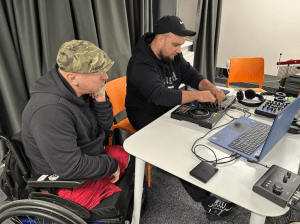
Zhenia: A small example from a technical side, the deejay booth, they are standard in terms of height and configuration, but we have two guys on wheelchairs who want to deejay and they need a different table, they need different access to this booth… So, there are a lot of things we can think about.
Andreas: The more you think about it, the more things come to mind about what should be done, it’s never ending.
In Superhumans, the music room has been fully equipped by Vova…
Andreas: Yeah, it’s great.
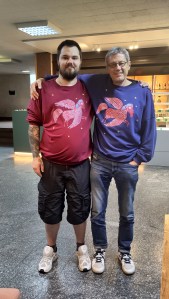 They have many instruments, etc. What is the setup at your place, is it mostly about deejaying skills, or do you have instruments as well?
Andreas: Well, here is the good part! First of all, HVLV happens to be one of the places with the best sound systems in Ukraine. When I actually asked Roman, “How is it to actually play here?” he said, “Wow!” Ok… it feels good when you have a nice sound. So, in terms of deejaying, it is great. In terms of live, that’s why we have friends. We have musician friends who are ready to bring the instruments and play with the guys and even deejaying controllers or live instruments, whatever.
Part of it we will purchase, and this is me with another project because we have a basement and this will become a recording studio and not just a normal recording studio. I want it to be an accessible and social recording studio for young artists because now life is really hard for young artists. It’s very difficult to make money and record an album. So, the idea is that it will be free, or very low-cost access, with a grant. And this recording studio will bring a lot of instruments which will be there permanently.
I already knew I wanted to have a combination of all these activities. Also, I would like to employ veterans in these activities because I don’t think there are many government initiatives working on how to employ veterans. Right now, with the war, the priorities are different, but this is a huge problem so I think it would be great to employ veterans, because they would integrate.
So, it’s my plan, but in the meantime, we have musician friends who are ready to help, and we will start like this. That’s Ukraine. Everybody helps everybody.
You mentioned the financial constraints of veterans, so how can one persuade a potential donor to invest in music when they might think there are more pressing needs?
Andreas: Well, there are still lots of institutions who think about culture and those institutions are open to such ideas. I am not saying this is a priority. There are so many priorities, I wouldn’t know where to start, but there are people who think about the importance of culture. This is the only international language that everybody can understand. Within culture, we can find funding for our project, definitely. We just started working on it, but I know it will possible… actually, a bit less now without America. A bit lot less.
Have you felt the impact of the demise of USAID personally?
Andreas: Not me personally, but 90% of my friends are in a deep hole right now.
Zhenia: As Shum Rave we worked a lot with USAID in Sloviansk from 2015 and thanks to their program we developed Ukrainian culture in the Eastern region. I gained a lot of experience working with them and the closing of USAID is a big problem, not only for culture, but also in education, and health. We don’t have any research as to what the effects of this will be five years on from now. In small cities like Sloviansk, or places in the Kherson region which were funded by USAID, we don’t know what things will be like after three years without cultural events and without the people making these events.
Before the full-scale invasion there was money from small business to make events but now a lot of businesses, small and big businesses are working to support the army. A lot of people from the cultural sector have also joined the army so it has become very hard to put on cultural events without international donors.
Cultural initiatives within USAID represented a small percentage of the budget, they mostly supported infrastructure, but now we can see cultural institutions closing, some media are also closing. It’s a big problem, I hope everyone who needs this support will find it in new ways, but it was a big international donor.
 Ok, so maybe now is a good moment to talk about Shum Rave. Could you introduce it for us?
Zhenia: Shum Rave is a series of parties that started in Sloviansk in September 2019. It was intended as an answer for developing nightlife in the city because we didn’t have it. The main idea for the first event was just to give young people a place for music where they could dance and drink and spend time and feel free and just forget themselves.
Could you just briefly talk about Sloviansk?
Zhenia: It’s a good place with nice nature. In summertime it is amazing. There are many lakes and nature. It is small, you can cross the whole city on foot in two-three hours. The people are nice; I made a lot of good friends in Sloviansk. This stereotype of Donbas as an industrial place is not fit for Sloviansk. It used to be a place where people came for rehabilitation and the treatment of backpain.
Also, Sloviansk is where it all began…
Zhenia: Yes, for Eastern Ukraine, but everything began with Crimea and then moved to Sloviansk.
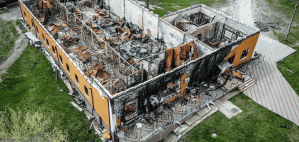
The Mariia Prymachenko museum after the full-scale invasion
Ok, for those who don’t know, Crimea was annexed in 2014, then what happened in Sloviansk?
Zhenia: On April 12, 2014, it started in Sloviansk. So, I woke up and turned on the television and saw a lot of russian channels and I thought, “What happened?” We lived in a private home and didn’t have a satellite, we only had Ukrainian channels, but when I turned the TV on, I saw a lot of russian channels. I was 16 at the time. I thought it was strange, then on the news I saw that there were pro-russian forces, or russian forces, in Sloviansk trying to annex our city and region.
Everything happened with the occupation of the city council and the city centre, because most administrative buildings in Sloviansk are located in the city centre. Within a few days a lot of checkpoints from pro-russian forces started appearing in Sloviansk.
It was my graduation year, and I was in Sloviansk with my friends still attending the lyceum until May. Actually, yesterday, [May 28, 2025] this lyceum was hit by shaheed drones. Then the situation gradually became more and more dangerous and with my family we decided to leave Sloviansk for Dnipro because I needed to pass my finals to go to university.
Before the occupation, I thought I would study in Kramatorsk, but after the occupation we understood that we might no longer have a Ukrainian university there, so I decided to go to Dnipro to pass my exams and choose a new university. After my exams, Sloviansk was liberated by Ukrainian forces on June 5th so we returned to Sloviansk, and I was still going to study in Kramatorsk as it’s only 12 km from Sloviansk.
After spending a year at university where I was studying IT, I understood that I didn’t want to become an engineer working in a factory.
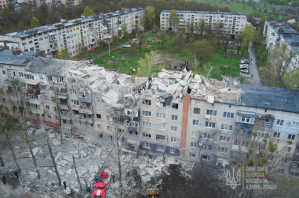
Damage to a residential building in Sloviansk after the April 2023 airstrike by Russia
What would you say to those in the West who still believe that there was a civil war in Eastern Ukraine?
Zhenia: It wasn’t a civil war. There were russian forces in Sloviansk in 2014. You know, there is a difference between a Ukrainian speaking russian and a russian speaking russian, and we could tell.
There were a lot of pro-Ukrainian meetings in Donetsk and in other Eastern Ukraine cities when the whole Maidan movement started. Eastern Ukraine has always wanted to be part of Ukraine. Economically we were somehow connected to russia because of the factories and the close borders, but not mentally.
Was there a population drop as a result of the occupation?
Zhenia: After Sloviansk was liberated, a lot of people returned to Sloviansk. Also, we had people from the city of Donetsk coming to Sloviansk and opening small businesses. By the way, Donetsk was an amazing city.
The main problem up until then, is that people didn’t travel much within the region. And when the war happened and people moved to Lviv and Kyiv, once they returned to Sloviansk after experiencing life in big cities, they understood which businesses they could open. Before 2014 there were not many places for leisure, there were billiard rooms or bowling halls, we had bars and a cinema, but when people returned to city they started opening new cool bars and cafés, bicycle rentals and they started developing the city. There were grants programs to support new businesses.
 What about the music scene?
Zhenia: Most of the musicians who came to us were from rock bands, so I can say we had a great rock scene in Eastern Ukraine. I wasn’t that deeply involved in the electronic scene before Shum Rave, I didn’t know electronic musicians and that’s mostly because electronic music is about night life and before the full-scale invasion there were no venues for it in Sloviansk, but when we started Shum Rave we realised that many cool guys near us were trying deejaying. They were doing it without controllers or proper gear, so we had to rent the gear from Kharkiv and Kyiv for the first Shum Rave events. But the scene was amazing with a lot of amazing people from different genres.
So, Shum Rave acted as a hub connecting people interested in electronic music?
Zhenia: It became like this. After the first event where we just wanted to provide a place for people to dance and drink, but thanks to my previous experience of working in some festivals and events we realised it could be much more than the typical party. I knew the guy who organised the Exit festival in Serbia, and I knew their story and how Exit changed things in Serbia so when I started Shum Rave I had this in mind. We started by fixing the problem of people not traveling much within the region. Thanks to Shum Rave people started travelling from Druzhkivka, Kramatorsk, Lysychansk, and Sievierodonetsk, to our events in Sloviansk and renting flats for the night.
Before Shum Rave, I was in an organisation that put on concerts for a big Ukrainian band, BoomBox, my favourite Ukrainian band. We organised buses to Sloviansk from Kostiantynivka, and other cities like Druzhkivka, or from the Luhansk region. This was the same except we didn’t stage big concerts, we opted for smaller scale events in half-abandoned places, but it was an idea that we had for many years to start movement inside this region.
How many people did the Shum Rave events attract?
Zhenia: A maximum of 400-450 for the Boiler Room events. But for the average for Shum Rave it was 200. It wasn’t much, but for Sloviansk, those were good numbers.
What were the ticket prices?
Zhenia: I think for the first event, it was 150 hryvnia [$3.60] and then 200 hryvnia [$4.80].
 What is the situation now and what happened after the full-scale invasion?
Zhenia: A few months before the full-scale invasion we did a Boiler Room event in Sloviansk and after that we had a huge plan to develop those events in the city and to develop the smaller cities around Sloviansk and bring culture there and in places near the occupied territories.
After the full-scale invasion we realised that we couldn’t come back to the region and couldn’t hold any events there and we started supporting musicians from newly occupied territories. With the support of House of Europe, we got some deejaying equipment and gave it to those who lost everything. We also made a series of podcasts called Sound of the Native Home and invited a number of local deejays to show how their region sounded.
Also, after the full-scale invasion, russia stepped up the propaganda, so we showed videos from our events to demonstrate how Sloviansk and the whole region was always Ukrainian, and we publicised what we did to counter russian propaganda. A lot of people within the cultural sector joined the army. Even I wasn’t that active on the cultural front, but in summer 2022, I realised that we needed to invite new organisations like Repair Together to meet each other and to understand the importance of culture, so we staged a conference called Brave Culture Meet Up in Ivano-Frankivsk with the support of the United Nations Development Programme (UNDP).
Do you have a database, and how do you keep the community together?
Zhenia: I do have a database but only in my mind. I don’t go to events that much, but I follow people on Instagram, and I know how to reach someone if I need to.
Are you in touch with anyone from the occupied territories?
Zhenia: No. I was never exactly friends with anyone from these territories.
You diversify a lot. Now, for instance you are working with the Crimean Tatar community, how does that fit in into the overall picture and how do you manage to do so many things at the same time?
Zhenia: With Shum Rave we were pushing people to travel more inside our region and Ukraine. We started thinking how we could develop our region and counter the stereotypes of Donbas only being an industrial region, so we made three videos with cool deejays in cool places. The first was in the Bilokuzmynivski mountains in Kramatorsk; the second with Vlad Fisun at the Lysychansk Soda plant hospital, a cultural heritage building in our region, – by the way, Lysychansk is now occupied by russians; and the third one was the High Voltage Research Institute in Sloviansk. So that was three videos, one shot in a natural setting, the second one in a cultural heritage building, and the third one in an industrial building to promote the region in three different ways.
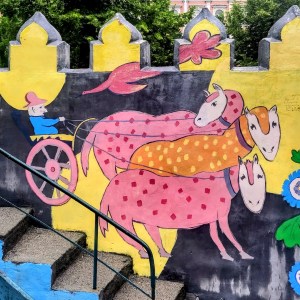
Then, with the support of USAID we started the Mariia Prymachenko project [Ukrainian Beasts] after the russians destroyed the Prymachenko Museum that stored some of her works during the full-scale invasion. The idea was to show that a museum is not just four walls. If the russians think they can destroy us, they are mistaken. Prymachenko’s work exists even outside those four walls. On our website we called this campaign “unleash the beast.”
Shum Rave, has always been more than just the music and cultural heritage is part of our remit. One day, I met up with Oleksii Makarenko and the guys from Gasoline Radio. He wanted to make a sample pack of Hutsul music, and I helped them to find the finance for it. With the support of the Izolyatisa Foundation we won a small grant to realize this project.
Sorry, just to expand, Gasoline Radio made a sample pack which they released on their Bandcamp page and sent out a call for tracks using these samples, after which they released a VA album.
Zhenia: They also made a documentary about the Hutsul region. After the completion of this project, I looked at ways to continue this idea. My partner Natasha was interested in Crimea, and after a year and half we found the money to make this project about Crimean Tatar music. We are now almost on the finishing line because we already made the sample pack which we sent out to a number of electronic musicians.
We all talk about how important it is to promote culture during the war and how russians are trying to destroy our culture. And when we started researching Crimean Tatar music, I understood how deep the problem is. Because of the deportation of Crimean Tatars, their music didn’t develop for a century. They use instruments similar to the ones used in traditional Turkish music like the Bağlama. In other countries this type of music was developing, but not in Ukraine. Not a lot of musicians in Ukraine can play on these instruments. You cannot even buy them in Ukraine.
This project shows how important it is to save this culture and to hear this music and to give to everyone the opportunity to work with this music. It will be really interesting to see the outcome of this project, but at present I can already say that we are expecting huge results.
When is it coming out?
Zhenia: It will be released at the end of June with a documentary on how Crimean Tatars live here in Kyiv and try to make their own Crimea here without physically being able to be in Crimea.
We will also release the sample pack for everyone, but we first made an open call to show artists how to work with the samples because the history of Crimean Tatar music is a hard and sad story. We wanted to explain how to use the samples with respect for the music and the musicians who recorded the samples. For instance, Jemil Karikov, who played four of the instruments for us, he dedicated his whole life to find out how the Crimean Tatar instruments should sound, and how Crimean Tatar melodies should sound. It’s a huge job and we want everyone to respect and understand this.
How do you ensure that these sounds are not used in a way that could be considered as cultural appropriation or become some Eurovision byproduct?
Zhenia: It’s a good question and you will find answers to this in our documentary, no spoilers, but as I was saying, Crimean Tatar music has not developed for 100 years. The risk is to fall into the trap of what we call “Sharovarshchyna,” which is a simplification of using the culture. In some way every music needs to go through this phase to develop. We need to understand how different music genres can sound, like nice trip hop, or bad drum and bass, for instance. Without mistakes there is no development. We are ready to give feedback about this and to explain to people how it should work. But it is amazing music, and it must go through this phase.
Do the musicians who recorded the samples have a say in the final production?
Zhenia: We will definitely consult with them, but they also understand that once the samples are released, they will be used in different ways. But this must happen if we want this development.
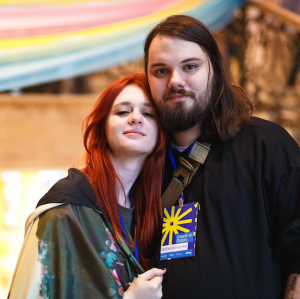
Zhenia Skripnik with Sawras
Ok, so the overall musical landscape in Ukraine has changed since the full-scale invasion. Some venues are closing, and new ones are opening. This happens the world over, but I wanted to get a sense of how one operates in an especially difficult context like the one in Ukraine during wartime.
Zhenia: I really like Noise every Wednesday at Otel’ because it’s a nice concept and they give musicians the opportunity to play more experimental stuff, like Symonenko, for example, who has an experimental side to him.
In general, after the full-scale invasion, many popular deejays left and new names appeared on the scene, but after three years, it’s the same names on the lineup and the people who used to say, “We want to see new names” are now the same people on the line ups of every festival here.
For us, with Shum Rave, we didn’t invite artists because of their names, but because of their music. Even if you have two followers you can come to us. And I hope HVLV will have a spot for new names.
A: A lot of big collectives started in HVLV. They eventually became too big for us, and I am really happy about it, but they also have a need to renew their collectives and bring in new artists, so my idea is for HVLV to provide a space for them to develop. We already started with Kontrabass who are now sending us new artists, we are discussing with people like Symonenko
Symonenko is also teaching…
Zhenia: He teaches music production.
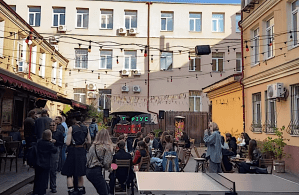
HVLV
Andreas: There is also Eugene Kasian from Kurs Valüt who wants to get involved and teach music production. So, my idea is that all these people will bring us new artists, and we will make it as a new artists place. We will still have parties over the weekend, but the week has seven days, and this is definitely a priority for me.
This is the reason why I moved here on a permanent basis, because I couldn’t follow these projects remotely, you cannot put the responsibility on someone else, either you do it and you do it properly or you don’t.
HVLV has always been the place where you could get discovered as a younger artist and it was very successful in this and it’s a cultural hub, and we have a great sound system, so the conditions are right for us to do this. HVLV is not limited to any one genre of music, as long as you are talented and want to showcase your art, I’d be happy to see them.
The one million dollar questions now, what do you think is going to happen?
Andreas: I was asked this by a journalist recently, and I said, I am not the right person to ask because on the 23rd of February [2022, the day before the full-scale invasion], I said, “They are not going to come here!” We just live by the day. That’s what I do.
Zhenia: I hope everyone will remember the feeling that we are stronger when we are together. It does not depend on what happens, we need to remember who we are and that only connections can make us strong. It’s not only about the music scene.
Is there anything else you’d like to add?
Zhenia: If you listen to this podcast or read this interview, we have three lessons on our website they are really short, you need only your laptop, no controller or anything. Headphones are preferred but if you only have your laptop, that’s also OK. Go to our site and see what we are talking about, try to figure out how you can make this transition between two songs and play two songs together. If you feel depressed and you want to try something new that doesn’t require a lot of energy, just go to our website and try this. It can help you to understand what we are talking about here. It’s really simple.
Andreas: Also, keep in mind that this is not a program just for veterans. If you are stuck at home, all you need is a notebook. It is accessible. Try it.
MAY 20, 2025 – Odesa
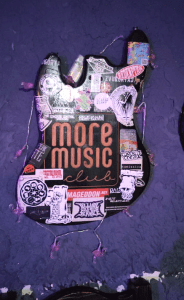 Oleksandr Hodosevych [More Music Club – Rudnic Ore; Mist Tower] and Serhii Batura [Rudnic Ore; Lu Joyce]
OH: My name is Oleksandr Hodosevych. I work at More Music Club. Ten years ago, me and my friend Sasha Kapuka opened this club, but we were in a different location. This is the fourth location of More Music Club. We had three different locations before, but we’ve been here for five years now, I think. It’s because of some problems with neighbours and landlords. Clubs are not easy because they are loud.
You are also in the centre of Odesa…
OH: Yes. But this is a good place, we don’t have neighbours. Usually, we have some old ladies that often call the police because of too much noise and too many people on the streets, you know… it’s rock concerts.
The situation must be different since the full-scale invasion and curfew?
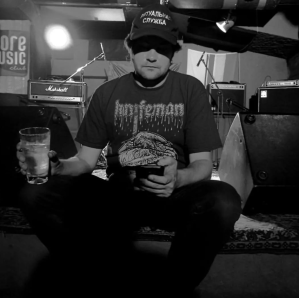
Olexandr Hodosevich photo by Proletarskyi
OH: It is, but people’s behaviour sometimes it is not changing, and if we were in a different location we would still have problems with neighbours. This is an office building, we don’t have any neighbours, so it’s a good place.
Could you give me an idea of the type of bands that play here?
OH: We have different kinds, some psychedelic bands, some stoner bands, some indie bands, some black metal bands and death metal bands. So, it’s different evenings. We have evenings where it’s acoustic music, just one man with an acoustic guitar, and we also have music jams when different musicians from different bands and different styles come together on stage and do something interesting.
How do bookings happen, do you get approached by promoters, do you ask bands directly…
OH: We usually work with the bands directly because we know many bands. As we have been doing this for a long time now, we have the contacts. Before the war we were working with two or three bookers but now that’s stopped because the bookers worked mostly with European musicians, and now we don’t have the pleasure to listen to European bands because they don’t come to the country.
Has any foreign band played here at all since the full-scale invasion?
OH: One or two, maybe, yes. There was a guy from Australia, one from Britain, just one-man bands. As for a full band, I don’t know…
Ah, we had a band from Germany [Doc Flippers], and a band from Poland and there is live in Kuyalnik [the Kuyalnik Estuary, on the northwest coast of the Black Sea]. There is a guy, Alexander Sunshine, [sAn] and he made a live video on the Kuyalnik historyand these two bands were playing on this live.
Could you give me an idea of the music scene in Odesa?
OH: At present, in Odesa, it’s often younger people that go to concerts and they like more aggressive music, so it’s usually metal or death metal or hardcore and this music is popular in our club. Five years ago, indie bands were more popular.
Have you noticed a different kind of energy with mosh pits?
OH: Yes, because it’s about age, the audience is different. The hard rock concerts ten years ago were different. It’s really changed.
In Odesa, the metal scene is quite developed with bands like White Ward…
OH: Yes, one of the greatest bands in Odesa. They played here many times, at least one or two times a year. They have tours in Europe, and they often start or end their tours in Odesa.
I heard that since their latest European tour was cancelled, they are now on a hiatus…
OH: Yes, now they are not playing. I talked to the guitarist from White Ward, and he told me they are now talking a pause.
What about your own involvement in metal?
OH: I played metal, but stoner metal. I have two bands Rudnic Ore, it’s light music, you wrote about us, and Mist Tower, we play stoner metal, something like that.
Could you talk about Rudnic Ore?
OH: We released our first album last year, we had concerts in Lviv, in Kyiv and many times in Odesa. We have our listeners, and I think this year we will release a new album, we are working on new material.
Is there a specific concept you are working on?
OH: Serhii come here.
[We are joined by Serhii Batura, aka Lu Joyce and 1/3 of Rudnic Ore]
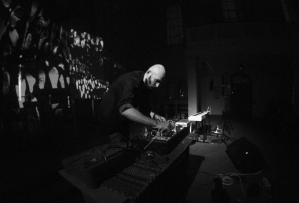
Lu Joyce
Serhii Batura: Hello, Gianmarco.
OH: Speak about the new material.
SB: Today we are playing really new material. I sit at home underground, I live at the zero ground level, I am really an underground artist, and I sit with Eurorack samplers and find some random material from the radio. I work with radio samplers and work with Roland 06 drum machine like a sequencer and trigger it bass, synth, and Moog and work around that dubby like the band Seefeel. Do you know? Like that. I really like the old material from Seefeel. And today we play like that. 11:55 Oleks and Salim [Lepekha] must re-synthesise my synthesiser material, if you understand what I mean.
OH: You know, I am just the drummer, he is the songwriter.
SB: I have a guitar too. And I want to play like Seefeel, dubby, but a blues raga style song. You can listen to it today. We have come to rehearse today after a long time, a month or two.
I was going to ask how often you rehearse.
OH: When we have this period, we can play twice a week. When we don’t have…
Inspiration…
OH: Yeah, yeah. We do not play.
SB: It’s very interesting, playing all the time is not good for us. We are like a different band every time we play because each one of us has different experiences, new emotions, and we must have new emotions to play new material. For me, two days ago on the sea I had a microdose of a Psilocybin magic mushroom, very little, a microdose and the next day I went boxing, and it’s a new emotion, a different emotion, and it will transfer for new material. Oleksadr has new emotion, Salim has new emotion. If we played every day, we wouldn’t have new emotions, only beer, and that’s not a new emotion.
It’s fuel.
SB: That’s our case. We don’t do metal music, we play electronic music. I use techno stuff for not techno music.

Lu Joyce
But you also play in other bands and do solo stuff.
SB: Yes, Lu Joyce, it’s ambient. Three nights ago I wrote an ambient track for a compilation made with samples of traditional music from Crimea. I can play you a few seconds. Because for me it’s a new experience. Usually, I record a track straight on tape in one take, it’s only improvisational music. But for this track I worked on it for three nights. I had good feedback from it. I used a santir sample with ambient around it. The santir is like a zither. The first night it was like Brian Eno and Laraaji, the I came to Tim Hecker special vibes, like tremolo stuff, slow power ambient, when you don’t hear sub bass, but it works for this compilation.
It’s sound on tape. I have Nagra from BBC mono recorder, and I usually compose on a Nagra.
Can you tell me how Odesa has changed, have many people left?
SB: We stayed in Odesa.
OH: But many of our friends have left. And many are on the frontline.
SB: I lost a friend. Yesterday it was one year, since I lost him. A schoolfriend with whom I used to play Nirvana music. It’s very sad, but strange as it is, we adapt. It’s not emotional for us. It’s very strange. We live like a simple life, we don’t have high emotions all the time, we adapt. And for me, to adapt it’s my darling, my cats, red wine, magic mushrooms, but not music. It’s very strange, but music doesn’t help us with war.
Really?
OH: For me, it is different, music is…
SB: It’s not about mood, it’s about real protection. It’s like Jesus, you must believe, but he cannot protect you.
We also have a problem because some bad military people take you [from the street] and send you to the frontline even though you are not a soldier.
OH: I think time has stopped for us and we live in standby mode. We are waiting for the end, and it might end differently for everyone.
Talking about the club, how many people do you get a night?
OH: Sometimes it can be 10 people, sometimes it can be 50 people, sometimes it can be 100 people. It depends on what kind of band plays and what kind of audience the band has. It’s different.
Do you ever get veterans coming?
OH: Yes, very often. Some of our friends who have leave from the frontline sometimes come back to us. They listen to the bands they were listening before the war, and I think it is precious for them. We have veterans with injuries, and we lost some friends, we lost some musicians. It’s very depressing. We were not prepared for this war and it very hard for anyone to adapt to this situation.
Do you have any triggering sounds?
OH: I remember you asked. But I don’t.
Have you started listening to different music?
OH: No, my music taste has not changed.
How about you, Serhii?
SB: Yeah, I saw a film in the cinema, I was the only one in the audience, it was Sisters With Transistors about women in electronic music. It’s a really interesting story because they played electronic music during the war when London was being bombed. And I listen to this music about the war when living through a war.
Now I listen to more music by women like Delia Derbyshire, Wendy Carlos or Ursula Bogner from Jelinek’s Faitiche label which I like very much.
Delia Derbyshire was working with the sounds of sirens.
SB: It’s very interesting. War time is depressing but it can productive. When you could die tomorrow you concentrate, and your mind works faster. For me, this is also why I came to psychedelics, they’re not drugs, they’re like a cure for war, that’s when hippies used psychedelics. Like Don Buchla used psychedelic stuff. Hippies used psychedelic stuff, and it helped them during the Vietnam war. It’s the same story, different, but the same.
You understand that only leading a healthy life doesn’t work in wartime. Your emotions get destroyed. Psychedelics are a very good teacher. I read the books by Castenada. It’s like you live in one room and you don’t know about the existence of other rooms, but when you try psychedelics and read Castenada’s book, you open a new room and remember about different rooms. It’s like Gurdjieff who says you must work with your mind and emotions, and you have to do so to go to those other rooms. It’s interesting because those were the times of the Armenian Genocide and Gurdjieff escaped to other countries. It’s all about war. War all the time.
Can I ask you one last question? Are there any other venues where one can play experimental music here in Odesa?
SB: I know only Vitalnya. It’s a new place. It’s a community. It’s a creative studio. I played in Vitalnya on a modular and they used a very interesting TV installation and poetry. It’s like hippy stuff, poetry, electronics, installations… post-hippy stuff.
And have many places closed in Odesa?
OH: Yes, after the war started.
SB: Ok, now we play.
MAY 21, 2025 – ODESA
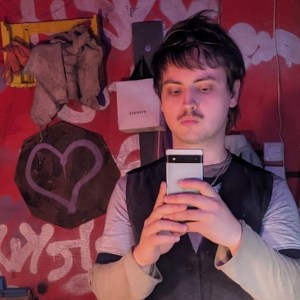 Yurii Charkin – Vitalnya
My name is Yurii Charkin, I am a musician, and I come from a family of artists. But I do more music and enjoy music more as an artform.
Vitalnya is a space where we are trying to create our own scene and play music that we enjoy and the music. This place was formed in its current configuration approximately one year ago. That’s when we started holding the first concerts. Before then, this used to be my father’s art studio, but after he stopped making art, this place was just empty.
I really liked this space; I was here often and was inspired by the space. Eventually I brought all my music here and gear, and I invited my friends to improvise and jam together.
We started meeting up regularly, writing and recording music. At one point I felt like opening it to the broader public instead of using for a closed circle of people. The first event here was a concert of local bands. I also played together with my friends, improvising and experimenting on the go.
I didn’t expect so many people to come. This is technically still an apartment, so 100 people was a huge number. It was stressful but also gratifying.
From the very start, we also had presentations of zines, lectures, and different activities. But first of all, this place is more about music and one day there was a concert by Vova Chyhrynets, a curator of a local fine arts museum. At this concert I met Vitalii and Misha who were starting a band and they needed a drummer, and since I play drums, we formed Früyper together with Max, the bass player, who joined a bit later. This was a rock and emo band, but as time went on, we became more experimental.
I find it inspiring that bands and projects are born and develop here. I would like this place to offer residency space for people to come here and create and record their projects here. Other than that, this place functions as a venue. Sometimes we live stream concerts and invite different bands, as long as the space allows it.
Unfortunately, we parted ways with our sound engineer who owned some of the technical gear, and because of that we hold fewer concerts, but we are trying to solve this so as to resume our activity.
On Friday we will have a show by Renata Kazan [May 23, 2025] who does slowburn pop and is from Odesa but mostly lives in Finland now. It will also be live streamed.
So, this is a nutshell the history of the place. It is an attempt to create a cultural place and bring together like minded people. There aren’t many places like this in Odesa.
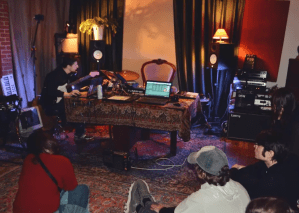 Do you have a regular program, and do you invite artists yourself to perform here or do you get requests from artists to perform?
There is no concrete program, sometimes we like to invite specific artists, sometimes they text us, or people come to one of the events and we get to know them. This is the kind of place where you don’t just attend an event, but you can also spend a couple of nights here from other parts of Ukraine. And this creates a conducive atmosphere for an exchange of ideas.
Do you live here yourself?
I used to live here a while ago, but not anymore.
Could you describe the experimental music scene in Odesa and how would you say it changed since the full-scale invasion?
After the full-scale invasion culture has suffered here in Odesa. In terms of experimental music, I didn’t really interact with a lot of experimental musicians, but now I know some people and many people have left the country. Many of those I know, if they want they perform, they to Kyiv to perform at Noise Every Wednesday at Otel’, the most popular event.
Before the full-scale invasion, I didn’t really attend events, but I knew there was an active music scene in Odesa. Alas, now, there are virtually no places for experimental events. Vitalnya is potentially the place that could bring back such activity.
Sometimes an event attracts a lot of people, and this place cannot always accommodate everyone. So, we have been thinking of staging offsite events to showcase some of the artists who would normally play here.
 In Odesa or even further afield?
To date we have already staged a concert at the Green Theatre here in Odesa. It is a big venue, but we still have a limited number of people who are allowed to gather in an open space because of the war.
How the music changed I cannot really say.
Would you say there is an experimental music scene here in Odesa at present?
There is a community of experimental and noise musicians here in Odesa, and people know each other, but these are small groups of people.
You mentioned the techno scene earlier, and there was a club called Port, which I believe has closed, what is the current state of play?
As far as I remember, the big electronic music festival took place in different venues and abandoned factories, like the one that produced champagne.
 Is this place self-financed, and do you ask people who come to the events for donations?
By and large, all events are free, or we ask for small donations to partly cover our expenses. In terms of financing we have been exploring different avenues, like turning this into a sound recording or sound processing studio, but because we no longer have a proper sound engineer, we are now currently looking for one who shares our vision.
You talked about live streams, do you also record some of the sessions with a view of releasing them at some point on tape maybe?
We have already recorded some of the live sessions on tape and we plan to release a few on Bandcamp and in physical format. This could also help us in terms of fundraising. This would also help to popularise this place and expand our audience. But our first goal and mission were to create something new and open it up to the public.
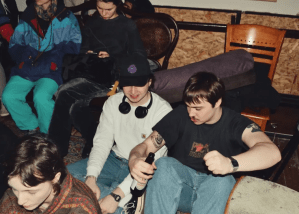 So, a technical question now. This is a residential place, do you get along with your neighbours, or do you get complaints?
First of all in this room where we are sitting right now, there is no one living behind these walls.
But the first thing the neighbours noticed is that many people were coming and going through the courtyard and into our flat. We are adapting to the reality and are trying to limit the number of people attending the events in order not to inconvenience our neighbours and reduce any discomfort from the confined space. The number of people is the biggest concern for our neighbours, more so than the noise, as sometimes they can here music from the ground floor. Anyway, we try never to play after 10 pm.
Do you ask performers to tailor their sets to the space or are they free to perform any set they please?
When it comes to classic instrumental bands, they try to muffle the sound a bit, but when it’s a solo artist, their noise levels are by and large within acceptable levels, but of course we talk to the musicians beforehand. If it is some kind of loud techno, we might try to change the program a bit and make it quieter, but there is some sound proofing in this room.
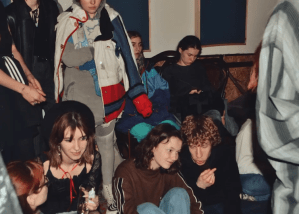 How do you explain the popularity of an event like Noise Every Wednesday and what is your own interest in noise?
We have no similar regular events here in Odesa, but there is demand for it and this is the quintessential answer. There is demand for it, even though there is not enough of it around, so venues that cater for these needs are in the spotlight. For me personally, I take inspiration from noise and from Noise Every Wednesday, but I also feel sorry that musicians from Odesa chose to go there to play instead of playing here and developing a local community.
Maybe the last question, what role do you think music has in war time?
Obviously, because of the war, all artists like painters or musicians are searching for their personal identities and maybe trying to defend it or even deconstruct it. Also, different art forms are a place of escape from war so that they can act as escapism. In terms of music more broadly and experimental music in particular, it can help us to reflect on current times.
In terms of instrumental bands here at Vitalnya, these are more limited because of the noise levels, but sometimes we have acoustic concerts from bands that play electric instruments and sometimes they enter this creative process where they improvise more, and write new music.
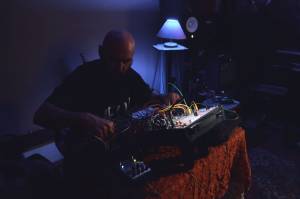 Do you work with spoken word and poetry as well?
There haven’t been any specific spoken word events here as yet, or hip hop for that matter, but for example there were some fragments of poetry during a visual art opening that started with poetry readings from local poets followed by a set from Lu Joyce.
But talking about poetry there was a fun event there. One day, we had a random challenge to write poems in a minute while I played some broken percussive sounds, and Vitali secretly recorded the session. He then sent me the recordings which I then put into Ableton and this give me the idea in future to make an album out of snippets from different recordings on my hard drive.
[Special thanks to Glib Serduk for interpreting during the interview]
JUNE 10, 2025 – ODESA

My musical past is most likely that I’ve been listening to music since a very early age, it’s always been around me, on different media and inside. I didn’t study music, except that I started playing the guitar more than once, but I don’t play anything yet.
Has the full-scale invasion changed the way you think about poetry, music, and sound in general?
No, I was convinced of what I knew and felt. Existence is always the same, only the scenery of the historical horror that is projected onto individual experience changes. Poetry was and is about the eternal and the painful, music is voluminous.
And the sound? Well, there is more noise from the opinions of people who previously had no voice, but decided that their opinion would change something. Well, and the sound of air raid sirens, as well as the sound of explosions from landings and air defense.
Most artists I interviewed have told me that in the first weeks and months of the full-scale invasion they were unable not just to play music but also to listen to music. Has this happened to you as well and if so, when and how did you come back to producing new material and listening to music again?
I don’t create music, I write poetry. I stopped writing in February 2022 for a while, and continued in March. I clearly remember that throughout February, right up until the 24th of 2022, I came up with a whole series of poems in russian that brought the onset of horror closer for me. Like all the previous years, since 2014-2015 for sure. And I didn’t stop listening to music, I just closed the windows so as not to hear the explosions and listened to it in albums. And we made new material with Serhii Batura, it was April 2022, and that’s where the Booster of Sadness album was born. It was spontaneous, new lyrics, his modulars and guitar. And recording on tape in real time, it was extremely necessary at that time, a kind of healing. Like the track “Потрісканий світ” [Potriskanyy svit – Cracked World] with the Ivano-Frankivsk group NUG, released in May of that year. But I wrote all this back in the summer of 2021, in July. Everything was clearly felt.
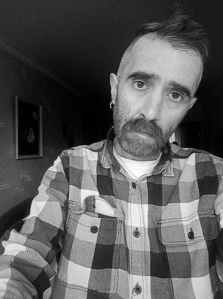 When I was in Odesa recently, I visited both the More Music Club and Vitalnya, but I understand that several other venues, like Port, have since closed down. Has the full-scale invasion fragmented the music community and how do you see the dark folk, and experimental scene developing under present circumstances both in Odesa and in Ukraine more in general?
To talk about fragmentation of something, there must be something before the collapse. In my opinion, there is nothing snout, rare flashes of enthusiasts who sit at home and in basements and sublimate their frequent fears into rare joys in the so-called creativity. Often this is just ordinary passing shit, very rarely there is something authentic. About dark folk and experimental scene – the first in Ukraine and Odesa never happened, rare flashes are a mistake, and experiments on oneself often lead to a sound and word, which then are embarrassing to show somewhere.
There are mentions of the sea in your work, I am thinking of the line “как море, заминирована снаружи,” [kak more, zaminirovana snaruzhi – like the sea, mined from the outside] for instance, from the album dichotomy and the artwork for your track “Filtration.” Has your relationship to Odesa changed in a significant way, and generally speaking, has your relationship to time and space also changed?
The mentioned track [“Кислотная капель” – Kislotnaya kapel’, Acid Drop] from the album dichotomy was written in 2022, in the summer, when there was exactly this feeling, it remained there, in that year. Recorded with one person named Sergey (not Batura), whom I respect, but cannot name for some reasons.
My attitude towards Odessa has not changed, it is the place of my birth, a place of weakness, strength, horror and hope that there may be a miracle among the pigsty.
Time and space are categories that do not depend on my perception, they exist outside the context of circumstances. The main thing is to accept them and try to get along in them.
You frequently collaborate with Serhii Batura (aka Lu Joyce). Can you tell us about your working method? Are the texts written beforehand and the music composed subsequently and is there an element of improvisation involved?
We made two records together in 2022. The lyrics were written in advance (in the spring and summer of that year), everything else is improvisation, experimentation, spontaneous perception of circumstances that influence you. It’s all a creative laboratory in the field – here and now. No thoughtful plan or logistics of implementation. Serhii knows what he’s doing and probably this union of ours is quite organic for implementation.

Sleep in the Fire
Could you introduce Sleep in the Fire and talk about your production process?
This is a creative laboratory, which includes me, Serhii Batura, Dima Bondar and Zhenya Baretsky. Great guys, all very different. Musically and mentally. Sometimes drummer Antop Pelyansky plays with us. We got together on my initiative in March 2024. Since then, we have played seven performances in a year. All this spontaneous music-making, memory noise, crematory of noise and a cemetery of sounds that live inside us. The same with the lyrics, all this is the blood of days that die in us. We practically don’t have rehearsals, this is a performance, we got together and play here and now. And in general it doesn’t matter whether it will be in the future or not, it lives now.
You have also collaborated with a number of musicians from different cities, from Ivano-Frankivsk (Nug / Zlele) to Cherkasy (Deadhead). Does this make you feel part of a wider musical community and is there any sense in talking about localised music scenes from different cities, considering the number of IDPs and musicians that have been mobilised?
I will repeat again that I feel like just a person, more or less alive, for now. Communication and interaction have no borders, be it central, western, southern or eastern Ukraine. It so happens that people live in different places, it turns out that there is communication between us. I do not feel like a part of a puzzle, I just try to nurture individuality in everything.
 Many electronic musicians have been inspired by the poets from the Executed Renaissance over the past three years and half. Do you view this as part of rediscovery of the Ukrainian cultural legacy and / or an affirmation of national identity and is this something that has produced interesting works in your opinion?
No, I don’t consider it in that context, it’s just that in most cases it’s a sublimation of fear into creativity and a way to somehow occupy your hands in the moment. The scale of comprehension is unique, social networks have killed a lot and revived much less. Serhii Batura has released several good works, I’ve listened to them and this individual experience in sound is personally close to me. And also everything that 58918012 does.
Are there any Ukrainian albums from the past three years that you feel have captured current events in a meaningful way?
For me there is. Zlele – Чому такий сумний? [Chomu takyy sumnyy? – Why so sad?], a very personal and tragic record in Yura’s personal experience, connected with the death of his father. And EP zlele feat. 58918012, keeroo – “memento.”
Which book / film / album / song / traditional dish / podcast / blog / artwork / building / meme best captures Ukraine for you?
I don’t attach myself to local identity, but there are some places that I personally have some connection with. For me, Odesa is reflected in Kira Muratova’s films, as well as Ukraine sometimes.
From literature, globally in the context of the country, nothing at all, locally I like essays by Andrey Bondar and Yuriy Andrukhovych.
As for music, then most likely DakhaBrakha – На межі, an album from 2009. Epochal, global, methodical, melodic and authentic.
As for the food – I don’t eat much at all, I’ve been a vegetarian for about twenty years, with a transition to veganism. Well, yes, I love dumplings with potatoes, that’s a fact.
I don’t listen to podcasts and blogs, I do my job as I can.
NEW RELEASES
Emotional Anhedonia ~ Lack of Self Duty
🍂 𝑅𝑒𝑐𝑜𝑟𝑑𝑖𝑛𝑔 𝑜𝑓 𝑜𝑢𝑟 𝑝𝑒𝑟𝑓𝑜𝑟𝑚𝑎𝑛𝑐𝑒 𝑎𝑡 𝑀𝑎𝑙𝑎 𝑂𝑝𝑒𝑟𝑎, 𝑎𝑢𝑡𝑢𝑚𝑛 𝟸𝟶𝟸𝟹
𝐴𝑛𝑜𝑡ℎ𝑒𝑟 𝑙𝑖𝑣𝑒 𝑖𝑚𝑝𝑟𝑜𝑣𝑖𝑠𝑎𝑡𝑖𝑜𝑛 𝑜𝑛 𝑡ℎ𝑒 𝑡ℎ𝑒𝑚𝑒 𝑜𝑓 𝑒𝑚𝑜𝑡𝑖𝑜𝑛𝑠, 𝑡ℎ𝑒𝑖𝑟 𝑠𝑦𝑛𝑡ℎ𝑒𝑠𝑖𝑠, 𝑎𝑛𝑑 𝑠𝑡𝑟𝑢𝑔𝑔𝑙𝑒.
𝑊𝑒 𝑤𝑒𝑟𝑒 𝑔𝑙𝑎𝑑 𝑡𝑜 𝑠ℎ𝑎𝑟𝑒 𝑡ℎ𝑒 𝑠𝑡𝑎𝑔𝑒 𝑤𝑖𝑡ℎ 𝑉𝐼𝐴 𝟸𝟸𝟿 𝑎𝑛𝑑 “𝑃𝑟𝑜𝑘𝑙𝑦𝑎𝑡𝑦𝑖 𝐻*𝐼.”
𝐴 ℎ𝑢𝑔𝑒 𝑡ℎ𝑎𝑛𝑘𝑠 𝑡𝑜 𝑡ℎ𝑒 𝑜𝑟𝑔𝑎𝑛𝑖𝑧𝑒𝑟𝑠, 𝑠𝑜𝑢𝑛𝑑 𝑒𝑛𝑔𝑖𝑛𝑒𝑒𝑟𝑠, 𝑎𝑢𝑑𝑖𝑒𝑛𝑐𝑒, 𝑎𝑛𝑑 𝑒𝑣𝑒𝑟𝑦𝑜𝑛𝑒 𝑒𝑙𝑠𝑒 𝑤ℎ𝑜 𝑐𝑜𝑛𝑡𝑟𝑖𝑏𝑢𝑡𝑒𝑑 𝑡𝑜 𝑡ℎ𝑒 𝑒𝑣𝑒𝑛𝑡. 𝐴 𝑙𝑎𝑐𝑘 𝑜𝑓 𝑠𝑒𝑙𝑓-𝑟𝑒𝑠𝑝𝑜𝑛𝑠𝑖𝑏𝑖𝑙𝑖𝑡𝑦, 𝑠𝑒𝑙𝑓-𝑎𝑤𝑎𝑟𝑒𝑛𝑒𝑠𝑠, 𝑎𝑛𝑑 𝑖𝑛𝑛𝑒𝑟 𝑑𝑖𝑠𝑐𝑖𝑝𝑙𝑖𝑛𝑒 𝑔𝑖𝑣𝑒𝑠 𝑟𝑖𝑠𝑒 𝑡𝑜 𝑐𝑜𝑢𝑛𝑡𝑙𝑒𝑠𝑠 𝑓𝑒𝑎𝑟𝑠 𝑖𝑛 𝑜𝑢𝑟 𝑚𝑖𝑛𝑑𝑠 — 𝑓𝑒𝑎𝑟𝑠 𝑡ℎ𝑎𝑡 𝑠𝑡𝑎𝑛𝑑 𝑖𝑛 𝑡ℎ𝑒 𝑤𝑎𝑦 𝑜𝑓 𝑡𝑎𝑘𝑖𝑛𝑔 𝑛𝑒𝑤 𝑠𝑡𝑒𝑝𝑠 𝑓𝑜𝑟𝑤𝑎𝑟𝑑 𝑒𝑣𝑒𝑟𝑦 𝑑𝑎𝑦.
🌙 𝐷𝑜𝑛’𝑡 𝑙𝑒𝑡 𝑓𝑒𝑎𝑟 𝑡𝑎𝑘𝑒 𝑜𝑣𝑒𝑟 — 𝑒𝑣𝑒𝑟𝑦𝑡ℎ𝑖𝑛𝑔 𝑖𝑠 𝑖𝑛 𝑦𝑜𝑢𝑟 ℎ𝑎𝑛𝑑𝑠.
Limanenko ~ Pigs
We’re having a party on the edge of the abyss and trying not to jump in. Rhythm, alcohol, magical characters from either fairy tales or Miller’s stories; trip labyrinths, walks through valleys of despair. The season of black rains after a scorching summer, and no more options to escape.
Jabro Grow ~ Following Me
The new EP from Jabro Grow is a sonic journey where primal rhythms collide with cinematic depth, and emotional melodies weave seamlessly through fractured beats. These aren’t just tracks — they’re stories unfolding with each bar, from hypnotic immersion to explosive catharsis.
Hailing from the Cherkasy region and finding his creative voice in Kyiv, Jabro Grow is a producer shaped by the old-school DnB spirit — a spark that ignited his own unique sound. His music lives outside the box: fusing technical precision with raw emotion to craft a sound that feels both intimate and electrifying. His style balances cold, minimalist soundscapes with rich, emotionally charged textures. Fearless in experimentation, Jabro explores new forms in the evolving landscape of Ukrainian electronic music.
Unusual Cosmic Process ~ Awakening Chimes
Awakening Chimes is a gentle invitation into a serene, introspective world shaped by soft piano lines, warm strings, subtle textures, and the calming sounds of nature.
Crafted with an organic approach to ambient music, this EP reflects the delicate beauty of early morning stillness, the harmony of natural rhythms, and the quiet poetry of rain and wind.
Perfect for meditation, deep listening, or simply retreating into a quiet corner of the world.
некрохолод ~ Und Lebenden, und Toten, und Wiedergeborenen
This album is a collection of luminous sensations — subtle, often inconspicuous. Each composition reflects a facet of this spectrum — that very brightness I’ve managed to preserve, to recognize, to gather piece by piece through different periods of life.
It wasn’t always easy, because what is bright often reveals itself not in the loud, but in the quiet. It’s easy to miss, to mistake for something else, not to understand right away what’s worth holding on to. Sometimes it hid in pain, sometimes in silence, sometimes in things I didn’t see the value of at the time.
But over time, these fragments began to come together. Not into something finished, but into a shape I now feel as my own. This album is not an attempt to capture something final, but a way to give form to one of those depths that have become my core. A part I will carry through everything — living, dead, and reborn.
Julian Kytasty and Viktor Pushkar ~ Bandura Road
Recorded in Kyiv, 100% live, during 3 sessions, Oct of 2024. We did some rehearsal online before the recording, and agreed what we definitely don’t play. So it appears to be a well structured album.
With our deep respect to Albert Bandura, the psychologist, and some influence of his ideas.
Na Nich ~ White Soil
Na Nich returns to Delsin following up his 2023 ‘Black Soil’ EP. On ‘White Soil’ the Ukrainian producer continues his queeste pushing the boundaries of deep immersive techno. Compared to the previous chapter, ‘White Soil’ contains a significant lighter touch. Playing with subtle melodies and musing atmospheres to set an uplifting tone. It’s still powerful and propulsive while this sparkle of brightness provides a strikingly fresh angle.
Ivan Samokrutkin ~ Immigration Sounds Like…
система | system presents release: “Immigration Sounds Like…” EP by Ukrainian/Odesa-born and France/Ukraine-based artist Ivan Samokrutkin.
~ “Ivan Samokrutkin’s ‘Immigration Sounds Like…” is an intense sonic exploration of forced displacement/forced immigration brought on by Russia’s invasion of Ukraine in February 2022, capturing the emotional, psychological, and existential experiences of those uprooted by war and violence. In this release, Ivan reflects on one of the most significant episodes of his life, evoking the deep feelings of loss and dislocation that accompany forced migration. The album immerses the listener in the surreal, often nightmarish reality of being severed from one’s homeland, language, and identity, using abstract soundscapes and fragmented melodies to convey these struggles.
Anton Malynovskyi ~ незаконна забудова
nezakonna zadudova is a noise album that explores two elements of the barbaric destruction of space. It is music about violence against land, history, and memory. It is a protest, an archive, and a document of aggression.
The first element is the direct construction of monuments and cultural spaces in peaceful cities. It is the pain of the fact that historical buildings that should preserve the identity of the city are being replaced by concrete boxes.
The second element is military colonial construction. The Russian occupiers are building their facilities on destroyed cities, happily declaring that “it feels like home here,” and barbarically changing the very meanings of these places.
nezakonna zadudova is not music, it is sound testimony. It is an act of defiance that documents the processes that destroy and rewrite space. It is a form of resistance through noise.
The proceeds will go to a fundraiser to car repair for Maksym aka Prince Buba, a friend who is currently serving in the 47th Brigade “Magura”
äsc3ea ~ Acute: Anxiety Diaries
This album was crafted from a place of overstimulation and internal noise — drones, distorted claps, field recordings, prayer calls, and soft ambient memories collapse into each other, like the body’s own anxious archive.
AV ~ Resilient Resistance OST
Resilient Resistance proudly announces the release of its collaborative album: a powerful musical project celebrating unity and cultural exchange.
Curated by Giammaria Coccoluto (GNMR), the album features 15 original tracks by Italian, Ukrainian, and international artists, showcasing the vibrancy of Ukraine’s creative scene.
All proceeds will go to support artistic organizations and humanitarian initiatives in Ukraine, reinforcing the project’s mission to connect and uplift young Ukrainian creatives through the universal language of music.
All the profit will be devolved to Some People.ua and other selected partners.
58918012 ~ Useless Prayers
Hi friends! In the last few years (from 2020 until now, to be precise), the feeling of wasted time, willingness, energy, and life in general has literally lived in my head as a permanent inhabitant. Honestly, I am not a believer, but sometimes, there’s nothing left but to pray.
Anyway, it seems like all those prayers just accumulate somewhere outside my body, and…nothing happens afterward. So, I think I just should break that clot of wasted prayers into tiny pieces and throw them all away. I actually felt my head slowly clearing with each new note of this album.
From a musical perspective, this album is not even dark or sad. It sounds overall freer in my opinion. I’ve tried to put the feeling of processes inside of my head into the sound. Compositions begin as suddenly as they end, similar to the thoughts of my anxious mind. Melodic and atmospheric moments mixed with noisy / drone / industrial, and strange electronic sounds. You will hear what am I talking about during the listening. As usual, thanks for your support! Enjoy the music and stand with Ukraine! Peace ❤
VIEWING ROOM
(Gianmarco Del Re)
 a closer listen