

Artwork by Mariia Prymachenko
New Year, new episode of Ukrainian Field Notes. This month we speak to Bohdan from delayed minds and kittens on the balcony about “cunning recruiters,” while sovist’ reveals she’s a bassline junkie and Vladyslav Larkin poses a simple, looping question: Doyouwannalofi?
Back in Kyiv, darialism includes music in her personal growth plan, Shana deals with burnout and Cruel Blu asks to be remembered ugly while in Prague, whereas Odarka talks about closing your heart to pain and Olympysky navigates the restless currents of ADHD.
The new season of UFN podcast over at Resonance FM starts with a conversation with viixiii and Clemens Poole about blackouts, freezing temperatures, procrastination and noise.
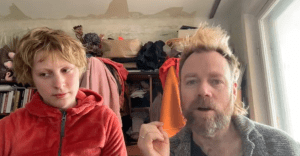
viixiii and Clemens Poole
Tracklist:
- Група Б – Прозорі очі tape excerpt
- некрохолод – Kharkiv
- viixii – I will be fine
- Pøgulyay – atttmainddd
- Axelrod Bering & Chloë Landau – Welcome to the Shop
- äsc3ca – If You Hear This, Wake Up
Background music:
- Volkean – Hva Ov…
- Volkean – Sang Om Evigheten
- VacDeca – moist
- weed420 – El chiste más largo de la historia
- Tegh & Adel Poursamadi – Bad’a
We also look at new releases from birdsandpeople, kyïvite, kittens on the balcony, Chloë Landau & Axelrod Bering, Doctor Bugg, Mystictrax and Lostlojic and we end with a video from Svyatoslav Lunyov.
JANUARY 5, 2026 – KYIV

delayed minds at OTZHEFEST
delayed minds – kittens on the balcony
So, I’m Bohdan. You may know me from projects like delayed minds, kittens on the balcony, Zak Chill, or Erythroleukoplakia Records. I live in Kyiv, study at the university to become a sound engineer, and am simply living the best and worst life of my life at the same time 🙂
I come from Zhytomyr region from a small town called Nova Borova, where I lived for 15 years, until the start of the full-scale war, after which I lived abroad for several years.. I started doing music at the age of 13 when I made some beats in FL Studio, Later, my friend taught me how to play the guitar, and at 15 I decided to create a project, and that’s how band Alone Parts was formed. My first musical influence was the indie rock scene of the 10s, but in 2021 I started listening to shoegaze and thought “that’s it, I want to do this”. We played 1 concert and disbanded because no one else was doing anything in the project except me, I freaked out and started writing the delayed minds first album.
Could you describe the production process behind Blue Heaven, and what does the idea of “heaven” mean to you in this context?
It’s hard for me to say anything specific about the recording of this album, most of the music for me is one big audio diary and it just follows the wave of feelings. I planned the album to be an hour and a half, but over time I realized that in some commercial stuff it would be a failure, because mostly people don’t listen to music in albums, especially in Ukraine.
Also, during the second half of 2024, after the release of the first album, I didn’t even touch the music writing and the process went very slowly. There was a point when we played more live shows and I didn’t write music for almost half a year. It’s hard to imagine now. I recorded most of the material at home myself, on the cheapest sound card from Beringer, with VST drums and a $60 microphone. Dmytro Doomdoze helped me partly in writing the album, he is the only person I can send a demo to, let him record the bass, or add drums and influence the sound.
Also, on the album you can hear the violin from our live bassist Sofia Savchuk in the song deeper, vocals from Marina from the band Alfater, saxophone from Andriy from the band DEDDOM, and a poem written and voiced by Mykhailo from Emotional Anhedonia. The work has been going on since March 2024 (some tracks started recording already then). I did all the mixing and mastering myself, I wanted it to sound the way I see it.
Also, a problem with recording was that sometimes I waited a very long time for some session materials from the musicians to be recorded, and the process dragged on for months, but that’s okay.
How would you describe the shoegaze scene in Ukraine, and what would you say is specific or distinctive about it?
The shoegaze scene in Ukraine is practically non-existent. Most bands are scattered around the country, or don’t communicate with each other, and you can’t clearly identify the bands that make good shoegaze on the fingers of one hand. This applies not only to shoegaze, but our scene is really very disconnected, but I’ll write about that later.
I will highlight several interesting projects – Almaz, Meryvo, last past., moreforest (те, що більше ніж ліс) and… delayed minds:) (marked only active bands located in Ukraine)
How has the ongoing war influenced your creative process, both emotionally and practically?
After the full-scale invasion began, I lived in the Czech Republic for a long time and started to conduct my projects there. At that time, I was very interested in the heyday of the Ukrainian scene in 2022-2023, but it was difficult to join the scene remotely, so in 2024 I started living in Kyiv. Practically and emotionally… I didn’t do music until full-scale but anyway making music in wartime is of course more difficult, music born in such conditions is considered by me to be the most sincere. + You try to do everything at the same time, because every day you can die and this lifestyle forces you not to give up and keep working.
As a concert organizer, I will say that it has become practically impossible to persuade a band from abroad to come and perform in Ukraine. Also, a lot of bands are fighting for our freedom right now, and we try to support them as best we can, although sometimes you think about the lineup and say to yourself “fuck, I don’t know who to invite to perform” or you adjust the date of the concert for their military leave. And in general, competition has increased because the music scene has experienced its creation/rebirth and market oversaturation.

Me (right) and Misha from Emotional Anhedonia
How did your involvement with Erythroleukoplakia Records come about, and would you describe the label as one big happy family—or more like the kind of dysfunction all self-respecting families have?
My joining the ELP team was very funny. Misha is a “cunning recruiter”. Once I put out a demo album Alone Parts on the label, and then I wanted to put out an ambient release, Misha offered to help him with some processes at the label, fix distribution, etc. So I joined the team in April 2024. I could say that I became a kind of CEO of the project since summer 2024, although sometimes I took quite long breaks and practically left the team due to burnout (I took on much fewer tasks).
Now the Erythroleukoplakia team is “3.5 heroes” who are carrying a lot of work. This is me, Mykhailo (he is less involved in the project now, as he joined the army a 1.5 years ago and simply doesn’t have the time and resources for it), Volodymyr Alberti from Музична Шкатулка/Gender Studies, Denys from ЧОРТОПОЛОХ, Yurii Dyban’ (Xerxerash) who’s making almost all gigs with me, and several people who are involved in the project minimally, but who help us a lot.
We are a completely enthusiastic team, we earn almost nothing from the project for ourselves, and we do it from the heart. Over the past year, as a team, we have fine-tuned most of the processes, grown in scale and quality of work, but there is still room to grow. I would say that ELP is like a big family, we have our own small community of people with whom we see each other at all the concerts, we have a common chat, and all these people are the biggest fucking freaks who do the most interesting and cool music in Ukraine.
How did you come up with the name kittens on the balcony and how do you decide which ideas belong to delayed minds and which belong to kittens on the balcony?
delayed minds for me is a project in which I always invest millions of efforts so that the music sounds like a quality produced product, as far as my resources allow (but at the same time remains sincere and honest). This is a project that I am developing as my main musical engine.
kittens on the balcony is like when a taxi driver says that he drives for the soul, but in reality, he has a “successful business”. So, kittens are like this taxi driver job for the soul, lol. The name comes from the fact that my friends and I would often sit on my balcony and just spend our evenings there, smoking cigarettes and listening to music. I was really inspired by the mage tears, so the first cover was a bit in her style, and the whole sound of the project is mostly short bedroom pop songs. I never spend more than a month (and usually a week) recording an album for this project. It’s something that’s born in a second and immediately goes out into the world. Maybe this project will get more attention someday, considering the contemporary influence of slow rock and bedroom pop on musical trends. Also, about kittens – I’m a big fan of Teen Suicide, mage tears and many bedroom indie projects that influenced my vision of music
How would you describe the music scene in the Zhytomyr region?
I’ll describe it with one story. Recently we wanted to do a concert in Zhytomyr. We agreed with the bands, the bar, the conditions, the road, everything was great. and then the bar owners said “Well, we only do concerts Monday-Wednesday, because football and beer bring in more money” That’s the whole scene in Zhytomyr in one example.
How would you describe the live music scene in Kyiv today?
I will be as frank – and a little rude – about this issue as possible. The music scene in Kyiv is when people are ready to fight for a concert venue, set crazy conditions and prices for organizing or renting a venue. Also, some organizers hold concerts only for their own, don’t provide artists with normal conditions, but then write on their Instagram about how awesome and cool they are. Or they’ll put together a big concert venue and only give 20% to charity, which I think is shit. Overall, there are a lot of concerts happening in Kyiv, both good and bad, but our scene is very divided, and it feels like we’re not all doing it for the same goal. I wish people were more united so that all this shit would end sooner and we could do more concerts just for the soul. But I’m glad it lives on at least in some form, even though there are parties and people I can’t stomach.
What would you say have been the most interesting musical developments in Ukraine over the past four years?
One of the most interesting phenomena of the last 4 years is of course noizschoseredy. This was an event that has became a phenomenon and has shown many people that music is not only about melody, but that any sound can have something in it. I had several performances there and I am very grateful to Otel’ and the organizers for such an initiative, which lasted exactly 100 Wednesdays of performances.
This is the first thing that came to my mind, and I think you could LISTEN TO ANYTHING there – from a choir (ummsbiasus) to an “old geezer” with an electric grinder (Ereh Saw).
Of course, there is a lot more, from Vlad Yakovlev’s lectures about the Ukrainian underground from the 90s to thematic concerts, but this is what stuck in my memory the most.
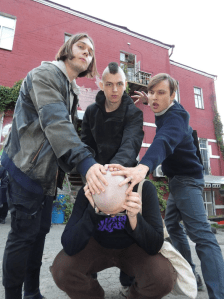
Музична Шкатулка (Muzychna Shkatulka) band and me with a shaved head
What does it mean to you to be Ukrainian?
For me, it probably means fighting for the right to a free life, both against external enemies and internal problems. And proving to the world that our culture has made a significant contribution to our time. Honestly, sometimes it’s hard for me to say anything more specific to this question.
Are there any Ukrainian releases from the past four years that have captured the war experience in a meaningful way for you?
МС Мягкий Металл – Околовойны
Emotional Anhedonia – Lack of Self Duty
derwisz – Горизонт подій, які не згадати
ELP WAR SPLIT
electricity label – Ukrainian Indie for Independence pt. I and II
Альфатер – Колись все мине
(It’s not only about the war, but also the music, which simply remained something favorite and special for me)
JANUARY 5, 2026 – KYIV
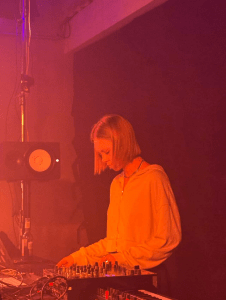
My name is Anastasiia, and my artist name is sovist’. I’m 25 years old. I was born in Kherson and moved to Kyiv in 2018. My production journey started in 2023 at the Module Exchange school. There, I wrote my first track and later performed my first live set. In 2025, I also started DJing.
I have loved music all my life, but for a long time I didn’t really understand it. I was waiting for the right moment and inner readiness to do so. And now I’m here.
What can you tell us about the production process for Bassline Junkie?
Bassline Junkie is an important album for me — it’s my first one. It consists of three tracks. I started writing it in 2024 in Thailand, after a difficult period in my life, and finished it in Kyiv with a heart filled with love and creativity. Because of this, you can hear vibes of jungle, travel, and change throughout the tracks.
“Subsonic Affair” is my favorite, to be honest. It has a feeling of weightlessness, adventurism, and exploration.
“Sync or Swim” comes next. It’s about a challenging period in my life, and the title says it all: “Either you’re up to speed or you’ll get washed away.” It’s an ironic and philosophical title for a deep, heavy, bass-driven track.
The last one, “Zero Fucks Given”, symbolizes my approach to making music. I do it the way I like, and I don’t explain myself. Other people’s opinions won’t make me change what I do. It’s about accepting yourself, your choices, your taste, and your direction in life and creativity. It might be harsh, but it works 🙂
What can you tell us about your experience at the Symonenko School of Music and about your track “Whistle” included in the VA album Vacuum?
I wasn’t officially part of the Symonenko School of Music, but Symonenko was my lecturer at Module Exchange.
The track “Whistle” has an interesting story. I was performing a live set at the Mriya Festival in Lviv, and Symonenko was there as well. We prepared my live set together a few days before the performance. During my set, he recorded a part that he liked the most and later suggested releasing it on the Disk D label.
What is the recipe for a perfect live set?
It’s like the recipe for your favorite dish. If it’s cooked with love, everything will be tasty.
How has the ongoing war influenced your creative process, both emotionally and practically?
Writing music has become physically harder because of shelling, power outages, and other realities of war. It has also become mentally harder. But this mental difficulty often gives an impulse to creativity.
What is one thing you learned from someone you worked with?
Not all popular artists make high-quality music. And not all artists who make great music will become popular.
What would you say are the most interesting musical developments in Ukraine over the past four years?
For me, the first one is Repair Together, a charity that organizes tolokas (traditional Ukrainian communal work days), where more than 100 people help strangers rebuild houses destroyed by Russia — while techno music is playing at the same time.
Another one is the Brud Pes Festival (which translates to Dirty Dog in English). It’s an amazing large-scale festival, and the organizers donate the proceeds to animal shelters, which is really inspiring.
How would you describe the electronic music scene in Kyiv?
Because of the war, many electronic artists have left the city or even the country. This may seem like sad news, but in reality, the underground scene in Kyiv is now shaped by strong, ideological artists who continue to carry this culture forward — both within Ukraine and beyond.
Despite the war, artists continue to create, inspire, work, and love what they do. This is what real underground means: creating despite difficult conditions, not putting fame and money first. The idea should always come first.
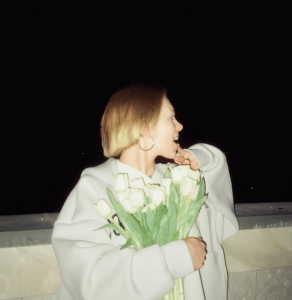 What does it mean for you to be Ukrainian?
For me, it means being strong — in our decisions, our thoughts, our bodies, and in war. It means being proud. The world has given us the opportunity to show our strength and who we truly are.
It also means having a big, kind heart and the ability to love life even during war. It means being brave enough to stay home when it’s scary, ready to fight for our home, or to support those who are fighting.
Which book, film, album, song, traditional dish, podcast, blog, artwork, building, or meme best captures Ukraine for you?
- Borsch.
- Poems by Lina Kostenko and Vasyl Symonenko.
- The Donbas stele.
- And Patron the dog.
JANUARY 6, 2026 – DNIPRO
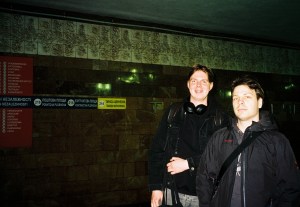
Me & label partner Yaroslav in the underground
When I was around 10 years old (I’m 28 now), I was really into skateboarding with my friends. Around that time, I played Tony Hawk’s American Wasteland [a 2005 skateboarding video game], and the soundtrack was insanely good: DFA 1979, Bloc Party, Black Flag, Sham 69, and a lot more. As a kid, that music hit me hard and had a huge influence on me.
At the same time, the internet was starting to appear in a lot of homes in Ukraine. I began searching for similar music on Last.fm and slowly discovered different lo-fi projects. Early stuff by Ty Segall, Thee Oh Sees, and the whole California garage scene played a big role in shaping my love for this kind of sound.
What made you want to start a label, and how is it organized? Do you accept demos, and/or do you mainly approach artists from your circle of friends? How do you handle the logistics of producing and distributing vinyl, tapes, and other merchandise?
What pushed me to start a label was simply my love for music in all its forms. I also make music myself – right now under my solo project Skatepark Philosophy Club. By the time I decided to start the label, I was already releasing cassette tapes for Ukrainian artists. I wanted some progress and growth, and I realized I could build a proper label to help local artists with promotion, physical releases, and other things like that.
Yes, we do accept demos – some artists joined the label that way. Sometimes we also reach out to artists ourselves. For example, projects like plaaato or rippedd, we already knew each other from playing shows together, and they wanted to be part of the label.
We buy blank tapes in the UK and then record them ourselves in Ukraine using cassette decks. It takes more time, but from experience the sound quality is much better than factory duplication. I work on the recording process together with Vlad Yakovlev (Bloomed in September). I handle the artwork and printing with my partner.
As for vinyl, there are no vinyl pressing plants in Ukraine, so we have to press records in Europe. Our latest vinyl release was made in Poland.
Lo-fi music often values intimacy, imperfection, and DIY ethics. How do these values shape DYWLF’s identity as a label, especially in the current Ukrainian context?
I’ve been into this whole aesthetic for a long time, and even the name DOYOUWANNALOFI came to me back when I was still in school. I don’t think the current context really shaped the label in any specific way – it just happened that we managed to start it during the full-scale war. If all of this hadn’t happened, I think we could’ve done way more in every sense.
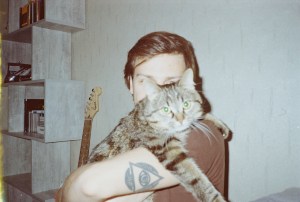
Me with my cat Lex
How would you describe the lo-fi scene in Ukraine, and what would you say have been the most interesting developments over the past four years?
I don’t really separate our artists into lo-fi and non–lo-fi. Sometimes it’s hard even for me to draw that line. From my personal feeling, the scene right now is kind of in a low state because of the war. Some people leave the country, some join the army, and some just stop making music for different reasons – it’s really hard when you see and feel this horror every day. Everyone is tired and just wants things to be like they were before.
If we’re talking about artists that I personally find interesting, especially in a lo-fi-related context, I’d mention Pencil Legs, Dirtbag Loris, Levko, and Pine Echoes.
Many of the acts you work with are young musicians who formed or started releasing music after the full-scale invasion. How has the ongoing war influenced their creative process, both emotionally and practically?
The fact that most of our artists are young just kind of happened naturally. When it comes to emotions during the war, I think that’s something you should really ask the artists themselves – the war affected everyone in a different way. Of course, it caused a huge emotional storm for all of us. It’s not normal when rockets and drones can fall on you or your loved ones. My hometown was actually occupied.
Speaking personally, the war made me trust the government and people even less, and this whole situation showed me that in the end, no one really has our backs except ourselves.
What is one important thing you’ve learned from someone you’ve worked with?
This question really made me stop and think. I can’t point to one clear thing right away, but maybe it’s this: if you want to collaborate with bigger brands or companies, you should be very clear about the terms from the start and have them properly agreed on, ideally in some kind of contract. I don’t really want to go deeper into details here.
Where are you currently based, and have you been displaced at any point?
Right now I’m based in Dnipro, and my label partner Yaroslav is in Kyiv. As a label, we haven’t had to relocate. Personally, I’m from Melitopol, which was occupied in the first days of the full-scale invasion. By that time, I had already been living in Dnipro for about two years.
Yaroslav is from Dobropillia in the Donetsk region. The city is about 15 km from active fighting, and his whole family has already left because it’s basically impossible to live there safely.
Do you have any New Year’s resolutions as a label?
We don’t really have strict New Year’s resolutions, but we do have plans. This year we want to try releasing a magazine, maybe even a multi-issue one. It would be about music – both Ukrainian and international. We’d like to cover not only musicians, but also places and different people connected to music in one way or another.
Also, the artist plaaato is preparing his fifth and final album, and we’re already working on a physical release. It’s shaping up to be a big one. And of course, we plan to keep releasing and promoting our artists moving forward.
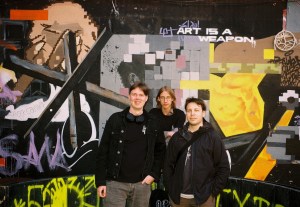
Me & Yaroslav and Sasha (rippedd)
What does it mean to you to be Ukrainian?
Maybe the right way to put it is being free, but I don’t always feel that way. For me, being a human comes first, and only after that comes being Ukrainian, American, Russian, or whatever. I don’t link nationality to someone’s qualities or flaws.
My wife is Korean, but she feels Ukrainian too – and that doesn’t cancel where she comes from. In the end, nationality is secondary; what really matters is what kind of person you are.
Are there any Ukrainian releases from the past four years that have captured the war experience in a meaningful way for you?
I’d probably say that the track “A Quick One Before the Eternal Worm Devours Connecticut” captures the experience of war the best for me.
Which book, film, album, song, traditional dish, podcast, blog, artwork, building, or meme best captures Ukraine for you?
Book — The Kaidash Family.
Film — probably Luxembourg, Luxembourg.
Song — Verka Serduchka, “Hulianka”.
Meme — the infamous viral video with Mykhailo Dobkin and Hennadiy Kernes.
JANUARY 8, 2026 – KYIV
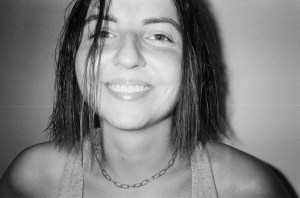
Hey, I’m Dasha, and I make music under the name darialism. I’m based in Kyiv. During the day I work as a Growth Manager at the biggest Ukrainian IT media, and outside of that I’m usually somewhere between writing music, DJing, climbing, hiking, or reading – depending on how much space the day leaves.
Can you tell us about your music path?
A year ago I didn’t see myself making music at all. Now it feels inevitable.
It started as a personal experiment. I opened Ableton for the first time and set myself a challenge: 30 minutes of music in 30 days. No skills, no background, just learning on the go. I didn’t know what I was doing most of the time – and that was probably the point.
That month flipped everything. Music just folded itself into me.
After that, I spent the next six months working on my first release while learning how to DJ at the same time. Along the way, I met people who changed how I listen to myself. Since then, my sound has been slowly taking shape. I’m still in the process of understanding what stays and what doesn’t.
It’s still wild to think about how much life can change in just one year. And even wilder to realize that this is only the beginning.
How would you describe your sound, and what would you say is its defining trait?
For me, music lives mostly on a subconscious level, so it doesn’t really fit into neat, logical descriptions. It often starts as a physical feeling – tension, a recurring feeling, something slightly uncomfortable. I’m translating things I don’t always know how to say out loud.
It’s my way of speaking without explaining.
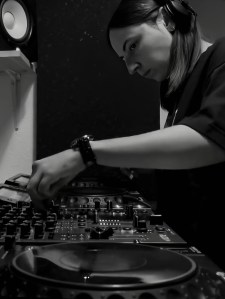 How did you get involved with Mystictrax, and what can you tell us about your track “silence” included in the 2026 sampler?
When I finished my first release, I honestly felt a bit lost. I had no audience to self-release, and I didn’t really believe that a label would be interested in an artist without any background. Sending that message felt more vulnerable than releasing the music itself. But I knew one thing for sure – I didn’t want the music to just sit on my hard drive. I wanted it to be heard, somehow.
I had been following Mystictrax for a while – their sound philosophy and the artists they work with really resonated with me. I decided to write to Volodymyr Lostlojic, the label’s founder, and sent him my release. With very little expectation, to be honest.
A couple of weeks later I saw a message from him. Before opening it, I had already rehearsed a polite “thank you for your time, maybe next time” reply in my head. But when I actually read the message, I was genuinely surprised – he offered to release my music on the label.
“silence” is one of the four tracks from my upcoming EP. The whole release is about becoming, and this track represents one of the stages in that process. It’s a reflection on unity made up of different elements, and on cycles we move through again and again while becoming who we are.
It’s about the intention behind every moment and the idea that nothing is ever really an ending, but another beginning.
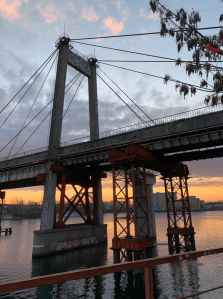 How would you describe the electronic music scene in Kyiv, and how has it been changing since 2022?
Even now, it’s hard for me to imagine the Kyiv electronic scene being any different from what it is today. People adapt incredibly fast – not only to good things, but to difficult ones too. Adaptation becomes a habit.
Memories of watching the sunrise at River Port (once a well-known club on the Dnipro River, now permanently closed) feel so distant that sometimes it seems like they never really happened at all.
Today, most parties start around 2 PM and end by 10:30 PM. Bringing international artists is more the exception than the rule. But at the same time, this has given a huge push to the local scene. People started paying real attention to local artists, and there’s much more space now for those who are just beginning their journey.
Many people shaping the scene today don’t even remember what it was like before 2022 – and yet they’re defining what it looks like now, and what it will become.
What does it mean to you to be Ukrainian today?
Pride. Responsibility. Conscious choice.
It affects how I work, how I create, and how seriously I take the right to do both.
Are there any Ukrainian releases from the past four years that have captured the war experience in a meaningful way for you?
Artists know how to carve pain into its most beautiful form. And even though the last four years have been about resistance, resilience, and strength, the most intimate feeling we all carried – the one we don’t always want to speak about – was still pain.
To me, it sounds especially honest in these releases:
- autoportrack by Andrii Barmalii
- Kyiv Eternal by Heinali
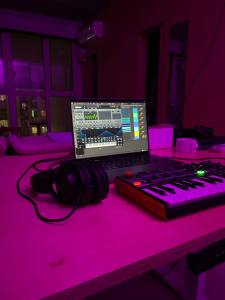 Which book, film, album, song, traditional dish, podcast, blog, artwork, building, or meme best captures Ukraine for you?
During the full-scale war, I consciously began immersing myself in Ukrainian culture. As a result, many things took on entirely different meanings for me. There are just a couple of pieces that reflect Ukraine for me:
- Book: Хто ти такий? (Who Are You?), Гра в переодягання (The Game of Disguise) by Артем Чех (Artem Chekh)
- Film: Камінь, папір, ножиці (Rock Paper Scissors)
- Song: Спробуй купи мене (Try to Buy Me) by Lely45
- Game: Back to Hearth by Podoba Interactive
- Dish: Mimosa salad
- Place: Carpathian Mountains
- Building: National Center “Ukrainian House”
Finally, do you have any New Year resolutions and what do you expect from 2026?
I don’t make plans that far ahead. But I hope I’ll still be alive, still living in a free Ukraine, and still have the chance to express what I feel.
JANUARY 13, 2026 – PRAGUE
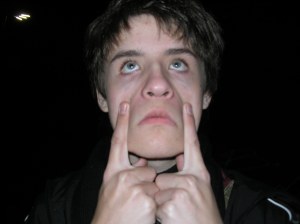
Me in Kyiv, right after recording “diptych”
Dumbtoxicsub, Cruel Blu, or Худбудинок
Hey! My name is Tima, but I’m usually known as Dumbtoxicsub, Cruel Blu, or Худбудинок.
My musical journey began even before I picked up a guitar, somewhere in my childhood. I was constantly building “houses for ants” out of sand, folding paper airplanes and ships, and painting them. My grandmother once told me that everyone has a mission in life, and mine is to create. Over time, I kept returning to this idea as I engaged in creative work. I realized that it is the process of creation itself that matters to me, not the medium or the instruments I use. I don’t consider myself a musician in the traditional sense, and I’m not really that person. I’m someone who creates by experimenting and messing around, like that kid who was building “houses for ants.”
Of course, I eventually started playing music by picking up a guitar and later other instruments. While I enjoy writing songs and performing, my main interest lies not in traditional song structure or composing instrumental parts, but in experimenting with sound—creating audio pieces full of emotion, texture, and vibe. I don’t even remember a single guitar part I recorded, though I recorded plenty; they were just improvisations expressing the emotions I felt at the moment.
One day, when I was in Kyiv, I was walking through Podil after work. When I smelled the Dnipro River and felt its breeze, I suddenly felt like I was by the sea, which inspired me deeply. When I returned to my friend Eva, with whom I was living at the time, I sat down at the drums and started recording, as I usually do, considering every draft as crap. When I went out for a smoke during a break, I noticed Eva trying to kill herself. Once I calmed her down and was sure she wouldn’t try again, I had to express my horror somehow. So I went back to the drums, and that’s when I realized that music has to be expressive, and that nothing in it is as important as its texture and the expression of emotions. That night, I recorded a strange diptych—the songs “Sea” and “Batyeva Hora Suicide,” in honor of the district where I was staying that week.
Something important happened in Kyiv—I completely reevaluated my approach to music and recording. I realized that I like to play and mess around with sound, releasing a kind of emotion or experience, rather than just being a performer of music.
In other words, my musical journey has always been a search for myself. I started with indie rock in a band at age 12, explored many experimental genres over the years, and eventually developed two solo projects: noise pop (Cruel Blu) and abstract hip-hop (Худбудинок), both focused on texture and expression rather than traditional songwriting.
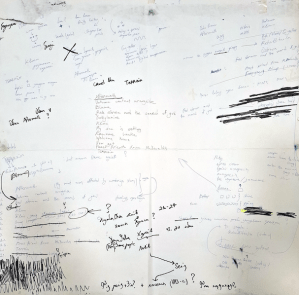
“Terrain” album notes
What can you tell us about the production process behind your debut, Terrain?
I wrote Terrain at a crossroads in my musical journey. I started writing Terrain just when Cruel Blu appeared as a project. Back then, I still hadn’t fully found myself in music and barely knew what I liked or didn’t like, so the songs came out pretty different from each other. At first, my main reference point was King Krule, with his carefully composed and incredibly deep guitar parts. But not long before the release, I finally arrived at the idea of the supremacy of texture in music, so I reworked Terrain once again – and this time, for the last time.
The attached photo is from that final revision, because all the notes on this huge sheet of paper were made then. Then, right before the release, I fully immersed myself in exploring texture, and in a week the album gained six new tracks – short pieces of sound and music that refined and detailed the emotions I had put into the album, while also deepening the story I was trying to tell.
I completed that story with the album cover. The album as a whole is, in essence, about the feeling of detachment. People often used to call me “the astronaut,” and I wanted to reflect that with a photo of my back, which, to me, looks like the surface of the moon.
Are Cruel Blu and Dumbtoxicsub the same person?
Probably yes 🙂 Although Dumbtoxicsub is purely my artistic pseudonym, and in my visual art I explore different things than I do in music. But that’s because some emotions are better expressed on canvas, while others are better expressed through sound. Still, the source of all these emotions is the same—me. So I think these different parts of my creative life just complement each other.
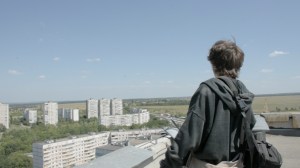
A frame from the film “Remember me ugly”
The production process for Remember Me Ugly sounds intense. Can you tell us about the film, whether it met your original intentions, and what it meant for you to leave Kharkiv? Also, where are you currently based, if you don’t mind me asking?
The logline of the film goes like this: “The last summer in Kharkiv. I leave traces of friendship and memory in the city—portraits of friends on the walls, my farewell to home.” Honestly, deciding to make this film was one of the outcomes of my constant experiments—I always feel this itch to try something new. I hadn’t made films before. I started this project because it seemed like a film would best serve my artistic goal at the time. I needed to document my last months at home and the street art I was doing back then.
I’m not sure if the film fully met my original intentions, because, in a way, there weren’t really any. I approached this project like an adventure that kept expanding, and at some point I realized I just needed to start shooting—make the material now and figure out what to do with it later. I’m glad I had something to focus on in those last months before moving; otherwise, leaving home would have been harder. This way, I was able to fully close that chapter of my life and be ready for the next one. I’m still finishing the edits on this film, and I plan to release it after it’s shown as part of the “Remember Me Ugly” exhibitions across Ukraine and Europe, as one of their elements.
Right now, I’m based in Prague—studying and working here 🙂
Has your work as a graphic designer informed your music production in any way?
Of course – at least because I can personally deepen my music releases with strong visual design, and I enjoy that almost more than the music itself. I dream of creating full multimedia worlds around my future releases.
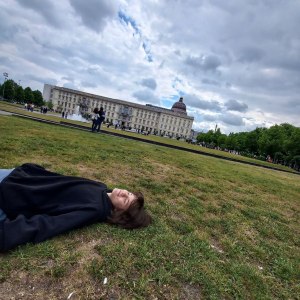
12 yo me in Berlin
How has the ongoing war influenced your creative process, both emotionally and practically?
I started my creative career — if it can even be called that — right at the beginning of the full-scale war in Ukraine. Back then, I traveled through different cities and countries and met a lot of new people. Before the war, I was 12, and I barely had any contact with the outside world. Facing circumstances that were so new to me, I began to actively engage in creativity and, in general, to actually live this life.
When it comes to music, I never felt the desire to write directly about the war. The experiences connected to it are too personal for me, and I mostly deal with them on my own. In this situation, it’s more important for me to act than to talk. So I’d rather organize cultural events to support Ukrainian culture, support the Armed Forces, and volunteer whenever I can than write songs about it. Some of the consequences of the war, on the other hand, have become the foundation for part of my work—for example, early adulthood and a strong sense of alienation.
What is one important thing you learned from someone you have worked with?
Songs, paintings, poems, and all of your ideas get really sad when they stay trapped in your head and never see the light of day. Art is meant to be released—otherwise, it’s fucked.
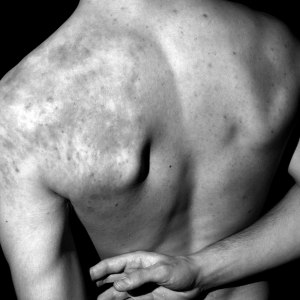
Terrain cover
What would you say have been the most interesting musical developments in Ukraine over the past four years?
It’s hard for me to single out anything specific, but I remember with particular warmth the time when, at the beginning of the full-scale invasion, the Kyiv underground scene noticeably consolidated. A large, cozy community formed there—one that, unfortunately, eventually fell apart. Still, the releases from that period feel like some of the brightest of the entire full-scale war, at least to me.
Though maybe that’s just my perspective, because back then I was only 12 and was just discovering the Ukrainian underground scene for the first time.

Sspacecowboyy performan
How would you say the music scene in Kharkiv compares to the one in Kyiv, assuming you have now moved there?
Even though I didn’t actually move to Kyiv, I think the Kharkiv scene—like any local scene—differs from Kyiv mainly through a special sense of coziness. In Kharkiv, everyone in the music scene knows each other. Fans often become friends with the musicians, and there are certain characters everyone in the scene knows. So the main difference is how tight the community is.
In the capital, I think that kind of consolidation is harder to achieve simply because there are more people. I mean, come on—in the whole of Kharkiv, we have only two rehearsal spaces; everyone knows everyone. Of course, that can be limiting, and sometimes that closeness doesn’t feel cozy at all, but quite the opposite. I both miss it and feel relieved now that I live in a bigger city.
Do you have any New Year’s resolutions?
Nah, man. I’m not really into the whole New Year’s resolutions thing. I do have a lot of creative plans for the new year, though—but if they don’t happen, it’s okay. I’d love to organize a traveling exhibition of my new artworks, make a new zine, do a bunch of street art, drop at least two albums, and sew my first clothing collection. We’ll see how it goes 🙂
Are there any Ukrainian releases from the past four years that have captured the war experience in a meaningful way for you?
I really like the mixtape From Ukraine, For Ukraine.
Which book, film, album, song, traditional dish, podcast, blog, artwork, building, or meme best captures Ukraine for you?
Oh, that’s a really tough question, honestly. Probably the film Kyiv Cake by Mykyta Lyskov.
JANUARY 14, 2026 – KYIV
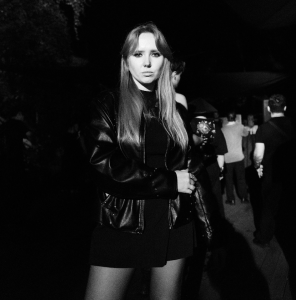
Hi, my name is Shana. I am a DJ based in Kyiv, originally from the small town of Chudniv in the Zhytomyr region. My musical journey began in childhood—I studied piano and sang for eight years.
After moving to Kyiv, I discovered the electronic music scene. I was fascinated by the parties taking place here, and over time I realized that I wanted to be not only on the dance floor, but also on the other side of it.
In 2021, I trained as a DJ at the Kultura Zvuku school under the guidance of Ruslan Mays. He became a very important mentor to me, and I am infinitely grateful to him for showing me the true art of DJing. Since then, I have been actively performing in Kyiv and other cities across Ukraine.
Currently, I am a resident DJ at the formation “SPEKA” and the label “Disk D,” and I also organize my own party, “Mriya,” where I explore sound and create a space for genuine musical interaction.
As for music, I love playing techno in all its forms, but I consider myself a multi-genre DJ, as I also enjoy playing acid, trance, hypnotic, house, breakbeat, drum and bass, and more.
In 2024, I began studying music production under the guidance of Vitaliy Symonenko. I have always wanted to learn from the best, so I consciously chose people who inspire me both as musicians and as individuals.
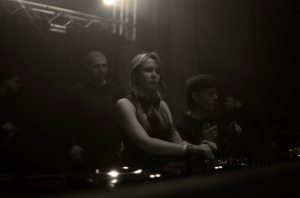 What can you tell us about your experience at the “Symonenko School of Music” and about your track “Riff Machine,” included in the VA album Vacuum?
Vitaliy Symonenko is a man of music in the broadest sense. I have always been fascinated by his live performances, tracks, and his constant thirst for experimenting with new instruments and methods.
After graduating, I joined his label, Disk D, together with other graduates of the school. I have now released three tracks and am trying to take a significant step forward with each release.
The track “Riff Machine” is special to me. Finding your own style in production is a difficult and lengthy process, especially when you want your music to reflect what you play as a DJ. This track was my first conscious step in that direction.
It has a clear, harsh character with a melancholic note—much like our current state. We are all exhausted; we look tough on the outside, but inside we remain hopeful for a better future. The track also features guitar. I was inspired to use it by the legendary Scorpions, whose music inspires me greatly.
What is the recipe for a perfect live set, and is Keller your favourite venue in Kyiv?
For me, the recipe for a perfect performance is good preparation, a clear understanding of the party concept, your time slot, and the audience. The best moments happen when there is real synergy between the DJ and the dance floor—when everyone is overwhelmed by the music, when you get goosebumps, and when you feel that everything is happening exactly as it should.
In Kyiv, every venue is unique and has its own history. I love them all in their own way. Keller is a very intimate club with extremely open and warm people. I feel at home there. In fact, it was at Keller that my DJ career began, so I’m always happy to play there.
How has the ongoing war influenced your creative process, both emotionally and practically?
The war has had a significant impact on both everyday life and creativity. From time to time, burnout sets in—due to fatigue from constant tension and uncertainty about the future.
Sometimes I literally have to force myself to write tracks or prepare sets for recording. 2025 was the most difficult year for me; I had never experienced such a level of burnout and despair before. But even in these moments, music remains a way to hold on and to speak about my condition.
 What is one thing you learned from someone you worked with?
I learned discipline, respect for the process, and continuous development. From my mentors, I gained an understanding that music is not only inspiration, but also daily work, attention to detail, and a willingness to constantly learn new things.
What would you say are the most interesting musical developments in Ukraine over the past four years?
Over the past four years, Ukrainian music has become significantly harsher and, at the same time, more melancholic. It has become more honest, darker, more intense, and deeper—a direct reflection of what we are all going through.
How would you describe the electronic music scene in Kyiv?
The Kyiv scene is vibrant, diverse, and very resilient. Despite all circumstances, it continues to develop, seek new forms and sounds, bring people together, and create new spaces for dialogue through music.
What does it mean for you to be Ukrainian?
For me, being Ukrainian means respecting my ancestors and appreciating the people who contribute to our culture and preserve our heritage today. It is about responsibility, memory, and the desire to develop our own identity, even in the most difficult times.
 Are there any Ukrainian releases from the past four years that have captured the war experience in a meaningful way for you?
For me, these include: Maat – Genocide, ummsbiaus – Kakhovka Hydroelectric Station (Destroyed), ummsbiaus – Blackout, and many of her other tracks. They convey the impact of war very clearly. I would also mention Symonenko – War Kids (Sonia Tarasevych), Yuvi – Лозиною мряку, and Yuvi – Градом.
Which book, film, album, song, traditional dish, podcast, blog, artwork, building, or meme best captures Ukraine for you?
The fate of Ukraine is very clearly reflected in the series Saga, which shows the complex and painful path of our country through the story of one family. Ukraine is also about delicious food and folk music, which preserve memory, identity, and the connection between generations—even in the most difficult times.
JANUARY 14, 2026 – GERMANY

My name is Darya (or Odarka, which is an older Ukrainian version of my name and the one I chose for myself in 2021). I have grown up with music all around me – my grandma and my mom singing me lullabies, listening to my dad’s old CD-disks, playing classical pieces on the piano, singing Ukrainian folk music and jazz throughout my childhood and teenage years. All of those have been influencing me gently, and over the years crystalising my desire to create.
How would you say the ongoing war has influenced your creative process, both emotionally and practically?
Since the war became full-scale I have changed in many-many ways and my work has as well. The texts and poems embedded in my music became political statements and ponderings, I started speaking about things that the experience of war and exile gifted me – longing for the home I lost, yearning for something I couldn’t even name, remembering nature around the house I grew up in, feeling great pain all the fucking time. Memories became a great force to move me. Anger and rage, as well as the deep love I discovered I have for Ukraine and its people made my work change form and direction. My music started moving into a more noise-driven, growling and spoken word direction. I think my music became unapologetic.
“A childish dissent is my answer” speaks about becoming dangerously accustomed to atrocity while still wanting to scream. How do you navigate the tension between numbness and responsibility in your music, especially as someone living in exile?
This is such an interesting question to think about!
I think numbness can be a necessary break that your nervous system turns on to protect you, so it’s important to acknowledge it and give yourself time to rest.
But sometimes I notice that it lingers around for too long and makes me feel disconnected and alien to the Ukrainian struggle for independence. The track ‘A childish dissent is my answer’ is my attempt at navigating the innate tension between a certain detachment I feel from daily observing atrocities and the desire to act as fiercely as I possibly can. It is also not only about Ukraine, but also Palestine, Sudan, Congo, Iran and other resistance movements that are being silenced and ignored. Closing your heart to the pain you see daily in social media has obviously become a habit for many, yet I refuse to stop noticing and stop fighting.
Much of your work blends spoken word with ambient and noise textures. What does sound allow you to express that language alone cannot — particularly when dealing with violence, grief, or inherited memory?
I think noise textures help me express the constant background of chaos and pain of our reality. I also started using field recording to add more context to the music I create. I think field recordings also make music more personal and relatable. I believe right now it is more important than ever as society gradually becomes desensitised to even the most gruesome news.
 In “Спомини – A reminiscence,” you work with a historical poem that mourns both nature and freedom. How do you approach giving new sonic life to texts that already carry deep cultural and emotional weight?
In ‘Спомини – A reminiscence’ which I wrote for my friend’s Olexiy Chychkan documentary Montis Momentum, I narrate a poem by Khrystia Alchevska ‘Споминʼ. As you well noticed, it mourns both nature and freedom and with that it relates to Ukraine’s present experiences – the relentless fight for freedom and the quiet distraction of Ukrainian fields and poisoning of Ukrainian soil with chemical weaponry. That’s why I chose to use it. Giving a new sonic life to such deep and reflective text feels liberating and connects me to my unknown past. Its relatability grants me power to keep going, keep speaking up and fighting in my own way. I think I was hoping it would also have such an inspirational, eyeopening effect on people who listen to it.
Your recent releases move between protest, memory, and near-whispered intimacy. Do you think of your music as a form of witnessing, resistance, or personal survival?
I think you captured the things built within my music perfectly! When creating I seek both to give myself a sense of relief and purpose, and to keep important and silenced subjects spoken of and remembered. My aim is an intimate take on the heavy topics that I think must be remembered and reflected on. It is also a protest against political blindness.
A big part of my work has been Palestine since it is heavily censored and I want Ukrainians to see the real parallels between Ukrainian and Palestinian struggles, not what the propaganda machine wants them to believe.
Can you describe the production process for “A year in sounds and whispers”?
‘A year of sounds and whispers’ is a collection of music that reflects on my year in exile in Germany. ‘A day of sun of her’ is a dreamy love poem to my partner who’s been supporting me all through those hard years. ‘A light moving through the void’ is a collaboration with my friend and a sound artist Parallel Processing, and it is mainly a reflection on the Gaza genocide and the propaganda embedded in it. ‘Playfulness among chaos’ is quite self-explanatory in a way, since it captures a stubbornly joyful life amidst war and chaos.
Are there any Ukrainian albums or tracks released since 2022 that have captured the war experience in a meaningful way for you?
There is this track called ‘Пісняʼ by Artistka Chuprynenko. I keep coming back to it from time to time. It captures a very specific kind of feeling, something that every Ukrainian can relate to. It helps me release a build up of sadness and let go.
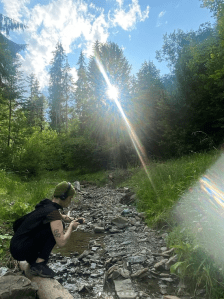 What does it mean to you to be Ukrainian?
It is a somewhat complicated question. I left it for myself to respond to the last.
I am Ukrainian, I speak the most beautiful and poetic Ukrainian language, I tell stories about Ukraine to my foreign friends all the time. I love my land. It is special and it holds me gently in its embrace. I feel connected with everything around me, I feel at home here even when it’s -15 outside and there’s no electricity, heating and water for days due to Russian attacks on Ukrainian power plants. I am the happiest here even when I wake up at night because the house I’m in is shaking from explosions. I think that’s what it’s like being a Ukrainian.
Which book / film / album / song / traditional dish / podcast / blog / artwork / building / meme best captures Ukraine for you?
Right now I feel like tricking that question a bit, and saying that being in Ukraine right now and observing how people are and how everything keeps working at the worst of times, is what captures it the best. Its essence is shining through everything and everyone when you’re here. The various dialects on the streets of Kyiv, the resilience, the openness of people and willingness to help even a total stranger. Its streets and people are so incredibly open and ‘borderless’, and I think it is the best to experience in person.
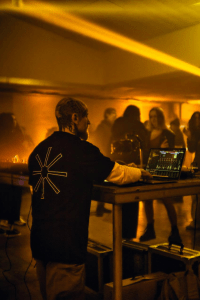
JANUARY 14, 2026 – UKRAINE
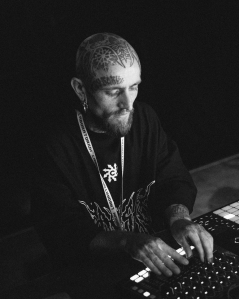
My name is Mykhailo, and I come from the town of Obukhiv. I don’t have a formal musical background as such — as a child I played drums, but music has always been an essential part of who I am. It has always helped me stay afloat. In 2023, I started producing electronic music.
What can you tell us about your experience at the Symonenko School of Music and about your track “ADHD,” which was included in a VA compilation?
I wouldn’t say that studying came easily to me. I’m very grateful to Symonenko for his patience and support. As for the track “ADHD,” I can simply say that it’s my official diagnosis 
How has the ongoing war influenced your creative process, both emotionally and practically?
The war threw me into a very difficult and painful situation, after which I struggled a lot mentally. Since music has always helped pull me out of different states, I decided to fully focus on creating it.
Physical and mental wellbeing seem to be important to you, as well as staying connected with nature. What is your secret to achieving balance in life?
At the moment, my physical and mental wellbeing isn’t as good as it used to be. But when things get really hard, sport and nature are the only things that truly help me regain balance.
If you don’t mind me asking, how many tattoos do you have, and what is the story behind them?
I started getting tattoos when I was 15. I always had a lot of friends who were just beginning to tattoo, and that’s how it all started. At that time there were almost no professional tattoo artists around, so the first tattoos we did were made with homemade machines and very chaotically.
What would you say are the most interesting musical developments in Ukraine over the past four years?
I can’t really answer this question, because I don’t know what the scene was like before.
How do you see your sound or artistic direction evolving in the near future?
I’d like to perform on an international level, but right now the most important thing is simply to survive. At the moment, I’m organizing a new techno formation, and we’re planning to host a party on April 4.
 What does it mean to you to be Ukrainian?
I can speak more about the kind of Ukrainians I would like us to be, because the war has affected everyone differently. But I believe it’s always important to remain human — not to walk past someone who asks for help, to have a sense of conscience, and to behave with dignity, no matter who is standing in front of you.
Are there any Ukrainian releases from the past four years that have captured the experience of war in a meaningful way for you?
I don’t know any releases like that.
Which book, film, album, song, traditional dish, podcast, blog, artwork, building, or meme best captures Ukraine for you?
The book 1984 by George Orwell strongly resonates with my perception of Ukraine.
NEW RELEASES
birdsandpeople ~ Don Quixote in Babylon
Everything begins with a letter you don’t remember. The handwriting is familiar, but the lines seem to know things you haven’t yet admitted to yourself. You read slowly. Nothing new. Just reminders. Calm.
Guitar sounds drift by like random thoughts. Time begins to move. It grows a garden in the middle of a busy city — and the garden lives by its own rules. Venus flytraps are waiting for Her. When She appears, a synthesized choir of plants tears through the smog and clouds of Babylon. Her dance is mesmerizing.
A little to the side sits an old Comanche. He explains nothing. He doesn’t interfere. He simply knows when something is finished and when it is not. He looks inward and from time to time, with a light hand, draws the note E from a glockenspiel.
What is an electric sheep? No one knows. The Comanche would say it is the very structure of Babylon — its mechanism. For the electric sheep, all of this was and will remain a game. So there is no need to try to understand it. Just accept the electric sheep.
And who are you in this story? I am almost certain you are Don Quixote. You came here to feel Babylon. You need this feeling as a reference point. Today, the city is safe for you. High stone walls protect you from the chaos that surrounds it.
And what surrounds it is a war of worldviews.
There will be no ending. Babylon is too complex a thing. Here, the ending is different for everyone.
Chloë Landau & Axelrod Bering ~ Luftalarm im Wunderland
Luftalarm im Wunderland lands like a siren-drenched pin-up left on the bonnet of a wrecked car: mischievous, abrasive, and gleefully unhinged. Preceded by a 2026 Pirelli style calendar and released on Kyivpastrans, the tape captures Chloë Landau and Axelrod Bering (aka Clemens Poole) in full collision mode, splicing fetishistic mechanics, pop decay, and wartime dread into a grimy Wunderland where bodies and machines fail together. On “Welcome to the Shop,” Ukrainian invocations of love, speed, and annihilation grind against Axelrod’s grease-stained American but German inflected—guard rails, Jaws of Life, over-performance—until desire itself becomes a salvage operation dragged across the shop floor. Across nine tracks of alarms, foreign parts, medical clinics, and constant velocity joints, the record revels in impact and repair, innocence and brutality, turning air-raid anxiety into warped play and industrial romance into something cracked, funny, and uncomfortably alive.
Mystictrax ~ Label sampler ’26
Mystictrax community kicking the door into 2026 and giving the world a new energy. High-end electronica in synergy with nature is the key to a better future. This compilation is a test sample of the next music: mysticism and hypnotism from well-known and new 20+ artists who produce the meanings of being right now. You will hear some of the trax in the artists’ upcoming solo releases: Travis or Alice, SHKLV, Aezron, Tabris, Lostlojic, CJ Plus, Bodro, Revshark, Grid User, Mootney, Saturated Color, Raavel, Lectromagnetique, s0ncenastinah, darialism, Ryndin, OPR8, Distortion (UA), Terawax, User Kyx, Radiant Futur, Lvcerate, Sumbur, äsc3ea.
All proceeds will be sent to funds to help Ukrainian musicians during the war.
Lostlojic ~ Cybervampire Adventures
Inspired by the dark streets of Kyiv, cyberpunk, and Robert Eggers’ films, musician and DJ from Ukraine Lostlojic adds another gem to the catalog of his Noneside Records imprint: Cybervampire Adventures! All four tracks are filled with mystical melodies, samples of old hits on synthesizers that crash into intoxicated heads. The rich harmonies will simply blow your mind, and under the hypnosis of repetitive phrases and rhythms, it will make you dance like it’s your last!
Natalia Tsupryk ~ Are We Alive?
‘Are We Alive?’ is a collection of modern classical pieces by Ukranian composer and violinist Natalia Tsupryk. Each track is inspired by photos of life in her native Ukraine in 2025: “I wanted to show something different from what people around the world see in the news—that despite all the destruction caused by Russia’s war, there is a lot of love, resilience and kindness. That today, when there is so much division around the world, you can still feel at home.” To be frank, if Tsupryk’s vision ruled the day, we’d all be living in a better world. While she doesn’t shy away from the hard truths in this record – with moments of pain interspersed – she envelopes us in a warm blanket, crafting beautiful pieces that provide us with hope for the future. The music is downright sumptuous, pairing her gorgeous violin with layers of synths, felted piano and etherial vocals. It is a stunning portrait of Ukraine through the eyes of one of its most original musical voices.
kittens on the balcony ~ dreaming of something new
Let go of everything that worries you, pour yourself a cup of warm cocoa, and think about something new and good that awaits you, maybe not today.
kyïvite ~ broadcast 09/01/26
Format: radio broadcast.
Samples: archival recordings of the Transcarpathian Folk Choir (1960s).
Original choir director: Mykhailo Krechko.
On air: radio “Kyïanochka”.
Doctor Bugg – Осінь настала зненацька
Doctor Bugg sketches a feverish inner landscape where urban life, media signal, and distorted spirituality collapse into one continuous pressure. The album circles themes of bad grounding: radio and TV bleeding into thought, therapy and faith mutating into rituals of control, dreams turning somatic and painful. Bodies fracture, identities become insectile or mutant, and myth, science, and pop noise blur into the same hallucinated language. Autumn is not a season but a condition—sudden, irreversible—marking exhaustion, vigilance, and survival in a world where meaning flickers, repeats, and refuses to settle.
VIEWING ROOM
(Gianmarco Del Re)
 a closer listen