
 With Hope for Nothingness as Something, Antonio Gallucci delivers a two-chapter suite that feels less like an album and more like a controlled philosophical quest. Written for modular and FM synth, wind and string instruments, electronics, sound objects, and field recordings, the work stages a descent—from the solidity of human intention to the abstraction of post-human data.
The album unfolds as a systematic erosion. It begins with the tangible: a concrete score and live performance. Gradually, these materials are subjected to algorithmic processes that strip them of identity. Motifs decay into fragments, fragments into “digital dust,” and dust into recombined, structureless code. Gallucci’s procedure is not merely technical but ontological. Meaning itself is emptied out.
The philosophical premise echoes Theodor W. Adorno’s quote: that only through absolute discardment can a zero point be reached. Gallucci treats nothingness not as void but as value. The album’s title proposes a radical pivot—hope relocated from acquisition to negation. Absence becomes the desired presence. It is a deeply paradoxical gesture, and the music inhabits that paradox without resolving it.
The first track, “The Age of Impossibility“, draws conceptual inspiration from Masachi Osawa and his diagnosis of post-bubble Japan as an era defined by the collapse of collective futurity. In Gallucci’s rendering, this impossibility is not dramatized but internalized. The score feels constrained by invisible parameters; instrumental gestures seem to reach outward only to be rerouted, processed, and flattened. There is motion, but it feels preemptively denied.
The sound design is technological yet pointedly unsleek, as Gallucci resists the polished perfection of a purely digital sonic environment. Instead, we hear systems grinding, circuits misfiring, mechanisms wandering as if haunted, as if set loose in the wilderness. There is a palpable “ghost in the machine” quality, though not in a romantic sense; it feels residual, like memory persisting in corrupted files that are only partially retrievable. The music suggests a society that continues to operate long after its animating belief has evaporated.
The second chapter, “Endgame”, references Samuel Beckett’s play, which Gallucci encountered in a staging by Robert Wilson. Beckett’s world—post-apocalyptic, absurd, tragically comic—finds a striking analogue here. Just as Beckett’s characters Hamm and Clov are bound in circular dependency, Gallucci’s sonic materials appear trapped in recursive loops. They wait for a resolution that never arrives.
Yet, as in Beckett, bleakness coexists with a strange wit. The back-and-forth of digital signals resembles banter stripped of language, though not in the quick-fire succession normally associated with it. What is essential here is a sense of negative space, occasionally punctured by tiny glitches interrupting long drones like physical comedy performed by malfunctioning code. The chess metaphor embedded in Beckett’s title lingers: this is an endgame already lost, its moves performed out of inertia.
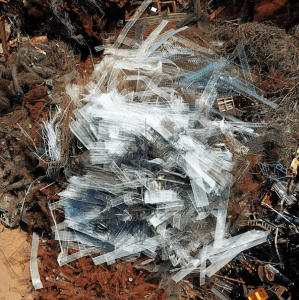
The cover artwork – a drone photograph of a demolished shopping mall in the US – perfectly encapsulates the project’s aesthetic. What initially reads as abstraction is in fact documentation: the remains of industrial and commercial collapse rendered almost painterly from above. It mirrors the music’s trajectory from recognizable structure to disintegrated form. Industrial debris is discernible yet lost in a sea of steel beams that resemble white lines. The digital eye of the drone unsettles human perception.
Despite its dystopian atmosphere, Hope for Nothingness as Something is not catastrophist. There are no explosive climaxes, no grand apocalyptic gestures. Instead, Gallucci offers quiet resignation. The music does not rage against absurdity; it accepts it, studies it, and finally inhabits it. By the end, the listener stands in an unreal acoustic space where human authorship feels distant, almost obsolete. The result is austere, unsettling, and intellectually rigorous. (Gianmarco Del Re)
 a closer listen