
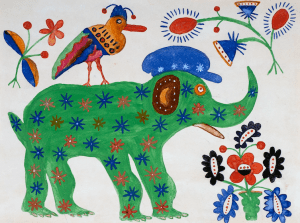
artwork by Mariia Prymachenko
One of the joys of doing this series is discovering new artists. After more than four years, I’m still finding fresh, original voices emerging from Ukraine.
Hailing from Ivano-Frankivsk is 20-year-old støïbrok, an improviser and researcher of sound who only started releasing music in February but has already managed to put out nine titles in two months—full albums, EPs and singles. At this rate, the rest of us may need to take a lie-down.
In Kyiv we find folklorist, singer and teacher of ethnic vocal Oriole Nest who sees a growth in people interested in traditional culture whereas s0ncenastinah sees the war as a unique kind of cultural “fuel.”
Moving on to Lutsk, Faraday reflects on the castles of Western Ukraine as symbols of the country’s historical depth and endurance. Back in Kyiv, Second Sort engages in “parkour on an alien ship,” while Iryna Lytvynenko plays the bandura to a different tune. Finally, Artem Kotowsky tweaks knobs to refresh his brain while serving in the Armed Forces.
In the New Releases section we have albums by Kadiristy, Venture Silk, sOncenastinah, Oleksii Lupashko, Moon Projection, Luigi Lynch / an honest fox, Fedir Tkachov, DvaTry, Faraday, Paraboloids, sekkar, Антон Слєпаков / Андрій Соколов, Ambiotik, Natalia Tsupryk, orfin, 58918012, Dada vs Evil, iiuoiim, Занепад and Maks Yos.
In our Viewing Room we have Паліндром, Hillmer, Alexey Shmurak and .at/on.
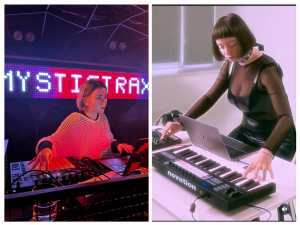
TĒMNA RÁDIST and äsc3ea
But first, for our monthly podcast on ResonanceFM, we spoke to TĒMNA RÁDIST and äsc3ea about gender balance within the electronic music scene and surviving winter in Kyiv.
Tracklist
ROZPUSTA – “Manic episode symptoms”
NFNR – “Dream 3”
DARIALISM – “Silence”
PARKING SPOT – “Хоран”
IRIS FOREST – “Anywhere I Go, Ghosts Are Following Me”
TĒMNA RÁDIST – “submerge/emerge/repeat”
FEBRUARY 19, 2026 – IVANO FRANKVISK
I can say about myself that I have always considered myself exclusively an improviser and, so to speak, a researcher of sound. I have no musical education, at the age of 6 I tried to study piano at a music school, but I quickly gave up. Later I independently mastered the guitar by ear, immediately trying to write my own music.
I never liked studying someone else’s compositions and learning something from notes. I was always drawn to independent study and research. At about the age of 12, I started writing my own music with lyrics. Later, at art school, at the age of 15, she began to improvise on the piano and play compositions on the guitar with freestyle for the audience in the student dormitory. Later, there were regular attempts to record full-fledged tracks, but she always gave up, because the process of recording and mastering, mixing seemed too complicated and overwhelming. I am currently 20 years old.
The project name, taken from Norwegian and translating as “noise-noise,” suggests insistence through repetition. In your work, is repetition structural, psychological, biological?
I came up with the name of the project when I was 14, when I was fascinated by the Norwegian metal scene and atmospheric black metal. At that time, I hadn’t thought about the concept of replicators yet, and the name more likely meant “noisy noise”.
 You have released the albums — Medicine; A Stab in the Dark, Down the Same Path, and нове ще не придумають — all in February 2026. Are they intended to form a triptych?
No, these three releases weren’t specifically planned as a concept or triptych. It just so happened that I caught a very strong flow of productivity and was finally able to basically master the recording, even though it still sounds dirty.
You’re based in Ivano-Frankivsk. How would you describe the music scene there and do you feel mart of the local experimental music community?
Oh, I will have an exact answer to this question. I really, really love the Ivano-Frankivsk experimental scene. I personally know many creators and many of them inspired me to finally pull myself together and start recording music, because I have been creating it for several years now, but I never got around to releasing it. I used to participate in some chamber events, but only as a poet, without promoting my music in any way. Only my closest circle knew that I played music.
 Medicine, recorded in a psychiatric hospital, feels simultaneously cavernous and airless. How did that space determine the sound — particularly the thick, lingering reverb that saturates it?
All the songs on medicine are triple-processed and reworked recordings of improvisations on electric guitar and toy synthesizer. I used them as samples, then stretched them, added multiple soundtracks, and added several layers of reverb. I wanted to create something that would reflect the state of being under medication. Something long, long, self-duplicating and thick. Maybe subconsciously I wanted to relieve my mental load, or maybe I just like to create and seek out sounds of this kind.
The 19-minute “replicator,” bracketed by “hospital №1” and “hospital №2,” produces a waveform that resembles DNA. Was that visual echo deliberate? Are you thinking in terms of replication, mutation, cellular process?
Yes, I wanted to create a sound that would reflect the replicator. I’ve been thinking a lot lately about the topic of memetic and cellular replicators, as far as it describes human existence, a sound that is simply an echo of mathematics. This composition was conceived as a very long, self-duplicating one, gradually growing layers of noise, like mutations in cells, which ultimately results in a new organism.
 Across the three releases, you move between electric guitar, ukulele, smartphone recordings and unstable acoustic instruments. On нове ще не придумають, “вважайте, що зспросоння” — recorded on ukulele in a psychiatric hospital— is framed almost as an immediate notation upon waking, while “(((оїОїо)))” layers untuned nylon guitar with “black hole” sounds captured during periods of concentrated thought. How do these moments of acute psychological intensity translate into sound and do you consider music as a form of therapy, or release and is it ever cathartic for you?
If I may say so, yes, it is cathartic. I am not sure if it is a form of therapy, because I deliberately did not record the album with this purpose, but it is definitely a kind of embodiment of many hours of reflection. Also why the sound flows from one instrument to another over the course of three releases – I really like to experiment and find my own sound.
You describe the recordings as pure improvisation, yet there is post-editing. Where does improvisation end and composition begin?
I believe that until the moment of publication and the formation of various compositions into a complete album, it is still improvisation. Post-editing is minimal, if you do not take into account the release “medicine” (there only echoes remained from the original recording). However, even during the recording of the last release, I improvised in the process of experimenting with different effects.
 How would you explain the appeal of noise music in Ukraine with initiatives like Noise Every Wednesday, which ran for 100 consecutive weeks at Otel’ in Kyiv until its closure in 2025?
Unfortunately, I cannot provide an answer to this question, as I am not familiar with these projects. However, I can say that the Ivano-Frankivsk noise scene is thriving with initiatives such as the Community Garden Hub.
Which book / film / album / song / traditional dish / podcast / blog / artwork / building / meme best captures Ukraine for you?
This question is probably the most difficult for me, since there is a lot of such content for me. However, I can share my favorite performers from Ukraine and interesting chamber events. Regarding favorite bands: Azimut, White Ward, notconstantine, де?генерація. Other projects that I visited or participated in one way or another: potuzhnyak, GardenHub, antigravity, detali.
FEBRUARY 22, 2026 – KYIV
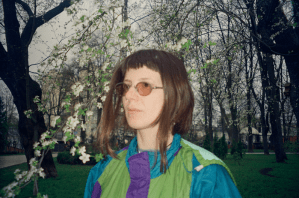
photo by Liza Struzhuk
Hі! My name is Tetiana Chukhno (many know me as Tetiana Osin’). I’m a folklorist, singer, co-founder of folk group “Viltse” and creator of a project “Oriole Nest” (Гніздо Вивільги).
My musical journey began in Mykolaiv, the city where I was born. Quite by accident, actually. In high school, a friend asked me to go with her to a group singing class because she was too afraid to go alone. I had no intention of taking it seriously. But the Ukrainian folk songs we learned there captured my heart almost immediately. I felt something awaken in me — a quiet but undeniable certainty that this was what I wanted to devote my life to.
Later, I entered the Mykolaiv College of Culture and Arts to study folk choral and solo singing. After some time, I realized that this path wasn’t entirely mine. That’s when I discovered the field of “musical folkloristics” and felt certain this was the direction I was meant to follow. So I moved to Kyiv and enrolled at the Kyiv National University of Culture and Arts to study exactly that.
Throughout the time, I felt drawn to weaving traditional folk music into contemporary forms. I have always been attracted to ambient, minimalist and dark musical atmospheres. I felt that this kind of sound was missing from the Ukrainian music scene, so I decided to explore combining these elements. After a period of experimentation “Oriole Nest” was born.
 Since the full-scale invasion began, has the way you think about music and sound changed? Has it affected what you listen to?
Overall, it’s hard for me to say which changes in my perception and preferences happened specifically because of the war. For me, music (and content in general) in the russian language has definitely become unacceptable. In addition, I’ve become more attentive to the messages that artists convey.
As for other things, it’s difficult to analyze which changes were caused by the war and which are simply a stage of my personal development. Sometimes I feel like I prefer a more intimate, chamber-like sound, and loud, intense sounding tires me quicklier.
Do you feel that music in Ukraine has taken on a different role recently — beyond entertainment — perhaps as a way of expressing identity, staying connected, or even surviving emotionally and physically?
I believe music has always carried these functions, but today the emphasis on them has clearly intensified.
When we speak about folklore, it becomes evident that more people feel a need to understand who they are and to reclaim what was taken from them during years of Soviet occupation and ongoing russian propaganda. I see how significantly the number of people interested in traditional culture has grown, how they unite around it and build communities. Those who were forced to leave their homes because of the war especially need something that helps them process loss, something that connects them to the places they were torn away from, yet cannot be taken from them again. Folk music and culture has become that bridge for many people.
At the same time, speaking more broadly, we can see how heavily russia invests in its propaganda. It actively works to appropriate what does not belong to russia and to spread kremlin narratives. For a Ukrainian artist, any opportunity to present themselves internationally is therefore also a responsibility — to remind the world about Ukraine, to speak about who we are, and to represent our values clearly and confidently. When a Ukrainian artist performs inside the country, they also carry the responsibility to support people, to remind them what we are fighting for, and why we must continue to resist, to support the army, and to remain grateful for every new day in which we are able to live, create, speak Ukrainian, and call ourselves Ukrainians. Today, hardly any cultural event takes place without fundraising for the military, for medics, or for civilians affected by the war.
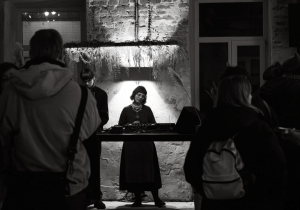
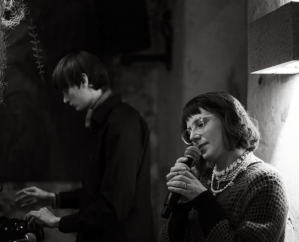 We’ve seen many young Ukrainian artists reconnecting with their musical roots, sometimes blending folk traditions with electronic music. How did you approach your collaboration with Parking Spot?
Yes, that’s true. My collaboration with Mark (Parking Spot) began thanks to Liza Struzhuk, co-founder of Cmyk, an organization that curates ethno-raves as well as educational events and projects focused on bringing folklore and electronic music together. One evening, she reached out to me with the idea of collaborating with one of the musicians and performing at the spring edition of Cmyk. Mark’s music resonated with me deeply, so I decided to give it a try. At that time, my own project was on pause, and it was generally a challenging period in my life. This collaboration gave me a great deal of inspiration and renewed my desire to keep developing both our joint project and my personal work.
With Viltse, you sing traditional songs from different regions of Ukraine. What makes these regional traditions distinct from one another in your view?
Ukrainian folk song traditions share common foundational features across the country, yet each region has its own distinctive characteristics. These differences appear in melody, language, rhythm, stylistic expression, and performance manner. It is difficult to describe these aspects briefly and in a general way, but singing songs from different parts of the country really can feel like traveling. The music seems to reflect the landscape itself. Sometimes I feel like some of Carpathian songs are felt like a swift mountain river — twisted and flowing. In lowland regions songs are often more expansive: drawn-out, melodic, long, and resonant.
Are you familiar with Rusyn, North Azovian Greek, or Crimean Tatar musical traditions? If so, do they resonate with you in any particular way?
Yes, I’m familiar with the music of these peoples, though, unfortunately, I haven’t encountered it much in everyday life — mostly through my professional work or works of various artists. My closer acquaintance was with the music of the Bulgarian community in the Mykolaiv region. There is a district called Ternivka, where about a third of the population is Bulgarian. Older residents still remember traditional songs and preserve the language, which has its own fascinating features. I have worked with some members of this community and even included a few of their songs in my repertoire.
In general, this music of these cultures interests and moves me. I admire that, despite many hardships, the people who carry these traditions continue to preserve their heritage and memory. In everyday life, I sometimes notice how our cultures subtly overlap, almost without being noticed. Sometimes you just travel to Greece, go to try some traditional food and see that this food isn’t something new for you at all.
 DakhaBrakha are often seen as cultural ambassadors for Ukraine. Maria Sonevytsky writes in Wild Music that their “ethno-chaos” helps piece together Ukraine’s fractured past by combining different regional “soundmarks” — sonic gestures tied to specific places and histories — into one composition. She suggests this reflects the idea of building a collective identity from diverse parts. How do you respond to that interpretation? And more broadly, what role do you think traditional music plays in shaping national identity?
It’s a beautiful idea, and in my opinion, this band’s music truly works in that way. I know many people who were not interested in Ukrainian folk music at all, but after listening to DakhaBrakha, they realized how much they had been missing and became genuinely curious about our musical tradition.
Of course, traditional music plays a profound role in shaping national identity. Through it a person can feel part of something far greater than themselves and sense the historical continuity. It creates a deep unity with the people you sing or play. No other form of communication allows you to feel one another in that way that shared song or music-making does. And of course, interest in traditional music rarely exists without context. Once someone is drawn to a song, they begin to wonder about the circumstances in which it was sung, the daily life surrounding it, the history of the time. This is how a whole world opens up, of which you are a part.
What are your thoughts on sharovarshchyna?
This is indeed a sore point. It is very unfortunate that it became such a successful tool of propaganda that many people in Ukraine began to believe that this is what authentic Ukrainian culture looks like, which often leads to a lack of interest in it. Today, a lot of work is needed to help people rediscover their cultural heritage, and this is difficult because simplified and stereotypical perceptions of culture remain very loud and widespread.
I was recently in Ukraine and was struck by how vibrant and diverse the music scene still feels. How do you see it evolving, especially as more artists are mobilised and international musicians hesitate to perform in Ukraine?
In fact, I see how the Ukrainian music scene continues to grow and gain new names despite all these challenges. The public demand for Ukrainian music has increased significantly.
More artists have embraced the idea that tomorrow is not guaranteed. There is a stronger sense that there is no time to postpone what matters — if you feel the need to create something, you create it now.
 Are there any tracks or albums from the past four years that, for you, really capture this moment?
For me, it is music of Artystka Chuprynenko. She has many songs that tell about war and work with theme of loss. At different times, different songs resonate with me more strongly, but her entire music is truly remarkable and deeply therapeutic. Lately, I often find myself listening to her song “Lehko” (“Easy”). Even though I know that things will not be easy for a long time, those words help me stay grounded and keep going.
If you had to choose, what book, film, album, song, dish, podcast, artwork, building, or even meme feels most representative of Ukraine to you right now?
Since the beginning of the full-scale invasion, reality sometimes felt similar to certain moments in The Lord of the Rings by J. R. R. Tolkien. At some point, my husband and I started rereading it, and it helped me to go through that period of time. Some of the lines still give me hope and strength.
FEBRUARY 25, 2026 – KYIV
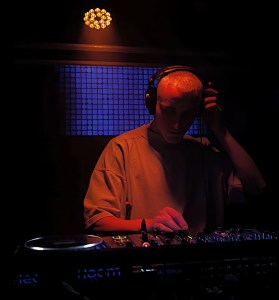
photo by @underp1nk
Hi, my name is Volodya, and I am the producer behind s0ncenastinah. My journey in music has been quite long and consistent. I grew up listening to psychedelic rock, metal, and jazz. I play the guitar and used to have a school band where I wrote my first arrangements. Over the years, I tried to learn everything I could get my hands on, and gradually transitioned into electronic music, largely influenced by Massive Attack.
My first production attempts were in FL Studio, but then I switched to Ableton, which I feel suits me much better. The s0ncenastinah project has been around for two years, though I’ve been producing seriously for the last four. I spend all my free time in Ableton, forging my own style and constantly developing my skills. Since finishing my last track for the haus porta EP, I’ve managed to write enough material for about three more releases. I’m currently organizing all of this to send out to labels. After that, I plan to focus on a more commercial sound under a different alias. I also want to record a full instrumental release — I already have everything I need for it.
Has the full-scale invasion changed the way you think about music and sound in general and has it altered your setup?
No. One of the main goals I set for myself was to achieve a creative process that is completely independent of external circumstances, and I have managed to accomplish that. The war has changed only one thing for me regarding electronic music: I stopped going to parties, with very rare exceptions.
What can you tell us about the production process for haus porta and how did you get to release on Mystictrax?
Once, I was walking with friends in Podil, and we dropped into my favorite bar in the world, Khvylovyi, where Lostlojic and Ochii were playing a fucking great b2b set at the time. That was the last time I completely surrendered to the music, and the first time I had done so in a very long while. When Volodya played the track “Ahora Si” by Furious Frank — which is one of my all-time favorites, regardless of genre or era — I realized that maybe now I actually have a place to release my music. Mystictrax is an electro label. I’m not a huge fan of that genre, so my challenge was to adapt my music and blend it with electro. That’s how the tracks “holy shit heavy deep” and “pavlivskiy twilight” came to be.
Regarding the concept of the release, I wanted to make it very diverse, yet still cohesive. Because of this, the tracks serve different purposes and suit different moods. Sound-wise, it’s basically breaks with elements of trance, electro, and rominimal. I used my own specific production techniques throughout — it’s an attempt to craft a signature sound that no one else can replicate. haus porta is a title that doesn’t mean anything; the word ‘haus’ is intentionally misspelled. I dislike strict definitions and lack of ambiguity, which is exactly why it’s named that way.
What are the most interesting trends within electronic music in Ukraine at present?
At present, I don’t follow the entire Ukrainian electronic scene; I only keep an eye on what my friends or acquaintances are doing. One interesting trend I’ve noticed is people gravitating toward a trance sound. Trance is my favorite genre, so it really makes me happy to see this.
How would you describe the electronic music scene in Ukraine in general and how do you see it evolving at present with many producers being mobilised or leaving the country?
I might say something harsh, and I don’t mean to offend anyone, but honestly — with the exception of a few artists — the Ukrainian electronic scene, at its best, mostly just does a decent job of reproducing someone else’s sound. This is exactly where I see the potential for growth: in working on our own identity and learning how to express ourselves through culture. War is a horrific factor, yet it is an existential phenomenon, and we have only one way to deal with it — to cope and endure. The war itself and the experience it brings are unique ‘fuel’ for culture; I don’t see it any other way.
Are there any Ukrainian releases from the past four years that have managed to convey life during the full-scale invasion in a meaningful way for you?
For me, the releases that truly capture this feeling are by Morwan: “Vse po kolu, znovu” and “Svitaye, palaye”.
Where are you based and how are you coping with the winter conditions?
I’m in Kyiv right now. I’m dressing warmer than usual. In general, I’m coping calmly — I’m an unpretentious person. I have a lot of questions for our authorities, but since I don’t have direct contact with them, I’m just buying more clothes.
What does it mean for you to be Ukrainian?
Fight.
photo by @underp1nk
Do you suffer from burnout and what do you do relax?
I don’t. The discipline and approach I’ve developed excludes such things. I finished writing the haus porta release in the days immediately after breaking up with the person I still love. At that time, I couldn’t do anything else but write music. It’s a mechanism that is not influenced by external or internal circumstances.
Which book / film / album / song / traditional dish / podcast / blog / artwork / building / meme best captures Ukraine for you?
None. Ukraine is such a global and broad phenomenon that it would take an entire library to describe it. One work or symbol is not enough.
MARCH 3, 2026 – KYIV
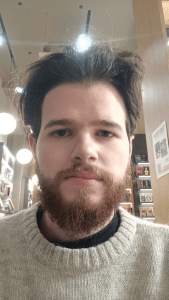
Photo Pavlo’s archive
I’m Pavlo, 21 years old, based in Kyiv, originally from Svatove (Luhansk region). By day, I work in engineering consulting. My formal musical background is quite brief: it lasted exactly two weeks when I attended a music school to learn the bayan (accordion). Despite my teachers seeing “great potential,” I quit for reasons I still can’t quite explain. I have no formal music education and no perfect pitch; I rely entirely on intuition and feeling.
I started writing music systematically in early 2019 after downloading FL Studio. My early work was heavily influenced by the “dark” side of hip-hop – artists like $uicideboy$, BONES, and Scarlxrd. The moniker “ken=en” was a happy accident. I needed a new name and didn’t want to use my old nicknames. While trying to type something, I forgot to switch my keyboard layout, and the sequence “ken=en” appeared on the screen. It looked strange, almost like a glitch, but I liked it immediately.
Your first album, artificial world, was released in January 2022… In retrospect, this feels prescient. Did you have an inkling that something was about to happen?
The track titles “is this a new beginning” and “or are we close to the end” weren’t actually meant as a prophecy at the time I wrote them. They are a direct reference to a lyric from the first song on Enter Shikari’s album Nothing Is True & Everything Is Possible.
However, an “inkling” did arrive soon after. I started to feel a strong sense of premonition in the first half of February 2022. Looking back, what began as a musical homage became far more literal and heavy than I could have ever imagined.
On artificial world, there is also a track called “ptsd.” How have you personally been coping with mental health challenges and burnout over the past four years?
My experience with PTSD started long before the full-scale invasion. It dates back to a Russian sabotage in my hometown of Svatove, which caused a massive explosion at an ammunition depot. The blast physically impacted the house where I lived and left a deep scar; for a long time, I was terrified of any loud noises.
From there, my mental health issues snowballed into depression, suicidal ideation, social anxiety, and paranoid delusions. It was only after seeking psychiatric help that I began to regulate my condition. Recently, I started working with a psychotherapist, which has helped me become much more socially adapted and has made my creative output more conscious and less chaotic. I cope through a mix of creativity, socializing, long walks, cinema, and video games – things that allow me to either reach a state of catharsis or simply find a necessary distraction from reality.
Two tracks on your sophomore album, real world (August 2022), are titled “there was no hybrid warfare” and “come back alive.” How difficult was the production process, and how did the invasion affect your setup?
The production process for real world wasn’t difficult technically, even though every track was written after the full-scale invasion. However, the emotional weight was immense. For instance, the track “to all affected cities” was written while I was living under occupation, born from the shock of the tragedy in Bucha.
Musically, the invasion triggered an evolutionary shift. After my first album, I saw all my technical mistakes, and I used real world to fix them. Even now, I consider it my best-sounding work – it’s deeply electronic, saturated with detail, fast, and dynamic. It captures the mental chaos I was navigating.
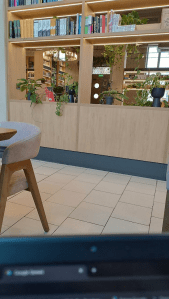
Photo Pavlo’s archive
You mentioned that the title of your latest album, простій, points to a duality… How would you say you managed to untangle yourself from this predicament?
Ironically, artificial intelligence helped me untangle this web of ideas. I had accumulated a vast amount of material but was stuck in a loop of burnout, trying to “jump over my own head” by making production increasingly complex. I realized I couldn’t outrun my own perfectionism that way.
I moved forward by deciding to just be myself. I stopped worrying about technical complexity and focused on raw sincerity. My career in engineering consulting instilled discipline in me, but it also temporarily dulled my creative ambitions. I needed a moment of clarity to realize that life is short, and I wanted to leave another meaningful mark. The epiphany happened while sitting in a bookstore/cafe; it was the epicenter of my decision to let the music be heard.
Your albums mix different styles and genres. What direction will you be taking next?
My next project, titled «Дідо» (Grandfather), is a shift toward “sound archaeology.” I am moving away from purely electronic genres to explore my family roots in the Polissia region.
I am deeply inspired by the late work of Talk Talk and Mark Hollis – specifically their method of recording hours of material to find one essential fragment of truth. I want to learn how to work with silence. I’m moving toward “walls of live sound” and field recordings – the rustle of leaves, birdsong, or rain. My philosophy for this project is one of radical equality: a bird’s chirp carries the same weight as a human life.
What would you say have been the most interesting developments in electronic music in Ukraine over the past four years?
The most significant development is the radical shift in public attention. Before the full-scale invasion, Ukrainian experimental music was a very narrow niche. Paradoxically, this war acted as a catalyst for our identity, creating a massive demand for “our own” sound. We discovered we have more than enough unique voices. My greatest hope is that we will eventually transcend this tragic context, and our music will be judged as “eternal” pieces of art on its own merits.
Are there any Ukrainian albums from the past four years that have captured current events in a meaningful way for you?
- Stas Koroliov — Round 2: Цифровий Утікач: A masterclass in documenting the psychological state between digital noise and reality.
- The Unsleeping — Справжній бедрум панк: Captures the raw energy of survival and defiance.
- DakhaBrakha — Ptakh: A spiritual anchor carrying a sense of necessary freedom.
- Andrii Barmalii — autoportrack: A brilliant example of the new wave of experimental music – personal and chaotic.
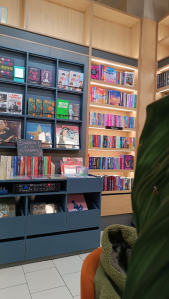
Photo Pavlo’s archive
What does it mean to you to be Ukrainian?
To me, being Ukrainian is the ability to find a “spoonful of honey” even in a “barrel of tar” – to laugh in the face of the darkest times. A Ukrainian is often someone who speaks little but does much. We are people who feel intensely but express little outwardly.
It’s a complex identity born from being a long-suffering nation. This is why the question of roots and restoring traditions is so vital to me now. There’s a philosophical contrast: sometimes the diaspora feels more “authentic” in their preservation of traditions. Being Ukrainian is challenging and full of contrasts, but it’s never boring. A Ukrainian might remain silent, but you know they always have something profound to say.
It doesn’t seem easy to track you down on social media. Is that deliberate?
It’s deliberate in the sense that being visible has never been my goal. I am a private person and I don’t find constant public activity interesting. I create primarily for myself. I dislike it when there is more “advertising” in the music than the music itself. Social media has a tendency to kill my desire for sincerity, so I find it easier to appear and disappear periodically, focusing on the creative process rather than empty words.
Which book, film, album, song, traditional dish, podcast, blog, artwork, building, or meme best captures Ukraine for you?
- Book: Voroshylovhrad by Serhiy Zhadan.
- Music: The self-titled album by Motanka.
- Film: U Are the Universe (Ти космос) by Pavlo Ostrikov.
- Traditional Dish: Borsch. It’s our absolute cultural code.
- Meme: “Russian warship, go f*** yourself.”
- Artwork: Literature.
- Building: The Motherland Monument in Kyiv.
MARCH 3, 2026 – LUTSK
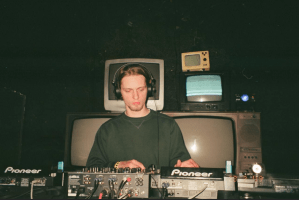
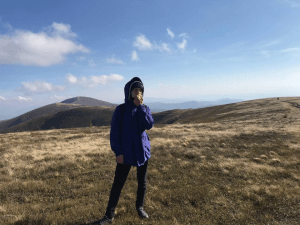
Hi, my name is Dmytro, my alias is Faraday. Electronic music interested me since my teenage years — back then I used to listen to cassettes on a tape recorder, the music was something like trance as far as I remember.
In 2013 I downloaded FL Studio and started experimenting with sound. I had a strong desire to create something of my own, and the whole process looked very exciting, so I just started learning through practice, watching tutorial videos and communicating with people who were also making music.
Over time I got more involved, learned more things and eventually switched to Ableton Live and became more focused on shaping my own sound.
In 2016 local parties and raves started appearing in Lutsk, and that became a turning point — I got really into DJing. At first I was learning on my own — through Virtual DJ, Traktor, theory and observation. Later I bought a controller and started recording mixes. Also appeared places in Lutsk where I could play on Pioneer CD decks, and later decks with USB as well.
When I came to practice one day, promoter invited me to play a set at the next Ukryttia event, and from that moment everything started developing — I began playing local parties and later in other cities.
When the war started, I realized I needed to start sharing my music with the world, and after some time I began uploading tracks to Bandcamp and Nina Protocol
Has the full-scale invasion changed the way you think about music and sound in general and has your setup changed as a result?
Yes, my perception of music has definitely changed. I’ve grown closer to minimalism — more space, more silence, more breathing room in sound. I feel the need to stretch moments rather than rush them. This shift affects both my listening habits and my production process, leaning more toward experimental and minimalistic sound.
Technically, my setup hasn’t changed, but my internal approach to sound has shifted toward simplicity and emotional clarity.
What can you tell us about the production process for Sambidia and what would you say is the defining trait of your sound and how would you say are you influenced by different genres like ambient?
With this album, I wanted to guide the listener through different emotional states — from tension to calm. Part of the process was improvisational; I allowed the tracks to unfold naturally.
Ambient music, for me, has become a space for resetting and being present with myself. In my sound, textures and atmosphere are often as important.
What would you say are the most interesting developments in electronic music in Ukraine over the past four years?
Over the past four years, there has been more experimentation and stronger international integration. Many new artists, DJs, places, and labels have emerged. The scene feels more confident in its own identity.
How would you say martial law and the loss of nightlife has affected the clubbing scene in Ukraine?
I think the scene has become more flexible — people adapt, organize events in different formats, and value each gathering more. It feels more meaningful now.
If I am not mistaken you are from Lutsk, how would you describe the music scene there and do you feel part of the music community in your hometown?
Yes, I’m from Lutsk. I would describe the local scene as homey and warm — it’s easy to connect with people and find support here. In Lutsk we have several collectives, and everyone does something different, but we stay connected and support each other. I feel like I’m part of this community.
Are there any Ukrainian albums from the past four years that have captured current events in a meaningful way for you?
There might be albums that reflect current events, but I haven’t really heard them. The music I’ve listened to feels more personal — about individual experience, mood, or style. But even that can be shaped by what’s happening around us.
Do you ever suffer from burnout and how do you deal with it?
I haven’t experienced full burnout, but I do sometimes feel tired. When that happens, I focus on staying active and taking time for things that help me recharge.
 What does it mean for you to be Ukrainian?
For me, being Ukrainian means being free, resilient, and responsible. It’s about the ability to stay united even in difficult times.
Which book / film / album / song / traditional dish / podcast / blog / artwork / building / meme best captures Ukraine for you?
For me, Ukraine is reflected in the castles of Western Ukraine — they symbolize historical depth and endurance.
MARCH 5, 2026 – KYIV
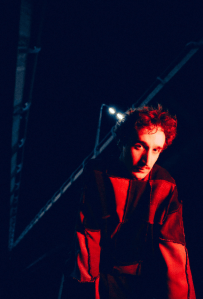
Hey! Sasha here — performing as Second Sort. I’m a Kyiv-based electronic artist originally from Zaporizhzhia. My intentional music journey began at the start of the full-scale invasion, as a way to process intense internal tension and emotional overload.
What began as experimentation gradually became something much deeper. Only recently did I fully realize that music isn’t just a phase — it’s what I want to dedicate my life to. My sound grew out of instability, pressure, and a need to find grounding. For me, bass music became that anchor — something physical and undeniable in the middle of uncertainty.
Has the full-scale invasion changed the way you think about music and sound in general, and has your setup changed as a result?
The invasion sharpened everything. It made my relationship with music more physical and more honest.
The instability around me pushed me toward textures that feel tense, fractured, often atonal. At the same time, I became more drawn to low frequencies.
In terms of setup, I keep it minimal: a laptop and good headphones. Occasionally I use my phone and a microphone for recordings. I like the portability — it allows me to create anywhere, without depending on a fixed space.
What can you tell us about the production process for Unsleeping, and how did you get to release on Iriy Records?
Unsleeping developed as a collection of unreal dreams, captured and translated into sound. I was building small sonic narratives — like fragments of a soundtrack to an imagined film that doesn’t connect logically, but shares emotional continuity.
The process was heavily reference-driven and texture-focused. I searched for references that captured exactly the feeling I wanted in the moment, then tried to create my own version — something that could seamlessly extend or continue that emotional state.
Since I don’t have strong formal music theory knowledge, I decided to let go of genre “correctness.” Instead, I worked with unstable tones, glitches, and dense low-end textures. I never aimed for a specific genre, but I was strongly influenced by dubstep and IDM.
Iriy Records is one of the few Ukrainian labels that truly dedicate full attention to their artists — from music development to release strategy and promotion. I wanted to be part of a team that shares that level of taste and commitment. So I sent them a letter with a SoundCloud link. A few days later, they responded with an invitation to release a full album. I was incredibly happy.
The title Unsleeping suggests a state between insomnia and hyper-awareness. What does “unsleeping” mean to you personally, and how does it shape the emotional arc of the album?
For me, “unsleeping” is a state where you’re neither fully resting nor fully awake — mentally overstimulated, emotionally alert, unable to switch off. That’s exactly how I felt during that period.
The album moves through that condition — tension, alertness, distortion of perception — and eventually toward collapse or numbness. It mirrors that unstable psychological rhythm.
Several track titles—“Hysteria,” “Wake,” “Vivid Dreams,” and “Coma”—suggest altered psychological states. Is the album structured as a kind of sleep cycle or psychological descent?
You can interpret it as a movement through different states of consciousness — from overstimulation to collapse, from hyper-awareness to numbness.
I wanted the album to feel like drifting through mental states that blur into each other. Not a strict narrative, but somehow a psychological flow.
“Parkour on an alien ship” is a striking image. What kind of world were you imagining while creating this track? Is it cinematic in your mind?
After the intensity of “Hysteria,” I felt a need to release that tension. So I created a massive impact at the beginning — almost like an explosion — and from there the imagery began forming in my mind.
I imagined an alien ship crashing. The main character is a boy who witnesses it and decides to investigate. As he approaches the ship, his excitement grows. Once he enters, he starts exploring, learning how to move inside this unfamiliar structure.
For me, it symbolizes a transition — the old world collapsing, and a new one emerging from its ruins. It’s very cinematic in my head.
The liner notes describe the album as “a diary of unreal dreams.” Do you begin with narrative concepts, or do the stories emerge from sound design experiments?
The stories usually emerge from sound.
I start with bass, then texture or rhythm. I experiment, trying to recreate a specific emotional atmosphere. Once the sound feels charged, a narrative begins to reveal itself.
It’s like hearing something hidden in the background and slowly bringing it forward. It felt like peeking through a crack.
There’s a tension between IDM-style detail and club-oriented bass pressure. Do you see this project as intended for the body, the mind, or somewhere in between?
Somewhere in between.
I’ve always loved complex music — where many things are happening at once, and you can shift your attention from one detail to another. The whole composition becomes a wall of emotion and texture.
In my album, I want the body to feel the bass first — the physical pressure as an anchor. Then the details move around it, giving the mind something to explore.
As a Kyiv-based artist, how does your local environment — culturally or physically — inform the textures and atmospheres on Unsleeping?
Kyiv carries tension and resilience at the same time. There’s beauty, but it’s not soft — it’s layered, complex, and raw.
I both love and struggle with the industrial side of this city. It gives me goosebumps — from the people living here, their strength — and at the same time it overwhelms me with the constant flow of movement, urgency, and pressure.
I believe environment shapes us almost completely — our taste, perception, and emotional language. So even if it’s not intentional, Kyiv is implicitly embedded in my sound.
 This is your debut album. Looking back at the finished work, does it feel like a document of a specific period in your life, or more like an opening statement of what’s to come?
It feels like both.
It documents a specific emotional period — a time of instability and searching. But it also feels like an opening statement — a foundation for the next chapter.
It defines a darker emotional language that I want to continue developing. And for me personally, it was a big step — to stop hiding my music on my hard drive and finally release it, instead of endlessly reshaping and looping it in private.
Which book / film / album / song / traditional dish / podcast / blog / artwork / building / meme best captures Ukraine for you?
Three albums: REACTOR by RUSIIIK & Misha Substance, Грунт by Злипні, Спомина Любову by YUVI
Three movies: Мy thoughts are silent, Pamfir, 20 Days in Mariupol
Three memes: “Два-три тижні, максимум місяць”, “Астанавітесь”, “Цей день настав”.
MARCH 11, 2026 – KYIV
When did you first encounter the bandura, and how did your journey with the instrument begin?
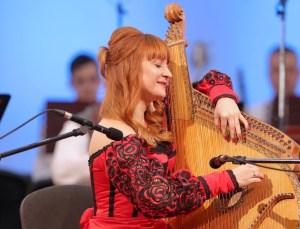
I was only six years old when the bandura seemed to call to me. I knew nothing about the instrument and had never heard its sound before. Yet one day I simply walked into a music school and asked to be enrolled in the bandura class.
The teacher refused — I was too young. Usually children began studying this instrument at an older age. At that very moment a rehearsal was taking place in the classroom. The bandura students were learning the legendary song set to the words of the great Ukrainian poet Taras Shevchenko — “Dumy moi, dumy moi” (“My Thoughts, My Thoughts”). I listened quietly and went home.
On my way, I stopped by my neighbors’ house. Hanging on their wall was an old bandura. I took it down, tuned it as best as I could using pliers, and by ear picked out the melody I had just heard.
Then I returned to the music school.
I played and sang the song for the teacher. She listened — and began to cry. That same day, I was accepted into the bandura class.
From that moment, a long and beautiful journey began: countless concerts, victories in competitions, studies at a music college, and later at a music academy, where I completed my master’s degree.
Over the years came work with orchestras and various artistic ensembles, numerous tours around the world, and a career in teaching, including at the university level. I also created many practical and theoretical educational publications and recorded several CDs.
And all of this grew from one small childhood step toward the instrument that once simply called to me.
Has the full-scale invasion changed the way you think about music and sound in general?
The war has radically and forever changed our soundscape. Sounds that were once unimaginable have entered our everyday lives: air-raid sirens, explosions, the roar of military vehicles, the cries of very small children running to shelters clutching their dogs while missiles explode above their heads, the screams of wounded civilians after bombardments, and—most unbearable for me—the soul-tearing cries of parents over the bodies of children killed by Russian drones or missiles.
These sounds echo in my mind like a relentless leitmotif. They live in my cells, in my bones; they have pierced through me and will remain there forever. They shape a new reality in which people are forced to live and to listen to the world differently. Our hearing becomes painfully sharpened, while silence acquires a completely different meaning. I have even begun to fear silence, because I know that after it, explosions and death may follow.
For me, as a bandura player, sound also carries a deep inner dimension. The bandura is a profoundly meditative instrument. Its timbre calms the mind and creates a space for inner dialogue and healing. In a sense, it becomes a form of art therapy—both for the performer and for the listener.
The possibility to perform during the war has become vitally necessary for me. It feels like a stream of light that helps me preserve inner balance and mental health in the darkness of war. In the moments when music sounds, people can return—even if only briefly—to their human core: to sensitivity, memory, and hope.
The very act of listening has also changed during wartime. People listen more deeply and more attentively. Music ceases to be merely an aesthetic experience; it becomes a way to endure reality and to find inner support. This inevitably influences the creation of new music. It emerges from a much deeper layer of experience—born of pain and loss, but also from a profound need for light, silence, and spiritual renewal.
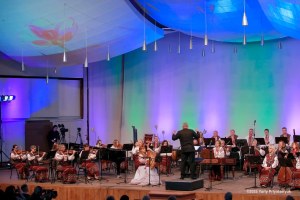 You recently arranged and performed Deborah Hanson-Conant’s “Mercedesita Waltz” for bandura. What were your intentions in adapting the piece for this instrument, and what artistic challenges did you encounter in the process?
My primary intention was to preserve as faithfully as possible the original musical text created by Deborah. In a sense, it became a genuine struggle — a struggle for every note, every nuance, every breath of the music — so as not to lose its inner poetry and delicate emotional texture.
At the same time, I was fully aware that the bandura is not the harp. Every instrument has its own soul, its own sonic nature, its unique possibilities and limitations. Therefore, another equally important task for me was to discover a way for this music to resonate on the bandura naturally and organically, as if it had been written for this instrument from the very beginning. My goal was not only to transmit the music, but also to allow the bandura to give it a new voice.
The greatest challenge was to preserve the emotional world of Mercedesita Waltz — its luminous lyricism and inner delicacy.
Given the reality in which my country lives today, I often felt an instinctive temptation to imbue the music with a more dramatic tone. After all, drama has become part of our daily experience.
Only later did a deeper realization emerge: perhaps more than anything today, Ukrainians need hope. They need a sense of wonder. They need a quiet kind of musical magic — a feeling of silence, safety, calm, trust, and unconditional support. All those things that true love so generously offers.
Within this understanding, I was finally able to rediscover the emotional key that Deborah embedded in her music and reconnect with its gentle, luminous essence.
The collaboration emerged through The Legacy Bridge Project. What does this project represent to you as an artist working under difficult conditions?
It all began when, for the celebration of the 95th anniversary of the Academic Orchestra of Folk and Popular Music of Ukrainian Radio, where I have worked for more than twenty years, I wanted to perform something truly special — a piece that no one in Ukraine had ever heard before, something that would go far beyond the traditional expectations of the bandura for Ukrainian audiences.
For me, that piece was “Baroque Flamenco” by Deborah Hanson-Conant. I was very nervous, but in the end I gathered the courage to write to her.
During the war — I will not hide this — musicians in Ukraine are living in very difficult financial circumstances, and I am no exception. Of course, I was not able to pay the licensing fee.
And that was the moment when something truly extraordinary began to happen.
Deborah not only said yes — she immediately wrote to her friends asking if anyone might be able to help. Within minutes, her longtime friend from Florida, Dan Beach, responded and offered his support. I simply could not believe it. Later I wrote him a letter of gratitude, and from that very day Dan and I became friends. For me, he has become much more than a friend. He is a remarkable person who supported me during one of the most difficult times of my life.
Without his support, the premiere of “Baroque Flamenco” would never have happened. Nor would the premiere of “Merceditas,” and “Kolomyika la Vita” by the distinguished Ukrainian composer Volodymyr Zubitsky might never have come into existence in its version for bandura and orchestra — an arrangement that Dan also helped make possible. Over time, he has become an integral, dear, and deeply important part of my life. Thanks to the DHC Legacy Bridge project, not only I but many other musicians have received the invaluable opportunity to perform the extraordinary music of Deborah Hanson-Conant.
Our creative collaboration continues to this day. And I would also like to say something very important: Dan helped a musician from my orchestra whose home was struck by a Russian missile. In times when war tries to divide the world, people like Deborah and Dan remind us of something essential: music still has the power to unite hearts, change lives, and connect human destinies — even across oceans.
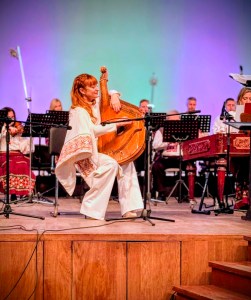 What does it mean to continue performing and creating music in Ukraine during wartime, and how has the experience of war changed your relationship with music and with audiences?
Engaging in artistic work during wartime has become, for me, an experience at the very limits of human endurance. In a country where so many tragic events occur every day, music ceases to be merely an art form. It becomes a vital necessity — both for the performer and for the listener.
That is why I continue to perform. And not only because Ukraine is now experiencing a powerful cultural resurgence. To a great extent, this resurgence is sustained by the audience — people who sometimes come to concerts with their last strength and even their last money, simply to support culture and to feel the living power of art.
At the beginning of the war, many concerts took place in the metro — in underground stations that became both shelters and concert halls at the same time. This winter, concert venues often remained without electricity or heating: enemy missiles had destroyed a large part of Ukraine’s energy infrastructure. We performed with generators, in freezing cold and darkness.
The premiere of Deborah Hanson-Conant’s piece “Merseditas” was performed under such conditions. The hall was bitterly cold, the instrument refused to hold its tuning, and backstage there was complete darkness. I prepared for the performance and walked onto the stage guided only by the light of the flashlight on my phone.
Almost every performance, every concert, is interrupted by air-raid alarms. The audience descends into shelters, waits out the attacks, and then returns to the hall. The musicians continue playing from the exact moment where the siren suddenly cut the music short.
And no one leaves the concert.
Often this comes after a sleepless night — because of missile strikes. Then comes a working day, a concert… and the near certainty that the next night will again be filled with the sound of sirens, terrible explosions, fires, destruction, and death.
This is how Ukrainian culture and its artists are passing today through the fire of the war’s brutal trials. And this experience is changing the very understanding of art. It reveals its true power — the power of resistance — a force that sustains society and at the same time shapes a new inner resilience within artists themselves.
Yes, I may be killed at any moment. But no one can take away my ability to create.
MARCH 13, 2026 – On active duty
 Thrones Beneath Gallows / Ulværn / Гурт Тосол / Turbobebra / Immortal Television
I’m Artem. At the moment, I’ve been serving in the Defence Forces of Ukraine for almost two years. Before the full-scale war, I was a kind of middle-class urban kid working in the IT industry and enjoying artsy and weird music. Then things changed dramatically. I fled from Kharkiv to a tiny village surrounded by oak forests and sunflower fields with my family.
I believe I have zero real experience in music. Somewhere in my late teens I discovered that it was possible to make music using only a PC, and at the same time I discovered noise, ambient, drone, and so on. I composed several tracks somewhere between death industrial and harsh noise wall under the moniker Immortal Television, played three or four concerts, and even designed a soundtrack for an indie game. Then I forgot about all that. Occasionally I tweaked some virtual knobs from time to time, but mostly I focused on listening.
Then some circumstances changed. The isolated village, a newborn son, remote work, and many other things made it necessary to do something to stay sane. At the same time, a friend proposed that we compose some EBM together.
You run a nanolabel. How many of the projects released on it are you directly involved in?
It’s not really about publishing other people, it’s just a Bandcamp page to share my music. I call it a nanolabel as a kind of homage to old-school punk, industrial, and black metal acts that created their own labels to release music that even indie labels wouldn’t touch. Every single track there is mine.
Nocturnal Voices by Ulværn was released with no post-production, no mastering, and no digital polish. Was that practical necessity or an aesthetic choice?
The idea was to share it exactly as it is. Nocturnal Voices sounds perfect without any modifications. It’s full of tiny noises and sound artefacts accidentally produced by cheap guitar pedals from Chinese online stores. These technical imperfections create something really unique. Also, in my opinion, post-production for noise music is just dumb.
The album is described as a “pure noisy meditation experience.” When you’re living and serving in wartime conditions, does making this kind of music function as psychological release?
For sure. In service you’re always surrounded by many different people. Usually everyone is friendly, but I clearly understand that in other circumstances I would never spend a moment with them. And they probably feel the same.
At the same time I deal with constant longing for home, family, friends, and even my old lifestyle — craft beer, hardcore gigs, a warm toilet, and clean shoes.
So yes, spending a few minutes tweaking knobs is how I rest and refresh my brain. Maybe when the war ends I’ll host sessions with other veterans to help them deal with their experiences. Noise music doesn’t require special training or technical skill, but it allows you to express the deepest feelings.
Many Ukrainian musicians currently serving in the military have started producing dungeon synth and similarly minimal electronic music. Do you think that’s mainly because those genres are easier to produce with limited equipment, or is there something about the atmosphere of that sound that resonates with life in the trenches?
I don’t belong to the infantry, so I know almost nothing about real trench life. Our life is much easier, although sometimes I still have mental meltdowns from all these villages and roads near the battlefield, constant Shahed attacks, and so on. I can’t even imagine what music I would compose if I had direct contact with the enemy and saw what the infantry sees.
As for the popularity of dungeon synth and similar genres, it’s a complicated question. In my unit no one even knows about them. Some of my friends in other brigades were listening to it long before the war.
We also have to remember meme culture, especially right-wing memes, with all the connections to black metal, kellersynth, gnomes, and the accidental popularity of artists like Grausamkeit and Blod Besvimelse.
There’s actually a huge variety of music being made by military personnel — from hip-hop and punk to metal and some insane folk crossovers. The Ukrainian Defence Forces are extremely diverse. Technical limitations aren’t really that important anymore because a laptop can function as a full studio. If you can make dungeon synth, you can basically make any electronic music.
You’re from Kharkiv, which has long had a strong underground and experimental music culture. Do you still feel connected to that scene while serving?
The scene definitely still exists. As far as I know, some gigs are still happening. But honestly it started collapsing many years before the war. Ten years ago things were much better. Then COVID happened, with work-from-home policies and closed venues. Then the war. To be honest, I think COVID damaged the scene more than bombs and drones.
One of the modern leaders of the Kharkiv experimental scene — the drone-doom-sludge-noise-whatever-post-metal band ПРАЩУР — is still active, even though their longtime collaborating drummer Amorth was killed in action.
I hope a younger generation of teenagers and people in their early twenties will emerge — people who understand the value of peacetime but have never heard the disgusting sound of an FPV drone or visited the graves of friends at such a young age. They’re going to create amazing music.
The project Гурт Тосол often uses exaggerated humor and absurd characters. Why satire and dark comedy?
Гурт Тосол is basically a joke itself. As I mentioned, a friend proposed making some EBM together. We agreed that it had to be funny — almost stupid — but we couldn’t agree on other aspects. So he started his project OBSKURWA, and I started mine.
Since EBM is basically punk with synthesizers, I decided it should be the punkiest punk possible on synthesizers.
Post-Soviet punk had a different aesthetic than Western punk. I didn’t actually listen to it much — while my classmates were into Король и Шут and Сектор Газа, I was listening to HIM and Cradle of Filth — but I understand the vibe very well: underclass drunkards, hardworking “real men,” urban decay, and so on.
This also connects deeply with modern Ukrainian culture. Artists like Serhiy Zhadan use this rough “rude boy” aesthetic, writing in surzhyk and swearing heavily while still being respected intellectual figures.
So I combined those elements and recorded everything as badly as possible, because my goal was to make it sound really disgusting.
 What does it mean for you to be Ukrainian?
To be Ukrainian — especially from Eastern Ukraine — is to understand what “це не по нам” means: it’s not aimed at us.
Before, when explosions happened outside, we were scared. Now I call my mother after another attack on Kharkiv and she says: it was far away, so we continued our day.
Also, to be Ukrainian means to do your job anyway.
This summer I drove from Dobropillya to Kramatorsk several times and wondered why all the fields were still full of wheat and sunflowers. The Battle of Pokrovsk was already happening, so those crops might never even be harvested. But someone planted them anyway.
You see electricians, postmen, even small buses still working just a few kilometres from the frontline under shelling and drone attacks for miserable salaries. When you ask why, they simply say: If I don’t do it, who will?
So we do what we have to do. Despite danger, constant stress, blackouts, and everything else. Maybe it’s just insane willpower.
Which book / film / album / song / traditional dish / podcast / blog / artwork / building / meme best captures Ukraine for you?
Book: Black Council, a Chronicle of the Year 1663, by Panteleimon Kulish. At first, I read it in middle school while suffering from an insane flu. It’s old as hell, published in the 1850s, but it’s cool. There’s a lot to think over even today, and the plot is really entertaining. Also, the Mirgorod-era writings of Mykola Gogol captured Ukrainians very well. And please, don’t ever call Gogol a russian writer. His novels are Ukrainian to the bone.
Film: The Lost Letter (1972). A real gem based on a Gogol novel. It’s available on YouTube for free, so enjoy.
Song: Luxembourgish neofolk musician ROME perfectly captured Ukraine in his album Gates of Europe for Western listeners. Speaking about Ukrainian music, any song by Цукор Біла Смерть works. It’s way too experimental and mysterious to understand, but nice.
Traditional dish: beetroot kvass. Sadly, it’s mostly forgotten now. But a hundred years ago it was a staple. Just peel and cut your red beets, put them in a jar, add a spoon of sugar or several raisins, pour clear cold water, and let it stay in the shade for a week or more. Then drink it as is, use it as a hangover relief, or cook with it. Now it’s gaining some popularity again. It’s very similar to Ukrainian culture: we tried to be more Westernized than the West, but eventually came back to our roots.
Podcast: I don’t like podcasts. So I’d recommend the YouTube show Хащі. It’s just something you have to watch.
Artwork: you have to google Soviet-era bus stops in rural Ukraine. It’s absolutely insane how they could even emerge. But to our disgrace, neither locals nor the government care about their preservation.
Building: Derzhprom in Kharkiv. It is hope captured in concrete, steel, and glass. I could say a lot about Cossack baroque, Ukrainian architecture of the early twentieth century, wooden churches, and so on. But I prefer Derzhprom.
Meme: it’s the “where the fuck am I” sheep. It has so many tiers.
NEW RELEASES
støïbrok ~ 9
9 by støïbrok is a nine-part descent and return — a metaphorical cartography of human consciousness traced in reverb and shadow. Conceived as a cycle of formation, fracture, and fragile renewal, the album unfolds like a single breath stretched across nearly an hour, where each track begins with the letter “e,” as if every stage were an echo of the same origin.
From the hushed threshold of “entrance” to the engulfing 18-minute closer “exit,” 9 moves through states of “education,” “emergence,” and “expansion,” only to confront “erosion” and “extinction” along the way. The sequencing feels deliberate and philosophical: growth and dissolution are inseparable, equilibrium is temporary, and the ethereal is never far from collapse.
Sonically, Stoibrok leans fully into experimental post-rock and dark ambient textures. Sheets of reverb blur the edges of drone-heavy guitars and distant percussive pulses, creating a vast, cavernous atmosphere where melody dissolves into texture. The sound is immersive and tidal — closer to a psychological landscape than a traditional instrumental record. Each composition feels less like an environment: slow-burning crescendos, suspended harmonics, and tectonic low-end swells shape a meditative yet unsettling experience.
As her fifth release since February 2026, following projects such as артхаус за взаємною згодою and Medicine, 9 refines Stoibrok’s fascination with altered states and interior worlds. Where Medicine confronted consciousness through abrasive noise and clinical intensity, 9 turns inward with a more spacious, ritualistic patience — less chaotic, but no less profound.
Released March 1, 2026, 9 is not simply an album but a closed loop: entrance and exit mirror one another, suggesting that consciousness is cyclical, self-consuming, and self-renewing. In Stoibrok’s hands, reverb becomes memory, drone becomes time, and silence becomes the final teacher.
Oleksii Lupashko ~ blue elimination gloves
An 18-minute, single-arc composition unfolding in three parts, a violin solo, and a quiet resolution, where free improvisation converge into a distilled minimalist state. Emerging from both Ukraine’s underground and academic scenes, Lupashko shapes a time-polyphony of overlapping musical events that gradually transfigure into focused stillness. With Olha Goncharenko’s searching violin lines at its core, the ensemble—tenor saxophone and soprano trombone (Jea Bjea), zither and natural trumpet (Anastasiia Marykutsa), and Lupashko on percussion, natural trumpet, and metal objects—creates a tactile, resonant sound world in which breath, metal, and string dissolve fragmentation into clarity, inviting deep, attentive listening.
Venture Silk ~ Venturing into the Unknown
Electronic music producer Venture Silk unveils Venturing into the Unknown, an 8-track EP about self-discovery and personal transformation. The release blends Detroit electro, breakbeat, UK garage, and jungle influences into a cohesive sonic journey.
“My music is about myself – what bothers and interests me. It’s my way of understanding, exploring, and reflecting the world around me,” explains Venture Silk. “With every new track I am born and live a separate life with it. I don’t know what my music is about and I don’t care to define it. My music is a search for meaning – let the listener search for meaning too.”
Inspired by electro pioneers like Drexciya, E.R.P., and DMX Krew, along with 80’s sci-fi aesthetics, the EP takes listeners through different emotional and sonic territories. From the melancholic opener “Dark Sector” through the high-energy “Control Your Mind” to the contemplative closer “Saturn Returns,” each track represents a different stage of personal growth.
DvaTry, Zbyten, Stratynski muzyky ~ CMYK sample pack
This sample pack of Ukrainian tradition brings together instrumental melodies from Halychyna, Polissia, and the Naddniprianshchyna regions — performed by distinct traditional bands 🎻
and recorded using different approaches ❕
The music of Polissia is performed by the Kyiv-based band DvaTry, featuring two violins and a frame drum (bubon).
Naddniprianshchyna is represented by kapela Zbyten, with violin, basolia (traditional bass), and bubon.
Halychyna sounds through the village band from Stratyn in the Ivano-Frankivsk region, performing on violin, accordion, and drum.
Traditional melodies are not metrically rigid and are not meant to be performed in isolation — musicians follow one another, shaping the tempo collectively in real time.
At the same time, to make this pack accessible to producers of different backgrounds and workflows, the ensembles were recorded using different methods:
the Stratyn musicians performed together live as a group,
Zbyten was recorded instrument by instrument,
and DvaTry was recorded both individually and to a metronome.
Ambiotik ~ Healing River
Healing River is a harmonious combination of deep vibrations of singing bowls, light pleasant music, special healing sound frequencies that help you relax quickly, and the soothing monotonous sound of a river that accompanies the listener throughout the composition.
This original sound healing set was developed and performed during musical wellness events that Alexander held for civilian and military participants of Ambiotik events.
Luigi Lynch / an honest fox ~ club 27
Hello, my name is Vadym, and I am 27 years old.
I was supposed to leave a message here for next year, but it turned out to be very personal, with all its flaws and things that should not be posted on the internet.
So I will continue my struggle on my own, and as a gift to you, here is this album.
Dada vs Evil ~ Neue ist immer Neu!
A small glimpse behind the scenes in the form of a track from the upcoming album and a bonus track.
58918012 ~ Damaged View
Hi, guys! I’ve always liked lofi aesthetic. Not only in music but in graphics as well. This whole release was inspired by one photo, which was taken in 2009, using one of the first digital cameras I’ve ever owned, with a broken matrix. I stumbled upon this picture while looking for something in my archive HDD. Now this photo is an artwork for this release.
In general, I just wanted to write something that will remind me (and hopefully you) of the times when I was free. I can’t say that I am not free now…but you know, when you predictably become an adult, a lot of problems fall on your head. So, believe it or not, that photo literally made a butterfly effect, which led to the moment when your ears percept the sounds of this album.
Musically, this EP (or album…whatever) sounds more like a mixture of trip-hop and lofi hip-hop than ambient. Anyway, I think you will catch my ambient fingerprints in these sounds. Thanks for your support! Stand with Ukraine! Peace ❤
Moon Projection ~ Drifting Thoughts / Echoes From My City
Drifting Thought is a hushed and introspective ambient journey, where stillness speaks louder than sound. Across four delicately balanced pieces, Ukrainian artist Moon Projection explores the emotional resonance of quiet moments and the subtle movement of inner landscapes.
On Echoes From My City, Moon Projection offers a brief, atmospheric postcard from Mykolaiv, tracing quiet corners of the city far from the noise of war. Across four miniature pieces—“Dry Fountain,” “Yacht Club,” “Manganari Square” and “City Breathes Slowly”—hazy synth tones, birdsong and soft strings drift like slow air through familiar streets, capturing a fragile moment of stillness.
orfin ~ Нотатки мимоволі
shreds of notes scattered on the wind
October–November 2025
Kadiristy ~ Fever Dream
Hailing from Kyiv, Ukraine, Kadiristy presents a collection of tender emotions captured through sound and melody. The EP unfolds as a journey to a faraway tropical Neverland — one that exists on the dancefloor.
Created during many sleepless (yet joyful) nights over the past few years, the record was shaped through constant experimentation with presets and the invention of grooves, resulting in a vivid, fever-dream atmosphere.
Reflecting on the process, the artist explains: “Lately, it feels like the modern world is lacking serenity and warmth. Creating this kind of music has become my favorite escape when I produce.”
Fedir Tkachov ~ Uncut Jams
Above all, this is a gift for my birthday and a token of gratitude to people who supported and participated in my musical journey all these years, but also to anyone who wishes to receive it.
Originally these minimalistic ambient improvisations were born out of musical exploration of various synthesizers in the second half of the year 2025. Some of the instruments were lent to me for a limited time, others I owned for years, and some of them were fresh software releases that I was eager to try out.
I wasn’t trying to impress anyone with my skills as a performer, or to make a pretentious conceptual statement about my life or the world at that time. I was either having fun, or trying to find solace and escape from pain in doing creative activities.
Ironically, in some cases this approach led me to fresh compositional structures and sounds that I usually filter out as too excessive or complex.
A few of these tracks were first joined together in a context of a fairly dark situation, which is better left unsaid. If you know – you know, if not – that’s best for everyone.
Eventually I decided to release that collection as an EP, but things quickly went out of proportion into a full album ark, and now it’s here!
I’m lucky to have quite a lot of people supporting me over the years in all kinds of ways, and I’m tremendously grateful to all of you.
DvaTry ~ Savynts
The album Savyntsi is a spontaneous winter trick, born of blackouts and glassy roads.
It brings together six traditional melodies from the village of Savyntsi in the Myrhorod district of the Poltava region. Their original recordings were made in 1955 from local musicians Ivan Yehorovych Moskalenko, Fedot Ivanovych Mykhailenko, and Nastia Fedotivna Moklytsia by researchers A. I. Humeniuk, O. A. Yusov, and H. T. Dzeria.
Today, these recordings are preserved in the archive of the Maksym Rylsky Institute of Art Studies, Folklore and Ethnology.
Vlad Yakovlev ~ Baloons
Baloons [sic] sees Vlad Yakovlev return with a quietly expansive ambient work where space and patience guide the listening experience. Built around soft, slowly unfolding tones, the album drifts between stillness and subtle movement, allowing each sound to breathe and resonate.
Framed by two long-form pieces—Seagulls and the title track Baloons—the record moves like a gentle arc through open sonic landscapes. At its center sits Miracles, a shorter, shimmering piece where processed bow and hazy textures create a fragile sense of light and possibility. The result is a contemplative drone record that invites listeners to slow down and float within its spacious, carefully sculpted atmosphere.
Антон Слєпаков / Андрій Соколов ~ warнякання, частина друга – позивний публіцист
The latest dispatch from Антон Слєпаков / Андрiй Соколов reads less like a pair of songs than a pair of field reports filed through damaged circuitry. As the closing single before the forthcoming Warнякання, частина друга — Позивний Публіцист, “Мойсей / Солдат Прикро” deepens the project’s documentary impulse: memory fragments, war-room philosophy and the absurd poetry of survival braided into two uneasy transmissions.
Together the tracks feel like the last single-page entries before a larger ledger opens. Warнякання continues to operate as an archive as much as a musical project—an improvised vault for voices that might otherwise disappear: prisoners, volunteers, drivers, friends, the dead. Two more stories added to the hiding place.
Natalia Tsupryk ~ Vil’na
On Vil’na (“free”), Natalia Tsupryk assembles a stark, deeply personal cycle of pieces that blur chamber minimalism and folk memory into a quietly devastating portrait of wartime Ukraine. Expanding material from the earlier do nestyamy EP, the album unfolds like a sequence of elegies attentive to the textures of place and loss.
Opening track “Anti-Drone Nets” frames the album’s atmosphere with slow, tensile string layers, its title referencing the makeshift mesh canopies now stretching across the streets of frontline cities. Elsewhere, Tsupryk turns fragments of lived reality into strange beauty: “Kyiv” reshapes a recorded air-raid siren into a drifting harmonic signal, while the extended “bipolar” and “A Blue Road” move through austere, patient crescendos.
At the centre sits “posiy maty zhyto,” a traditional wedding song from Mykolaiv region — preserved in a 2011 field recording—reimagined here as a meditative folk lament. The vocal by Oriole Nest floats over Tsupryk’s layered strings, connecting fragile archival memory with the album’s present-tense grief.
Across its nine pieces—titles drifting between sacred architecture, cemeteries and water — Vil’na maintains an elegiac tone: an ode to lost friends and interrupted lives without slipping into sentimentality. Like its stark black-and-white cover of scorched earth, the record stands as both memorial and quiet act of resilience.
maks yos ~ я зловживав ембієнтом та дабстепом
maks yos sketches ten small studies in memory, habit and sound. What begins with early-2010s dubstep curiosity gradually dissolves into something more diaristic: dog claws on the floor becoming rhythm, summer fans and wind folding into ambient drift, river currents echoing through dubby bass lines.
Much of the material emerges from casual encounters and improvised setups — Ableton feedback loops, borrowed Moogs, modular patches from Denys SAXR, late-night jams with Pu’er Tea. Like its sleeve assembled from flea-market books in Kharkiv, the record thrives on found fragments, quietly measuring time through everyday noise and half-formed ideas.
Paraboloids ~ Crossings
A half of an hour and a half of recordings done on der Heimcomputer during the period between 05.12.2025 and 07.03.2026
sekkar ~ 遠 (Distant)
Inspired by the works of William Basinski and cold찬 (The Shattered Sky)
In memory of the deceased, especially my grandpa. I will never forget you.
Занепад ~ Епілог
As a debut, it is not very easy to listen to and understand. Thus, the dark sound has become more “clean”, but the essence has been lost – this is music about pain and suffering (greater). By the way, I don’t like to be surrounded by people, but I always feel more freedom in the way the music I write can sound. Vocals, as before, are replacing, rather, the role of another instrument to enhance the emotional music, less central. I haven’t written a lot of words. And if there is a stink there, then the stinks were improvised by me at the moment, like all the “vocal” parts.
iiuoiim ~ How Much Is Between?
A music piece by two Ukrainians Khrystyna Kirik and Yurii Boiko, who live in between different EU cities but both with hearts and minds in Ukraine. This 36 min 49 sec piece made from a 2 min 19 sec fragment of improvisation on piano and ukulele found in a friend’s apartment in Berlin, played by Khrystyna and Yurii, and then slowed down 16 times, pitched down, and became melted, floated, disassociated, vulnerable, and intimate. Afterward (lessness) it appears to be alive & strengthless, in a way broken, empty, silent. Silent as a comfort. Silent as a pause between explosions, as a disappearance, as a lack of response. Silent as a neutrality. Silent as a responsibility. As a residue of presence. As a system where sound does not reach upwards. Disappears between levels. Distorted along the way. Losses without an addressee. Decisions without bodies. As only duration. As listening aesthetically. As listening ethically. Can we hear what lasts in between the magnitudes of the present?
VIEWING ROOM
(Gianmarco Del Re)
 a closer listen
Pingback: A Closer Listen Reviews – Avant Music News