
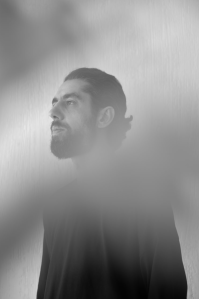
photo by Tina Gevorgyan
Kai Khachatryan is a sound artist and experimental musician based in Yerevan. Active in various punk bands since 2002, he began producing experimental music in 2010.
Field recordings form the foundation of his practice, alongside electromagnetic sounds captured using devices he has built himself. Technically, he is interested in all kinds of sound, including those beyond human hearing, such as electromagnetic wave activity. He is particularly drawn to the authenticity of street noise and natural acoustic environments, choosing not to fragment or deconstruct them.
Rather than altering form, structure, or duration, he focuses on manipulating and processing timbre within his sound works. At times, his compositions emerge from research into psychological conditions and the diagnosis of disorders, translating these studies into sonic explorations.
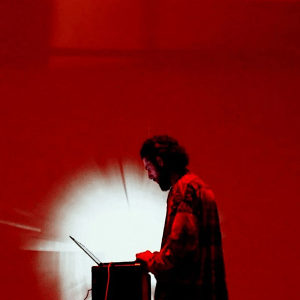
Bohemnots Radio (Composers’ Union Dilijan)
Your work integrates field recordings and electromagnetic sounds captured with devices you’ve built yourself. What draws you to these “unheard” frequencies, and how do you decide when a sound should remain structurally untouched? Also, you’ve said you manipulate timbre without altering form, structure, or duration. What does this restraint preserve for you artistically or ethically?
For me, working with field recordings — whether using a standard microphone or a DIY electromagnetic device — is primarily about capturing a process. When I move from point A to point B while recording, that journey itself becomes a story embedded in the sound. The same applies when I sit still recording the rain; being fully present in that specific moment is what matters most to me. In this sense, choosing to leave a sound structurally untouched is indeed an ethical decision. It is an act of preserving the integrity of the time and space I have documented, allowing the original ‘history’ of the recording to remain intact.
Psychological diagnoses sometimes inform your compositions. How do you translate complex mental states into sound without reducing them to metaphor?
At a certain point, I began reading extensively about psychology and clinical diagnoses. I was driven by a genuine curiosity about how individuals with various mental health conditions perceive reality and what they experience internally. My goal in composing is to ‘wear’ these sensations myself and translate them through sound, rather than simply creating a sonic metaphor. It is an attempt to embody a subjective internal experience in an auditory form, allowing the listener to engage with these states of being more directly.
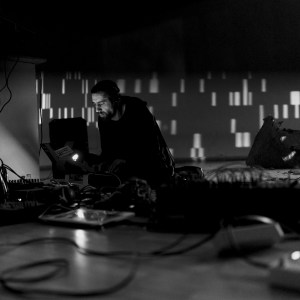
Noise դրախտ by SPEED_TV (Armenian Center for Contemporary Experimental Art)
You began in punk bands before moving into experimental and electroacoustic music. How does that early DIY ethos continue to shape your current practice?
I see my current practice as a logical evolution of where I started. Despite the radical shift in genre, my punk roots haven’t disappeared—they have simply transformed. My friends often tell me that even in my most abstract and experimental compositions, the spirit and energy of early punk are still clearly audible. I believe this DIY ethos manifests in my very approach to sound.
Your latest release, Bogoth (2025), uses coded or technical-looking track titles. Is this a reflection of digital culture, scientific language, or a conceptual framework behind the album?
Regarding the track titles, there are two layers at play. On one hand, there is a technical aspect: while working, I often quickly type in numbers or letters just to save a project. However, the core of the album Bogoth is built upon the clear concept of a Requiem. Therefore, the final titles are not just random characters; they are encrypted references or codes pointing to specific texts from the Requiem Mass. This transforms digital chaos into a structured liturgical act, where technical language becomes a modern way of interpreting the requiem.
Your track “آن” is tagged with postnaturalism. How do you define postnaturalism as a genre or aesthetic, and how does this piece embody that idea?
Postnaturalism is a new conceptual term introduced by artist Anna Esaian (esai), which explores, through hyperbole, primarily so-called “human apes” and their animalistic needs and behavior patterns in human society.
The most recent example of my exploration of this direction was the “Performance of Post-Naturalism №1” , which we created together with esai. But the first example was the work “آن”, which marks the first attempt in history to audify this concept.
How would you describe the electroacoustic and experimental music scene in Yerevan today, what trends are you observing among emerging electronic musicians in Armenia right now? Does it feel like a tight-knit community, or more like independent artists working separately? And how engaged is the local audience with experimental sound practices compared to club-oriented or mainstream electronic music?
Armenia is a very small country, and the electronic scene is proportionally small; as for the experimental scene, you could practically count the key players on one hand. Naturally, in such a tight-knit circle, we are all friends—everyone knows everyone else, and we often collaborate. Unfortunately, the experimental scene itself remains very niche. While there are occasional festivals where this music can be heard, dedicated concerts are generally a rare occurrence in Armenia. However, the landscape has begun to shift slightly with the recent influx of relocants; for instance, the opening of the Ban venue has provided a vital platform for performing and experiencing experimental sound. Nevertheless, compared to the club-oriented or mainstream electronic scenes, our community remains very intimate and largely driven by the passion of a few independent artists.
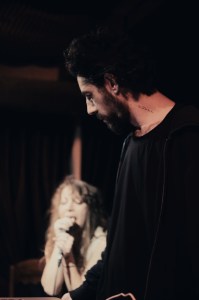
ArTur duo (SoundBridge İstanbul Concert)
In relation to neighbouring countries such as Georgia, Iran, or Turkey, do you sense artistic dialogue or shared sonic directions?
Yes, we definitely maintain an active creative dialogue with colleagues from neighboring countries. For instance, I have a duo with a Turkish artist called ArTur—a name symbolically derived from the first letters of Armenia and Turkey. We have performed this project in Georgia, Turkey, and Armenia alike. Regarding the broader regional context, I actually find myself playing in Georgia more often than in Yerevan. The experimental and electronic scene in Tbilisi is much more established; it is larger, more active, and has deeper-rooted traditions.
With recent developments in the peace process between Armenia and Azerbaijan, do you feel any tangible impact—socially or culturally—on the artistic community in Yerevan?
Regarding the shifts and their impact on the community, just a month ago I was working on a film soundtrack with the Azerbaijani composer Leyla Suleymanova. We met in Georgia, where we had the chance to talk and collaborate in person. Naturally, we both dream of a time when such collaborations will be possible not just on neutral ground abroad, but when we will be able to perform our music freely in both of our countries. It is a shared hope that culture will ultimately serve as a bridge rather than a wall. (Gianmarco Del Re)
 a closer listen