
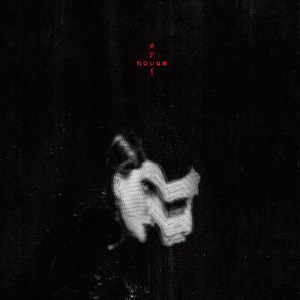
 A Requiem is the gift that keeps on giving. First came the exquisite parent album, followed on Halloween by the companion piece Æternum, and now a reworked version that in many cases completely transforms the original versions, making OPVS NOVUM: A Requiem Reworked sound like an entirely new project.
Even before the reworks, Penelope Trappes has established herself as a sonic chameleon. Consider the difference traveled between the piano, voice and reel-to-reel of Heavenly Spheres, the halldorophone of Hommelin and the gothic power of A Requiem. The fact that Trappes shifts the angles of her own music encourages guest artists to do the same, which they do to an incredible extent. OPVS NOVUM turns out to be even more experimental than the initial release, although not as unified, which is to be expected given the large number of contributors.
The ten tracks of A Requiem each receive a funhouse mirror version, presented in identical order with only one exception, the title track moved from the eighth spot to the fifth. Our only quibble with the set has to do with sequencing, our opinion being that if one track could be moved, the others could as well, and that the album might have flowed better had the ambient, drone and electronic renditions been bundled by genre rather than distributed evenly across the set.
The Sarahsson rework of “Anchor Us to Seabed Floor” starts with the same cassette click, but only the click; the track is now voiceless in its opening half, building to a cathedral of organ tones. The original “Bandorai” was a dark and mysterious introduction, zeroing in on cello and voice. Klara Lewis more than doubles the length, focusing on the timbral nuances of the strings while pitching Trappes’ voice down to an even-more haunting level. In its earlier incarnation, “Second Skin” was a wisp of a track, 1:46 of filtered dread. Flora-Lin Wong lowers the density, revealing previously unheard textures: scrapes of guitar and shadows of drone. In the hands of Midwife, the title track pushes the field recordings front-and-center, while retaining the cavernous depth, producing the LP’s first patch of brightness, while Julia Holter extracts a tempo and alien noises from “Thou Art Mortal,” emphasizing the toll of a church bell.
Most readers will have guessed this by now, but we’ve done our own rework via re-sequencing. The above paragraph represents our Side A; what follows is Side B. “Torc” was slow and moody, but Dania adds new tones. The strings are sharper and brighter, now accompanied by a warm guitar melody and late, playful piano, transforming the track into a springlike frolic. The pace is beginning to pick up. “Caro” was once a 56-second sprout (actually 00:50 as the last six seconds were silent); Stephen Mallinder adds all manner of instrumentation, quadrupling the length of the piece: first a pulse, then an electronic squiggle, and finally percussion.
Now to the end run. Of all these pieces, we were most looking forward to the Gazelle Twin & PRIZMA9 rework of “Sleep,” and we were not disappointed. Gazelle Twin’s experience in film scoring is on full display, as the stops and starts are evened out by a procession of beats without losing their original power. If any track should be turned up, it’s this one. The piece edges its way toward a beatless conclusion, which allows it to slide into “Platinum,” which starts with strings but swiftly becomes a dance track, courtesy of St. Etienne, the beats first slow, then fast, making us wonder if another rework, adding beats to the beginning, might heighten the club appeal.
Finally we arrive at Smote‘s take on “Red Dove,” the most sparkling track on the original album. Shifting the focus from electronics to organ and drums, topping it off with a post-rock finale, the piece gains a triumphant tone that lends the album – when sequenced in this order – a tonal arc. We feel like participants now in the grand experiment, not just passive listeners. How do I play thee? Let me count the ways. (Richard Allen)


Pingback: A Closer Listen Reviews – Avant Music News