
 A cruel quirk of translation turns out to be a clever trick on Bländverk, as the Swedish title implies bland work while the actual English translation is illusion. Old Amica‘s album is many things ~ quiet, intimate, reflective ~ but it is certainly not bland.
The template is established on opening track “Stilla nu” (“Quiet now”), which suggests the softness of a home in which all but the piano player have gone to bed. The track has the feel of a lullaby, even a music box, leading us to believe that a baby or small child is in the house; the track possesses a gentle gratitude, akin to a composer looking back on the day.
As it turns out, the album was composed “during the gentle hours before midnight,” the two high school friends communicating from Stockholm to Geneva and back again, suffusing their piano pieces with harmonium, tape loops and subtle field recordings, all in support of the ivory tones. This approach first becomes apparent on “Laura,” which begins with a thin veneer of drone before adding closely-miked piano, like mist before a light spring shower. A closing loop, like a second piano playing in a distant room, underlines the sub-theme of memory.
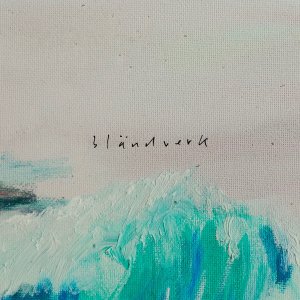
Kind chimes punctuate “Sanden” (“The Sand”), a soft reminder of the season that awaits. Waves and seabirds are audible in the second minute, a sonic reflection of Isak Falk Eliasson’s painting, hearkening back to “Ön” (“Island”). “Eftersol” (“Afternoon”) contains one of the album’s largest blooms, although even this unfolds gradually in a series of light glissandos. In contrast, “Ifred” (“Peace”) descends into a long segment of harmonium and surf.
Over a quarter of the album is occupied by the 10:36 title track, which begins with field recordings and solo notes, like a window open during a thoughtful, late night improvisation. The harmonium enters next, offering gentle support. At 3:01, the piano suddenly sprints into a new idea, as if late night inspiration has struck: the bright night of the soul. The harmonium shifts to a brass timbre, and carries the piece through its final strokes as the ivories evaporate to reveal the sea. All is stilla nu as the album wraps back around to its beginning; midnight is here, and a new day, unheralded by the sleeping populace, has begun. (Richard Allen)


Pingback: A Closer Listen Reviews – Avant Music News
Pingback: A Closer Listen Reviews – Avant Music News