
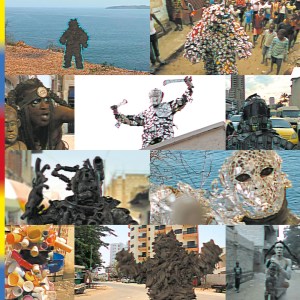
 Kinshasa in Action is a unique release that represents something few outside of the Congo have ever seen: a street performance in which trash becomes treasure, outfits become instruments and mythology becomes protest. The 68-page zine (available separately or in a bundle) provides visual documentation, while the LP bursts with energy and creative verve.
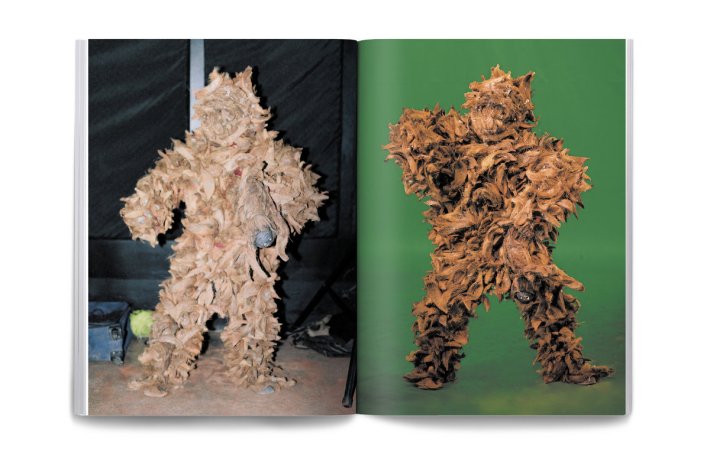
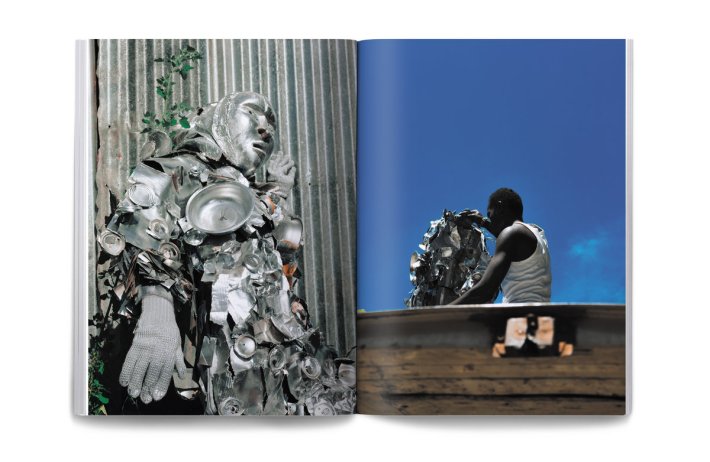
Wearing costumes “assembled from bottles, wires, tyres, dolls and detritus,” welded to xylophones and drums, the Congolese collective marches through the streets. This is true industrial music, incorporating the sounds of power drills, sheet metal, hammers, engines and saws. Ritual chanting, growling and yelping increases the energy of the festival and the fascination of the attendees. Where else might one find a man made out of cans, a cup creature, a sabre-rattler on a roof, all with something to say about “pollution, gendered violence and postcolonial scars?” In one sense, the ancestors are singing; in another, they are supplanted by new personifications.
After a brief yet sweet introduction (“Musique du Congo”), the LP plunges into the first of many drum circles. One is already excited to join the dance, the flutist operating like the Pied Piper, yet with a more benign purpose. In “Atelier Kinact,” one can hear the sounds of the workshop, along with the ebullience of the narrator. The percussion is fantastic, featuring an incredible contrast between the drums and the drills. “Gaingai” ups the ante through street saws and combs, rapid drumming and exhortations. When the music drops out, one can hear the crowd noise, a vast market of human sound. When the drums reemerge, they are even faster, with group chants enhancing those of the soloist.
“La Marche Inévitable” is the most menacing piece, borne on breath and growl. The tension is palpable; one can sense revolution in the air, a reminder of French colonization, independence, democracy, civil war and a return to a one-party state. The final exasperated scream says it all. “Kinshasa La Nuit” incorporates the sound of traffic while toppling into a street dance, as if to say that trouble is adjacent to joy. The closing “Les Cloches (Spiritus’ Invocation)” asks the ancestors for help while the costumes channel their energy; the land and water may have been replaced by plastic and metal, but the spirits are prepared to pivot and possess new forms. (Richard Allen)
 a closer listen
Pingback: A Closer Listen Reviews – Avant Music News