
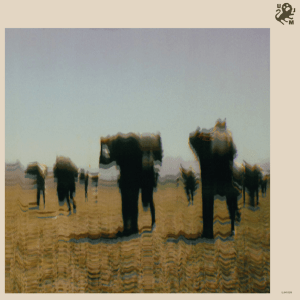
Nothing is quite what it seems on Zawsze coś. Ben Bekele is not, in fact, a single musician but the collective identity adopted by Hubert Zemler, Kamil Piotrowicz and Igor Wiśniewski. Nor is Bekele a surname in the Western sense. In Ethiopia, where hereditary family names are not traditionally used, Bekele—meaning “he has grown” or “he has flourished”—is simply a personal name, one that immediately unsettles assumptions about identity. Zemler has long enjoyed these conceptual sleights of hand. “The Life and Death of Ben Bekele,” released on the Portrety compilation (2019) by U Know Me Records, first introduced this fictional figure, while Gostak & Doshes (2014) borrowed its title from the famous linguistic phrase “the gostak distims the doshes.” The album’s cover, assembled from photographs taken by Zemler’s parents during their travels in Africa, already pointed towards the persistence of family memory. The blurred photograph on Zawsze coś, also taken by his father during a trip to Ethiopia in the mid-1980s, returns to the same personal archive, suggesting that these images continue to resurface in different forms.
Yet Zawsze coś has remarkably little to do with Ethiopia itself. Instead, it reflects on the way memories become family mythology. Zemler’s father returned from Africa with photographs, stories, two small drums and the memory of a boy named Bekele teaching him a traditional song. Four decades later these fragments re-emerge, not as ethnographic reconstruction but as the starting point for an entirely personal musical language. The record consistently resists exoticism and refuses to turn biography into narrative.
Rhythm provides its structural foundation. “La Clave en medio de la nada” hints at ritual before “R-4” answers with a precision that feels almost architectural, carefully avoiding the familiar vocabulary of free improvisation. “Niosą” introduces a more reflective register, but “Phillip Jeffries” quietly redirects the entire album. Named after David Bowie’s enigmatic Twin Peaks character, forever suspended between dream and reality, the piece invites the same uncertainty that Lynch famously condensed into the question: “We live inside a dream.” From there, the title track “Zawsze coś” changes course once again before arriving at “Linoleum (Shining).” Whether the title alludes to the famous hexagonal carpet pattern from Stanley Kubrick’s The Shining remains deliberately ambiguous, but the reference would be entirely in keeping with the album’s fascination with memory, dreams and unstable realities.
That refusal to stabilise meaning is precisely what gives the album its character. Zawsze coś never asks the listener to distinguish fact from invention, memory from fantasy, or autobiography from fiction. Instead, it inhabits the uncertain space where all of these overlap, allowing rhythm, recollection and imagination to coexist without demanding resolution.
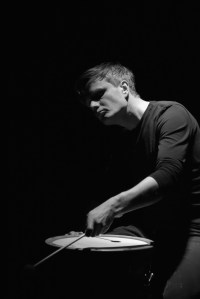
Hubert Zemler by Krzysztof Pawłowski
To shed some light on the production process for the album, Hubert Zemler kindly agreed to answer a few questions for us by email.
Ben Bekele begins with a memory that may not even be entirely reliable: an Ethiopian song your father brought back from a trip in the 1980s, filtered through decades of recollection and imagination. How do you navigate the space between personal memory, family mythology, and cultural reference when building the world of Ben Bekele? At what point does memory become composition?
First and foremost, I must say that this story is true. However, its influence on the music and the entire concept of the Ben Bekele project is only symbolic.
In my ideal world, the music should speak for itself, and descriptions should be superfluous. However, this would require erudition and contextual knowledge from listeners, which is impossible in the current online reality. A properly told story adds context to the music, increasing the chance that someone will reflect and pause.
In this case, memory is simply a part of my identity. Ben Bekele is not a concept album, but a record of my current emotional state.
Given that Ben Bekele originated from such a personal source—a childhood memory of your father, his stories from Ethiopia, and a melody that resurfaced decades later from your subconscious—what made you decide that this project should become a collaboration rather than a solo record? What did Kamil Piotrowicz and Igor Wiśniewski bring to the music that allowed you to expand such an intimate and autobiographical idea into something larger than your own memory?
After many solo albums, I wanted to tap into the imagination and energy of younger musicians. On the album Zawsze coś (Always Something), I decided to utilize the talents of two wonderful improvisers: Kamil Piotrowicz and Igor Wiśniewski. My part is limited to ethnic rhythms, which have always fascinated me. Interestingly, although I listen to a lot of Ethiopian music, none of the compositions are based on the music of this region. I gave Kamil and Igor quite specific guidelines on what I expected from the final result, but left them free to choose the means to achieve their goal. I wanted to avoid free jazz improvisation, with solos and formal chaos. So I told my companions: every note should be the final note: “I don’t want to hear the creation process, only the finished composition.” They fulfilled this task brilliantly. Thanks to this, we composed compositions together that we perform in a similar format live and avoided the trap of a “free improv” album, which is a stream-of-consciousness recording of improvising musicians.
The title Zawsze coś is a wonderfully ambiguous Polish expression—part resignation, part optimism, suggesting that even when things fall short, something remains. Why did you choose it as the album’s title, and does it reflect the emotional atmosphere of the record or perhaps the collaborative process between yourself, Kamil Piotrowicz, and Igor Wiśniewski?
The title has nothing to do with the creative process. As you yourself pointed out, it’s wonderfully ambiguous. It could be “oh no, not that” or “at least that much,” but it’s also a phrase that symbolically emphasizes that life is a constant movement and transformation.
As a parent, but also someone caring for an elderly mother, working in the uncertain profession of a freelance artist, I have a lot of problems to solve. Just when it seems like everything’s taken care of, something always comes up. Always something.
Rhythm seems to function as the album’s primary organizing principle, often taking precedence over melody or harmonic development. Tracks such as “Niosą” and “La Clave en medio de la nada” feel almost trance-like in the way they build momentum through repetition and subtle variation. What interests you about rhythm as a form-generating force, and how did the three of you develop this collective rhythmic language?
I’ve already partially answered this question in point 2. Drums are my instrument because they are close to the primary role of music (and art in general) – to transport the listener momentarily to another dimension. Beyond reality, to distance themselves from everyday matters.
One of the album’s most intriguing titles is “Phillip Jeffries,” referencing the mysterious Twin Peaks character who becomes untethered from ordinary reality while pursuing forces beyond human comprehension. What drew you to Jeffries as a point of reference, and do you see parallels between his disappearance into an unknown realm and the way this music often seems to move between concrete reality, memory, dream, and imagination, especially since this track in particular seems to be the most mysterious on the album?
You’ve essentially partially answered this question yourself. You understood my intentions very well. Phillip Jeffries is the one who knocks on us from our dreams. It’s not without significance that this character is played by David Bowie, who is a great inspiration to me on many levels.
The universe created by David Lynch is like a cure for the madness of the modern world. We all live in a dream – but who is the dreamer?
(Gianmarco Del Re)


Pingback: A Closer Listen Reviews – Avant Music News