
 Drone has an incredible tonal range. With sounds that range from calm to abrasive, drone can soothe or unsettle, like the distance between a refrigerator hum and an attack copter. These albums not only reflect the sounds that flow through our bodies, perceptible or not, but the hum, buzz and noise of everyday life. Earth’s empty aural spaces are being filled in slowly by sound, from subsonic frequency to passing plane. Those who work in this field underline the musical aspects of drone: subtle shifts, undulations, tension and release. Turning the intrusive into the sonically desired is yet another form of reclamation.
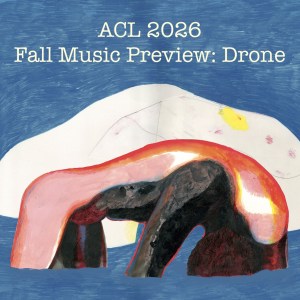
Our cover image is from Marta Salogni & Stefano Pilia‘s Phren on Maple Death, covered below.
As always, our discussion of drone begins with the amazing Room40 label, whose roster focuses on drone yet is in no way restricted to it. We’ll be listing all of the imprint’s fall announcements here, including those of Someone Good, since Lawrence English has done such a fine job with advance publicity and it looks tidy!
The first is a re-release of David Shea‘s I, originally on Sub Rosa; the Zorn-influenced album still sounds fresh and raucous (September 2). Next on the schedule is Werner Defeldecker + Eliad Wagner‘s Fray Field; readers may recall Dafeldecker’s Fathom Tidea with Lawrence English from earlier this year. This improvised album of double bass, synth and guitar is a whole different beast (September 11). Jannis Anastasakis and Peter Knight follow with Feather, a two-and-a-half-hour performance distilled to 32 minutes, light as air (September 18). The month ends with Hannes Strobl‘s Resonance IBK, an immersive five-part piece that blends field recordings of mountain and valley with complementary, drone-like music, and Prime Frequencies from mHz, who brought us 2024’s Material Prosody. The latter album, available in code and web-based formats, contains 47 investigations of sine waves and their relationship to prime numbers (September 25).
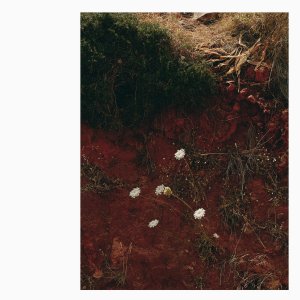 Room40’s October slate begins with Andrew Tuttle & Darren Cross‘ AT/DC (no, that’s not a typo)! This warm guitar and banjo set is enhanced by reverb and synthesizer, reminiscent of Rain Drinkers (October 2). Winter comes early with Philip Samartzis & Michael Vorfeld‘s Atmospheric Pressure, an acoustic reflection of a 36-hour Antarctic blizzard (October 9). Matt Rösner‘s Lost Meridians follows, described as “music to pause to,” reflecting the peace of open prairies and wide, unpolluted skies (October 16). Yann Novak‘s Discontinuity is a remixed response to Continuity, as well as a commentary on “deteriorating conditions in the U.S.” (October 16). Bruno Duplant investigates the nature of erosion through sound, offering l’usure du socle stable du monde, a two-part study meant to be experienced as a single piece (October 23). Steven Hess + Rutger Zuydervelt follow Re:collecting exactly a decade later with Re:construct. Times have changed, but there’s always a place for hope (October 30).
 Maple Death continues its fabulous run with another box set produced in conjunction with Opale. Phren is a collaborative effort from Marta Salogni & Stefano Pilia, introduced with an eleven-minute hymn that turns out to be the album’s most sedate selection, a worthy closer after the weight of the preceding tracks. The cover art is only the beginning; more of Sarah Mazzetti’s illustrations lie within (October 2).
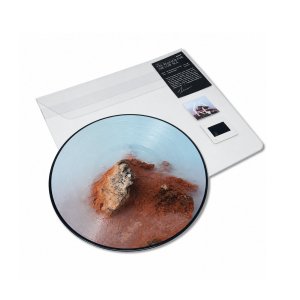
zakè‘s Tide Requiem for the Low Sea is a beauty to behold, available on increasingly rare picture disc vinyl. The music is like the end of summer, the art like an invitation to extend the season (September 2). The Sirens begins with the sound of an observatory door being opened. Geologist & Kyle Simon‘s music twinkles and shines, like a planetarium score or the biography of starlight (Outside Time, October 16). Calum Builder plays a reconstructed Copenhagen pipe organ on Although Changed, I Arise the Same, accompanied by vocal fragments culled from the Psalms. This results is a double reconstruction of faith and sound (thanatosis, September 25).
Tehran-born, Berlin-based Ava Rasti‘s No One Knows How Wild the Wind Blows is a harrowing reflection on current conditions in Iran. Aslan Mohammadpour‘s video for the title track starts as a benign home video before literally pulling back the curtain (FatCat / 130701, October 30). Falling into dark ambient-drone territory with titles such as “Circle of Black Candles,” Ajna‘s Mysterium Tremendum can’t wait for sunset. On this album, darkness is meant to evoke transcendence as well as fear (Winter-Light, September 4). Eric Angelo Bessel‘s Illusion of an Inland Ocean is murky, dark and mysterious, a reflection of everything from the ocean depths to the depths of the soul (Lore City Music, October 30).
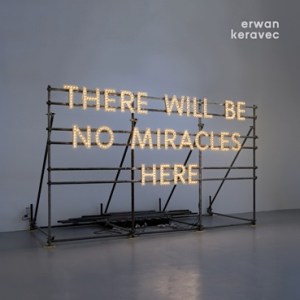 Seven bagpipe players and three basin players create an enveloping sound on Erwan Keravec‘s There will be no miracles here; check this video for insight on the performance. The organic sound borders on the otherworldly (Buda Musique, October 16). Rachel Shearer honors the earth and the Māori concept of whakapapa on Te Oro o Te Ao, as Maori vocals give way to a massive wall of field recordings and lead to a peaceful denouement (Thin Wrist Recordings, October 9). Falsetto singing, harmonium and cassette are the hallmarks of KKKAAARRREEENNNIIINNNAAA, an album as wild as its spelling bee title, courtesy of Charlemagne Palestine / Oren Ambarchi / Daniel O’Sullivan (Black Truffle, September 10).
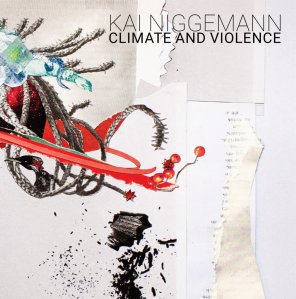 Kai Niggemann‘s Climate and Violence began as music for the theatre performance “Denkraum der Utopien,” and has been updated and tweaked for this release. Since then, global climate change has only accelerated, and threatens to increase exponentially. The morphing music reflects shifts in atmospheric conditions and long-range forecasts (WAF80 Music, September 25). Giulio Aldinucci‘s Materia treats sound as matter that can be sculpted; the pieces feel like clay, molded and remolded, resisting their final forms (Karlrecords, September 18).
Haarvöl‘s Overflowed Shelters is a direct commentary on recent events, highlighted by the harrowing first single, “Perpetual Ruins (a lament for Gaza).” The music reflects a slow-motion genocide, a horror from which many turn away, but that demands to be seen and confronted. There’s no escape in this music, nor should there be (Moving Furniture, September 26).
 Thomas Brinkmann‘s GETGETGET is a single piece in two parts, born of a live performance. Listening is like traveling through the various permutations of drone, thin to thick, soft to loud, with percussion serving as additional texture (Editions Mego, October 23). A “diverse ecology of machines” is used on Ben Carey‘s INVENTIONS, which at times sounds like a cathedral tower and at other times a factory floor (Hospital Hill, September 14). Markus Solid creates immersive atmospheres by combining drone and electronics. Elastic Embrace is as mutable as its title, bent forward and back, refusing to break (Rhizome, September 25). ARROWOUNDS‘ Fludiic Time Cathedral is dark and mysterious, as one might expect from the artist who brought us In the Octopus Pond. The style is gothic rock drenched in shoegaze timbres, removed from the ether while still dripping, a worthy finale for Lost Tribe Sound’s Moss & Melee series (September 25).
Richard Allen


Pingback: A Closer Listen Surveys Fall 2026 Drone Releases – Avant Music News