
 Over the course of a month-long bicycle journey across southern and central Thailand, H. Flora accumulated a personal archive of nocturnal field recordings. These recordings became the basis for two interconnected releases, each approaching the same ecosystems from a different perspective.
Anthropause presents the material in its raw form: rainforests alive with gibbons, amphibian choirs, Tokay geckos, bats and insects captured during the hours when human activity had receded to its minimum. Noumenon takes those same recordings as its starting point, reshaping them through modular synthesis, electronic processing and improvisation into a “naturel-concrète” ecosystem.
The relationship between the albums never feels schematic. Anthropause already demonstrates a careful compositional ear. Each lengthy piece unfolds episodically through changing densities and acoustic perspectives rather than functioning as a documentary collage. Different species occupy distinct spatial registers, creating a strong sense of internal organisation without any intervention beyond careful listening and recording. H. Flora repeatedly resists the temptation to isolate individual sounds, allowing the rainforest to remain a collective acoustic environment whose complexity exceeds immediate human understanding.
That sense of immersion carries naturally into Noumenon. Here the field recordings dissolve into modular drones, fractured rhythms and densely layered electronic textures whose origins are often impossible to identify. Animal calls become synthetic oscillations before gradually revealing their biological source; electronic gestures acquire the behaviour of insects or amphibians. Nature and technology enter into a continuous exchange, with the album always remaining profoundly organic.
What ultimately distinguishes these releases is the absence of ecological sentimentality. H. Flora is not constructing a fantasy of untouched wilderness, nor imagining a world cleansed of humanity. His recordings repeatedly acknowledge how difficult it has become to find moments free from anthropogenic noise, while Noumenon accepts that any attempt to imagine a post-human ecosystem remains speculative.
Heard in parallel, the two albums also begin to unsettle the listener’s assumptions about sound itself. The raw recordings of Anthropause, with their hissing rainforests, reveal the mechanics of nature through high frequencies, rhythmic pulses, amphibian loops and electronic-sounding timbres, while Noumenon demonstrates how organic modular synthesis and digital processing can become when they remain attentive to those same acoustic behaviours. The boundary between documentation and invention becomes increasingly porous, exposing just how strange and sonically complex the natural world already is.
Personally — and somewhat ironically — I found that, at times, Noumenon adhered more faithfully to my own imagined soundscape of a rainforest in Thailand. For this armchair traveller, H. Flora’s “Nocturnal Fantasias” may even feel more authentic than the ambience documented on Anthropause. Of course, I am exaggerating here, but this also goes to show how difficult it can be to leave one’s own expectations behind, even when embarking remotely on a sonic expedition. Across the two albums, bioacoustics and electroacoustic composition become part of the same exploratory process, beginning with the act of listening and following wherever the sounds happen to lead.
Taking us on his travels, H. Flora kindly answered a few questions via email elaborating on the production process.
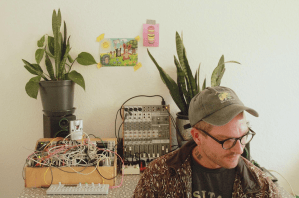 The two releases, Anthropause and Noumenon, feel like complementary perspectives on the same material. One presents the rainforest as recorded, while the other imagines how these ecosystems might evolve in the prolonged absence of humanity. At what point did you realise that the project needed to exist in these two parallel forms rather than as a single album?
Well, it was more of a fluid process than a decision. When I scanned through the original material to see what I could find and did some cutting around parts where there was subtle human activity, I realised again how challenging it was to capture sonic moments in which those sounds could really be perceived in an isolated, pure form. So, by making chops here and there, I started to extract parts that I really liked and began playing around with them.
It just came naturally over time from this initial idea of capturing the sonic footprint of the non-human world, and I felt it could be extended by building something on top of that attempt. More in the sense that I could create my own individual idea of a possible version of the anthropause.
The title Anthropause refers to the idea of a temporary withdrawal of human activity from the environment. During your nocturnal recordings across Thailand, were you trying to document moments where nature seemed to reclaim the acoustic foreground, or was the album also a reflection on the impossibility of ever fully removing the human presence from contemporary ecosystems?
I mean, for me it is more an excercise to record in nature. It is a way to expand my own senses and to visualize how beautiful and unique it can be to get yourself into this multilayered, complex non-human world of communication and sonic order and chaos. Therefore, I need to search sometimes for the acoustic space on which i want to focus to get into this certain sphere of perception.
The partly highly contrasting sounds created by humans and the quantitatively presence, its effects on the territorial behaviour of animals and therefore, among other things, on the sonic landscapes is sure something which can not be dismissed overall while recording. also myself, I am part of this ambivalent relation. we are all.
So I didn’t really want to reduce the framework of these pieces on a imagination, where humankind finally vanished for its sinful, destructive nature of being and an acoustic domesticity being finally claimed again by the so called natural world and so on.
I found it more fitting to see and understand it as a kind of Noumenon, something that can be measured from a certain perspective and that one has a responsibility to react to, but which, on the other hand, cannot really be perceived in its entirety; something one cannot fully understand in all its dimensions, and something that is not perceptible solely through a human understanding of things. The earthly sphere and its ecosystem have their own complex “logic”, with or without our presence. And it is also the case that the sonic stage should be allowed to belong to someone else for a change..
 You spent a month travelling through Thailand by bicycle, often recording after 10 p.m. or before dawn to minimise human interference. How did those long periods of isolated listening change your relationship with environmental sound? Were there particular encounters—whether the gibbons of Phang Nga, the amphibian choirs, the Tokay geckos, or the cave-dwelling bat colonies—that fundamentally altered your understanding of these ecosystems?
It was more like a last-minute trip and, in general, when I travel nowadays, I’m not really well prepared and I do it without much planning. So basically, I had absolutely no idea what to expect when I arrived there. I had got these new clip-on microphones beforehand, and my intention was to get familiar with them, play around and experiment a bit. But I quickly noticed after arriving that there was a huge sonic landscape to explore. I remember that somewhere on the coast I started making my first recordings at night, and this one animal was very close to me and had this strange, distinctive sound. So the next morning I asked some people around the bungalows and played them my recording. It was a tokay gecko, and for the locals it was more than familiar. They were giggling—it’s a well-known guy there.
This kind of thing happened to me many times. I remember sitting in a small roadside restaurant at night in Khao Sok National Park and having a lot of fun talking with the owners. Then this frog began to croak. I pointed towards the sound and they immediately responded that it was the “bullfrog”, because it blows up its cheeks in order to make the sounds it does. When everything had closed down and it was late enough that there probably wouldn’t be much traffic anymore, I went back to the place and luckily the colony was still there, croaking.
The next day I met a birdwatcher who told me about this Facebook group, “Thai Biodiversity Survey & Species ID”, a very active, wonderful group with a lot of professionals helping each other. From then on, I used it a lot to identify the animals and plants around me. So yeah, I learned a lot about Thailand’s highly biodiverse environment through making these recordings.
The sound artist and theorist Gerald Fiebig describes your work as occupying a space between pure phonography and electroacoustic composition. How do you navigate the balance between faithfully documenting a soundscape and reshaping it into something new? Is there a point at which a field recording ceases to be documentation and becomes composition?
It can also be the other way around, so that the composition is already there, recorded, and therefore gets documented. I think it always depends on how one understands it and from which angle it is observed. It can be the same as with photography or other fields of art. It is documentation. And even if it is meant to be understood as a pure composition, it is still a certain kind of documentation. But I don’t really think too much about that, to be honest.
It is more of a process with a life of its own. I do not try to put that much control on it. When it feels right and attracts my energy, I go on. When there is a framework or a narrative evolving around the work, even better. On the other hand, I have plenty of recordings—for example, from Iceland last year—that I have tried to work with, but they haven’t led to any fruitful progress yet.
 Many passages on Noumenon blur the boundaries between natural and synthetic sound. At times it becomes difficult to distinguish an animal call from a modular synthesis process or a heavily transformed recording. What attracts you to this ambiguity, and do you see electronic manipulation as a way of extending nature’s own processes rather than imposing something artificial upon them?
I think it is simply another way to play around with our possible means of (creative) expression. It always depends on how one wants to channel or expand the material and shift it into another context. I think art always has something to do with a kind of communication. And what has been chosen here is communication with a certain excerpt of the surrounding environment. Within it lies a wide aesthetic sonic palette that provides a lot of interesting material for exploration.
I would say I don’t have a particular plan for those sounds. I just borrow them, shapeshift and transform them into something else, and give them back to the environment. That is the whole compositional interplay. Even so, it mostly arises from experimentation, and it isn’t as if I put a lot of focus on composition and arrangement; it’s more of an improvisational process.
You cycled for 2300 km. What would you say surprised you the most that you were unable to capture or to render sonically?
Suprisingly it even exceeded my expectations and I was overall happy with the results and the diversity of the recordings. But… maybe the fart of a elephant, that would have been something 🙂
(Gianmarco Del Re)


Pingback: A Closer Listen Reviews – Avant Music News