
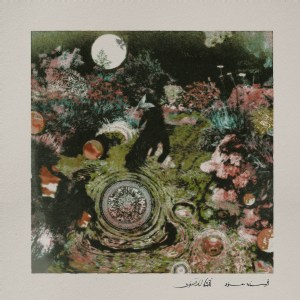
 The title of Emna Mâaref‘s first solo full-length comes from a verse by the tenth-century Arab poet Abu Firas al-Hamdani, roughly asking, “Has longing no hold over you?” Yet hawa encompasses love, desire, attraction and surrender, and Mâaref describes these impulses as the engine behind her creative life. Across Ama Lel Hawa, longing generates movement: through maqām, improvisation and an oud vocabulary shaped by two decades of playing alongside her experience with electronics, sound design and cinema.
Recorded at Montreal’s Hotel2Tango in a single day, the pieces were improvised or partially composed within frameworks established beforehand. “الخطبة البتراء” opens ceremonially, while “Ouverture ’25” and “Improvisation I” progressively loosen that initial concentration, allowing phrases, resonance and silence to determine the music’s direction. Mâaref’s knowledge of maqām provides the underlying grammar, but the music remains sensuous and exploratory, constantly finding new routes through familiar materials.
The album opens further when other musicians enter. On the title track, Lounis Adjissa’s bass gives the oud additional depth and physical weight, while “Afa2estas9aynakumuha” introduces Habib El Bardi’s saxophone and electronics, extending Mâaref’s melodic language into a more ambiguous acoustic space. Both appear on “Wa Na7ya”, where oud, saxophone, electronics and bass move around one another without settling into conventional accompaniment. These pieces also connect the album to Mâaref’s wider practice: oud, electronics and sound design emerge as different parts of the same musical vocabulary.
“From Hadrumetum to Tiohtià:ke (And Back Insha2allah)” brings another kind of longing into view. Its journey from ancient Hadrumetum, present-day Sousse, to Tiohtià:ke/Montréal turns geographical distance into musical space, with the promised return left suspended in insha’Allah. The final improvisations bring Mâaref back to the oud alone, probing attacks, silences and decaying resonance. Ama Lel Hawa ultimately feels both deeply rooted and unsettled: tradition remains a living language through which Mâaref can articulate desire, displacement and change.
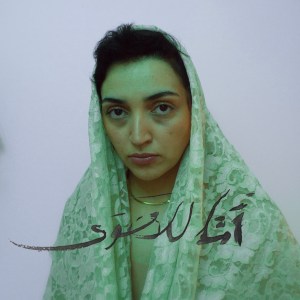
Photo by Nick Jewell
To find out more about the production process of Ama Lel Hawa we have reached out directly to Emna Mâaref.
Ama Lel Hawa is introduced through Abu Firas al-Hamdani’s famous verses on longing, yet the album rarely feels nostalgic in a conventional sense. Instead, longing seems to function almost as a creative force that continually pushes the music forward.
How did that poem become the conceptual centre of the album, and what does “hawa” mean to you beyond its imperfect English translations as “love” or “passion”?
For me, love and passion are essential. I don’t think I could do what I do, make music, pursue artistic discipline, or even move through life, without them. They are the engine behind everything, the force that gives me motivation and keeps me moving forward. In that sense, hawa is much more than simply “love” or “passion.” It carries something more unstable and difficult to contain: desire, longing, attraction, attachment, perhaps even a kind of surrender to something that pulls you.
My connection to Abu Firas al-Hamdani was not necessarily a particular fascination with him as a historical figure. It was more an attraction to this poem and, especially, to some of its verses. I have always been passionate about history, and many of the references in the album’s titles come from that interest. But I am also deeply drawn to Arabic poetry. I read it constantly, and I often find myself reciting or singing poems to my friends.
At the beginning of the project, I had many different titles in mind for the album. After the recording session at Hotel2Tango, we went out to celebrate at a bar. At some point, I recited the entire verse, and “Ama Lel Hawa” came out almost spontaneously. Habib and Ghazi immediately said, “By the way, that’s an amazing title.” And that was it, we chose it.
I love the poem, and I find it incredibly rich, but I think my decision to take the album’s title from it came more from my relationship with the Arabic language and Arabic poetry in general. So perhaps the title emerged quite naturally from that relationship, rather than from a preconceived conceptual decision.
Ama Lel Hawa is deeply rooted in the tradition of the oud and the maqām system, yet you seem to approach the oud almost as a sound designer. Has your work with electronics changed the way you physically listen to and perform the instrument?
Absolutely! Working with electronics has given me a broader perspective on sound in general. Whether you choose to play the instrument in a more traditional way or experiment with new techniques and sounds is ultimately a personal choice, or depends on the artistic vision of a particular project. But more generally, working with electronics has transformed the way I think about music. It has opened my practice to areas I didn’t know or explore before. Even though the oud and electronic music don’t necessarily share the same language or codes, as a player and an artist, the way you listen, think about, and design a sound or a musical project inevitably changes. It has definitely expanded and developed my perspective compared to before.
Your recent soundtracks, particularly The Color of Phosphate and I’ve Known Rivers, are inseparable from landscape. Dust, desert, abandoned mining towns and geological spaces seem to shape the music as much as the images themselves. Ama Lel Hawa contains no environmental recordings, yet I often had the impression of listening to landscapes rather than solo performances. Do you think your experience composing for cinema has changed the way you imagine musical space, even when you’re recording the oud entirely on its own?
Every experience we have teaches us something and helps us develop our practice. Cinema, for me, is one of the most inspiring art forms. Composing for film was one of my dreams, and I feel very lucky to have had the opportunity to realise it. I hope to continue developing this part and to have more opportunities to work in cinema. The films I have worked on, including The Color of Phosphate, I’ve Known Rivers, and another film, Barbary, which was selected for TIFF, as well as the sound work I have created for several art exhibitions, were all closely connected to the artistic vision of their directors and creators. When you compose or design sound for an image, you still have space to create freely, but the work itself and its creators also suggest certain directions and intentions.
It’s interesting that Ama Lel Hawa can evoke a sense of landscape, even though the album contains no environmental recordings. I was trying to capture a particular phase in my life, connected to many emotions, especially distance and being far from my home country. Maybe this is what gives the music this feeling of openness or space. But for me, this project still has its own independent character and internal logic.
The album was recorded in a single day, with pieces that were improvised or only partially composed, yet the performances never sound spontaneous in the casual sense. They feel architecturally coherent, as though years of musical knowledge are being distilled into a single gesture. How do you negotiate the balance between improvisation and the discipline of maqām, and at what point do you feel an improvisation has become a finished composition?
The discipline of maqām is a large and fluid frame for improvisation. This is the first rule! What makes Oriental music so rich and interesting is that its sounds and melodies have to be sensuous. Obviously, there are theories, maqām trees, variations, patterns, and different schools of playing, but you have to feel it and find your own way of expressing yourself. I think this is the most important thing you have to learn.
In this project, there are indeed a lot of improvised parts in certain tracks, but the general frame was already defined: the maqām, for example, and some transition phrases. It is improvisation within a predefined frame.
During the preparation of the album, the rehearsals were dedicated to defining these frames. When I reached a certain feeling that this was how the album should be, we went to the studio and recorded the momentum itself. Because, to be honest, there is no finished composition in itself, you have to decide where it ends, or when it has reached a point of completion. For someone like me, if I don’t make that decision, it might take years before something is released—which was actually the case with many previous projects.
Although Ama Lel Hawa is primarily a solo oud record, the three ensemble pieces with Habib El Bardi and Lounis Adjissa subtly transform the musical landscape without ever abandoning the album’s intimacy.
What drew you to introduce those collaborations at those particular moments, and what possibilities emerge for the oud when it enters into dialogue with saxophone, electronics and bass rather than remaining entirely alone?
Interacting with other musicians, as well as with electronic music, was always part of this project. From the beginning, the intention was to compose pieces involving other instruments. At some point, I was actually trying to do the opposite: to give the oud more space to exist on its own, because I initially wanted to add more instruments to other tracks as well.
So the final result became what you hear on the album: a project where the oud is often alone, but where these other musical presences enter at particular moments. It wasn’t really about deciding that the oud should remain isolated, but rather about finding the right balance. For example, I’ve worked and performed live with Habib on several occasions, and we have an amazing ability to connect, exchange, and really enjoy what we’re doing together. His saxophone playing therefore felt very relevant to the project as a whole, and especially to the two tracks on which he appears.
For the release concert, the instrumental parts will develop and extend further. I really love playing the oud with other instruments, and I feel that interaction and dialogue with other musicians inspire me a lot.
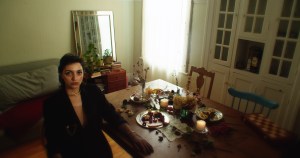
Photo by Nick Jewell
Your first electronic EP, Scars of Thorns, embraced heavy, abrasive textures inspired by hip-hop production and synthesis, while Ama Lel Hawa is almost entirely acoustic. On paper, they seem to belong to completely different musical worlds. Yet I wonder whether they are driven by the same curiosity about sound.
Do you see these projects as separate identities, or are electronic production, film scoring and the oud simply different ways of asking the same musical questions?
Not at all. Nothing is separate. Everything is happening inside my mind. It all comes from the same person, with this rich and varied lived experience.
Every practice I engage in expresses different parts of me, frustrations, madness, love, tenderness. Nothing is isolated from the rest. Whether I am working with electronics, composing for film, or playing the oud, these are not separate identities or different musical worlds. They are simply different ways of expressing parts of the same person.
Of course, certain sounds or musical approaches can express particular feelings more effectively than others. Sometimes something more sensitive or intimate calls for one kind of sound, while something more intense requires another. Sometimes you simply feel that you need a specific sound rather than another. This is what makes creating music with different tools so exciting: you have more possibilities and different ways of expressing what you want to express through music. But in terms of separate identities, I don’t see them as separate at all.
(Gianmarco Del Re)

