
With Ukraine critically short of the air-defence systems and interceptors capable of countering ballistic missiles, Kyiv increasingly resembles a frontline city, subjected to sustained Russian missile and drone attacks. Meanwhile, civilians in Russian-occupied Oleshky face acute shortages of food and medicine, while Kramatorsk and Sloviansk continue to come under heavy attack. The situation in Ukraine is becoming increasingly critical.
Against this backdrop, it is entirely understandable that Ukrainian musicians may have more pressing concerns than answering questions about their artistic practice, which accounts for the reduced number of interviews in this episode. Nonetheless, this month I was able to catch up with Oleksii Podat to discuss his latest release, and I spoke to the band Vøvk, who described how music became a kind of guiding light after the full-scale invasion, bringing back a sense of peaceful life. Quite unexpectedly, I also had the chance to have a brief exchange with Valentina Goncharova on Instagram, which was a real pleasure, especially after having seen her perform live at Cafe OTO back in 2022. To round things off I checked in on Vlad Fisun to discuss AI slop, algorithms and leftfield corners and discussed tape experiments and inner films with MoreForest.
New works by 58918012, Aircraft, Hatroneli, Revshark, Unstable Knowledge University, King Imagine & Bruno Gussoni, Kowdra, Moon Projection, moreforest, Toucan Pelican, циркуляр, Вербна Неділя, Обрій / Obrij, вісь, Katrù and Kateryna Ziabliuk, Hyphen Dash, and hjumən are all featured in our new releases section.
In the viewing room, we have an animation by Nata Metlukh with sound & music by Maksym Andrukh, and new videos from Паліндром and Міша Правильний with Hidden Element.
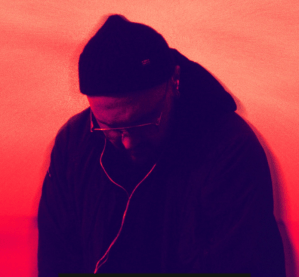
Anton Slepakov aka walakos
But first, our monthly podcast for Resonance FM sees Andrii Sokolov aka walakos talking to us from Kyiv about making music since the full-scale invasion, both before and after joining the military.
- walakos – 1,74B COP
- Anton Slepakov / Andrii Solokov (warнякання) – втрати
- Anton Slepakov / Andrii Solokov (warнякання) – Тарантіно Ліс
- Nosaj Thing – My Soul or Something (Instrumental)
- Mariia&Magdalyna and Bunht – Earth is a beautiful place
- SI Process & Dennis Adu – Just to be a human
SEPTEMBER 24, 2026 – KYIV
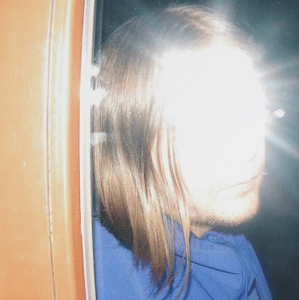
photo by @__zhuravlev
Oleksii Podat (b. 1996) is an avant-garde composer and producer from Sloviansk. He works with both small and large musical forms, in particular, his compositions can be heard in audiovisual art projects and films. Radical methods of sound production, genuine pop sensitivity and avant garde playfulness distinguish his music on Ukraine’s experimental scene, while his self-proclaimed “melodic noise” genre is becoming its defining component.
Hi Oleksii, when we spoke last year, you told me that your music had become increasingly improvisational: you would develop material through live performances, remember the passages that continued to interest you, and later turn them into finished tracks. The liner notes describe We Were Born to Feel Everything as “a long-form composition knitting sundry paraphernalia of intimate value into a tēla”. What exactly is this “paraphernalia of intimate value”? Are these sounds, recordings, memories and musical fragments accumulated over time, and how did they eventually become this single forty-minute composition?
Actually, there is relatively little on this album that comes directly from improvisation, although there are elements from the process of preparing for live performances, such as instruments created from my field recordings. There are more field recordings on this release than on any of my previous ones, and their presence anchors memories of particular events that were happening in my life at the time of recording. Working with this kind of material has always felt like an intimate process to me.
You previously described music as a medium through which you can understand yourself without translating an experience into words, particularly during the full-scale invasion, when making music could reveal an emotional state otherwise hidden while functioning in “automatic mode”. The title We Were Born to Feel Everything seems particularly significant in that context. What does “feeling everything” mean to you now? Does it refer to heightened receptiveness, emotional overload, the impossibility of shutting things out, or something more personal?
For me, this title means facing all the feelings that arise inside me, without trying to distract myself from them through self-destructive practices or self-deception. This phrase helped me begin a new stage of growing up in my life.
There is a striking image in the liner notes of “the stroke of a reliable brush tilting just enough to unveil the mesh of the fabric, only to skid into another aberrant tangle.” That seems close to the experience of the music itself: patterns and textures become recognisable, but they rarely remain stable for long before being disrupted or transformed. How did you approach that balance between recognition and instability? Were there structures or recurring materials holding the forty-minute piece together beneath its continual changes?
When I work on an album, I think less about balance and more about reproducing my preferences in sound and composition as precisely as possible. This time, I wrote the album in a single project, without separating it into individual tracks. I enjoyed this experience because, it seems to me, it helped maintain a unified sound throughout the whole thing.
Recently, I have also developed a love for contemporary Ukrainian painting, and this passion was reflected in the way I worked on the album as a single canvas, an open space for layers to accumulate. Google Olena Topolian, Olia Yeriemieieva, Krystyna Melnyk, Anna Nykytiuk, Anton Saenko.
Last year you made an interesting distinction between using the emotional state produced by the war and using its actual sounds. You were uncomfortable with directly incorporating explosions or air-raid sirens and spoke instead about recordings from walks, conversations with friends and other ordinary experiences because their sounds carried personal memories. Given the liner note’s reference to material of “intimate value”, has that relationship between sound and personal memory become more important on We Were Born to Feel Everything? And after another year of living through the full-scale invasion, how much of the world contained in this composition inevitably carries your experience of Ukraine now?
The relationship between the sound I work with and my memory has always been extremely important to my creative practice. The music I make carries my everyday experience, unusual events that break out of this everyday life, crises, love, friendship, disillusionment, calmness and apathy.
Everything affects me, and I affect what you hear. That’s somehow how it works.
OCTOBER 4, 2026 – KYIV
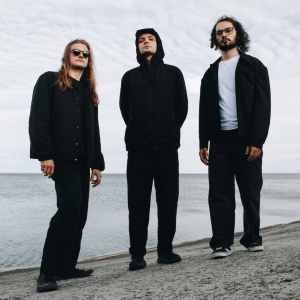
photo by Veronika-Gusieva
Could you start by telling me about your individual backgrounds in music and how Vøvk originally came together? Your music draws on post-hardcore and progressive rock but has developed a very recognisable language of its own. What were the formative bands, records or musical experiences for each of you, and how did those different backgrounds eventually become Vøvk?
When you create music based on feelings, it’s really hard to talk about genres. For ourselves, we know for sure that we write songs in whatever form best conveys our emotions and passions in music, and only then do we add tags. Right now, our blend is this: unconventional song structures, meaningful lyrical delivery, plenty of odd time signatures from progressive rock, and the nerve and raw edge of old-school post-hardcore.
Oleksandr (vocals, bass): I’m inspired by very diverse artists from different eras who shaped my perception of music at various points in my life. One of my very earliest memories is dancing with my dad to the video for Genesis’ ‘I Can’t Dance’. And vintage prog pops up in my musical tastes from time to time (Rush, King Crimson, etc.). During my school years, I listened to a lot of punk rock, which led me to the raw energy of old-school post-hardcore (Quicksand, Fugazi). At some point in my life, vibrant guitar music entered the picture, along with one of my absolute favorite bands – The Smashing Pumpkins, which heavily influenced my songwriting and molded the feelings you want to draw out when listening to and creating music. As for Vøvk specifically, I think all our preferences have blended into a single kaleidoscope, one way or another.
Yehor (guitar): As for me, my prior musical ventures and influences weren’t actually that aligned. Yevhenii and I joined Vøvk from the band Ooze, a prog-stoner band, and my influences were pretty much all the old thrash/black bands like Slayer, Death, etc.”
Yevhenii (drums): I’ve always loved how music can feel like it comes from completely different worlds, so my playlists have always been bizarre mixes of seemingly incompatible genres. Outside of band settings, I’ve explored practically every style imaginable, but the actual bands I played in spanned black metal, thrash, stoner rock, and indie rock. So, when I saw that Oleksandr was looking for band members, I was confident that this was a place where I could bring all those diverse layers to life – and the same went for my friend Yehor, as we grew up together and shaped our musical paths side by side.”
The current line-up has an extraordinary origin story: Yevhenii Khrulov and Yehor Druzenko joined Oleksandr Kuts in January 2022, and Yehor has recalled that you had effectively just prepared his guitar set-up when the full-scale invasion began. How did 24 February change the band before this version of Vøvk had really had the chance to exist? Did you ever wonder whether the new line-up would survive, and at what point did making music together become possible again?
Oleksandr: I suppose the first months of the full-scale invasion left little room for planning or dreaming. However, with time, music became a kind of guiding light and brought back a sense of peaceful life. At first, it was sharing ideas and material remotely, and later together in person once it started feeling relatively safe. So, rather, it was a natural and gradual process of growing stronger.
Yehor: If my memory serves me right, we were working on new stuff pretty much from month one of the full-scale invasion. Working together was a breath of normalcy during the absolute chaos the invasion caused.
Yevhenii: Playing together became possible again once it was clear that creating isn’t an escape from reality, but a way to process it and resist.
Litera took six years to arrive, and you have described it as a kind of diary in which personal experiences and Ukrainian landscapes coexist. “Promin”, for example, takes an idyllic childhood memory of walking through wheat fields with Oleksandr’s father and sets it against the image of farmers harvesting fields in Kherson that have still not been completely demined. Elsewhere, “Leleka” invokes Velykyi Luh, the construction of the Kakhovka HPP and Nova Kakhovka, before addressing the stork returning to a landscape it no longer recognises. How did the war change the album you originally thought you were making, and why did landscape, memory and the transformation of physical places become so important to it?
In nature, everything is cyclical: there is drought and fire, water and ice. We realized that this is exactly what our experiences look like in the reality of war: exhaustion, outbursts of anger, cleansing, new hope, and at the same time the return of old anxieties. This shaped such a diverse and multi-layered dynamic. An imprint of our lives.
Yehor: One of the big decisions we had to make was whether we should fully switch to Ukrainian. And once we decided that, writing about the flora, fauna, and landscapes of Ukraine felt natural.
Oleksandr: Although the backbone of most songs existed even before the current line-up formed, it was during the war that they grew ‘muscles of meaning’. Perhaps such a shock as war was the catalyst that sparked this growth. We cannot ignore reality, and it cannot help but affect us. Throughout all these years of war, this strange sense of cyclicality has never left us – an anticipation of impending peace, which abruptly gives way to a new escalation, followed by a surge of hope that erases decline. And so it goes constantly, season after season.
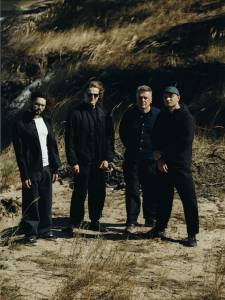
With Anton Slepakov – photo by Veronika Gusieva
The live split with KAT captures your May 2026 performance at Druk in Kharkiv, a concert you describe as a special day in one of your favourite cities; proceeds from the release also support the KAZKA Family community. What does performing live in Ukraine mean to you now? Has the relationship between a band and its audience changed during the war, when simply gathering in a room to hear loud music takes place alongside air-raid alerts, military service, displacement, fundraising and loss?
Yehor: For us, playing in places where bombings are more frequent and shows are a rarity is incredibly important. Seeing people to whom we can give at least a little bit of that feeling of normal life before the war – it brings tremendous joy to people in these cities and to us.
Yevhenii: The dynamic in the room has shifted entirely. Live shows are no longer just a cultural event. Beyond being essential for fundraising, they’ve become a release valve for the dense, bottled-up emotions of living under constant threat – and a space where everyone realizes they aren’t facing this alone.
Oleksandr: “For us, live performances are the most valuable form of interaction, especially during the war. We notice that the further east we travel, the stronger the anticipation feels and the more vital these concerts become.”
“Tiger | Tyhr” seems to capture another aspect of wartime psychology. The song concerns fear of failure and the tendency to believe that one’s contribution is too small to matter–something you explicitly connect to people feeling that their donations or assistance during the war are insignificant. Its recording was itself repeatedly disrupted by attacks on Ukraine’s power infrastructure and subsequent blackouts. More than four years into the full-scale invasion, how do you deal with that tension between exhaustion and the feeling that everyone still has to contribute? Has music itself become one of the ways in which you feel you can contribute?
Yehor: Everyone is exhausted, but that doesn’t change the fact that everyone has to contribute in any way possible for this exhaustion to finally dwindle. Most musicians who are still able to play shows have a job that directly or indirectly helps the cause, music naturally being one of them, with the biggest artists doing charity concerts all the time.
Oleksandr: To be honest, sometimes it’s very hard to stop and reflect. A feeling of peace becomes a luxury privilege that you don’t want to cloud with doubts – about whether the help is sufficient, or whether it holds its own distinct meaning when tragedies are happening all around. For me personally, the process of making the contribution itself is more important than post-satisfaction. Action matters, results matter. I can wait to draw conclusions.
Has what it means to you to be Ukrainian changed since 24 February 2022? And are there any works by Ukrainian musicians, filmmakers, writers or other artists created since the full-scale invasion that you feel have captured these years in a particularly significant way–whether by addressing the war directly or simply conveying what it feels like to live in Ukraine now?
Yehor: It certainly did in a way. As annoying as it is being associated with war for the foreseeable future, I believe Ukraine will be seen as one of the few countries that still held its face and, I’d say, morality and honor in times when pure evil started acting nearby and brewing overseas. There is one work of art that has really stuck with me – Heinali – Kyiv Eternal. It’s an ambient album piece that is wholly nostalgic, but at the same time tragic, because memories like these don’t seem recreatable for generations to come.
Oleksandr: Personally, my sense and understanding of what it means to be Ukrainian haven’t changed. I’m inspired by the fact that for many people around me who didn’t have this feeling before, it has now become important. On a broader level, it has become much clearer what it means to be a person of principle and what needs to be done to uphold those principles.
If we’re talking about books, I’d like to highlight Yevhen Lir’s book Flood (Povin), which tells the story of the tragedy caused by the russians blowing up the Kakhovka Hydroelectric Power Plant. It’s a very powerful and necessary work that focuses specifically on the South of Ukraine and the ecocide caused by the war and the enemy. As for music about the war, in my opinion, it has been best embodied by Oleh Kadanov, Warniakannia, and Oleksandr Remez. Writing music and lyrics about war is incredibly difficult. There are so many details you have to keep in mind, so many tangled knots of emotion to unravel, picking at wounds that are still far from healing. For these reasons, I’ve been avoiding war movies for now. It’s just too hard to watch. But my recommendation is 20 Days in Mariupol. A heavy film about a city that holds a special place in my heart.
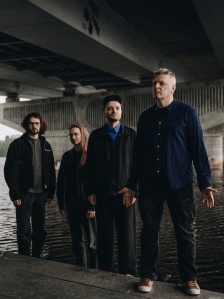
with Anton Slepakopv – photo by Veronika Gusieva
Finally, if you had to assemble a very personal portrait of Ukraine as it feels to you today, what song, album, film, book, play, meme, dish and building or monument would you choose? They don’t have to be solemn or patriotic choices: they can be funny, ordinary, contradictory or deeply personal. What matters is that, taken together, they represent something about Ukraine as you see it now.
Yevhenii: When it comes to music, the entire discography of Low Roar has essentially become medicine for my mental state today. It helps me process and integrate sadness without reopening wounds – approaching that darkness tenderly, with an underlying sense of light and hope.
Oleksandr: I’ll go down the list.
Film: restored films Shadows of Forgotten Ancestors and The Color of Pomegranates;
Play: every children’s play that gets interrupted by an air-raid siren;
Meme: a frame from the animated film Once Upon a Dog (Zhyv-buv пес) showing Cossacks dancing, captioned ‘What sad news’ (‘Yaka sumna novyna’);
Dish: homemade borsch cooked during blackouts;
Building: Drama Theater in Mariupol;
Monument: the monument to Taras Shevchenko in Borodianka shot through by the occupiers;
Song: KAT – “Mertvi” (“The Dead”);
Album: Vøvk – Litera (it might be impolite to name our own album, but the goal behind creating it was precisely to capture a portrait of present-day Ukraine).
Symbols are important, and spirit is important too. They are what give material things special meaning. These things around us are my home.
OCTOBER 5, 2026 – TALLIN
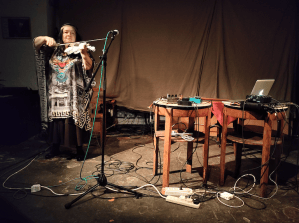
performing at Cafe OTO, London – photo by Gianmarco Del Re
Historically informed violin player, prize-winning street musician, new age experimentalist, chamber ensemble performer and conservatoire deviant. The career of Valentina Goncharova (b. Kyiv 1953) shares parallels with those associated with the broader new music movement of the 20th century and the dissemination of home recording technologies.
Hi Valentina, you completed Ocean more than thirty years after you began it, and you have said that afterwards it was difficult to start composing again because any new idea seemed too small beside it. Then, in 2023, Campanelli emerged very suddenly. At the same time, your recordings from the 1980s and 1990s are finding a new audience. Do you feel that Campanelli opened a new period in your life as a composer? And do you hear a connection between the music you made then and the music you make today?
Campanelli is a very important work for me. OCEAN is more about the idea that the Universe is a hologram, and that the human being is the same hologram, but contained within a small crystal. There is nothing else, nor can there be.
Campanelli reveals the human being as someone who has their own unique life, character, appearance and free will. Ideally, every person possesses these things, although not everyone is aware of it.
OCEAN creates a very comfortable inner state, provided the listener has at least some preparation. Campanelli takes a person far outside their comfort zone, but along this path they acquire their purpose and a kind of “navigator”.
There is, of course, a connection between the music I made in the 1980s and my work today. The force that created the Universe and the human being is one and the same. But it can be seen from one side or from another.
You have described Campanelli as the story of a human life that eventually became a story about all of humankind. You have also said that the music came to you after a strong feeling that something terrible was happening in the world. Do you think music can express or respond to human suffering in ways that words cannot?
Music is a process; it is experience. Words are the understanding of experience.
Spirituality has been present in your music for many years, from your encounter with Buddhism in Mongolia to Ocean and now Campanelli. Has your understanding of the spiritual purpose of music changed as you have grown older?
I cannot say that my understanding of the spiritual purpose of music has changed with age.
You were born in Kyiv but have lived in Tallinn for many years. What does Ukraine mean to you today? Has the full-scale invasion changed your relationship with the country where you were born?
I do not define myself as a pacifist, because that concept is too closely connected with politics, while I live and think on a different level. But I really do dislike any kind of war. I believe that the full-scale invasion is a tragedy.
At the same time, the world has become completely different. I believe in Ukraine. Perhaps it is precisely now that Ukraine is being given the chance to take its rightful place, not in the old world, but in the new world that is being created before our eyes.
OCTOBER 8, 2026
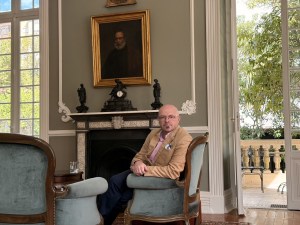
Hi Vlad, over the past couple of years, you have been producing the Leftfield Corner podcast, offering musical journeys that steer clear of the mainstream and predictable choices. How important do you think it is to encourage listeners to move beyond a passive, consumerist approach to music and embrace a spirit of exploration, particularly in an era of AI slop, algorithms and Spotify playlists?
For those, who do not care, chefs will be replaced with cribs – that’s what algorithms do, reducing the cost of feed.
Leftfield Corner started a year and a half ago, and we’ve just reached our 14th episode this October. From the beginning, the only clear intention was to offer a different perspective to modern music consumers, particularly those who have started questioning the way they consume content in general, and reduce scrolling.
Music, in my opinion, is the easiest form of content to consume, and that’s both its advantage and its problem. We have much more music now – a hell of a lot more – and that’s hardly news. So we tend to choose what we already know, which also means choosing what impressed us in the past.
For artists, creating something genuinely exciting has become a big challenge. It’s risky, too. Many artists, the big names, have adopted repetition as a strategy. They keep cooking what their huge international, cross-social audiences are most likely to consume. Compared to the food, it’s like witnessing the line of tourists to the burger’s kingdom in front of the artisanal food market, where they just don’t want to make a mistake.
Meanwhile, niche artists continue experimenting and offering something unexpected. So my task is to find, select and deliver it. And make it tasty.
It’s pretty much my dream job, and I do it with the help of my longtime friend Max Shvaykovskyy, who brings his skills as a sound engineer and director. I’m also lucky to have the trust of many artists around the world who send me their tracks and albums, often before the official release dates.
Content matters to people. That’s why we have food experts, film critics, book reviewers and people who can guide us through the endless universe of records. My task, as a certain kind of provider, is to find something that connects with a particular mood, a request, the news, the weather, the season or simply an idea.
And the current idea is to promote progressive original Ukrainian music in the most natural way possible – by placing it alongside established ‘leftfield’ names from all over the world. Not as a separate category that requires special attention, but as music that belongs in the same conversation.
So, as a selector, I don’t rely exclusively on my own choice. I keep looking around, listening and following what’s happening. I also run the DJBuro Telegram channel, where me and my colleague Volodymyr Sivash share Ukrainian releases daily. It helps me navigate the scene and pick what deserves a place in that special corner.
I see my role less as someone who tells people what to listen to and more as someone who offers them a reason to stay curious.
One of the main aims of Leftfield Corner is to showcase the richness of Ukraine’s progressive music scene, from iconic releases of the 1990s to the latest productions from cutting-edge local labels. Your mixes are wonderfully eclectic: Ukrainian bands such as Tik Tu might appear alongside Arcade Fire, or producers such as Asynchronous alongside Tori Amos. Almost five years into the full-scale invasion, do you think international audiences have become more aware of and receptive to Ukrainian artists? And have you noticed a significant shift among Ukrainian listeners towards music produced in Ukraine?
You’re provoking me to be sceptical, even though my podcasts are always very optimistic.
It’s rather a dream, or a mistake, to think Ukrainian music has gained huge interest from international audiences. I want to be wrong – maybe your books about Ukrainian indie scene, probably the first exploration on such a scale, is already nearly sold out?
It’s wrong to think Ukrainian music has achieved international recognition now – but it has a chance. We have organisations working to increase its visibility, and we have many out-of-the-box producers who have escaped the TV talent-show mould to reveal their own identities. And I’d be happy if the bands and producers who send me tracks also listened to what’s going on around them to think diverse in their next studio session.
The shift is happening, and I can see it in the many Ukrainian releases on international labels – European, Asian, American. It’s real. But if you see a blue-and-yellow flag in front of a stage in any city in the world, chances are the people on the dancefloor will be hugging and kissing each other because they’re all from Ukraine, and that’s why they’re there.
Check the international festival line-ups of any scale this summer.
Somewhere the presence is noticeable, but it’s more a matter of respect than genuine interest.
You are also involved with EnterDJ, a charitable initiative that supports veterans and others affected by the war through music therapy and DJ training. Could you tell us about some of the projects and achievements you are particularly proud of over the past two or three years? And what are the biggest challenges you currently face?
EnterDJ celebrates its second anniversary this autumn. It’s a program that teaches DJing as a way to heal through engagement with music. And the magic comes quickly – people make their first mixes after the very first class, on their own computers, with no special equipment required.
This summer we had a tiny stage at Ukraine’s biggest festival, Atlas, soundsystems at sports and social festivals and events, and offered our participants not just a chance to try DJing in a classroom, but to get into the booth. We even sent some of them abroad to Doof Festival in Scotland and Colours of Ostrava, with the help of our friends at UAME and Turn The Tables.
For this autumn, we have about up to 4 performance requests per month. And it’s just as great to have such examples of our program’s success as it is to help newcomers understand that they can simply stay home and enjoy their time mixing, digging for music and creating their own environment.
For now, the program is well established at HVLV in Kyiv, with teachers from PRODJ School and monthly groups. We’re also setting up several regular classes in Lviv, including at the Halychyna rehabilitation centre.
From my point of view, I can’t make a chart of achievements – they’re definitely far from the usual DJ performance indicators. And anyone who has been DJing for a while knows that some “big” events are much less significant than an evening with people in a cosy watering hole, where everybody’s happy with the music.
For me as co-founder, every person who attends a class or watches our sessions online discovers a new meaning in music. How it will influence them, what results and metrics will emerge – that’s probably an achievement we’ve only initiated, and we’ll be happy to support it in any way possible.
The challenge of EnterDJ now is to scale properly. Fortunately, more and more people understand what we’re doing – including veterans and soldiers we invite to join, as well as rehabilitation and medical institutions to which we offer our volunteer work. So we grow.
This is a question I have been asking quite often over the past year: what does it mean to you to be Ukrainian? And, given your extensive knowledge of the country’s musical history, do you think there is such a thing as a recognisable Ukrainian sound?
I think it’s the way you love a certain piece of Earth, feel and express your roots here in your very own way, with the freedom to choose your identity and the circumstances that allow you to act. What you choose – moments, heritage, realms, cuisine, truth – is yours.
I cannot define the sound of such a big variety of very different approaches. I can’t say it’s melancholic, or cheerful, or close to nature, or far from it. I want to think it’s a sound with a very eclectic background.
I’ve recently finished a track using only Tatar and Carpathian samples. Let this release be my answer in the near future.
OCTOBER 9, 2026 – UZHHOROD
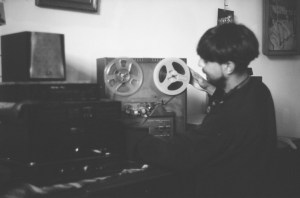
Could you tell us a little about your musical journey? How did you get into experimental and ambient music? What made you start working with tape loops and analog recording?
I think it started when I was a kid. There were no phones or computers back then, so everyone had to find their own ways to have fun. I remember cutting cassette tapes into pieces and gluing them back together in random order.
I was experimenting with what I could record on a cassette player and what I could do with the recordings. I was simply interested in physically changing the medium that carried the music.
In the album notes, you describe “inner films” as a journey into distant parts of the mind, mentioning archetypes, night wandering, and emptiness filling everything around you. What inspired these three pieces? Are the “films” in the title connected to specific memories, dreams, or images, or do they appear while you are making the music?
Oh yes. Each composition is a different night, a different little world and a different story.
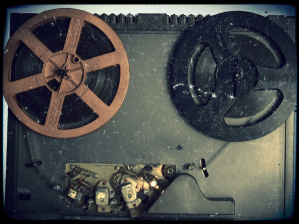
The first composition is based on a tape loop made from a guitar abstraction. I recorded it onto a loop of magnetic tape and ran it through a homemade ambient system. The system works by sending the signal through a graphic equalizer into recording two cassette machines connected in parallel. The sound is played back with a delay between the machines. From one machine, the processed signal goes to the speakers, while from the other one it goes back to the starting point of the system. It is a night dive into a repeating, hypnotic sound.
The second film is very specific. Once I went to some mountains I didn’t know. I stayed awake all night, listening to unknown animals and phantom sounds. It was around 5 a.m. when I started watching the fog slowly cover everything around me. The fog was like a rising sea. It was dissolving everything around me, and then slowly came closer and surrounded me from all sides. I couldn’t see anything. I was just existing in this weightless space. My cigarette went out because of the humidity, and everything became covered with tiny drops of water. When the sun came up, the magic of the night was gone. The fog had taken away everything unnecessary and everything that made me anxious. What was left was just a feeling of peace and Love. Love in the fog. Real Love, the original force that moves the Universe. This journey became several cassette tape loops, a guitar improvisation, and some playing with a homemade white-noise generator.
The third track is technically quite complicated. During that period, I traveled a lot, recording night birds and rain on a cassette player. It is a story of field recordings spinning in a closed loop, and also a story about traveling. I covered the erase heads of the tape machines, looped the sounds, and used reverbs and guitar. I took all these field recordings and fragments and ran them again through an ambient system made from two reel-to-reel tape machines. One machine was recording, then the tape went to the second machine for playback. I then sent that signal back to the recording machine.That is the interesting part: you feed a sound into this system, and it creates something of its own in a way that is very difficult to predict. You never know what will come out, or if anything will come out at all. These recordings are connected to a feeling of heavy loneliness, but at the same time to a feeling of tenderness that comes from realizing that you are alive. For myself, I called this work “Tenderness.”
You also describe your work as “random music” – as part of the vibrations of the world around us. How much room do you leave for chance when you make music? Do you start with a clear idea of where a piece should go, or do you let the tape loops and sounds decide the direction?
I like making abstract music with technological machines. You give a sound to a system you have built, and then the system works with it on its own. After that, you just play with the chaos created by the sound machine. There is something very human in that – looking for meaning and trying to organize chaos. Sometimes it is tape machines and a system where the tape moves through different parts of the setup. Sometimes it is cyclic sounds that physically break down while they are being played, homemade devices, and so on. Sometimes it is the sound after rain, drops falling from trees. I hear the music of the Universe playing in my head, and I can’t leave it there. Recording is just a way of capturing this inner Universe.
How did your life change after the full-scale invasion began, and did the war change your relationship with music?
My life, like the lives of all my friends, went through a transformation. It is difficult to talk about, because when people close to you die, when friends die, when missiles are flying and people you love are on the edge between life and death – it changes the way you see the world. You understand values differently and start to rethink your life. I don’t think it changed my relationship with music. Again, it is a question of life and death. Music has always been part of my life. Being close to death and living through such huge changes only made it clearer what is important to do while you can, and what is just noise.
What does being Ukrainian mean to you today?
It means understanding what Thanatos and Eros are. Children see death. The difference between what is important and what is not has become very clear. Ukrainians, and everyone who lives here, are doing something important. We live and create under terror from a neighboring pseudo-state. I love and embrace every musician and artist who continues to create Ukrainian art right now. We are creating more than we realize. It really matters. As long as intellectuals and artists exist, there exists a cultural stratum without which the country could not survive.
 Are there any albums or releases by Ukrainian musicians from the last four years that, in your opinion, capture this period especially well? They don’t have to be directly about the war – maybe they simply express the emotional experience of living through these years.
I would recommend listening to all the compilations released by the late label “electricity”. They are a good snapshot of the Ukrainian indie scene from 2018 to 2026. Lviv psych-garage music, Kyiv punk, the Uzhhorod metal scene – a vast diversity and unique projects. I also really like listening to Ukrainian hip-hop sometimes. There are a lot of great bands in the underground scene, and it is difficult to fit all of them into the limits of this interview.
And finally: if you had to choose a book, play, work of art, building or monument, meme, song, album, and dish that best represent Ukraine to you right now – what would you choose and why?
Probably not one particular symbol. It is difficult to put the complexity of everything that is happening into a single symbol. But I see death more and more often. And every one of us has started to encounter death more often than before, in many different forms. Death. It was always close. But now it is even closer and more violent than before. We are living in unique and very intense times. But everything passes, and this will pass too. Sooner or later. I embrace everyone who creates and makes things. I believe in you.
NEW RELEASES
Aircraft ~ Тигролови 2
Тигролови 2 is the darker, trip-hop continuation of Aircraft’s six-song story about Ukrainian memory, survival, and freedom. Moving through surreal everyday images, wounded landscapes, isolation, exhaustion, and the weight of experience, the EP explores what remains after the struggle becomes part of ordinary life. From “Листя” to the ambient “Кінець”, it is a journey through alienation, resilience, and the search for a place to belong.
Moon Projection ~ Slow Skies
Slow Skies is a serene ambient EP from Ukrainian artist Moon Projection (Armen Akopov), unfolding through gentle melodies, spacious textures, and warm cinematic atmospheres. Building on the reflective qualities of Light Through Clouds, the release creates a slow-moving journey of calm and contemplation, capturing the beauty of quiet moments, open landscapes, and the ever-changing moods of the sky.
Обрій / Obrij ~ Серед доби руїн
On September 24, Серед доби руїн (Amidst the Era of Ruins) arrives on all platforms—a new song from the Uzhhorod-based death metal band Obrii. It reflects on how, five years into the major war, we have all become completely different people, forced to adapt to new realities and integrate into a wartime existence.
Biblioteka Prospero ~ Сумерки
The album Сумерки [Twilight] mainly consists of the material for which Biblioteka Prospero was called the Ukrainian The Legendary Pink Dots. It was started even before 2013, when we got our Korg MS2000B. Back then, whenever he had the chance, Dmytro would sit down with it, put on his headphones, and spend hours fiddling with sounds. In general, the album grew out of these meditations; later, other instruments, lyrics, and arrangements were added. By the way, this is the first time that two of the album’s lyrics are not by the main lyricist. “Империя” [Empire] and “Кризис” [Crisis] feature lyrics by Dmytro.
The music from “Империя” was also used in a multimedia project by photographer Maksym Dondyuk focused on the problem of tuberculosis in Ukraine.
циркуляр ~ ніколи знову
вісь ~ Туск
A strange blend of emotions and raw, overloaded sound. Vocals that sound like they’re coming through a telephone receiver, drowning in the screech of guitars. A short yet intense work.
Unstable Knowledge University ~ AHAP de Aliyah
‘AHAP de Aliyah’ is one of the key concepts of Kabbalah, reflecting the process of spiritual ascent through attachment. The Upper allows itself to descend slightly in order to extend a hand to the Lower—which is reaching out to it—and raise the latter to a level unattainable by its own efforts.
This is a key mechanism for the correction of souls and the reception of spiritual light, achieved by elevating lower, egoistic desires to the level of higher, altruistic ones. This concept also explains why spiritual growth is impossible for a person who receives light from the Creator without returning it. If someone does not allow the light to circulate continuously but views themselves merely as its final consumer, this plunges them into an inexplicable depression. However, the process of spiritual ascent requires persistent, ceaseless effort and entails the risk of setbacks and nervous breakdowns.
toucan pelican ~ snapshot: спалах
snapshot: спалах is a fragment of a live performance at Spalah, taken apart after it was recorded and lovingly put back together in a home studio. Six different yet closely related tracks are captured in a state of constant motion — just as they sounded on that August evening.
The recording marks the end of a year of live performances, bringing together the best ideas, demos and accidental discoveries that accumulated along the way. Some of them may eventually grow into fully fledged studio tracks, while others might simply continue to live here.
Revshark & Hatroneli ~ Oculus Beam
Nothing is more eternal than the temporary. Synergy, and at the same time, a rejection of nature. The sound will dissolve into white noise, and the painting will be washed away by the next rain. Be in the moment; be here with us. Listen this double album Oculus Beam by Revshark & Hatroneli now.
58918012 ~ Dreams Ahead of Mind
Hi, my friends! The first month of autumn is always somewhere in between happiness and sadness. You know, it’s time when literally a few moments ago it was summer, but at this point it’s autumn again. It’s still pretty warm outside, but you already feel that cold and wet breath. I don’t want to screw your good mood (I hope you’re in the one), it’s just my own perception of life.
From a musical perspective, this album is pretty melodic, but at the same time, incredibly dark and kind of scary. I can even say that it sounds like some kind of soundtrack for a psychological thriller. Probably, the lightest and softest tracks on the album are “Ceiling”, “Summer”, and “Transparency” (especially the last one). I hope you will catch my vibe through this album. Enjoy.
hjumən ~ Mountains_9_26
Techno music with Ukrainian Carphathian ethnic fusion. hjumən is artist from Ukraine and now debuting on SEREMONIA.
“Ethnic music (not only Ukrainian) always attracted me with its unusually pleasant harmonies, melodies, rhythms, and moods. In this release, I’ve tried to combine and mix the atmosphere and freedom vibe of the Ukrainian traditional music with the robotic and monotone power of techno music. I think this experiment is successful. You can clearly hear how the mysterious sounds of the Ukrainian Carpathians merge with the atmosphere of dark dancefloors somewhere in underground clubs.” -hjumən
hjumən is one of many musical faces of a regular human being from Ivano-Frankivsk, Ukraine. My name is Yurii Popov. I have been creating music for over 20 years now. Honestly, I am not sure how I came to techno. Probably, it just called me. In any case, techno is not the only music genre I create. My interests go way further into other sides of music in my different projects. As hjumən, I just write machine music for good human beings from all over the globe.
King Imagine & Bruno Gussoni ~ Modular Volcano
Our new experimental work, dedicated to planet Earth as it was 300 million years ago.
Kowdra ~ Wish
There are a lot of late-night thoughts here, warmth breaking through the noise, and a quiet melancholy that doesn’t weigh you down — it wraps itself around you instead. This mini-album was born somewhere between sleepless evenings, old memories, and the urge to disappear into sound for just a little while.
Katrù, Kateryna Ziabliuk ~ I thought the plateau would eventually end but the ground was singing
I thought I was making electronic music, but those old field recordings will never leave me. Ultimately, it is an another atempt to see where the folk music will feel good, where I feel myself comfortable singing, and how much space there could be for the prepared piano.
It was supposed to be a self-published EP with ideas I would eventually develop in a full album or concerts, but I found myself in the plateau of non-decisiveness and missed publishing music much more than presicion. Ultimately, it is very much about where I am right now.
Вербна Неділя ~ Осінні. Закохані. Самотні
The project’s latest release is like a long journey into the unknown and the strange—a farewell to childhood fears, ultimately leading to letting them go.
Revshark ~ Jams
This is the first volume in a collection of live jams, most of which were originally posted on my YouTube channel. The concept behind this series is to record a wide variety of music without adhering to specific stylistic boundaries or strict quality standards—acting essentially as a studio diary. It captures a spontaneous stream of consciousness, recorded live in a single take (though some tracks underwent minor editing during pre-mastering). This volume focuses primarily on laid-back music with a measured tempo. Almost all the tracks were created using two machines: the Elektron Digitakt II and Digitone II.
støïbrok ~ expressionism.
expressive landscapes of dense sound with recording artifacts deliberately left in—like brushstrokes on a canvas.
delayed minds ~ Live in Kyiv 22.08.2026
Delayed Minds’ most recent performance in Kyiv, recorded at the Praying Mantis “Death Wish” gig.
В’язане Море ~ …думаючи про посмішку весь час
A romantic piece, firmly rooted in the indie-rock traditions of the 90s. A soundtrack to a summer that has flown by, yet the memory of a smile remains.
Hyphen Dash ~ I was afraid of Stone Rooms
VIEWING ROOM
(Gianmarco Del Re)

