
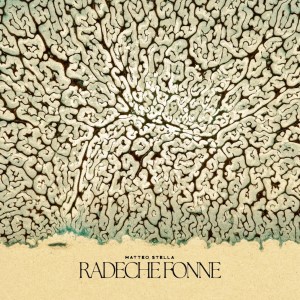
Matteo Stella’s Radeche Fonne resists the pastoral temptation that often shadows music rooted in place. While deeply embedded in the geography and traditions of the Marche region, the album refuses nostalgia, instead exposing the tensions that underlie rural life—its frictions, silences and coded forms of conflict. The opening “Cagnara Muta” sets the tone: a reference to silent quarrels conducted through gestures and objects rather than words, here translated into sound as an uneasy interplay between cello and electric guitar with the pipe organ mediating. Nothing resolves; everything coexists in a state of stubborn attrition.
Stella’s practice unfolds as a continuous exchange between action and environment. Instrumental gesture is articulated over a pre-existing sonic environment, not imposing form but responding—almost reflexively—to the irregularities and unpredictability of the recorded landscape. Sound is not placed onto a setting but emerges from a process of listening and reaction, where each intervention acknowledges the terrain’s resistance. In this sense, dissonance becomes relational rather than disruptive: a condition of forced coexistence rather than rupture.
The Callido organ, central to several pieces, breathes with a living instability, while the cello, recorded outdoors in freezing conditions, carries the physical imprint of the landscape. Intonation falters, timbres fray, and these imperfections are not corrected but embraced as evidence of an environment acting upon sound. Nowhere is this more evident than in “Brumale,” which seems to grow from beneath the surface like a subterranean organism. Its slow accretions of tone recall an organic structure unfolding in layers, dense yet internally veined. The organ’s breath fills the acoustic field, constructing a space that feels both static and alive, where change occurs almost imperceptibly through shifts in density and colour.
Across the album, instruments do not settle into hierarchy; instead, they press against one another, creating a vigilant balance. Even moments of apparent stillness—”Brumale”’s sustained tones for solo pipe organ or the fragile folk inflection of “Maggio a Botontano”—are charged with latent tension, as if shaped by forces just beneath the surface. Stella treats place not as backdrop but as collaborator: churches, springs, and mountain air enter the music not through explicit documentation but through their effect on gesture, listening and material.
Everything is connected—the sacred and the profane, the historical and the immediate. “Congedo in La Minore” (Farewell in A Minor) appears to introduce a liturgical register, yet its origins lie elsewhere: composed by Massimiliano Luciani from Giovanni Ginobili’s poem “Congedo,” it reconfigures folk memory into a form that resonates with the album’s broader field of tensions.
Radeche Fonne ultimately operates as both sonic map and residue, tracing the persistence of memory within a territory while acknowledging its instability. Contrast here does not erupt but accumulates, organised into signs and textures that linger. It is an album of quiet resistance—where the land speaks, but never plainly.
To delve further into the making of the album, Matteo Stella has kindly answered a few questions for us over an email exchange.
 Your album moves between very specific sites—churches, hermitages, and natural springs. How do you choose a location, and at what point does a place stop being a backdrop and become a collaborator in your work?
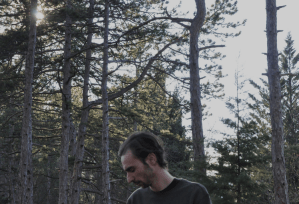
When I choose a location, I am not only thinking about its acoustic qualities, but also about its historical and emotional resonance. Some of these places also feel fragile, in the sense that they hold memories, traditions, and atmospheres that deserve to be preserved. At the same time, many of these places are closely tied to my own personal history, so there is always an intimate connection in the way I approach them. A place stops being just a backdrop the moment it begins to influence the musical gesture itself. It is no longer simply a setting in which sound happens, but something that actively shapes the way I listen, record, and compose.
 Several tracks feature the historic Gaetano Callido organ from 1791 in Fabriano. What kind of dialogue do you feel you’re entering into when you improvise on an instrument with such a long history?
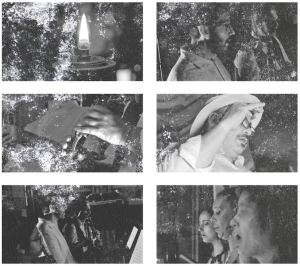
There is a very deep connection with these instruments. For the previous album, I had the chance to play another organ near Fabriano with the same intonation, and both experiences felt incredibly visceral. Even listening to a single chord can be astonishing. You can hear every harmonic in motion, and the way they interact creates beating patterns that constantly shift within seconds, shaped by the air moving through the pipes. What moves me most is that the instrument never feels static. There is always a kind of internal tension, a living instability that gives it an almost breathing quality. The effort of the pipes as they open and respond gives an extraordinary sense of life to the sound.
When improvising on an instrument with such a long history, I feel like I am entering into a dialogue not only with its sound, but also with the memory it carries. It is not simply about playing the organ, but about listening to what the instrument gives back, respecting its character, and allowing its voice to guide the gesture.
In “Brumale”, the organ is presented solo, stripped of other instruments. Does working alone with that instrument reveal something different compared to the more layered pieces like “Cagnara Muta” or “Scannafoglie”?
The deepest connection with the organ was definitely in “Brumale.” I was feeling all the little nuances of the sound. When you play such a big instrument, you really feel the sound filling the entire church from the organ consolle to the back of the room. The absence of dynamics in this instrument, gives you a much wider understanding of your surroundings, grounding you into a sense of stability and meditation.
“Maggio a Botontano” introduces the Pancotti organetto and the Cantamaggio tradition, performed by Tommaso Gagliardini. What drew you to include this specific folk element, and how does it relate to the broader sonic world of the album?
The organetto is a traditional instrument, and it’s closely related to the organ, both in its timbral quality and in the intimacy of its sound. This particular instrument, built in 1901, is very rare and was tuned by ear, preserving a strongly imperfect and unstable intonation. I had been interested for some time in recording a personal interpretation of the more traditional Cantamaggio, and Tommaso Gagliardini felt like the right person to bring that idea to life. What I was looking for was a version that could retain the folk identity of the piece while also resonating with the broader sonic language of the album, something capable of evoking the sustained tones, the fragility, and the contemplative atmosphere that run throughout the record.
I asked Tommaso to approach it with that sensibility, almost as if the instrument was echoing the voice of an ancient organ. As soon as I started recording, he performed this beautiful ten-minute version in a single take. This musical piece is especially important to me, because it gives the Organetto a living, fragile presence and becomes another way of exploring memory and places.
 Across the record, you move between improvisation, field recording, and a composed piece — “Congedo in La Minore”. How do you think about authorship when the music emerges from so many different sources and collaborators?
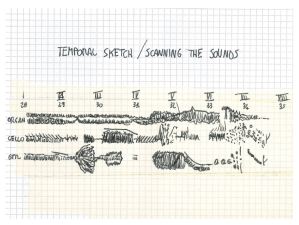
That’s a very important question. My role in this record is not limited to playing the organ on certain tracks; what I wanted, above all, was to act as a kind of connective tissue between many of the historical and folkloric layers of the province. In that sense, authorship does not reside in a single gesture or in one individual contribution, but in the way these different elements are brought into relation with one another. The field recordings, the improvisations, the collaborators’ voices, and the composed material all belong to the same process of listening and shaping.
The composed piece, entrusted to Massimiliano Luciani, emerged from a shared path of research and attention toward the cultural heritage of the Marche region, understood not as a repertoire to be preserved in a fixed form, but as a living organism to be listened and reinterpreted.
In pieces like “Rsumiju,” natural sounds and percussion coexist without a clear hierarchy. How do you approach listening in those moments—are you reacting to the environment, or trying to reframe it?
In these pieces, I try to adapt to the environment rather than reshape it. “Rsumiju,” especially, is an attempt to respond to the few sounds present in that place. Each natural sound seems to have its own role, unfolding within an order that already exists. I wanted the drums to adjust to that environment, allowing the musician’s sensitivity to follow the same path. So the process is less about reframing the landscape and more about entering into its internal logic. The hierarchy is already set by nature: everything is there, already organized, and the task is simply to listen carefully enough to find a place within it.
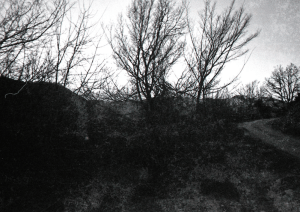 The titles and references—Maggio, Brumale, local place names—suggest seasonal cycles and rural traditions. Is Radeche Fonne, for you, a kind of sonic map of a territory, or more an exploration of memory and cultural residue?
That is a very difficult question to answer, but for me it is definitely both! Radeche Fonne is rooted in a very specific territory, so in that sense it can be seen as a kind of sonic map. The titles, the local references, and the seasonal elements all reflect a precise cultural and geographical landscape. At the same time, it is also an exploration of memory and cultural residue of everything that remains present in a place through sound, ritual, language, and atmosphere. So the album exists somewhere between landscape and memory, between geography and what that geography continues to carry over time.
The album comes with a book, “a collection of listening notes tracing the cultural, material, and sonic imagery behind each track.” What can you tell us about and the way the album and the book complement each other?
The book is an important extension of the album, because it gives another form to many of the ideas and images behind the music. While the record communicates through sound and intuition, the book makes space for the cultural material and sonic references connected to each track. Together, they create a wider space in which the listener can engage not only with the sound itself, but also with the memories, places, materials, and cultural resonances that informed it. It is not there to explain the music, but to deepen the listener’s relationship with it. (Gianmarco Del Re)


Pingback: A Closer Listen Reviews – Avant Music News