
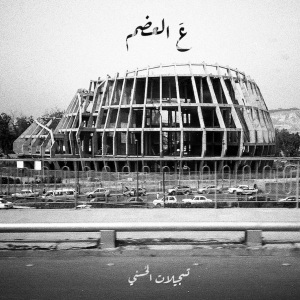
 Shell and Core takes its title from the unfinished concrete structures that have become fixtures of the Syrian landscape, and Tasgeelat Al-Husni تسجيلات الحُسني uses that image of arrested construction as a way of looking at lives left incomplete. Much of the record is assembled from things heard or observed in everyday life: bureaucratic rituals, checkpoints, cars, street conversations, scrap collectors and an uncle’s absurd political opinions. On “Spacetune” these details accumulate into a comic story that deliberately goes nowhere; “Existing” turns repetition and waiting into its subject, while the heavier “Grinder” pushes familiar material towards something more grotesque. The humour is important. Rather than presenting Syria exclusively through catastrophe, Tasgeelat Al-Husni draws on a local tradition of satire and everyday mockery in which absurdity is one means of living with circumstances that have themselves become absurd.
The music operates in much the same way, refusing a clean division between local tradition and experimental electronics. The oud can introduce the relatively spacious “Existing”, sit behind electronic and guitar noise on “Spacetune”, or grind against doom-laden riffs on “Grinder”. Al-Husni explicitly rejects using the instrument as a nostalgic signifier of a disappearing culture; here it belongs to the present as naturally as synthesis, distortion or field recording. Progressive and heavy rock are equally embedded in the record’s vocabulary, particularly in its abrupt shifts between calm and physical weight. Lazar Mečanin’s production makes those contrasts unusually pronounced: passages of relative openness can suddenly thicken into distortion, low-frequency pressure and noise, giving the album the unstable logic of the environment it describes. One of the album’s most striking changes of register comes on “Perspective”, where the voice of Ukrainian opera singer Oksana Vakula introduces a radiant tone, briefly opening up the record’s otherwise rough and unstable sonic terrain.
That makes the unfinished Massar Discovery Center on the cover more than an illustration. Along with Syria’s other abandoned concrete shells, it becomes an architectural counterpart to a record about interrupted trajectories. Yet Shell and Core avoids turning incompletion into a grand metaphor. What matters most is the peripheral and the discarded: things overheard, jokes, irritating routines, incongruous sounds and surreal encounters. The picture of Syria that emerges is at the same time damaged and precarious, but also mundane and funny, a place whose exposed structural bones are filled with everyday life.
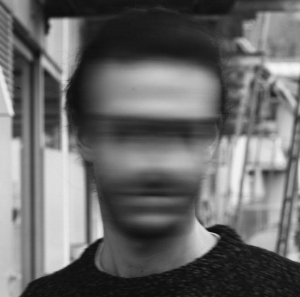 To help us better understand the production process for Shell and Core we reached out directly to Tasgeelat Al-Husni.
Throughout عَ العَضم (Shell and Core), everyday Syrian life is depicted in a way that often feels almost surreal, allowing the ordinary and the mythical to coexist. The repeated “unknown” in “Spacetune”, the taxi driver nicknamed Azrael—the Angel of Death—blasting heavy dabke, the endless bureaucracy of “Existing”, the Ladas, and finally the litany of scrap collectors all feel like fragments of the same social landscape. There is also a distinctly sardonic humour running through the writing. Do you think of your lyrics as poetry, documentary montage, social commentary or simply another way of composing with sound?
Most of the lyrics are rephrasing of something I have heard in Syria either in a conversation with friends or randomly on the street. I wrote down some of what I had heard and then integrated them with how I thought of each song. I am new to writing words, so I don’t know much, but I have tried writing a comical story with mild suspense that leads nowhere on “Spacetune,” describing recurrent scenes from daily life on “Existing,” and creating some surreal visual scenes on “Grinder.” The sardonic humor is essential to the environment where the album came from. It’s in the music we hear (such as the music of the Rahbani family), the TV we watch (such as Spotlight – بقعة ضوء), the books we read (such as Muhammad al-Maghut’s), so you would also hear it in your day-to-day life from your relatives, your college friends, the bus driver or even from a soldier on a checkpoint. Add to that the absurdity of people’s takes on the conflict, like that uncle on Spacetune, which naturally calls for mockery.
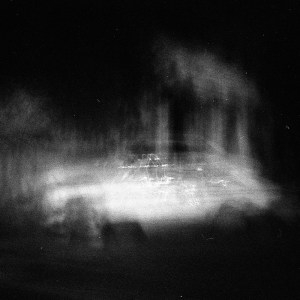
Peugeot 504 – photo by Hussain Hussain
The second track, “Existing”, opens with an oud before gradually expanding into a much broader electronic landscape. The instrument never feels nostalgic or symbolic of tradition; instead, it becomes another texture within the composition. Was it important for you to avoid treating the oud as a marker of cultural identity, allowing it instead to coexist naturally with electronics and noise?
It was! I think such instruments are not supposed to sound like a distant cry from the past echoing in an empty space, or “a ghostly remnant from a lost culture”, like David Byrne once wrote.
The oud, like any instrument, should be used to serve the song the way the song is meant to be. It definitely could be used in its classical character with takasim and as accompaniment for singing like on “Existing,” but it can also accompany heavy doom metal riffs to add a bloody drilling texture on “Grinder,” or do some finger picking behind synth and guitar noises like on Spacetune. If you listen to a based folk performance from the past, you hear the oud vital and integrated with the rest of the instruments, not sounding like an anomaly, and I think this is how it should be treated in any other (modern) context.
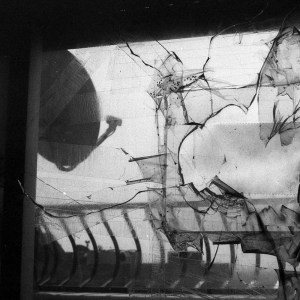
Window – photo by Hussain Hussain
Although the album is rooted in electroacoustic composition and experimental electronics, there are moments—particularly in the treatment of distortion, low-frequency weight and rhythmic pressure—that recall progressive rock, heavy rock and noise. Are those traditions part of your musical vocabulary, and how do they intersect with the experimental and electronic music you make today?
These traditions strongly influence how we have approached this record and music making in general. The treatment of sound at this level was more Lazar’s part, so I have forwarded the question to him, and this is his response: “Those traditions have to be a part of our vocabulary given the fact it’s the music we grew up on – Floyd, Crimson, etc. These bands influenced us as players but they also influenced how we think about music. A song can exhibit cinematic properties and sometimes be even more immersive than a movie if done right.
The record is really a landscape representing every-day life in Syria (if I understood it correctly myself hah), moments of beauty and calmness intertwined with unpredictable chaos mostly right next to each other, so in a way the music is interpreting life, and by using these acoustic and production techniques we are attempting to recreate the feelings one might have simply living there.”
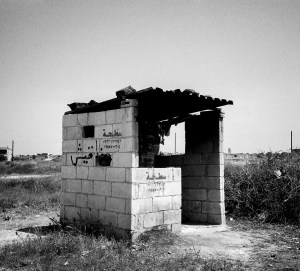
Random Structure – photo by Hussain Hussain
How do you see your work in relation to other Syrian experimental musicians? Is there a shared aesthetic or set of concerns emerging from the scene, or do you feel that each artist is responding to the experiences of recent years in fundamentally different ways?
I have learned a lot from contemporary Syrian and Arab artists — Tootard, Shabjdeed, Khaled Allaf, Lynn Adib, Al-Rahel Al-Kabir, Kulna Sawa, and many more — and that has encouraged me to work on my own stuff, sing about what I have heard or seen, and eventually release that. It is true that everyone is responding to their experiences in their own way; some express that in a desperate way, some in a cynical way, some tackle social issues, and some speak about personal experiences.
Maybe what we have in common is our frustration and disgust with our situation now and in recent years, but who knows? What’s important to me is that many of our artists sound so fresh, so unique and so relevant, and I always look forward to hearing their new approaches and what they are talking about.
The cover features the unfinished Massar Discovery Center (“Massar Rose”) in Damascus—a project that was meant to embody education, innovation and the future before construction stopped in 2014. Throughout the album, there is a recurring sense of lives shaped by interruption: bureaucratic waiting, checkpoints, abandoned trajectories and systems that never quite reach completion. Did you see the building as encapsulating that condition, or were you drawn to it for different reasons?
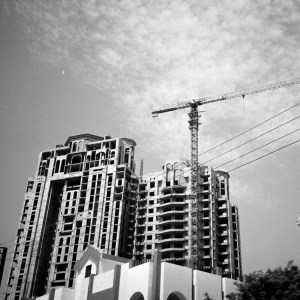
Gardenia Towers – photo by Hussain Hussain
Exactly, hence the name, ع العضم Shell and Core! The rest of the album art (partly prepared for a CD release) features some well-known incomplete buildings, such as the infamous 50-year-old Yalbugha Tower in the middle of the capital and the Gardenia Towers in Homs that became known among the public as the “Death Towers”, used by snipers during the war.
Such giant incomplete, mostly ugly, structures are so common to see in Syria. They are ironically reflective of the life of Syrian individual that has become so crippled, it might never reach a sense of completion. Everyone who lost their home forever and had to live in a tent, everyone that lost their beloved ones, got detained for the stupidest reason, or had to serve in the army for 8 years or so, and also everyone who just had to live or grow up there during these awful times. To me, this building not only encapsulates these incomplete trajectories, but also resembles, with its bare bones (عضم) sticking out, how naked, exposed and fragile we are.
(Gianmarco Del Re)


Pingback: A Closer Listen: Recent Experimental Reviews – Avant Music News